Half a Day in Beijing: A "Galloping Glance" at the National Museum and the Temple of Heaven with My Wife
Here is the SEO-optimized article, rewritten and expanded from your source material. It is structured for search engines while maintaining the personal, narrative voice of the original author.
SEO Meta Data: - Title: Half a Day in Beijing: A Senior’s Guide to the National Museum & Temple of Heaven - Meta Description (160 chars): Retired couple explores Beijing’s National Museum & Temple of Heaven in a day. See top artifacts, travel tips for seniors, and a perfect half-day itinerary. - Primary Keyword: Half a day in Beijing itinerary - Secondary Keywords: National Museum of China guide, Temple of Heaven for seniors, Beijing with elderly parents, Chinese history museum must-see, Beijing 2025 travel guide.
Half a Day in Beijing: A "Galloping Glance" at the National Museum and the Temple of Heaven with My Wife
March in Beijing: peach blossoms are just beginning to bloom, and the spring breeze still carries a hint of chill. For a retired couple like us, the city's appeal goes far beyond the grandeur of its red walls and golden tiles. It lies in the stories buried within museums—stories that have accumulated thousands of years of history. This time, we finally embarked on our third journey to Beijing. The previous two attempts had to be canceled due to health issues, forcing us to forfeit our reservations and tickets. Good things, it seems, always come after many trials.
This year is the Year of the Horse (Bingwu Year) in the Chinese zodiac, and spring is at its peak. We decided that, no matter what, we would make it this time—even if it meant only a "galloping glance" (a quick, superficial look) at the treasures we had longed to see.
Departure: From Tianjin to Beijing, A Station’s Transformation
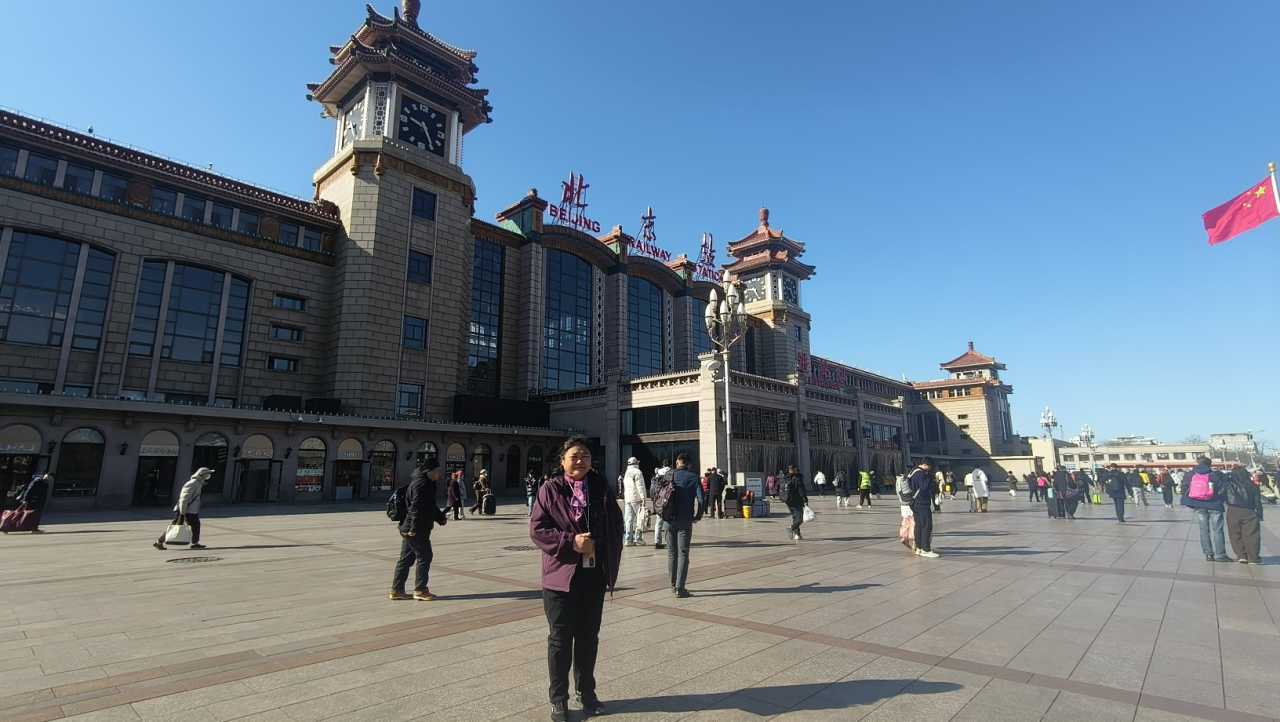
At 5:50 in the morning, we set out from our doorstep in Tianjin. For my wife, Beijing Station was a distant memory. These days, the high-speed train is the most convenient way to travel from Tianjin to Beijing: a half-hour journey that is both comfortable and efficient.
Yet, as I walked into Beijing Station, a complex emotion welled up inside me. This station, one of the ten monumental architectural works built after the founding of the People's Republic of China, has carried generations of travelers north and south. But time has left its mark: the facilities are outdated, the exit passages are too long with gentle slopes, and there are no elevators—hardly friendly to elderly visitors.
Today, most of Beijing Station's passenger traffic has been diverted to other hubs. The South High-Speed Rail Station handles southeastern routes (Tianjin, Jinan, Nanjing, Shanghai, etc.), the West Station covers the southwest and south (Shijiazhuang, Wuhan, Guangzhou, Chongqing, etc.), the North Station serves the northwest (Zhangjiakou, Hohhot), the Chaoyang Station specializes in the northeast, and the Fengtai Station connects to Shijiazhuang and Taiyuan. Beijing Station still retains routes to the northeast and north, such as Harbin, Shenyang, and Dalian, but its aging infrastructure makes one sigh: times change, and so do stations.
Tip for Seniors: If you are traveling from Tianjin, consider arriving at Beijing South Station instead. It offers better accessibility, escalators, and direct subway links to the National Museum.
I. The National Museum of China: A Dialogue Across Time
From "History" to "Nation": A Century of Transformation
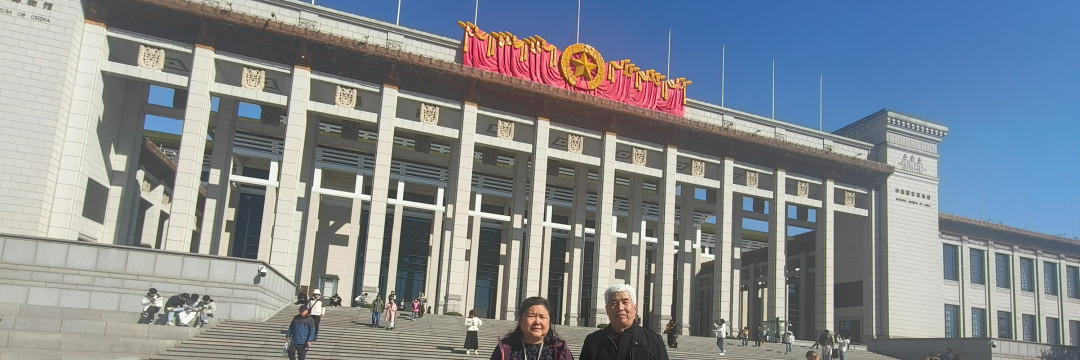
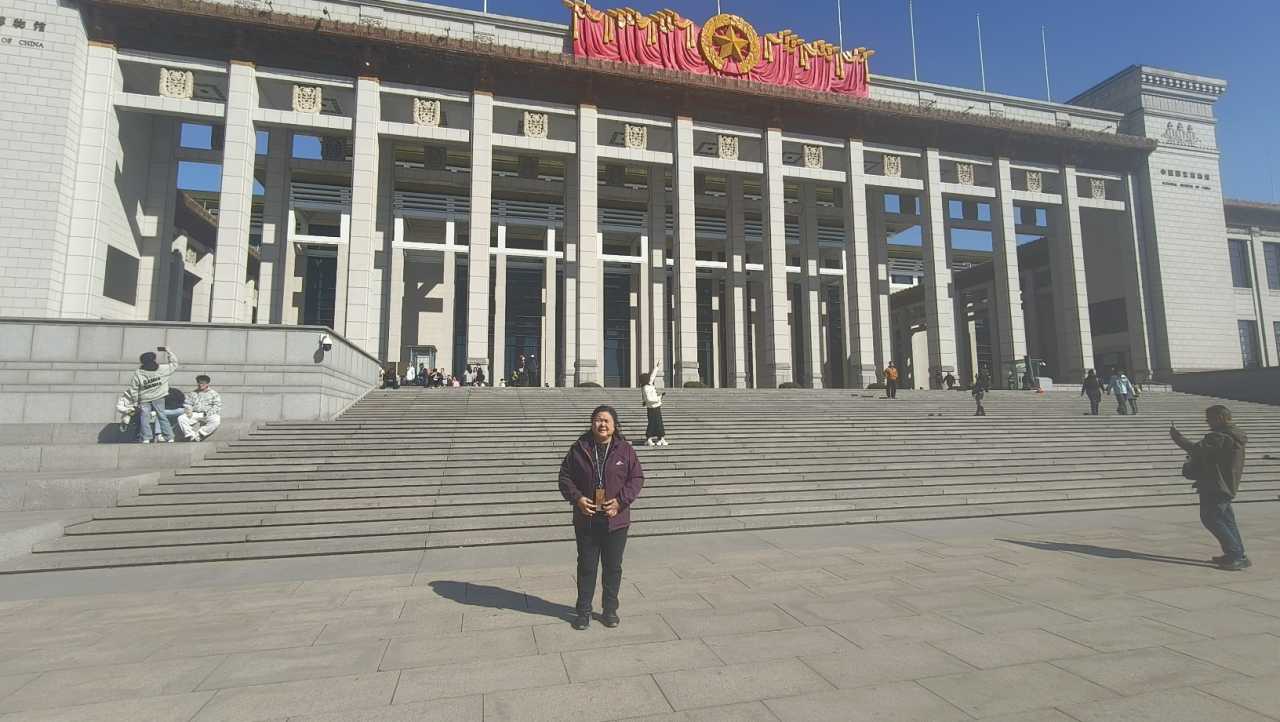
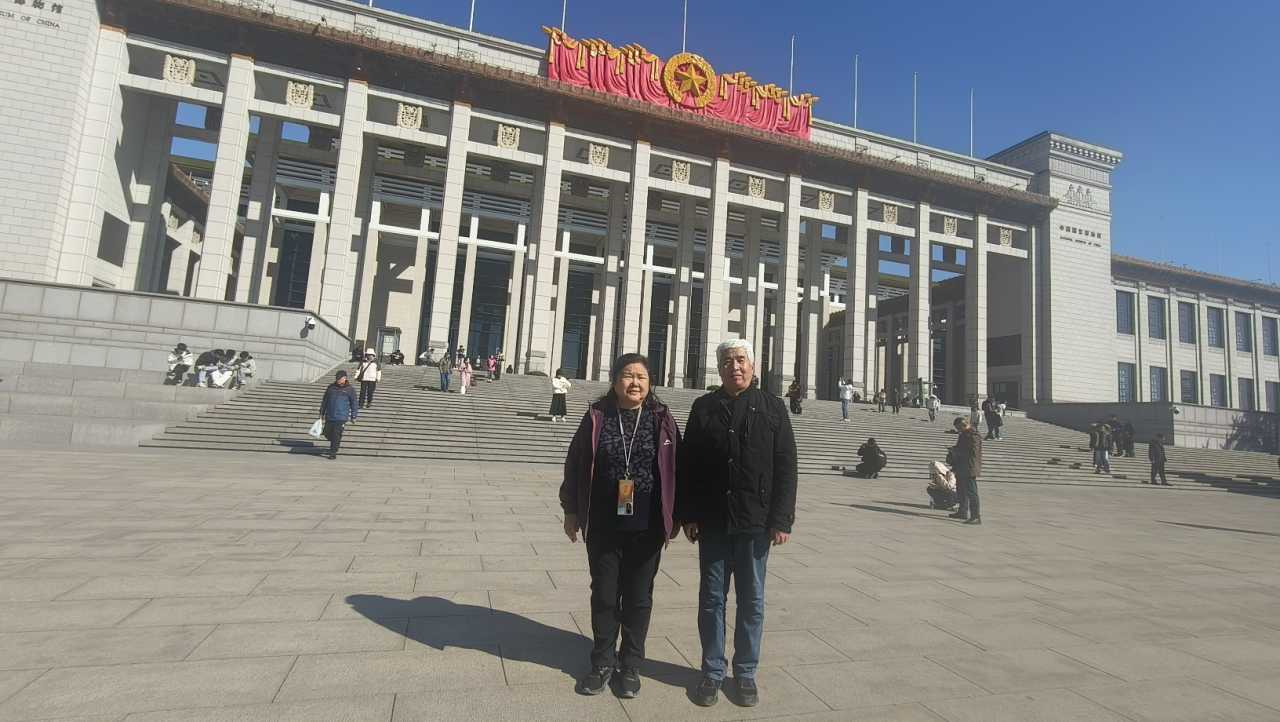
The history of the National Museum of China dates back to 1912, when the preparatory office for the National Museum of History was established. Later, the two buildings housing the Museum of the Chinese Revolution and the Museum of History were constructed in 1958, completed in just 293 days, covering nearly 70,000 square meters—one of the "Ten Great Buildings" of the era.
In 2003, the two museums merged to form the present-day National Museum. In 2007, an expansion and renovation project began, preserving the western, northern, and southern sections of the old building while extending eastward by 70 meters, bringing the total floor area to 191,900 square meters—roughly the same height as the Great Hall of the People. The museum opened for trial in 2011 and officially to the public in 2012.
I had visited alone in 2023, staying from opening until 1:30 p.m., and still felt I hadn't seen enough. Every time I walk in, it feels like opening a thick, heavy history book.
A Time Machine of "Made in China": From the "Three Old Essentials" to the 14th Five-Year Plan

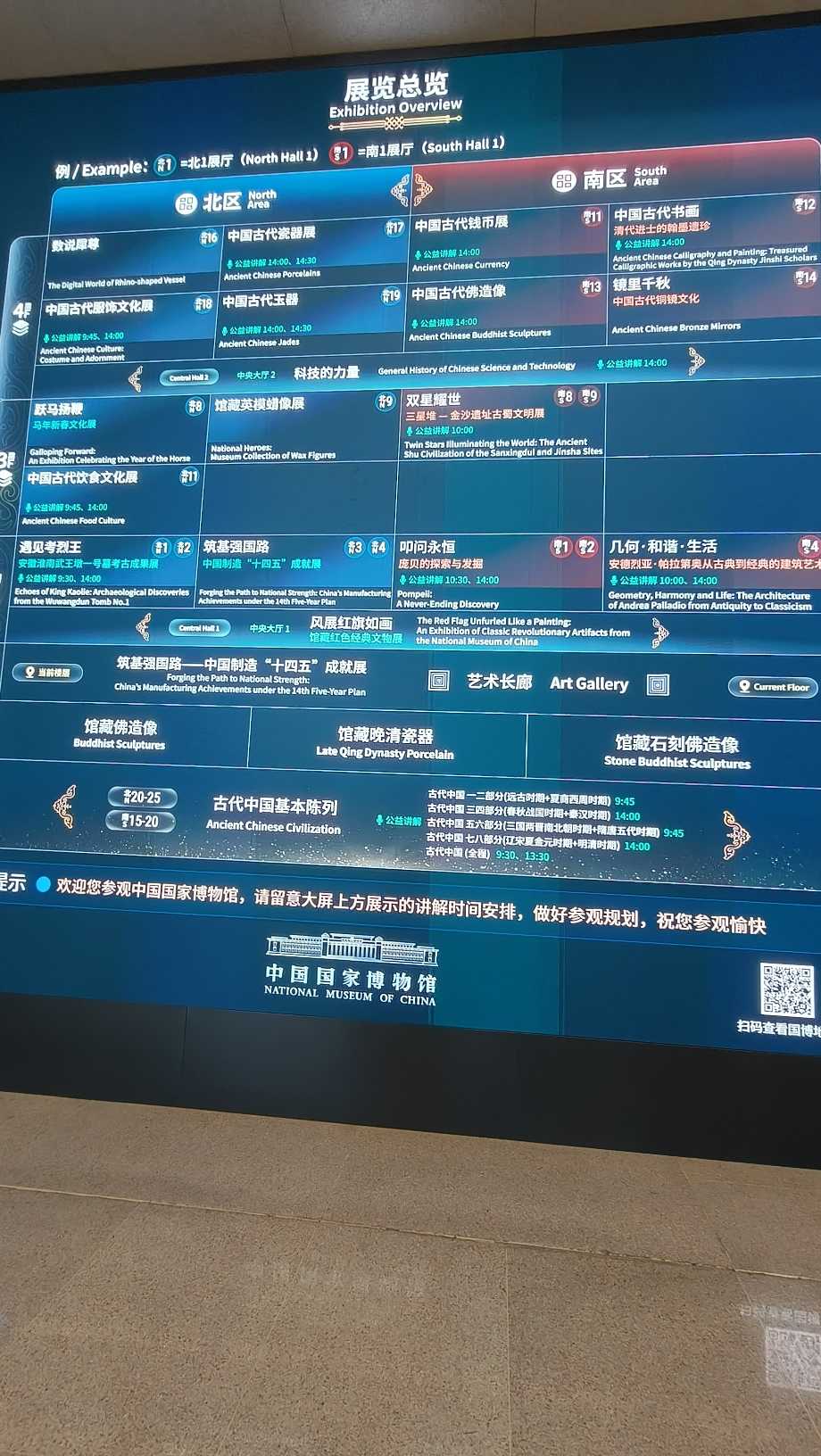
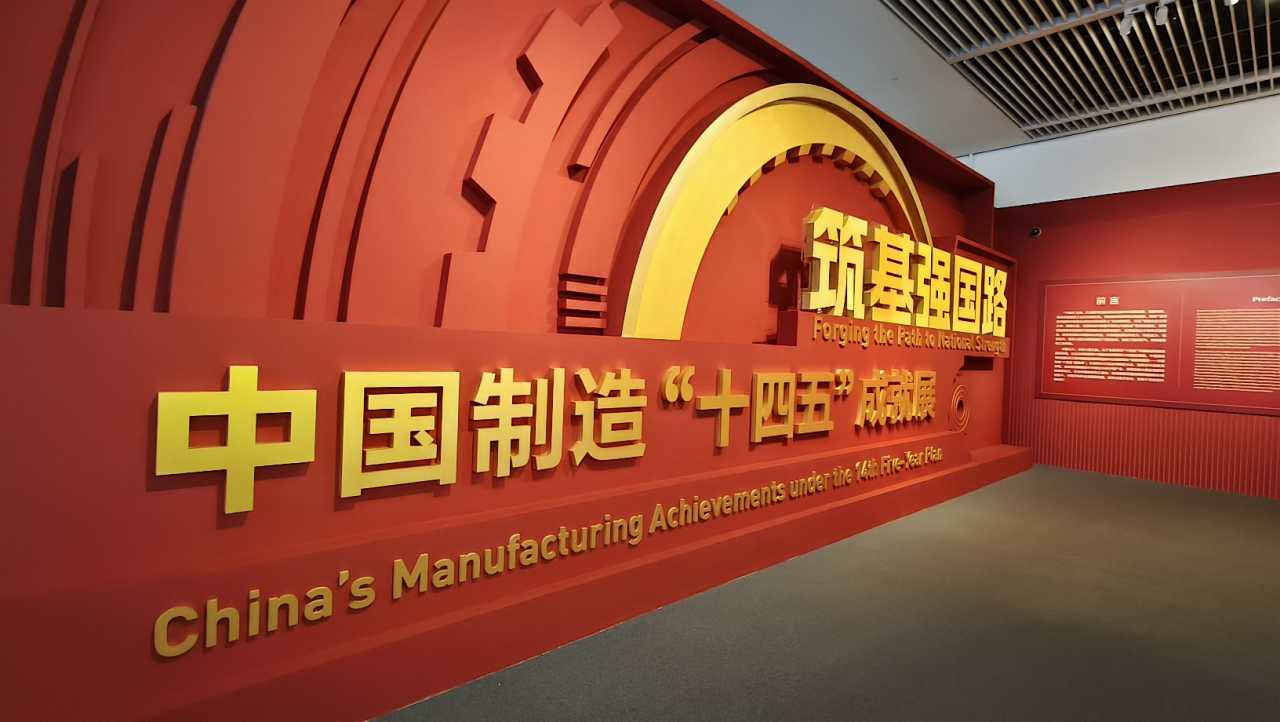
Walking into the "Made in China: Achievements of the 14th Five-Year Plan" exhibition felt like stepping into a time machine. Growing up, my family had a black-and-white TV, a twin-tub washing machine, and a single-door refrigerator. The "three old essentials" —a wristwatch, a sewing machine, and a bicycle—were standard in every household.
Clocks, vacuum-tube radios, desk fans, washbasin stands, and coat racks were all memories of that era. When I got married in 1988, modular furniture replaced the old "36 legs" or "48 legs" (a reference to the number of furniture pieces in a traditional dowry), and large sofas and stereo systems became trendy. Wall calendars replaced framed photos as the centerpiece of home decoration. These seemingly mundane objects recorded a nation's journey from scarcity to abundance.
Standing Tall in the East: The First National Emblem and the First Flag
In the "Standing Tall in the East" exhibition area, what moved me most was the first wooden national emblem ever mounted on the Tiananmen Rostrum. If you look back at footage of the founding ceremony in 1949, you'll see the national flag flying high and the anthem playing loudly, but the rostrum lacked the national emblem—because its design process was quite tortuous, and it wasn't finalized until June 1950.
In September of that year, the Shenyang No. 1 Machinery Factory cast the first metal national emblem of New China, measuring 2 meters in diameter, 2.4 meters in height, and weighing 487 kilograms. It was officially hung on May 1, 1951. Also on display are the first Five-Star Red Flag raised in front of Tiananmen (460 cm long, 338 cm wide), the first red palace lanterns hung on the rostrum, and the signboard of the Central People's Government. Each exhibit is a witness to history.
Ancient China: In the Basement, a Dialogue with the Millennia
The museum’s core exhibition is undoubtedly the "Ancient China Basic Display" on the basement level. Structured around the rise and fall of dynasties, it is divided into eight sections: the Paleolithic and Neolithic eras, the Xia, Shang, and Zhou dynasties, the Spring and Autumn and Warring States periods, the Qin and Han dynasties, the Three Kingdoms and the Jin and Southern and Northern Dynasties, the Sui, Tang, and Five Dynasties, the Liao, Song, Jin, and Yuan dynasties, and the Ming and Qing dynasties.
At the entrance, a large screen shows an animated map of China's territorial changes from ancient times to the present, vividly illustrating the origins of the Chinese nation—the Central Plains region along the middle reaches of the Yellow River. Flanking the entrance are statues of Laozi and Confucius, titled Asking the Way, created by Wu Weishan, the director of the National Art Museum of China and a man my age.
National Treasures Worth Queuing For
1. The Ming Dynasty Nine-Dragon Nine-Phoenix Crown The ceremonial crown of Empress Xiaoduan, made of a lacquered bamboo frame set with 115 rubies and sapphires and over 5,000 pearls. Nine golden dragons and nine golden phoenixes adorn it, with the "diancui" (kingfisher feather inlay) technique making the phoenixes appear lifelike. It was excavated in 1957 from the Dingling Mausoleum in Beijing and restored to its former splendor.
2. The Four-Ram Square Zun A masterpiece of Shang Dynasty bronze ritual vessels, with a curled-horn ram's head at each corner, seamlessly integrated into the body. It combines line carving, relief, and full-round sculpture. The vessel was once broken into over 20 pieces before being restored to its original form. I have visited its excavation site—Anyang in Henan Province, home to the Yin Ruins.
3. The Houmuwu Ding The heaviest ancient Chinese bronze vessel, weighing 832.84 kilograms, often called the "King of Bronzes." Unearthed in Anyang in 1939, villagers buried it underground to prevent Japanese soldiers from seizing it. The interior wall bears the inscription "Houmuwu" (originally misread as "Simuwu" until officially corrected in 2011).
4. The Hongshan Jade Dragon 26 cm tall and weighing 1,000 grams, this dark green jade piece is shaped like a reverse "C," as if about to soar into the sky. It is hailed as the "First Dragon of China."
5. The Guo Ji Zi Bai Pan Excavated in Baoji, this bronze water vessel from the late Western Zhou dynasty features a 111-character inscription detailing a royal hunt and military campaign. It is a masterpiece of calligraphy and metallurgy.
[Link: How to book free tickets for the National Museum of China]
II. The Temple of Heaven: A Sacred Pause
After a quick lunch near Qianmen Street, we took a taxi to the Temple of Heaven. While the National Museum is a dialogue with history, the Temple of Heaven is a conversation with the sky.
Built in 1420 during the Ming Dynasty, the Temple of Heaven was where emperors of the Ming and Qing dynasties performed the Heavenly Worship Ceremony. The complex is larger than the Forbidden City, yet it feels more open and serene.
We entered through the South Gate, following the traditional path of the emperor. The first sight was the Circular Mound Altar (Huanqiu Tan), a three-tiered white marble terrace. The acoustics here are remarkable—a whisper at the center can be heard clearly at the edges.
We then walked along the Danbi Bridge, a raised walkway connecting the altar to the Hall of Prayer for Good Harvests (Qinian Dian). This iconic blue-roofed building is the symbol of Beijing. Built entirely of wood without a single nail, it stands 38 meters tall.
For my wife, who has difficulty with stairs, the Temple of Heaven was surprisingly accessible. The main pathways are flat, and there are benches every 50 meters. We sat for a while, watching locals practice Tai Chi and Kung Fu under the ancient cypress trees.
Tip for Seniors: Enter via the East Gate for the flattest route to the Hall of Prayer for Good Harvests. Avoid the South Gate if stairs are a concern.
III. Practical Tips for a Half-Day in Beijing
| Activity | Recommended Time | Notes for Seniors |
|---|---|---|
| High-Speed Train (Tianjin to Beijing) | 5:50 AM – 6:30 AM | Book a Business Class seat for wider legroom. |
| National Museum of China | 9:00 AM – 12:00 PM | Focus on Ancient China (B1) and Standing Tall in the East. |
| Lunch | 12:00 PM – 1:00 PM | Try Wangfujing Snack Street or a simple dumpling house. |
| Temple of Heaven | 1:30 PM – 3:30 PM | Walk the Danbi Bridge; skip the Circular Mound if tired. |
| Return to Tianjin | 4:00 PM – 4:30 PM | Use Beijing South Station for a smoother exit. |
Frequently Asked Questions (FAQ)
Q1: Is one day enough to see the National Museum of China and the Temple of Heaven? Yes, if you plan carefully. Focus on the Ancient China hall (basement) and the Standing Tall in the East exhibit at the museum. Spend 2–3 hours at the Temple of Heaven. This is a “galloping glance” itinerary—you will see the highlights, but not every corner.
Q2: Are the National Museum and Temple of Heaven wheelchair accessible? The National Museum is fully accessible with ramps and elevators. The Temple of Heaven has accessible pathways, but the Hall of Prayer for Good Harvests requires climbing 3 sets of stairs. Wheelchairs are available for free rental at both sites.
Q3: How do I book tickets for the National Museum of China? Tickets are free but must be reserved online via the official WeChat account "National Museum of China" (国家博物馆) . Book at least 1–3 days in advance. Bring your passport for entry.
Q4: What is the best time of year to visit Beijing for seniors? Spring (March–May)* and Autumn (September–November)* are best. Avoid summer (June–August) due to heat and humidity, and winter (December–February) due to cold and potential smog.
Q5: Can I bring a backpack into the National Museum? Yes, but large bags (over 40cm x 30cm) must be checked at the cloakroom on the ground floor. Water bottles are allowed, but no food or drinks in exhibition halls.
Conclusion: A Journey Worth the Wait
As the sun began to set over the Temple of Heaven, my wife and I sat on a bench near the Hall of Prayer for Good Harvests. The golden light reflected off the blue-glazed tiles, and for a moment, the crowds disappeared.
We had only half a day. We didn’t see everything. But we saw enough.
We saw the first flag of New China. We saw the jade dragon of the Hongshan culture. We stood where emperors once prayed for rain. And we did it together.
If you are planning a trip to Beijing—especially if you are traveling with elderly parents or as a senior couple—remember: you don’t need to see everything. You just need to see the things that matter.
Ready to plan your own “galloping glance” of Beijing?
[Link: Best hotels near Tiananmen Square for seniors] [Link: Complete guide to Beijing’s subway accessibility]
Book your high-speed train tickets now and start your journey through Chinese history.
Have you visited the National Museum or Temple of Heaven recently? Share your experience in the comments below!
You should also read:
Beijing: From Deep Autumn to Early Winter – Discover Hidden Seasonal Beauty in China's Capital
Meta Description: Explore Beijing's transition from autumn to winter through personal stories and hidden gems. Discover Western Hills sunrises, Forbidden City snow scenes, and authentic hutong experiences in this SEO-optimized travel guide. Beijing isn't just a city of history and politics—it's a living, breathing entity…
Continue reading...
A Winter Journey in Beijing: Romance and Misery at Minus Five Degrees – An SEO-Optimized Travel Guide
Meta Description: Discover the romance and misery of a winter trip to Beijing at -5°C. Explore snowy Jingshan Park, historic hutongs, and budget-friendly tips for a 4-day Spring Festival adventure. Some say Beijing is a city you both love and hate. You love its profound…
Continue reading...
Solo in Beijing: Discovering Another Side of the Capital Amid Red Walls and Grey Tiles
Meta Description: Traveling solo in Beijing on a student budget? Discover hidden gems, practical tips for first-time solo travelers, and how to explore the capital's red walls and grey tiles without breaking the bank. When my friends asked why I chose to go to Beijing…
Continue reading...