In the Creases of Time, Shaxi Lies Hidden: A Complete Travel Guide to Yunnan's Ancient Tea Horse Road Gem
Meta Description: Discover Shaxi Ancient Town, the last authentic stop on the Ancient Tea Horse Road in Yunnan. Explore hidden temples, rural villages, and timeless landscapes near Dali.
Introduction: Why Shaxi Remains Yunnan's Best-Kept Secret
At the foot of the Cangshan Mountains in September, I checked into a youth hostel. The courtyard bloomed with bougainvillea, sunlight filtering through leaves onto a wooden table where a cup of Pu'er tea had gone cold. That afternoon, I met travelers fresh from Tibet and trekkers preparing for Yubeng. When conversation turned to hidden gems near Dali, every single person mentioned the same name: Shaxi Ancient Town.
They said it preserved the last traces of authenticity along the Ancient Tea Horse Road.
I remembered that. In early October, after cycling around Erhai Lake, I sat in a Shuanglang guesthouse, opened my map, and let the cursor rest on those two characters: Shaxi. Then I packed my backpack and set off.
This is the story of what I found—and what you can find too.
How to Get to Shaxi Ancient Town from Dali
There's no direct bus from Dali to Shaxi. You must first travel to Jianchuan County and transfer—a genuine hassle that keeps the crowds away. Fortunately, a shuttle bus runs between the county and Shaxi twice daily at 9:00 AM and 3:00 PM.
I chose the afternoon bus. The ride took over two hours through winding mountain roads, and I arrived around five in the evening.

A light rain was falling.
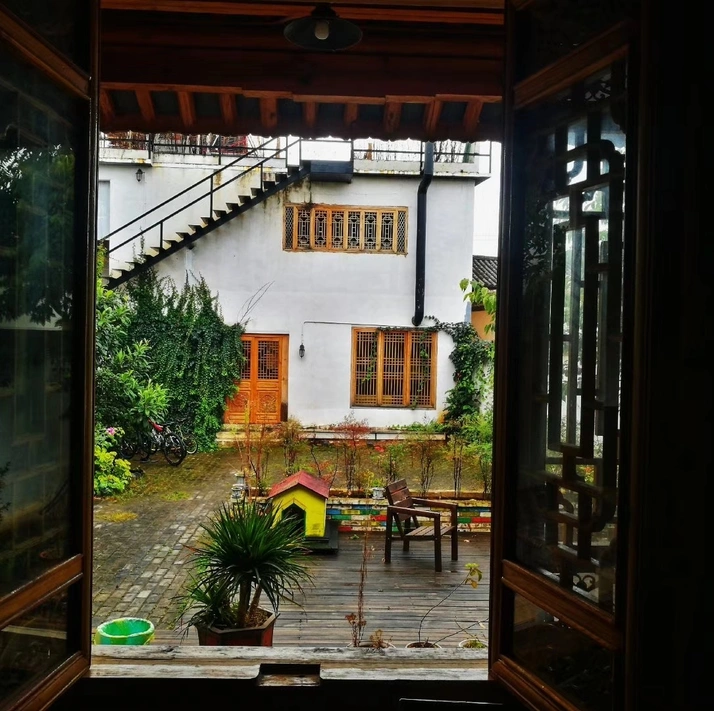
The Shaxi guesthouse was tucked into a narrow alley. Pushing open the wooden door, I found a small courtyard bursting with flowers. I dropped my luggage, listened to the rain, and went to bed early.
[Link: Best guesthouses in Shaxi Ancient Town]
First Sight of Shaxi: An Unexpected Gift After the Rain
I woke to birdsong.
Pushing open the window, I found the night rain had stopped. The air was damp, carrying earth and greenery. I stepped out for a morning stroll.
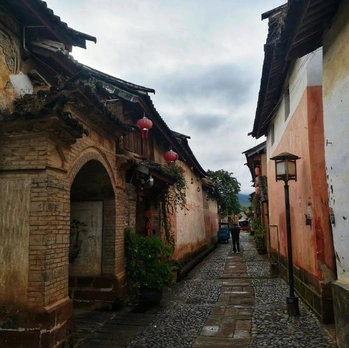
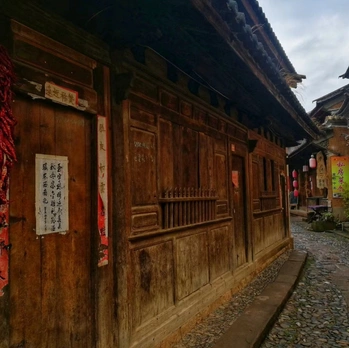
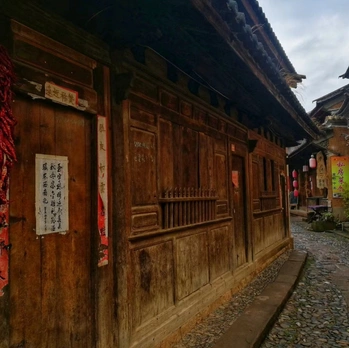
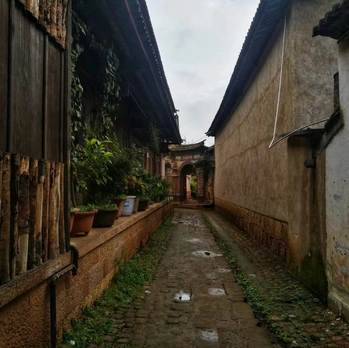
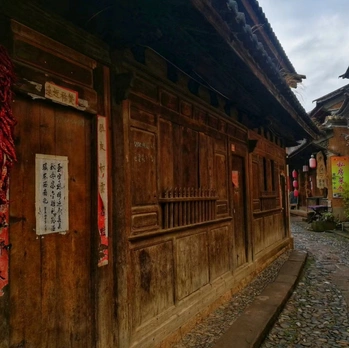
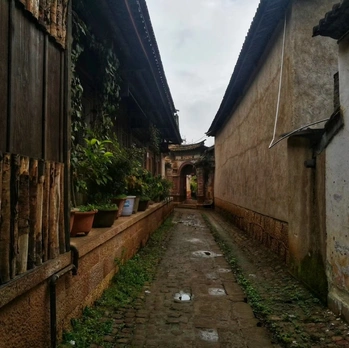
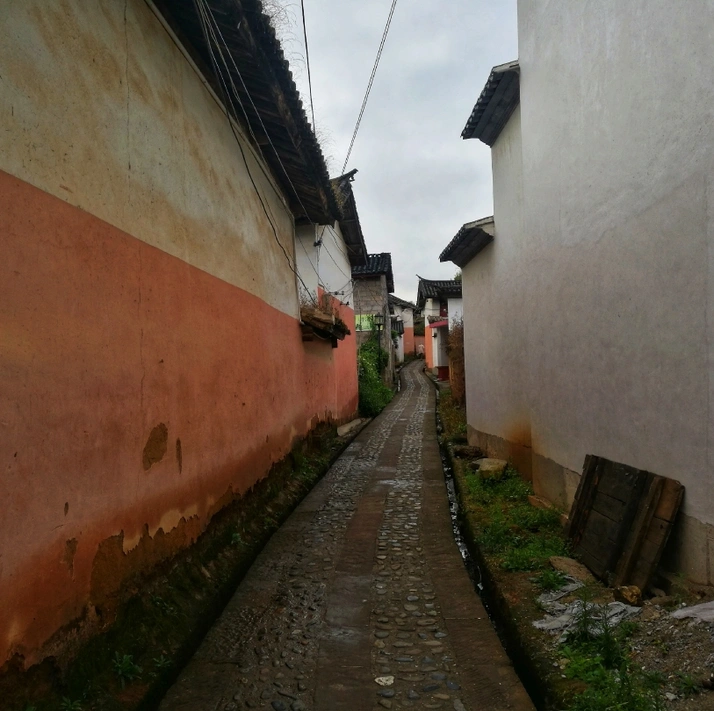
The ancient alley, paved with cobblestones, gleamed from the rain. From deeper in the alley came a dog's bark. On the mountainside, clouds seemed to dance. The Heihui River flowed quietly past the old town, spanned by the Yujin Bridge—its stone arch curved as gently as an eyebrow. On the far side, a farmer bent over his field.
At that moment, I felt I had stepped into a painting.
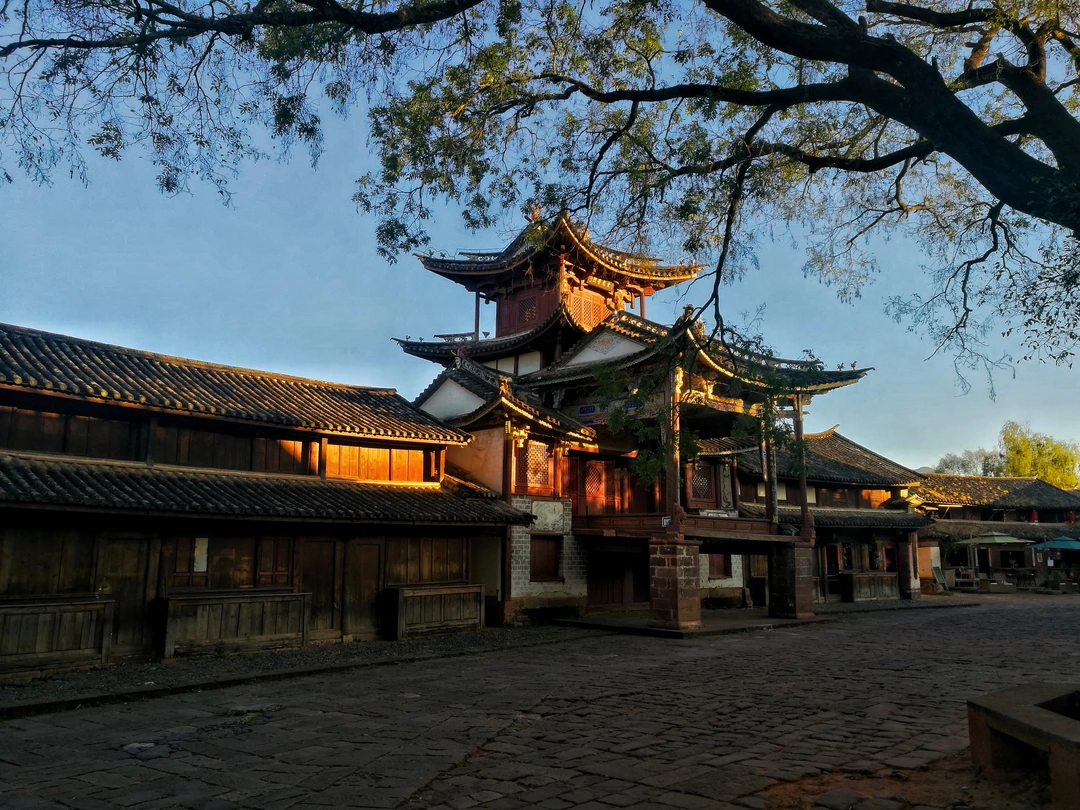
By noon, clouds scattered and sunlight poured down. The old town transformed. Under clear skies, the upturned eaves and carved beams of ancient houses stood in sharp relief. The old stage in the market square looked especially dignified in shifting light. I stood before it, imagining an afternoon centuries ago when drums and gongs thundered here, and horse caravan bells echoed from afar.
Wandering Shaxi: Getting Lost to Find Yourself
Shaxi Ancient Town is small—small enough to walk through in a day. But Shaxi is also vast—vast enough that half a month isn't enough to explore it all.
Every day, I did the same thing: I wandered. No destination. No schedule.
Turn down one alley, and you might find a half-open wooden door with an old grandmother sitting in the sun inside. Turn another corner, and you might discover an abandoned old house with wild grass swaying on its walls.
The Market Square: Heart of the Ancient Town
The Shaxi market square is the heart of the old town. The ancient stage and Xingjiao Temple face each other, as they have for centuries. The painted decorations on the stage are faded, but traces of their former delicacy remain. The temple's main gate was closed; I peered through the crack and saw only darkness.
South Gate and Ancient Alleys
The South Gate is the town's entrance. Its archway is narrow, the bluestone slabs worn smooth as mirrors by centuries of footsteps. I stood under the gate, imagining horse caravans passing through, hooves echoing in the tunnel.
Every alley has its own character. Some are so narrow that only one person can pass. Others are paved with uneven stones, forcing you to watch your step. At the end of one alley stands an old tree with a well beneath it, the water clear and cold.
During those days, I got "lost" every day. But strangely, I was never truly lost. Because no matter where I went, I could always look up and see the mountains in the distance. And the direction of the mountains was the direction home.
[Link: Self-guided walking tour of Shaxi Ancient Town]
Rural Life Around Shaxi: Picking Chestnuts, Harvesting Chilies, and a Bowl of Rice Noodles
Tao Yuanming once wrote: "Dimly I see a village in the distance, / A wisp of smoke rising from a chimney." I couldn't understand those lines as a child. In Shaxi, I suddenly did.
Everything in the fields felt new to me, a city kid.
Picking Chestnuts in Hualong Village
One afternoon, I wandered across the Heihui River to Hualong Village. Built on the mountainside, the village offered a view of the entire Shaxi basin spread below: golden rice paddies, scattered villages, layered mountains in the distance.
Behind the village, I found a grove of chestnut trees. The ground was covered in spiky shells, some already split open, revealing brown chestnuts. I crouched and picked them one by one. Soon, both pockets were full.
Back at the hostel, I washed and peeled one. It wasn't as sweet as sugar-roasted chestnuts, but it had a natural sweetness and soft, powdery texture. The satisfaction was far greater than buying a bag at a supermarket.
Picking Chilies in Taoyuan Village
On my way to Shaxi, I had glimpsed a small village nestled in a basin among the mountains, with a road running through it. That single glance was enough: Taoyuan Village.
One day, I hitched a ride with a fellow traveler and arrived there. Walking through the fields, I spotted a couple picking chilies. My fingers itched to join. The chilies were bright red—premium quality.
In the afternoon, they warmly invited me to their home for a meal. I ate a bowl of Yunnan rice noodles (饵丝) —the best I'd had since arriving in Yunnan. Later, I thought: Yunnan's rice noodles are probably like Shanxi's noodles—the best ones are always made in a mother's kitchen.
Visiting an Ancient Temple in Changle Village
In Shaxi, three things captivated me most: basking in the sun, stargazing, and exploring villages.
The afternoon sun is lazy. Find a chair, sit down, sip tea, read a book, daydream—it seeps into your bones. At midnight, wrap yourself in a coat, climb to the rooftop, and look up at a sky full of stars. Stay until the chill seeps through your clothes, then go back to bed, dreaming of stars.
One afternoon, I strolled to Changle Village. Many old houses were hidden deep in the alleys: the Kuixing Pavilion, the Wenchang Palace, the Sanjiao Temple. In the main hall of Sanjiao Temple, painted carvings were still exquisite, though the building now served as a senior activity center. A few old men played cards inside. They smiled when I walked in.
[Link: Day trips from Shaxi Ancient Town]
Mapingguan: A Time Tunnel on the Ancient Tea Horse Road
Mapingguan lies deep in the mountains southwest of Shaxi—an important checkpoint on the Ancient Tea Horse Road.
I set off in the morning, following a dirt road that wound through green hills. By late morning, I finally reached Mapingguan Village. The village was hidden deep in the mountains, still looking almost primitive. The weathered Wenfeng Covered Bridge was once the passageway for horse caravans heading west.
Standing on the bridge, I closed my eyes and could almost hear the sound of hooves approaching from afar, growing nearer, then fading away. Mountains upon mountains, miles upon miles of passes, the rhythmic beat of hooves—that was the sound of another era.
The village houses were built on the mountainside, scattered yet harmonious. Some still bore traces of traditional construction: earthen walls, wooden beams, grey tiles.
[Link: Hiking the Ancient Tea Horse Road from Shaxi]
FAQ: Planning Your Shaxi Ancient Town Trip
1. How many days should I spend in Shaxi?
Most visitors recommend 2-3 days minimum. One day to explore the old town, one day for surrounding villages (Hualong, Taoyuan, Changle), and one day for a Mapingguan hike. If you want to truly slow down, stay 4-5 days.
2. What is the best time to visit Shaxi Ancient Town?
September to November offers the best weather—cool, clear skies, and golden rice paddies. Spring (March-May) is also beautiful with blooming flowers. Avoid Chinese National Holiday (October 1-7) when crowds increase.
3. Is Shaxi better than Dali or Lijiang?
If you seek authenticity, peace, and untouched ancient architecture, Shaxi is superior to both Dali and Lijiang. It lacks the commercialization, loud bars, and souvenir shops. However, it also has fewer restaurants and entertainment options. Choose Shaxi for genuine cultural immersion.
4. How do I get from Dali to Shaxi?
Take a bus from Dali to Jianchuan County (about 2 hours), then transfer to the Shaxi shuttle (45 minutes). Alternatively, hire a private driver for about 300-400 RMB, which takes 2.5 hours directly.
5. What should I pack for Shaxi?
Comfortable walking shoes (cobblestone streets), a light jacket (mornings and evenings are cool), sunscreen, insect repellent, and a reusable water bottle. If hiking to Mapingguan, bring hiking boots and snacks.
Conclusion: Why Shaxi Will Change How You Travel
Shaxi isn't a destination you check off a list. It's a place that stays with you.
Months later, I still remember the sound of rain on cobblestones, the taste of wild chestnuts, and the sight of clouds dancing over Cangshan. In a world racing toward the future, Shaxi Ancient Town remains hidden in the creases of time—waiting for those willing to slow down and look.
Ready to experience the real Ancient Tea Horse Road? Start planning your Shaxi trip today. Book your bus from Dali, find a guesthouse with a courtyard, and prepare to get lost in the most beautiful way possible.
[Link: Book your Dali to Shaxi transport] [Link: Top-rated Shaxi guesthouses and hostels]
Have you visited Shaxi Ancient Town? Share your experience in the comments below—or ask any questions about planning your trip!
You should also read:
Beijing Through the Lens: One Person's Winter Wanderings – An SEO-Optimized Travel Guide
Meta Description: Discover Beijing's winter charm through a photographer's lens. From Nanluoguxiang's night scenes to Sanlitun's neon glow, explore the city's hidden corners and iconic landmarks in this SEO-friendly travel guide. January in Beijing is so cold you can hear your own breath. But for…
Continue reading...
[Fish with You, Tong in Step] The Beijing We Conquered Together: A Wedding Travel Photography Gift for a Beloved Brother
Meta Description: Discover how a heartfelt Beijing wedding travel photography trip became the ultimate gift for a beloved brother. Explore Nanluoguxiang, the Forbidden City, the Great Wall, and more in this 4-day adventure filled with family, friendship, and love. There are moments in life that…
Continue reading...
Avoid the Crowds and Traps: The Ultimate Guide to Taking the S2 Train to Badaling Great Wall
Meta Description: Discover the cheapest, most scenic way to reach Badaling Great Wall from Beijing. Avoid fake buses and traffic jams with the S2 train—just 6 yuan, no crowds, and stunning mountain views. If you ask a Beijing local for the most comfortable way to…
Continue reading...