My 2017: Measuring the World with Hand-Drawn Art – A Travel Journal Through Watercolor Paintings
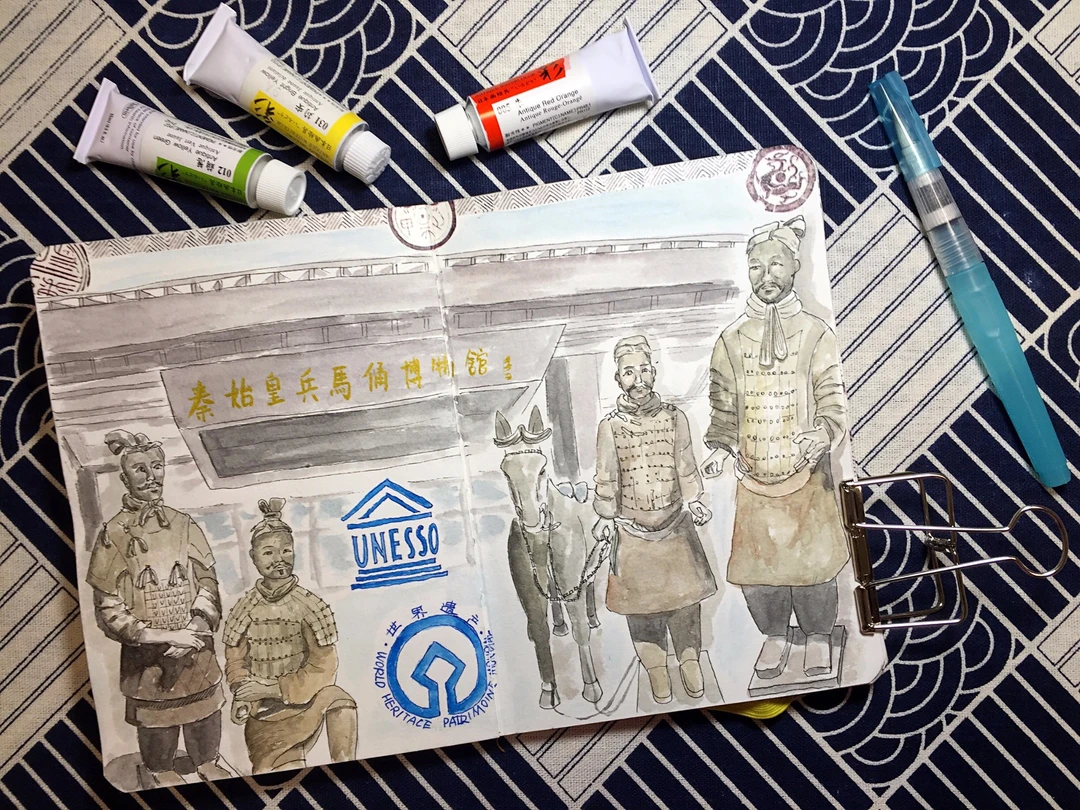
Meta Description: Discover how hand-drawn art transforms travel memories. Follow one artist's 2017 journey across Japan, Nanjing, Hong Kong & more, with watercolor paintings that capture feelings no camera can.
Introduction: Why Paintbrush Travel Journals Beat Photography
In 2017, my passport gained seven new stamps, and my travel journal gained over a hundred watercolor paintings. From Nanjing to Singapore, cycling the Seto Inland Sea to exploring Universal Studios, every departure was an adventure—and every brushstroke held a story.
Someone once asked me why I insist on recording travel with hand-drawn art. The answer is simple: a camera captures the scenery, but a paintbrush preserves the feeling of that moment—like the sensation of the Seto Inland Sea breeze brushing through my hair, the embarrassment of coughing from the peppery sting of Singapore's Bak Kut Teh broth, or the satisfying soreness of blistered feet after walking 22 kilometers in Kyoto. These things can't be seen in photos, but they're all there in my paintings.
If you've ever wondered how to create a watercolor travel journal or why hand-drawn travel art is so powerful, keep reading. This is my year of measuring the world, one paintbrush stroke at a time.
[Link: How to start a travel journal]
Nanjing: A Spontaneous Wedding Anniversary Getaway
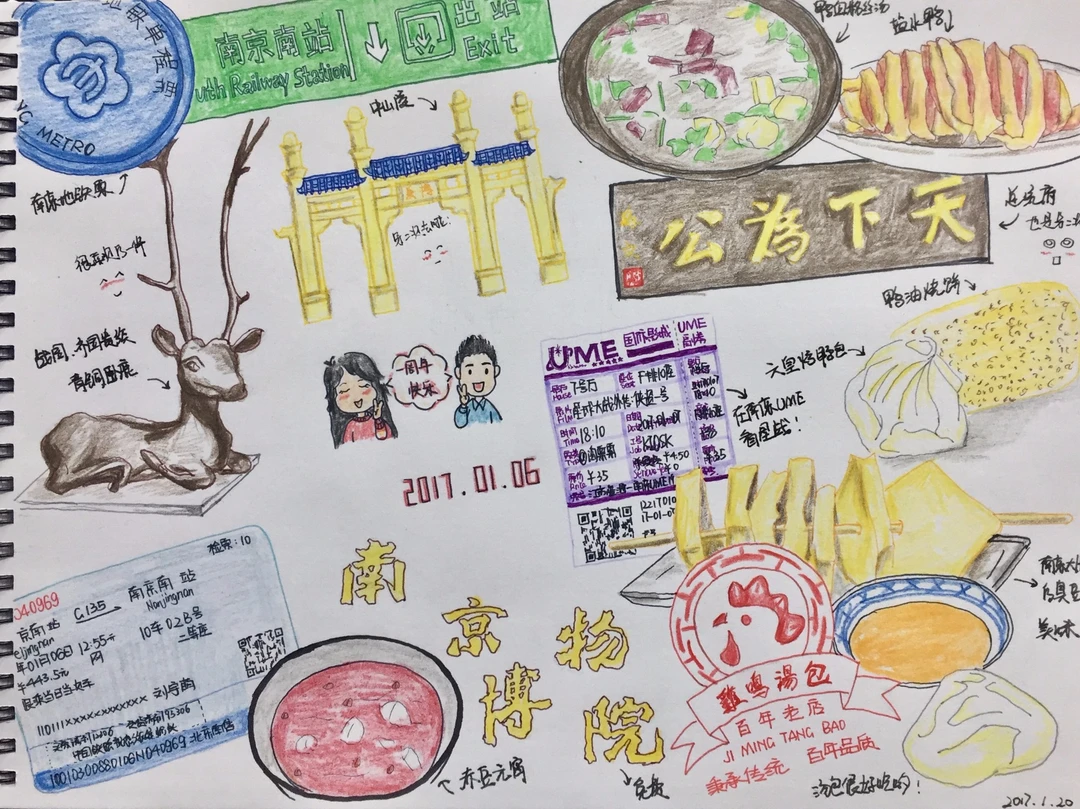
The first stop of 2017 was Nanjing—a spontaneous impulse for our first wedding anniversary. My husband Mr. Zhao and I met through an old-fashioned arranged blind date, and for our anniversary, we impulsively bought train tickets. The result? Not bad at all.
As the train passed through Hebei Province, the window was hazy with smog, and a throat-scratching smell seeped into the carriage. I drew a little figure wearing a mask in my journal and wrote beside it: "When will the haze truly go away?" That was probably one of my biggest wishes for 2017.

In Nanjing, we visited the Nanjing Museum. It was the first time I realized a museum could be so much fun. The Republic of China Hall, with its old-fashioned barber shop spinning poles, rickshaws, and vintage records, felt like traveling back to the 1920s and 30s.
Mr. Zhao's interest in the museum was clearly lower than his enthusiasm for food. Over two and a half days, we were either eating or on our way to eat. Duck blood vermicelli soup (yāxuě fěnsī tāng), salted duck (xiánshuǐ yā), soup dumplings (xiǎolóng bāo), plum blossom cake (méihuā gāo)... I drooled while drawing, and only realized after finishing that the entire journal page was filled with food, with attractions squeezed into a tiny corner.
Practical Tip: The Nanjing Museum requires advance reservation, especially the Republic of China Hall. Go in the morning to avoid crowds.
[Link: Best food in Nanjing]
Seto Inland Sea: Japan's Most Beautiful Seaway – and Our Most Miserable Bike Ride
In April, we returned to Japan for the second time. Our goal: conquer the Shimanami Kaido—a 70-kilometer cycling route connecting Hiroshima and Ehime Prefecture, spanning six islands. It's known as "Japan's most beautiful seaway."
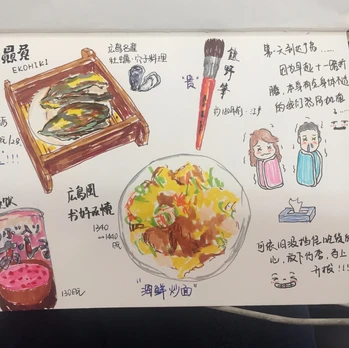
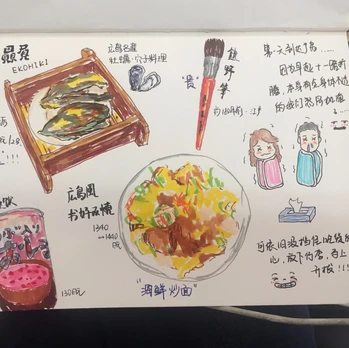
Unfortunately, plans went awry. The day before departure, I started running a fever with a throat so sore it felt like swallowing razor blades. Mr. Zhao wasn't much better; his hay fever flared up, and he was blowing his nose the whole way. We became "two sick cats," dragging our ailing bodies onto the road.
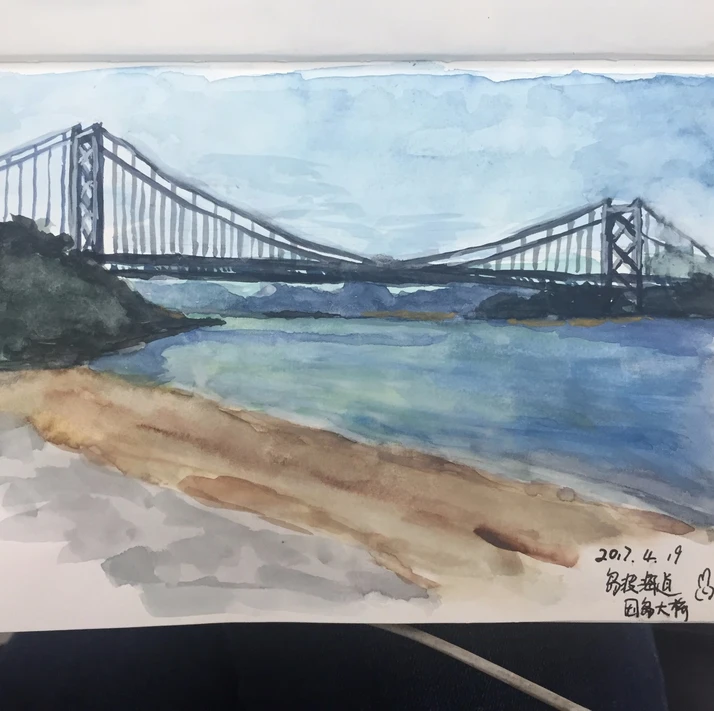
On cycling day, I couldn't even make it a third of the way before stopping. Sitting by the roadside, I looked at the distant bridge and azure sea, thinking: This is the most beautiful seaway I've seen in 29 years. The water was crystal clear. Bike lanes on the bridge were separated from pedestrian paths—everything orderly. Japanese cyclists proactively gave way and smiled and nodded at you. This civility warmed my sick heart.
Even though we didn't complete the full ride, we still visited Miyajima to see the Great Torii gate, ate oysters in Hiroshima, and saw cherry blossoms at Himeji Castle (though there were more people than blossoms). What I remember most vividly: a giant white strawberry costing 1,200 yen each. Biting into it, juice exploded everywhere, sweet to the core. And that glass of cold milk after the hot spring—pure heaven.
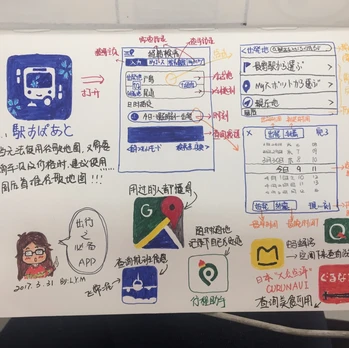
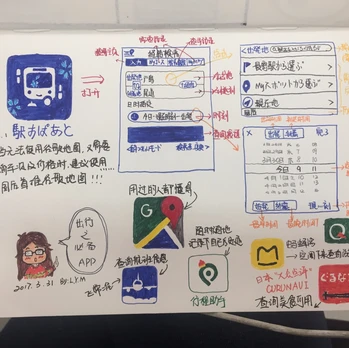
About the Journal: I hadn't learned watercolor yet on this trip, so my drawings were "terrible." Later, I joined a watercolor practice group and gradually found my rhythm. If you want to create travel notes, I recommend using a trip planner app that records map information. I hope Mafengwo develops a similar feature to insert a travel itinerary directly—intuitive and time-saving.
[Link: Shimanami Kaido cycling guide]
Hong Kong and Macau: Rediscovering Family Travel with My Parents
Before getting married, I used to take my mom on a trip every year. After marriage, I got lost in our two-person world and inevitably neglected my parents. In 2017, it happened to be my parents' 30th wedding anniversary, so I decided to take them on a short trip to Hong Kong and Macau.
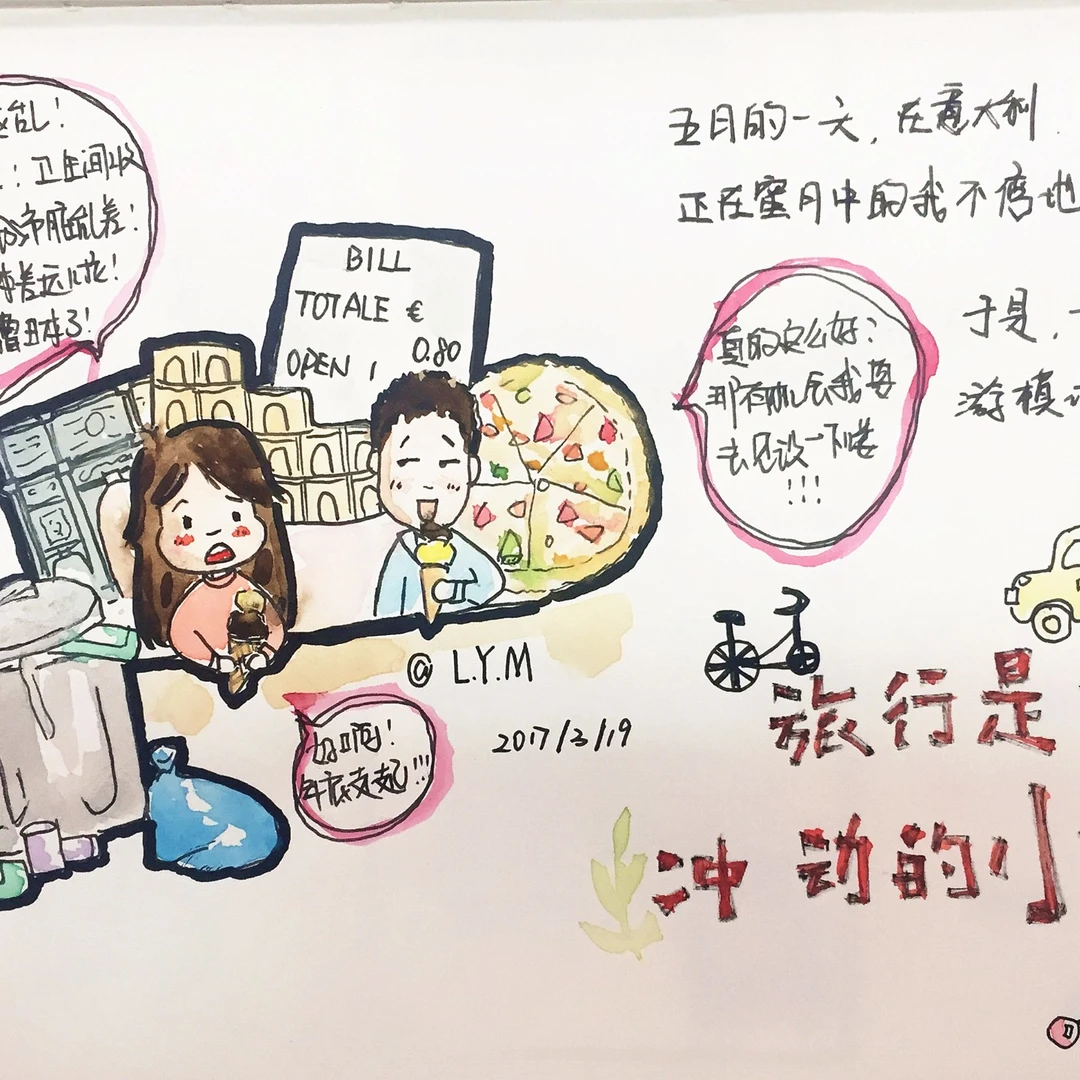
As it turned out, I caught a stomach flu before departure and had no energy throughout the trip. On the last day, near Kowloon, we found a small restaurant and ordered wonton noodles (yúndùn miàn) and iced milk tea (dòng nǎichá) . The taste was surprisingly amazing. We also came across an ice cream truck selling old-fashioned Hong Kong ice cream—soft, smooth, and sweet. I sat by the roadside, eating and drawing, thinking: Travel doesn't always have to be about checking off attractions. Sometimes, a bowl of noodles or an ice cream cone is enough to remember a city.
Regret: This travelogue remains unfinished to this day. I owe my parents a complete story.
[Link: Family travel tips for Hong Kong]
Nagoya: A "Belt and Road" Compensatory Leave Adventure
In June, because of the "Belt and Road" forum, I unexpectedly got two days of compensatory leave. Between Chongqing and Nagoya, I chose the latter—thinking Japan would be cool, only to get sunburned like crazy.
Nagoya had always been just a transit point for me when visiting Japan. This time, I discovered that this small city has surprisingly rich tourism resources. The sushi at Nagoya Station was indescribably fresh. I ate and drew at the same time, and halfway through, my drool dripped onto the paper, smudging the paint. Later, with watercolor practice taking up my time, I couldn't manage a full travelogue and only managed a few sketches. But Nagoya's eel rice (mán yú fàn) , miso cutlet (wèi zēng zhū pái) , and fried chicken wings (zhá jī chì) are all etched in my memory.
[Link: Nagoya food guide]
Kansai: The National Holiday Marathon Walk
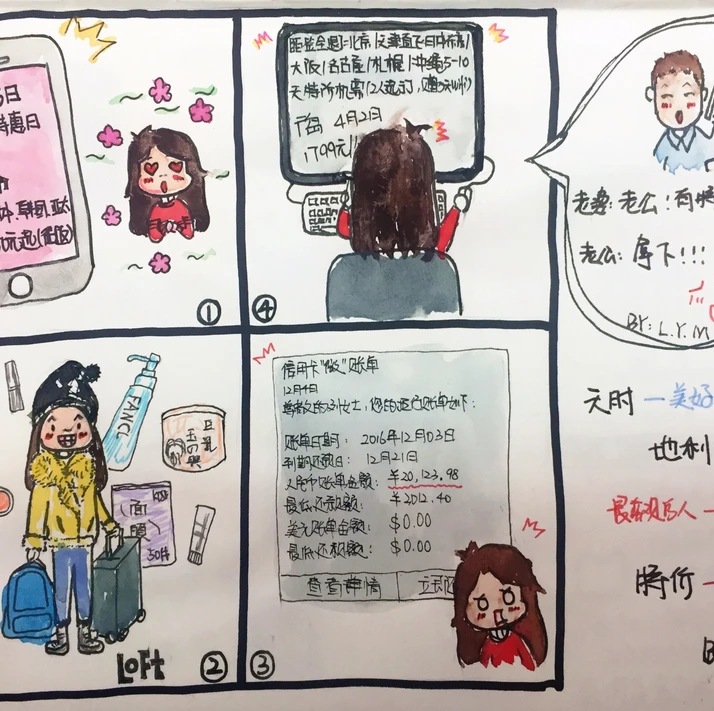
During the National Day holiday, we went to Osaka, Kyoto, and Wakayama. We had booked flights back in April: ANA round trip to Osaka for 2,400 yuan, with a transfer at Tokyo's Haneda Airport on the return. Mr. Zhao had never been to Kyoto and insisted we had to go. So, after trimming and cutting the itinerary, we ended up with a simple route: Osaka-Kyoto-Wakayama.
This time, the quality of my journal took a leap forward. I started learning to stage photos, pasting in food, tickets, and maps, using words and drawings to record each day. Our first meal cost 9,600 yen. Mr. Zhao was so greedy he didn't recognize anyone. I winced at the cost while drawing him wolfing down his food.
The guesthouse in Kyoto was satisfactory, except the mattress was too hard. We walked 22 kilometers—from Heian Shrine to Nishiki Market, from Sanjusangen-do to Senbon Torii. The national treasure at Sanjusangen-do left me in awe: 1,001 statues of Kannon lined up in two rows, each with a different expression. Saiho-ji Temple required advance reservation, was incredibly exclusive, but its moss garden was as beautiful as a fairyland.
The tuna in Wakayama was the highlight. We ordered a portion of fatty tuna belly (tún yú dà fù). It melted in the mouth, the aroma of fat exploding on the tongue. After eating it, Mr. Zhao said, "This is what life is all about."
Note: The conveyor belt sushi in Kyoto is not worth the hype—stick to local specialties instead.
[Link: Kyoto walking itinerary]
Singapore: Universal Studios and Bak Kut Teh
Our final trip of 2017 was to Singapore. Mr. Zhao had a conference there, and I tagged along. While he attended meetings, I explored Universal Studios Singapore and ate my way through Chinatown and Little India.
The Bak Kut Teh (pork rib soup) at Song Fa was peppery and intense—I coughed after the first sip, but couldn't stop drinking. The Hainanese chicken rice was so tender it fell apart at the touch of chopsticks. I drew everything: the colorful shophouses, the Merlion, the indoor waterfall at Jewel Changi Airport.
Singapore was the perfect end to a year of travel—clean, efficient, and full of flavor.
[Link: Singapore travel guide]
FAQ: Hand-Drawn Travel Journals
1. Why choose hand-drawn art over photography for travel?
Photography captures what you see; hand-drawn art captures what you feel. A photo of the Seto Inland Sea shows blue water and bridges. My painting shows the exhaustion of cycling while sick, the kindness of Japanese cyclists, and the joy of that 1,200-yen strawberry. Feelings fade from memory, but they stay alive in brushstrokes.
2. What supplies do I need to start a watercolor travel journal?
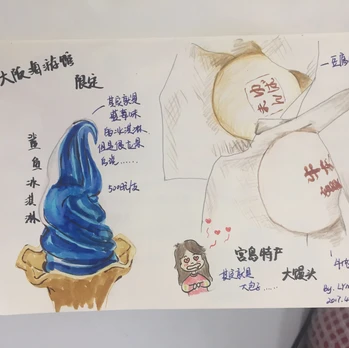
Start simple: a small watercolor set (like Winsor & Newton Cotman), a water brush (fills with water, no cup needed), a hardcover sketchbook (A5 size fits in a bag), and a fine-liner pen for outlines. That's it. You don't need expensive gear—just the willingness to draw imperfectly.
3. How do I improve my travel sketching skills?
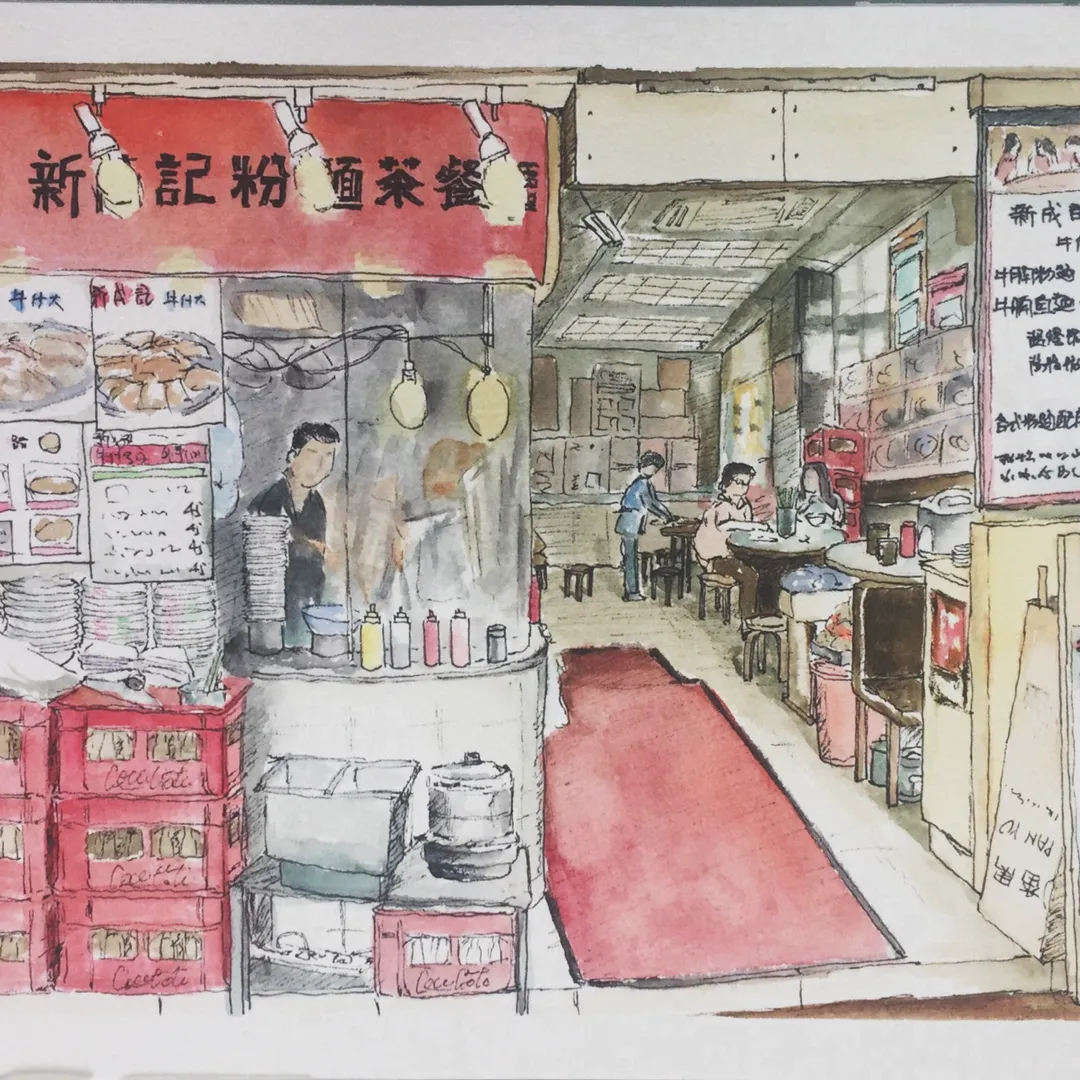
Join a practice group (I joined one on WeChat) and draw daily—even if it's just your coffee cup. Focus on capturing the essence, not perfection. Use photos as references but add your own perspective. Over time, your lines will become more confident.
4. How do I balance enjoying the trip with drawing?
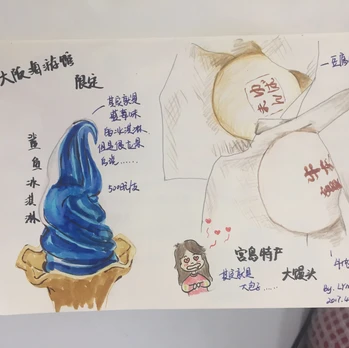
Draw quick sketches during meals or rest stops. Save detailed work for evenings at the hotel. Don't let drawing become a chore—if you're too tired, just take photos and draw later. The goal is to enhance your travel experience, not replace it.
5. What's the best way to preserve a travel journal?
Use acid-free materials if possible. Store the journal flat, away from direct sunlight. Scan or photograph pages you love for backup. I also paste in ticket stubs, maps, and food wrappers—they add texture and memory triggers.
Conclusion: Your Paintbrush Awaits
My 2017 was measured not in miles, but in brushstrokes. From the smog of Nanjing to the clear waters of the Seto Inland Sea, from my parents' anniversary in Hong Kong to the fatty tuna in Wakayama—every painting holds a story that no photograph could tell.
If you've been thinking about starting a travel journal, now is the time. You don't need to be an artist. You just need a paintbrush, a notebook, and the willingness to see the world differently.
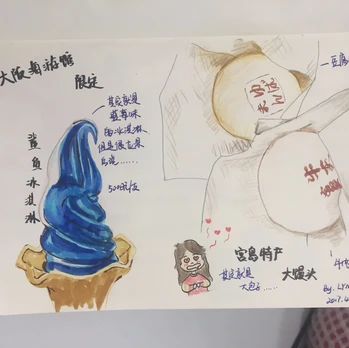
Your turn: Which destination will you measure with your paintbrush first? Share your travel journal journey in the comments below—or tag us on social media with your own hand-drawn adventures. Let's measure the world together, one watercolor at a time.
[Link: Best travel journals for beginners]
P.S. Ready to start? Download our free travel journal template with prompts and watercolor tips. [Click here to get yours]
You should also read:
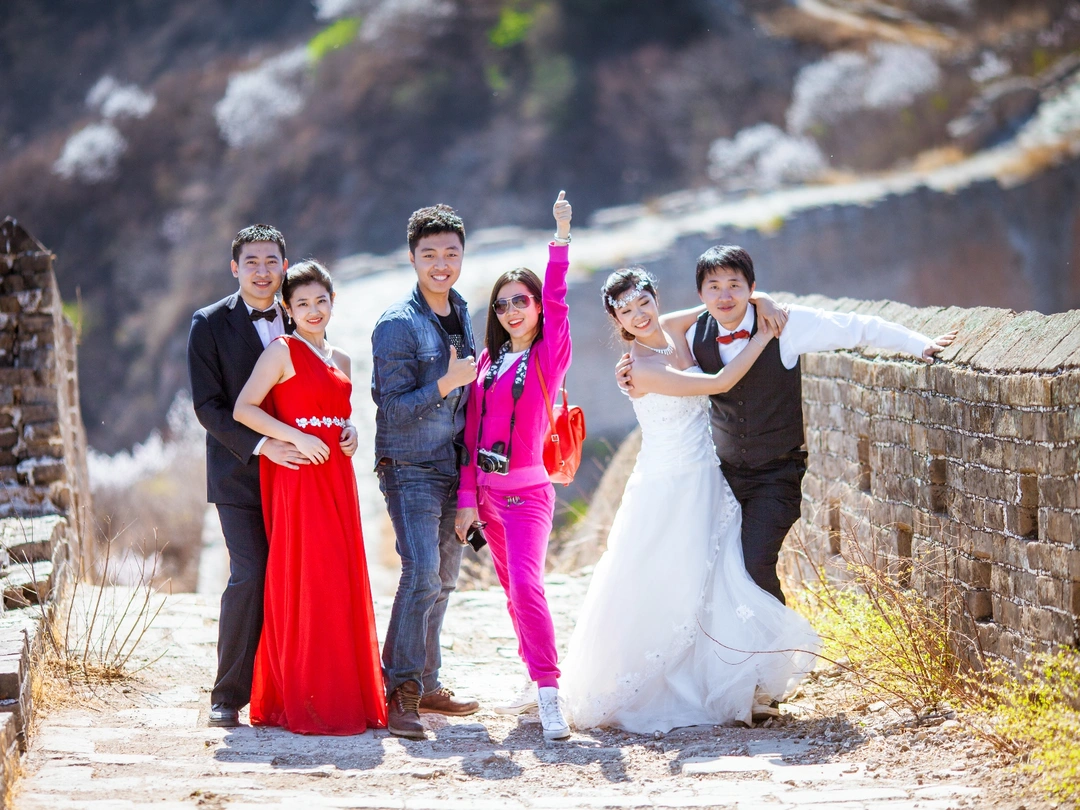
[Fish with You, Tong in Step] The Beijing We Conquered Together: A Wedding Travel Photography Gift for a Beloved Brother
Meta Description: Discover how a heartfelt Beijing wedding travel photography trip became the ultimate gift for a beloved brother. Explore Nanluoguxiang, the Forbidden City, the Great Wall, and more in this 4-day adventure filled with family, friendship, and love. There are moments in life that…
Continue reading...
A Spontaneous Escape Through Tianjin, Beijing, and Shandong: An Unforgettable Solo Travel Adventure
Meta Description: Discover the raw beauty of a spontaneous solo journey through Tianjin, Beijing, and Shandong. From Quanjude roast duck to Tanggu night views, read this heartfelt travelogue of escape and self-discovery. The July wind carried restlessness and unease. After abruptly ending a ten-day job…
Continue reading...
A Passionate Journey Through Beijing & Tianjin: Beijing Complete Guide – JOJO's In-Depth Travel Notes
Meta Description: Explore Beijing & Tianjin in 5 days with this complete travel guide. From the Forbidden City to the Great Wall, discover insider tips, transportation hacks, and must-see attractions. Plan your perfect China trip today. Beijing is not just a city—it's a living museum…
Continue reading...