Rediscovering the Soul of Beijing: A New Year's Journey Through Hutongs and History
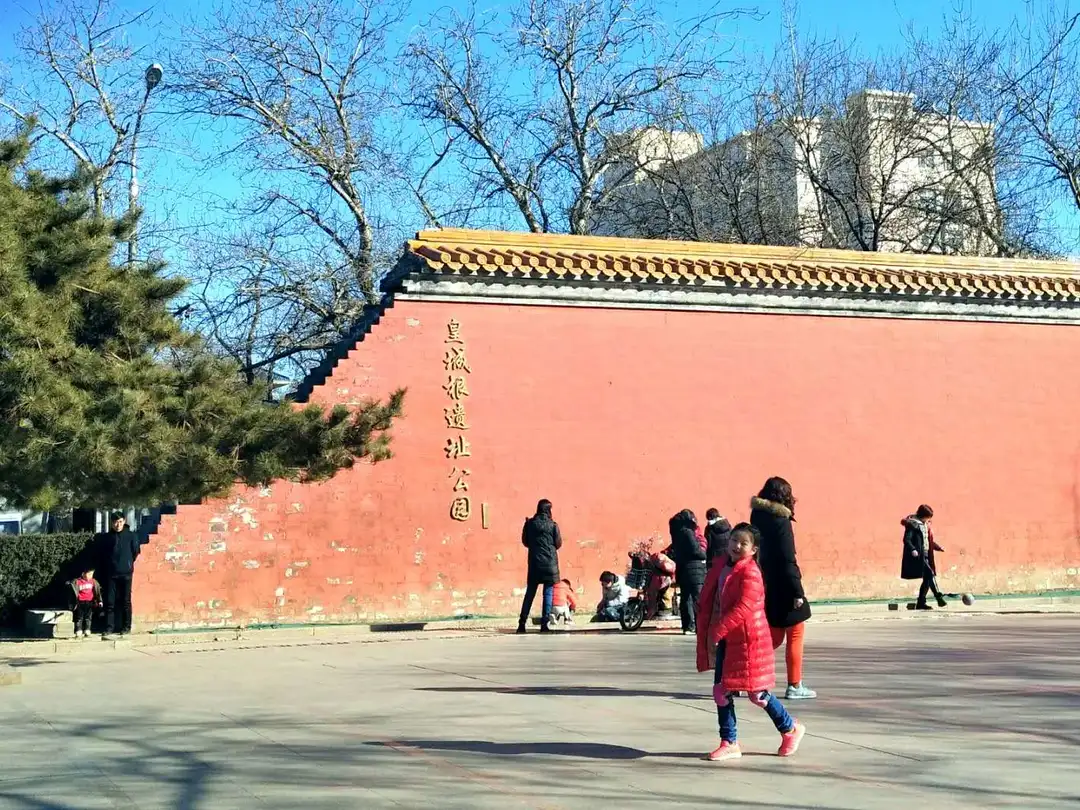
Meta Description: Explore Beijing's historic Dashilan, hutongs, and temples during Spring Festival. A personal journey through ancient traditions, legendary brands, and the soul of Old Beijing.
Introduction: The Lost Magic of Spring Festival
As a child of the 1960s, I've watched the Spring Festival gradually lose its magic. The New Year of my youth was a sensory explosion—the sticky sweetness of guandong candy (a maltose-based confection), the fragile glow of paper lanterns, the crackle of firecrackers saved like precious treasures. We'd hoard those hundred-firecracker strings, rationing them from New Year's Eve all the way to the fifth day, feeling triumphant when other kids had run out and we still had a few pops left. After the reunion dinner, we'd don new clothes, light our lanterns, and race to the darkest corner of the courtyard, our excitement too big for words. We'd stay awake past midnight, exhausted but exhilarated.
This year, hungry for that lost feeling, I decided to go where the crowds and traditions still pulse: Beijing's historic heart. Over two days—the first and second of the Lunar New Year—my husband and I walked through time itself, from the grand commercial avenues of Dashilan to the serene temples of Yonghegong, from the ancient drum towers to the winding hutongs that still whisper stories of emperors and commoners alike.
Day One: The Grand Bazaar of Old Beijing

Dashilan: Where Commerce Meets History
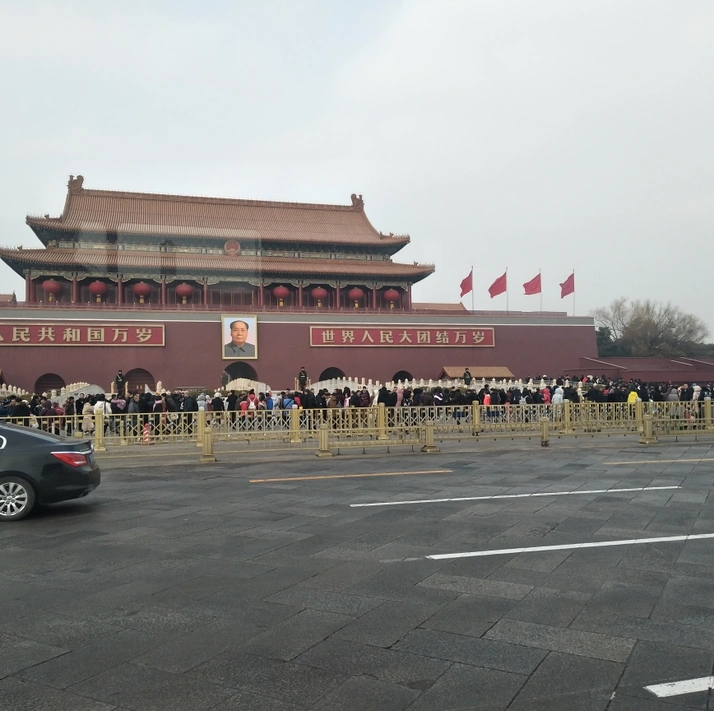
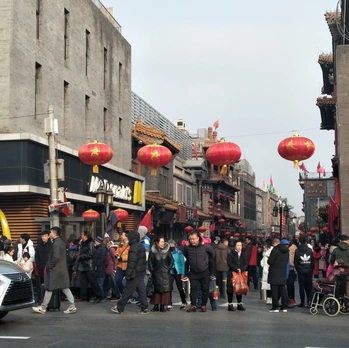
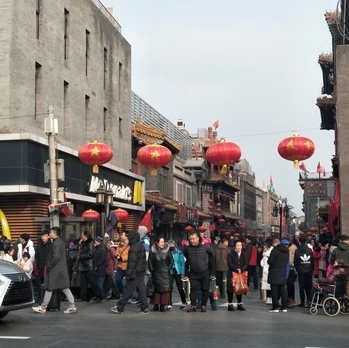
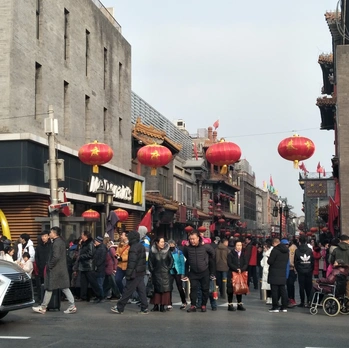
We set out after lunch, taking a surprisingly empty bus toward Dashilan. The streets were quiet, traffic light—a rare gift in Beijing. Passing Tiananmen, we noticed the crowds hadn't yet swelled. By 3 PM, we arrived at our first destination.
Dashilan's name is a story in itself. During the Ming Dynasty's Hongzhi period (1488–1505), Beijing enforced a curfew. To prevent crime, officials and wealthy families jointly built wooden barriers across alleyways, which were locked at night while watchmen patrolled with gongs. Over 1,700 such barriers were installed. By the Qing Dynasty, the numbers had grown—440 outer city barriers approved in 1729, 1,919 inner city barriers in 1753, and 196 within the imperial city itself. The barriers were so well-crafted that they became local landmarks. A street with two barriers became "Double Barrier Lane," while the grandest of them all—at what was then called Langfang Sitiao—earned the name "Dashilan" (Big Barrier), a name that stuck and eventually replaced the original.
In 1900, the Boxer Rebellion burned the entire street to the ground. Rebuilt in the style of the early Republic era, it rose again, more vibrant than ever.
The Theaters That Shaped Chinese Cinema
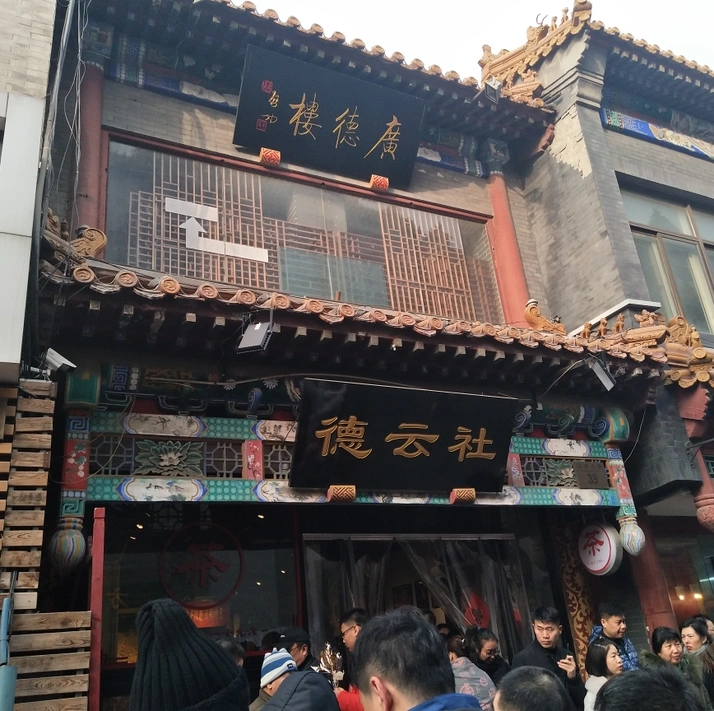
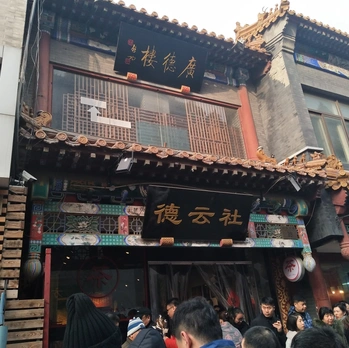
At No. 39 Dashilan Street stands Guangde Theatre, built around 1796 during the Jiaqing reign of the Qing Dynasty. It's one of Beijing's oldest surviving opera houses, contemporary with the Paris Opera House, Milan's La Scala, and Moscow's Bolshoi Theatre. Today, it's famous among tourists thanks to the Deyun Society comedy troupe, which has made it a must-visit on many itineraries. We didn't have time for a show, but it's on my list for next time. [Link: Beijing opera house tours]
Just steps away, the Daguanlou Cinema holds an even more monumental place in history. In 1905, photographer Ren Qingtai—who had taken Empress Dowager Cixi's "official portrait"—invited Peking Opera master Tan Xinpei to film Dingjun Mountain. That two-day shoot marked the birth of Chinese cinema. Daguanlou, opened in December 1907, was both the filming location and the premiere venue. At a time when few places in Beijing could show films, this bustling spot drew crowds so large that "the streets emptied to watch."
The Legendary Brands of Old Beijing
Walking through Dashilan is like flipping through a catalog of China's most storied brands. "South has Zhang Xiaoquan, north has Wang Mazi"—the Wang Mazi scissors brand, founded in 1651 during the Shunzhi reign, is a national treasure whose traditional forging techniques are now a UNESCO-recognized intangible cultural heritage.
Ruifuxiang, established in 1862, was by the late Qing the largest silk and fabric shop in Beijing. Its storefront features exquisite white marble reliefs of flowers, and a plaque from the Ministry of Domestic Trade certifies it as a "China Time-Honored Brand." Every garment carries the Ruifuxiang label, and even the shopping bags and receipts bear the name. About 50 meters west, you'll find the "Ruifuxiang Hongji" branch—originally the "second gate." During a renovation a few years ago, its sign, buried for decades, was uncovered and preserved as a historical artifact. Though both stores were once one family, they now belong to different companies, with the original holding the official certification and the Hongji branch protected as a historical site. [Link: Beijing time-honored brands walking tour]
Neiliansheng, founded in 1853 by Zhao Ting from Tianjin's Wuqing district, originally made court boots. The name itself is a wish: "Nei" refers to the imperial palace, "liansheng" means "continuous promotion"—a hope that wearing these boots would lead to three promotions in official rank. Old Beijingers had a saying for showing off wealth: "Head from Ma Juyuan, feet from Neiliansheng, body from the Eight Great Xiang, waist from the Four Great Heng." To wear Neiliansheng shoes was to announce your status. Today, you can still see artisans making shoes by hand at the entrance.
A Taste of Dashilan
We couldn't resist trying the lamb skewers from Donglaishun, a famous hotpot chain. The cumin and chili powder coating wasn't the best I've had, but the experience itself was worth it. The shop's vintage decor—with its nostalgic posters—made me realize I should have come here sooner. I'd always thought Dashilan was just for tourists, but it's actually the fastest way to understand old Beijing's commercial soul.
We passed the famous Goubuli steamed buns from Tianjin (honestly, nothing special), and paused to admire the police dog on duty. The little alley called Menkuang Hutong, running north-south between Langfang Toutiao and Dashilan, might look unremarkable now, but it was once so lively that a folk rhyme listed it among Beijing's busiest spots: "East Four, West Single, Drum Tower Front, Wangfujing, Qianmen Dashilan, and the tiny Menkuang Hutong—a thread of sky." The area was both a commercial and entertainment hub, with theaters like Guanghe, Guangde, Sanqing, Zhonghe, and Qingle, plus cinemas like Tongle and Daguan. Opera stars and cultural figures—including Qiu Shengrong, Shang Xiaoyun, Jin Shaoshan, Lu Xun, and Chang Baokun—were regulars at the food stalls here. [Link: Beijing hutong food tours]
The Medicine and Tea of Old Beijing
Tongrentang pharmacy, founded in 1669 by Le Xianyang, is a national intangible cultural heritage site. Its motto—"Though the process is complex, we dare not cut labor; though the ingredients are precious, we dare not reduce materials"—speaks to a tradition of integrity that has lasted centuries. [Link: Traditional Chinese medicine experiences in Beijing]
Zhang Yiyuan Tea House, established in 1908 by Zhang Wenqing from Anhui's She County, started as a small stall outside Chongwenmen. Zhang personally went to Fujian to source and blend teas suited to Beijing palates, creating a light jasmine tea that became a daily ritual for locals. "First thing in the morning, brew a cup of jasmine tea—don't fill the cup, just cover the leaves to 'steep' it," as the old saying goes. "Then when you're ready to drink, top it off with boiling water—'smash' it."
The Sweet Legacy of Daoxiangcun
Daoxiangcun's origins trace back to 1773, when it was known as "Suzhou Daoxiangcun Pastry Shop." Legend has it that Emperor Qianlong, during his southern inspection tour, tasted their pastries and declared them "the finest among foods, too delicious to be found often," even bestowing a personally inscribed plaque. In 1895, Guo Yusheng from Nanjing brought the recipes to Beijing, opening a shop near Qianmen's Guanyin Temple. Lu Xun, during his time in Beijing, visited frequently—his diary mentions it over a dozen times.
Today, you'll see two logos: the original Suzhou Daoxiangcun and Beijing's "Sanhe" Daoxiangcun. Both have their loyalists. [Link: Beijing Spring Festival food guide]
Day Two: Temples, Towers, and Timeless Hutongs
Yonghegong: The Lama Temple's New Year Blessings
On the second day, we headed northeast to Yonghegong (Lama Temple) , one of Beijing's most important Tibetan Buddhist monasteries. Built in 1694 as the residence of Prince Yong (the future Yongzheng Emperor), it was converted into a lamasery in 1744. During Spring Festival, the temple draws thousands seeking blessings for the new year. The air is thick with incense, the halls echo with chanting, and the massive 18-meter-tall statue of Maitreya Buddha—carved from a single sandalwood tree—inspires awe.
We joined the queue to light incense and spin prayer wheels, each revolution a wish for health, happiness, and prosperity. The energy was palpable—a collective hope that transcends time. [Link: Beijing temple visits during Spring Festival]
The Drum and Bell Towers: Marking Time in Old Beijing
From Yonghegong, we walked south to the Drum Tower and Bell Tower, ancient timekeeping structures that once regulated daily life in imperial Beijing. The Drum Tower, built in 1272 during the Yuan Dynasty, housed 24 drums—one for each solar term. The Bell Tower, completed in 1420, holds a 63-ton bronze bell that could be heard across the entire city.
Climbing the steep stairs to the top, we looked out over the gray-tiled rooftops of the surrounding hutongs. The view is timeless: a sea of courtyards, each one a story, stretching to the horizon. [Link: Beijing Drum Tower area walking route]
Wandering the Hutongs: The Soul of Old Beijing
We spent the afternoon wandering the hutongs around Shichahai and Nanluoguxiang. These narrow alleys are the capillaries of old Beijing, where life unfolds at a slower pace. We saw elderly men playing chess under bare trees, women hanging laundry on bamboo poles, and children chasing each other with sparklers.
One hutong caught our attention: Yandai Xiejie (Tobacco Pipe Slant Street), a 232-meter-long alley that once sold tobacco pipes and accessories. Today, it's a mix of souvenir shops, cafes, and street food stalls. We stopped for a bowl of douzhi (fermented mung bean juice)—an acquired taste that old Beijingers love—and watched the world go by.
FAQ: Planning Your Beijing Spring Festival Journey
Q: When is the best time to visit Dashilan during Spring Festival? A: Late afternoon (around 3 PM) on the first day of the Lunar New Year is ideal—crowds are lighter, and the festive atmosphere is building. Avoid peak hours around noon and evening when locals and tourists converge.
Q: Are the time-honored brands in Dashilan still authentic? A: Yes, many maintain traditional craftsmanship. Ruifuxiang, Neiliansheng, and Tongrentang are genuine heritage brands. However, check for official certification plaques to ensure authenticity.
Q: Can I visit Yonghegong during Spring Festival without a pre-booked ticket? A: It's possible, but queues can be long. Pre-booking online is recommended, especially for the first three days of the Lunar New Year when visitor numbers peak.
Q: What's the best way to explore Beijing's hutongs? A: Walking is best, but renting a bicycle or taking a rickshaw tour (with a licensed guide) adds context. The Shichahai and Nanluoguxiang areas are pedestrian-friendly and rich in history.
Q: Are there any food specialties I must try in Dashilan? A: Absolutely—lamb skewers from Donglaishun, jasmine tea from Zhang Yiyuan, and pastries from Daoxiangcun are must-tries. For a true old Beijing experience, sample douzhi and zhajiangmian (noodles with fried sauce) in the hutongs.
Conclusion: Reclaiming the Magic
Standing on the Drum Tower as the sun set, I realized that the magic of Spring Festival isn't lost—it's just waiting to be rediscovered. In the crowded temples, the bustling markets, and the quiet hutongs, the soul of Beijing endures. The firecrackers may be quieter now, the lanterns may be electric, but the spirit of renewal and connection remains.
This New Year's journey reminded me that tradition isn't static—it's a living conversation between past and present. Whether you're a first-time visitor or a returning native, Beijing's historic heart offers a chance to step into that conversation.
Plan your own Beijing Spring Festival journey today. Explore the hutongs, taste the flavors, and let the city's timeless soul welcome you into a new year of possibilities.
For more Beijing travel guides, itineraries, and insider tips, subscribe to our newsletter or browse our curated [Beijing Spring Festival travel packages].
You should also read:
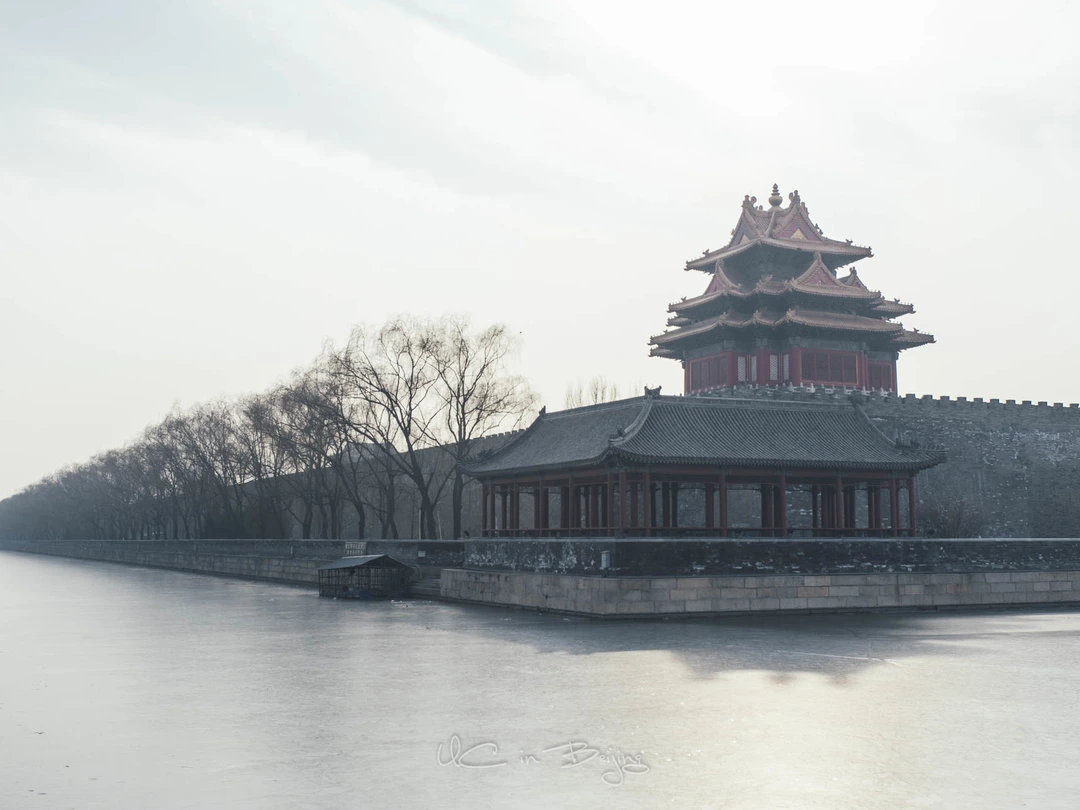
Beijing Through the Lens: One Person's Winter Wanderings – An SEO-Optimized Travel Guide
Meta Description: Discover Beijing's winter charm through a photographer's lens. From Nanluoguxiang's night scenes to Sanlitun's neon glow, explore the city's hidden corners and iconic landmarks in this SEO-friendly travel guide. January in Beijing is so cold you can hear your own breath. But for…
Continue reading...
Dreaming of Beijing: A City of Flames and Embers
Here is the SEO-optimized, rewritten article based on the source material. It has been restructured for search intent, readability, and keyword density while preserving the original poetic and narrative essence. SEO Title: Dreaming of Beijing: A City of Flames, Embers, and 3,000 Years of History…
Continue reading...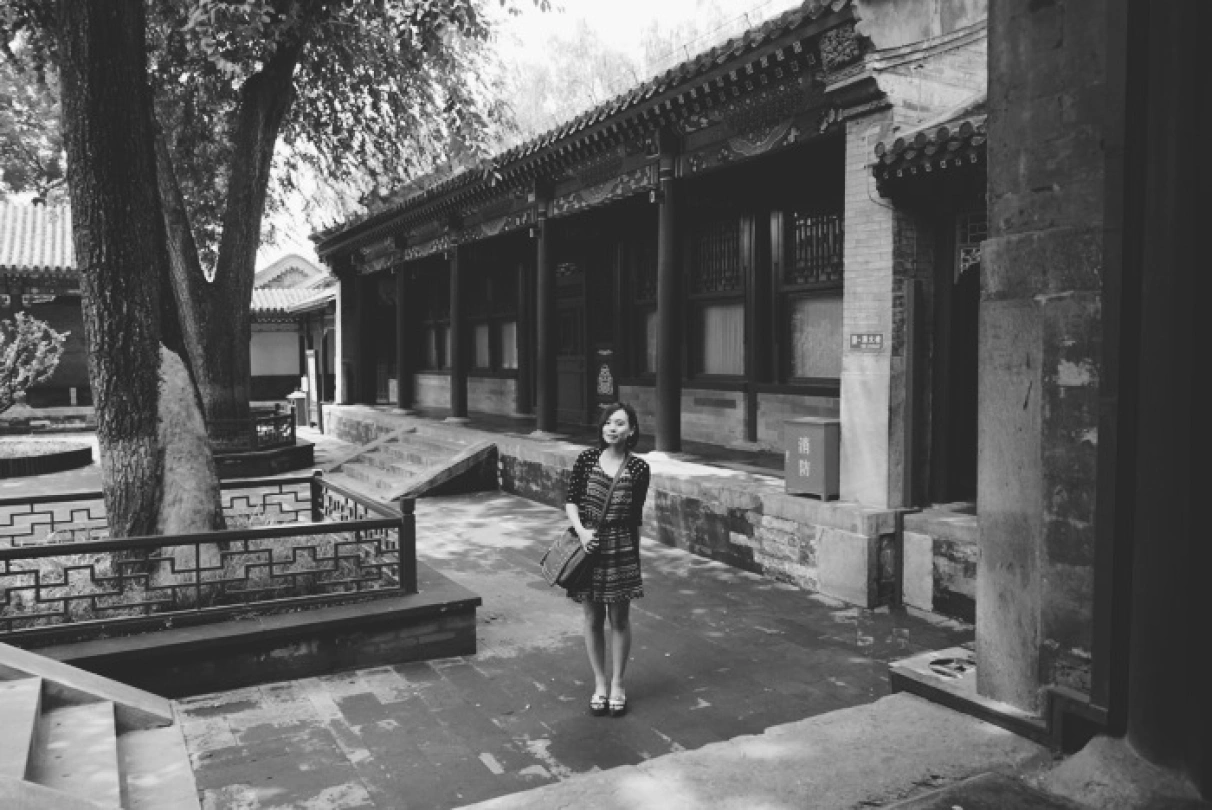
Solo in Beijing: Discovering Another Side of the Capital Amid Red Walls and Grey Tiles
Meta Description: Traveling solo in Beijing on a student budget? Discover hidden gems, practical tips for first-time solo travelers, and how to explore the capital's red walls and grey tiles without breaking the bank. When my friends asked why I chose to go to Beijing…
Continue reading...