Savoring the Flavors of Di'anmen: A Culinary Journey Through Beijing's Heart
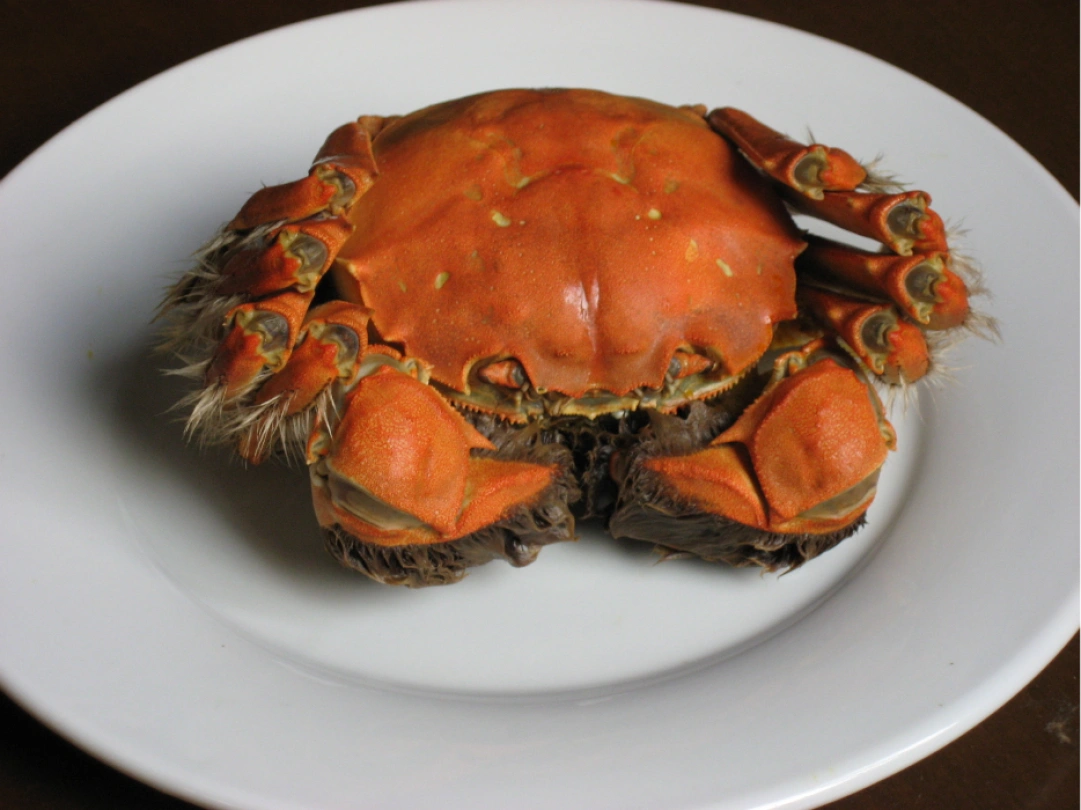
Meta Description: Discover the authentic tastes of old Beijing in Di'anmen. From douzhi to stir-fried liver, explore hidden hutong food stalls, legendary snack shops, and the vibrant street food culture surrounding Shichahai Lake.
Introduction: Why Di'anmen is the True Culinary Heart of Beijing
The story of Beijing has never been solely about crimson walls, golden tiles, emperors, and generals. What truly brings this ancient city to life is the everyday warmth found deep within its hutongs (narrow alleyways) and hidden street corners. And Di'anmen, without question, is one of the places where this vibrant, earthy atmosphere burns brightest.
If Tiananmen represents solemnity and grandeur, then Di'anmen embodies the warmth and depth of daily life. It doesn't boast or clamor for attention. Instead, through countless dishes and drifting aromas, it quietly tells the truest story of old Beijing.
In the autumn of 2012, I spent two days setting out from Di'anmen, wandering and eating my way along Shichahai Lake, past the Drum Tower, and through Yandai Xiejie (Tobacco Pouch Alley). This wasn't some lavish gourmet expedition—just an ordinary person's taste adventure. But it was precisely these down-to-earth flavors that deepened my affection for this city.
Whether you're a first-time visitor or a seasoned food traveler, Beijing hutong food tours starting at Di'anmen offer an unfiltered glimpse into the city's soul. Let's begin our Di'anmen food guide—one bite at a time.
Chapter One: Di'anmen Outer Street — A Prelude to Gastronomy
From Emei Restaurant to Huguosi Snack Shop: Iconic Beijing Street Food Stalls
Di'anmen Outer Street runs north from the intersection to the Drum Tower. It's not a long stretch, but it's one of Beijing's most concentrated areas for local snacks in Beijing. If you're a food lover, this street alone could keep you eating from morning till night.
Emei Restaurant sits at the northwest corner of the Di'anmen intersection. While this branch isn't as famous as its flagship, its signature dishes—Kung Pao Chicken and cold noodles—still hold their own. The chicken is tender and silky, the peanuts crispy, and the sauce strikes a perfect balance between sweet and spicy. It's the kind of dish that makes you want to pack an extra portion to take home.
A few steps north, a branch of Huguosi Snack Shop appears. Describing it as "packed to the rafters" is no exaggeration—during peak meal times, the queue can wind around the shop three times. Here, you'll find fermented mung bean juice (douzhi), crispy fried dough rings (jiaoquan), sugar-fired sesame cakes (tang huoshao), and deep-fried sticky rice cakes (zhagao). Each item is a beloved staple for old Beijingers.
I recall a visit to the "Old Cig Kiln Douzhi Shop" near the north gate of Tiantan (Temple of Heaven) Park, where I witnessed a southern Chinese tour group's profound misunderstanding of douzhi. Several tourists eagerly ordered a bowl each, only to spit it out after a single sip. One man even marched his bowl up to the counter and demanded, "Your soybean milk has gone sour—how can you still sell it?" They had, of course, mistaken douzhi for regular soy milk. This story always brings a knowing smile, yet it perfectly captures the unique, acquired charm of this Beijing specialty.
[Link: What is douzhi? A complete guide to Beijing's fermented mung bean juice]
Xinchuan Noodle House and Xiaoyan Jianbing: Must-Try Di'anmen Eateries
Continuing north, the sign for Xinchuan Noodle House stands out prominently. Their cold noodles are the restaurant's crown jewel—chewy noodles tossed in a tangy-sweet sauce, topped with shredded cucumber and sesame paste. One bowl on a summer day, and the heat simply melts away.
On the west side of the street, Xiaoyan Jianbing (a savory crepe stall) has a modest storefront but surprisingly brisk business. The crepes are thin and crispy, with eggs, scallions, and sauce perfectly balanced. One bite, and your mouth fills with fragrant delight.
Chapter Two: A Taste Legend at the Drum Tower Corner

Yao Ji Stir-Fried Liver: From Neighborhood Joint to Internet Celebrity
Reach the Drum Tower, turn the corner, and you'll spot Yao Ji Stir-Fried Liver Shop. This place doesn't have an exceptionally long history, but the phrase "If you want stir-fried liver, turn the corner at the Drum Tower" has become a golden saying in Beijing's food circles.
Yao Ji's stir-fried liver features tender liver slices, thoroughly cleaned intestines, a thick, rich broth, and a powerful punch of garlic. Paired with freshly steamed buns, the combination is simply sublime. In recent years, however, the influx of tourists has led some to feel the quality isn't quite what it used to be. Still, it remains an indispensable stop on any Di'anmen food map.
[Link: Best stir-fried liver in Beijing: A comparison of top shops]
Shandong Sour Dough Steamed Buns: The Miracle of a Single Bun
Head east from Yao Ji for less than a hundred meters, and you'll see a long line. Don't be surprised—they're just queueing for steamed buns at Shandong Sour Dough Steamed Buns. For a bun shop to draw such crowds, it relies on genuine ingredients and traditional techniques. The buns are large, with a rich wheat aroma and a satisfying chewiness. In an age of delicate, sugary desserts, this kind of honest, straightforward flavor feels especially precious.
Chapter Three: Yandai Xiejie and Shichahai — A Symphony of Food and Scenery
Kaorou Ji by the Yinding Bridge: A Grilled Meat Institution
Turn back south from the Drum Tower and pass through the archway of Yandai Xiejie (Tobacco Pouch Alley) , and you enter another culinary world. This alley isn't long, but its shops are a dazzling array of offerings, from trendy accessories to traditional handicrafts. At the alley's end, the view suddenly opens up—you've reached Shichahai Lake.

By the Yinding Bridge sits Kaorou Ji (a famous grilled meat restaurant), one of Beijing's "twin titans" of grilled meat (the other being Kaorou Wan). They offer two styles of dining: "civilized eating" and "warrior eating." But regardless of which you choose, the sizzling sound of meat on the grill and the irresistible aroma are enough to make your mouth water.
The second floor of Kaorou Ji has a viewing window. On clear days, it's said you can see the Western Hills in the distance. Personally, though, I find standing on Yinding Bridge itself offers a broader view, with the flowing water beneath adding an extra layer of charm.
[Link: Best grilled meat restaurants in Beijing: Kaorou Ji vs Kaorou Wan]
World's Stinkiest and Song Ji Fried Starch Sausage: Quirky Shichahai Street Food
West of Kaorou Ji, two quirky little shops catch the eye. World's Stinkiest sells deep-fried stinky tofu—it certainly smells pungent, but the taste is surprisingly delicious. Song Ji Fried Starch Sausage offers an old Beijing tradition: thin slices of starch sausage fried until crispy, drizzled with garlic sauce, creating a uniquely bold flavor.
Jiumen Snacks in the Depths of Houhai: A Beijing Food Market Experience
Walk west along the north shore of Houhai (the Back Sea), deep into Xiaoyou Hutong, and you'll find Jiumen Snacks, a place that has risen to fame in recent years. The name "Jiumen" carries layers of meaning: first, it refers to the nine gates of old Beijing, symbolizing "old Beijing" itself; second, the number "nine" in Chinese culture signifies abundance and completeness. So "Jiumen Snacks" can be understood as "a gathering of countless schools of old Beijing snacks."
The stalls here are a feast for the eyes: Yangtou Ma's soy-sauce-braised lamb trotters, Tofu Nao Bai's douzhi (fermented mung bean juice), Zhagao Xin's deep-fried sticky rice cakes, Cheese Wei's dairy treats, Baodu Feng's quick-boiled tripe, Niangao Qian's New Year cakes, and Chatang Li's millet tea… Each stall has its own signature specialty.
One particularly noteworthy stop is Yueshengzhai. This time-honored brand's braised lamb and soy-sauce beef are simply extraordinary. Legend has it that in olden days, some impoverished rickshaw pullers couldn't afford the meat itself. Instead, they'd buy two cornmeal buns, squat near Yueshengzhai, and wait for the giant pot to open. As the steam rose, they'd inhale the meat's aroma while eating their plain buns. It's a bittersweet story, but it perfectly illustrates just how tantalizing Yueshengzhai's meat fragrance truly was.
[Link: Jiumen Snacks menu: What to order at this famous Houhai food hall]
Chapter Four: Leisurely Moments by Qianhai
The Culinary Matrix of Lotus Flower Market
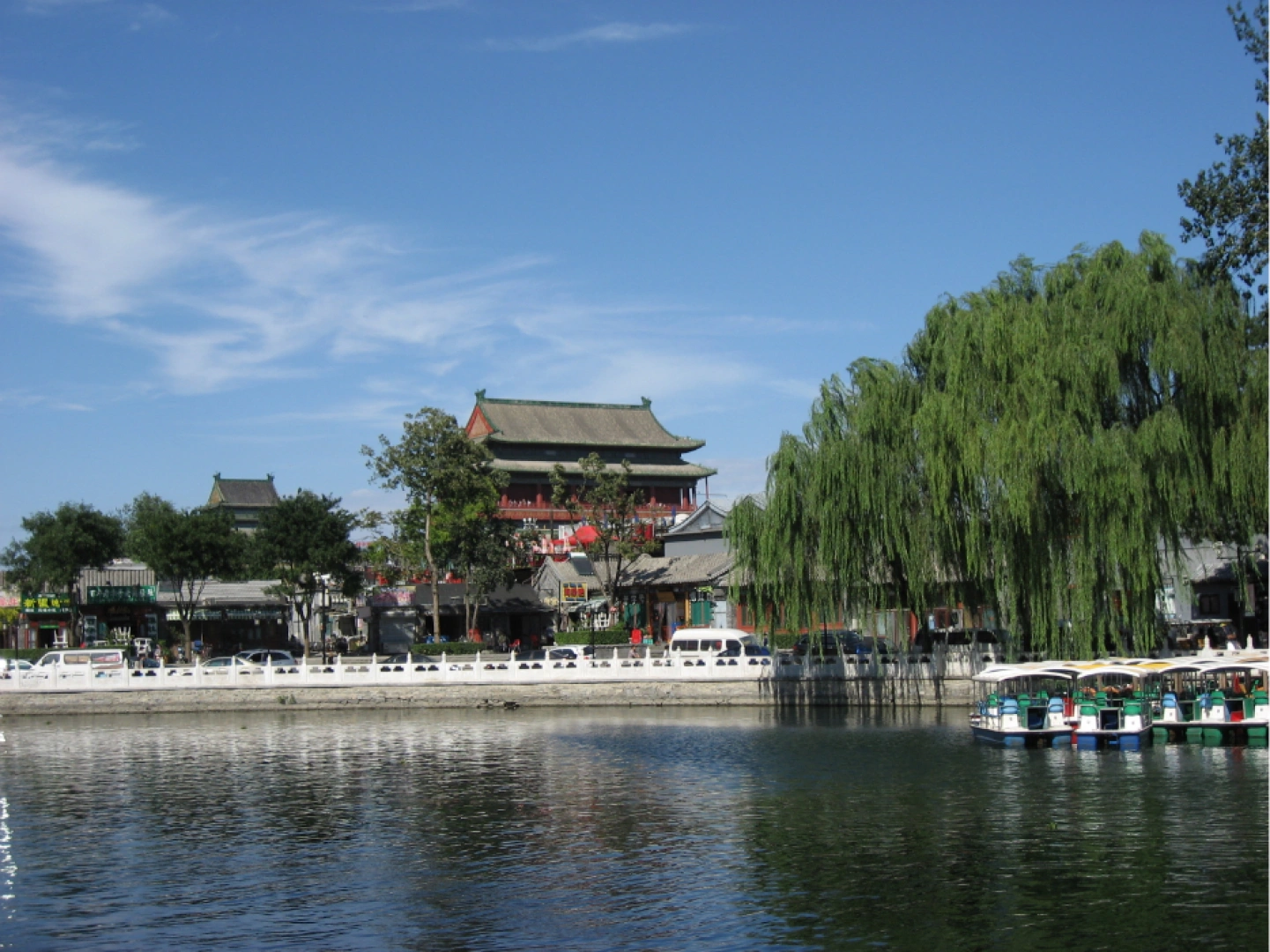
Cross Yinding Bridge and walk southeast along Qianhai (the Front Sea). Enter through the north gate of the Lotus Flower Market—a bustling hub where traditional snacks meet modern food trends. Here, you'll find everything from candied hawthorn skewers to freshly made tanghulu, alongside vendors selling grilled squid and cold noodle salads. It's the perfect spot to pause, people-watch, and sample a little bit of everything.
Frequently Asked Questions About Di'anmen Food
1. What is the best time to visit Di'anmen for street food?
Late afternoon to early evening (3 PM–7 PM) is ideal. Most snack shops and stalls are fully stocked, and the lines are manageable. Weekdays are generally less crowded than weekends.
2. Is douzhi really that bad? Should I try it?
Douzhi (fermented mung bean juice) is an acquired taste—sour, slightly funky, and nothing like soy milk. That said, it's a true Beijing icon. If you're adventurous, order a small bowl and pair it with crispy jiaoquan (fried dough rings) to balance the flavor.
3. Are there vegetarian options in Di'anmen?
 Yes. Look for zhagao (deep-fried sticky rice cakes), tang huoshao (sugar-fired sesame cakes), and cold noodles at Xinchuan Noodle House. Jiumen Snacks also offers several vegetable-based dishes.
4. How much should I budget for a Di'anmen food tour?
A satisfying food crawl costs roughly 80–150 RMB per person (about $12–$22 USD), depending on how many items you try. Most snacks range from 5–30 RMB each.
5. Can I visit Di'anmen and Shichahai in one day?
Absolutely. The entire area is walkable. Start at Di'anmen Outer Street in the morning, explore the Drum Tower and Yandai Xiejie by noon, and finish with a lakeside stroll at Shichahai in the afternoon. It's one of the best Beijing day trip itineraries for food lovers.
Your Di'anmen Food Adventure Awaits
From the tangy punch of douzhi to the sizzle of grilled lamb at Kaorou Ji, Di'anmen offers a culinary journey through Beijing that no guidebook can fully capture. This isn't just about eating—it's about tasting the history, the stories, and the everyday resilience of a city that has fed emperors and rickshaw pullers alike.
Ready to explore? Start your morning at Huguosi Snack Shop, grab a bowl of stir-fried liver at Yao Ji by the Drum Tower, and finish your day with a stroll along Shichahai Lake as the sun sets over the water. Your taste buds—and your travel memories—will thank you.
Plan your visit now. Book a guided Beijing hutong food tour or print this Di'anmen food guide and set off on your own. The flavors of old Beijing are waiting—one bite at a time.
[Link: Complete Beijing food guide: Top 50 local dishes you must try]
You should also read:

A Winter Journey in Beijing: Romance and Misery at Minus Five Degrees – An SEO-Optimized Travel Guide
Meta Description: Discover the romance and misery of a winter trip to Beijing at -5°C. Explore snowy Jingshan Park, historic hutongs, and budget-friendly tips for a 4-day Spring Festival adventure. Some say Beijing is a city you both love and hate. You love its profound…
Continue reading...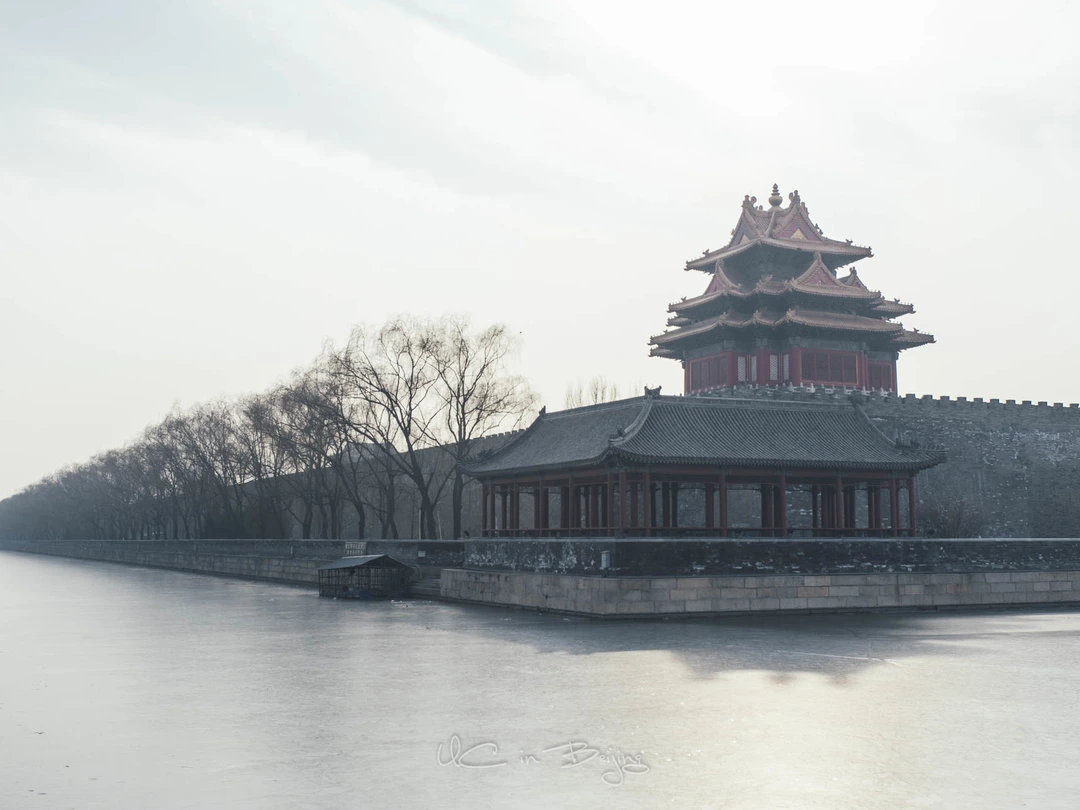
Beijing Through the Lens: One Person's Winter Wanderings – An SEO-Optimized Travel Guide
Meta Description: Discover Beijing's winter charm through a photographer's lens. From Nanluoguxiang's night scenes to Sanlitun's neon glow, explore the city's hidden corners and iconic landmarks in this SEO-friendly travel guide. January in Beijing is so cold you can hear your own breath. But for…
Continue reading...
The Beijing Adventures of "Dunderhead" and "Grumpy": A Heartwarming Journey Through Time and Childlike Wonder
Meta Description: Discover Beijing through the eyes of two playful travelers—"Dunderhead" and "Grumpy." From the Great Wall to the Forbidden City, this SEO-optimized guide blends nostalgia, history, and practical tips for an unforgettable trip. In June, Beijing's sky hung gray, the air thick with an…
Continue reading...