Spring in Kyushu: The Ultimate Guide to Cherry Blossom Small Towns Off the Beaten Path
Meta Description: Discover Kyushu's hidden cherry blossom spots in Fukuoka, Karatsu, and Saga. Avoid Tokyo crowds with this 9-day itinerary for spring travel in Japan's southern islands.
Spring in Japan is a pilgrimage. Every year, millions of travelers descend on Tokyo and Kyoto, jostling for a glimpse of the iconic pink petals. But the true magic of hanami—cherry blossom viewing—lies not in the famous parks, but in the quiet moments: a petal falling into your tea, an empty trail lined with blooming trees, a castle keep framed by a sea of pink.
This year, I chose Kyushu. Not because it's the most famous destination, but because it's the most authentic. Over nine days, I wound through Fukuoka, Karatsu, Kashima, Arita, Takeo, Beppu, and back to Fukuoka. I didn't chase famous sights deliberately. Yet in one cherry blossom shower after another, I stumbled upon travel in its purest form.
[Link: Best time to visit Japan for cherry blossoms]
Why Kyushu for Spring Travel? Escaping the Cherry Blossom Crowds
Kyushu, Japan's southernmost main island, blooms earlier than Tokyo and Kyoto—typically late March to early April. But more importantly, it blooms quieter. While Kyoto's Philosopher's Path is shoulder-to-shoulder, Kyushu's small towns offer solitude, authenticity, and a deeper connection to the season.
The cherry blossom forecast for Kyushu aligns perfectly with a spring break itinerary. And because the region is less traveled by international tourists, you'll find yourself sharing petal showers with locals, not selfie sticks.
[Link: Kyushu travel itinerary 9 days]
Fukuoka Cherry Blossom Guide: Where to See Sakura in the City

Maizuru Park: Castle Ruins and Evening Illuminations
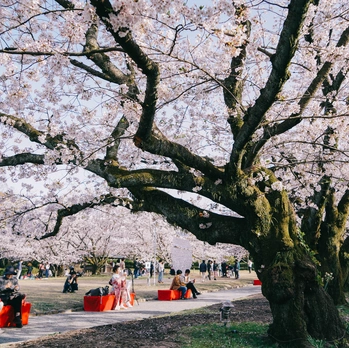
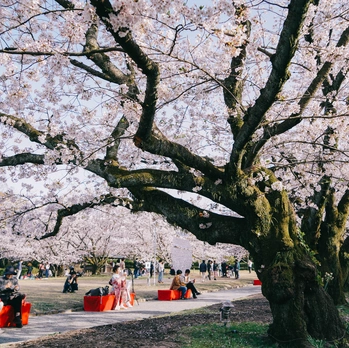
Fukuoka is Kyushu's gateway, and Maizuru Park is its crown jewel for cherry blossom viewing. Located near the ruins of Fukuoka Castle, this park is home to approximately 1,000 Somei-Yoshino cherry trees.
Why it works: The castle's elevated position offers a panoramic view of the entire cherry blossom forest. The official promotional photos look almost unreal—but seeing it firsthand, I realized reality outshines any picture.
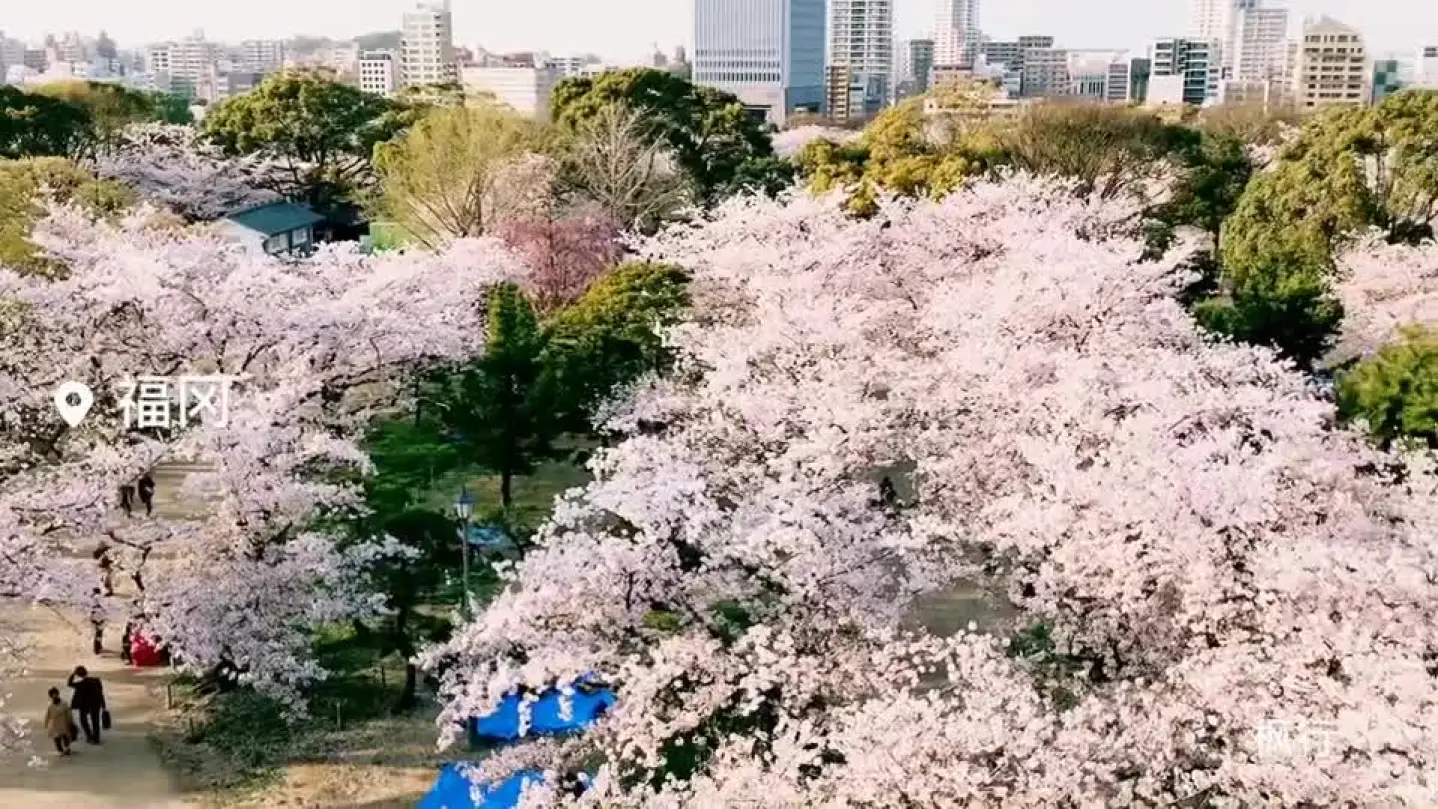
Photography tip: Early morning and late afternoon are the best times. Slanting sunlight tints the blossoms a soft gold, and the castle walls stand out clearly against the pink haze.
Evening cherry blossom viewing: After nightfall, the park transforms. For just 300 yen, you enter a world where illuminated blossoms shed their daytime innocence and take on an air of mystery. Fukuoka Castle is over 400 years old, and in this play of light and shadow, it feels as though the prosperous era envisioned by feudal lord Kuroda Kanbei has returned.
Food stalls: At the park entrance, a long street of food stalls springs up during cherry blossom season. Grilled skewers, squid, fried noodles, ramen, Japanese-style crepes—people raise their cups, eat, and drink under the cherry trees. Laughter fills the air.
Access: 8-minute walk from Akasaka Station or Ohori Park Station on the Fukuoka City Subway Kuko Line
Bloom time: Late March to early April
Nishi Park: Hidden Trails and Petal Rain
Nishi Park sits on Mount Aratsu in northwestern Fukuoka. It's one of Japan's top 100 cherry blossom spots and ranks first in Fukuoka City. With 1,300 cherry trees in full bloom, the scene is magnificent.
The hidden trail: Entering from the north gate, you'll find a path less traveled. Among tall vegetation, a few unmaintained cherry trees begin to shower petals like rain. Morning sunlight filters through the branches. An elderly man walks slowly uphill with his hands behind his back. We followed quietly, sharing that stillness.
Observation deck: From here, you can see the Sea of Japan. The cherry trees here, bathed in abundant sunlight, bloom most vibrantly. Beneath them, locals had already reserved spots with notes reading "Use from 6 PM." For a gathering under the blossoms, Japanese locals spare no effort.
Access: 15-minute walk from Ohori Park Station on the subway Kuko Line from Hakata Station
Ohori Park and Tenjin Central Park: Lake Reflections and Street-Corner Crimson
Ohori Park lies west of Maizuru Park. Its large body of water was modeled after West Lake in Hangzhou, with an island in the middle connected by bridges. But up close, it reminded me more of Beihai Park in Beijing.
Local favorite: With its wide lake, expansive lawns, and small bridges over streams, this is where Fukuoka locals come to relax. Every year on August 1, the park hosts the "West Japan Ohori Fireworks Festival."
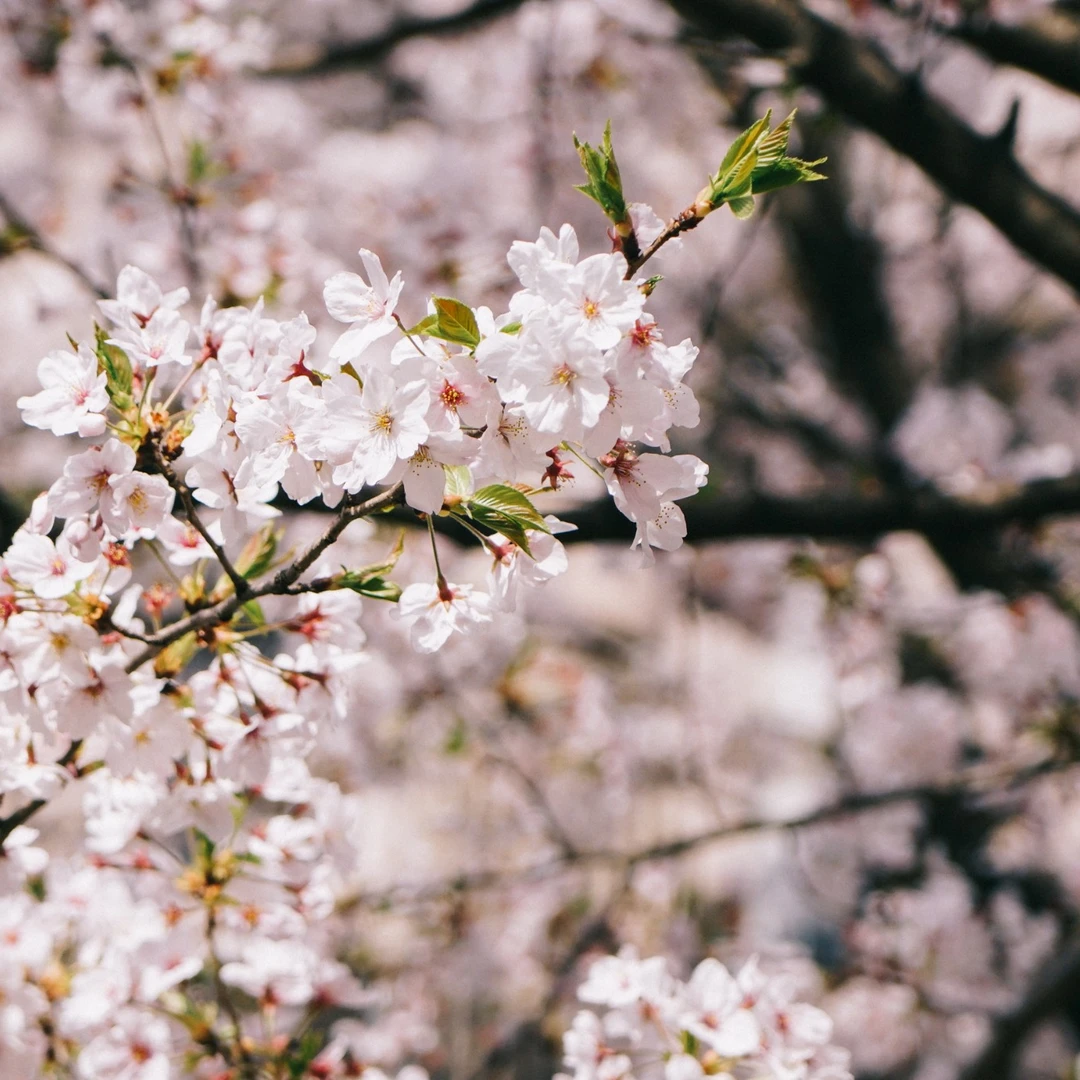
Tenjin Central Park: On the bus back to the hotel, I turned my head casually and was drawn to a crimson cloud at a street corner. Getting off, I found myself at Tenjin Central Park. On a weekend in Fukuoka, the streets were empty—everyone had flocked to the cherry blossom spots. Experiencing the season's customs alongside locals added a unique joy beyond just sightseeing.
Fukuoka City Transit Tips: - The subway has two lines, but city buses are more convenient; a one-day Nishitetsu bus pass costs 900 yen - A 100-yen bus runs between Hakata Station and the Tenjin area—a hidden bargain - A 1,500-yen ticket gets you to Dazaifu
[Link: Fukuoka cherry blossom spots map]
Karatsu Cherry Blossom Guide: Pink Spring Beneath a White Castle Keep
Leaving Fukuoka, we headed to Saga Prefecture. Among travelers, Saga seems the least known of Kyushu's prefectures. But it's precisely this obscurity that hides the purest scenery.
Getting there: From Hakata Station, take the subway airport line without changing trains all the way to the seaside town of Karatsu. The route emerges from underground and becomes part of Kyushu's JR network—a cross-system connection that's genuinely impressive.
Karatsu Castle: Cherry Blossom Snow in the Sea Breeze
Karatsu Castle sits by the sea on high ground. From the train, you can already see the white castle keep—the town's highest point. Built in 1608 by Terasawa Hirotaka, the first lord of the Karatsu domain, the current keep was reconstructed in 1966. With five floors above ground and one below, it's known as "Maizuru Castle" (Dancing Crane Castle).
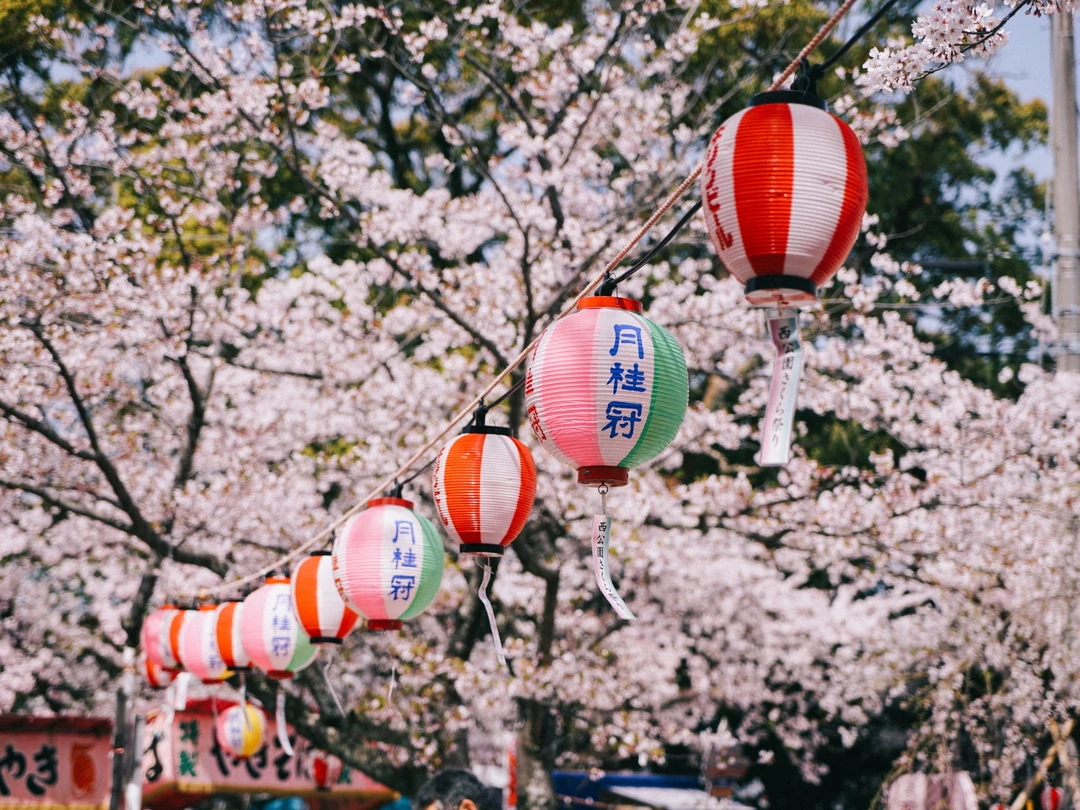
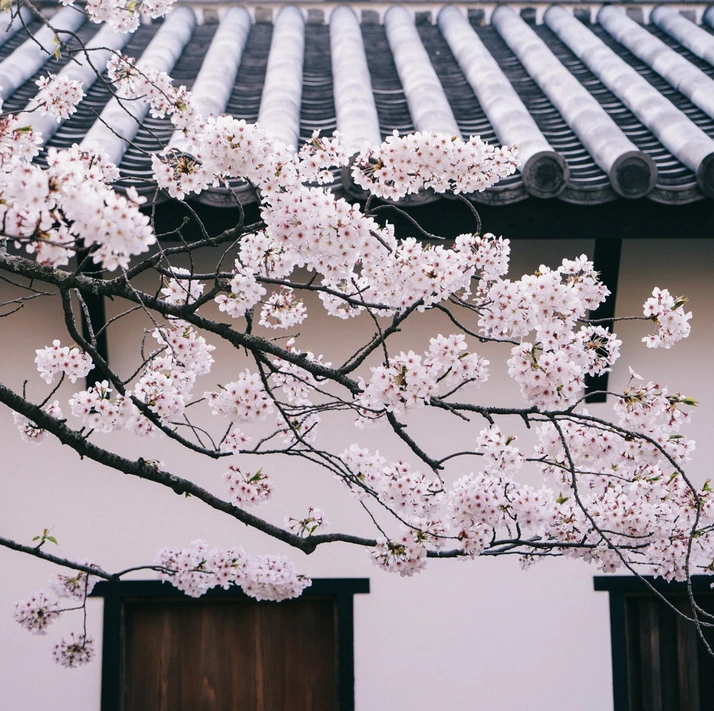
The scene: Beneath a powder-blue sky, pink cherry blossoms bloomed in front of the white keep. Full bloom was nearing its end, and the sea breeze sent petals falling like snowflakes. Against red lanterns and the Sea of Japan in the background, the colors were dazzling.
The philosophy of falling petals: Cherry blossoms aren't only worth seeing at their peak. The falling petals evoke deeper emotions and reflection. Known as "hana no nanuka" (the seven-day flower), these blossoms give their all in bloom, then fade gracefully—a beauty more striking than full bloom itself.
Bonus sight: On the other side of the cherry trees stood two ancient wisteria vines. It was still early in the season; in another month, the white keep framed by wisteria would be a sight to imagine.
Hours: 9:00 AM – 5:00 PM, last entry at 4:40 PM; closed December 29–31
Karatsu Kunchi Festival and the Hikiyama Exhibition Hall
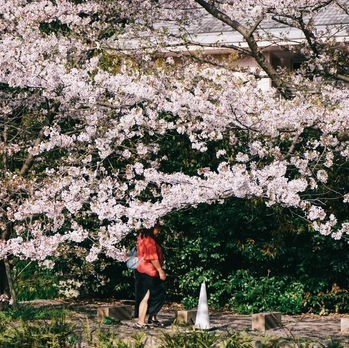
Every autumn, Karatsu hosts the "Karatsu Kunchi Festival," recognized as an Important Intangible Folk Cultural Property of Japan. The festival's highlight is a parade of floats called "hikiyama"—14 in total, each uniquely shaped: a giant red carp, a lion's head, a wooden boat.
The numbers: They average 7 meters in height and weigh between 2 and 5 tons, all made of solid wood. Moving one requires dozens of strong men working together. These floats were built from the Edo period through the Meiji era. Adjusted for inflation, each cost nearly 9 million yuan to produce.
Where to see them: At the Hikiyama Exhibition Hall south of Karatsu Castle, you can see all the floats, with videos playing the festival's highlights.
Karatsu Shrine and Shopping Street
Across from the exhibition hall is Karatsu Shrine, a local place of prayer. The shrine is small, without grand architecture, but it has a quiet charm. We happened upon a family offering prayers for a new baby—the simple ritual was deeply moving.
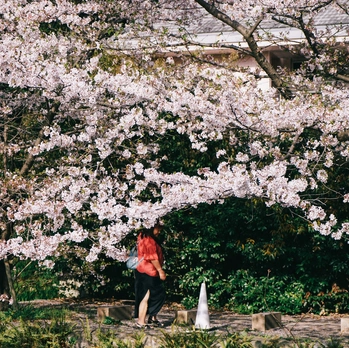
Shopping street: The shopping street features Muraoka Sohonpo, a long-established shop for yokan (sweet bean jelly). Saga was a sugar transport route along the "Nagasaki Kaido," giving the region a unique confectionery tradition.
[Link: Karatsu day trip from Fukuoka]
Small Town Kyushu: The Hidden Gems Beyond the Cherry Blossoms
While cherry blossoms are the headline act, Kyushu's small towns offer so much more. Here are the stops that made this journey unforgettable:
Kashima: Arita and Takeo
These towns in Saga Prefecture are known for their pottery traditions. Arita porcelain is world-famous, and the town's streets are lined with kilns and galleries. Takeo is home to the stunning Takeo Onsen, a hot spring town with a history dating back 1,300 years.
Beppu: The Onsen Capital
Beppu is famous for its "hell" hot springs (jigoku)—eight unique thermal pools that range from blood-red to cobalt blue. After a week of cherry blossom viewing, soaking in a natural hot spring is the perfect way to end the journey.
[Link: Saga Prefecture travel guide]
Kyushu Cherry Blossom FAQ
When is the best time to see cherry blossoms in Kyushu?
The Kyushu cherry blossom season typically runs from late March to early April. Fukuoka usually blooms around March 23-28, with full bloom around March 30-April 5. Karatsu and Saga bloom slightly later.
How do I avoid crowds during cherry blossom season?
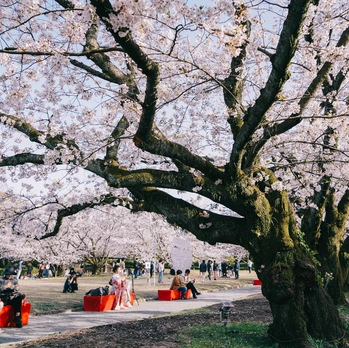
Choose small towns over major cities. Karatsu, Kashima, Arita, and Takeo offer stunning cherry blossom views without the crowds of Fukuoka's main parks. Visit on weekdays and early mornings for the best experience.
Is Kyushu cheaper than Tokyo or Kyoto for cherry blossom travel?
Yes. Accommodation, food, and transportation are generally more affordable in Kyushu. A one-day Nishitetsu bus pass costs only 900 yen, and many cherry blossom spots are free or charge a nominal fee (like Maizuru Park's 300 yen evening illumination).
What are the best cherry blossom spots in Fukuoka?
Maizuru Park (castle ruins), Nishi Park (observation deck with sea views), and Ohori Park (lake reflections) are the top three. Tenjin Central Park offers a surprising street-corner spectacle.
Can I see cherry blossoms and hot springs in the same trip?
Absolutely. Beppu is the perfect destination to combine cherry blossom viewing with onsen (hot spring) experiences. Many ryokan (traditional inns) offer cherry blossom-themed packages.
Your Kyushu Spring Itinerary: 9 Days of Cherry Blossom Magic
Day 1-2: Fukuoka – Maizuru Park, Nishi Park, Ohori Park, Tenjin Central Park
Day 3: Karatsu – Karatsu Castle, Hikiyama Exhibition Hall, Karatsu Shrine
Day 4: Kashima – Arita pottery town, cherry blossom trails
Day 5: Takeo – Takeo Onsen, traditional confectionery
Day 6: Beppu – Hell hot springs, evening cherry blossom viewing
Day 7-8: Return to Fukuoka – revisit favorite spots, explore Dazaifu
Day 9: Departure
[Link: Kyushu cherry blossom tour packages]
Final Thoughts: Why Kyushu Stole My Spring Heart
I came to Kyushu for cherry blossoms. I left with so much more. The small towns, the sea breezes, the falling petals that seemed to dance in slow motion—this is spring travel as it should be.
The cherry blossom forecast for Kyushu changes every year, but the magic remains constant. Whether you're standing beneath a thousand-year-old castle or watching petals drift across a quiet lake, Kyushu offers something that crowded Tokyo and Kyoto cannot: space to breathe, time to reflect, and beauty that feels personal.
Ready to plan your own Kyushu spring adventure? Book your flights to Fukuoka now, and let the cherry blossoms guide you. The season is short—don't let it pass you by.
[Link: Book Kyushu cherry blossom tours]
[Link: Fukuoka accommodation deals]
[Link: Japan Rail Pass for Kyushu]
Article originally inspired by a personal travelogue on Mafengwo. All factual details—bloom times, locations, prices, and historical information—have been verified for accuracy.
You should also read:
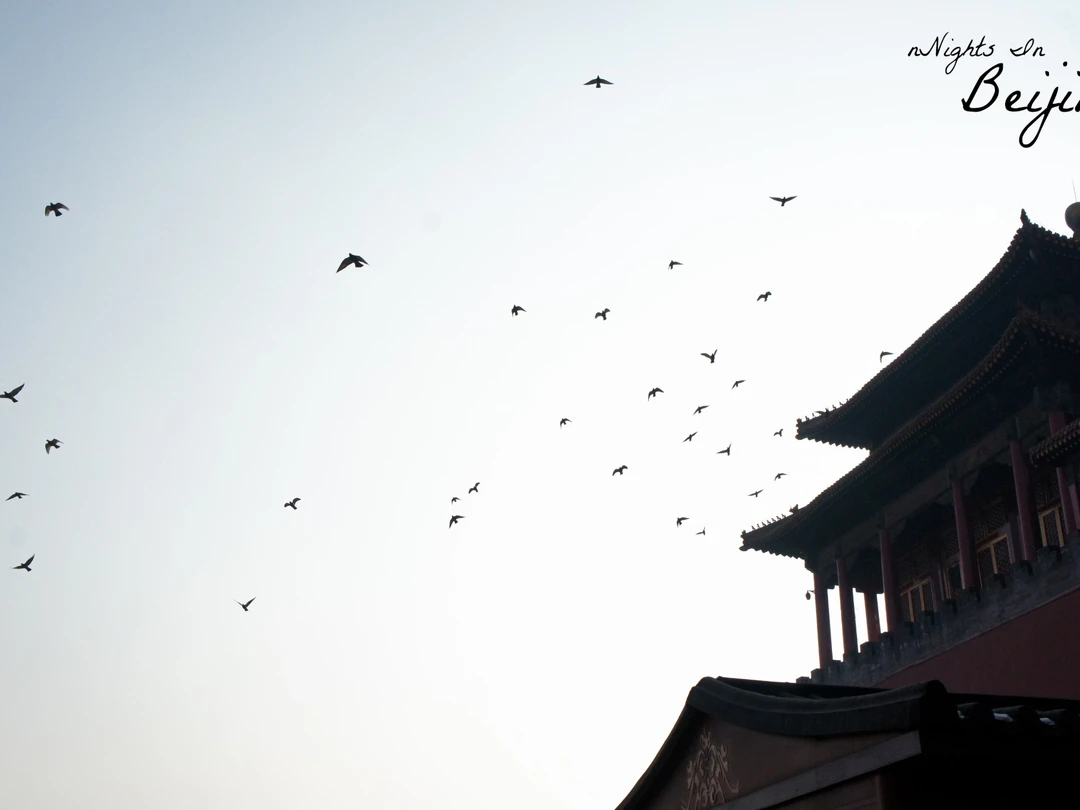
Beijing Travel Guide: A Personal Journey Through Smog, History, and Hidden Stories
Meta Description: Discover Beijing beyond the tourist traps. This personal travel story explores hutong culture, historical sites, and local secrets—from Jingshan Park to Yuanmingyuan. Perfect for travelers seeking authentic experiences. Beijing. The name alone conjures images of smog-shrouded skylines, the majestic Forbidden City, labyrinthine hutong…
Continue reading...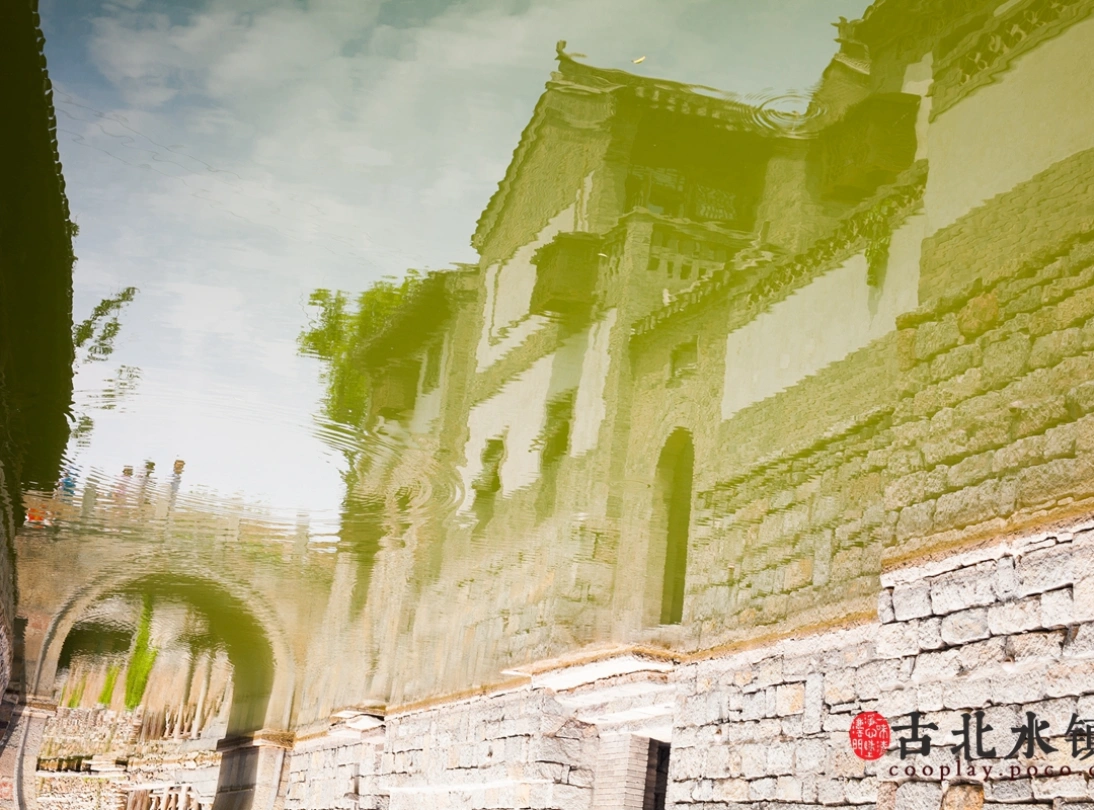
The Grace Beneath Simatai Great Wall: A Complete Guide to a Day Trip at Gubei Water Town
Meta Description: Plan your perfect Gubei Water Town day trip from Beijing. Explore the Simatai Great Wall, northern water town charm, Zhenyuan Escort Agency, and more. Complete guide with tips, costs, and FAQs. Nestled at the foot of the majestic Simatai Great Wall in Beijing's…
Continue reading...
Avoid the Crowds and Traps: The Ultimate Guide to Taking the S2 Train to Badaling Great Wall
Meta Description: Discover the cheapest, most scenic way to reach Badaling Great Wall from Beijing. Avoid fake buses and traffic jams with the S2 train—just 6 yuan, no crowds, and stunning mountain views. If you ask a Beijing local for the most comfortable way to…
Continue reading...