The Hidden Beijing: Temples, Flower Seas, and Villages Nestled in the Western Mountains – A Complete Weekend Road Trip Guide
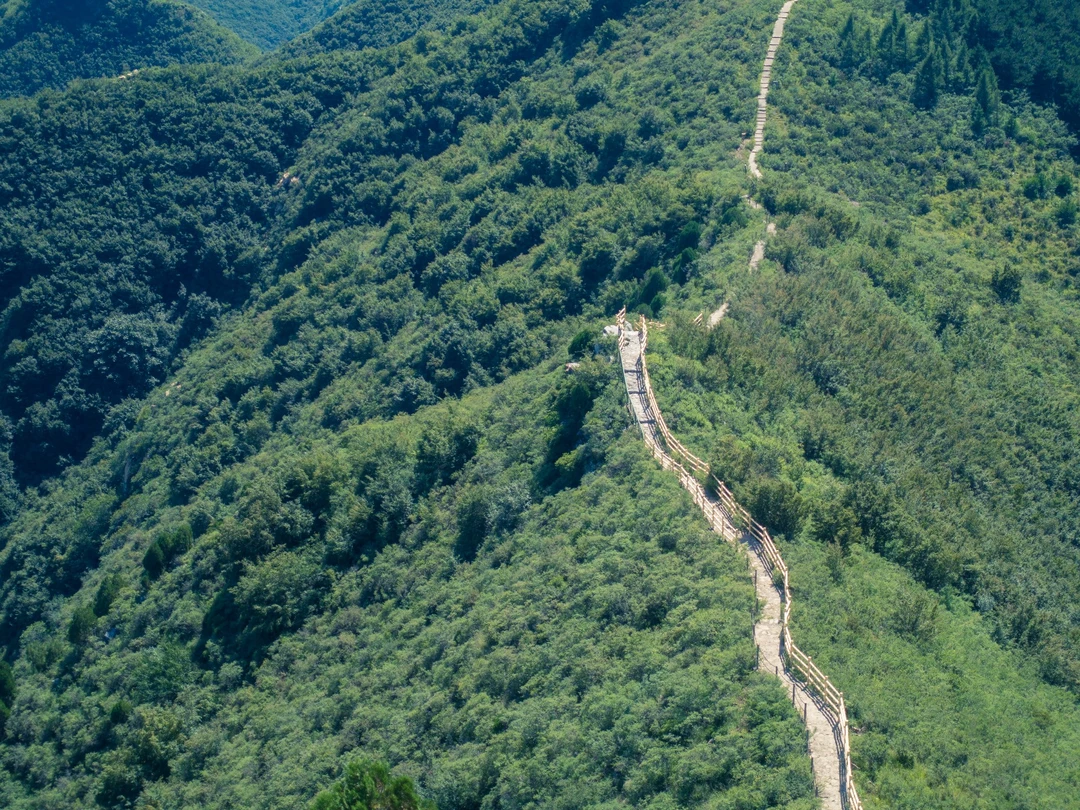
Meta Description: Discover Beijing's hidden gems beyond the Forbidden City. Explore ancient Tanzhe Temple, Baicaopan's flower seas, and mountain villages in the Western Mountains. Your ultimate road trip guide to Fangshan and Mentougou.
Introduction: Rediscovering Beijing Beyond the Hustle
"What is travel?" This question hit me one morning as I sat in a cubicle, mechanically switching between work screens, staring blankly at the monitor while my mind wandered far away. We often say travel is about escaping the place we're tired of living. But how many of us, like me, spend day after day "rushing" through this rapidly growing metropolis, trading youth and sweat for distant dreams, yet never truly stopping to explore the land beneath our feet?
My car sat in the underground garage, used only for my wife's daily commute. Weekend plans to head to the outskirts were always dismissed with a "maybe next time." Then, during a brief lull between projects, I finally decided: why not take a road trip? Let the rhythm of tires rolling over mountain roads help me rediscover Beijing.
This article is your complete guide to Beijing's Western Mountains road trip—covering ancient temples, mountaintop flower seas, and hidden villages. Whether you're a Beijing weekend getaway enthusiast, a temple history buff, or a nature photographer, this route offers something extraordinary.
Setting Off: Westward to Fangshan and Mentougou

At 6:43 AM, my body woke before the alarm. I've come to realize I suffer from "travel procrastination syndrome"—no itineraries, no hotel bookings, all under the guise of "plans can't keep up with changes."
For Beijing suburban drives, Fangshan and Huairou are the two hot spots. Huairou offers a hundred-mile gallery of landscapes with mountains and water intertwined; Fangshan features layered peaks and stunning scenery. Considering the morning rush hour congestion heading toward Huairou, I chose west—the Fangshan route.
The Route: A Perfect Western Mountains Itinerary
- Departure: Beijing city center
- Route: West Fourth Ring Road → G108 National Highway
- Stop 1: Tanzhe Temple, Mentougou (ancient temple)
- Stop 2: Baicaopan Meadow, Baihua Mountain, Fangshan (flower sea)
- Stop 3: Huatai, Puwa Township, Fangshan (mountain village)
Essential Driving Tips for the Western Mountains
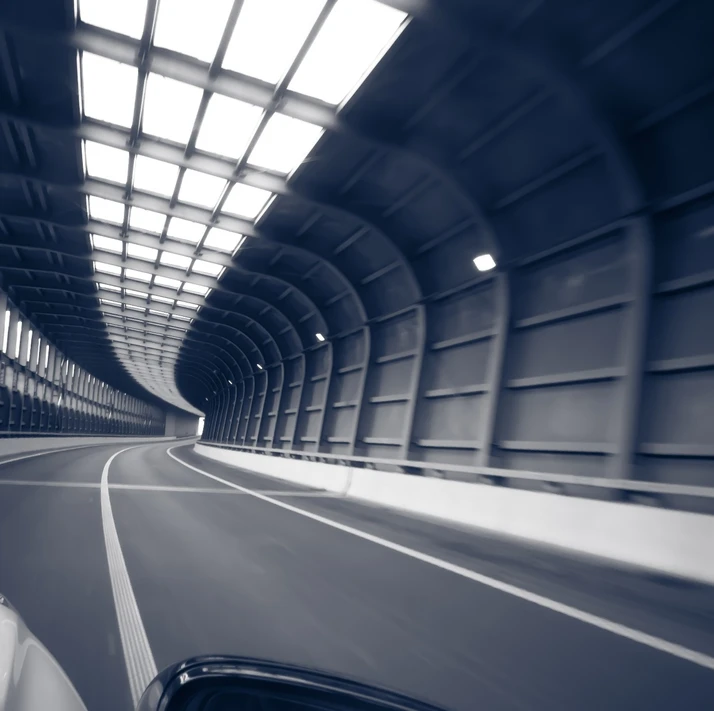
As a "son-in-law of Fangshan," I must warn you: this road is full of sharp curves, one after another. Here's what you need to know:
- Don't overtake unless you're absolutely confident
- Never cross into oncoming traffic on turns—I've seen too many accidents
- Watch for cyclists and motorcyclists—weekend motorcycle groups often drift into the opposite lane

- Stock up on snacks—after Hebei Town, there are basically no restaurants
- Be extremely careful in heavy rain—Fangshan is one of Beijing's highest-rainfall areas. At Baicaopan, the sky might look partly cloudy at the foot of the mountain, but at the summit, everything could be blinding white
Mountain Temple: Tanzhe Temple – Beijing's Oldest Buddhist Sanctuary
Before There Was Beijing City, There Was Tanzhe Temple
First stop: Tanzhe Temple in Mentougou. The saying "Before there was Beijing city, there was Tanzhe Temple" speaks volumes. First built in the first year of the Western Jin Yongjia era (307 AD), this temple has a history of over 1,700 years—predating Beijing city by centuries.
To be honest, before coming here, I didn't even know how to pronounce "柘" (zhè). It turns out "Tanzhe" comes from the dragon pool (tan) behind the temple and the zhe trees on the mountain. While Beijing has no shortage of temples—Yonghe Temple, Tongjiao Temple, Tianning Temple, Dajue Temple—Tanzhe Temple is the earliest Buddhist temple built in the Beijing area.
Originally called "Jiafu Temple," it wasn't very large. Buddhism hadn't yet been widely accepted by the common people, so its development was slow. Through dynastic rise and fall, Emperor Yongzheng and Emperor Qianlong of the Qing Dynasty made special pilgrimages here. When Chiang Kai-shek visited Beijing, he also came out of admiration. After the founding of New China, the Parks Bureau took over Tanzhe Temple, making it one of the first seven park scenic spots to open in Beijing.
[Link: Best ancient temples near Beijing for history lovers]
Incense, Legends, and a Serpent Sighting
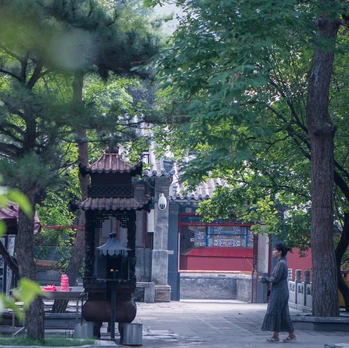
Around eight or nine in the morning, the parking lot was almost full. The temple complex faces south, with its main buildings arranged along three axes: central, eastern, and western. The central axis includes the Mountain Gate, Heavenly King Hall, Great Hero Hall, Monastic Dining Hall, and Pilu Pavilion. Surrounded by mountain peaks, the climate is mild, ancient trees tower into the sky, pagodas stand scattered, and the halls are cleverly laid out according to the terrain.
Important tip: Don't buy incense in the parking lot. The temple doesn't allow outside incense. They provide free incense—each person can take three sticks. Early in the morning, there's already a long line of people, bowing to the incense burner in all four directions. The scene is solemn.
I saw a young man in business attire, suit and leather shoes, looking just like my workday self. He closed his eyes, muttered a few words toward the incense burner, bowed, offered incense... I raised my camera and captured that moment.
Entering the first courtyard, a massive "Emperor Tree" rose from the ground, said to be 1,400 years old. Its branches and leaves were so dense they blocked out the sky. Tour guides were telling all sorts of legends—how a former Russian president came to make a wish, had it come true, and returned to fulfill his promise; or the story about "burning Tanzhe Temple, flooding Beijing city." As someone with a background in landscape architecture, I suspect most of these tales are made up by the local parks bureau.
The courtyard-style layout creates a palatial atmosphere with its square enclosures, but the courtyard itself is tranquil and elegant—green tiles, red railings, lush greenery, and buildings of a human scale that feel quite livable. Following the steps on either side of the main buildings upward, there are several more layers of courtyards, each filled with the haze of incense. It was just after the college entrance exams, and I saw a father and son praying, probably hoping the son would get into his dream university.
A circular garden gate framed a view that looked like a centuries-old painting. We walked along the foot of the building's gable walls, with quiet serenity on one side and pure Zen on the other.
An Encounter with a Snake
Tanzhe Temple has a legend about snakes, and every year they maintain the custom of "observing the Buddha snake" —it's said that seeing a snake here means a deity has appeared, bringing good luck. And in the first courtyard, on the roof of a building, I really did see a very long snake slithering along the ridge! Even though I'm not a Buddhist and didn't offer incense, seeing the spirit snake, I silently made a wish for "everything to go smoothly in the second half of the year."
By the time we left Tanzhe Temple, it was already past noon without us realizing it.
Flower Sea on the Mountaintop: Baicaopan Meadow
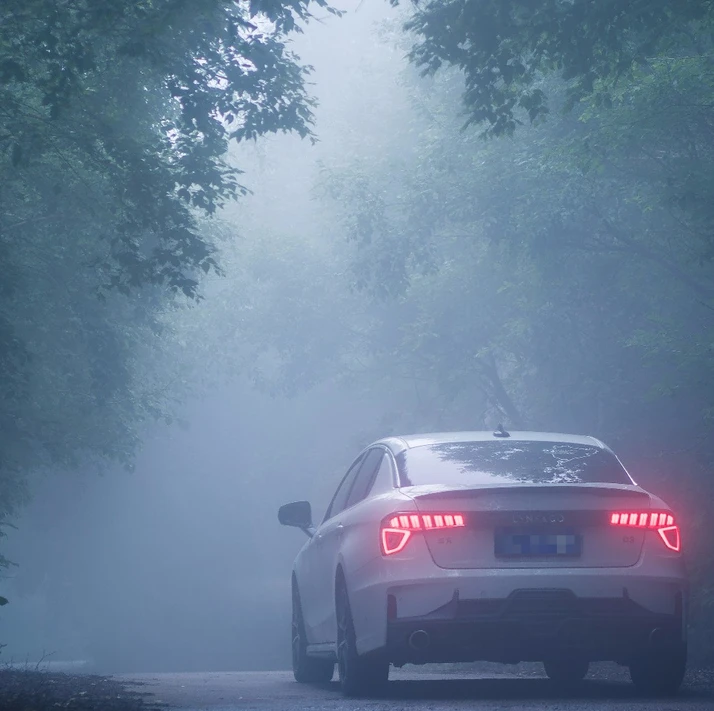
Heading West into the Sea of Clouds
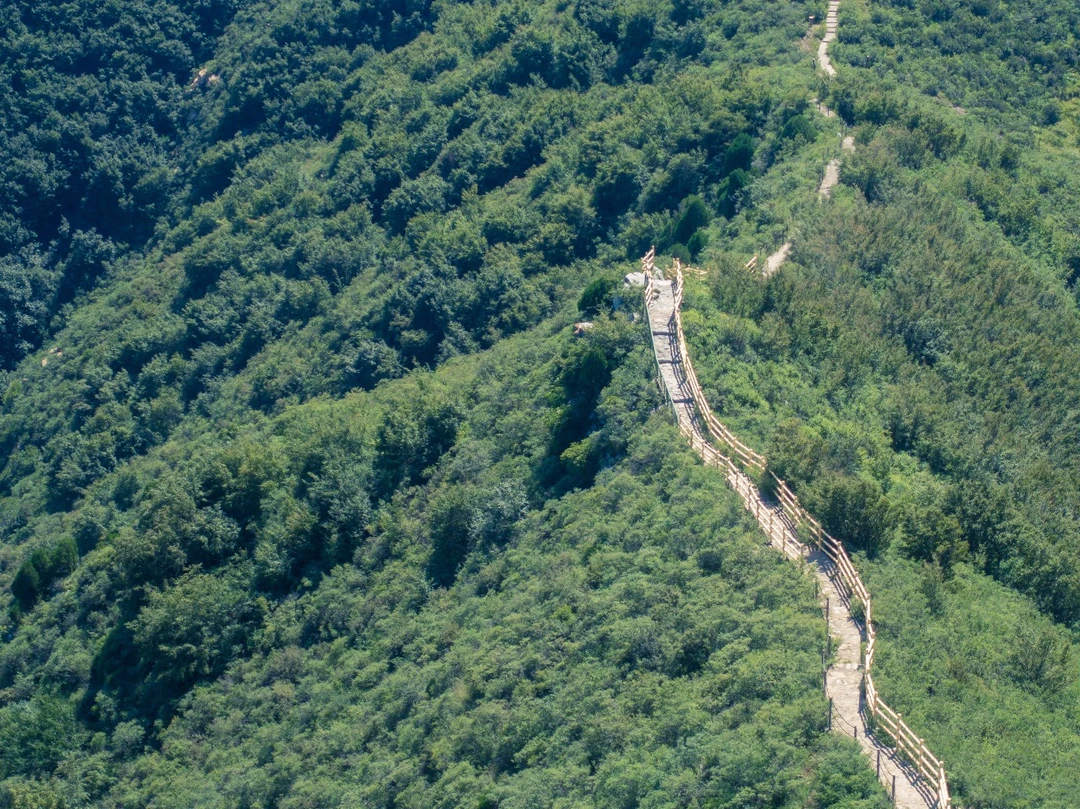
The next destination was about seventy or eighty kilometers away. Just getting from the scenic area entrance to the Baicaopan flower sea at the summit involved continuous winding roads and a long walk. If we didn't hurry, thick fog might roll in before we reached the top, and we wouldn't be able to see anything.
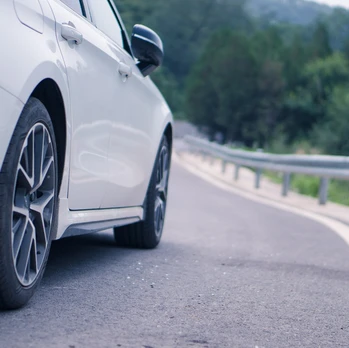
My car was a Lynk & Co 03. The interior has a Volvo feel to it, but without being too "Scandinavian minimalist." Sport seats, red stitching, a multifunction steering wheel with silver chrome trim—it's perfect for young people. The side armrests are made of suede, and the honeycomb decorative strip running across the dashboard adds a sporty touch.

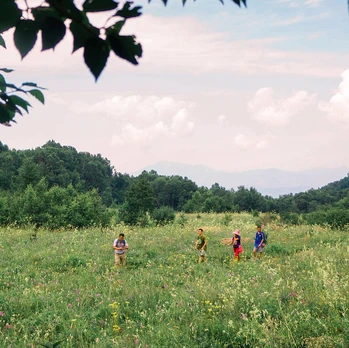
Baicaopan Meadow is part of Baihua Mountain (Hundred Flower Mountain) in Fangshan. At an elevation of nearly 2,000 meters, it's one of the best places near Beijing to see wildflower seas in summer. From June to August, the mountaintop transforms into a carpet of yellow, purple, and white blooms.
The climb is steep, but the reward is breathtaking. As you ascend, the city noise fades, replaced by the sound of wind through pine forests. At the summit, the flower meadow stretches like a living painting—waves of blossoms swaying in the mountain breeze.
Pro tip: Visit in late June for peak blooming season. The flowers include golden potentilla, blue gentians, and white anemones. Bring a windbreaker—even in summer, the mountaintop can be chilly and foggy.
[Link: Best flower seas near Beijing for photography]
Mountain Village: Huatai in Puwa Township
The final stop was Huatai, a small village nestled in Puwa Township, Fangshan. Unlike the tourist-heavy areas of Beijing, Huatai offers a glimpse into traditional mountain village life. Stone houses with gray tiles, narrow lanes, and terraced fields clinging to the hillsides.
The village sits at an elevation of about 1,200 meters, offering panoramic views of the surrounding mountains. In summer, the terraced fields are lush green; in autumn, they turn golden with ripe corn and millet.
What to do in Huatai: - Walk the ancient stone paths - Visit a local farmer's home for a simple meal (try the wild vegetable dumplings) - Photograph the terraced landscapes at sunset - Stay overnight in a village guesthouse for a true escape
FAQ: Beijing Western Mountains Road Trip
Q1: What's the best time to visit Tanzhe Temple and Baicaopan?
A: Tanzhe Temple is beautiful year-round, but spring (April-May) and autumn (September-October) offer the most pleasant weather. Baicaopan Meadow is best from June to August for flower viewing. Avoid weekends if possible to dodge crowds.
Q2: Is the drive to Baicaopan suitable for beginners?
 A: No. The G108 National Highway has continuous sharp curves and steep climbs. Only experienced drivers should attempt this route, especially in wet weather. Consider hiring a local driver if you're not confident.
Q3: Can I visit all three stops in one day?
 A: Yes, but it's a packed day. Start early (before 7 AM) and allow 2-3 hours at Tanzhe Temple, 2-3 hours at Baicaopan, and 1-2 hours at Huatai. You'll be back in Beijing by evening.
Q4: Are there accommodation options near Baicaopan?
A: Yes, there are village guesthouses in Puwa Township and a few basic hotels near the scenic area. Book in advance during peak season. For a more rustic experience, stay in Huatai village.
Q5: What should I pack for this trip?
A: Comfortable walking shoes, a windbreaker (even in summer), sunscreen, insect repellent, snacks, water, a camera, and cash (some villages have no card payment). Don't forget your ID for temple entry.
Conclusion: Your Western Mountains Adventure Awaits
This journey through Beijing's Western Mountains reminded me that travel doesn't always require a plane ticket. Sometimes, the most extraordinary experiences are hiding just an hour's drive from your doorstep. From the 1,700-year-old Tanzhe Temple with its legendary snake, to the sea of wildflowers at Baicaopan Meadow, to the timeless mountain village of Huatai—Beijing's western outskirts offer a rich tapestry of history, nature, and culture.
Your next weekend escape is closer than you think.
[Link: More hidden Beijing road trip itineraries]
Ready to explore? Share your Western Mountains photos with us on social media using #HiddenBeijing. Have questions about the route? Drop a comment below—we'd love to help you plan your perfect getaway.
Safe travels, and may you find your own "hidden Beijing."
You should also read:
Dreaming of Beijing: A City of Flames and Embers
Here is the SEO-optimized, rewritten article based on the source material. It has been restructured for search intent, readability, and keyword density while preserving the original poetic and narrative essence. SEO Title: Dreaming of Beijing: A City of Flames, Embers, and 3,000 Years of History…
Continue reading...
Solo in Beijing: Discovering Another Side of the Capital Amid Red Walls and Grey Tiles
Meta Description: Traveling solo in Beijing on a student budget? Discover hidden gems, practical tips for first-time solo travelers, and how to explore the capital's red walls and grey tiles without breaking the bank. When my friends asked why I chose to go to Beijing…
Continue reading...
A Passionate Journey Through Beijing & Tianjin: Beijing Complete Guide – JOJO's In-Depth Travel Notes
Meta Description: Explore Beijing & Tianjin in 5 days with this complete travel guide. From the Forbidden City to the Great Wall, discover insider tips, transportation hacks, and must-see attractions. Plan your perfect China trip today. Beijing is not just a city—it's a living museum…
Continue reading...