The Ming Dynasty from Start to Finish: A Journey Through Every Imperial Tomb of the Ming Thirteen Tombs
Meta Description: Explore the complete history of the Ming Dynasty through its imperial tombs. Discover 13 Ming emperors' final resting places at Changping District, Beijing—from Yongle's grand Changling to the mysteries of blank steles. Plan your visit today.
Introduction: Where History Rests in Stone
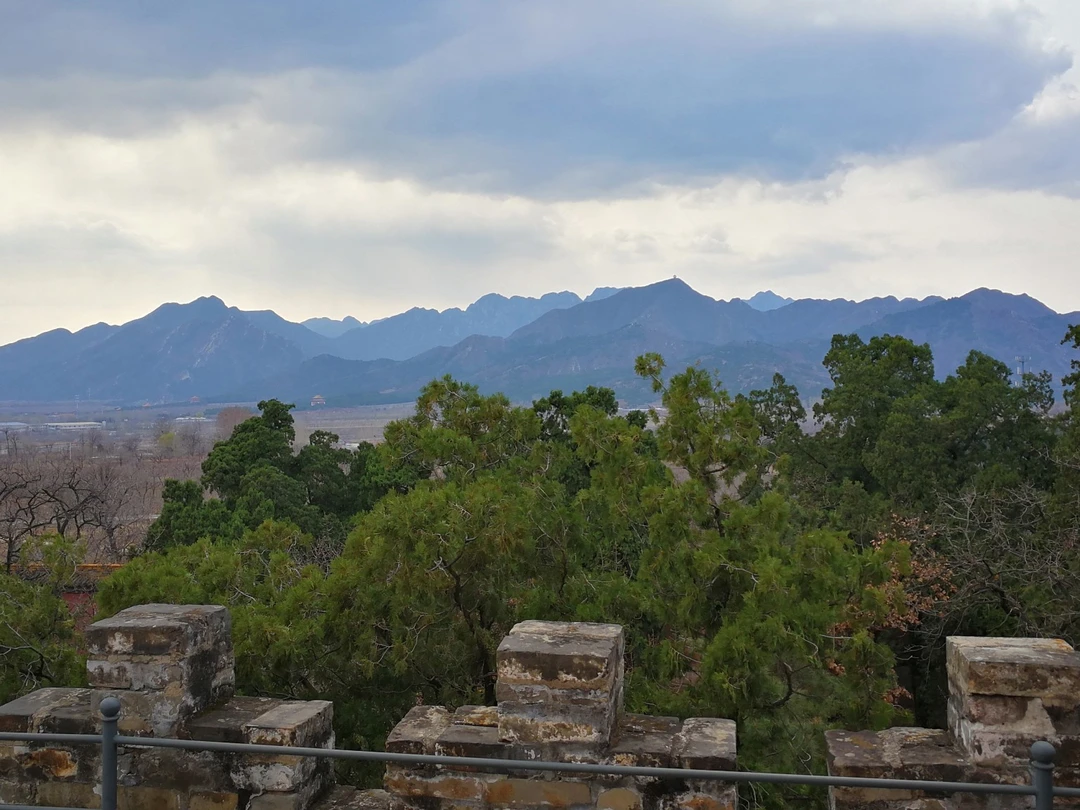
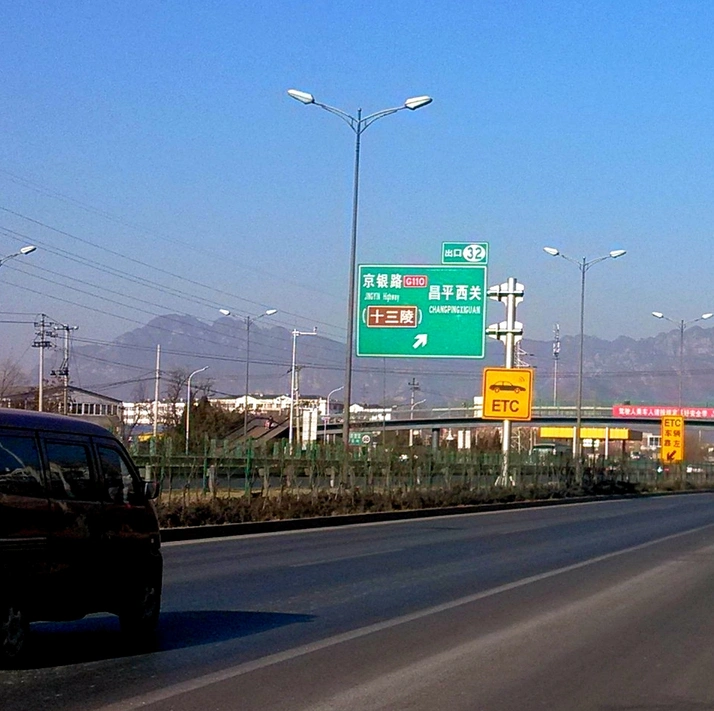
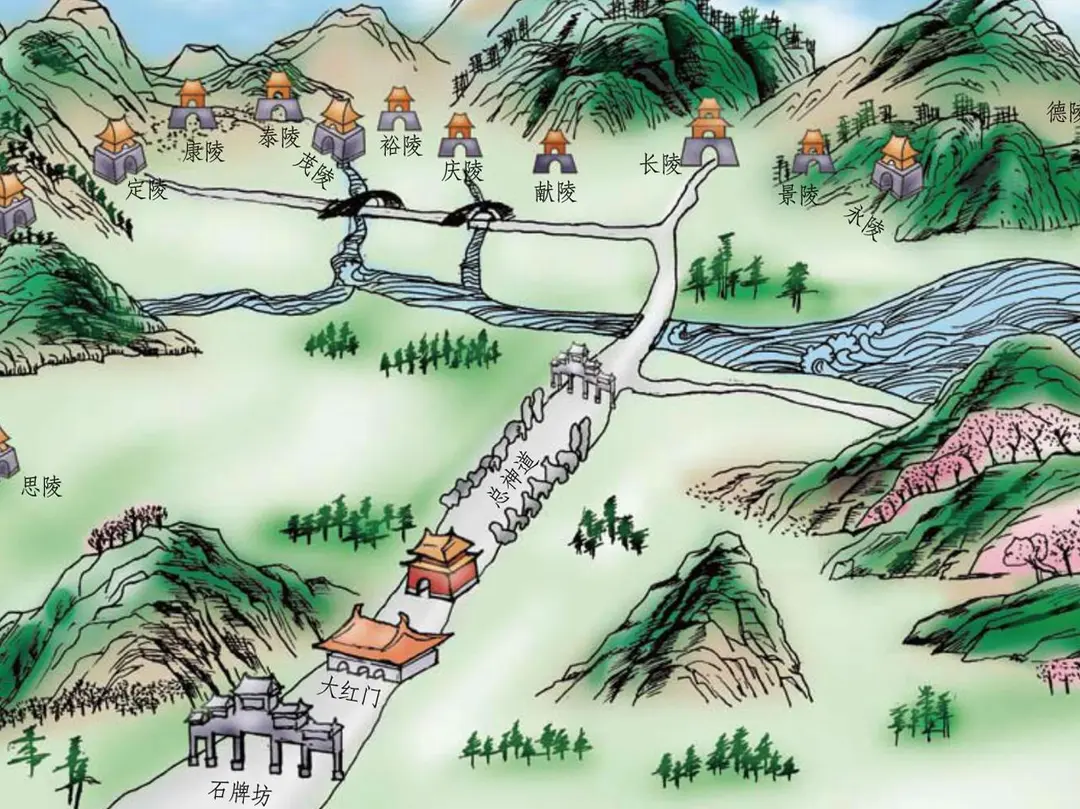
In the northwestern outskirts of Beijing, at the foot of Tianshou Mountain in Changping District, lie the final resting places of thirteen Ming emperors. There is no glittering gold here, no lantern-lit canals—only weathered stone statues, crumbling gate towers, and rolling mountain ranges. On a winter afternoon, as withered grass shivers in the biting wind, desolation and solemnity blend together, evoking a profound sense of history's weight and melancholy.
The Ming Dynasty was a uniquely remarkable chapter in Chinese history—a dynasty that "refused marriage alliances, refused tribute payments, refused war reparations, and refused territorial concessions." It was an era defined by the unyielding spirit of "the Son of Heaven guards the nation's gates, and the sovereign dies for the altars of state," alongside towering figures like Yu Qian, Hai Rui, Qi Jiguang, and Zhang Juzheng.
Of the sixteen Ming emperors, thirteen lie buried here. The founding emperor, Zhu Yuanzhang, rests in Nanjing. The Jianwen Emperor vanished without a trace. The Jingtai Emperor was deposed and buried at Yuquan Mountain in Haidian. Today, let us follow the trail of history and visit each of these emperors' final sanctuaries in the chronological order their tombs were built.
[Link: Ming Dynasty history overview] [Link: Beijing travel guide to Changping attractions]
Entering the Tomb Complex: The Great Red Gate and the Sacred Way
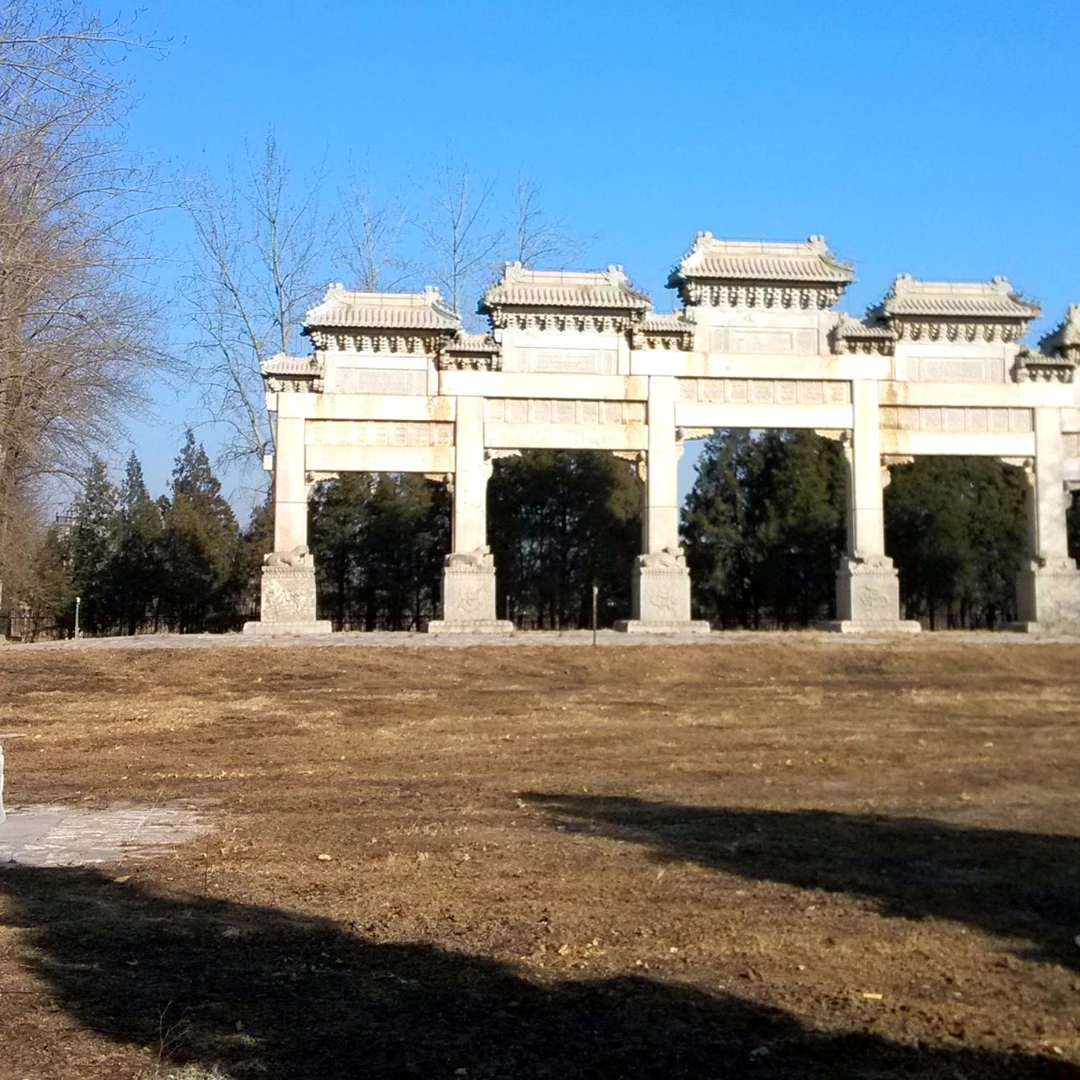
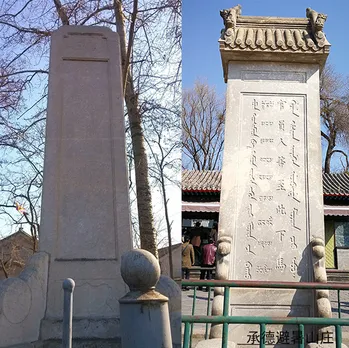
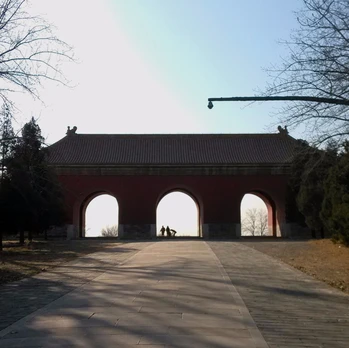
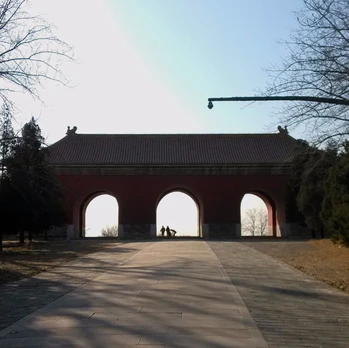
As you step into the Ming Thirteen Tombs complex, the first thing to catch your eye is a magnificent six-pillar, five-bay stone memorial archway. About five hundred meters further on stands the main entrance—the Great Red Gate. In the past, the entire tomb area was encircled by walls, but now only this solitary gate remains. On either side stand two dismounting steles, inscribed with the words: "Officials and others shall dismount here." Such steles can also be seen at Beijing's Imperial College and at the Mountain Resort in Chengde, serving as symbols of imperial authority.

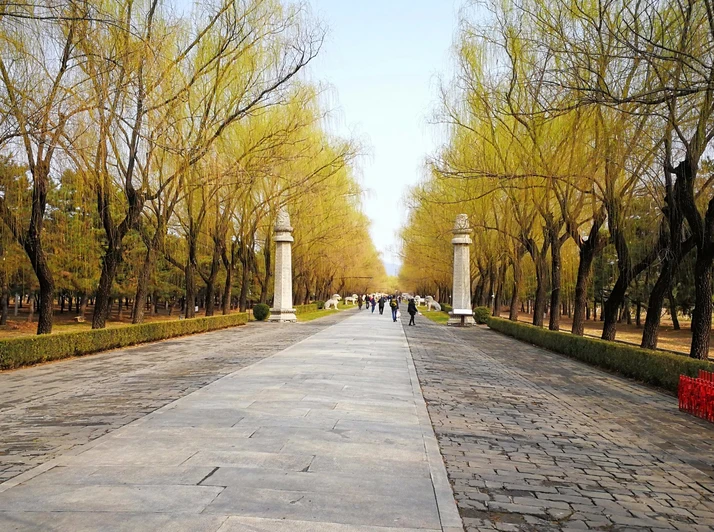
Passing through the Great Red Gate, you enter the Sacred Way. Along this path leading to the tomb area, stone statues, ornamental pillars, and the Stele Pavilion of Divine Merit and Sacred Virtue are arranged in sequence, as if silently recounting the life achievements of the Yongle Emperor, Zhu Di. The stele bearing the inscription of divine merit and sacred virtue was personally composed by Zhu Di's eldest son, Zhu Gaozhi, recording the life of the Yongle Emperor.
Interestingly, of all the Thirteen Tombs—except for the Siling Tomb—every tomb has such a stele, but only the one at Changling bears an inscription. The rest are blank steles—perhaps because later emperors, knowing their own achievements could not compare with their ancestors', simply left the stones empty.
[Link: Sacred Way stone statues history] [Link: Imperial tomb architecture guide]
Changling: The Glory and Final Rest of the Yongle Emperor
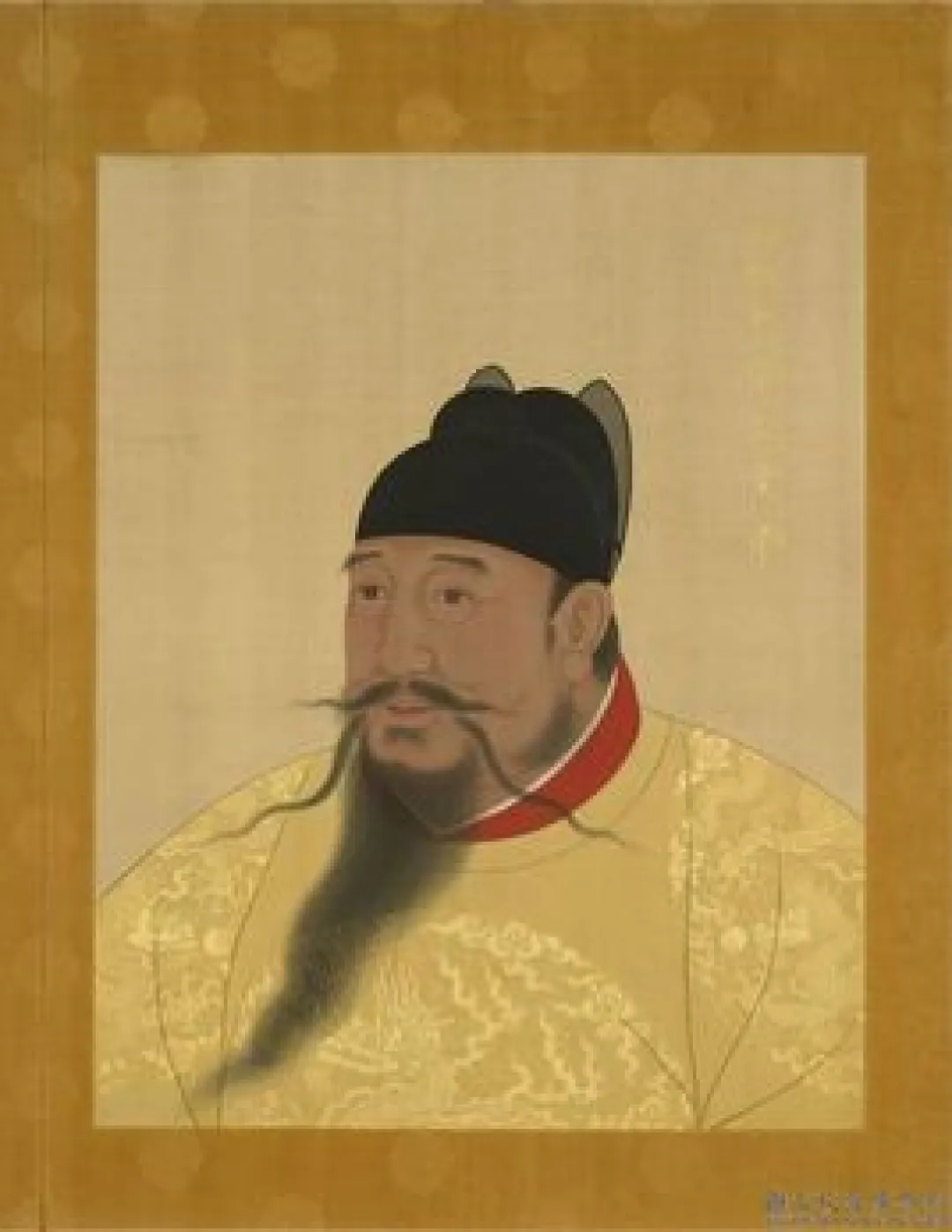
Changling is the first and largest of the Thirteen Tombs, as well as the best preserved. Its occupant is the third Ming emperor, Zhu Di, whose reign title was Yongle. He seized the throne from his nephew, executed Fang Xiaoru's "ten clans," and killed 873 people in a single purge—he was certainly not a "good man" in the conventional sense, but he was undoubtedly an outstanding emperor.
During his reign, he dispatched Zheng He on seven voyages to the Western Seas, moved the capital to Beijing, compiled the Yongle Encyclopedia, and launched five military campaigns into the northern deserts, ushering in the "Yongle Golden Age." Almost every historically significant building in Beijing—the Forbidden City, the Temple of Heaven, the Imperial Ancestral Temple—was built under his orders.
Entering Changling, you pass through the Ling'en Gate, the Ling'en Hall, and the Lingxing Gate before reaching the Ming Tower at the rear. "Ling'en" is a homophone for "receiving grace," a reminder to future generations that when they come to pay respects at the tombs, they must never forget the kindness of their ancestors. The Ling'en Hall is nine bays wide and five bays deep, symbolizing the emperor's "supreme status." The sixty main pillars inside, each over a meter in diameter, are all made of golden-thread nanmu wood. By the Qing Dynasty, this timber had become extinct; when the Kangxi and Qianlong emperors built their own tombs, they had to use pine wood instead.
On the treasure mound stands a stele inscribed with the words: "Tomb of Emperor Chengzu Wen." In fact, Zhu Di's original temple name was "Taizong." It was the Jiajing Emperor who changed it to "Chengzu" to avoid a conflict of succession. Throughout his life, Zhu Di personally led five military expeditions against the remnants of the Northern Yuan. In the twenty-second year of Yongle, he died on campaign in the northern frontier. Having walked through brilliance and splendor, he finally returned to this land he had chosen with his own hands.
[Link: Yongle Emperor biography] [Link: Forbidden City construction history]
Xianling and Jingling: The Frugal Legacy of the Ren-Xuan Golden Age
Xianling: The Tomb of Emperor Renzong
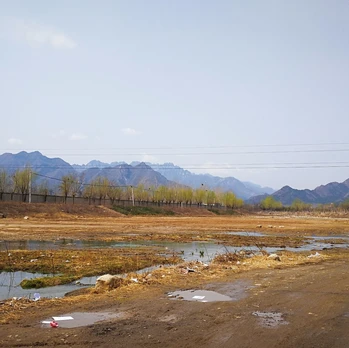
Xianling is the tomb of the Renzong Emperor, Zhu Gaozhi, Zhu Di's eldest son. He was overweight, prone to illness, and gentle by nature, ruling for only one year before passing away. Because his reign was so brief, he ordered a simple burial to avoid burdening the people, making Xianling one of the smaller tombs among the Thirteen. Today, only Changling, Dingling, and Zhaoling are open to the public; the rest remain closed. I could only catch a glimpse of Xianling's interior through a gap in the gate.
Jingling: The Artistic Emperor's Resting Place
Jingling, on the other hand, belongs to Zhu Gaozhi's eldest son, the Xuanzong Emperor, Zhu Zhanji. He reigned for ten years and was an emperor of extraordinary artistic talent. His paintings—Playing with Monkeys, Song of Snow, Cats Under Flowers, and Imperial Copy of Huang Quan's Birds and Flowers Scroll—rival the slender-gold calligraphy of Emperor Huizong of Song. But unlike Huizong, who lost his kingdom, Zhu Zhanji was a capable ruler who maintained the realm. The ten years of his joint rule with his father are known as the "Ren-Xuan Golden Age," a period marked by frugality. As a result, Jingling is also quite modest in size.
[Link: Ren-Xuan Golden Age economic reforms] [Link: Ming Dynasty art and culture]
Yuling: A Life of Captivity and Deposition
The Yingzong Emperor, Zhu Qizhen, was Xuanzong's eldest son and ruled for a total of twenty-one years. His life can be summed up as "muddled in the first half, clear-headed in the second." As a young man, inspired by his grandfather Zhu Di's martial exploits, he assembled 200,000 troops and personally led a campaign against the Oirat Mongols. The result was disaster: he was captured at the Battle of Tumu Fortress and spent three years as a prisoner.
A kingdom cannot go a single day without a ruler, so his younger brother, Zhu Qiyu, ascended the throne as the Jingtai Emperor. He appointed Yu Qian to defend Beijing. When many officials proposed following the Southern Song precedent of fleeing south, Yu Qian stood firm, personally leading 220,000 troops to defeat the Oirats and bring Yingzong back. Many people know Yu Qian's famous lines: "Shattered into a thousand pieces, I fear nothing, so long as my innocence remains in the world." But his military achievements deserve even more recognition.
After returning from captivity, Zhu Qizhen was placed under house arrest for seven years. He eventually regained the throne through a coup, deposing his brother and executing Yu Qian—one of the great tragedies of Ming history. His tomb, Yuling, reflects this tumultuous life. Though modest in comparison to Changling, it carries the weight of a ruler who experienced the extremes of imperial fortune.
[Link: Battle of Tumu Fortress analysis] [Link: Yu Qian biography and legacy]
Other Notable Tombs in the Ming Thirteen Tombs Complex
Dingling: The Only Excavated Imperial Tomb
Dingling is the tomb of the Wanli Emperor, Zhu Yijun, who reigned for 48 years—the longest of any Ming emperor. It is the only imperial tomb in the complex that has been archaeologically excavated. In 1956, archaeologists opened the underground palace, revealing a wealth of artifacts, including golden crowns, jade belts, and silk garments. The excavation remains controversial, as many artifacts deteriorated rapidly upon exposure to air. Today, visitors can descend into the underground palace and witness the emperor's stone throne and burial chambers.
Zhaoling: Restoration and Renewal
Zhaoling was originally built for the Longqing Emperor, Zhu Zaiji, who reigned only six years. It underwent significant restoration in the 1980s and is now one of the three tombs open to the public. The tomb complex features a beautifully restored Ling'en Hall and a peaceful courtyard, offering visitors a glimpse of Ming imperial burial architecture.
Siling: The Tragic Final Emperor
Siling is the tomb of the Chongzhen Emperor, Zhu Youjian, the last Ming emperor. When Li Zicheng's rebel forces breached Beijing in 1644, Zhu Youjian wrote a final message: "I have no face to see my ancestors in the underworld," then hanged himself on Coal Hill (now Jingshan Park). The Qing Dynasty later buried him in a concubine's tomb, which became Siling. It is the smallest and most humble of the Thirteen Tombs, a fitting monument to a dynasty's tragic end.
[Link: Wanli Emperor reign and decline] [Link: Ming Dynasty fall and Chongzhen Emperor]
Frequently Asked Questions About the Ming Thirteen Tombs
1. How many Ming emperors are buried in the Thirteen Tombs?

Thirteen of the sixteen Ming emperors are buried here. The founding emperor Zhu Yuanzhang rests in Nanjing's Ming Xiaoling. The Jianwen Emperor vanished during his uncle's coup. The Jingtai Emperor was deposed and buried at Yuquan Mountain in Haidian.
2. Which tombs are open to the public?
Currently, three tombs are open: Changling (Yongle Emperor), Dingling (Wanli Emperor), and Zhaoling (Longqing Emperor). Changling features the magnificent Ling'en Hall with its nanmu pillars. Dingling offers access to the excavated underground palace.
3. Why are most steles in the tomb complex blank?

Only the stele at Changling bears an inscription. Later emperors likely left their steles blank because they felt their achievements could not compare with those of the Yongle Emperor. This practice reflects the humility and self-awareness of later rulers.
4. How long does it take to visit the Thirteen Tombs?
A comprehensive visit takes 4–6 hours. Most visitors spend 2–3 hours at Changling and Dingling, plus time for the Sacred Way. The complex is located about 50 kilometers from central Beijing, so plan for a half-day or full-day trip.
5. What is the best time to visit?
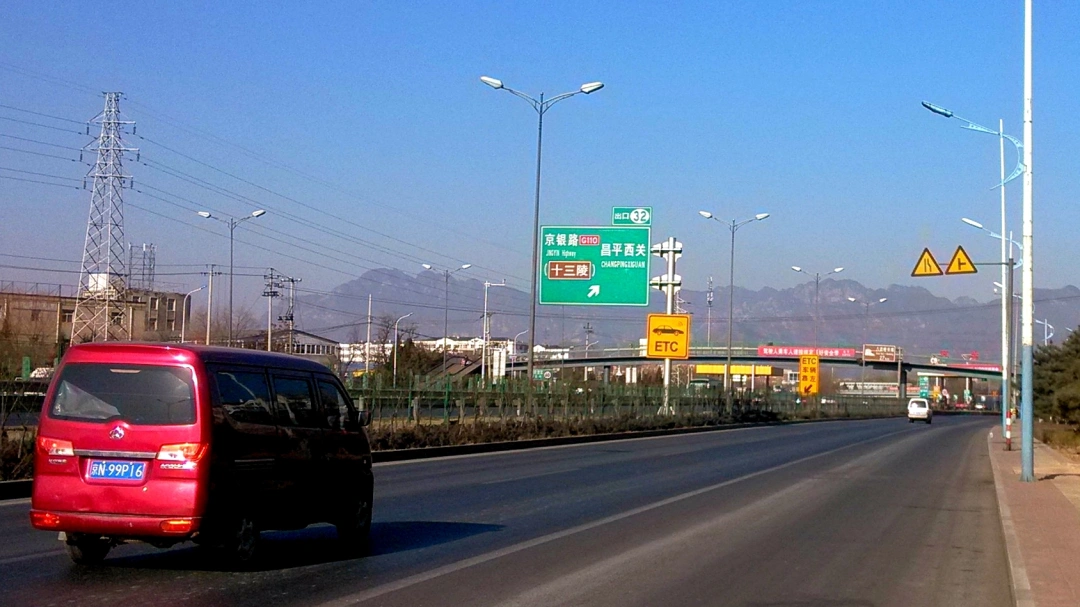
Spring (April–May) and autumn (September–October) offer pleasant weather and beautiful scenery. Winter visits provide a more somber, atmospheric experience with fewer crowds. Summer can be hot and humid, but the tombs' mountain setting offers some relief.
[Link: Beijing day trip itineraries] [Link: Best time to visit Beijing attractions]
Plan Your Journey Through Ming History
The Ming Thirteen Tombs offer more than just ancient architecture—they provide a window into the soul of a dynasty that shaped China's identity. From the grandeur of Changling to the humility of Siling, each tomb tells a story of ambition, achievement, tragedy, and legacy.
Start planning your visit today:
- Location: Tianshou Mountain, Changping District, Beijing (approximately 50 km northwest of city center)
- Transportation: Take bus 872 from Deshengmen or join a guided tour from central Beijing
- Opening hours: 8:00 AM – 5:30 PM (April–October), 8:30 AM – 5:00 PM (November–March)
- Ticket prices: Combined ticket for Changling, Dingling, and Zhaoling: approximately ¥135 (peak season)
Whether you're a history enthusiast, an architecture lover, or simply seeking a profound cultural experience, the Ming Thirteen Tombs await. Walk the Sacred Way where emperors once processed. Stand in the shadow of nanmu pillars that have witnessed centuries. And remember the dynasty that declared: "The altars of state matter more than the sovereign."
Book your tour now and step into the pages of Chinese history. [Link: Ming Thirteen Tombs official ticket booking] [Link: Beijing guided history tours]
Preserve history. Respect the tombs. Take only photographs, leave only footprints.
You should also read:
Beijing Through the Lens: One Person's Winter Wanderings – An SEO-Optimized Travel Guide
Meta Description: Discover Beijing's winter charm through a photographer's lens. From Nanluoguxiang's night scenes to Sanlitun's neon glow, explore the city's hidden corners and iconic landmarks in this SEO-friendly travel guide. January in Beijing is so cold you can hear your own breath. But for…
Continue reading...
Dreaming of Beijing: A City of Flames and Embers
Here is the SEO-optimized, rewritten article based on the source material. It has been restructured for search intent, readability, and keyword density while preserving the original poetic and narrative essence. SEO Title: Dreaming of Beijing: A City of Flames, Embers, and 3,000 Years of History…
Continue reading...
A Spontaneous Escape Through Tianjin, Beijing, and Shandong: An Unforgettable Solo Travel Adventure
Meta Description: Discover the raw beauty of a spontaneous solo journey through Tianjin, Beijing, and Shandong. From Quanjude roast duck to Tanggu night views, read this heartfelt travelogue of escape and self-discovery. The July wind carried restlessness and unease. After abruptly ending a ten-day job…
Continue reading...