The Palace Museum: An Invaluable Historical Witness to Chinese Civilization During the Ming and Qing Dynasties — Beijing World Heritage Series, Part 1
Meta Description: Discover why the Forbidden City is a UNESCO World Heritage site and an invaluable historical witness to Chinese civilization. Explore its 600-year history, architectural wonders, and modern transformation.
Introduction: One City, Six Centuries, A Living History of China
Throughout China's five-thousand-year history, more than 550 emperors and over 80 feudal dynasties have risen and fallen, with hundreds of capital cities built in their names. The palace complexes within these capitals once stood in glorious splendor, yet most crumbled into the dust of history alongside the dynasties they served. Only one remains intact to this day: the Forbidden City in Beijing, the imperial palace of the Ming and Qing dynasties, and the largest, most representative complex of royal architecture in existence.
In 1987, the Forbidden City became one of China's first entries on the UNESCO World Heritage List. The World Heritage Committee bestowed high praise: "The Forbidden City was the supreme power center for more than five centuries in China. With its landscaped gardens and the vast complex of more than 9,000 rooms containing furniture and works of art, it constitutes an invaluable historical witness to Chinese civilization during the Ming and Qing dynasties."
No matter how lavish the words, they can never fully capture the architectural beauty, the staggering wealth of treasures, or the profound cultural depth of the Forbidden City. It was precisely for this reason that in 2003, the academic community consolidated the many disciplines connected to the Forbidden City—history, politics, architecture, artifacts, literature, art, religion, folklore, and science—into a single comprehensive field of study: "Palacology" or "Forbidden City Studies."
The year 2020 marked the 600th anniversary of the Forbidden City's construction and the 95th anniversary of the founding of the Palace Museum. Through the sands of time, when we speak of magnificent palaces, the Forbidden City stands alone.
The History of the Forbidden City: From Imperial Forbidden Ground to World Heritage

Ming Dynasty Construction and the Yongle Emperor
Construction of the Forbidden City began in the fourth year of the Yongle reign of the Ming Dynasty (1406 CE) and was completed in the eighteenth year of the same reign (1420 CE). Over the following five centuries, it served as the residence and seat of power for 24 emperors of both the Ming and Qing dynasties.
Named after the concept of the "Purple Palace" at the center of the heavens, the Forbidden City became the ultimate symbol of imperial authority ruling over the entire nation. It is more than just a palace; it is a three-dimensional history of China. From Emperor Yongle's relocation of the capital to Beijing to the abdication of Puyi, the last Qing emperor, the Forbidden City witnessed countless pivotal events: the zenith and decline of the Ming Dynasty, the flourishing Kang-Qian era of the Qing, the Opium Wars, and the tumultuous winds of the Xinhai Revolution.
UNESCO World Heritage Site Status
In 1987, the Forbidden City earned its place as one of China's first UNESCO World Heritage sites. This recognition highlighted the palace complex as an invaluable historical witness to Chinese civilization during the Ming and Qing dynasties. The designation also paved the way for increased conservation efforts and global tourism.
Key Fact: The Forbidden City is the largest collection of ancient wooden structures in the world, with more than 1,200 buildings and 9,371 rooms.
[Link: UNESCO World Heritage sites in Beijing]
Architectural Beauty: Frozen Eastern Philosophy
The Principle of Axial Symmetry
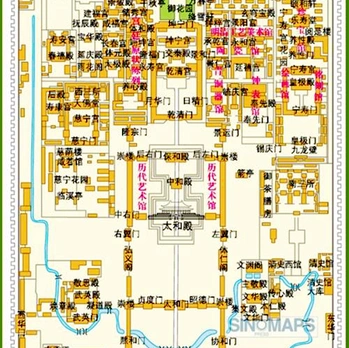
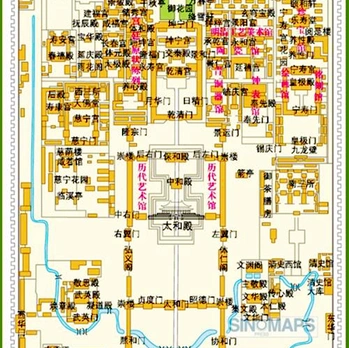
Hegel once said, "Architecture is frozen music." And the Forbidden City is undoubtedly the most magnificent movement in this Eastern symphony. The layout of the Forbidden City strictly adheres to the principle of axial symmetry. The three main halls of the Outer Court (Hall of Supreme Harmony, Hall of Central Harmony, and Hall of Preserving Harmony) and the three palaces of the Inner Court (Palace of Heavenly Purity, Hall of Union, and Palace of Earthly Tranquility) are all aligned on the central axis of the entire city of Beijing.
The entire complex measures 752.54 meters in length and 963.13 meters in width, with walls 9.27 meters high and four main gates. This layout not only emphasizes the supremacy of imperial power but also embodies the ancient Chinese philosophical concept of "harmony between heaven and humanity."
Hierarchical Design and Symbolism
Throughout the Forbidden City, a strict hierarchical system is evident. From the number of mythical beasts adorning the roof ridges to the number of bays in a gate or hall, and even the designated walking paths for different ranks, everything reflects a rigid social order. This beauty of sequence makes the Forbidden City a paragon of classical Chinese architecture.
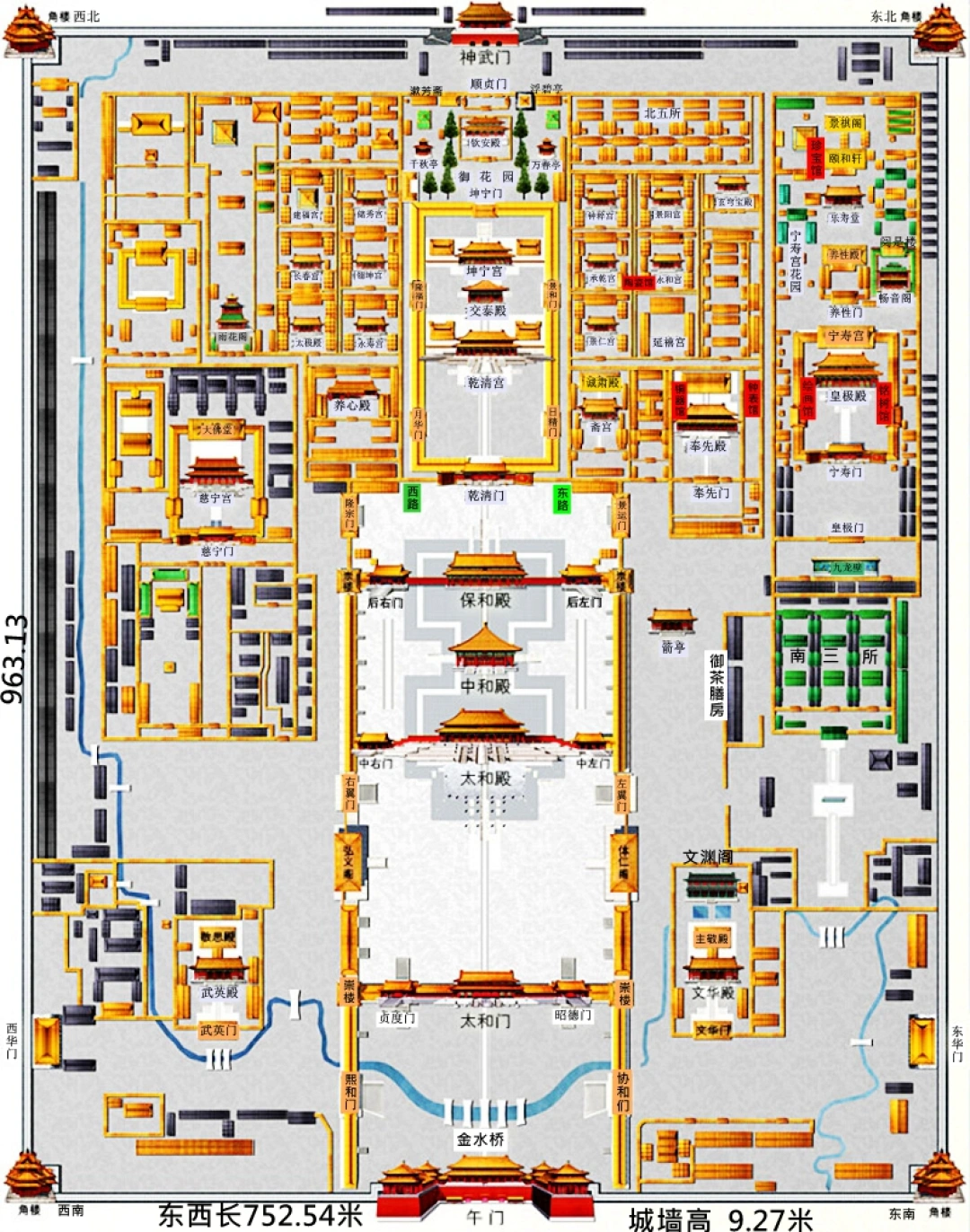
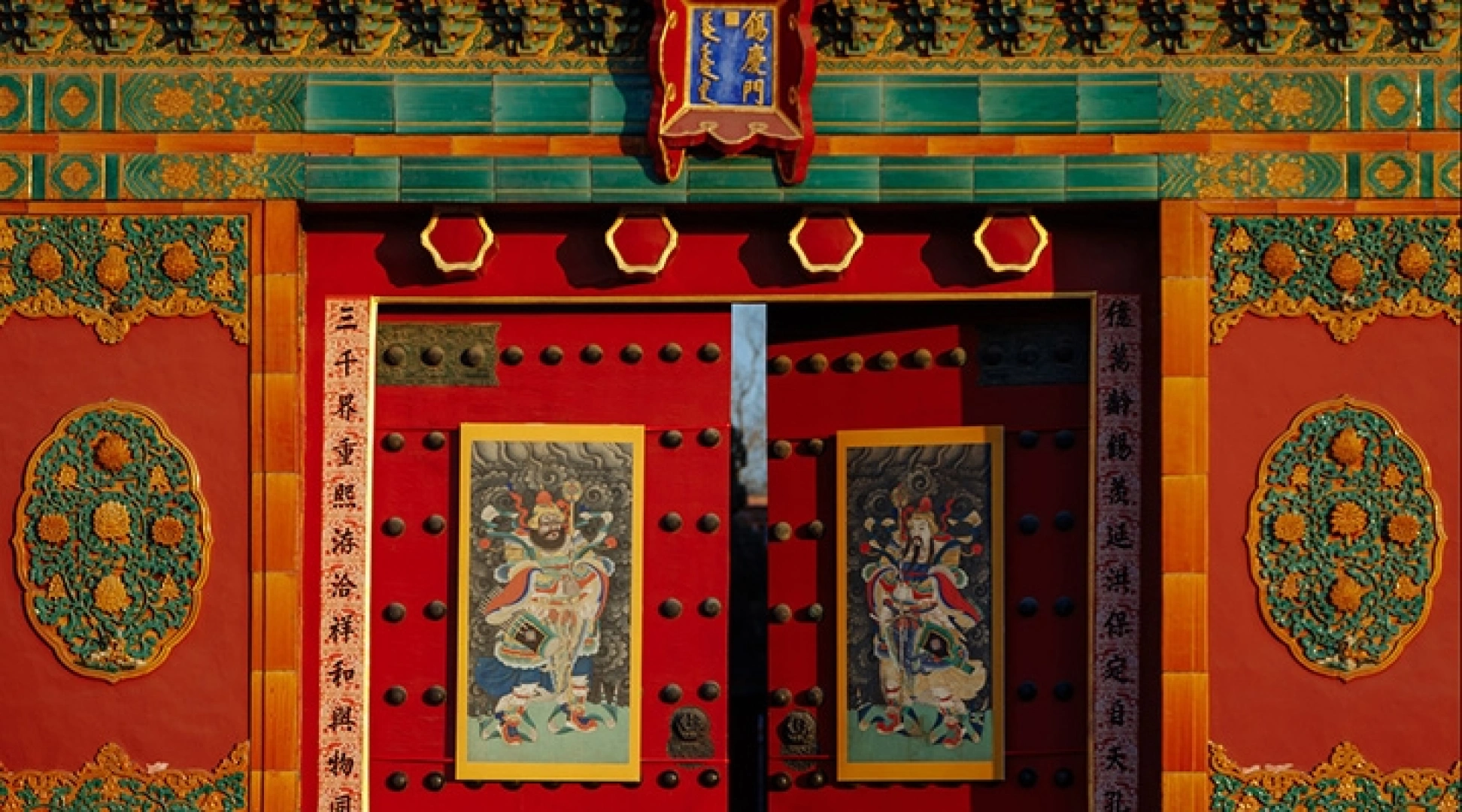
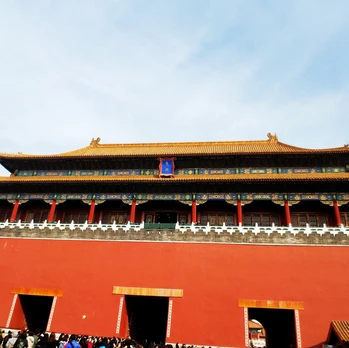
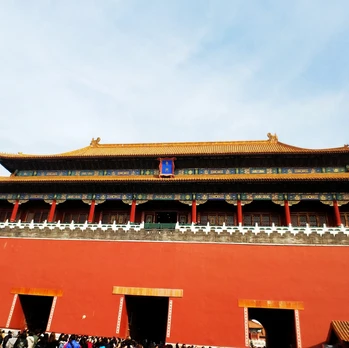
Architectural Highlights: - Hall of Supreme Harmony: The largest wooden hall in China, used for major ceremonies - Meridian Gate: The grand southern entrance with unique "door nail" symbolism - Nine Dragon Wall: A magnificent glazed tile screen representing imperial power
[Link: Chinese imperial architecture guide]
The Palace Museum Transformation: Shan Jixiang's Legacy
From "Seven, Eight, Nine" to 9,371 Rooms
For years, a popular myth held that the Forbidden City had "9,999 and a half rooms." It wasn't until December 15, 2018, that the true number was revealed by the director of the Palace Museum, Shan Jixiang.
In 2012, the Palace Museum was mired in controversy and at a low point. At the age of 58, Shan Jixiang took on the challenging role of director. Upon assuming office, he and his assistant spent over five months walking through every single one of the Forbidden City's 9,371 rooms and its more than 1,200 buildings. He walked the perimeter of the palace walls every day, wearing out 20 pairs of cloth shoes in the process.
Director Shan identified the "Seven, Eight, Nine" problems plaguing the museum:
- Seventy percent of the area was closed to the public
- Eighty percent of visitors rushed through (only seeing where the emperor held court, slept, and got married)
- Ninety percent of the collection was in storage
Bold Reforms and Digital Innovation
Faced with these challenges, Director Shan implemented sweeping reforms:
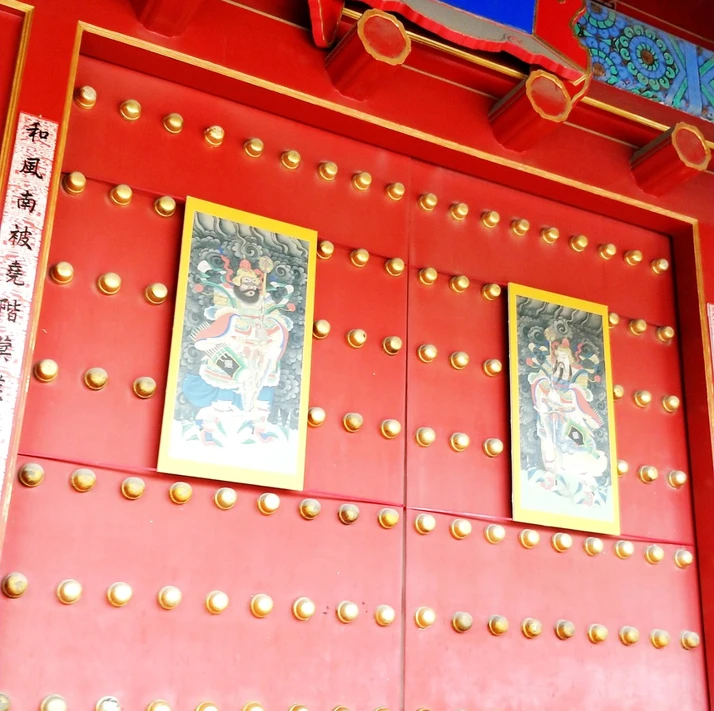
- Removing unauthorized exhibitions: Cleared out inappropriate exhibitions in front of the Meridian Gate
- Expanding public access: Open area grew from 30% to 80% by 2017
- Controlling visitor numbers: Capped daily visitors at 80,000
- Improving the environment: Banned smoking and enforced "no littering" policy in 2013
- Building a digital museum: Created virtual tours and online collections
Collection Facts: The Palace Museum holds 1,862,690 pieces (sets) of artifacts, making it one of the world's most comprehensive museum collections.
[Link: Palace Museum virtual tour guide]
Practical Visitor Guide for the Forbidden City
Best Time to Visit

- Spring (March-May): Pleasant weather, cherry blossoms
- Autumn (September-November): Clear skies, comfortable temperatures
- Avoid: Chinese National Day holiday (October 1-7) and summer weekends
Ticket Information
- Peak season (April-October): 60 RMB
- Off-peak season (November-March): 40 RMB
- Free admission: Children under 1.2m, seniors over 60 (with ID)
- Book in advance: Tickets sell out quickly, especially during holidays
Must-See Highlights
- The Three Great Halls (Outer Court)
- The Imperial Garden
- Treasure Gallery (additional ticket required)
- Clock and Watch Gallery
- Palace of Heavenly Purity (Inner Court)
Pro Tip: Arrive early (8:30 AM opening) to avoid crowds. Allow at least 3-4 hours for a comprehensive visit.
[Link: Beijing travel itinerary for first-time visitors]
Frequently Asked Questions
Q1: How many rooms does the Forbidden City actually have?
A: The Forbidden City has exactly 9,371 rooms. The term "room" refers to the space enclosed by four pillars, not modern rooms. The popular myth of "9,999 and a half rooms" was finally debunked by Director Shan Jixiang in 2018 after a complete survey.
Q2: Why is the Forbidden City called "Forbidden"?
A: The name comes from two sources. First, it was forbidden to commoners—only the imperial family, court officials, and servants could enter. Second, it was named after the "Purple Palace" (Zi Wei Yuan) in Chinese astronomy, believed to be the celestial home of the Jade Emperor, making it the earthly counterpart of heaven.
Q3: When was the Forbidden City built?
A: Construction began in 1406 CE during the Ming Dynasty under Emperor Yongle and was completed in 1420 CE. This means the Forbidden City celebrated its 600th anniversary in 2020.
Q4: Is the Palace Museum the same as the Forbidden City?
A: Yes and no. The Forbidden City refers to the imperial palace complex itself. The Palace Museum is the museum established within the Forbidden City in 1925, after the last emperor Puyi was expelled. Today, the terms are often used interchangeably.
Q5: How many artifacts does the Palace Museum hold?
A: The Palace Museum holds 1,862,690 pieces (sets) of artifacts, including paintings, ceramics, jade, bronze, calligraphy, and imperial treasures. Only about 1% is on display at any given time, though digital exhibitions are expanding access.
Conclusion: Experience the Invaluable Historical Witness to Chinese Civilization
The Forbidden City is more than a tourist attraction—it is a living museum of Chinese civilization, a testament to five centuries of imperial rule, and a UNESCO World Heritage site that continues to inspire millions of visitors each year.
Whether you're a history enthusiast, architecture lover, or cultural explorer, the Palace Museum offers an unforgettable journey through time. From the majestic Hall of Supreme Harmony to the intimate gardens of the Inner Court, every corner tells a story.
Plan your visit today and witness firsthand why this invaluable historical witness to Chinese civilization remains one of the world's greatest cultural treasures.
👉 Book your tickets in advance at the official Palace Museum website 👉 Download the digital guide for a self-paced tour 👉 Share your experience with #PalaceMuseum and #ForbiddenCity
This article is Part 1 of the Beijing World Heritage Series. Stay tuned for Part 2: The Temple of Heaven – Where Emperors Communed with Heaven.
[Link: Beijing World Heritage Series Part 2 – Temple of Heaven] [Link: Complete guide to Beijing's UNESCO sites]
You should also read:
Beijing Through the Lens: One Person's Winter Wanderings – An SEO-Optimized Travel Guide
Meta Description: Discover Beijing's winter charm through a photographer's lens. From Nanluoguxiang's night scenes to Sanlitun's neon glow, explore the city's hidden corners and iconic landmarks in this SEO-friendly travel guide. January in Beijing is so cold you can hear your own breath. But for…
Continue reading...
Dreaming of Beijing: A City of Flames and Embers
Here is the SEO-optimized, rewritten article based on the source material. It has been restructured for search intent, readability, and keyword density while preserving the original poetic and narrative essence. SEO Title: Dreaming of Beijing: A City of Flames, Embers, and 3,000 Years of History…
Continue reading...
Solo in Beijing: Discovering Another Side of the Capital Amid Red Walls and Grey Tiles
Meta Description: Traveling solo in Beijing on a student budget? Discover hidden gems, practical tips for first-time solo travelers, and how to explore the capital's red walls and grey tiles without breaking the bank. When my friends asked why I chose to go to Beijing…
Continue reading...