Three Explorations of Guji Mountain: Colliding with History Amid Autumn Colors and Ancient Ruins
Meta Description: Discover the hidden secrets of Guji Mountain in Beijing—ancient temples, pagodas, and eunuch tombs await. Explore autumn foliage, Yuan Dynasty architecture, and off-the-beaten-path ruins in this complete hiking guide.
Introduction: Why Guji Mountain Deserves a Place on Your Beijing Bucket List
Autumn in Beijing is heartbreakingly short—a fleeting golden window that demands to be seized. In 2021, as pandemic restrictions tightened, my companion "Assassin" and I finally turned our attention to the outskirts of Beijing: Guji Mountain, a place we had talked about for two years but never managed to visit.
This small mountain, located at the junction of Fangshan and Mentougou districts, stands only 711 meters above sea level. Its gentle slopes belie astonishing secrets: ancient temples, pagodas, bridges, and eunuch tombs—a corner seemingly forgotten by time, quietly waiting for curious souls to discover. After three dedicated trips, we uncovered a world of history hidden in plain sight. Here is our complete guide to exploring Guji Mountain's ancient ruins and autumn hiking trails.
Three Visits, Step by Step Deeper: How to Explore Guji Mountain

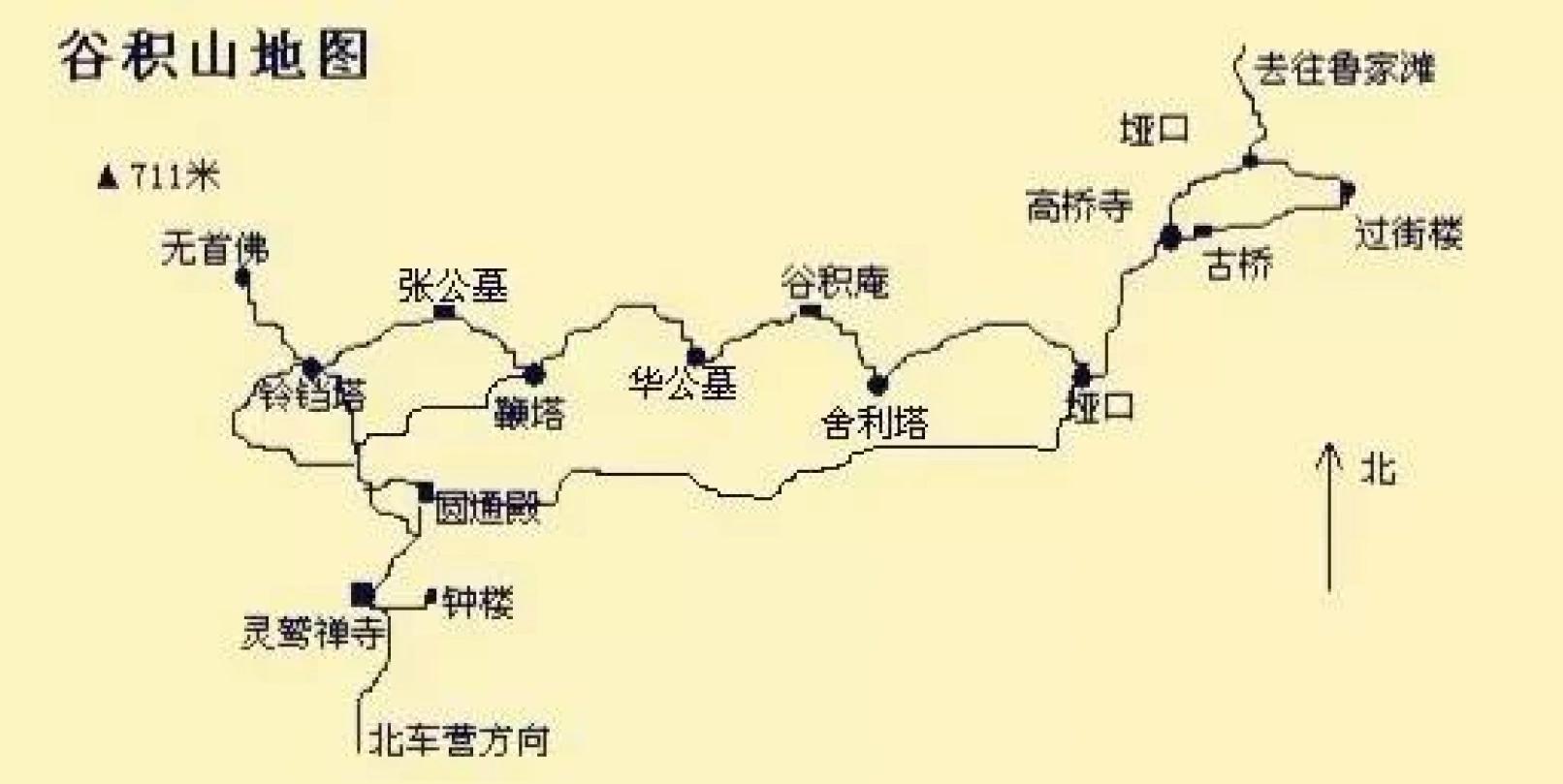
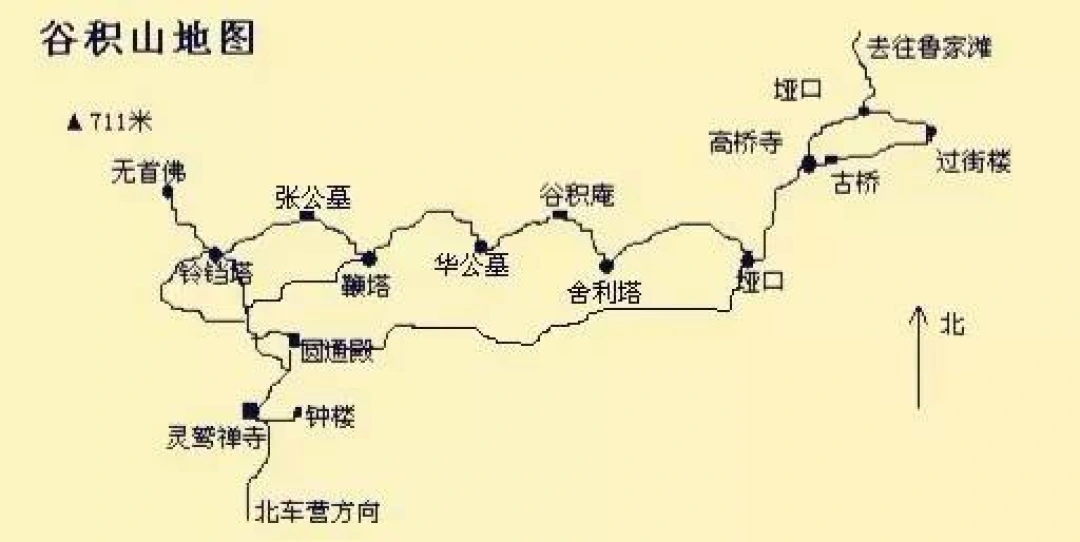
Before setting out, I found a hand-drawn map of Guji Mountain online with detailed markings. After three trips, I realized the map was astonishingly accurate—almost every ancient site could be located by following it. If you're planning a Guji Mountain hiking trip, here’s how to structure your visits.
First Visit: Western Section – Drunk on Autumn Colors
On our first hike, we planned to drive directly to Lingjiu Zen Temple. But at Beicheying Village, road construction workers stopped us, forcing us to park in the village and walk an 8-kilometer round trip. While this "detour" was frustrating, it gave us an unexpected warm-up.
The autumn colors that day were unreal. The trails on Guji Mountain are gentle, yet the crowds were almost as heavy as those at Fragrant Hills. Amid the sea of people and falling leaves, we visited: - Lingjiu Zen Temple - Yuantong Temple - Bell Pagoda - Part of Zhang Gong's Tomb - Whip Pagoda - Relic Pagoda - Part of Gaoqiao Temple ruins
Pressed for time, the section beyond Gaoqiao Temple had to wait for another day. [Link: Best autumn foliage hikes in Beijing]
Second Visit: Eastern Section in Reverse – With a Guiding Angel
A week later, we decided to go in reverse, entering from Lvyu Valley. This time, our targets were Guangzhi Zen Temple and Huanxiu Zen Temple, then crossing the mountains to find Gaoqiao Temple ruins.
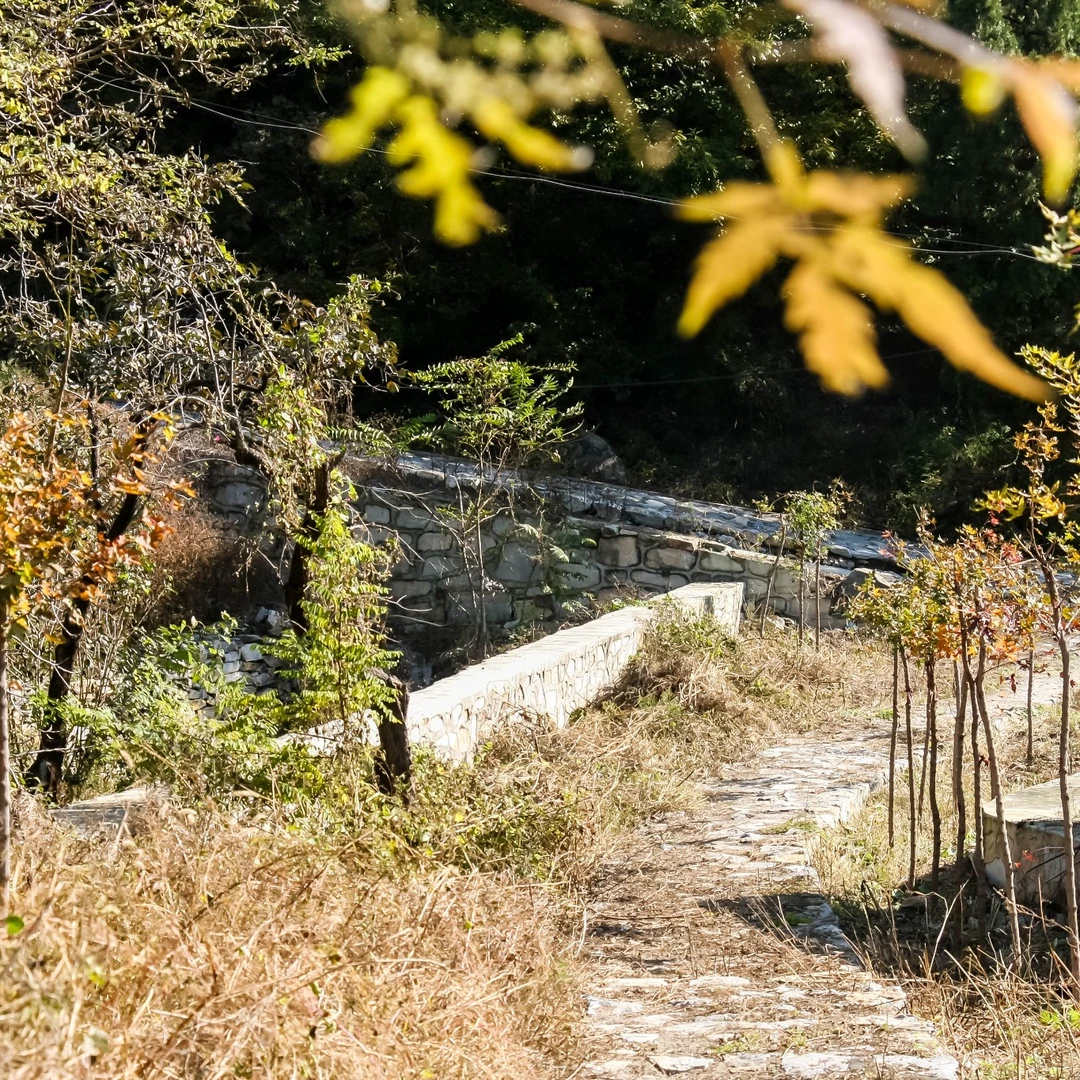
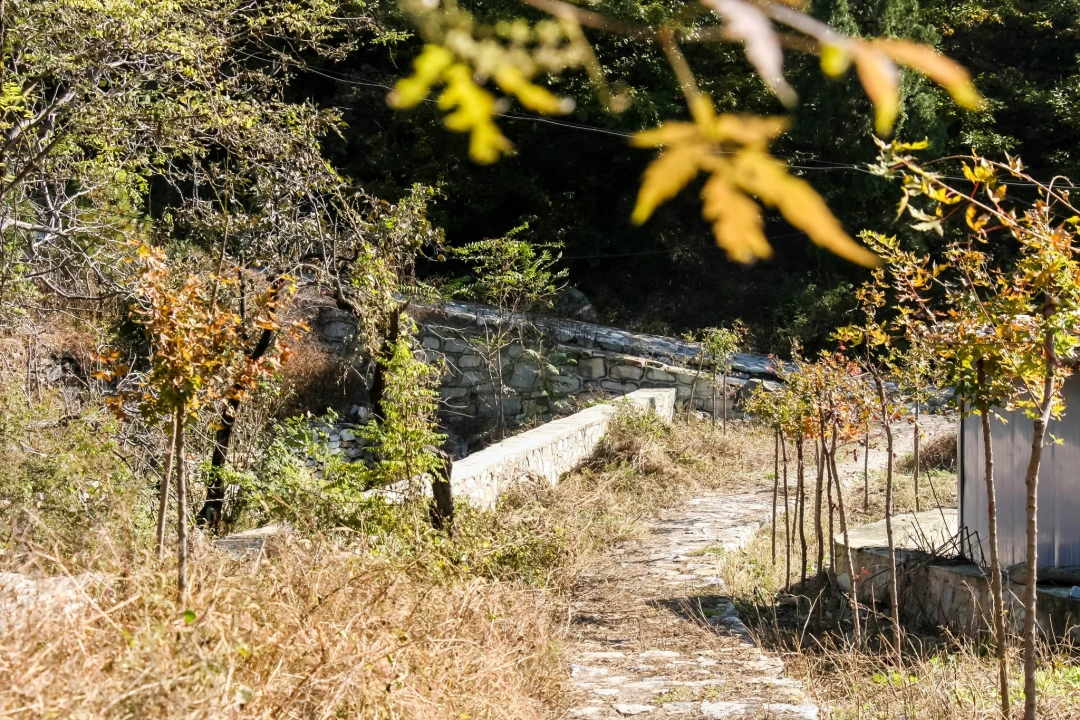
Just as we reached the Street-Spanning Pagoda ruins, we ran into a group of young people riding off-road motorcycles. One of them—a young man extremely familiar with the area—gave us detailed directions on how to find Gaoqiao Bridge and how to reach Gaoqiao Temple. Without him, we would likely have followed the well-worn path and returned empty-handed. He was nothing short of a heaven-sent guide.
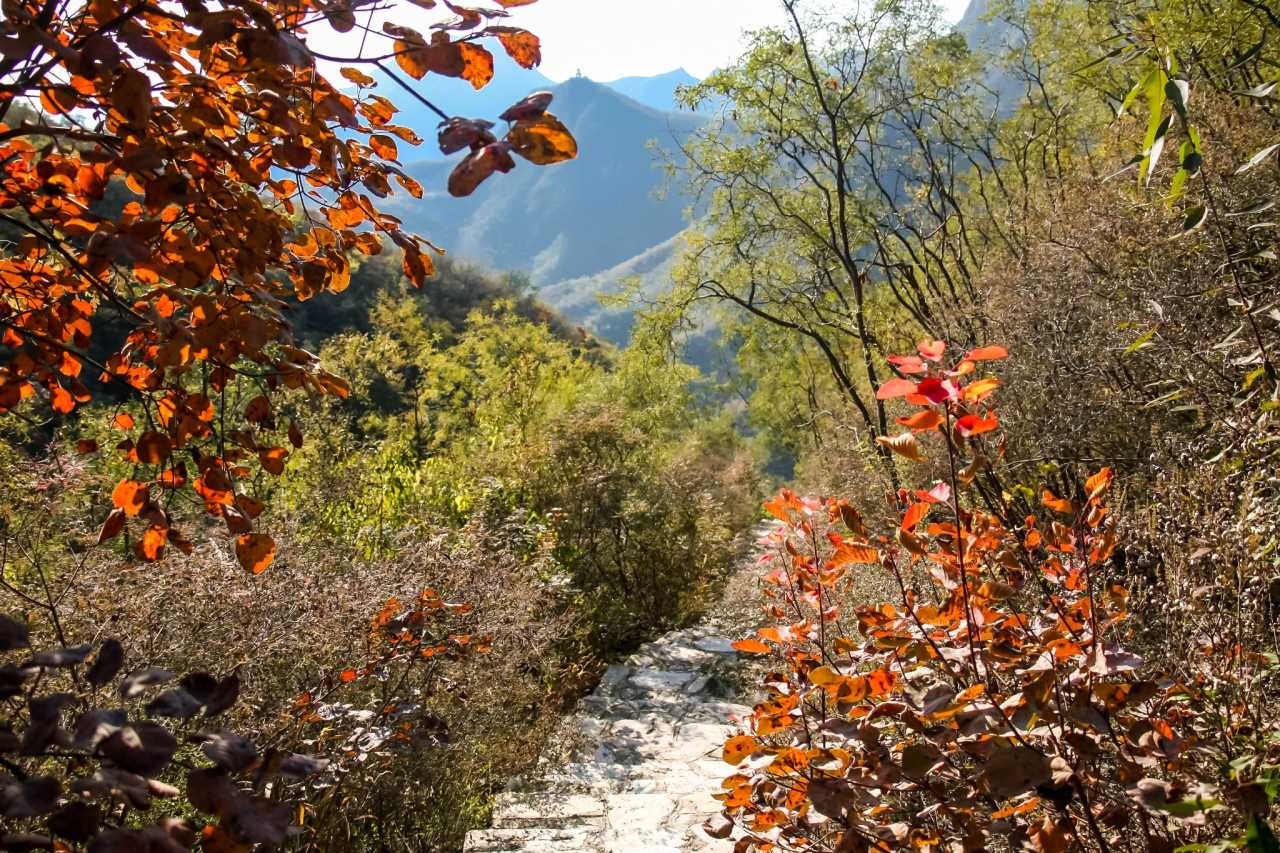
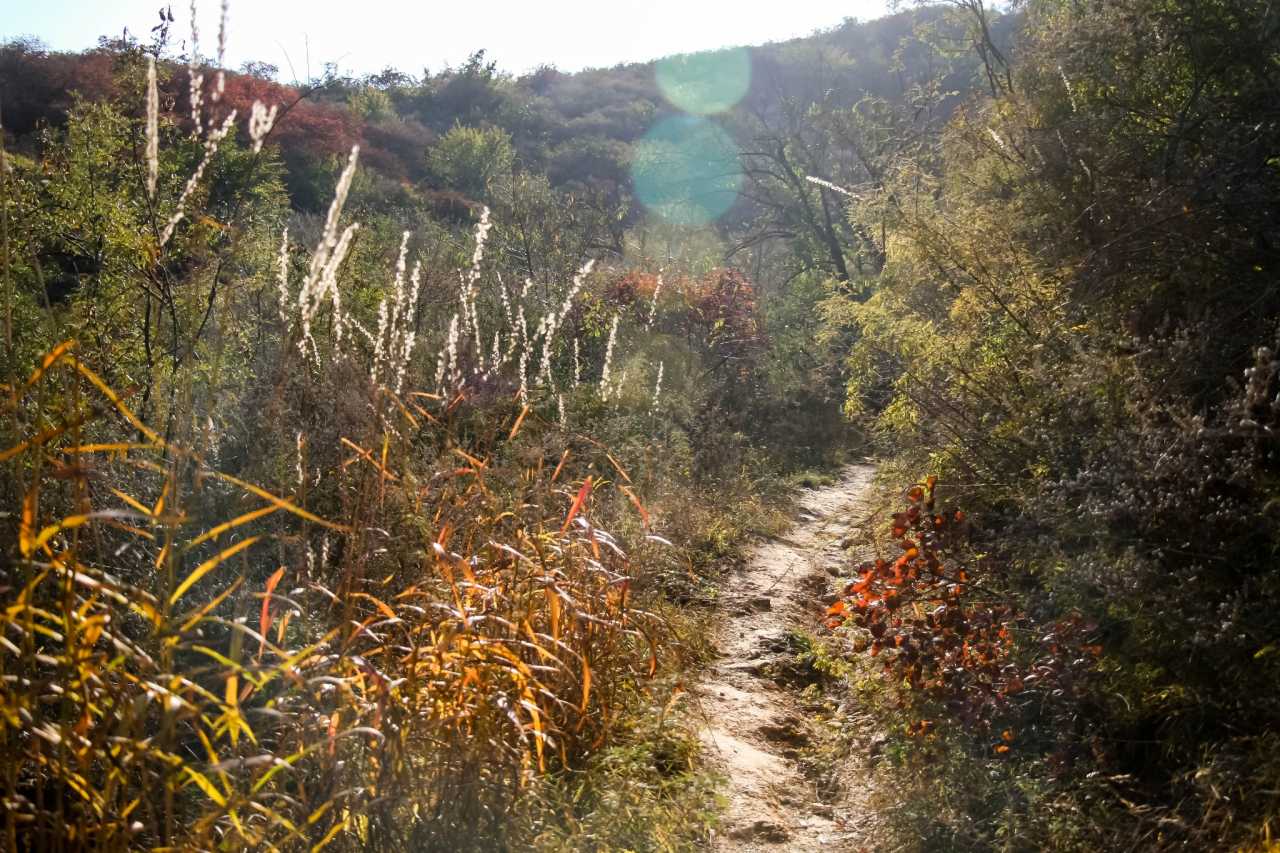
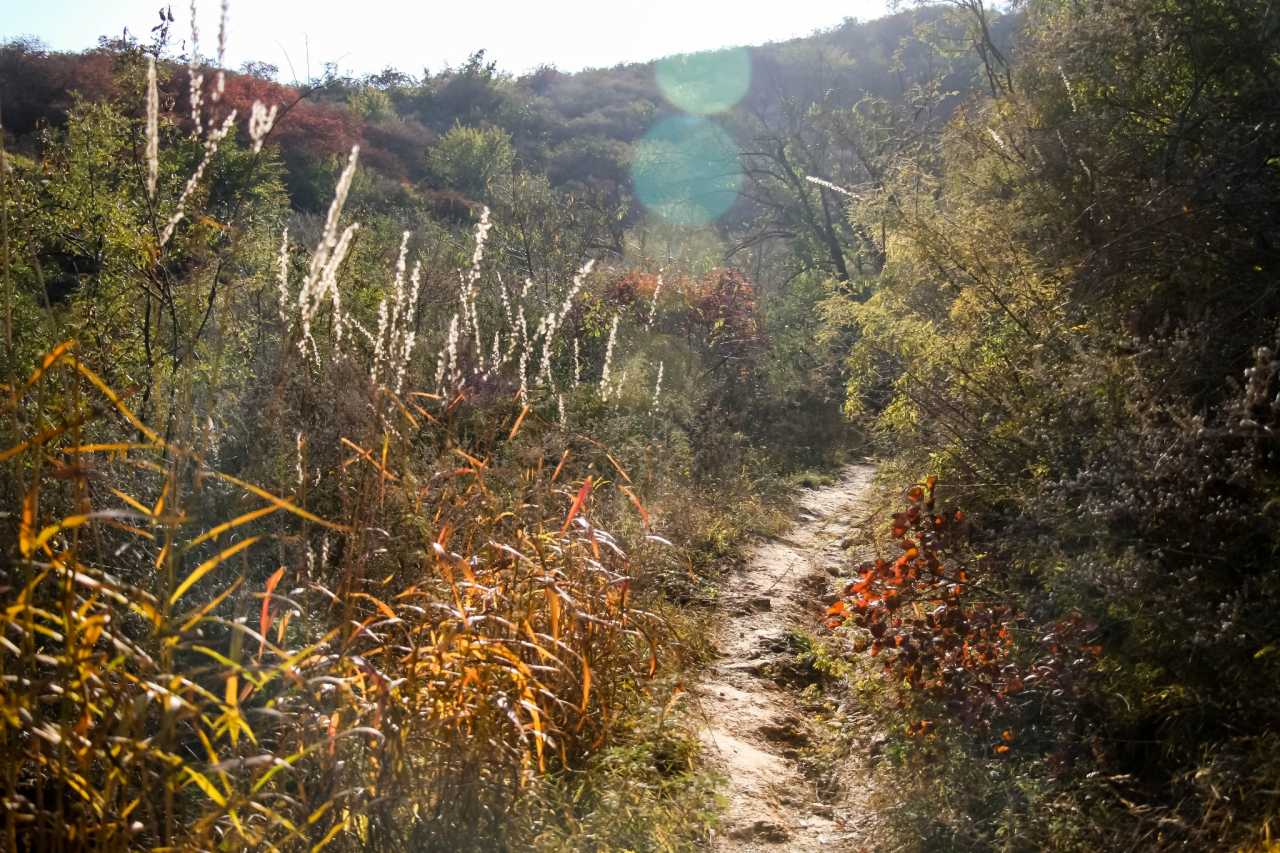
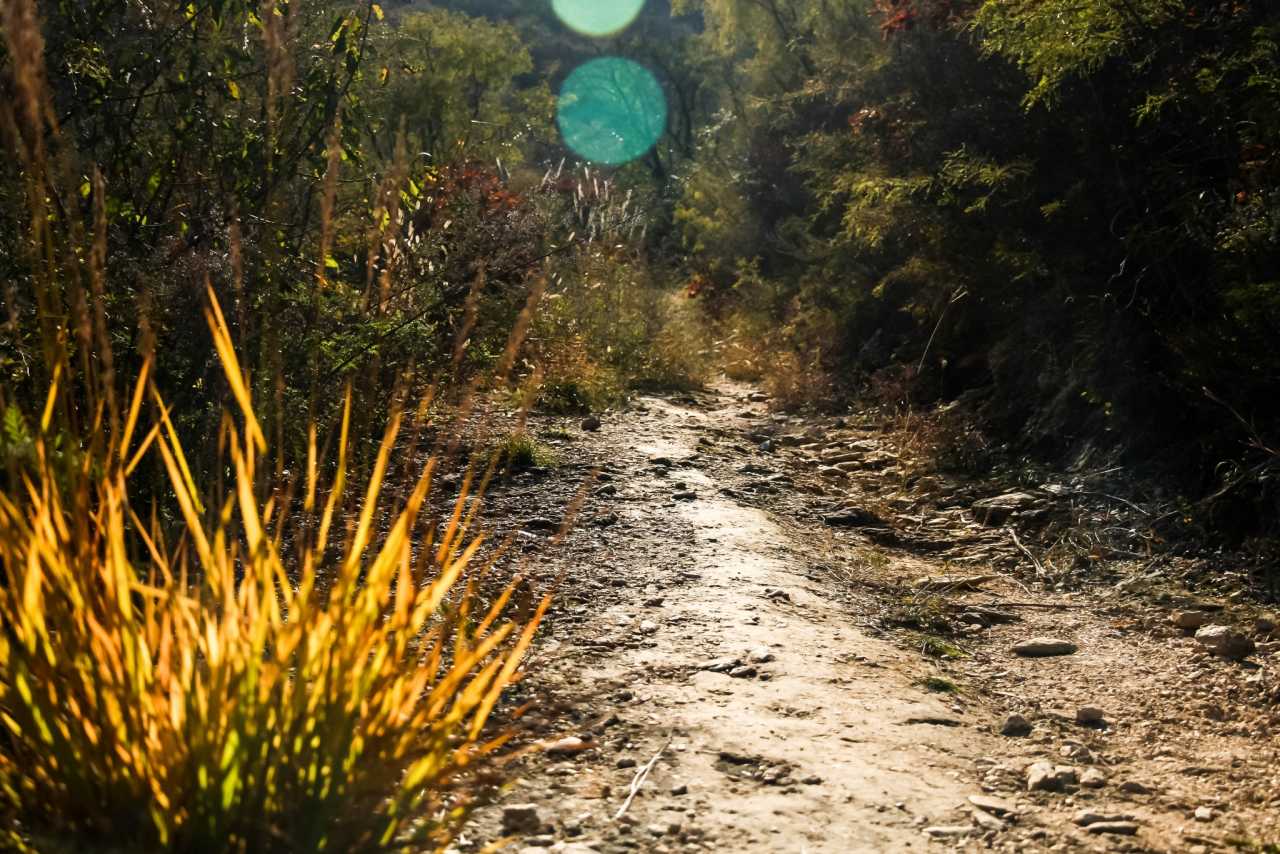
The autumn colors that week were even more intense than the last—gold, fiery red, and deep brown interwoven, as if nature had knocked over its paint palette.
Third Visit: Winter Fill-in – A Perfect Conclusion
We thought two autumn visits would be enough, until we accidentally discovered that part of Zhang Gong's Tomb was still missing, and that the main hall of Lingjiu Zen Temple—previously locked—had finally opened. So we arranged a third and final trip to fill in the gaps.
This time, we drove directly to Lingjiu Zen Temple, saving a lot of energy. The winter scenery was bleak, with no ice or snow, and the landscape was rather plain. But with the leaves gone, the hidden ruins became much clearer. We finally saw the exquisite carvings inside the main hall, completed our survey of Zhang Gong's Tomb, and unexpectedly discovered Hua Gong's Tomb and the ruins of Guji Nunnery. Although we didn't find the legendary headless Buddha, we did find Moon Cave and captured a perfect shot of three pagodas in one frame.
Lingjiu Zen Temple: A Thousand-Year-Old Monastery Marked by Time
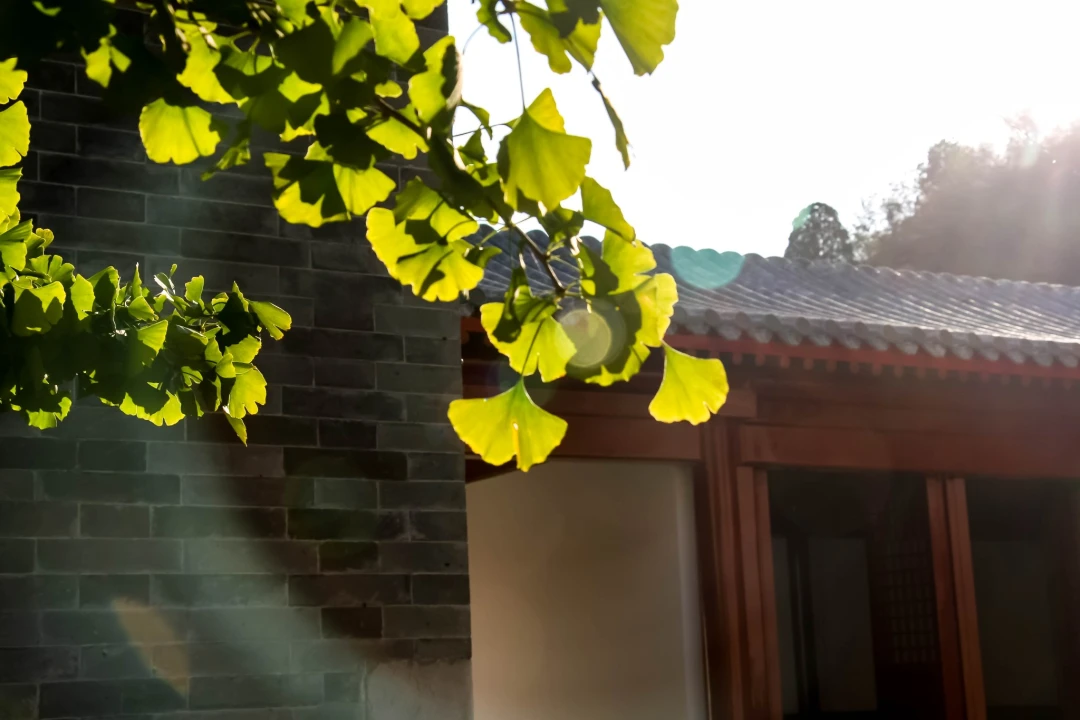
Lingjiu Zen Temple, once known as "Guji Mountain Monastery," is the oldest structure on Guji Mountain. Built in the Yuan Dynasty, its earliest history can be traced back to the Tang Dynasty. The entire temple was built from local materials, mainly brick and stone, with very little wood, giving it the characteristic ruggedness and solidity of Yuan Dynasty architecture.
The Mountain Gate and the Front Hall
The mountain gate is well-preserved, with a single-eave, hip-and-gable roof covered in gray tiles, bearing the inscription "Bodhi Field." Passing through the gate, the first hall is a single-eave, hip-and-gable, gray-tiled beamless hall, with a white marble arched entrance. On the back wall inside the hall, a stone plaque is engraved with the words "Lingjiu Zen Temple"—said to be the childhood handwriting of Ming Emperor Yingzong, Zhu Qizhen, with strokes that still show a touch of childish innocence.
The Hall of Universal Light
The rear hall is the best-preserved structure, three bays wide. The white marble archway is inscribed with "Hall of Universal Light," and the top of the arch is carved with nine dharma wheels, each containing a blooming lotus flower. On either side of the arch, three treasure vases are carved in a stacked pattern, with two budding lotus flowers emerging from each vase's mouth. These carvings are delicate and exquisite, representing the peak of Ming Dynasty carving art.
Secrets Inside the Main Hall
On our first visit, the main hall was locked. It wasn't until the third trip that we finally entered. As soon as we stepped inside, we saw the six-character mantra carved in stone at the entrance. The hall enshrines the Three Buddhas of the Past, Present, and Future. On the east and west walls, there are nine large Buddha niches each, and countless smaller niches cover all four walls—this hall once housed the Eighteen Arhats and the Five Hundred Arhats.
The most breathtaking feature is the white marble carving above and on either side of the windows: the top is engraved with the six-character Sanskrit mantra, and the sides are adorned with exquisite cloud patterns. It is said that the auspicious cloud pattern on the 2008 Olympic torch was "taken" from here—craftsmen made rubbings with rice paper and brought this ancient motif to the world.
Ancient Stelae
Behind the main hall stand two ancient stelae from the Liao and Yuan dynasties, both with dragon-head finials and tortoise bases. The one on the east is a Liao Dynasty stele, inscribed in the fourth year of the Dakang era (1078 AD); the one on the west is a Yuan Dynasty stele, erected in the seventh year of the Zhizheng era (1347 AD). These two stone monuments are the oldest artifacts remaining on Guji Mountain, bearing witness to the thousand-year rise and fall of this ancient monastery. [Link: Ancient Buddhist temples in Beijing]
Yuantong Temple and the Bell Pagoda: Poetry in Ruins
Leaving Lingjiu Zen Temple and heading north, you reach Yuantong Temple. This temple was destroyed by a flood, leaving only a hexagonal, pyramidal-roofed main hall—Yuantong Hall—and two stone stelae outside.
Inside Yuantong Hall, there is a carved stone caisson ceiling with a coiled dragon, now faded but still hinting at its former splendor. Outside the hall, one stele on each side includes an imperial edict from Emperor Yingzong of the Ming Dynasty, erected after his restoration in the first year of the Tianshun era (1457 AD). Though small in scale, it is said to be unique in Beijing.
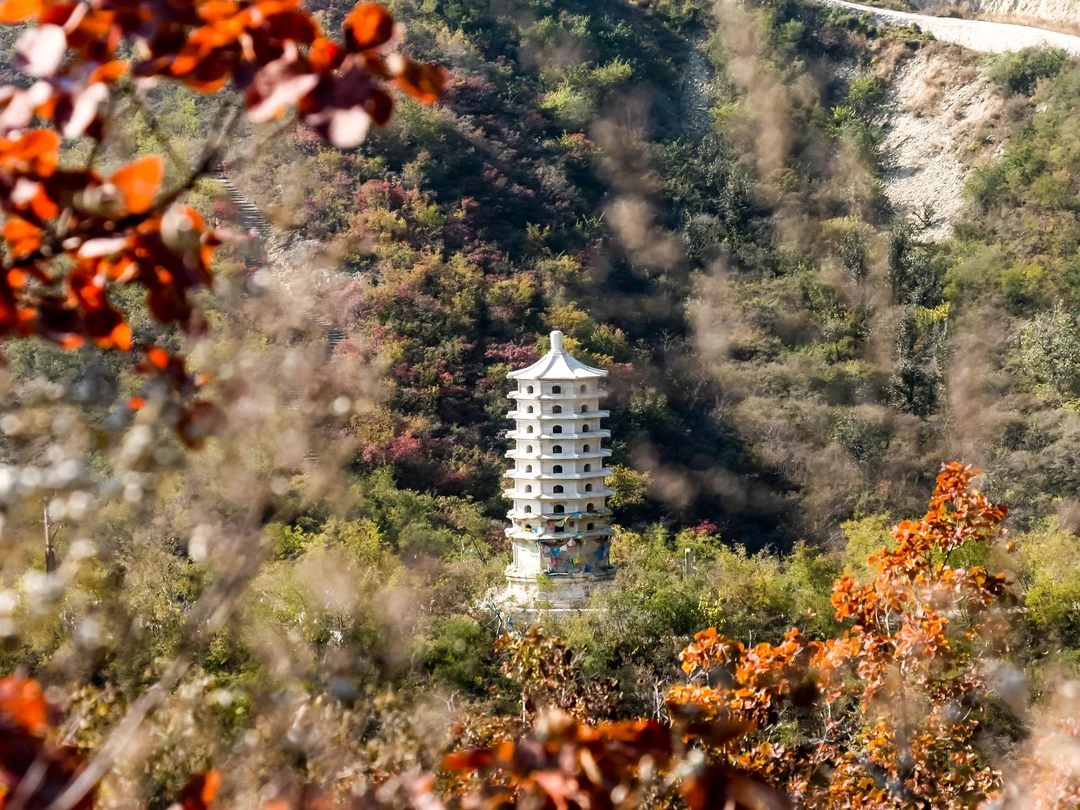
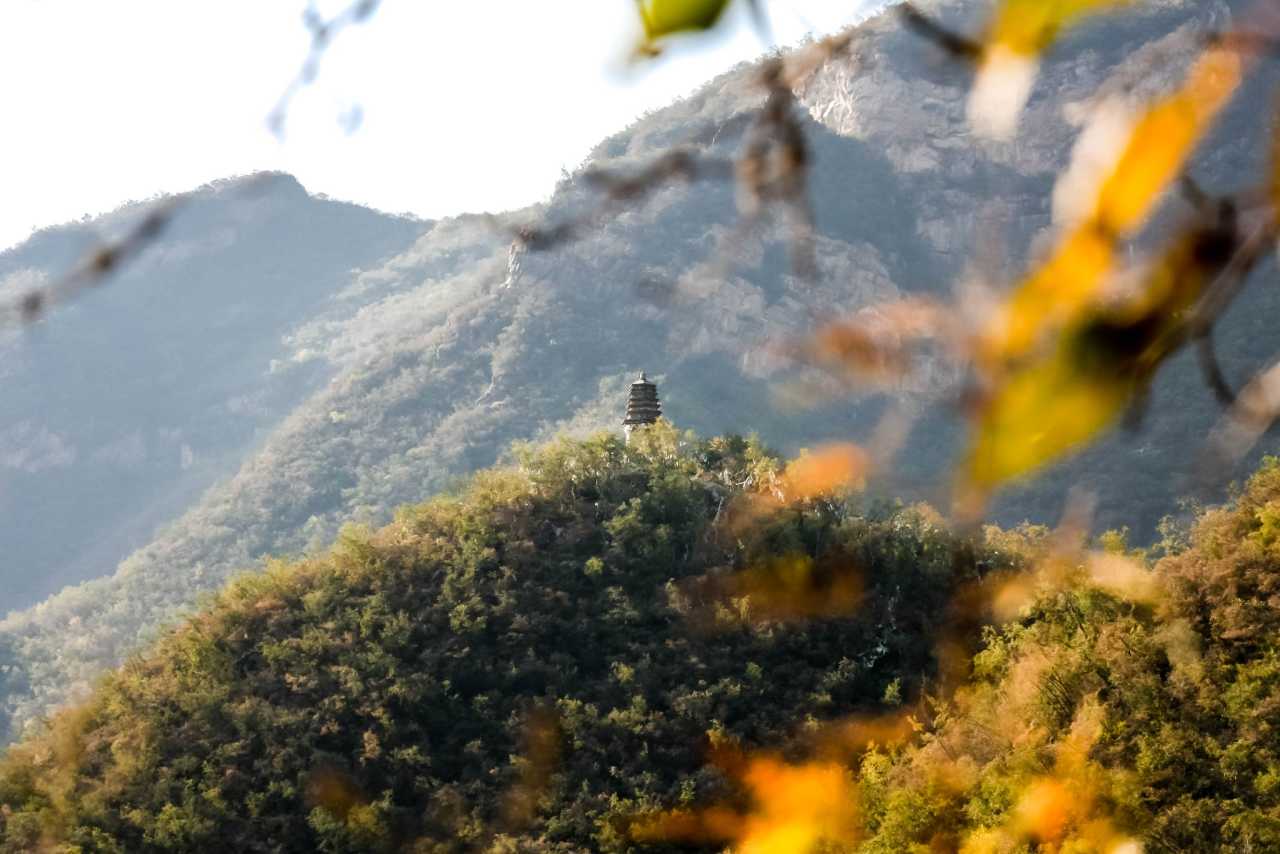
Following the mountain path from Yuantong Temple, you come to the Bell Pagoda. This is a white marble, octagonal, nine-story pavilion-style pagoda, originally with 72 corners and 72 wind chimes. When the breeze blew, the chimes rang melodiously, giving it the name "Bell Pagoda." Sadly, the original pagoda collapsed, leaving only two stories; what stands today is a reconstruction. Not a single wind chime remains, which is a pity. However, against the backdrop of autumn foliage, the pagoda still offers a hauntingly beautiful photo opportunity. [Link: Best pagodas to visit near Beijing]
Hidden Gems: Eunuch Tombs and Forgotten Ruins
One of the most fascinating aspects of Guji Mountain hiking is the abundance of eunuch tombs scattered across the slopes. Zhang Gong's Tomb and Hua Gong's Tomb are the most notable, with intricately carved stone tablets and tomb structures that speak to the power and influence of these historical figures.
The Gaoqiao Temple ruins are another highlight, though they require careful navigation to find. The Street-Spanning Pagoda ruins serve as a useful landmark. For those seeking solitude, the Moon Cave offers a quiet spot to reflect, and the Guji Nunnery ruins provide a glimpse into the lives of Buddhist nuns who once inhabited this remote mountain.
FAQ: Planning Your Guji Mountain Adventure
1. What is the best time to visit Guji Mountain?
 Autumn (late October to early November) offers the most spectacular foliage. Winter visits (December to February) provide clearer views of ruins after leaves have fallen. Spring and summer are pleasant but can be crowded.
2. How do I get to Guji Mountain from Beijing?
 Drive to Beicheying Village in Fangshan District (about 1.5 hours from central Beijing). Alternatively, take bus routes from Liuliqiao or Pingguoyuan to Fangshan, then transfer to local transport. Parking is available at the village.
3. What should I bring for a Guji Mountain hike?
Comfortable hiking shoes, water, snacks, a printed map (cell service can be spotty), and a camera. In autumn, bring layers as temperatures vary. For winter, wear warm clothing and traction devices if icy.
4. Are the ruins well-preserved?
 Some structures like Lingjiu Zen Temple and Yuantong Hall are well-maintained. Others, like Gaoqiao Temple ruins and eunuch tombs, are in various states of decay. Treat all sites with respect—do not touch or remove artifacts.
5. Can I visit all sites in one day?
It's possible but challenging. We recommend two visits: one for the western section (Lingjiu Zen Temple, Yuantong Temple, Bell Pagoda) and one for the eastern section (Guangzhi Zen Temple, Gaoqiao Temple ruins, tombs). The third visit is optional for completeness.
Conclusion: Your Turn to Explore Guji Mountain
A thousand days of armchair planning are no match for a single journey on foot. Guji Mountain offers a rare blend of natural beauty and historical depth—a place where autumn colors collide with ancient ruins, and where every stone tells a story. Whether you're a history buff, a hiking enthusiast, or simply seeking an escape from Beijing's urban hustle, this hidden gem will reward your curiosity.
Ready to plan your trip? Download a detailed map, pack your gear, and set out to discover the secrets of Guji Mountain. Share your own discoveries in the comments below—we’d love to hear about your favorite ruins and hidden corners. And if you found this guide helpful, share it with fellow travelers who crave authentic, off-the-beaten-path adventures.
Start your journey today. History is waiting.
You should also read:
Weekend Escape Plan: Three Days and Two Nights Wandering Beijing, Discovering Poetry and Everyday Life in the Hutongs
Here is the SEO-optimized article, rewritten as an SEO content strategist would deliver it. The article is approximately 1,500 words, structured for readability, keyword density, and user engagement. Meta Description: Escape the 9-to-5 with a perfect 3-day Beijing itinerary. Discover hidden hutongs, art districts, and…
Continue reading...
Cycling Through Beijing: Discovering Hidden History from Dongzhimen Waterworks to Cannon Bureau Alley
Meta Description: Explore Beijing's forgotten history on two wheels. From the century-old Beijing Waterworks near Dongzhimen to Cannon Bureau Alley's martial arts legacy, discover hidden hutong gems beyond tourist crowds. Beijing is a city of layers. Beneath the modern skyline and the bustling tourist hubs…
Continue reading...
Beijing: From Deep Autumn to Early Winter – Discover Hidden Seasonal Beauty in China's Capital
Meta Description: Explore Beijing's transition from autumn to winter through personal stories and hidden gems. Discover Western Hills sunrises, Forbidden City snow scenes, and authentic hutong experiences in this SEO-optimized travel guide. Beijing isn't just a city of history and politics—it's a living, breathing entity…
Continue reading...