Years Roll By, Engraved in History: A Journey Through the Anti-Japanese War Memories and the Great Wall at Gubeikou
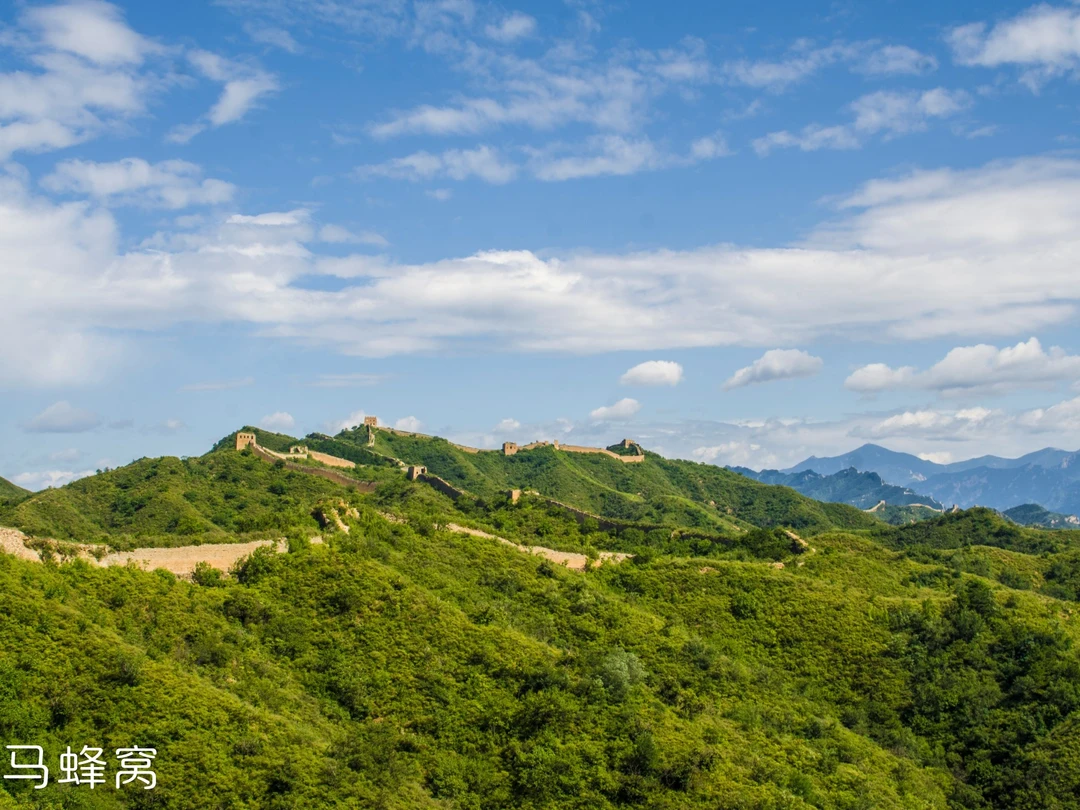
Meta Description: Explore the Gubeikou Great Wall Anti-Japanese War Memorial Hall, the Seven Warriors Monument, and the millennia-old fortress town. A poignant journey through Beijing’s wartime history and the enduring spirit of the Great Wall.
The year 2020 was destined to be extraordinary. As the COVID-19 pandemic swept across the globe, we spent the better part of a year battling the virus. Though the dawn of victory had not yet fully arrived, the hardest days were behind us. Beijing’s autumn arrived right on schedule, bringing blue skies, white clouds, and a cool breeze—as if reminding us: life must go on, and history must be remembered.
On September 3rd, the Victory Day of the Chinese People’s War of Resistance Against Japanese Aggression, I could no longer contain the restless heart that had been trapped by the pandemic for too long. I drove north, heading straight for Gubeikou—a place that bears the flames of war, the blood of heroes, and the millennia-old Great Wall. This was not just a trip; it was a dialogue with history, a tribute to the martyrs.
Gubeikou: The Gateway to Beijing, a Millennial Key
Gubeikou Town, located in the northeastern part of Miyun District, Beijing, is about 55 kilometers from the city center, covering an area of 85.82 square kilometers. As of the end of 2019, the town’s population was only 9,234, yet it has a history of nearly 4,500 years of administrative establishment. Known as the “Gateway to Beijing” and the “Key to the Capital,” it has been a strategic military stronghold since ancient times.
Imprints of History

From the Eastern Zhou period, when the State of Yan built fortifications here to defend against the Donghu tribes, to the Ming Dynasty’s construction of the garrison town, and to the Qing Dynasty’s Qianlong Emperor passing through and bestowing the name “Gubeikou,” every brick and stone bears the marks of time.
In the first year of Qianlong’s reign (1736), while traveling to Rehe, the emperor was captivated by the beauty inside and outside the Great Wall. He asked his minister Liu Yong the name of the place. Liu replied: “During the Spring and Autumn period, it was called Beikou; during the Northern Wei, it was called Chuxia; during the Tang Dynasty, it was called Hubeikou.” The emperor found the characters “Gu” (ancient) on the south gate and “Bei” (north) on the north gate, and thus bestowed the name “Gubeikou,” which has been used ever since.
The Gubeikou garrison town was built in the 11th year of the Ming Dynasty’s Hongwu reign (1378) and is a national-level cultural heritage site. The city wall, built along the mountain terrain in an irregular shape, has a perimeter of 3,245.1 meters and features three gates: east, south, and north. In 1933, after the Japanese invaders occupied Gubeikou, they demolished the north gate, which was not restored until 2012. Today, the surviving north gate and water gate still tell the story of that period of humiliation and resistance.
Diverse Cultural Relics
Gubeikou is not only home to the Great Wall but also to numerous cultural relics and historic sites. The Yang Linggong Temple, built in the third year of the Song Dynasty’s Tiansheng reign (1025) by the Liao Emperor Yelü Longxu, consists of a front hall and a rear hall, enshrining the loyal spirits of the Yang family generals. The East Pass Erlang Temple, built during the Ming Dynasty, houses statues of Yang Jian, Guan Yu, and Guanyin Bodhisattva, blending Buddhism and Taoism in a unique way. The Yaowang Temple (Medicine King Temple), also built in the early Ming Dynasty, is a Miyun District-level cultural heritage site. These structures, like three-dimensional history books, record Gubeikou’s diverse cultural heritage.
[Link: Best Great Wall sections near Beijing for history buffs]
Gubeikou Great Wall Anti-Japanese War Memorial Hall: An Unfulfilled Tribute
Departing from Beijing, I took the Jingcheng Expressway, exited after the Simatai Great Wall, and passed through Gubei Water Town toward Gubeikou Town. The entire journey was about 150 kilometers, with good road conditions, a toll of over 50 RMB, and a drive time of about 2 hours. Because of the special date, I set my navigation directly to the Gubeikou Great Wall Anti-Japanese War Memorial Hall.
Current State of the Memorial Hall
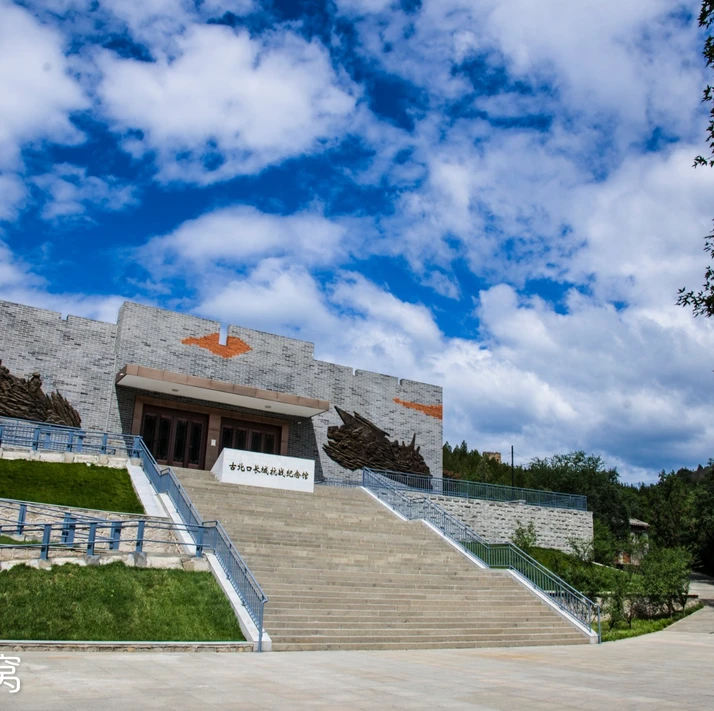
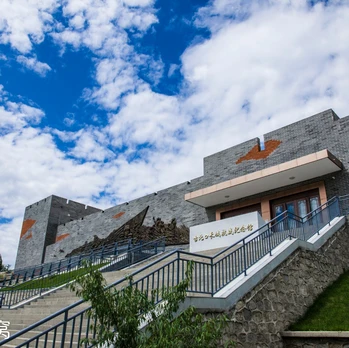
The Gubeikou Great Wall Anti-Japanese War Memorial Hall is located west of the municipal-level cultural heritage site—the Tomb of the Fallen Soldiers of the Gubeikou Campaign. The complex, consisting of a main hall, east and west side halls, a main gate, and side gates, adopts an antique architectural style. It covers an area of about 3,000 square meters, with a building area of approximately 500 square meters.
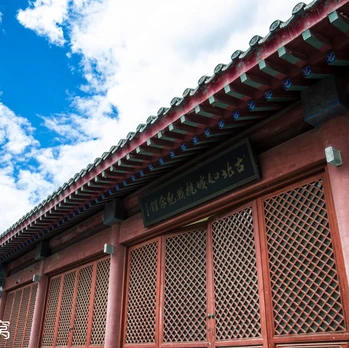
Unfortunately, due to the pandemic, the memorial hall’s doors were tightly shut. Although I had mentally prepared for this, standing outside the gate, gazing at the imposing memorial hall under the blue sky and white clouds, I couldn’t help but feel a sense of regret. The Great Wall-inspired architectural style and the bronze-colored relief base were awe-inspiring. Wildflowers on the rear hill bloomed in solitude, as if paying silent tribute to the martyrs.
Saluting History from Afar
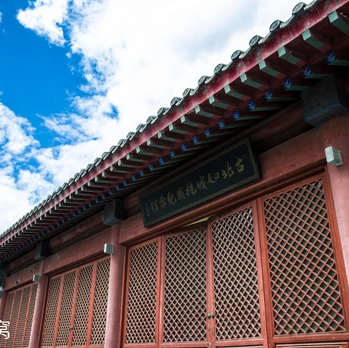
Unable to enter, I walked around the outside. The rebuilt stone tablet of the memorial hall and the relevant notices all spoke to the weight of this history. I stood before the memorial hall, silently paying my respects—on this special day, even though I couldn’t see the exhibition in person, my reverence remained undiminished.
[Link: Top anti-Japanese war memorials in China you must visit]
The Unexpected Seven Warriors Monument: Nameless Heroes, Eternal Spirit
Leaving the memorial hall, I drove toward Gubeikou Town. The navigation showed only 700 meters, and soon I arrived at the Gubeikou Cultural and Heritage Tourism Area. Built around the village, this area provides access to the Panlongshan Great Wall. Ten years ago, I had ventured alone to the Wohushan and Panlongshan Great Walls. Back then, dirt roads and dilapidated houses had given way to neat stone-paved paths, guesthouses, and restaurants. Under the pandemic, there were few visitors, but management remained strict—entering the scenic area required scanning the Beijing Health Code.
A Serendipitous Discovery
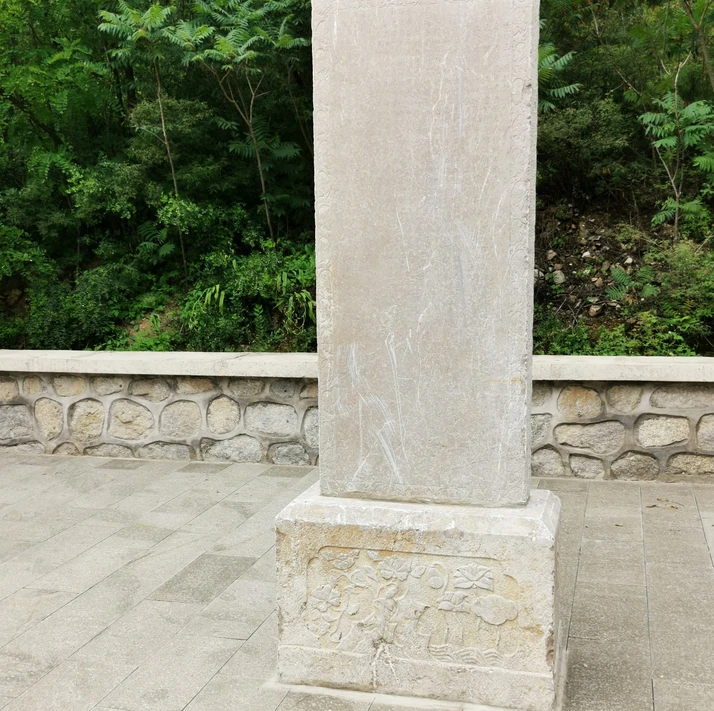
After wandering around the village, I couldn’t find the entrance to the Panlongshan Great Wall. Just as I was feeling a bit frustrated, I came to a mountain spur and suddenly discovered a tomb nestled amid lush greenery—truly a case of “searching high and low, only to find it without effort.” It was the Anti-Japanese War Seven Warriors Monument!
The Little-Known Story of the Seven Warriors
The Seven Warriors Monument is located in Gubeikou Village, Gubeikou Town, at coordinates 40°40′58″N, 117°17′28″E, facing west. The monument, standing 3.54 meters tall, is made of “Shenzhou Blue” granite from Chengde. It was funded and erected in 2005 by members of the Chengde Experimental Middle School Great Wall Expedition Team and the Gubeikou Village Committee.
The story of the seven warriors is awe-inspiring:
In 1933, 80,000 Japanese Kwantung Army soldiers attacked the various passes of the Great Wall. On March 10, the 25th Division of the National Revolutionary Army’s 17th Army rushed to the Gubeikou front line. The 145th Regiment engaged in fierce fighting with the enemy at Longwangyu Pass. The regimental command post stationed seven soldiers as an observation post on “Hat Mountain” to report the battle situation.
On the afternoon of March 12, the 25th Division’s command post was destroyed by enemy bombers, leaving the front line without leadership. Deputy Division Commander Du Yuming ordered a retreat to the Nantianmen line. As the troops withdrew, they were spotted by Japanese soldiers who had occupied “General’s Tower,” and heavy artillery and aircraft bombarded them repeatedly. At that moment, a large number of Japanese troops surged from the northern mountains. The seven soldiers voluntarily stayed behind to cover the retreat.
After the 25th Division and the 145th Regiment had safely retreated, the seven soldiers were forgotten in the chaos. They received no orders to withdraw. Their sacrifice—nameless, unrecorded, and unheralded for decades—stands as a testament to the countless unsung heroes of the Anti-Japanese War.
[Link: How to visit Gubeikou Great Wall from Beijing]
Frequently Asked Questions (FAQ)
1. How do I get to Gubeikou from Beijing?
Take the Jingcheng Expressway (G45) and exit after the Simatai Great Wall. Pass through Gubei Water Town and continue to Gubeikou Town. The drive is about 150 km and takes approximately 2 hours. Toll is around 50 RMB.
2. Is the Gubeikou Great Wall Anti-Japanese War Memorial Hall open?
 As of the time of this visit (2020), the memorial hall was closed due to the pandemic. Check official sources or call ahead before planning your visit, as hours may vary.
3. What is the best time to visit Gubeikou?
 Autumn (September–October) offers clear skies, cool breezes, and beautiful foliage. Spring is also pleasant. Avoid summer heat and winter cold if possible.
4. What other historical sites are near Gubeikou?
 Nearby attractions include Gubei Water Town, Simatai Great Wall, Panlongshan Great Wall, Wohushan Great Wall, and the Yang Linggong Temple. The Seven Warriors Monument is also within walking distance of the town.
5. Can I hike the Great Wall at Gubeikou?
Yes, the Panlongshan Great Wall section is accessible from the Gubeikou Cultural and Heritage Tourism Area. The terrain is rugged, so wear sturdy shoes and bring water. Some sections are unrestored, offering a more authentic experience.
[Link: Great Wall hiking tips for beginners]
Conclusion: A Journey Worth Taking
Years roll by, but history is engraved in every stone, every monument, and every story. The Gubeikou Great Wall is not just a tourist attraction—it is a living museum of courage, sacrifice, and resilience. Whether you are a history enthusiast, a Great Wall hiker, or a pilgrim paying respects to the fallen, this place will leave an indelible mark on your soul.
As I drove back to Beijing, the setting sun cast a golden glow over the distant mountains. The pandemic may have kept the memorial hall’s doors closed, but the spirit of the seven warriors—and all those who fought and died for China—remains wide open for anyone willing to listen.
Plan your visit to Gubeikou today. Walk where heroes walked. Remember what must never be forgotten.
[Link: Complete guide to Beijing’s Great Wall sections]
[Link: Best war history museums in Beijing]
Did you enjoy this article? Share it with fellow history lovers, or leave a comment below with your own Gubeikou memories. Let’s keep the stories alive.
You should also read:

A Winter Journey in Beijing: Romance and Misery at Minus Five Degrees – An SEO-Optimized Travel Guide
Meta Description: Discover the romance and misery of a winter trip to Beijing at -5°C. Explore snowy Jingshan Park, historic hutongs, and budget-friendly tips for a 4-day Spring Festival adventure. Some say Beijing is a city you both love and hate. You love its profound…
Continue reading...
Beijing Through the Lens: One Person's Winter Wanderings – An SEO-Optimized Travel Guide
Meta Description: Discover Beijing's winter charm through a photographer's lens. From Nanluoguxiang's night scenes to Sanlitun's neon glow, explore the city's hidden corners and iconic landmarks in this SEO-friendly travel guide. January in Beijing is so cold you can hear your own breath. But for…
Continue reading...
Solo in Beijing: Discovering Another Side of the Capital Amid Red Walls and Grey Tiles
Meta Description: Traveling solo in Beijing on a student budget? Discover hidden gems, practical tips for first-time solo travelers, and how to explore the capital's red walls and grey tiles without breaking the bank. When my friends asked why I chose to go to Beijing…
Continue reading...