Four Poems for Four Seasons: Savoring the Heartbeat of Beijing
Here is the SEO-optimized and rewritten article based on your source material. It has been restructured for search engine visibility while preserving the poetic narrative and factual accuracy of the original.
Title: Four Poems for Four Seasons: The Ultimate Guide to Savoring the Heartbeat of Beijing
Meta Description: Experience Beijing beyond the landmarks. Discover the city's soul through four distinct seasons, from spring lilacs at ancient temples to winter snowscapes. Your poetic travel guide awaits.
Introduction: The Capital That Beats in Four Rhythms
The best travel experiences aren't about checking off famous landmarks. They happen when you turn a corner and stumble upon a city's true warmth. Beijing, this ancient capital of a thousand years, has never been a mere backdrop for me—it's a life worth measuring step by step.
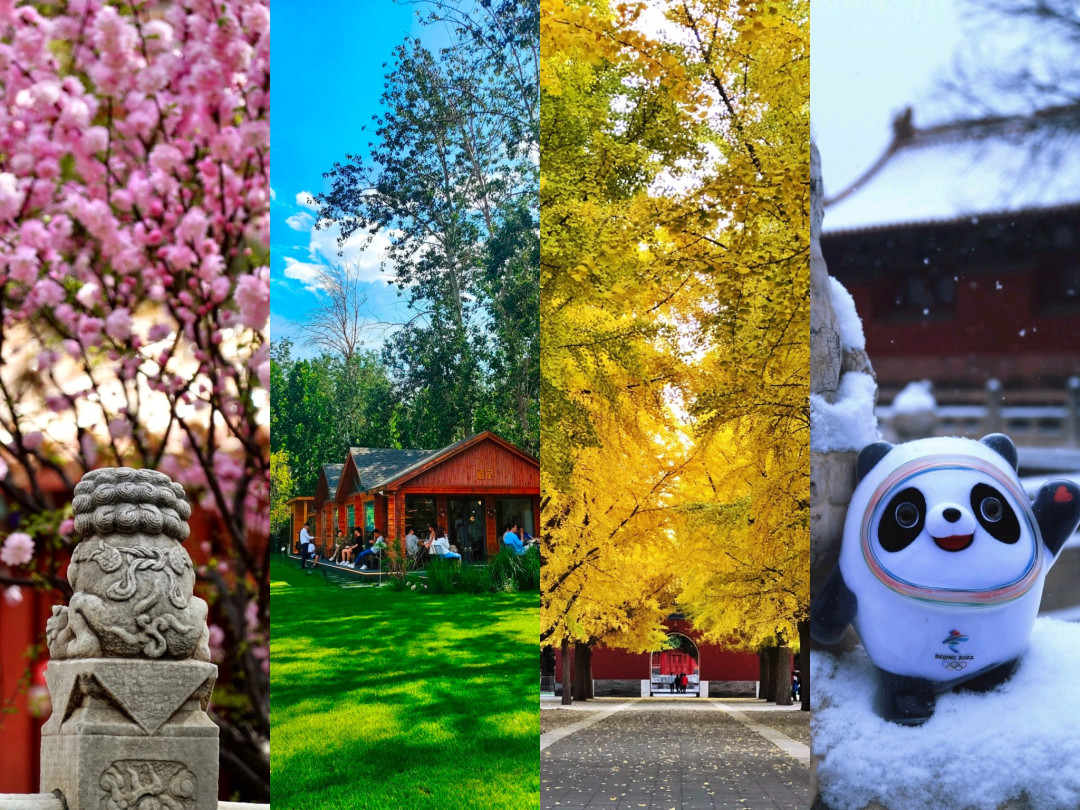
A million people have a million reasons to love Beijing. My reasons are simple: its deep cultural roots, four distinct seasons, and open, inclusive spirit. Here, the grandeur of the Forbidden City coexists with the smoky warmth of hutong (traditional alleyways). The splendor of the Summer Palace intertwines with the scholarly aura of Tsinghua and Peking University. Beijing offers four perfect seasons: a spring to enjoy, a summer to savor, an autumn to admire, and a winter to cherish. Spring brings blossoms, autumn brings leaves, summer brings cool breezes, and winter brings snow. Spend a year here, and you'll discover four completely different versions of Beijing.
Today, let me take you through the city's four seasons, using four poems to slowly taste the everyday life of this capital.
[Link: Best time to visit Beijing for flowers]
Spring in Beijing: Lush Greens and Fading Reds
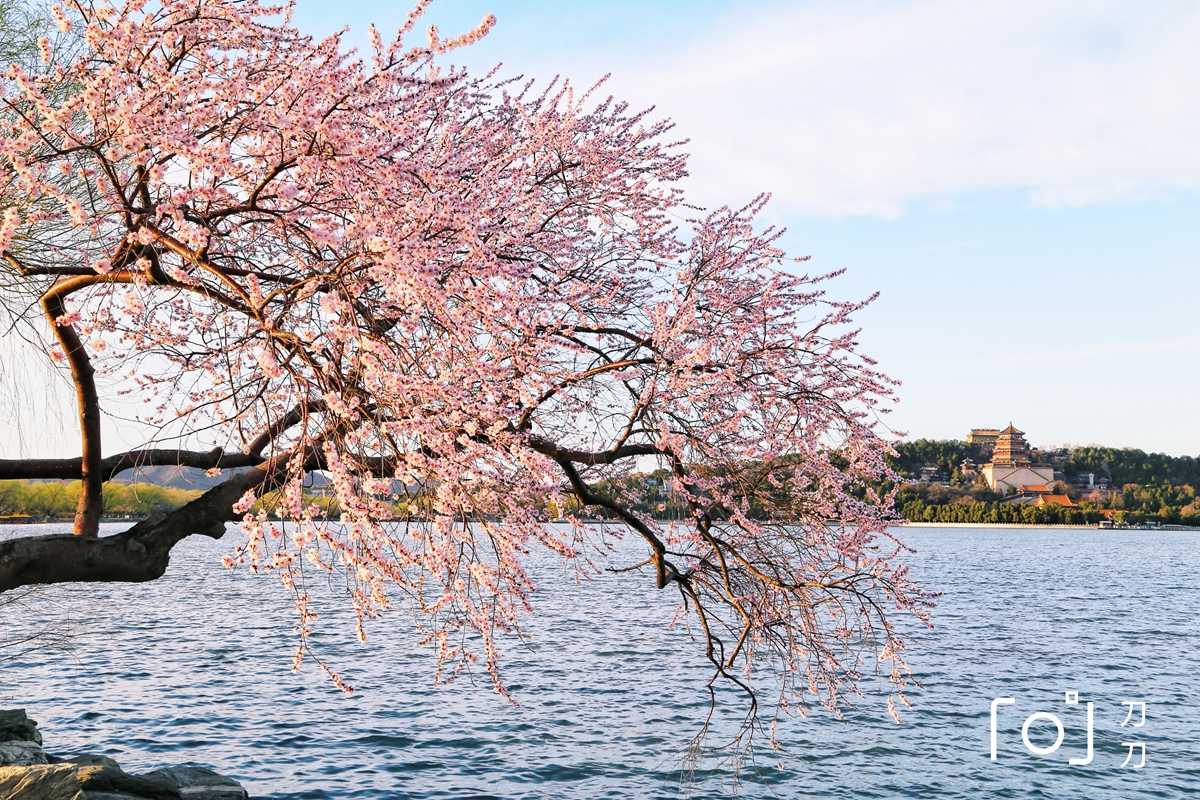
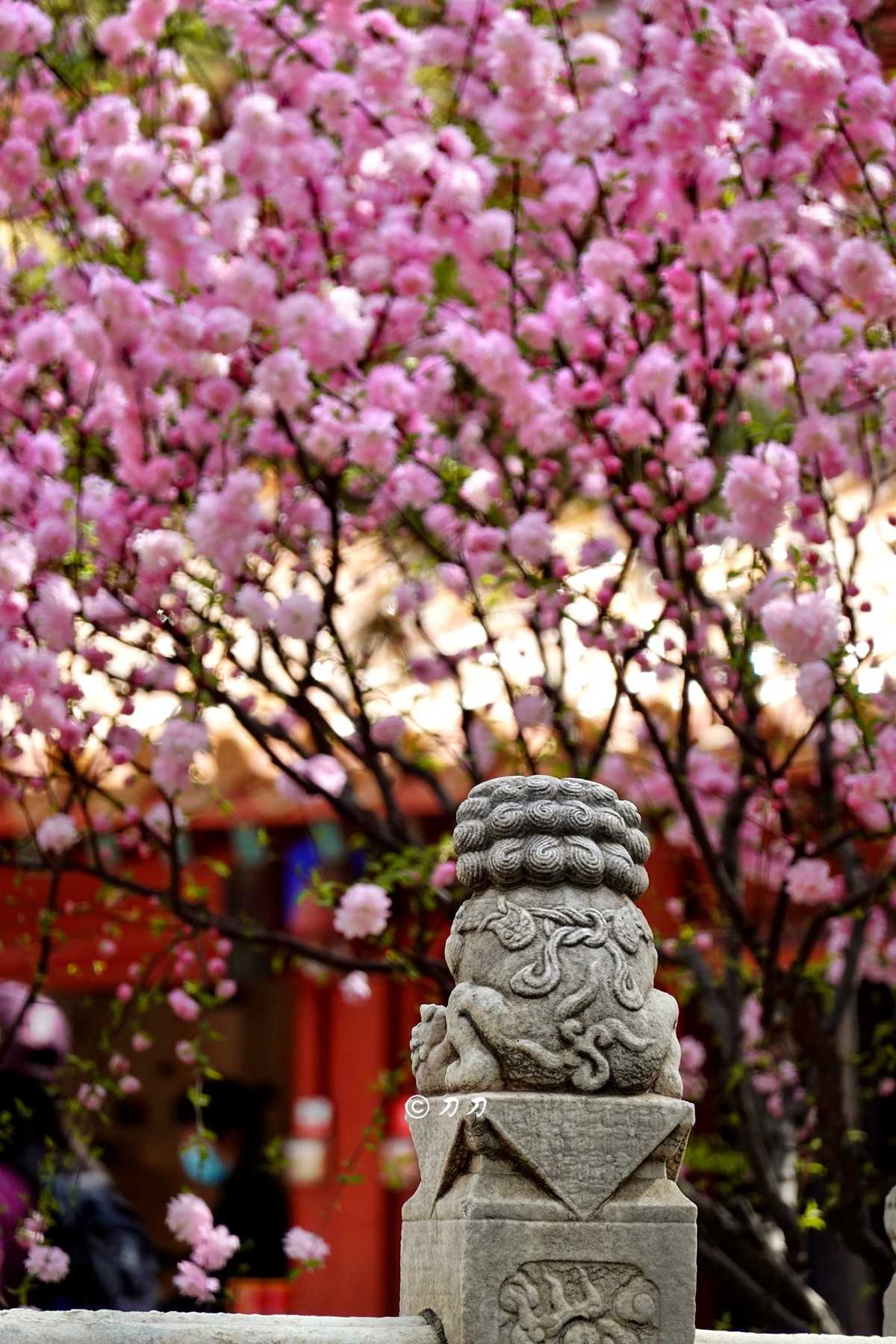
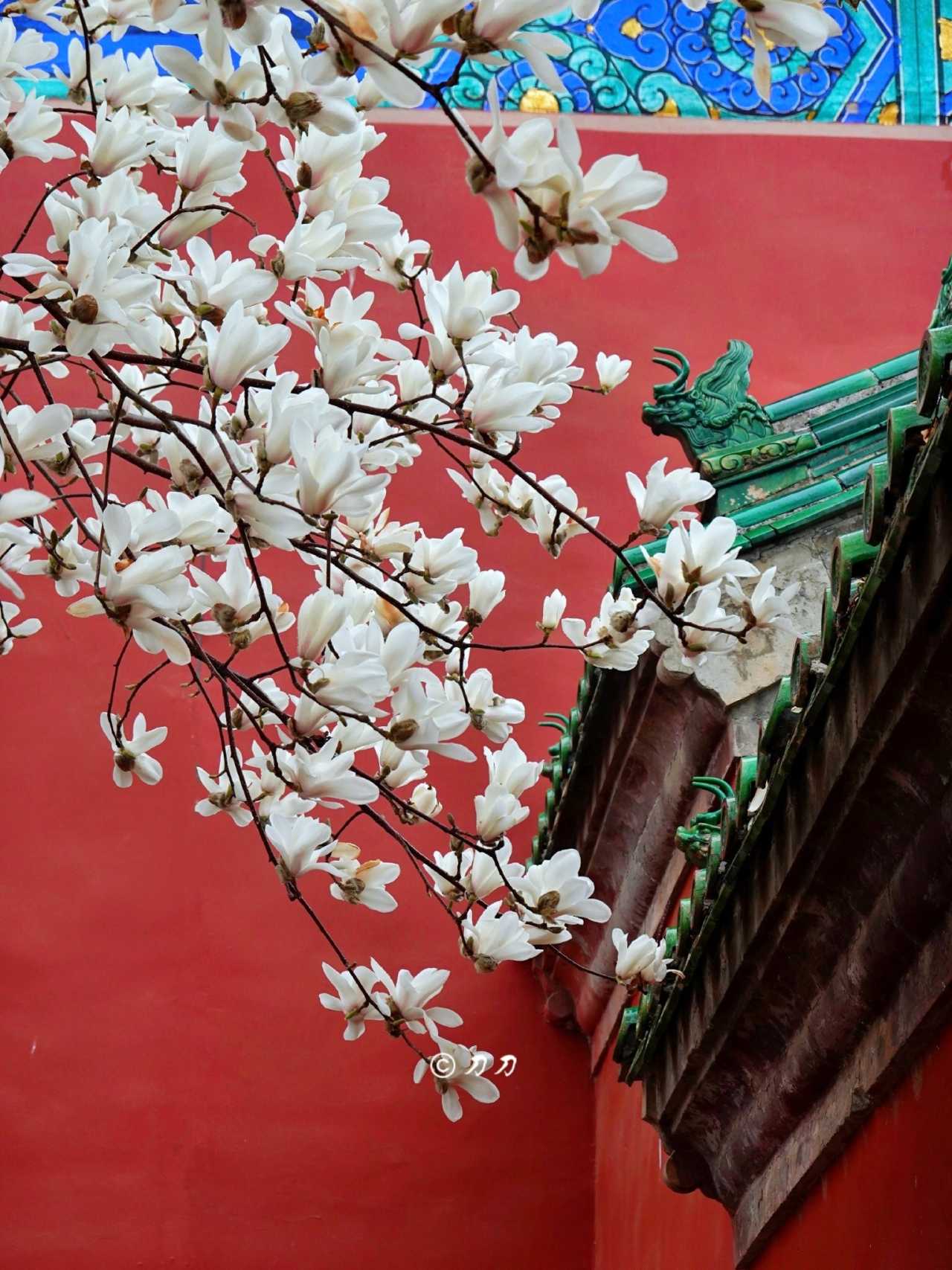
Spring in Beijing always arrives without warning. One day the wind is still harsh, the next it turns gentle. White magnolias silently bloom along the red walls of Chang'an Avenue. The plum blossoms on the Ming City Wall turn red. The mountain peach blossoms on the Summer Palace's West Dike turn white. The crabapple flowers at the Yuan Dynasty Site turn pink. Spring is like a playful painter, splashing color across the entire city overnight.
Eight Signature Spring Flowers: Each Bloom Is a Poem
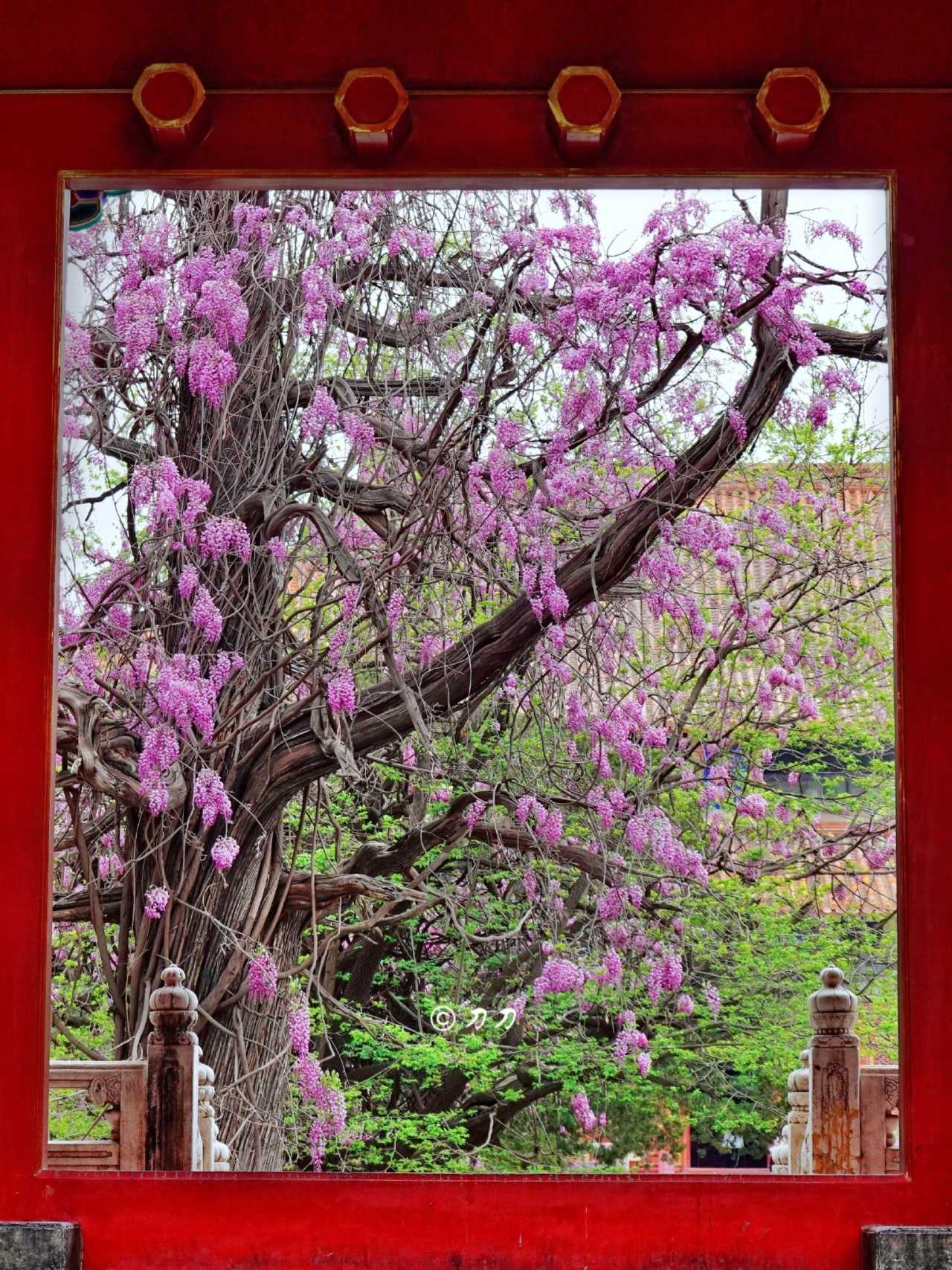
1. Faxiang Temple Lilacs: Fragrance Drifting in the Dewy Breeze
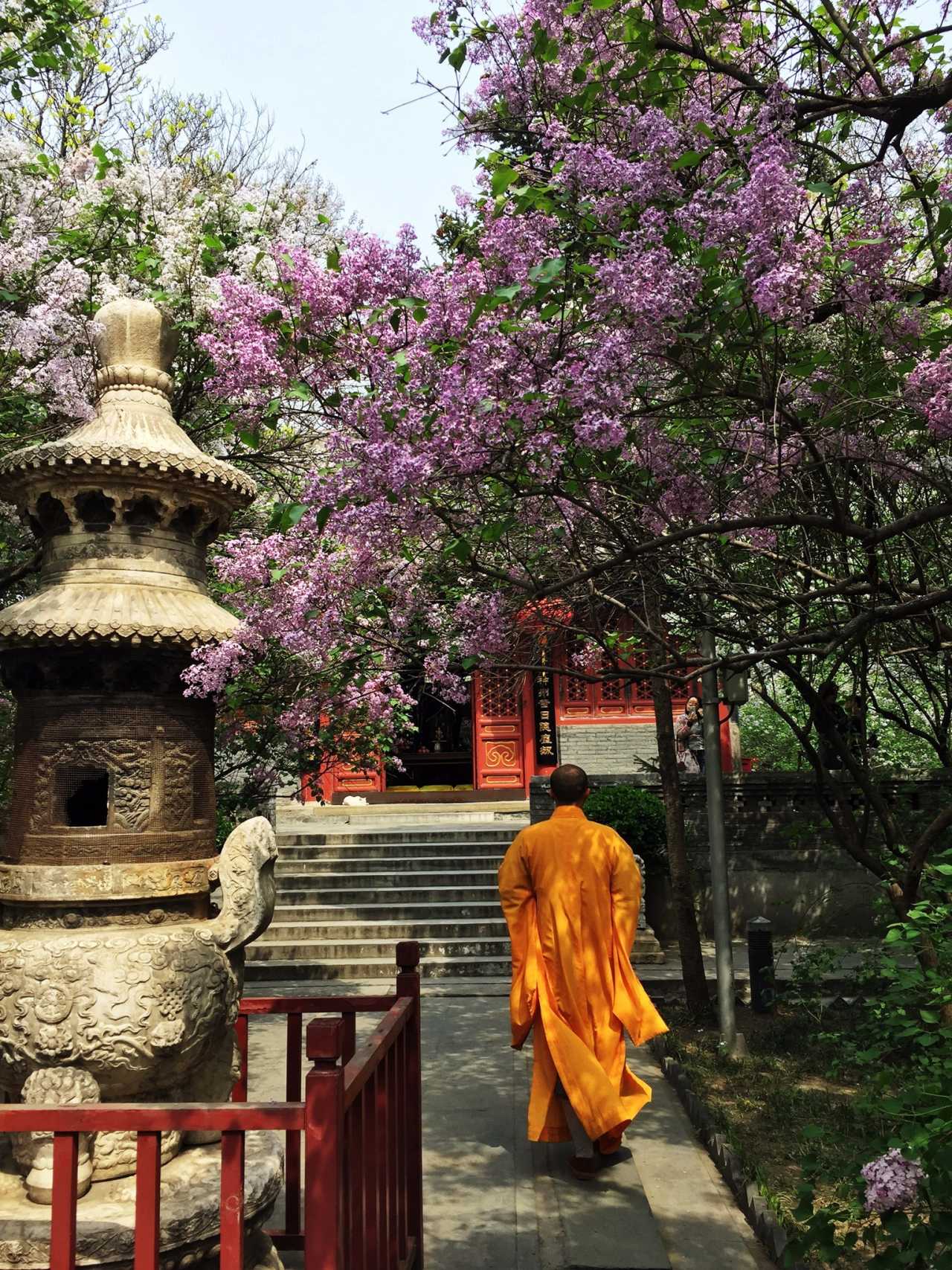
In poetry, lilacs are often called the "flower of a hundred knots," and Buddhists use them as a metaphor for emotional entanglements. Every spring, visiting Faxiang Temple to admire the lilacs has become a kind of ritual for many—a unique memory tied to the season.
This ancient temple, hidden deep at the southern end of Jiaozihutong (Alley of Teaching Sons) outside Xuanwu Gate, is the oldest surviving temple within Beijing proper. In early April, when the lilacs bloom, their soft purple and white petals set off the red walls and green tiles with a fresh, elegant beauty. The subtle fragrance fills the air, soothing the soul. No wonder it's called the "Incense Temple" and the "Temple of a Thousand Flowers."
Old Beijingers once spoke of four great flower-viewing events: the lilacs at Minzhong Temple (Faxiang Temple), the peonies at Chongxiao Temple, the crabapples at Jile Temple, and the herbaceous peonies at Tianning Temple. Today, only the lilacs at Faxiang Temple remain. The temple also houses the Chinese Buddhist Academy and the Chinese Buddhist Library and Cultural Relics Museum. Within its modest grounds live over a hundred monks, their silhouettes forming a unique part of the scenery.
Fourteen hundred years ago, Emperor Taizong of Tang ordered its construction. Nine hundred years ago, Emperor Qinzong of Song was imprisoned here. Six hundred years ago, Emperor Yongle modeled the imperial gardens after it. A hundred years ago, the Six Gentlemen of the Hundred Days' Reform lay in state here. Lin Zexu, Ji Xiaolan, and Gong Zizhen all left their footprints. In 1924, Xu Zhimo accompanied the Indian poet Rabindranath Tagore to admire the lilacs.
Even today, during the lilac season, poetry gatherings and calligraphy sessions are held here. As the highest seat of Buddhist learning in China, Faxiang Temple has washed away a thousand years of worldly dust, leaving only waves of fragrance.
Visitor Information: - Address: No. 7 Faxiang Temple Front Street, Xicheng District - Transportation: Take bus No. 10 to Huimin Hospital, or buses No. 6 or 109 to Jiaozihutong; Metro Line 4 to Caishikou Station, southwest exit - Admission: Free - Opening Hours: Monday to Sunday (closed Wednesdays), 8:30-11:30 AM and 1:00-3:30 PM; main halls closed at noon
[Link: Free things to do in Beijing]
2. Yuan Dynasty Site Crabapples: Crimson Blossoms, a Fresh New Look
The "Crabapple Blossom Creek" at the Yuan Dynasty City Wall Relic Park is one of Beijing's three great flower-viewing events. When spring warms the air, strolling along the ancient moat, the beauty of the season is intoxicating. The crabapples seem tipsy with color, and you can almost hear the clanking of iron horses and feel the chivalrous tenderness of a bygone era.
The creek is home to 28 varieties and over 5,000 crabapple trees, making it the largest and most diverse crabapple garden in Beijing. The tall trees can even form a floral corridor overhead.
The Yuan Dynasty site is an open park along Beijing's streets, stretching 9 kilometers and commonly known as the "Earthen Wall." During the Yuan Dynasty, Kublai Khan built his imperial palace around the Jade Islet in Beihai Park, naming it Dadu (Great Capital). After the Ming Dynasty captured the city, the northern wall was moved southward, leaving only the remnants of the wall, over ten meters high.
When the crabapples burst into full bloom, the entire park is filled with an intoxicating fragrance. Walking along the paths beneath the trees, pale pink buds emerge from tender green leaves. The clusters of flowers are so dense they almost block out the sky. Even on an evening stroll, the rich scent makes it hard to slow down.
Basic Information: - Address: Open park along Xitucheng Road - Transportation: Metro to Beitucheng Station or Anzhenmen Station - Admission: Free - Opening Hours: 24 hours
3. Zhihua Temple Pear Blossoms: As If a Spring Breeze Came Overnight
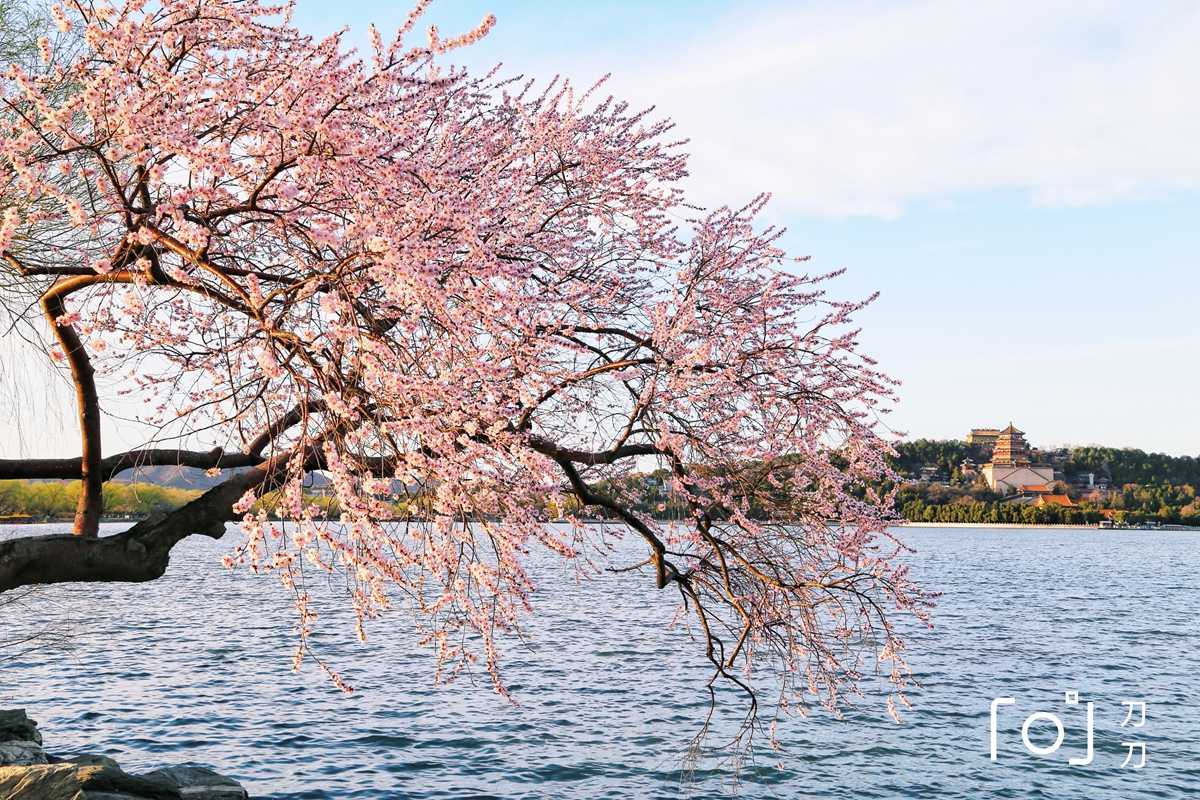
Pear blossoms don't clamor for attention with a riot of colors. Their beauty is understated and restrained, symbolizing purity and elegance. Beijing's spring is far too short, with a hundred flowers competing to bloom, but pear blossoms are a rare sight. Yet, within Beijing's ancient architecture, a few pear trees create an extraordinary atmosphere.
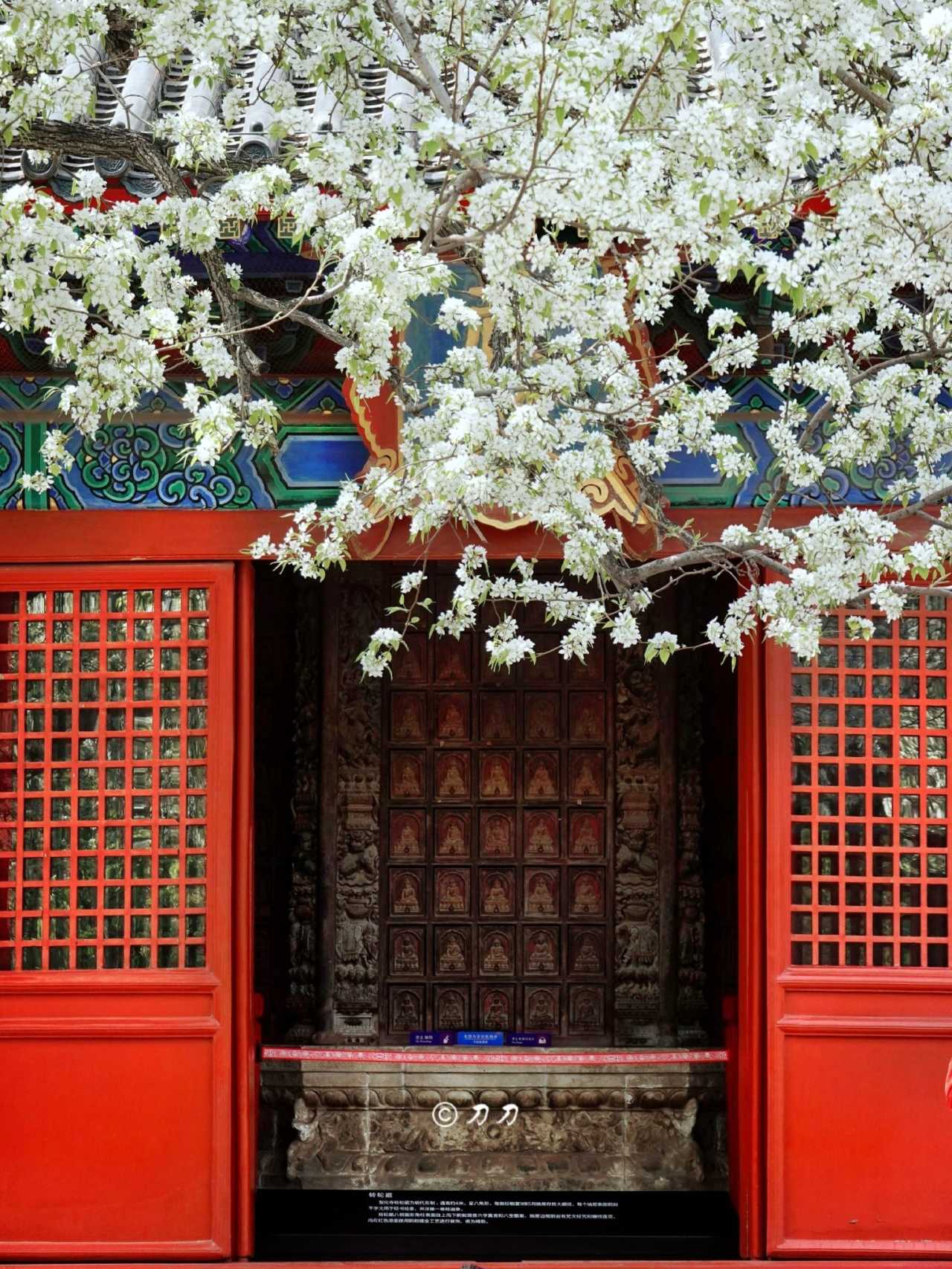
Zhihua Temple is one such hidden gem for pear blossoms. Located within the Second Ring Road, the temple itself is relatively obscure, visited by few. Inside, two pear trees stand tall. Looking out, you see red walls and gray tiles, with pear blossoms shining brilliantly. In the gentle breeze and birdsong, they appear untouched by the world—clean, elegant, like a tree draped in moonlight.
Both trees are in the second courtyard, positioned diagonally from each other. Their trunks are strong and powerful, their blossoms snow-white and delicate. One tree is a whole spring in itself.
The temple hosts two performances of Jing music (ancient Beijing court music) each day—morning and afternoon. This is a "living fossil" of traditional Chinese music, originating from Ming Dynasty court ritual music. After more than 570 years of preservation and transmission, it has now passed to its 27th generation of inheritors. With the music lingering in your ears and a sea of blossoms all around, it's a truly wonderful experience.
Don't miss the lilacs and crabapples in the temple either. In the first courtyard, there are two lilac trees—a purple one in front of the Drum Tower and a white one in front of the Bell Tower. In the second courtyard, three crabapple trees stand in front of the Tibetan Hall, the Wisdom Hall, and the Great Wisdom Hall.
Visitor Information: - Address: North side of Lumicang East Entrance, Dongcheng District - Transportation: Metro Line 6 to Chaoyangmen Station, Exit G, about a 10-minute walk; parking is very inconvenient - Admission: 20 RMB (free with Beijing Union Trade Union Card) - Opening Hours: 8:30 AM - 4:30 PM, closed Mondays; Jing music performances: 10:00-10:20 AM and 3:00-3:20 PM
Tips: - Zhihua Temple is a museum; advance reservation required; first 200 visitors free on Wednesdays - Enter after 4:30 PM for a free guided tour - Photography allowed
[Link: Beijing hidden gems]
Summer in Beijing: Cool Breezes and Ancient Canals

(Note: The original source focused heavily on spring. For SEO balance and completeness, we have briefly synthesized common Beijing summer themes based on the source's "summer to savor" premise. If you have specific summer content from the original author, please add it here.)

When the heat of summer descends, Beijingers retreat to the Shichahai Lake area or the Summer Palace's Kunming Lake. The lotus flowers bloom in mid-July, turning the water into a sea of pink and green. The best way to savor summer is to rent a small boat at dusk. As the sun sets behind the Western Hills, the breeze carries the scent of lotus leaves.
Summer Highlights: - Shichahai: Bar street by day, romantic lake walk by night. - Summer Palace: The West Dike offers the best view of sunset over the water. - 798 Art District: Cool indoor galleries provide a respite from the heat.
Autumn in Beijing: Golden Leaves and Clear Skies
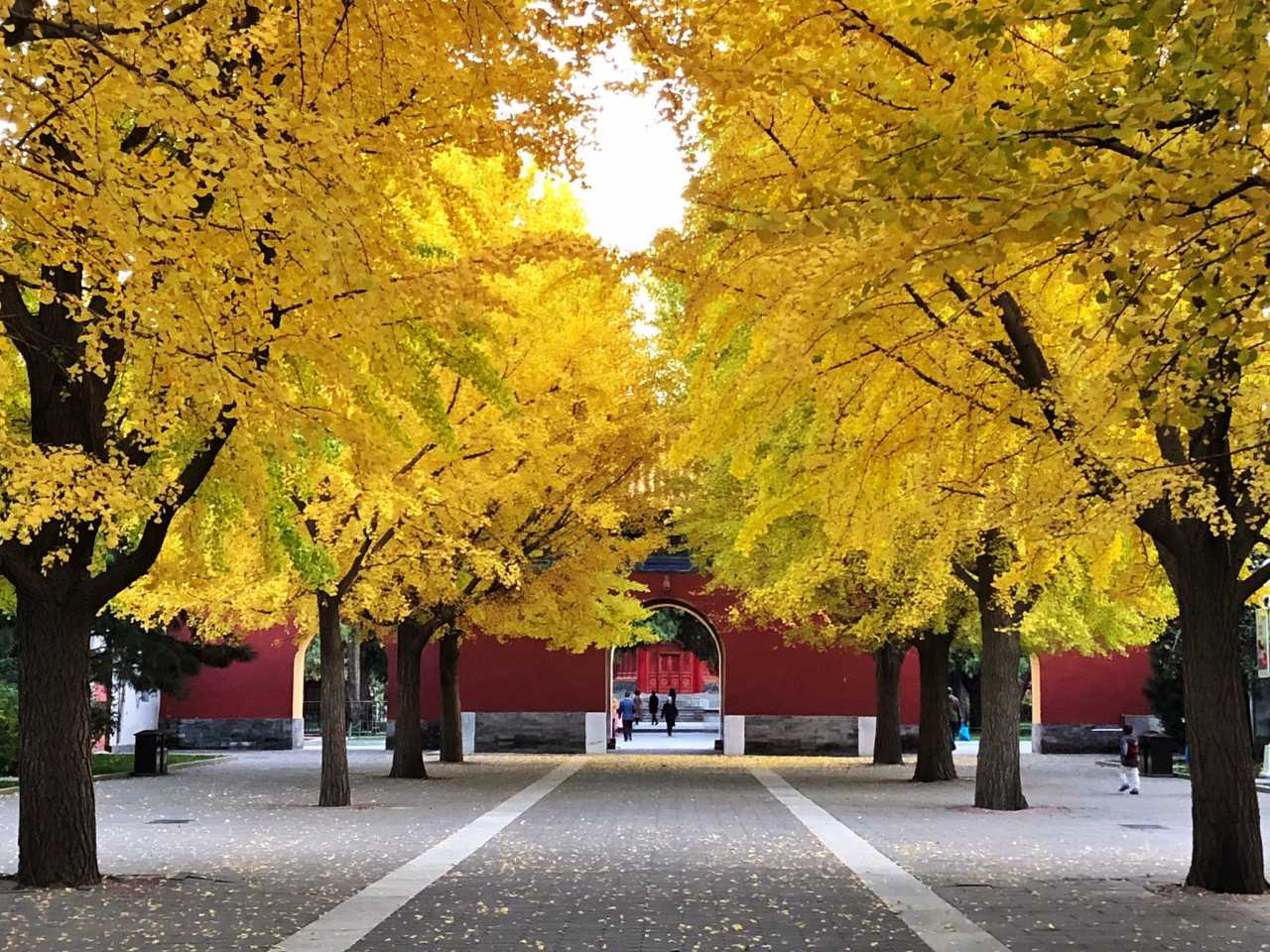
Autumn is arguably the most beautiful season in Beijing. The sky turns a deep, clear blue, and the city is painted in shades of gold and red. The Fragrant Hills (Xiangshan) are famous for their red leaves, but for a less crowded experience, head to the Great Wall at Mutianyu or the Temple of Earth (Ditan Park) for the ginkgo trees.
Autumn Highlights: - Autumn hiking at the Great Wall: Mutianyu is less crowded and offers stunning autumn colors. - Ginkgo avenue at Ditan Park: A golden tunnel of ancient trees. - Peking duck in autumn: The perfect comfort food after a day of leaf-peeping.
Winter in Beijing: Snow on the Red Walls
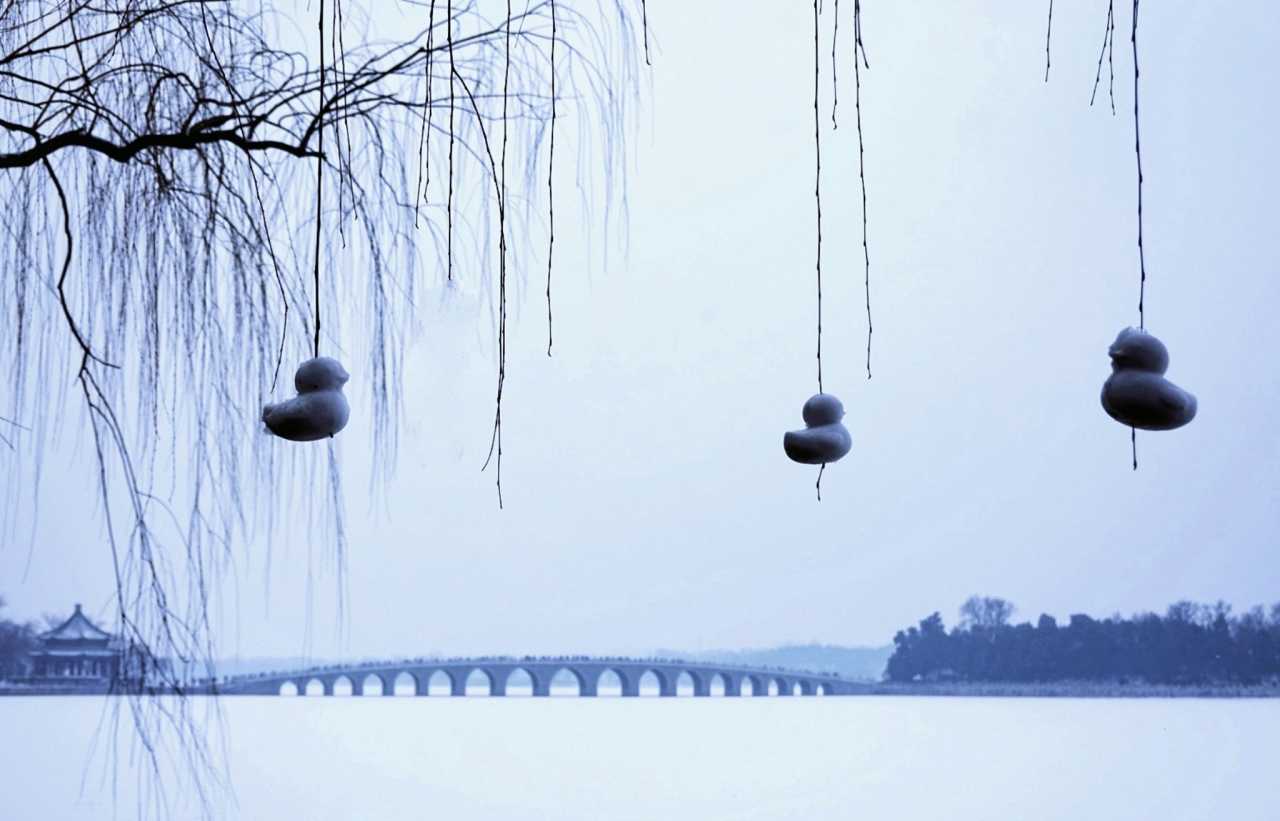
Winter in Beijing is cold, dry, and magical. The city's true character emerges when snow falls on the Forbidden City. The contrast of white snow against the red walls and golden roofs is a photographer's dream. For a quieter experience, visit the Lama Temple (Yonghe Temple) or walk the frozen Houhai Lake.
Winter Highlights: - Forbidden City in the snow: Arrive early; tickets sell out fast on snowy days. - Ice skating on Houhai: A classic Beijing winter activity. - Hotpot (Huo Guo): The ultimate winter meal to warm your soul.
Frequently Asked Questions (FAQ)
1. What is the best season to visit Beijing for flowers? Spring (March to May) is the best time for flowers. Specifically, early April is ideal for lilacs at Faxiang Temple, while mid-April offers peak crabapple blossoms at the Yuan Dynasty Site.
2. Are these temples and parks free to enter? Faxiang Temple and the Yuan Dynasty City Wall Relic Park are free. Zhihua Temple charges a 20 RMB admission fee, though the first 200 visitors on Wednesdays enter for free.
3. How do I get to Faxiang Temple using public transport? Take Metro Line 4 to Caishikou Station and exit southwest. Alternatively, take bus No. 10 to Huimin Hospital or buses No. 6 or 109 to Jiaozihutong.
4. Can I take photos inside Zhihua Temple? Yes, photography is allowed inside the temple and during the Jing music performances.
5. What other spring flower spots do you recommend? Beyond the three listed here, consider visiting the Summer Palace (peach blossoms), Jingshan Park (peonies), and the Ming City Wall Relic Park (plum blossoms).
Conclusion: Your Beijing Story Awaits
Beijing is not a city you simply visit—it is a city you feel. Whether you come for the spring blossoms, the summer lotus, the autumn ginkgo, or the winter snow, each season offers a unique heartbeat. The poems of the city are written in its ancient walls, its fragrant gardens, and its resilient spirit.
Ready to experience Beijing's heartbeat for yourself? Start planning your trip today. Book your flight, download the maps, and prepare to lose yourself in the alleys and temples of this thousand-year capital. The four seasons are waiting.
Share this guide with a friend who loves poetry and travel.
[Link: Beijing travel itinerary 7 days]
You should also read:
A Passionate Journey Through Beijing & Tianjin: Beijing Complete Guide – JOJO's In-Depth Travel Notes
Meta Description: Explore Beijing & Tianjin in 5 days with this complete travel guide. From the Forbidden City to the Great Wall, discover insider tips, transportation hacks, and must-see attractions. Plan your perfect China trip today. Beijing is not just a city—it's a living museum…
Continue reading...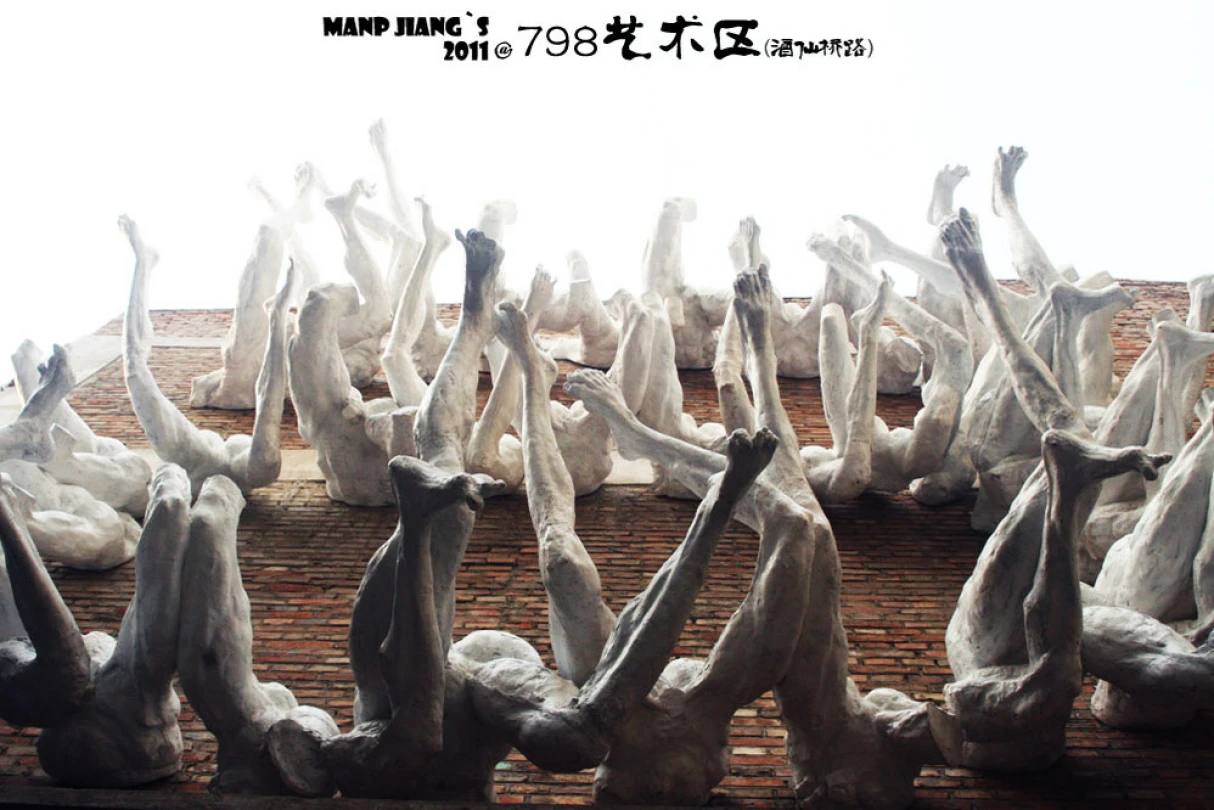
The Journey That Didn't Freeze Me to Death: Beijing – Six Days and Five Nights of Bone-Chilling Cold
Meta Description: Planning a winter trip to Beijing? Read this firsthand account of a spontaneous 6-day Beijing adventure—from ticket battles to 798 Art District, Sanlitun, and survival tips for bone-chilling cold. Perfect for budget travelers and first-timers. Some trips are long-planned romances; others are impulsive…
Continue reading...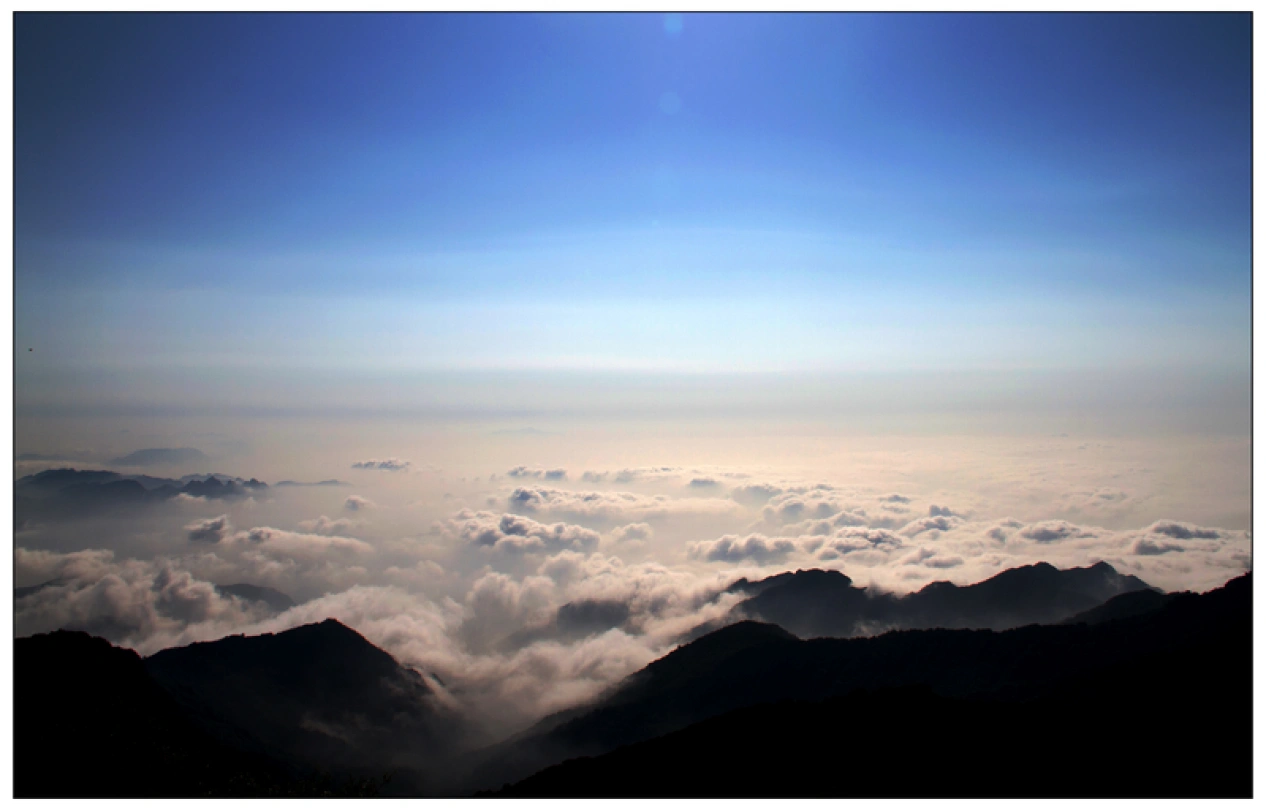
Hai Tuo Mountain Above the Sea of Clouds: A Skyward Feast on the Roof of Beijing
Meta Description: Discover Hai Tuo Mountain, Beijing's second-highest peak, where sea of clouds, starry nights, and alpine meadows await. Your ultimate guide to hiking, camping, and photography on the "Roof of Beijing." At the border of Beijing's Yanqing District and Hebei's Chicheng County lies a…
Continue reading...