Hai Tuo Mountain Above the Sea of Clouds: A Skyward Feast on the Roof of Beijing
Meta Description: Discover Hai Tuo Mountain, Beijing's second-highest peak, where sea of clouds, starry nights, and alpine meadows await. Your ultimate guide to hiking, camping, and photography on the "Roof of Beijing."
Introduction: Why Hai Tuo Mountain Is Beijing's Best-Kept Secret
At the border of Beijing's Yanqing District and Hebei's Chicheng County lies a sprawling, undulating forested range. It lacks the fame of the Great Wall, nor does it draw the crowds of the Forbidden City. Yet, with a silent and majestic presence, it guards the northern skyline of the capital. This is Hai Tuo Mountain—a wilderness that haunts the dreams of countless hikers and compels photographers to haul their heavy gear up its slopes.
Some call Hai Tuo Mountain Beijing's last "wild frontier." At 2,198.388 meters above sea level, it firmly holds the title of Beijing's second-highest peak, second only to Dongling Mountain. But when it comes to ever-changing scenery and the grandeur of its sea of clouds, Hai Tuo Mountain is undoubtedly the "beauty queen" of the capital's outskirts. Alpine meadows, rolling cloud seas, molten-gold sunsets, and a river of stars—these aren't exaggerations. They are the reality witnessed by every single person who reaches the summit.
Whether you're a seasoned hiker, a landscape photographer, or a weekend adventurer seeking escape from city life, Hai Tuo Mountain offers an unforgettable skyward feast. In this guide, we'll explore everything you need to know—from the best times to visit, to practical tips for your summit journey.
A Ridge That Divides: One Mountain, Two Worlds
The ridge of Hai Tuo Mountain is a natural dividing line. On the southern slope lies the Beijing Songshan Nature Reserve; on the northern side, it belongs to Chicheng County, Hebei. The two regions share the mountain as their border, yet also use it as a bond, together forming a green barrier stretching across the northern edge of the capital.
Geographical Significance: Beijing's Breathing Lung

Geographically, Hai Tuo Mountain serves as a crucial defense line, shielding Beijing from sandstorms. The winds howling down from the Mongolian Plateau, upon encountering this towering mass, are forced to slow down, leaving most of their dust and sand on the mountain's northern side. For this reason, some call Hai Tuo Mountain Beijing's "breathing lung," using its vast body to filter the dust from the north for the city.
To me, however, Hai Tuo Mountain feels more like a silent guardian. It speaks no words, yet through its ever-changing seasonal landscapes, it tells the story of nature's most primal power. In spring, the mountain flowers bloom in a riot of color; in summer, the grass is lush and green; in autumn, the forests are ablaze with color; in winter, everything is draped in silver-white. But the most intoxicating sight of all is the unpredictable, magnificent spectacle of the sea of clouds.
Ecological Diversity and Wildlife
The mountain's unique position as a borderland creates a rich biodiversity. Visitors can encounter wildflowers, alpine meadows, and even rare bird species. [Link: Beijing nature reserves] offer similar experiences, but Hai Tuo Mountain's remote location ensures a more pristine encounter with nature.
Two Summits, Two Kinds of Luck: My Hai Tuo Mountain Hiking Experience
This year, I've journeyed to Hai Tuo Mountain twice. The first time, my "luck" was a bit too much—I got caught in a full-blown hailstorm. Those soybean-sized ice pellets stung as they hit my face, but they also showed me the mountain's most authentic side: nature makes no concessions for anyone. It has its own temper.
Before the second trip, I deliberately checked the weather forecast and picked a day that was supposedly "clear and bright." As it turned out, this time my luck was indeed good—the sea of clouds, sunset glow, stars, the Milky Way, sunrise, and mountain flowers—almost every beautiful sight imaginable was laid out before my eyes.
Setting out at dawn, a thin mist still clung to the foot of the mountain. As I walked through the pine forest, my feet sank into the soft layer of pine needles, and the air was filled with the fresh scent of resin. Gradually, the view opened up. Wildflowers swayed in the morning light, blanketing the slopes, as if welcoming every visitor.
Best Time to Hike Hai Tuo Mountain

For the best experience, plan your Hai Tuo Mountain hiking trip between June and October. Summer offers lush greenery and wildflowers, while autumn provides stunning foliage. Winter hiking is possible but requires advanced preparation. [Link: Beijing hiking trails] often recommend Hai Tuo Mountain as a top destination for experienced hikers.
Above the Sea of Clouds: A Conversation with the Sky
When the first ray of sunlight pierced through the clouds and fell upon the ridge, I knew the star of the show had arrived.
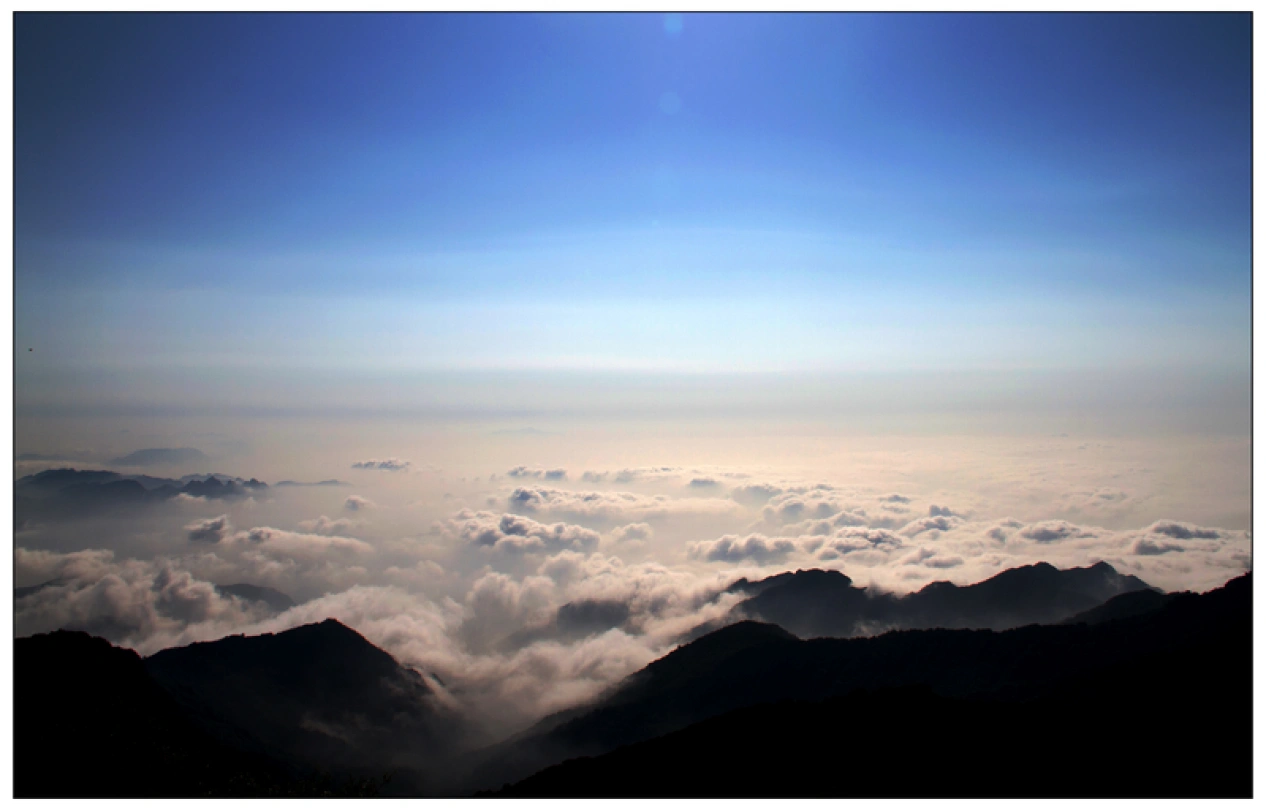
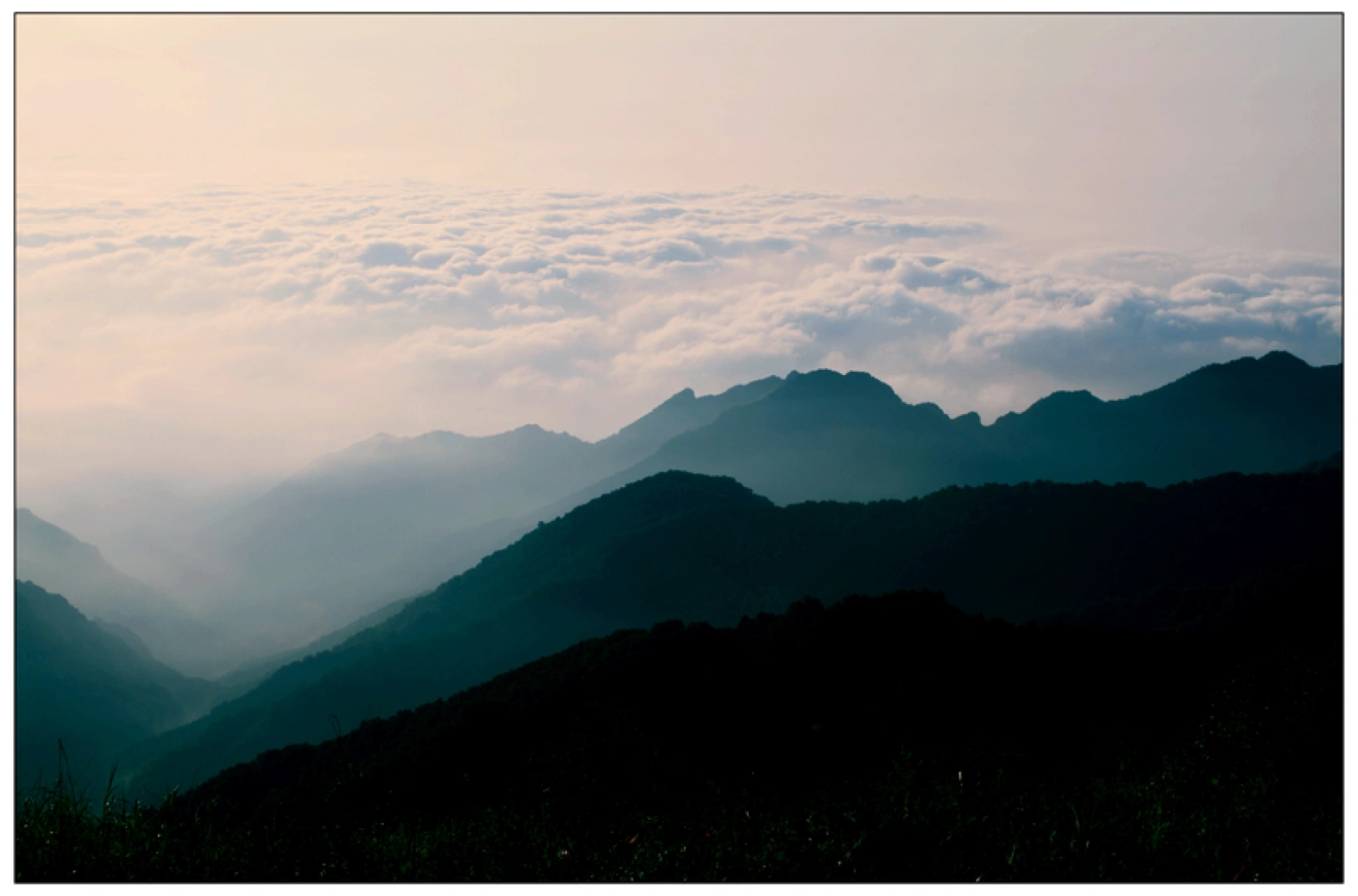
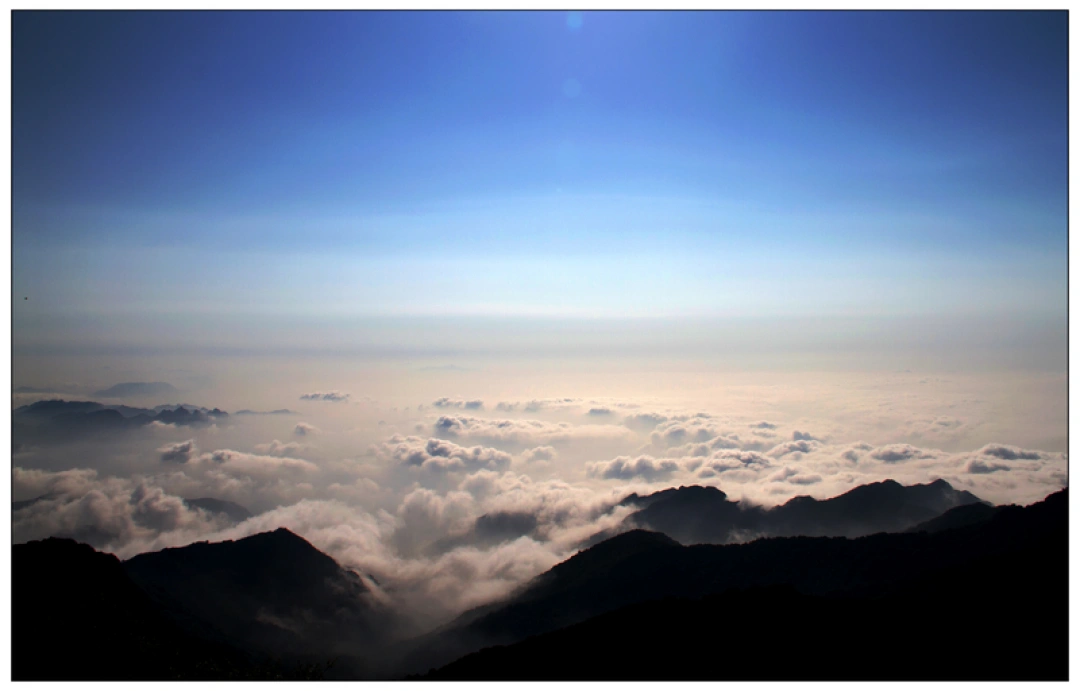
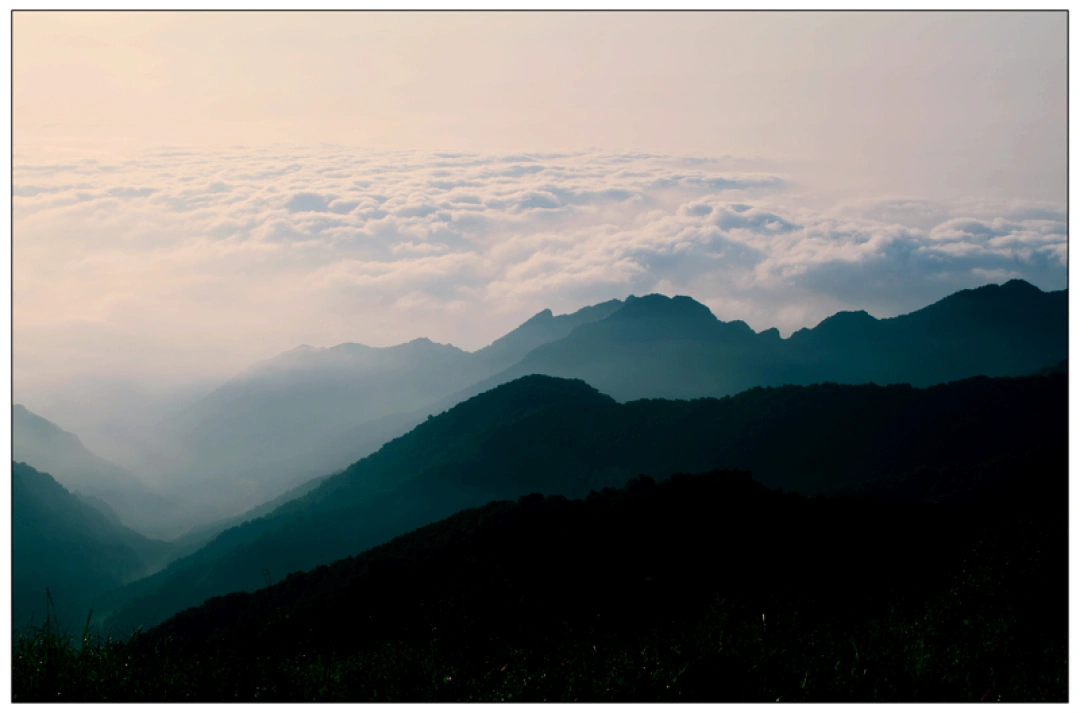
The sea of clouds at Hai Tuo Mountain is unlike the eerie, fantastical clouds of Mount Huangshan, nor the ethereal, drifting mists of Mount Emei. It's more like a flowing ink-wash painting—white layers of cloud churn and surge within the valleys, sometimes galloping like ten thousand horses, sometimes dancing like a delicate veil of silk. Standing on the summit, with the rolling sea of clouds beneath your feet and the brilliant blue sky above, you can't help but feel a strange illusion: that you are standing at the edge of the world, just one step away from the heavens.
I love this feeling of being enveloped in clouds and mist. When the fog swirls around, the whole world becomes hazy and gentle. Distant peaks appear and disappear, while the nearby plants and flowers are beaded with dew. Everything feels so unreal, yet so incredibly beautiful. In moments like these, you unconsciously slow your breathing, empty your mind, and just want to stand still, watch, and feel.
Photography Tips for the Sea of Clouds
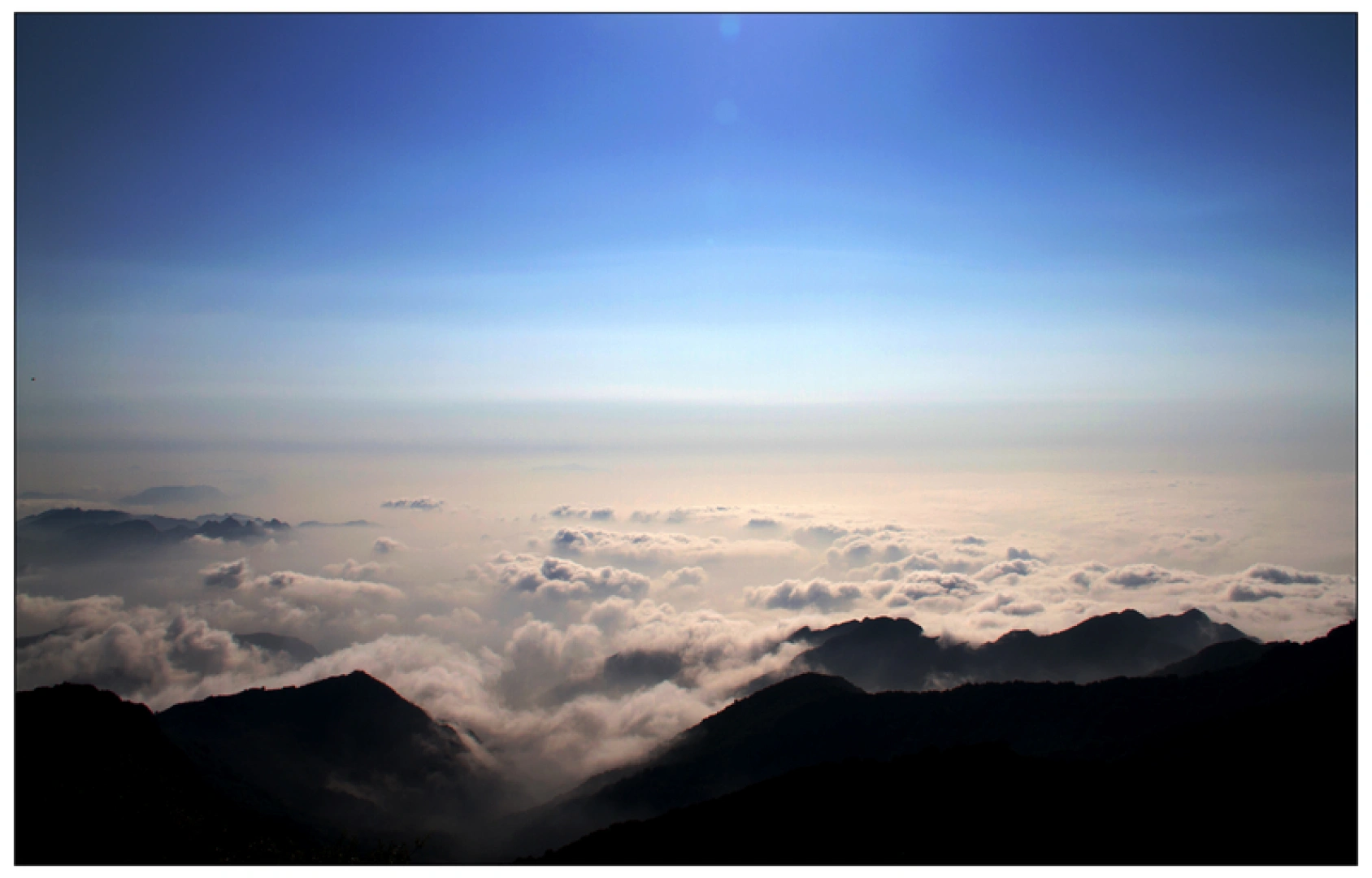
If you're a photographer, the Hai Tuo Mountain sea of clouds is a dream subject. Use a wide-angle lens to capture the vastness, and shoot during golden hour for dramatic lighting. A tripod is essential for long exposures. [Link: Landscape photography in Beijing] often features Hai Tuo Mountain as a prime location for cloud-sea shots.
Sunset and Twilight Glow: The Gentlest Time of Day
If the sea of clouds is Hai Tuo Mountain's "dance of daylight," then the sunset and twilight glow are its "poem of dusk."
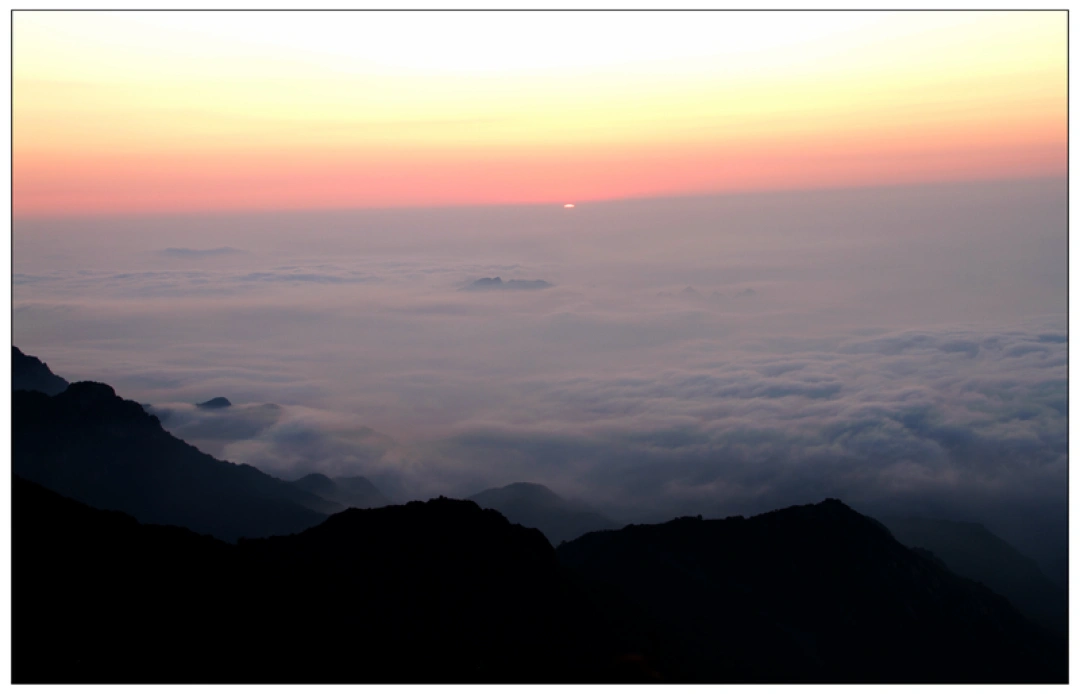
As the sun begins to sink westward, the sky's palette becomes incredibly rich. Starting from a pale gold, it shifts to orange-red, then to a deep crimson, before finally melting into the deep blue of night. The entire process feels like a meticulously choreographed performance, where every single frame deserves to be captured.
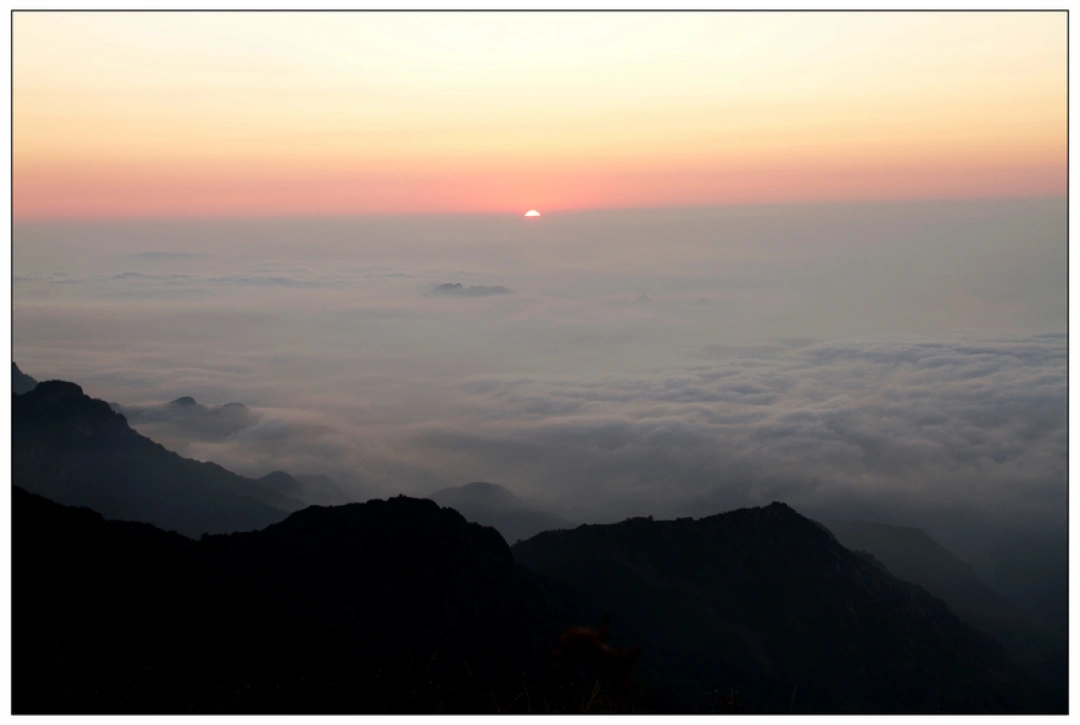
I sat on a rock at the summit, watching the sun slowly descend into the sea of clouds. The wind blew past my ears, carrying the distinct chill of early autumn. My friend beside me fell silent too. We just sat there, shoulder to shoulder, staring foolishly into the distance. Neither of us spoke, yet we felt that everything had already been said without words.
In that moment, I was reminded of a line by the poet Xi Murong:
I love the fields at twilight,
when all colors have grown still,
and darkness has not yet come.
Yes, dusk is the gentlest time of day. All the noise has faded away, and the night has not yet arrived. At such a moment, time seems to stand still. All your worries become insignificant, leaving only the beauty before your eyes and the peace within your heart.
Best Viewing Spots for Sunset
For the best Hai Tuo Mountain sunset views, head to the western ridge near the summit. A clear day offers unobstructed views of the horizon. [Link: Beijing sunset viewpoints] often rank Hai Tuo Mountain among the top spots for its dramatic skyline.
Stars and the Milky Way: The Splendor Beneath the Night Sky
When the last trace of sunset glow disappears over the horizon, another world of Hai Tuo Mountain begins to awaken.
Far from the light pollution of the city, the starry sky at Hai Tuo Mountain is exceptionally clear. Looking up, the sky is filled with countless stars, like diamonds embedded in black velvet. The Milky Way stretches across the heavens, a luminous river. Constellations you only ever see in textbooks now shine directly overhead.
I lay down on the grass, gazing up at this sea of stars. A gentle night breeze brushed by, and the chirping of insects came in waves. The whole world was so quiet that only the sound of my own heartbeat remained. Under such a starry sky, you feel yourself becoming very small, so small you could be insignificant. But at the same time, you feel yourself becoming vast, vast enough to hold the entire universe.
Some say that stargazing is a luxury, because it requires time, patience, and a quiet heart. But on Hai Tuo Mountain, this luxury is within easy reach. As long as you're willing, you can have a date with the Milky Way once the night falls.
Stargazing Tips for Hai Tuo Mountain
To maximize your Hai Tuo Mountain stargazing experience, plan your trip around a new moon for the darkest skies. Bring a red flashlight to preserve your night vision, and dress warmly—temperatures drop significantly after sunset. [Link: Beijing stargazing spots] often highlight Hai Tuo Mountain as a top destination for astrophotography.
Sunrise: The Overture to a New Day
The alarm went off at 4:30 AM. Even though I'd only slept a few hours, the thought of the Hai Tuo Mountain sunrise I was about to witness made me jump out of bed without hesitation.
The temperature at the summit was much lower than at the base. I zipped up my windbreaker, found a spot with a wide view, and waited for the sun to make its entrance. At first, only a sliver of pale light appeared on the horizon, then it slowly turned to a soft pink, then a vibrant orange-red. When the first ray of sunlight broke through the clouds and spilled over the mountaintop, it felt as if the entire world had been illuminated.
In that moment, I understood why so many people are willing to wake up in the wee hours just to see a sunrise. Because it's not just a natural phenomenon; it's a ritual. It symbolizes the beginning of a new day, a symbol of hope and rebirth.
Best Time for Sunrise Photography

Arrive at the summit at least 30 minutes before sunrise to set up your gear. The Hai Tuo Mountain sunrise is best captured with a telephoto lens to compress the layers of mountains and clouds. [Link: Beijing sunrise hikes] often recommend Hai Tuo Mountain for its unobstructed eastern views.
Practical Tips: How to Experience the Most of Hai Tuo Mountain
To make the most of your Hai Tuo Mountain hiking adventure, here are some essential tips:
Getting There
 - By Car: Drive to Yanqing District and follow signs to the Songshan Nature Reserve. Parking is available at the trailhead. - By Public Transport: Take bus 919 from Deshengmen to Yanqing, then transfer to a local bus or taxi to the mountain.
What to Pack
- Clothing: Layered clothing for temperature changes. A windbreaker and thermal layers are essential.
- Gear: Sturdy hiking boots, trekking poles, headlamp, and a first-aid kit.
- Food & Water: Bring at least 2 liters of water and high-energy snacks. There are no facilities on the trail.
- Photography: Tripod, wide-angle lens, and extra batteries (cold drains them fast).
Safety Tips
- Check the weather forecast before you go. Avoid hiking during storms.
- Start early to allow enough time for the ascent and descent.
- Stay on marked trails to avoid getting lost.
- Inform someone of your itinerary.
Accommodation Options
- Camping: Permitted at designated areas near the summit. Bring a 4-season tent for warmth.
- Nearby Lodging: Homestays and guesthouses are available in Chicheng County.
Frequently Asked Questions About Hai Tuo Mountain
1. How long does it take to hike Hai Tuo Mountain?
 The round trip typically takes 6-8 hours, depending on your fitness level and pace. The ascent is steep in sections, so allow extra time for breaks.
2. Is Hai Tuo Mountain suitable for beginners?
Hai Tuo Mountain is considered a moderate to difficult hike. Beginners should train beforehand and consider hiring a guide. The trail involves significant elevation gain and rocky terrain.
3. When is the best time to see the sea of clouds?
The sea of clouds is most common in spring and autumn when temperature inversions occur. Early mornings and late afternoons offer the best chances.
4. Can I camp overnight on Hai Tuo Mountain?
 Yes, camping is allowed at designated spots near the summit. You'll need a permit from the Songshan Nature Reserve. Camping is recommended for stargazing and sunrise photography.
5. What is the altitude of Hai Tuo Mountain?
Hai Tuo Mountain stands at 2,198.388 meters (7,212 feet) above sea level, making it Beijing's second-highest peak. Altitude sickness is rare but possible; stay hydrated and pace yourself.
Conclusion: Your Skyward Feast Awaits
Hai Tuo Mountain is more than just a hike—it's a journey into the heart of nature's most spectacular displays. From the sea of clouds that rolls beneath your feet, to the starry nights that stretch above your head, every moment on this mountain is a feast for the senses.
Whether you're chasing the perfect photograph, seeking solitude, or simply craving an escape from the city, Hai Tuo Mountain delivers. It's a place where time slows down, where worries fade, and where you can stand at the edge of the world—just one step away from the heavens.
Ready to experience the Roof of Beijing? Plan your trip today, pack your gear, and answer the call of Hai Tuo Mountain. The skyward feast awaits.
[Link: Book a guided Hai Tuo Mountain hiking tour]
[Link: Join the Beijing outdoor community for group hikes]
[Link: Explore more Beijing hiking destinations]
Have you hiked Hai Tuo Mountain? Share your experience in the comments below. Your story might inspire the next adventurer!
You should also read:
Beijing: From Deep Autumn to Early Winter – Discover Hidden Seasonal Beauty in China's Capital
Meta Description: Explore Beijing's transition from autumn to winter through personal stories and hidden gems. Discover Western Hills sunrises, Forbidden City snow scenes, and authentic hutong experiences in this SEO-optimized travel guide. Beijing isn't just a city of history and politics—it's a living, breathing entity…
Continue reading...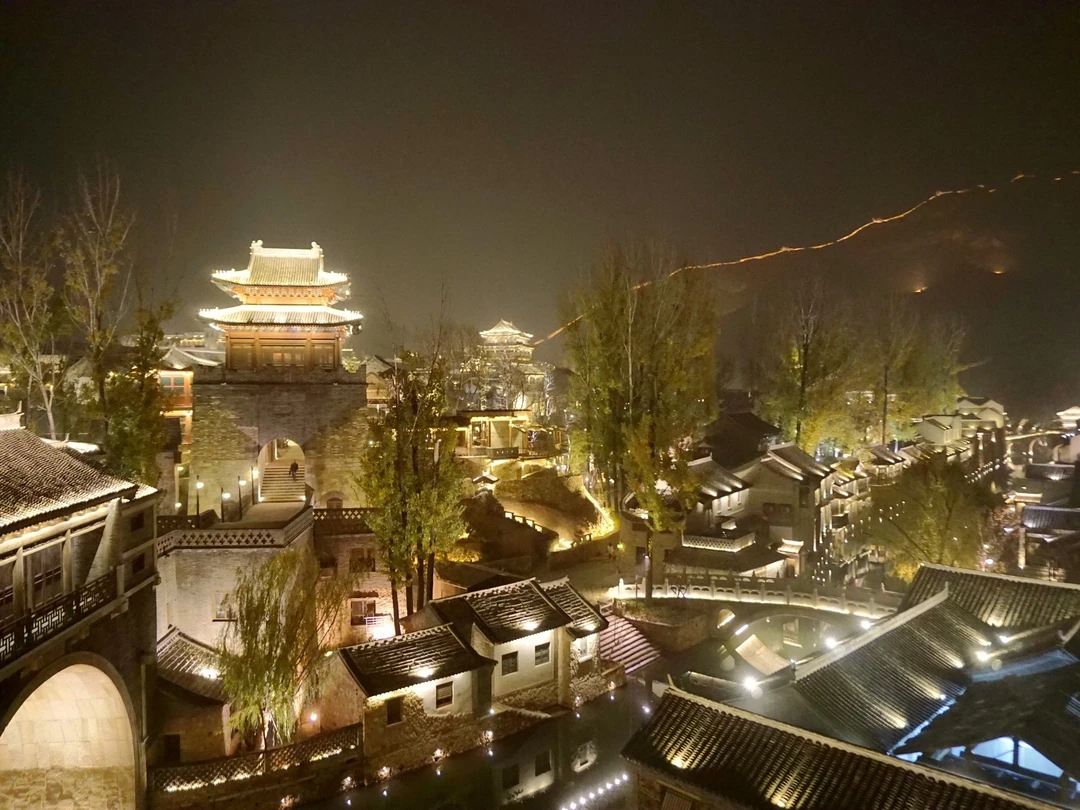
A Jiangnan Dream on Beijing's Outskirts: The Ultimate Gubei Water Town Travel Guide (November 2015)
Meta Description: Discover Gubei Water Town, Beijing's Jiangnan-inspired getaway at the foot of Simatai Great Wall. Read this detailed November 2015 travelogue with costs, tips, and must-see spots. The world is vast, yet life is fleeting. Sometimes, all it takes is a weekend—a spontaneous short…
Continue reading...
Lost in Beijing for Seven Days: A Solo National Day Journey Through the Capital
Meta Description: Discover how to survive—and thrive—during China's Golden Week in our SEO-optimized Beijing travel guide. From hidden hutongs to imperial palaces, this 7-day solo itinerary reveals crowd-avoidance secrets, budget tips, and must-visit attractions. Some say traveling during National Day is asking for trouble. But…
Continue reading...