Heavenly Craftsmanship: Hebei Quyang Stone Carving – 2,000 Years of Eastern Aesthetic Mastery
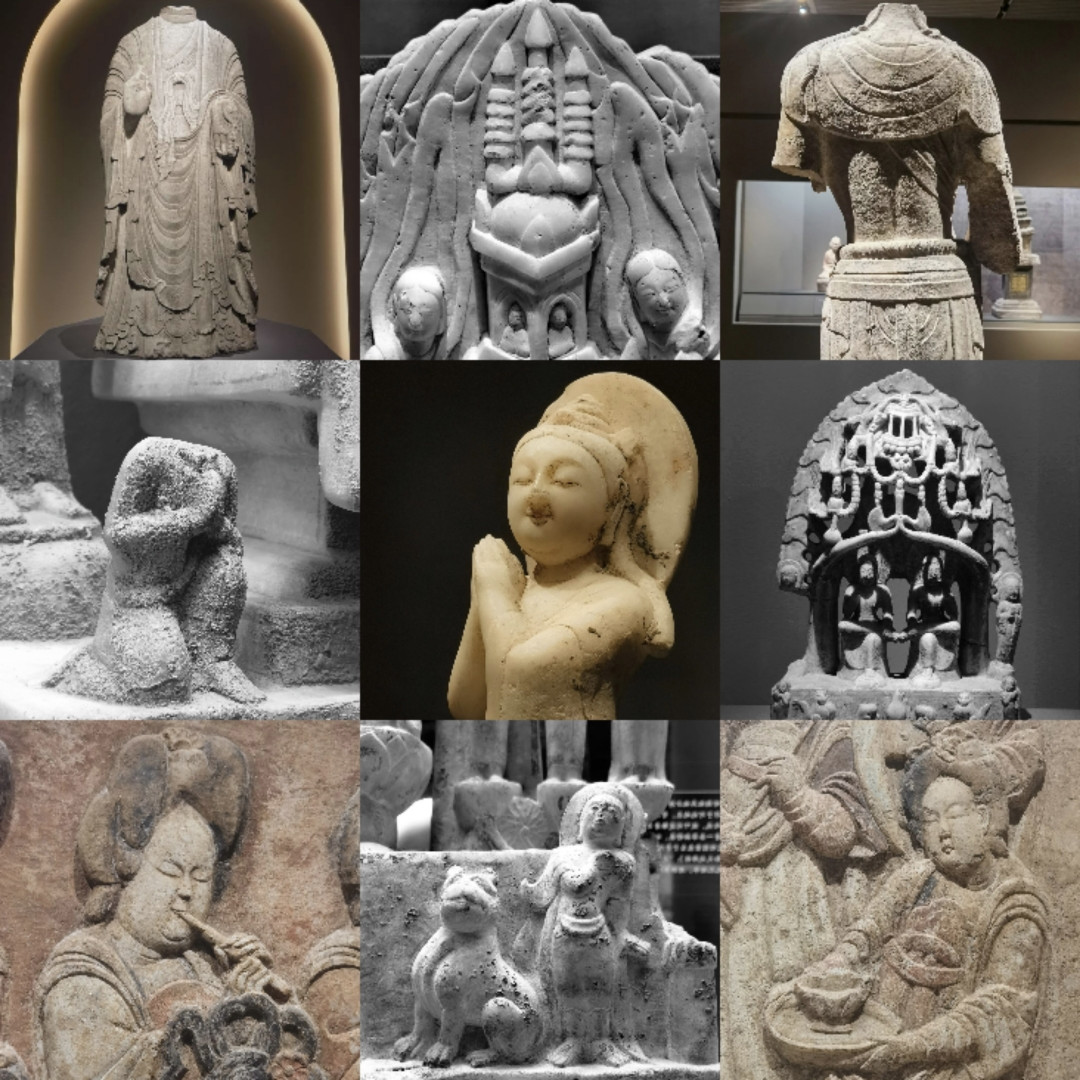
Meta Description: Discover the 2,000-year legacy of Quyang stone carving, from Western Han simplicity to Tang dynasty splendor. Explore the "Heavenly Craftsmanship" exhibition's masterpieces and why this Chinese art form endures.
Introduction: Why Quyang Stone Carving Resonates Across Two Millennia
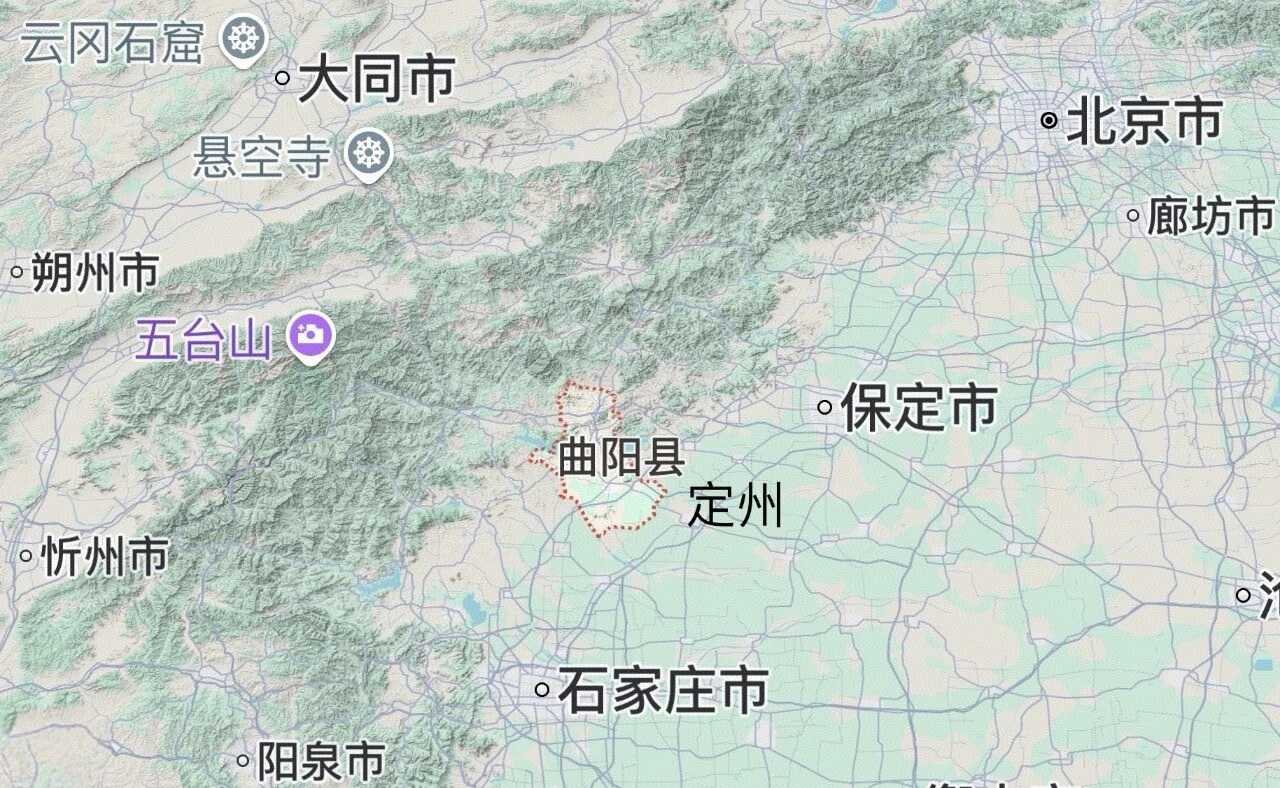
In the foothills of the Taihang Mountains lies a county whose name reveals its geography: Quyang. In Chinese tradition, yang denotes the sunny side of a mountain. Here, south of Damao Mountain—once the sacred site of the Northern Sacred Peak before the Qing Dynasty—Quyang earned its global reputation as the "Hometown of Chinese Stone Carving."
What makes this land extraordinary? White marble—stone as warm as fat, as pure as jade. For over 2,000 years, from the Western Han Dynasty to modern times, Quyang's craftsmen have never stopped wielding hammer and chisel. Even the Monument to the People's Heroes in Tiananmen Square bears the mark of Quyang artisans. Whether for imperial mausoleums, Buddhist grottoes, or folk beliefs, Quyang stone carving has consistently met the demands of history's most discerning "clients."
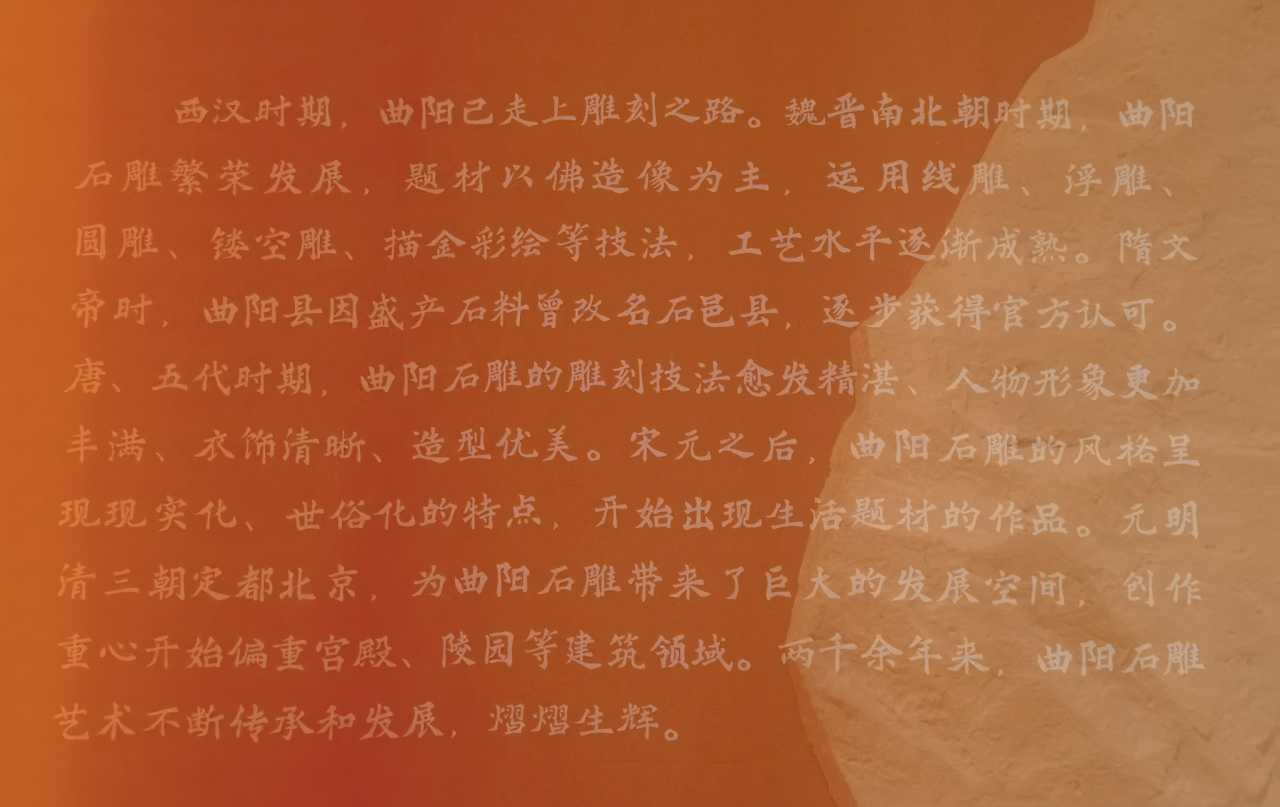
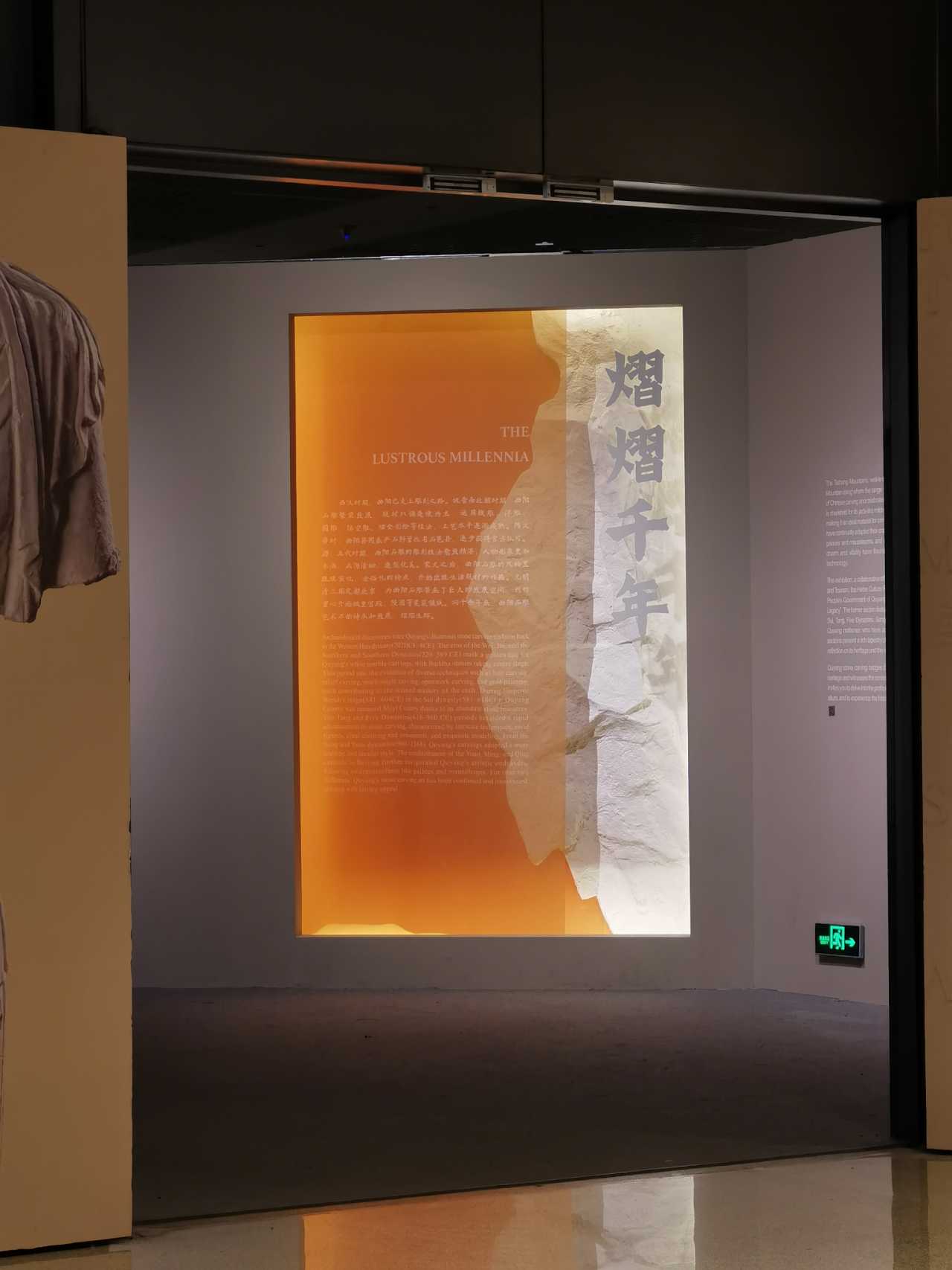
Though the "Heavenly Craftsmanship|Hebei Quyang Stone Carving Art Exhibition" has concluded, the stone carvings that survived millennia continue to speak of skill, faith, and aesthetics. This article focuses on the "Radiant Millennia" section, tracing the evolution of Quyang stone carving from Western Han simplicity to Sui-Tang splendor.
H2: Western Han Stone Carving – Minimalism That Breathes Life into Stone
H3: Male and Female Stone Attendant Figurines – The Art of Few Strokes
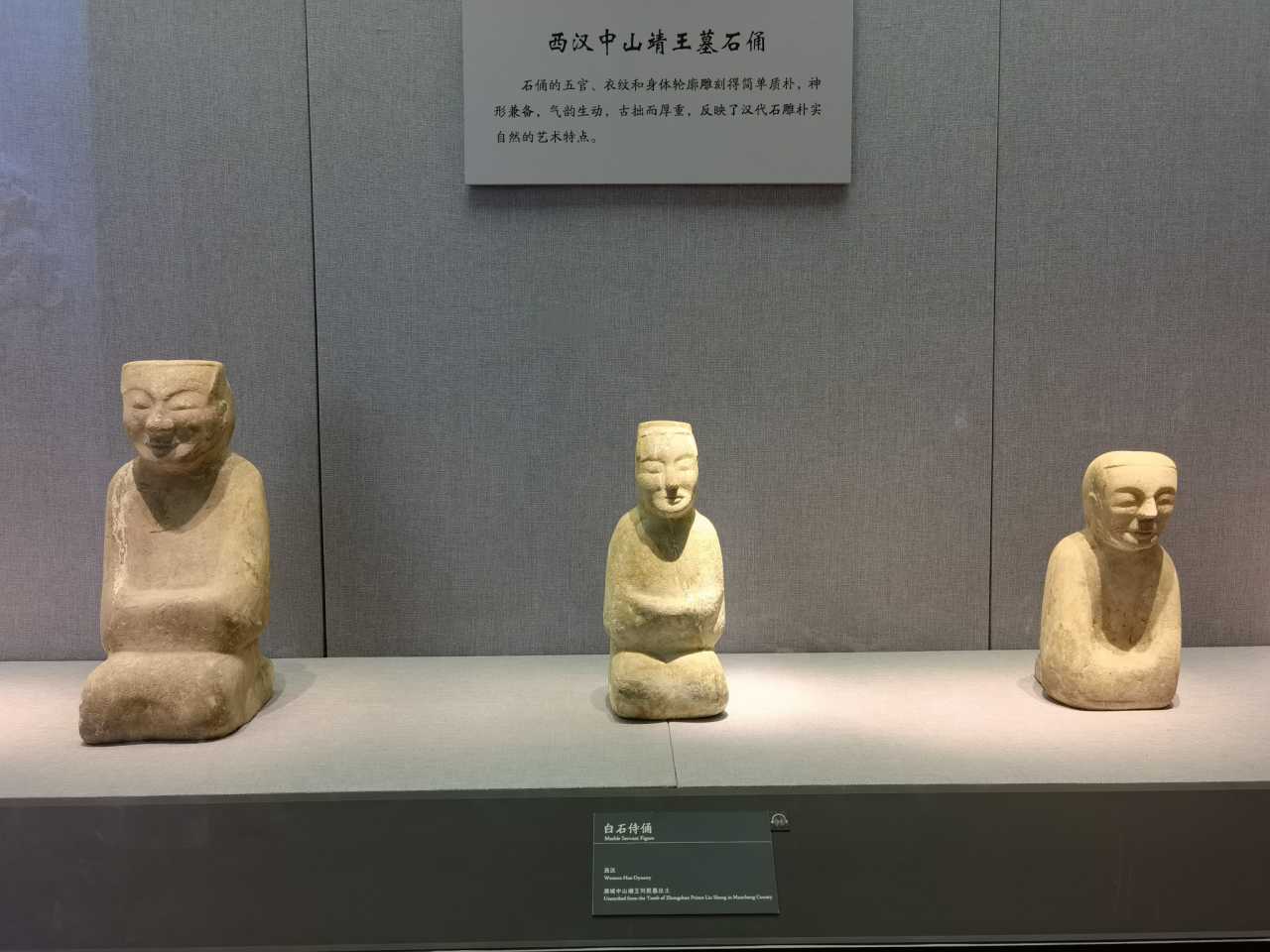
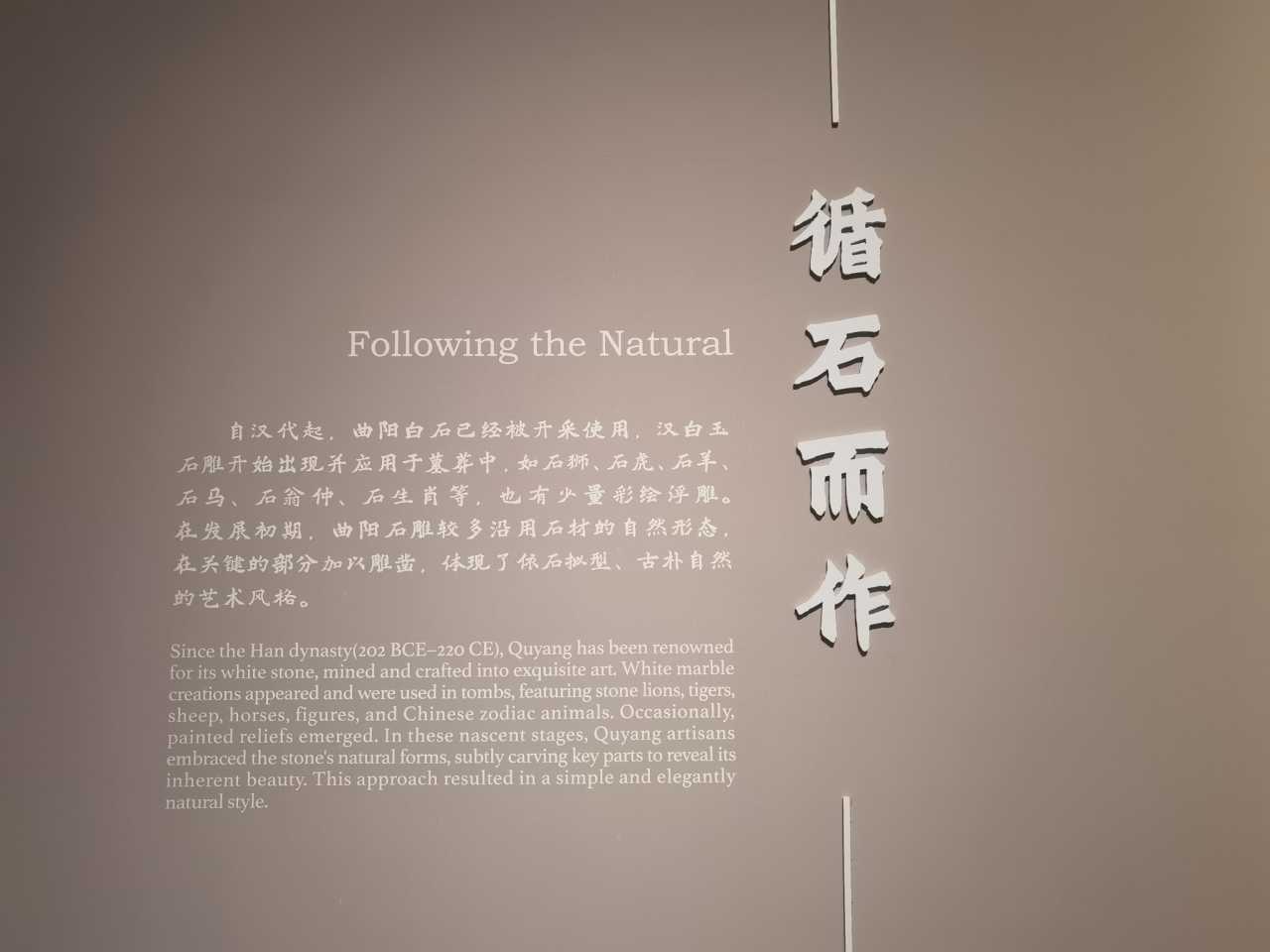
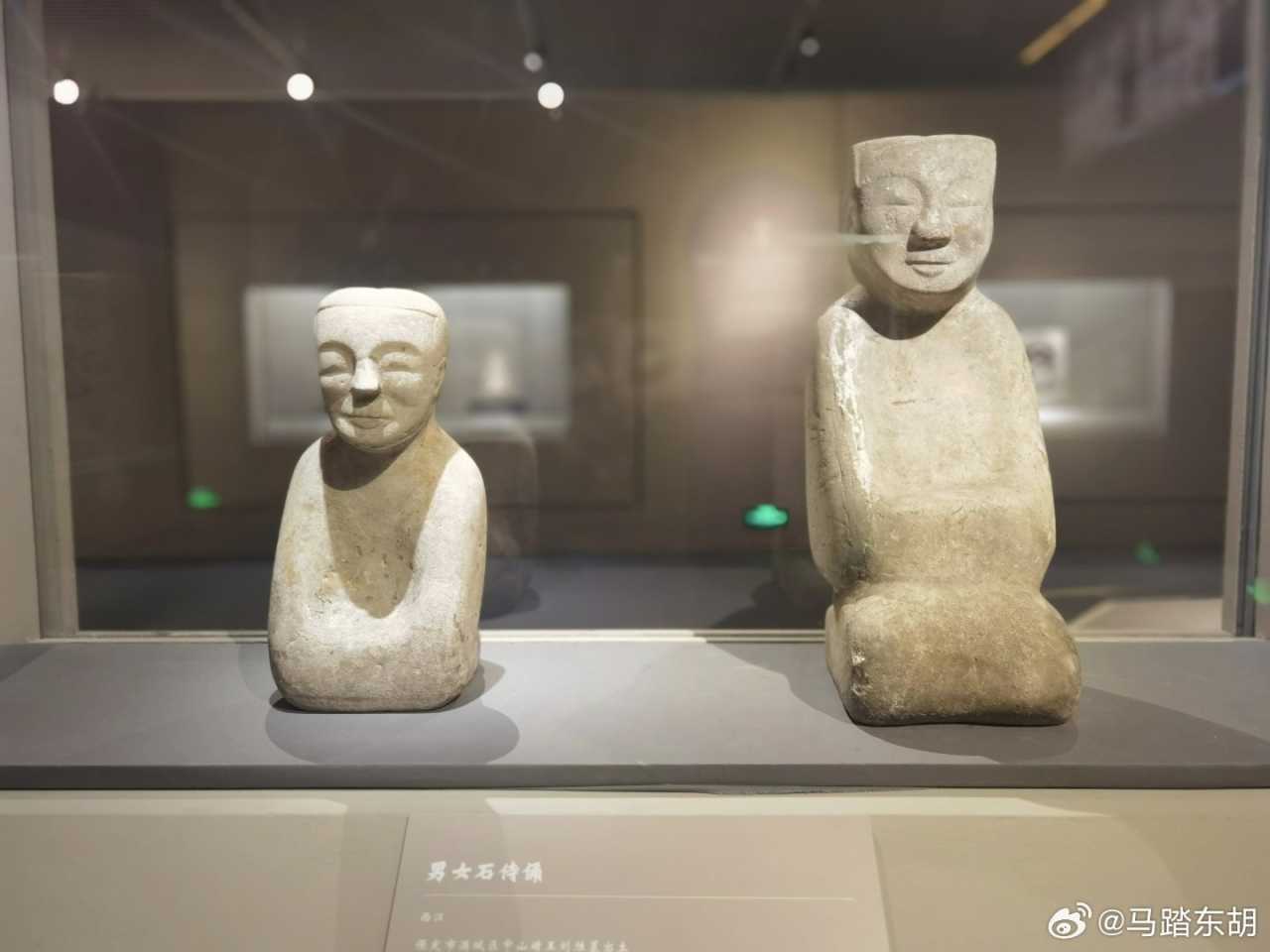
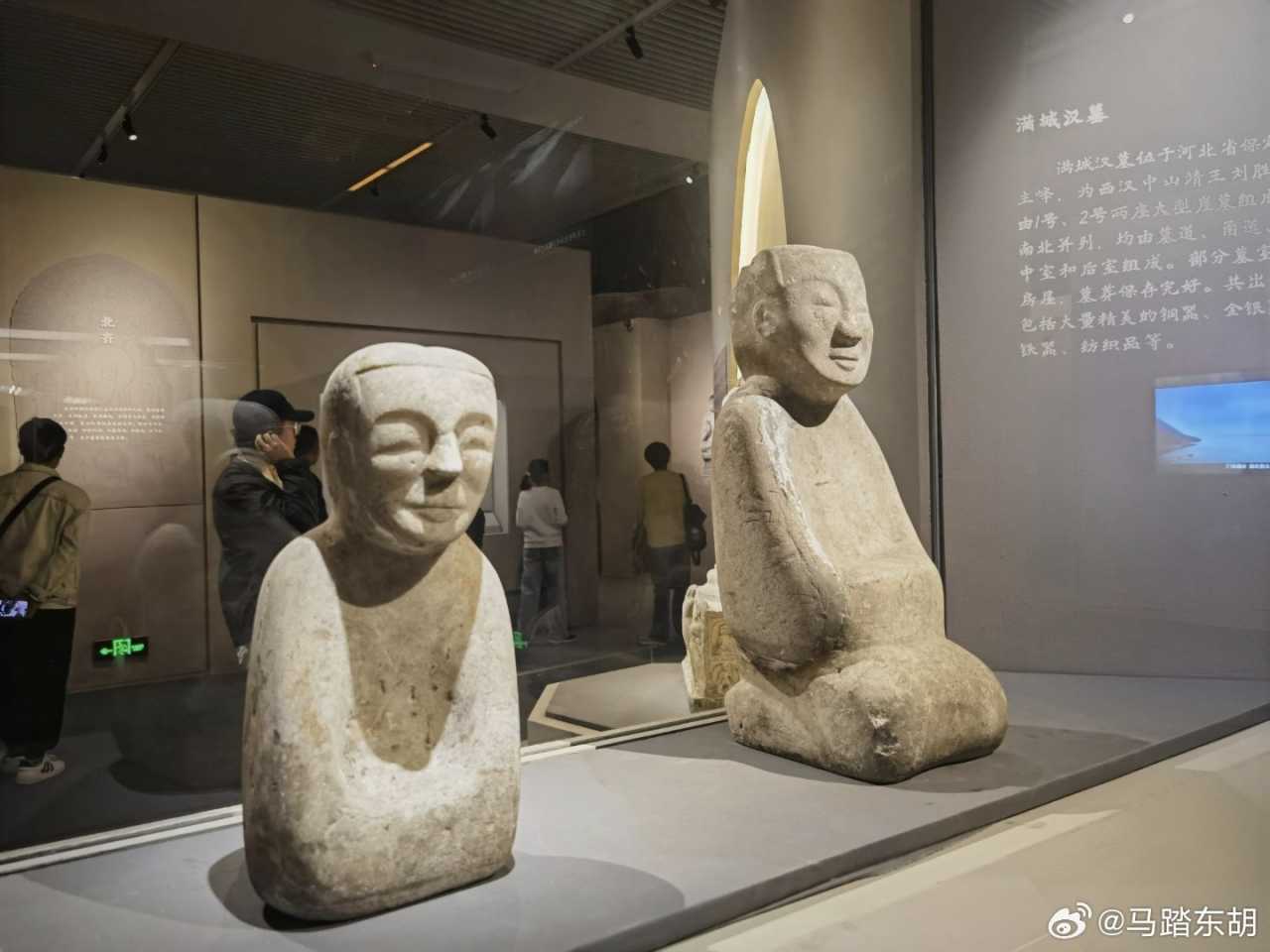
Entering the exhibition hall, the first artifacts that command attention are a pair of kneeling attendant figurines from the Mancheng Han Tomb. At first glance, they appear "unremarkable"—no intricate decorations, no delicate details. Yet this very simplicity represents the pinnacle of Western Han carving.
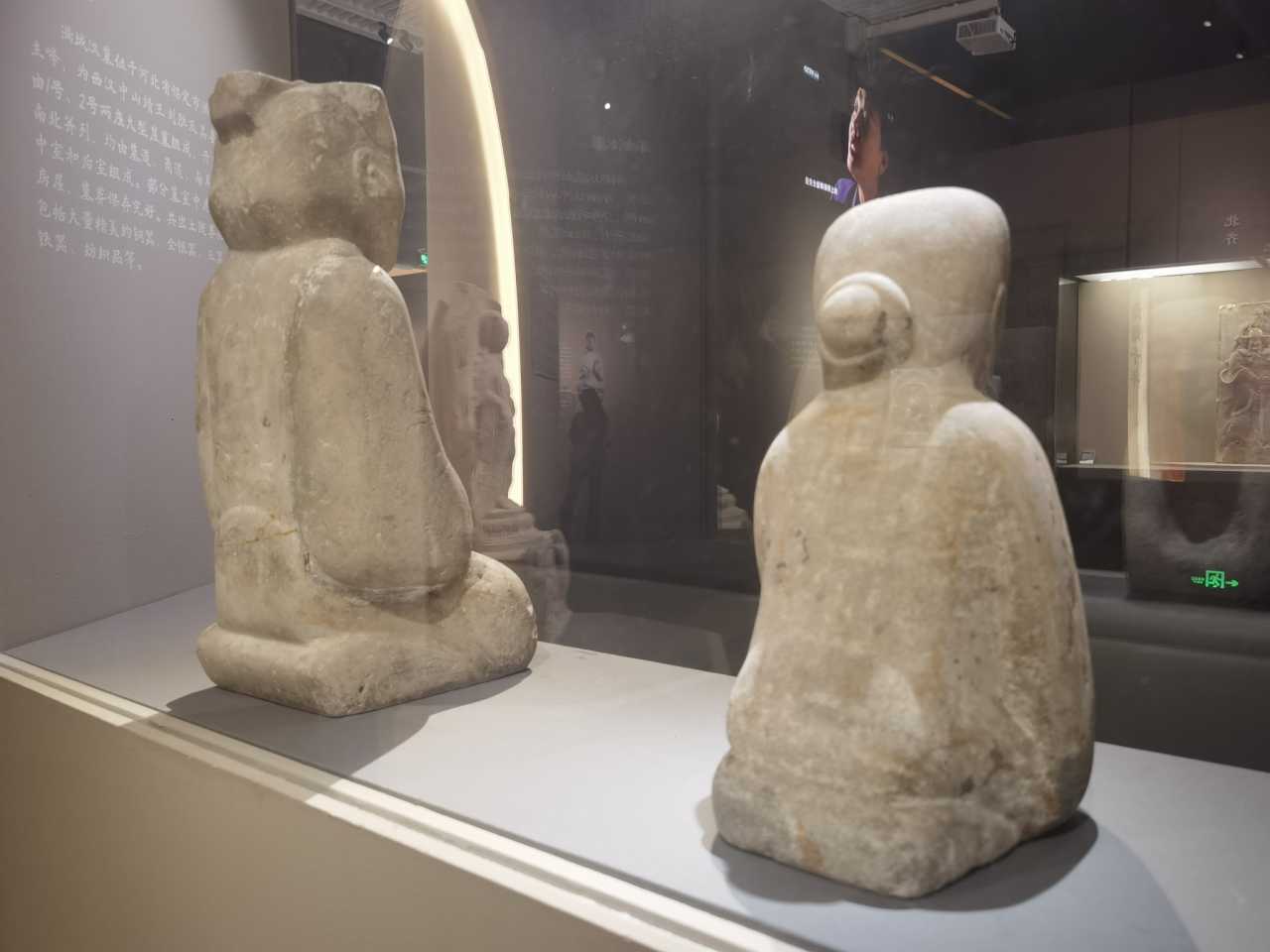
Quyang craftsmen followed the natural form of the stone, making only a few decisive cuts. You could almost count exactly how many strokes were used. The female figurine leans forward, her posture radiating deference and gentleness. The male figurine sits upright, his calm expression transmitting inner peace through the stone surface. As the exhibit panel explains: "I don't need to explain; you understand."
These pieces now reside in the "Quyang Stone Carving" hall on the first floor of the Hebei Museum. When I visited in 2021, I nearly overlooked them. But seeing them again at this exhibition, I finally grasped what it means to "always find something new in the familiar." Stone carvings demand quiet contemplation to appreciate the mastery behind each chisel mark.
[Link: Hebei Museum Quyang Stone Carving Collection]
H2: Five Dynasties Stone Carving – Motion and Stillness in Perfect Balance
H3: Painted Reliefs – Music Ensemble & Attendants
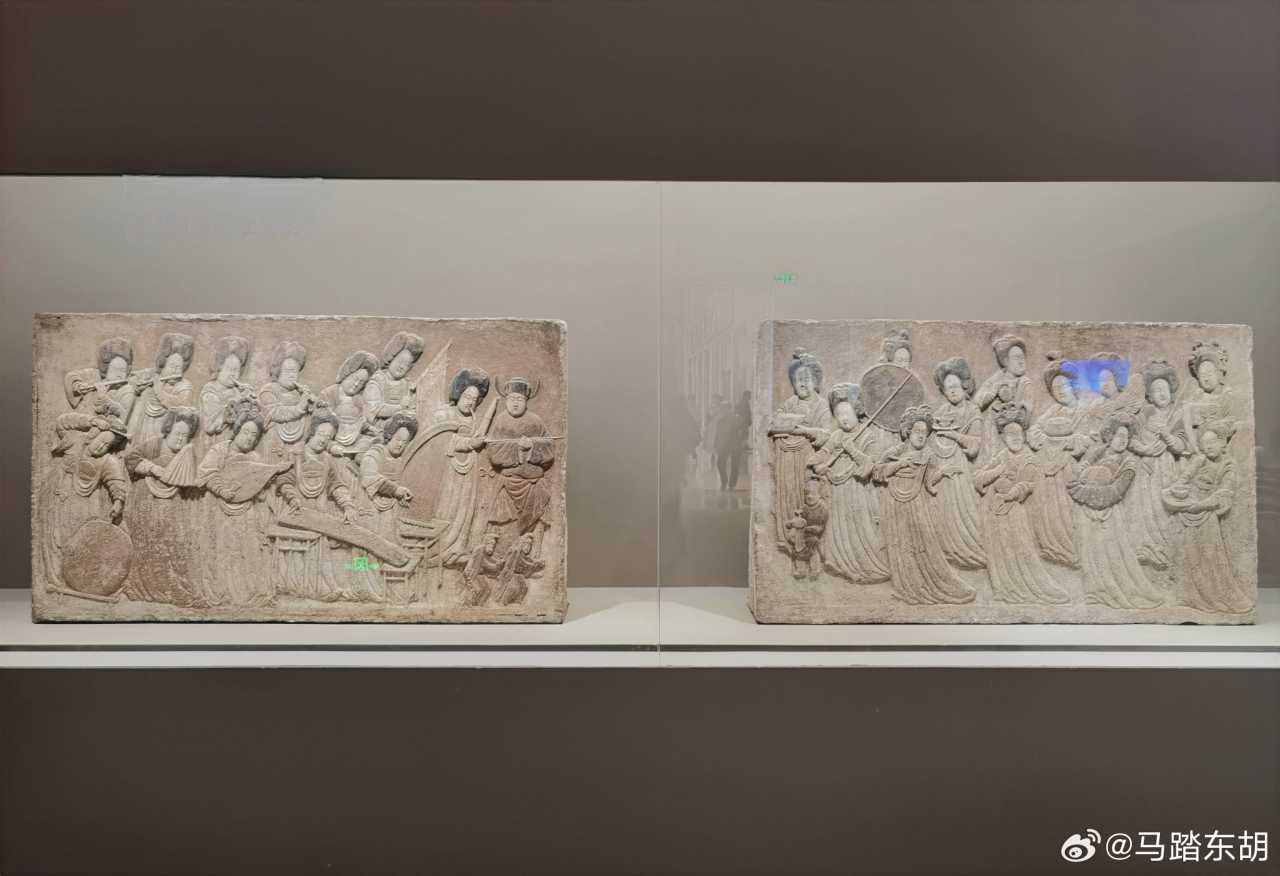
These two remarkable reliefs come from the tomb of Wang Chuzhi, a Five Dynasties military governor. At the Hebei Museum, they were displayed back-to-back; at this National Museum exhibition, they stand side by side, inviting direct comparison.
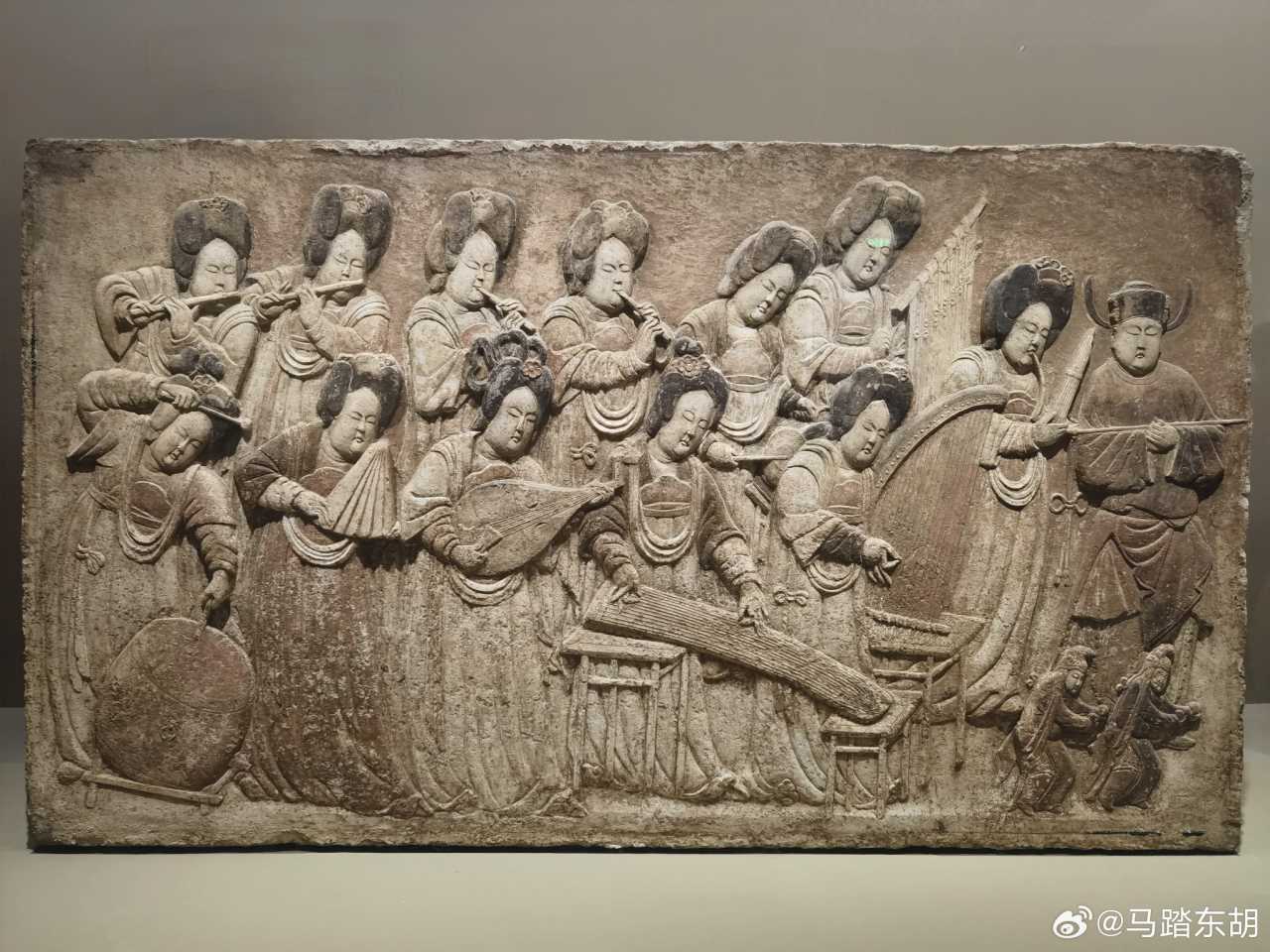
The Music Ensemble Relief presents a 12-member "girl band." Each figure holds an instrument: the bili (double-reed woodwind) produces a mournful sound; the flute offers ethereal clarity; the konghou (ancient harp) echoes like a babbling spring. The most striking figure is the young lady beating the large drum—her right elbow raised to its highest point, motion fully extended. You can almost feel the resounding "boom" of the next beat. This dynamic tension within stillness mirrors the dancing figure in Cave 25 of the Yulin Grottoes.
The Attendants Relief resembles "human luggage"—maids carrying daily-use items, their skirts swaying in the wind, the scene full of movement. Yet their expressions remain exceptionally solemn.
Here lies the genius of Five Dynasties craftsmanship: the Music Ensemble is overall static yet filled with lively energy, while the Attendants are overall dynamic yet quiet and solemn. This interplay of motion and stillness defines the era's aesthetic peak.
H3: Painted Warrior Reliefs – Repatriated Guardian Deities
The colors on these warrior reliefs are astonishingly well-preserved—red, gold, blue, green—as if freshly painted. Originally serving as tomb-guarding door gods in Wang Chuzhi's tomb, their images are majestic and imposing. The swirling, fluttering ribbons are the finishing touch, radiating power.
These are a pair of "repatriated guardian deities" : the figure stepping on a deer was donated by Robert Hatfield Ellsworth; the figure stepping on an ox was returned through Christie's spring auction in 2000. The ox-treading piece now resides in the National Museum's "Ancient China" hall, while the deer-treading piece appears in this special exhibition. The last time they stood together was at the National Museum's "Journey of Return" exhibition in 2019. Their tumultuous journey ended in the homeland they were meant to protect.
H3: Addressing Controversies About Wang Chuzhi's Tomb Carvings
The auction catalog's owner once raised two questions attempting to deny these carvings were tomb-robbed artifacts. Here's the critical perspective:

Q: Why does the warrior relief style differ from other reliefs in the tomb? A: Function dictates form. The Music Ensemble and Attendants reliefs depict life and entertainment—maids serving the tomb's occupant, with naturally calm expressions. The warrior reliefs serve as door gods, meant to ward off evil. Their exaggerated, even frightening, forms are entirely appropriate for their protective role.
Q: Why are the stolen works faded while the warrior reliefs remain bright? A: The Music Ensemble and Attendants reliefs were in the rear chamber, looted earlier. Environmental changes caused their colors to fade. The warrior reliefs were in the front chamber's corridor, where conditions remained relatively stable, preserving their pigments.
[Link: History of Wang Chuzhi Tomb Artifacts Repatriation]
H2: From Northern Wei to Sui-Tang – The Peak of Buddhist Stone Carving
H3: Seated Sakyamuni Statue – Northern Wei's "Broad Robes, Elegant Bones"
This seated Sakyamuni statue is the oldest piece in the entire exhibition , originating from the Xiude Temple site—Quyang's earliest Buddhist archaeological discovery. In 1954, over 2,000 Buddhist statues were unearthed at Xiude Temple, with about 10% bearing dated inscriptions spanning from the late Northern Wei to the High Tang period.
This statue exemplifies the classic "broad robes and wide sashes, elegant bones and clear features" style: wide-sleeved robes, sloping shoulders, a slender physique with ethereal beauty. The halo is rendered as a simple circle, while the body halo takes a boat-shaped back screen form. The robe is broad and thick, with shoulder folds arranged in stepped patterns, creating powerful three-dimensionality.
This style dominated the late Northern Wei. By the Eastern Wei and Northern Qi periods, influenced by India's Gupta style , robes became thinner and more body-revealing—a transformation that would reach its zenith in the Sui and Tang dynasties.
H3: Sui-Tang Buddhist Statuary – The Golden Age of Quyang Stone Carving
The Sui and Tang dynasties represent the golden age of Quyang stone carving. Buddhist statuary reached unprecedented levels of naturalism and spiritual expression. Craftsmen mastered the art of rendering fabric that seemed to flow, flesh that appeared warm, and expressions that conveyed divine compassion.
Key characteristics of Sui-Tang Quyang stone carving include: - Naturalistic proportions – figures moved from stylized forms to lifelike anatomy - Flowing drapery – robes appeared to ripple with divine energy - Expressive faces – serene smiles and downcast eyes conveyed inner peace - Intricate halos – decorative back screens became elaborate works of art
This period established Quyang as the undisputed center of Chinese stone carving , a reputation that endures today.
[Link: Xiude Temple Buddhist Statue Discoveries]
H2: Frequently Asked Questions About Quyang Stone Carving
Q1: What makes Quyang stone carving unique compared to other Chinese stone carving traditions?
Quyang's uniqueness stems from three factors: superior white marble from local quarries, an unbroken 2,000-year tradition passed through generations, and the ability to adapt to diverse needs—from imperial monuments to Buddhist temples. Quyang artisans even contributed to the Monument to the People's Heroes in Tiananmen Square.
Q2: How can I see Quyang stone carvings in person?
Major collections are housed at the Hebei Museum (Shijiazhuang) and the National Museum of China (Beijing). The Xiude Temple site in Quyang County also displays excavated pieces. Many Quyang carvings remain in situ at Buddhist grottoes across northern China.
Q3: What is the significance of white marble in Quyang stone carving?
White marble from Quyang is exceptionally pure, fine-grained, and warm to the touch—qualities that make it ideal for detailed carving. Its luminous quality, resembling jade, made it highly prized for Buddhist statuary and imperial commissions.
Q4: How has Quyang stone carving influenced modern Chinese art?
Quyang's techniques and aesthetic principles continue to influence contemporary Chinese sculptors. The tradition's emphasis on capturing spirit through form remains a core principle of Chinese stone carving education. Quyang artisans are still commissioned for major public monuments.
Q5: What threats does Quyang stone carving face today?
Challenges include loss of traditional skills as younger generations pursue urban careers, quarry depletion of high-quality marble, and preservation issues for ancient carvings exposed to environmental damage. However, government cultural heritage programs and growing tourism interest are helping sustain the tradition.
H2: Conclusion – Preserving the Chisel's Song
The "Heavenly Craftsmanship|Hebei Quyang Stone Carving Art Exhibition" offered a rare opportunity to witness 2,000 years of artistic evolution in one space. From the minimalist attendant figurines of the Western Han to the vibrant warrior reliefs of the Five Dynasties, from the ethereal Buddha of the Northern Wei to the naturalistic masterpieces of the Sui-Tang, Quyang stone carving tells the story of Chinese civilization itself—adaptable, enduring, and endlessly creative.
These stones have witnessed empires rise and fall, faiths transform, and aesthetics evolve. Yet the chisel's song continues. Today, Quyang's artisans still work in studios, their hammers striking stone with the same rhythm that echoed through the Taihang Mountains two millennia ago.
The question is: Will we listen?
H2: Experience Quyang Stone Carving Yourself
If this article has sparked your interest in Chinese stone carving, here are ways to engage:
- Visit the Hebei Museum in Shijiazhuang for the permanent Quyang Stone Carving collection
- Explore the National Museum of China's "Ancient China" hall for Five Dynasties and Tang pieces
- Travel to Quyang County to visit active carving workshops and the Xiude Temple site
- Support cultural preservation by visiting exhibitions and sharing knowledge about these masterpieces
The stones are speaking. Are you ready to hear their story?
[Link: How to Plan a Cultural Tour of Hebei Province] [Link: Chinese Buddhist Stone Carving Sites You Must Visit]
This article is based on the "Heavenly Craftsmanship|Hebei Quyang Stone Carving Art Exhibition" at the National Museum of China. All factual descriptions are verified against exhibition materials and historical records.
You should also read:
Through Three Thousand Years, Encountering the Fiery Charm of Chengdu: An Off-Season Family Travel Guide
Meta Description: Discover why an off-season family trip to Chengdu in late February delivers tranquility, incredible Sichuan cuisine, and authentic cultural experiences. Expert tips, hotel reviews, and must-visit spots included. If there's one city where you can simultaneously feel the weight of ancient Shu civilization…
Continue reading...
Xiamen: A Honeymoon That Took Ten Years to Arrive – The Ultimate Travel Guide
Meta Description: Discover why a decade-long wait made this Xiamen honeymoon unforgettable. From Gulangyu sunset views to cycling Huandao Road, explore our complete travel guide with insider tips, must-visit spots, and local food recommendations. Some dreams are like seeds buried deep in the heart, growing…
Continue reading...
Mountains and Waters Meet: A Family Journey Through Guizhou's Southeast That Was Ten Years in the Making
Meta Description: Discover a 10-year-awaited family road trip through Southeast Guizhou. Explore Libo's Seven Small Arches, Jiabang Rice Terraces, and Miao culture. Your ultimate Guizhou travel guide awaits. Some places are destined to be visited only when the time is right. Guizhou was that place…
Continue reading...