Mountains and Waters Meet: A Family Journey Through Guizhou's Southeast That Was Ten Years in the Making
Meta Description: Discover a 10-year-awaited family road trip through Southeast Guizhou. Explore Libo's Seven Small Arches, Jiabang Rice Terraces, and Miao culture. Your ultimate Guizhou travel guide awaits.
Some places are destined to be visited only when the time is right. Guizhou was that place for me. I had dreamed of this province since 2008, but nearly a decade passed before I finally set foot on this land of mountains and waters—this time with my child in tow during the National Day holiday.
Before departure, I scoured every travel guide online. The horror stories were everywhere: hours-long queues at Libo's Seven Small Arches, crowds so thick at Xijiang's Thousand Household Miao Village that you could only see the backs of people's heads, highway traffic jams stretching for hours. These descriptions felt like warnings, even deterrents. But what could I do? I had a Guizhou complex. Back in 2008, I was backpacking through Qujing in Yunnan, planning to enter Guizhou, but persistent rain trapped me in Yunnan instead. Over the next ten years, I always missed my chance. This time, I prepared for the worst and resolved to accept whatever came my way.
As it turned out, some worries were unfounded, and some surprises were completely unexpected.
Pre-Trip Preparation: A Well-Worn Route, a Calm Heart
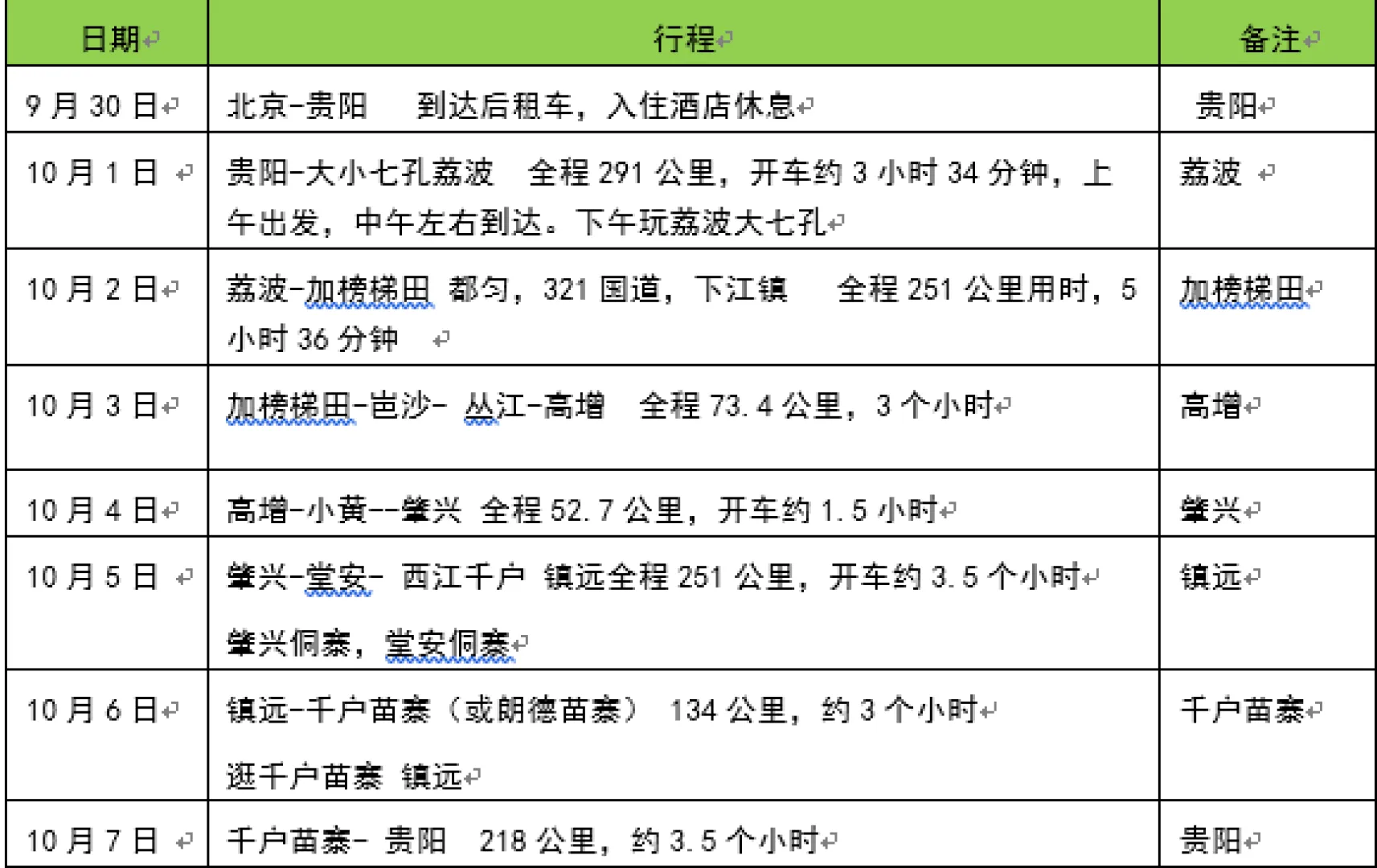
The Southeast Guizhou Grand Loop is a highly developed route, easy to plan. With ample time, I added Libo in Southern Guizhou and the relatively off-the-beaten-path Jiabang Rice Terraces to the classic circuit.
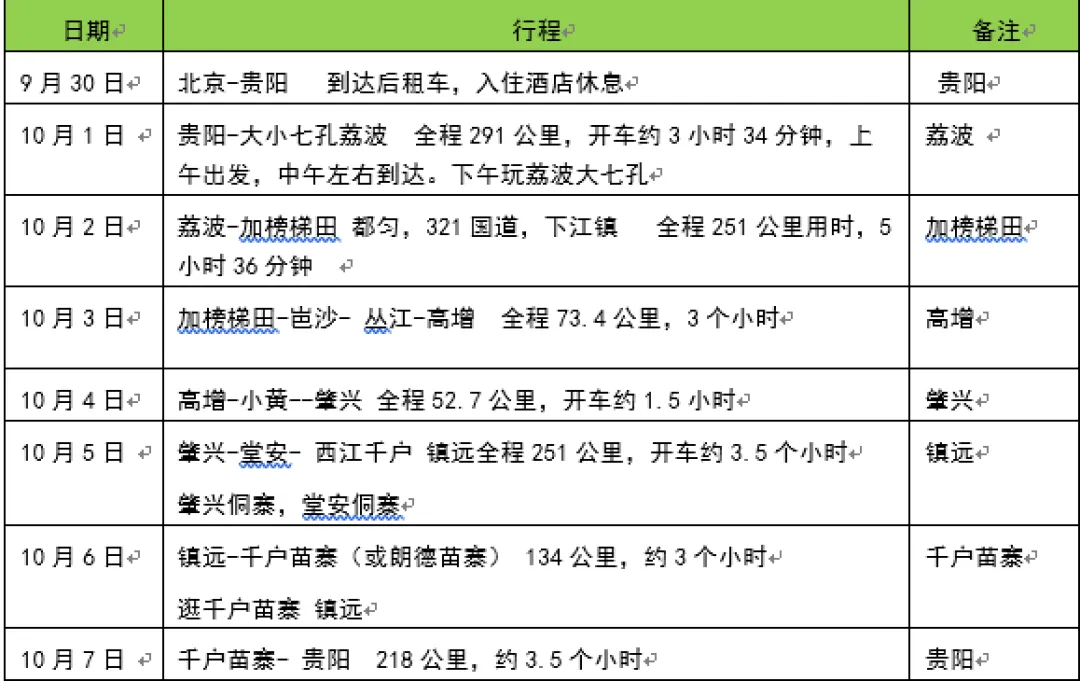
Total distance: 1,269 kilometers. Before departure, a friend warned me about Guizhou's winding mountain roads and the risks of self-driving. But that's old news. Today, most major attractions in Guizhou are connected by expressways. Even during the Golden Week holiday, apart from a minor accident near Guiyang that caused a brief delay on the way to Libo, the rest of the journey was smooth sailing. Of course, the mountain road to Jiabang Rice Terraces was indeed winding and required careful driving.
For driving enthusiasts, Guizhou's expressways feature countless tunnels and spectacular scenery. But be warned: tunnels are prone to rear-end collisions. Keeping a safe distance is key.
[Link: Guizhou self-driving tips and safety guide]
Day 1: Guiyang's Sour Fish Soup—A Prelude for the Taste Buds
Guiyang served only as our starting and ending point—no sightseeing planned. Cities don't appeal to me much, but food is another story.
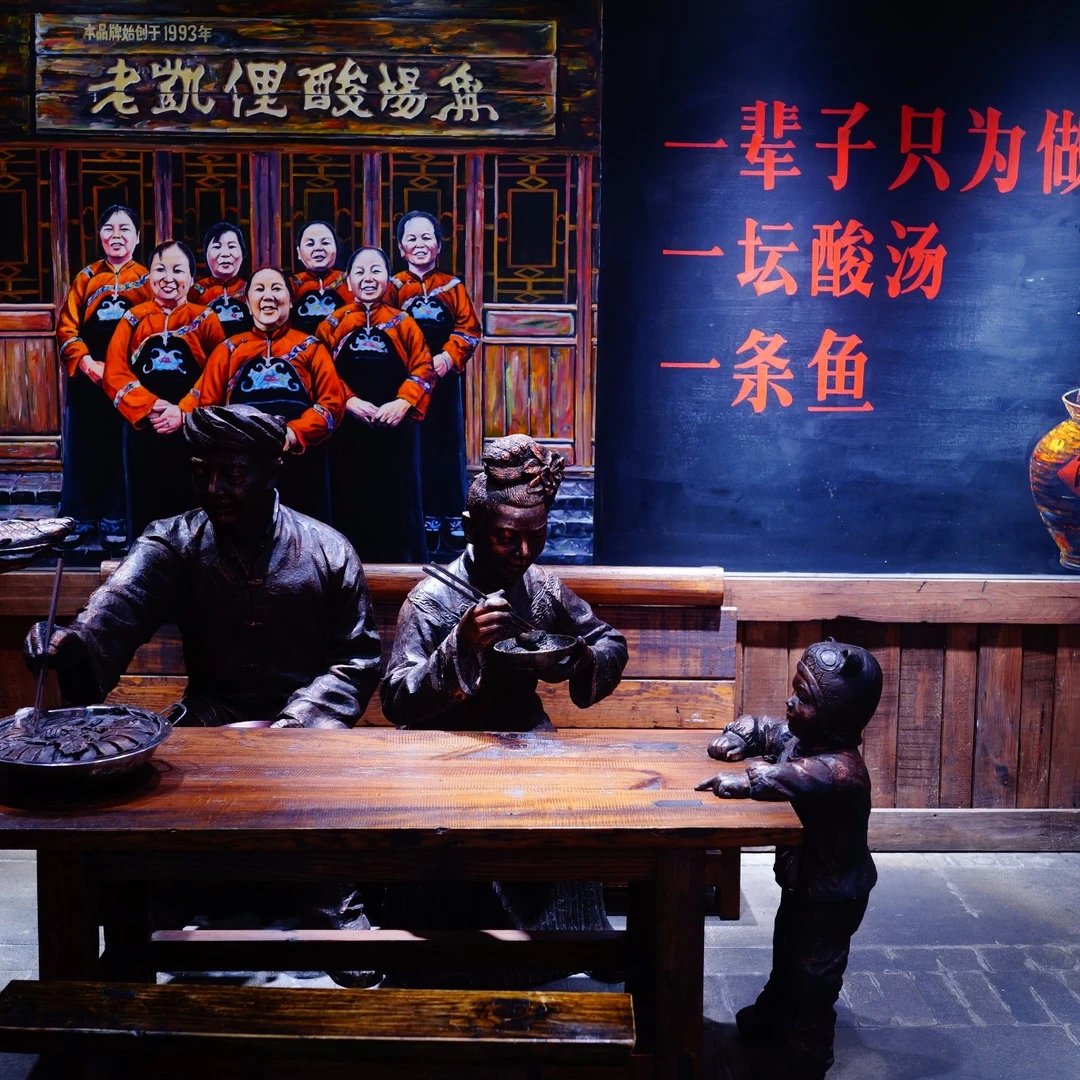
Our journey began—and ended—at 老凯俚酸汤鱼 (Old Kaili Sour Fish Soup) near the airport. This restaurant is a Guiyang intangible cultural heritage site, known for its perfectly seasoned sour fish soup. Guizhou's humid climate makes food preservation difficult, so the Miao people invented sour soup to keep ingredients fresh. Legend has it that the longevity of Miao elders is linked to drinking sour soup. After finishing the fish, down a few bowls of the broth, and you'll feel completely revived.
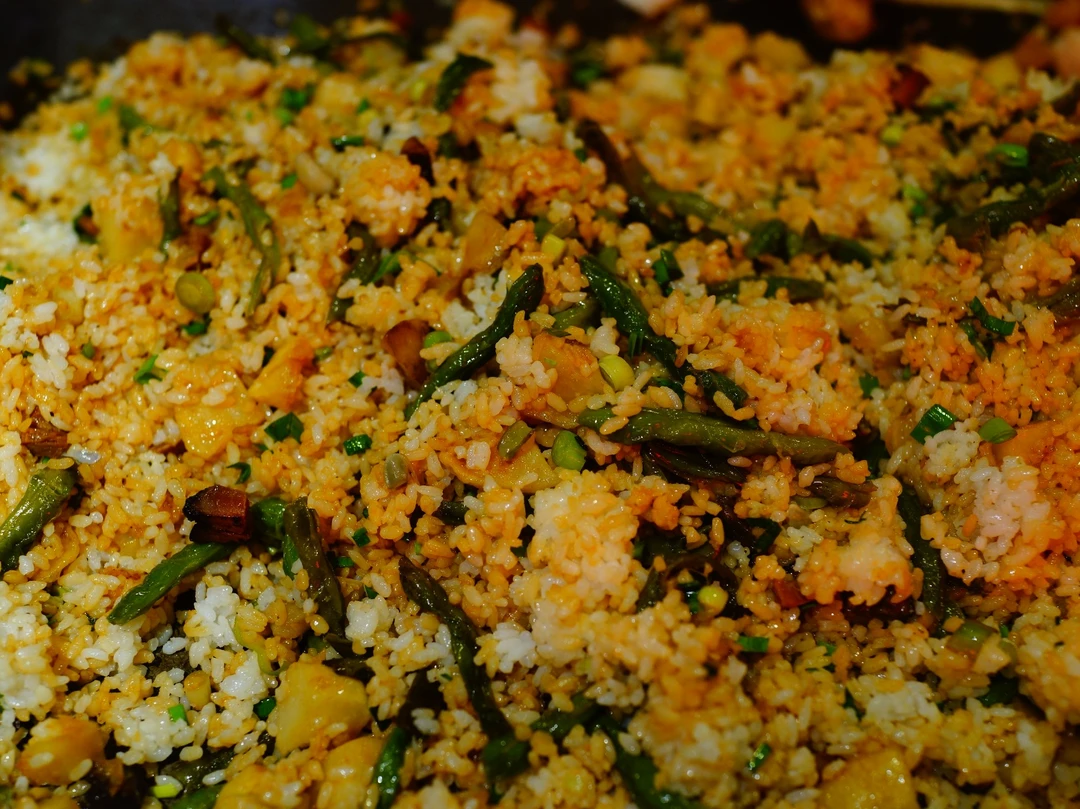
I highly recommend 棒豆洋芋饭 (bean and potato rice) —it looks so appetizing that it instantly whets your appetite, and it's a hit with kids.
[Link: Best Guiyang food experiences for families]
Day 2: Libo's Seven Small Arches—A Poem of Water

From Guiyang to Libo's Seven Small Arches, the navigation showed 3 hours 34 minutes, but traffic added an extra hour. All delays were caused by accidents near tunnels—Guizhou's mountains mean many tunnels, and many rear-end collisions.
What Makes Seven Small Arches Special?
Seven Small Arches (小七孔) is a 5A-rated national scenic area, a UNESCO World Natural Heritage site, and a classic example of karst landscape. Its name comes from a seven-arch bridge built in the 15th year of the Daoguang reign (1835). Tickets cost 110 RMB, with a 40 RMB eco-shuttle fee. Children under 14 enter free—Guizhou's ticket policy is remarkably child-friendly, with free entry for kids at even the most famous attractions.
Highlights of the Scenic Area
The scenic area is long and narrow, stretching from east to west: the Seven Small Arches Bridge, 68-tier Waterfall, Laya Waterfall, Water Forest, Emerald Valley Waterfall, Mandarin Duck Lake, and Wolong Pool. The full loop takes 4–5 hours.
Seven Small Arches Bridge is the first eye-catching sight. The pool beneath it is a deep, ethereal turquoise, with the ancient bridge spanning across—unassuming yet possessing a rustic beauty. Ancient trees line both banks, their thick branches perfect for kids to swing on. The ecological environment is excellent; I even saw the colorful dragonflies of my childhood—chili red, peacock blue, jet black—much to the children's delight.
After the bridge, follow the water's edge to see cascading streams. At first, it's a thrill—you can't take enough photos. But after a while, the novelty fades, and your pace quickens.
Water Forest was the kids' favorite. Trees grow among rocks, water flows over stone, and to pass through the forest, you must walk on water. You don't need to remove your shoes, but stepping along the damp stone paths through the serene forest is a unique pleasure.
Rowing a boat on Mandarin Duck Lake is worth trying, but we lingered too long earlier and missed it. From the shuttle to Wolong Pool, I caught a glimpse—the lake was a jade green, rivaling Canada's Banff Emerald Lake.
The final stop is Wolong Pool, the half-arc waterfall often featured in promotional photos. An underground river emerges from the cliff base, the pool surface mirror-smooth, then suddenly plunges over the precipice into a roaring natural curtain of water—a magnificent sight.
Overall, Seven Small Arches is absolutely worth a visit. It may not be breathtaking, but it will brighten your journey.
Where to Stay and Eat in Libo
That night, we stayed at 石缘客栈 (Stone Fate Inn) in Libo Ancient Town, a quaint boutique inn with bridges, rockeries, flowing water, and a courtyard perfect for tea and moon-gazing. The town's specialties include 簸箕宴 (bamboo tray feast) and 豆花烤鱼 (tofu pudding roasted fish) . We chose the Bouyei bamboo tray feast—a bamboo tray lined with banana leaves, filled with poached chicken, sticky rice, spring rolls, fried river fish, and more. It looked better than it tasted.
[Link: Libo Ancient Town accommodation guide]
Day 3: Jiabang Rice Terraces—A Painting Hidden in the Mountains

Jiabang Rice Terraces are little known to the world, hidden deep in the Moon Mountains. Their inaccessibility has preserved their pristine character. From Libo, via Rongjiang to Jiabang, the last 50 kilometers were all mountain roads—rough terrain, with so many turns I felt dizzy. The whole drive took 7 hours.
After crossing Lawa Bridge onto the rural road, the view suddenly opened up: vast terraced fields stretched before us. This is land cultivated by the Miao for generations. The terraces follow the mountains, their lines shifting with the terrain. Miao stilted houses dot the landscape, creating a harmonious picture.
The Best Villages to Visit
The essence of Jiabang lies in Dangniu Village, Jiaye Village, and Jiaju Village. Jiaju, at the highest point, offers the best panoramic view. The largest terrace here is barely one mu (about 0.16 acres); the smallest is said to be the size of a bamboo tray. A single slope can hold hundreds or thousands of mu, each terrace unique in form.
Over millennia, the Miao ancestors transformed entire mountains into these magnificent terraces with their labor and wisdom. Even the humblest wildflower comes alive against this backdrop.
When to Visit for the Best Views
The terraces are most beautiful during the irrigation season—still like silver mirrors, rippling gently in the breeze. On a clear day, sunrise and sunset paint the terraces in seductive reds, making it a paradise for photographers. However, due to its geography, Jiabang has no ideal sunset viewpoint.
[Link: Best time to visit Guizhou rice terraces]
Day 4: Morning at Jiabang and the Gunman Tribe of Basha
We didn't get the dreamy sunrise. By the time sunlight broke through the clouds and reflected on the water, the sun was already high. The morning air was thick with mist, drifting lazily over the half-hidden terraces. Hardworking Miao farmers were already in the fields, humans and nature in perfect harmony.
Walking along the narrow footpaths between the terraces, I caught beams of light and framed scenes. We strolled through Jiaju Village, watching locals go about their daily lives—a humbling reminder of how simple life can be.
The Basha Miao Village Experience

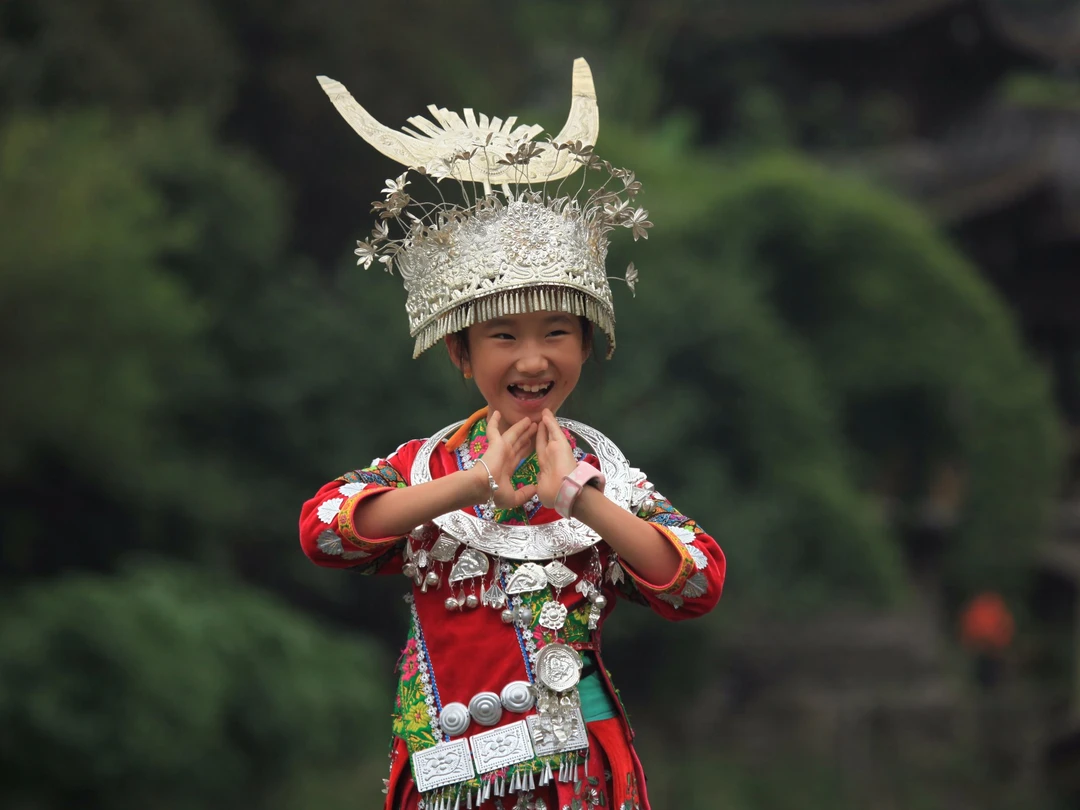
Later, we visited Basha Miao Village, known as the "Gunman Tribe." This is one of the last places in China where men still carry guns as a symbol of their identity. The Basha people are a subgroup of the Miao, known for their unique hairstyles, traditional clothing, and ancient customs. Watching the gun salute and the ceremonial dance was a highlight for the whole family—especially the kids, who were fascinated by the real rifles.
[Link: Basha Miao Village cultural guide]
FAQ: Planning Your Guizhou Family Trip
1. Is Guizhou safe for self-driving families?
Yes, absolutely. Most major attractions are connected by expressways. However, mountain roads to places like Jiabang Rice Terraces are winding and require cautious driving. Keep a safe distance in tunnels, as rear-end collisions are common.
2. What is the best time to visit Southeast Guizhou?
The best times are spring (March–May) and autumn (September–November) for mild weather. For rice terraces, the irrigation season (May–June) offers mirror-like reflections, while autumn (September–October) brings golden harvest colors.
3. Are children allowed free entry to Guizhou attractions?
Yes, Guizhou is very child-friendly. Children under 14 enter free at most major attractions, including Libo's Seven Small Arches. Always carry ID or passport for age verification.
4. How many days do you need for a Southeast Guizhou road trip?
A minimum of 5–7 days is recommended for a comfortable loop covering Guiyang, Libo, Jiabang Rice Terraces, and Basha Miao Village. Add extra days if you want to include Xijiang Thousand Household Miao Village.
5. What food should I try in Guizhou?

Don't miss sour fish soup (酸汤鱼), bean and potato rice (棒豆洋芋饭), bamboo tray feast (簸箕宴), and tofu pudding roasted fish (豆花烤鱼). Guizhou cuisine is known for its sour and spicy flavors.
Your Guizhou Family Adventure Awaits
Ten years of dreaming, one unforgettable journey. From the turquoise waters of Libo's Seven Small Arches to the misty terraces of Jiabang, from the gun salutes of Basha to the sour fish soup of Guiyang—Southeast Guizhou delivered every bit of the magic I had imagined.
If you've been waiting for the right moment, stop waiting. Pack your bags, load up the car, and set out on your own Guizhou family road trip. The mountains and waters are calling—and they'll welcome you with open arms.
Ready to plan your trip? [Link: Book your Guizhou self-drive itinerary] or [Link: Download our Southeast Guizhou travel checklist]
Have you visited Guizhou? Share your favorite hidden gem in the comments below!
You should also read:
Beijing Travel Guide: A Personal Journey Through Smog, History, and Hidden Stories
Meta Description: Discover Beijing beyond the tourist traps. This personal travel story explores hutong culture, historical sites, and local secrets—from Jingshan Park to Yuanmingyuan. Perfect for travelers seeking authentic experiences. Beijing. The name alone conjures images of smog-shrouded skylines, the majestic Forbidden City, labyrinthine hutong…
Continue reading...
Lost in Beijing for Seven Days: A Solo National Day Journey Through the Capital
Meta Description: Discover how to survive—and thrive—during China's Golden Week in our SEO-optimized Beijing travel guide. From hidden hutongs to imperial palaces, this 7-day solo itinerary reveals crowd-avoidance secrets, budget tips, and must-visit attractions. Some say traveling during National Day is asking for trouble. But…
Continue reading...
The Beijing Adventures of "Dunderhead" and "Grumpy": A Heartwarming Journey Through Time and Childlike Wonder
Meta Description: Discover Beijing through the eyes of two playful travelers—"Dunderhead" and "Grumpy." From the Great Wall to the Forbidden City, this SEO-optimized guide blends nostalgia, history, and practical tips for an unforgettable trip. In June, Beijing's sky hung gray, the air thick with an…
Continue reading...