How Fortunate We Are, Born in China: A Heart-Pounding Beijing & Datong Pre-Spring Festival Journey
Meta Description: Discover why a pre-Spring Festival trip to Beijing and Datong is unforgettable. From Forbidden City tickets to Yungang Grottoes, this SEO-optimized travel guide covers it all.
Introduction: Why a Pre-Spring Festival Trip to Beijing and Datong is Unforgettable
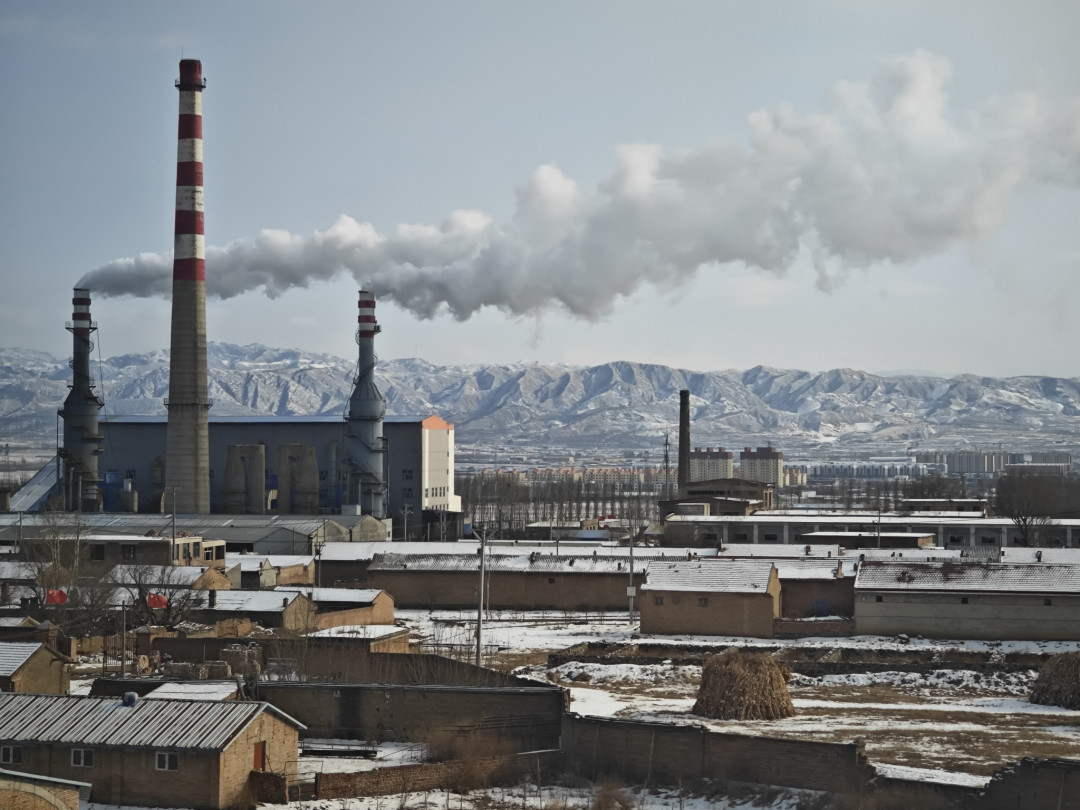
February 3, 2024 — six days before Chinese New Year's Eve. My travel partner and I dragged our suitcases through the airport in Chengdu, boarding a flight to Beijing. Down south, spring was already stirring; up north, winter's chill still clung to the land. We weren't joining the Spring Festival travel rush crowds — we were going against the tide, hoping to touch the pulse of this ancient capital before the holiday, and on the way, to explore a city whose brilliance has been overshadowed by coal dust for far too long: Datong.
Five days. From the steel tide of the Military Museum to the red walls and blue tiles of the Temple of Heaven; from the deep palace halls of the Forbidden City to the thousand-year sighs of the Yungang Grottoes. We walked Beijing's avenues and alleyways, stood beneath Datong's ancient city walls, watching sunset spill over the ridge beasts of Liao and Jin dynasty temples. Along the way, history flowed like a river — and we were but two tiny grains of sand, fortunate enough to witness its vastness and weight.
How fortunate we are, born in China, witnessing a century. May the mountains and rivers remain unharmed, and our motherland prosper and thrive.
Before You Go: Beijing Tickets — A War Without Gunpowder
If you're planning a Beijing travel itinerary, remember this: There is no off-season for tourism in Beijing. Even before the Spring Festival, when you think you can avoid the crowds, you'll find that everyone else had the same idea.
My first attempt to book tickets for the Forbidden City on February 4? Failed. The National Museum? Failed again. At that moment, I almost gave up. But then, relying on the "take a step back and refresh a few more times" strategy, plus enlisting friends to help with the booking, we managed to secure all the tickets — just barely. So don't panic, but prepare well in advance.
Preparations before booking: - Enter your personal information into the mini-programs in advance (almost all museums in Beijing require your ID card, and you might even be asked to show it while walking down the street). - Confirm the booking time and set an alarm 3–5 minutes beforehand.
Here are the specific booking methods:
- Chinese Military Museum of the Revolution: WeChat mini-program. Tickets are released 6 days in advance, starting at 8:00 AM, with additional batches released later.
- Temple of Heaven Park: Relatively easy to book.
- National Museum of China: WeChat public account. Tickets are released 7 days in advance at 5:00 PM. I highly recommend hiring a guide — otherwise, you won't understand what you're looking at.
- Palace Museum (Forbidden City): WeChat public account. Tickets are released 7 days in advance at 8:00 PM. There are morning and afternoon time slots; I recommend the morning slot for smaller crowds. When purchasing, you can add the Meridian Gate exhibition. Tickets for the Treasure Gallery and the Clock and Watch Gallery can be bought on-site.
Day 1: Steel and Faith — The Chinese Military Museum of the Revolution
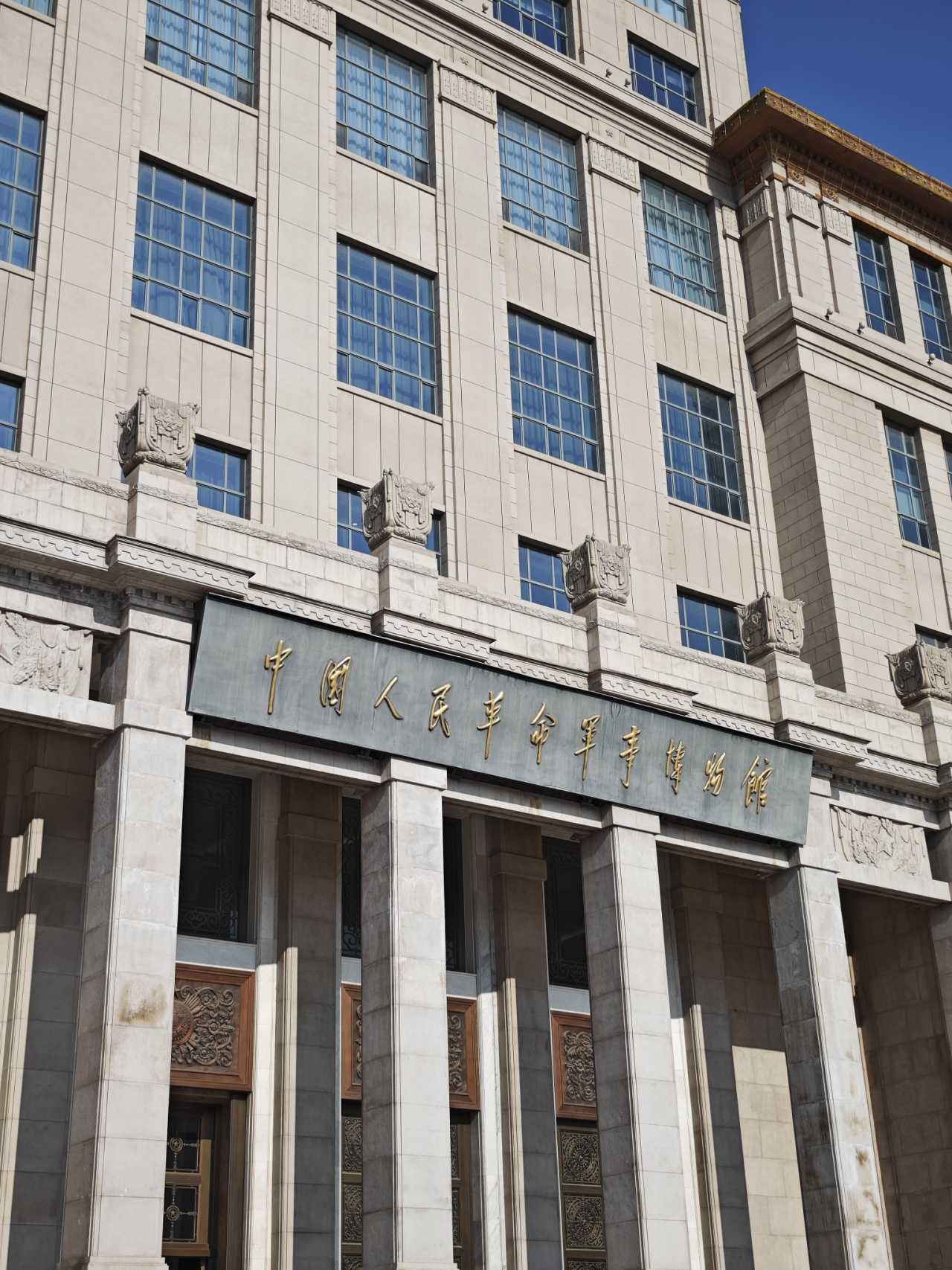
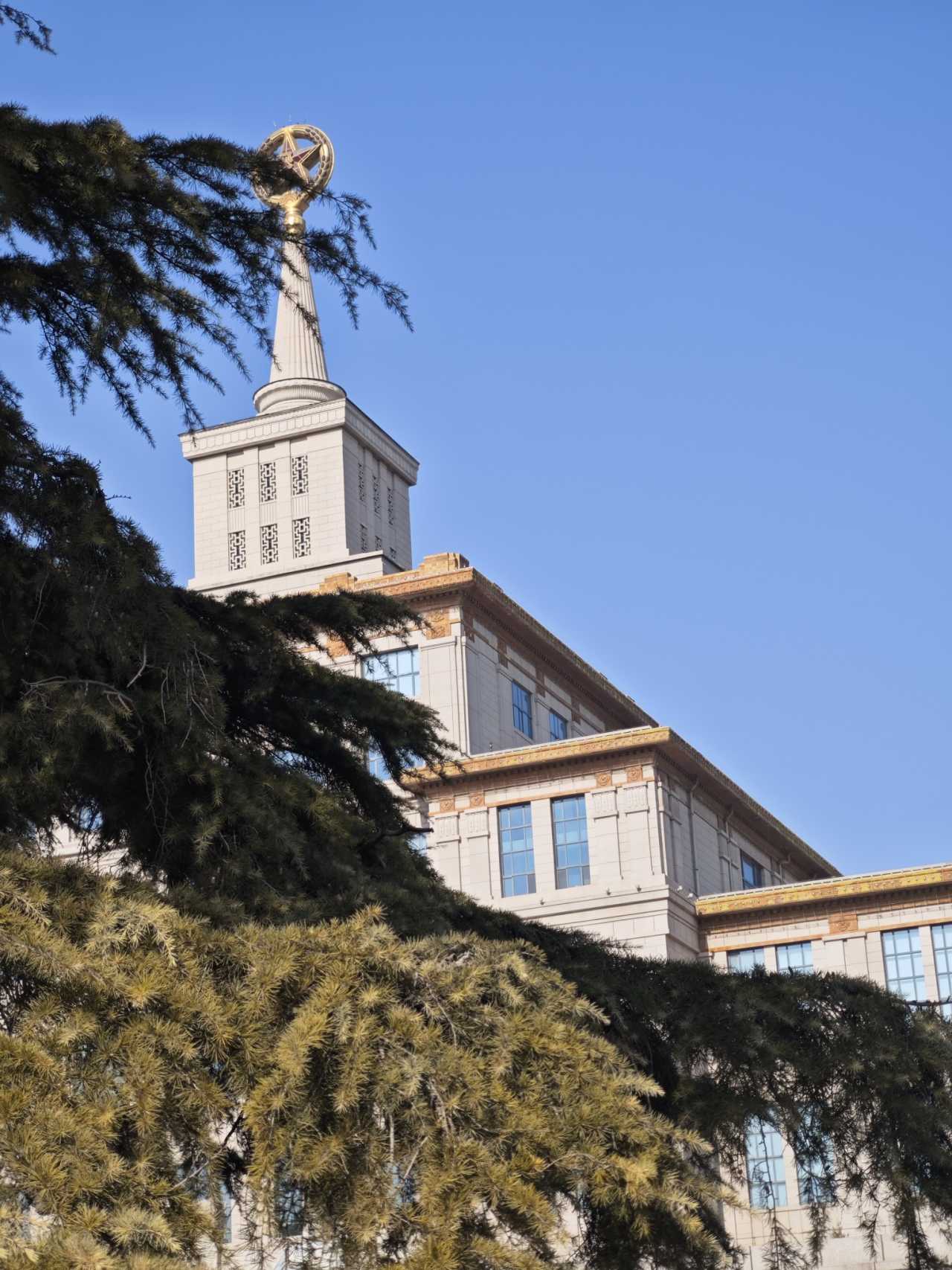
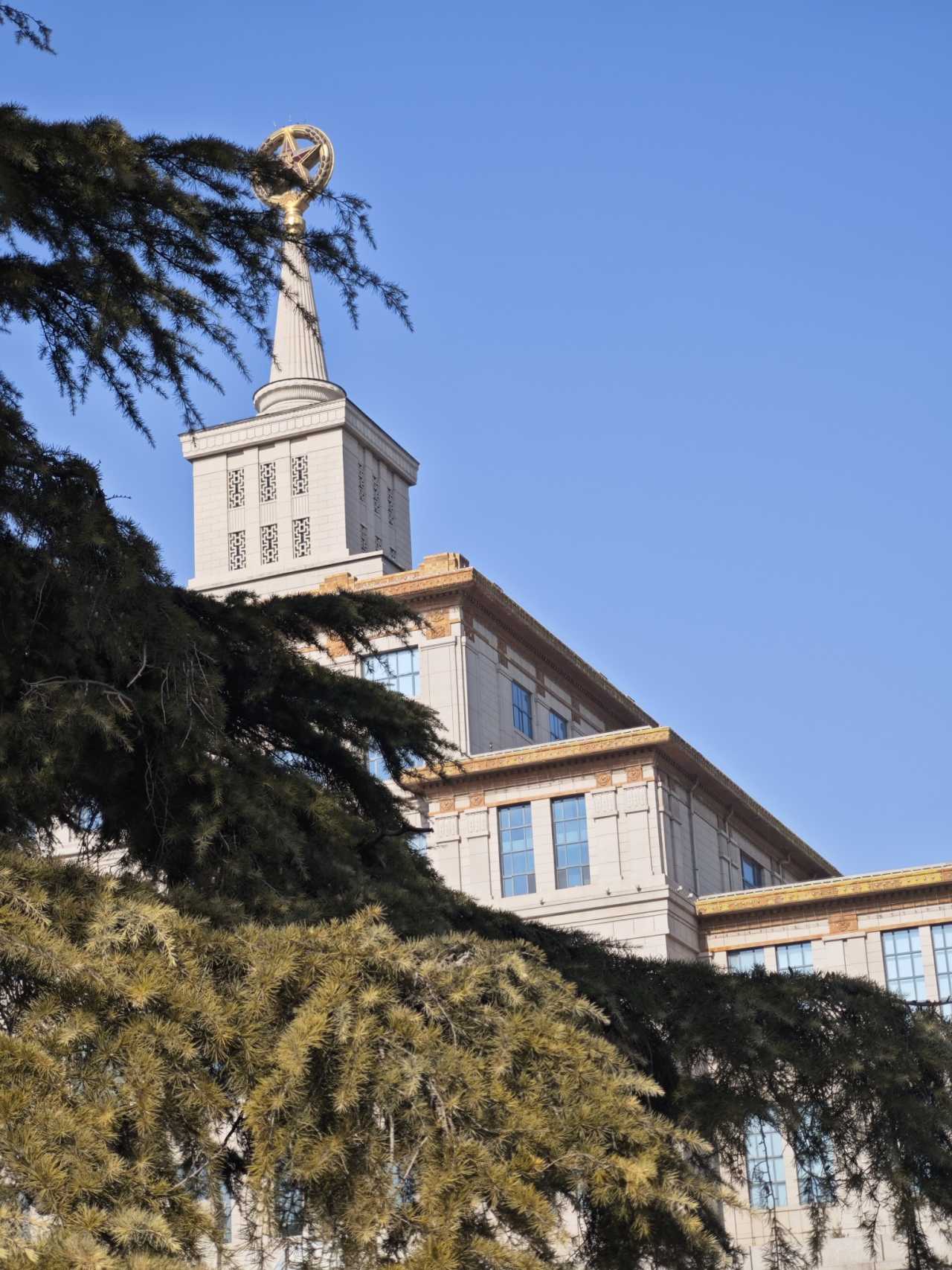
The moment I stepped off the subway and saw the five-pointed star atop the Military Museum, an air of solemnity washed over me. It stood there like a soldier in uniform, ramrod straight, right before my eyes.
Before we went, my travel partner kept raving about it, saying the exhibits weren't just weapons — each one had a story. I wasn't convinced. But after visiting, I had to admit I was wrong — it was incredible.
Our route: First floor → Basement → Second floor.
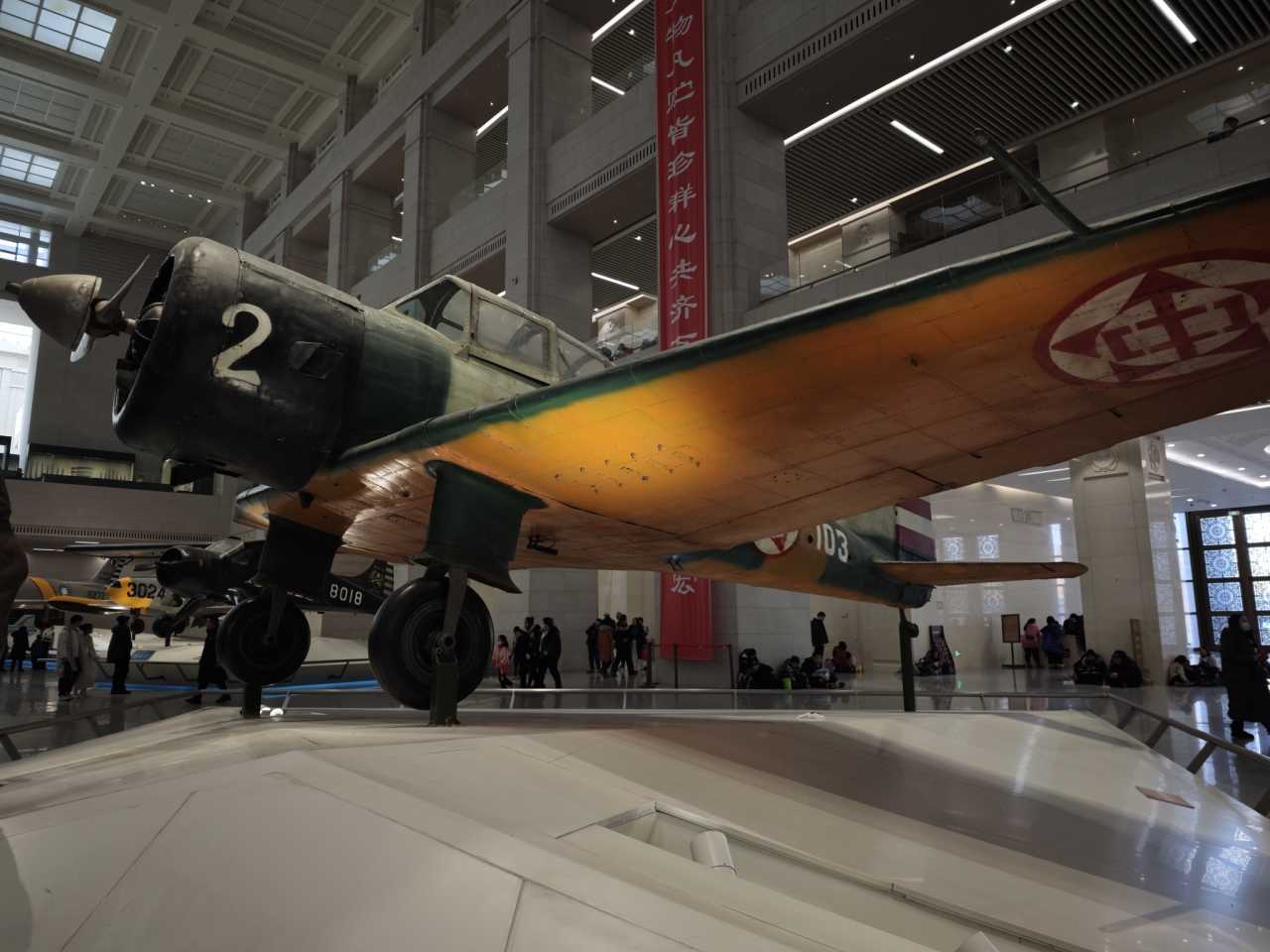
First Floor: Aircraft - A downed American drone - Aircraft left behind by the Japanese when they fled - J-6 fighter jets - MiG-15 trainer jets and Tu-2 bombers supplied by the Soviet Union during the Korean War - The personal aircraft of Wang Hai, an ace pilot of the Chinese Air Force - A P-51 that participated in the founding ceremony of the People's Republic of China - Aircraft defected from the Nationalist forces - A Dongfeng-1 missile, as tall as the building itself
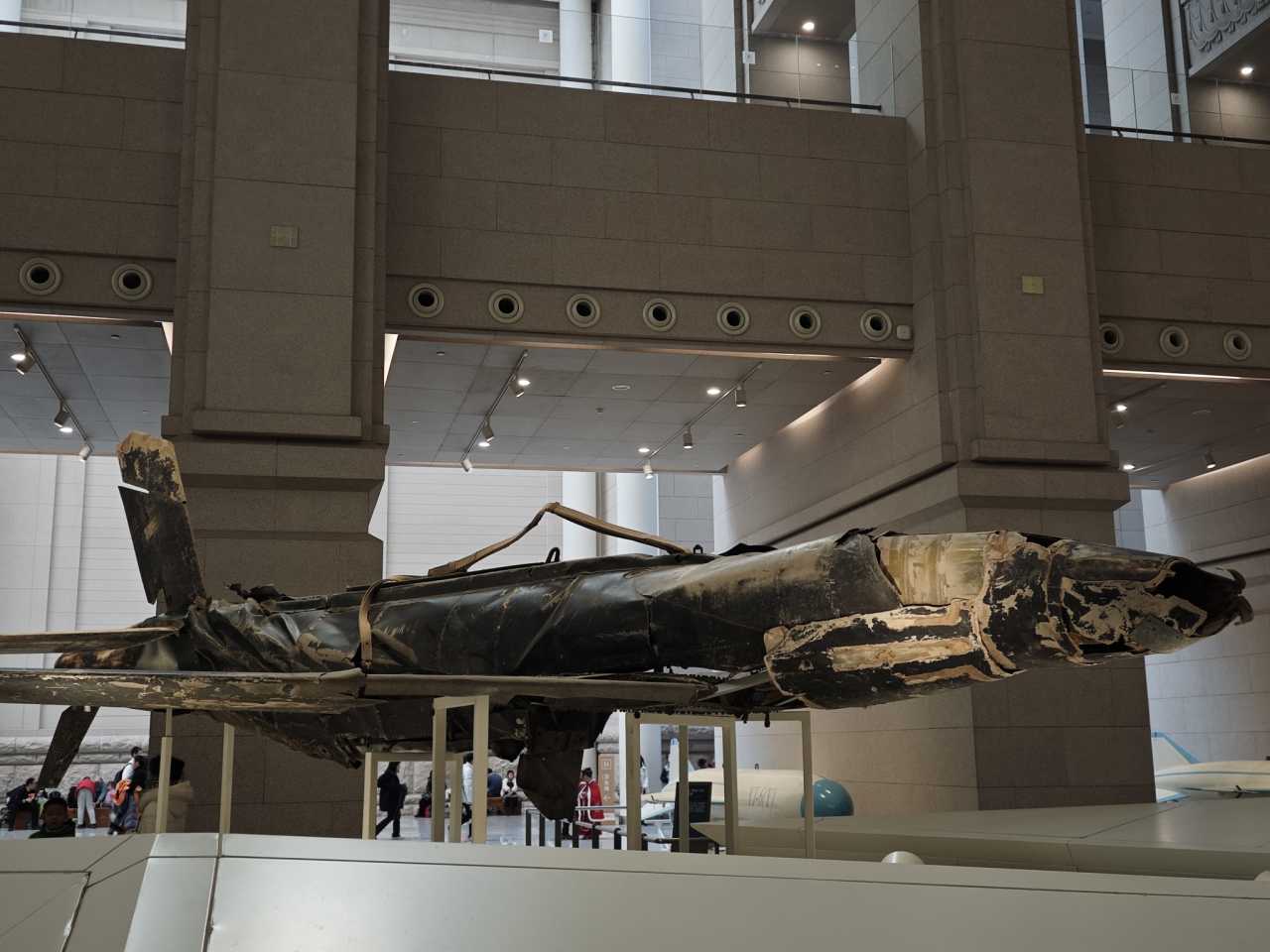
Basement: Combat Vehicles - The T-34/85, an ace tank from the Korean War - An M8 Greyhound - Tanks captured from two major powers: on the left, a T-62 captured during the Zhenbao Island conflict; on the right, an M26 captured during the Korean War - A T-62 that provided significant assistance to China's tank industry - M24 Chaffee and M4 Sherman tanks - A Japanese Type 97 tank, repurposed as the Chinese army's "Meritorious Vehicle" - An Italian CV35 mini-tank imported by the Nationalist forces - A downed U-2 reconnaissance aircraft
Second Floor: Firearms Walls covered with guns — an overwhelming array.
Day 2: The Temple of Heaven, the National Museum, and Tiananmen — From the Hall of Prayer for Good Harvests to the Flag-Lowering Ceremony
Temple of Heaven Park: Red Walls, Blue Tiles, Every Piece a Prayer
"The heavens are round, the earth is square" — the Temple of Heaven was built for sacrifices to heaven, so all its structures are circular. In contrast, the Temple of Earth is entirely square. The Hall of Prayer for Good Harvests is where the emperor worshipped the Supreme God of Heaven.
The crowds at the front were overwhelming. But don't worry — there are plenty of spots to avoid the masses: - First, take some photos outside the red walls of the Hall of Prayer for Good Harvests. The background is clean, and the light is perfect. - From behind the hall, you can see the Imperial Vault of Heaven against the blue bricks, giving a greater sense of historical depth. - On the side, there's a small square where you can shoot from a low angle for a stunning effect.
At the Circular Mound Altar, I even did a bit of "cosplay" — playing multiple roles, imitating Yuan Shikai's "heaven worship" ceremony. Architect Zhu Qiling, Yuan Shikai from the front, Yuan Shikai from the back — just having fun with it.
National Museum of China: A Whirlwind Tour in Three Hours, Every Piece a National Treasure
The Square Zun with Four Rams, the Guo Jizi Bai Plate, the Jade Burial Suit Sewn with Gold Thread, the Phoenix Crown of Empress Xiaoduan, the Imperial Seal of the Realm... Any one of these would be the crown jewel of another museum. The architecture of the National Museum itself is grand and imposing, befitting a great nation.
Even with just a quick look at the highlights, it took us three hours. I strongly recommend hiring a guide — otherwise, you really won't grasp what you're seeing.
Tiananmen: Watching the Flag-Lowering Ceremony, Having the Entire Square to Ourselves
We couldn't make it for the flag-raising ceremony, so we chose to watch the flag-lowering instead. As dusk fell, the crowds at Tiananmen Square gradually dispersed, and we almost had the entire square to ourselves.
Note: Security around Tiananmen is extremely tight. Police check IDs every few steps. To enter the area in front of Tiananmen, you must have a reservation. Since the National Museum is right next to Tiananmen, a ticket to the museum also grants you access.
In the evening, we strolled over to Xinhua Gate to take a photo. We thought photography was prohibited there, or that we couldn't even get close. Every time someone asked us what we were doing, we said, "Just taking a walk after dinner." When we finally arrived and asked, we were told we could take photos! So we captured some precious memories.
Day 3: Citywalk — From Huguo Temple to Houhai Sunset
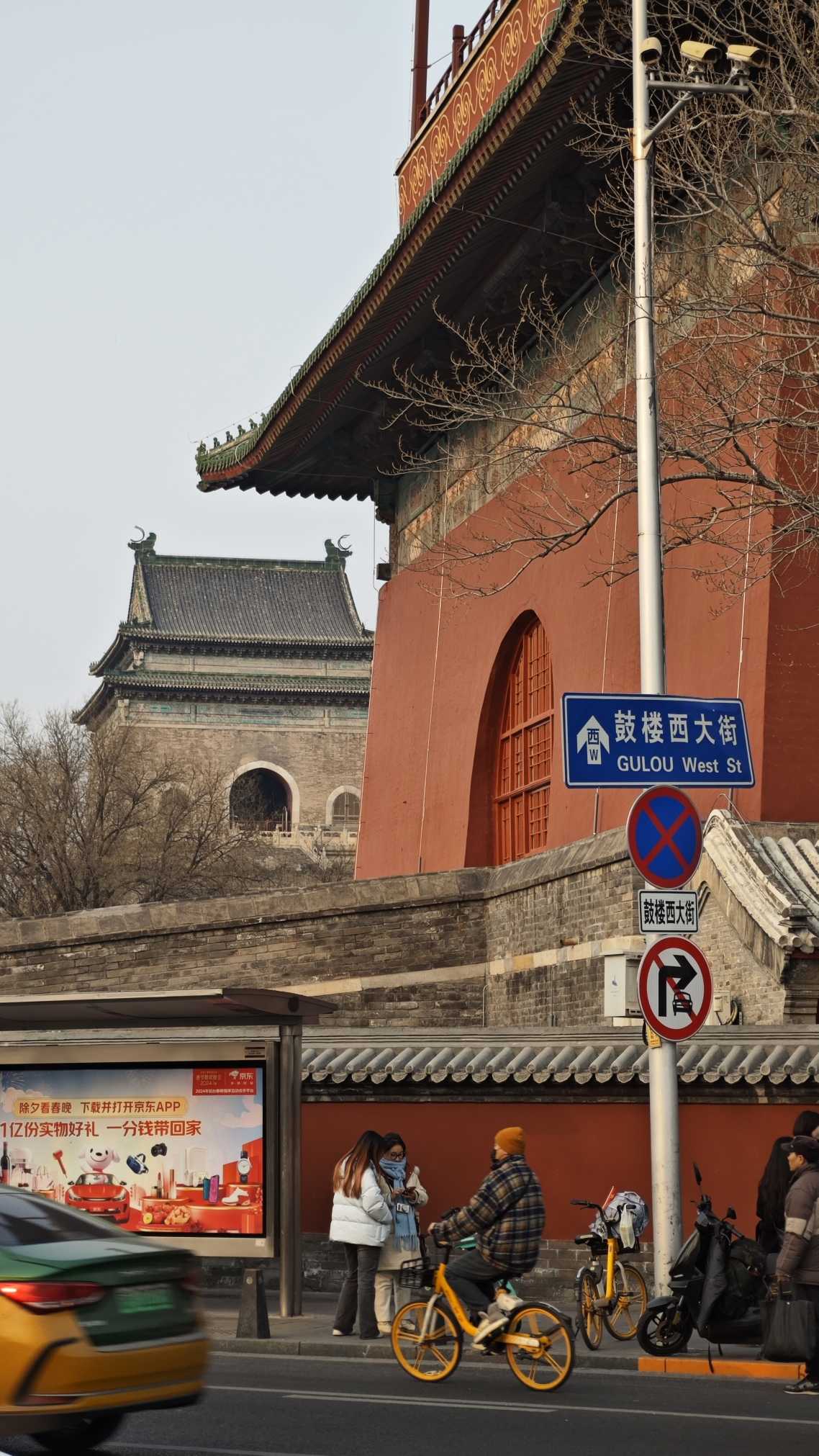
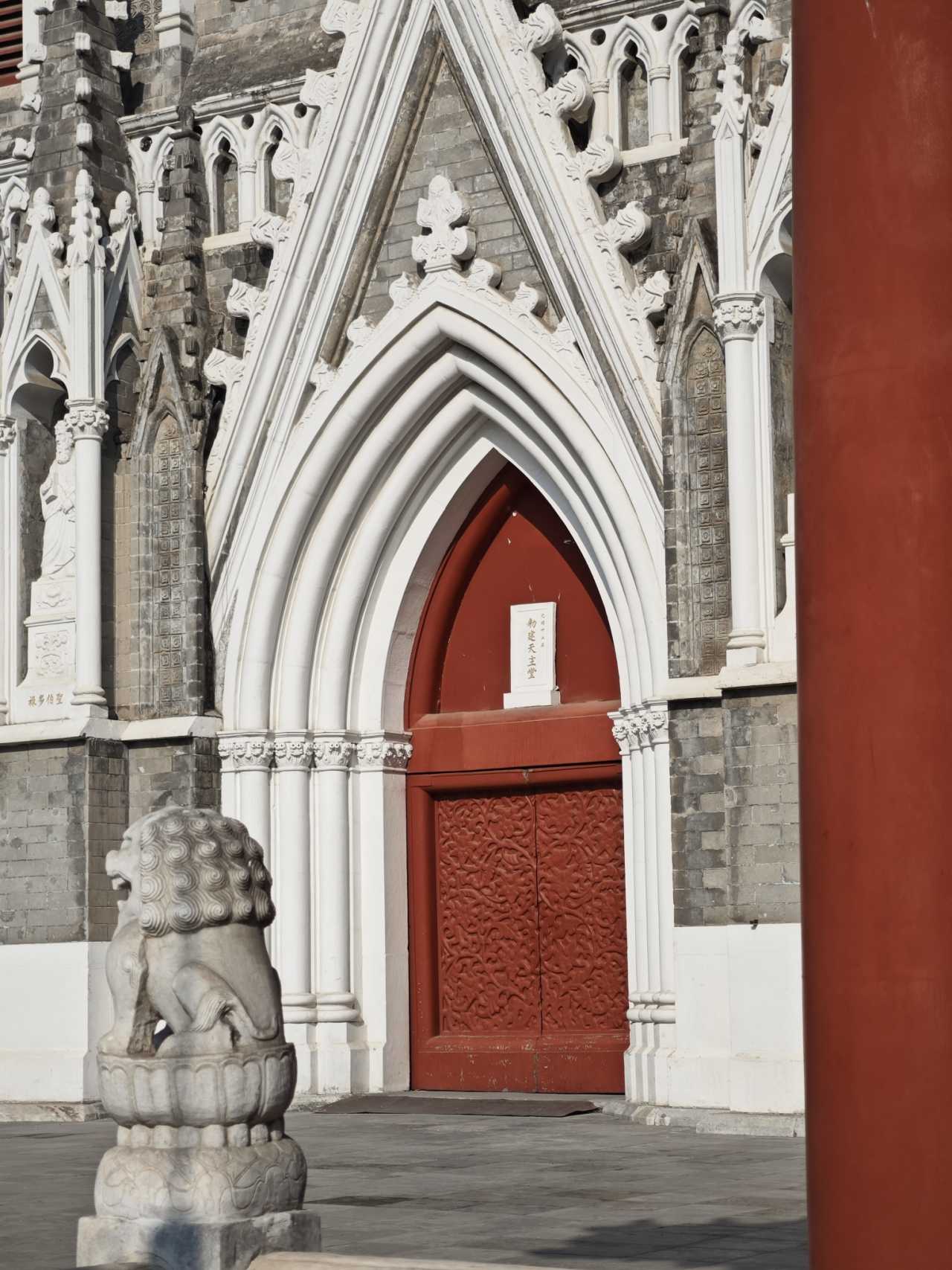
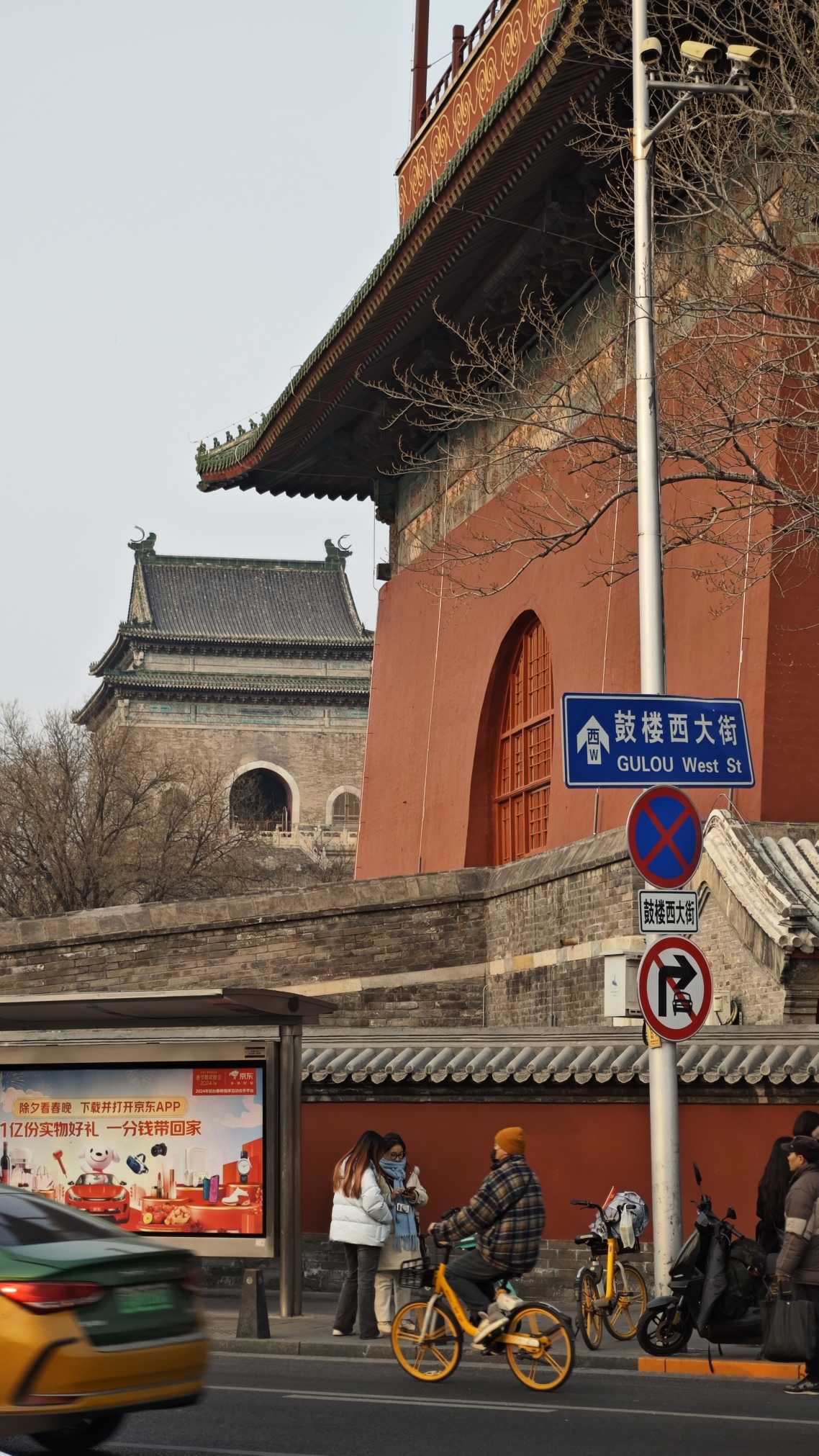
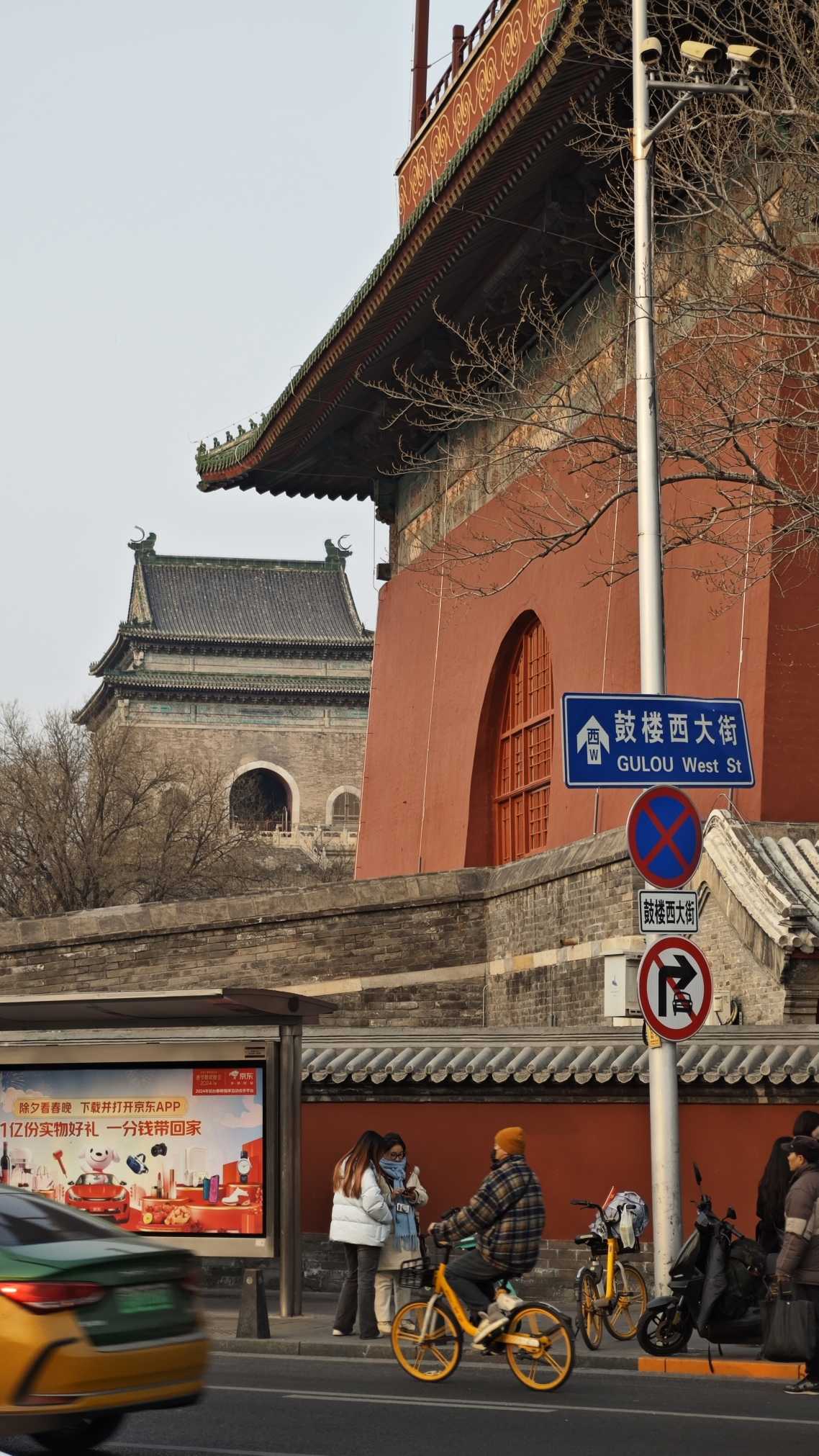
Our route for the day: Huguo Temple → Hutongs → Miaoying Temple (White Pagoda) → Xishiku Church → Beihai Park → Jingshan Park → Nanluoguxiang → Drum Tower and Bell Tower → Houhai and Qianhai.
Huguo Temple and the Hutongs: Old Beijing in the Smoke of Daily Life
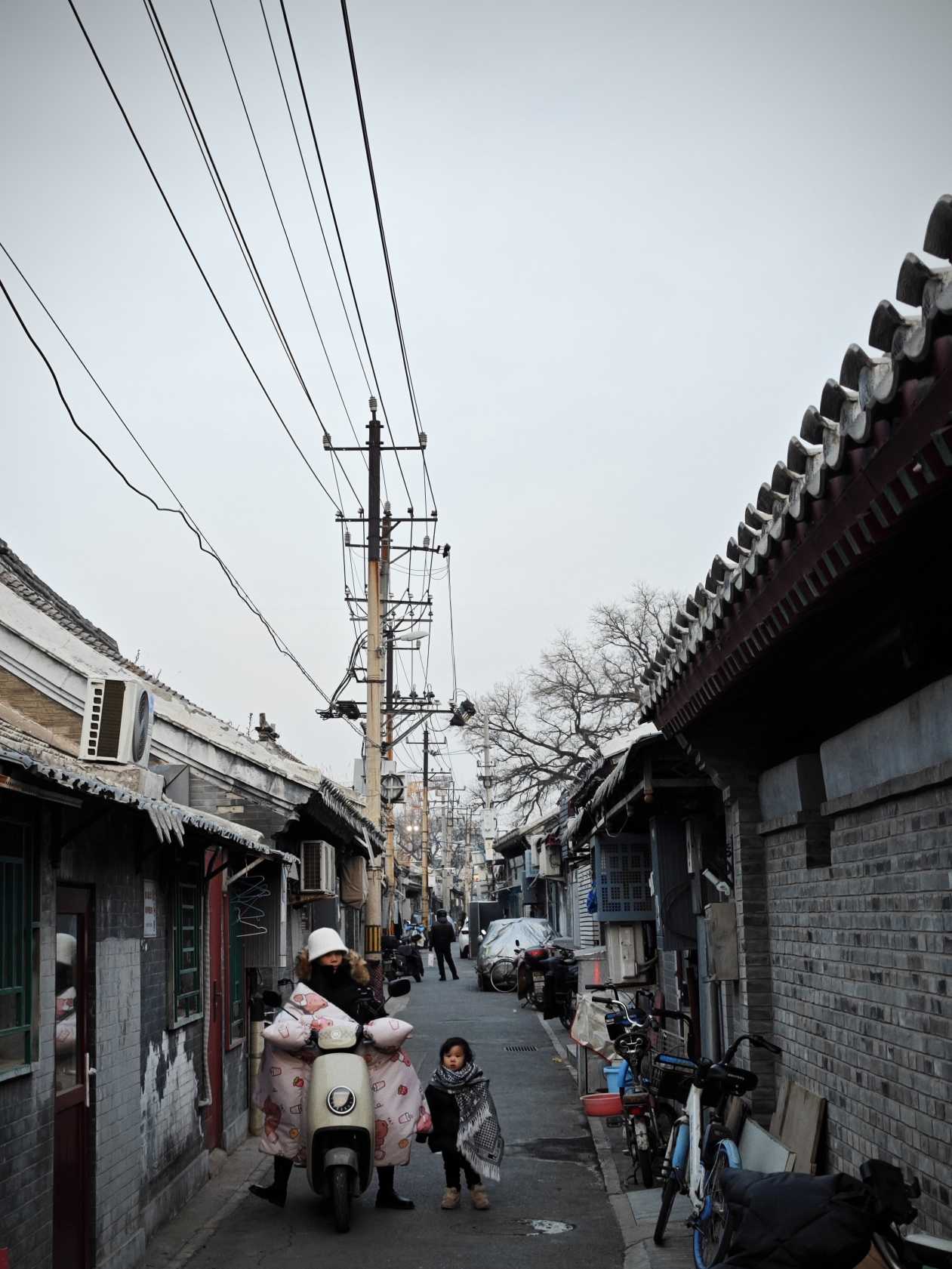
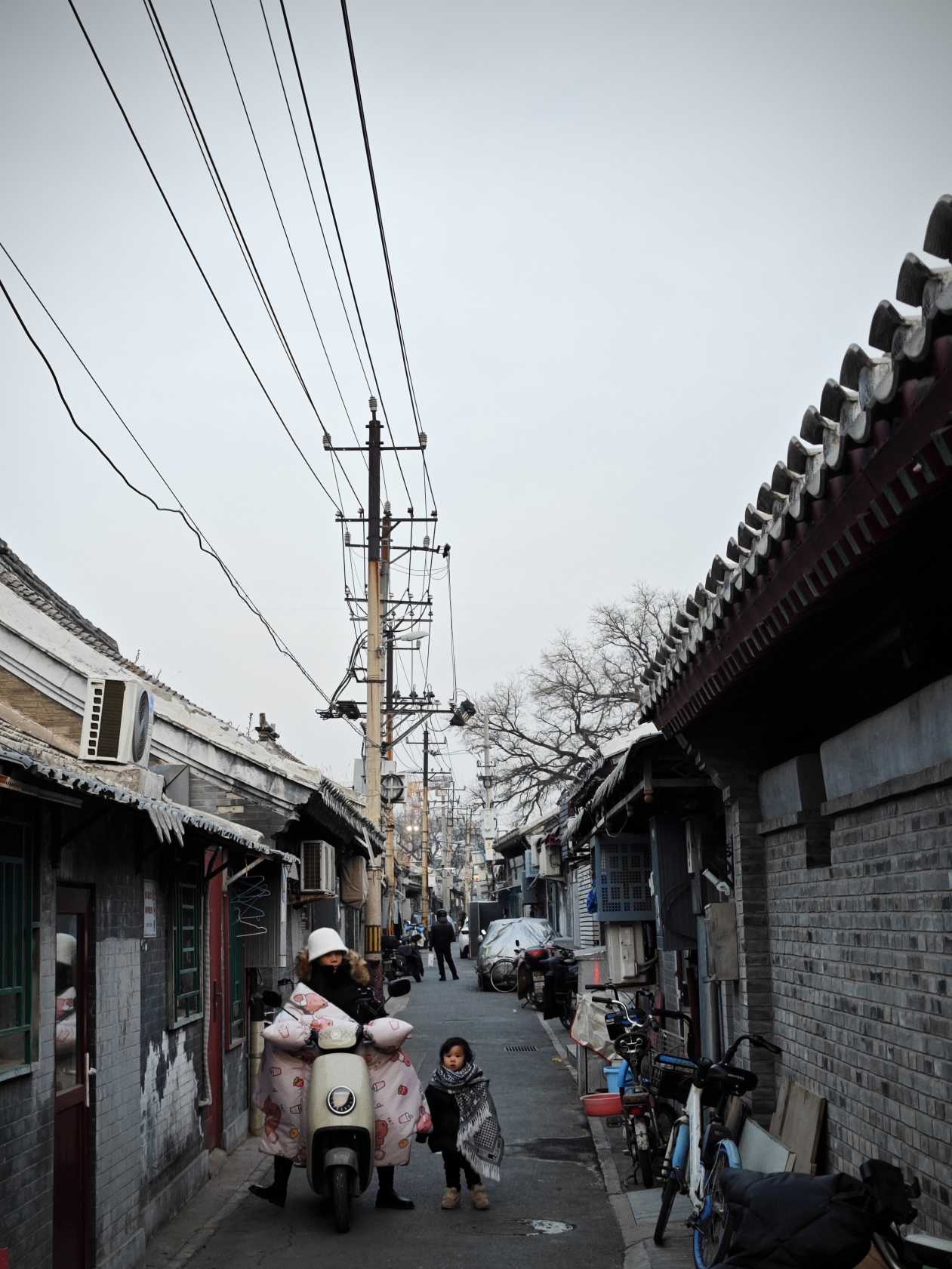
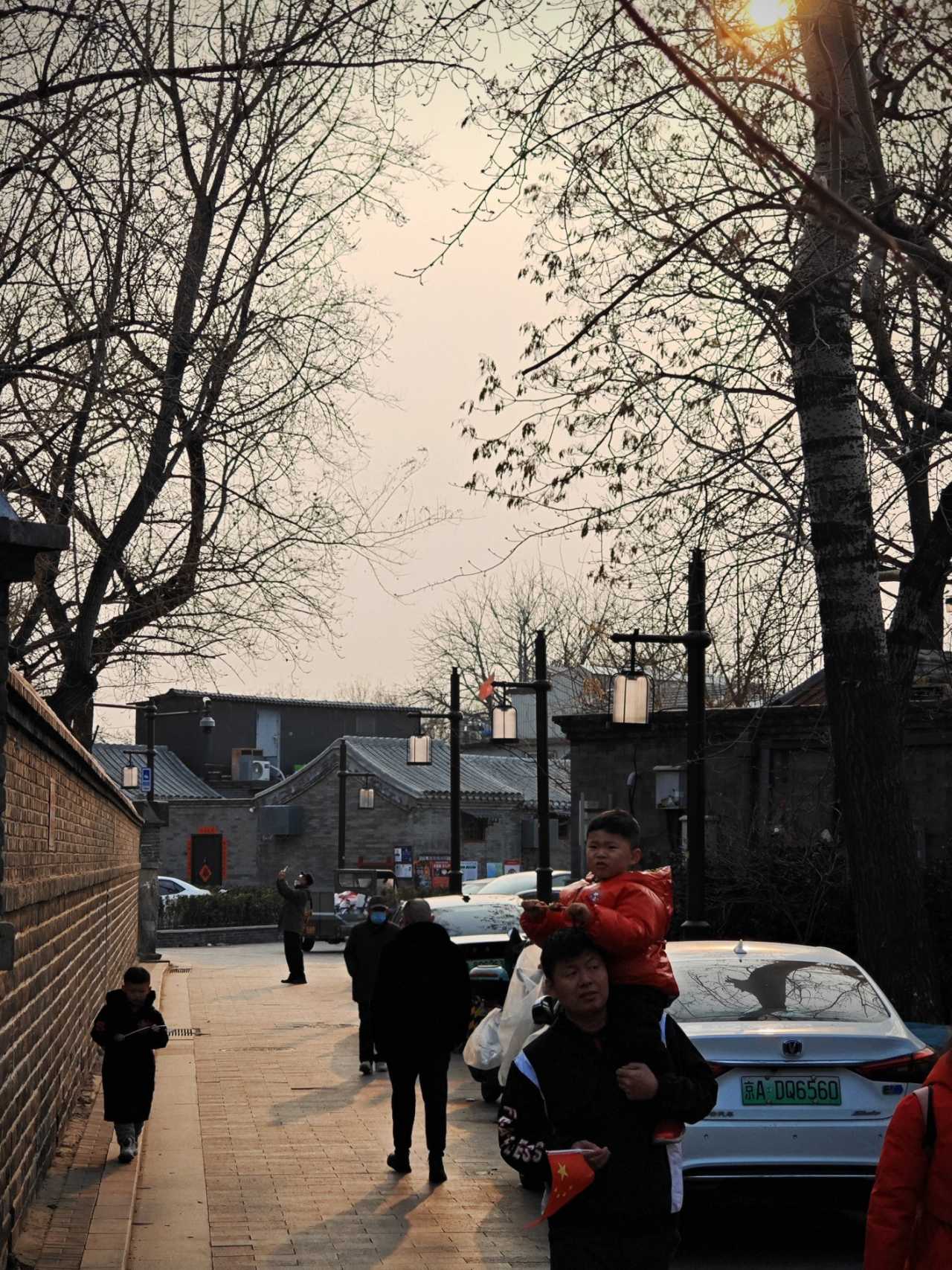
The Vajra Hall of Huguo Temple is not open to the public, so we could only snap a photo of the street scene. But as we walked through the surrounding hutongs, we felt the pulse of old Beijing — the aroma of street food, the chatter of locals, the bicycles weaving through narrow alleys. It's a side of the city that no museum can capture.
[Link: Beijing hutong walking tours]
Miaoying Temple (White Pagoda): A Tibetan Buddhist Jewel in the Heart of Beijing

The White Pagoda of Miaoying Temple is one of Beijing's most iconic landmarks. Built during the Yuan Dynasty, it stands as a testament to the city's multicultural heritage. The pagoda's stark white form against the blue sky is a photographer's dream.
[Link: Tibetan Buddhist sites in Beijing]
Jingshan Park: The Best View of the Forbidden City
From the top of Jingshan Park, you get a panoramic view of the Forbidden City's golden roofs stretching to the horizon. It's the perfect spot to end your day — especially at sunset.
Houhai and Qianhai: Nightlife on the Water
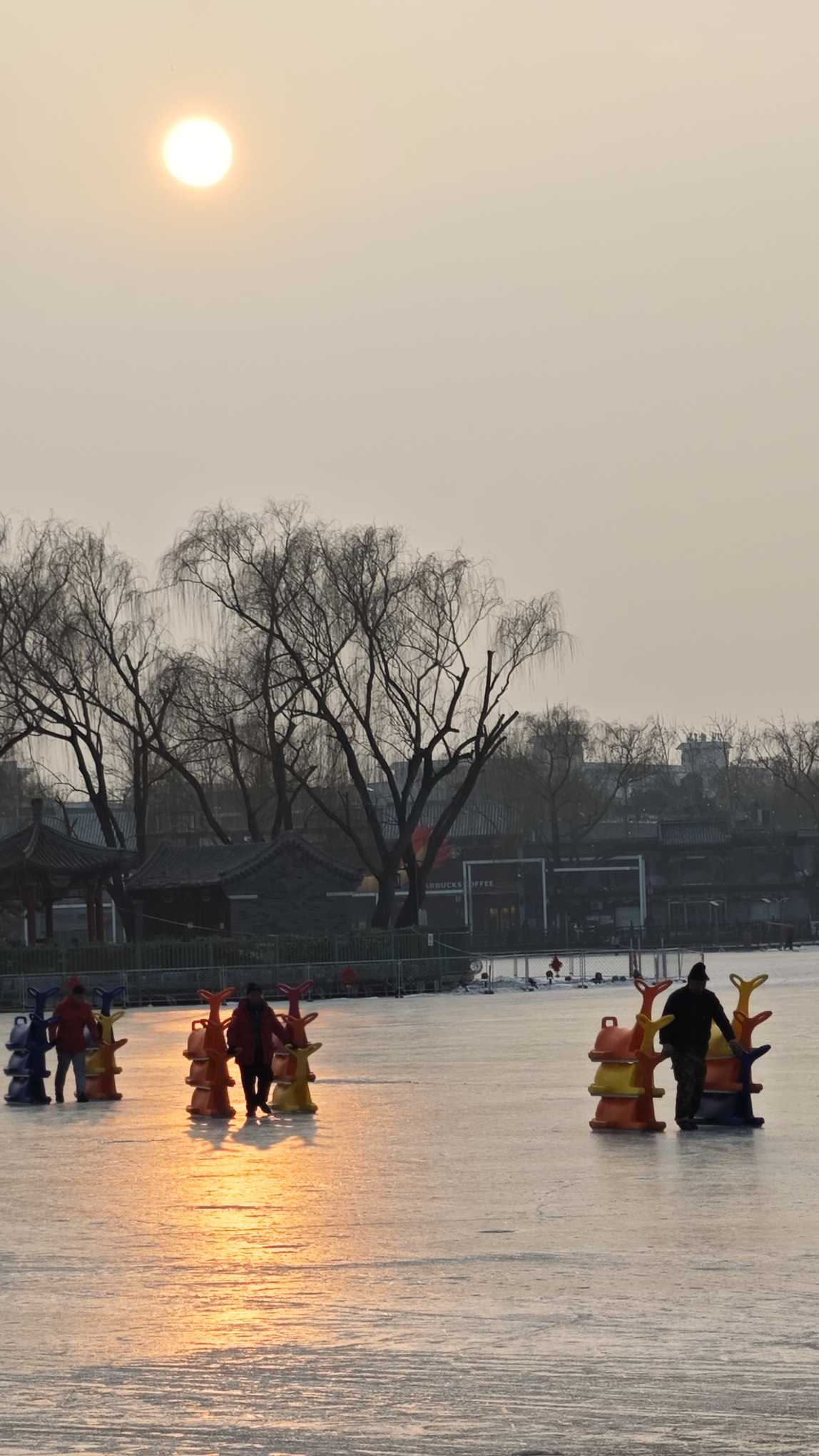
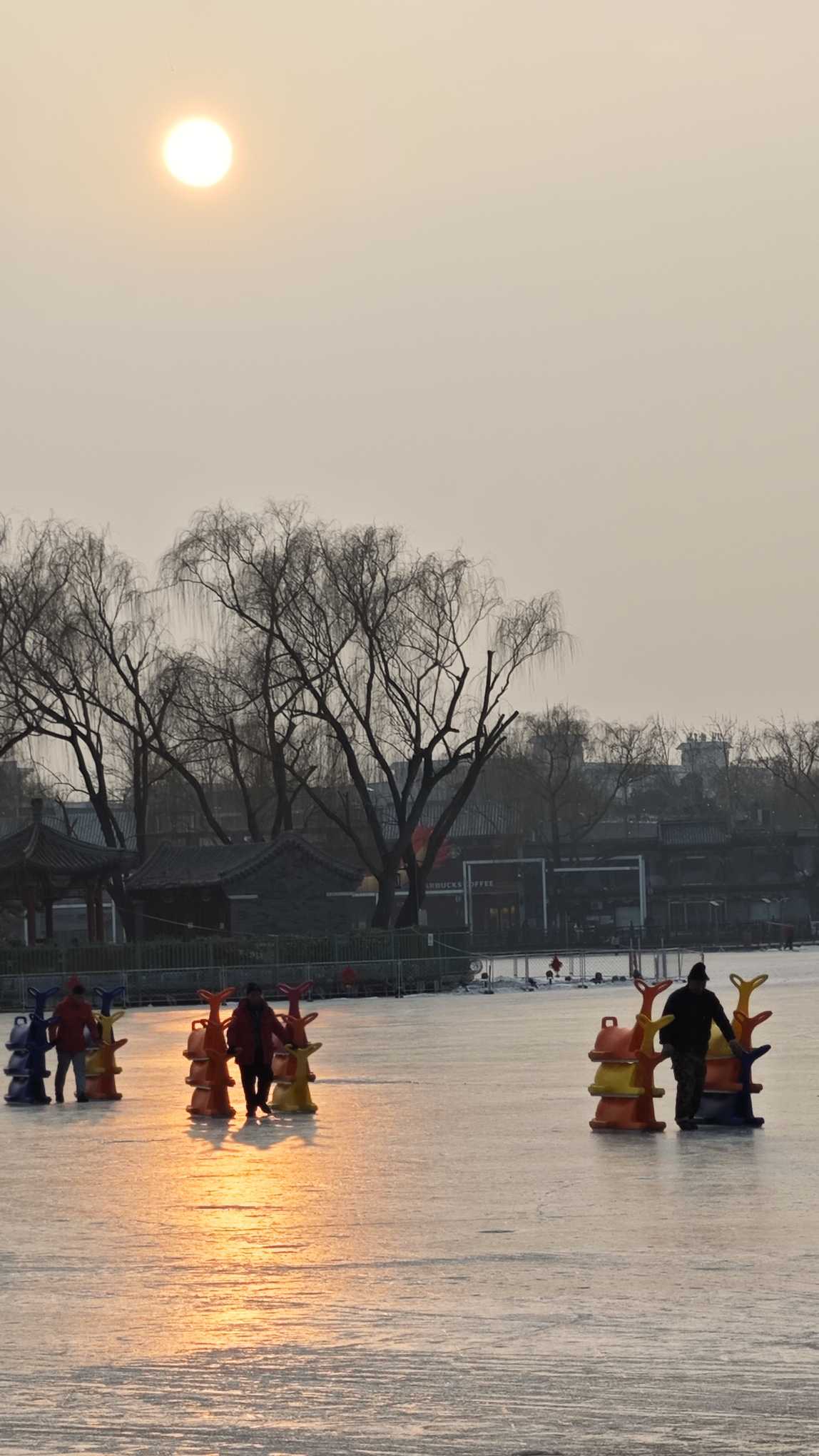
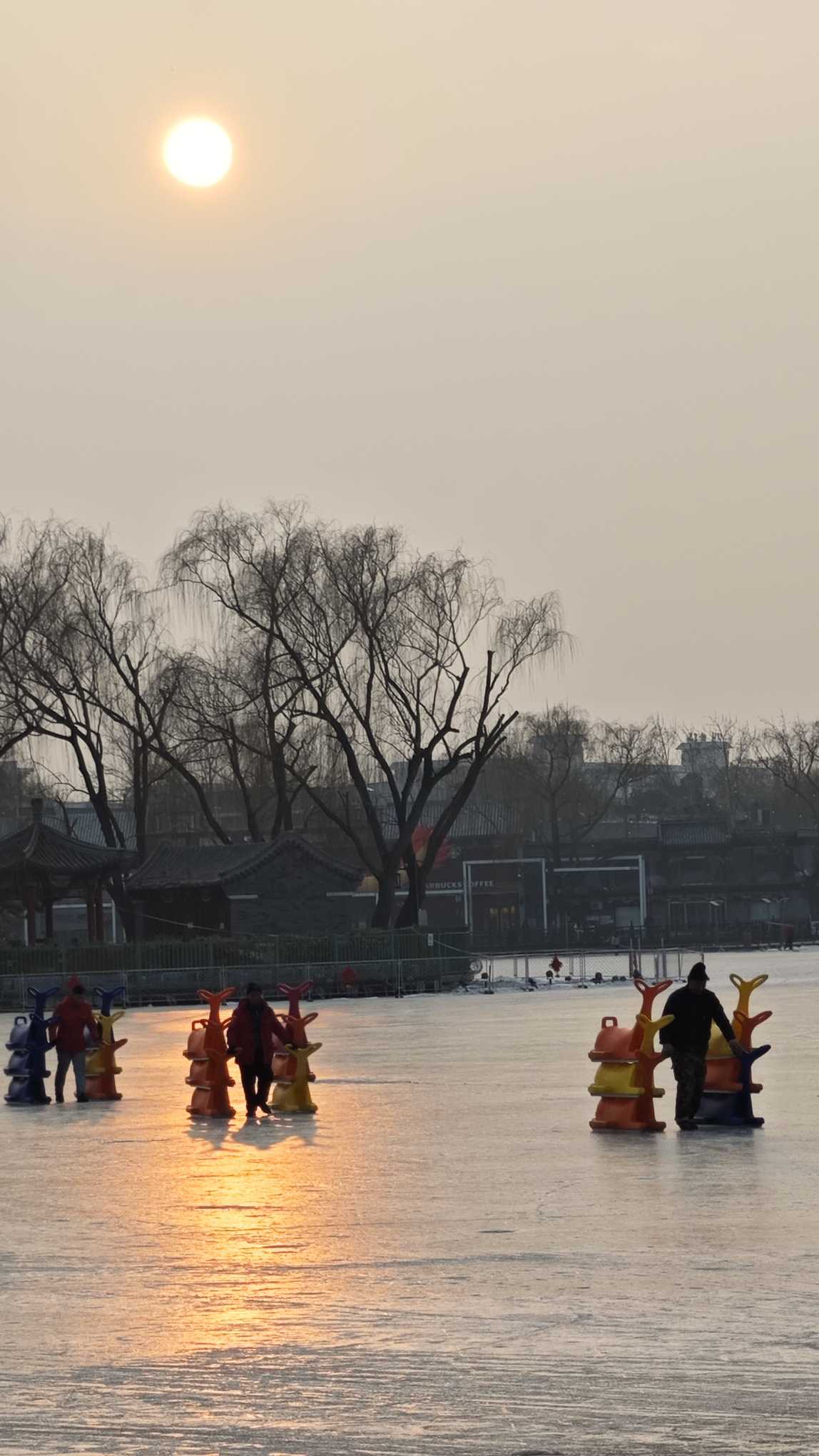
As night fell, we wandered to Houhai and Qianhai, the interconnected lakes that form the heart of Beijing's nightlife. The neon lights reflected on the water, and the sound of live music drifted from nearby bars. It was a stark contrast to the ancient temples we'd visited earlier — but that's Beijing for you: a city of endless contrasts.
Day 4: Datong — A City Rising from the Coal Dust
The Yungang Grottoes: A Thousand-Year Sigh
The Yungang Grottoes, a UNESCO World Heritage site, are a series of 53 caves carved into the sandstone cliffs of Datong. They date back to the 5th and 6th centuries, during the Northern Wei Dynasty. The largest Buddha statue stands 17 meters tall — a silent guardian of history.
Walking through the grottoes, you feel the weight of centuries. The carvings are intricate, the scale is overwhelming, and the silence is profound. It's a place that makes you forget the modern world.
[Link: UNESCO World Heritage sites in China]
Datong Ancient City Wall: Sunset Over the Ridge Beasts
The ancient city wall of Datong has been restored to its former glory. We climbed to the top just as the sun began to set. The ridge beasts on the Liao and Jin dynasty temples glowed golden in the fading light. It was a moment of pure magic.
FAQ: Your Questions About Beijing and Datong Travel Answered
1. Is it worth visiting Beijing and Datong in winter?
Absolutely. Winter in Beijing and Datong is cold but clear, with fewer tourists than in peak seasons. The Forbidden City and Yungang Grottoes are less crowded, and the winter light creates stunning photography conditions. Just pack warm layers — temperatures can drop below freezing.
2. How do I book tickets for the Forbidden City and National Museum?
Book through their official WeChat mini-programs or public accounts. For the Forbidden City, tickets are released 7 days in advance at 8:00 PM. For the National Museum, they're released 7 days in advance at 5:00 PM. Set an alarm and have your ID information ready.
3. What's the best way to travel between Beijing and Datong?
High-speed trains run regularly from Beijing North Station to Datong South Station. The journey takes about 2 hours. Book tickets in advance, especially during the Spring Festival period.
4. Can I visit the Yungang Grottoes in one day from Beijing?
Yes, it's possible as a day trip, but we recommend spending at least one night in Datong to fully experience the city's ancient city wall and local cuisine. The high-speed train makes it convenient.
5. What should I eat in Datong?
Datong is famous for its刀削面 (knife-cut noodles) and羊杂割 (lamb offal soup). The local cuisine is hearty and warming — perfect for winter travel.
Conclusion: A Journey That Changes You
Five days in Beijing and Datong. Five days of walking through history, of standing in awe of human achievement, of feeling the pulse of a nation. From the steel and faith of the Military Museum to the thousand-year sighs of the Yungang Grottoes, every moment was a reminder of how fortunate we are to witness this century.
How fortunate we are, born in China, witnessing a century. May the mountains and rivers remain unharmed, and our motherland prosper and thrive.
Ready to Plan Your Own Journey?
Don't wait for the perfect moment — the perfect moment is now. Whether you're drawn to the ancient wonders of Beijing or the hidden gems of Datong, this pre-Spring Festival itinerary will leave you with memories that last a lifetime.
Start planning today: - Book your flights and trains early - Reserve your museum tickets as soon as they're released - Pack for cold weather and comfortable walking shoes - Bring your camera — you'll need it
Share your own travel stories in the comments below, or tag us on social media with #BornInChinaWitnessingACentury.
Safe travels, and may your journey be as heart-pounding as ours.
Note: This article is based on a real travel experience from February 2024. All information is accurate at the time of writing, but please check official websites for the latest updates on ticket availability and travel restrictions.
You should also read:
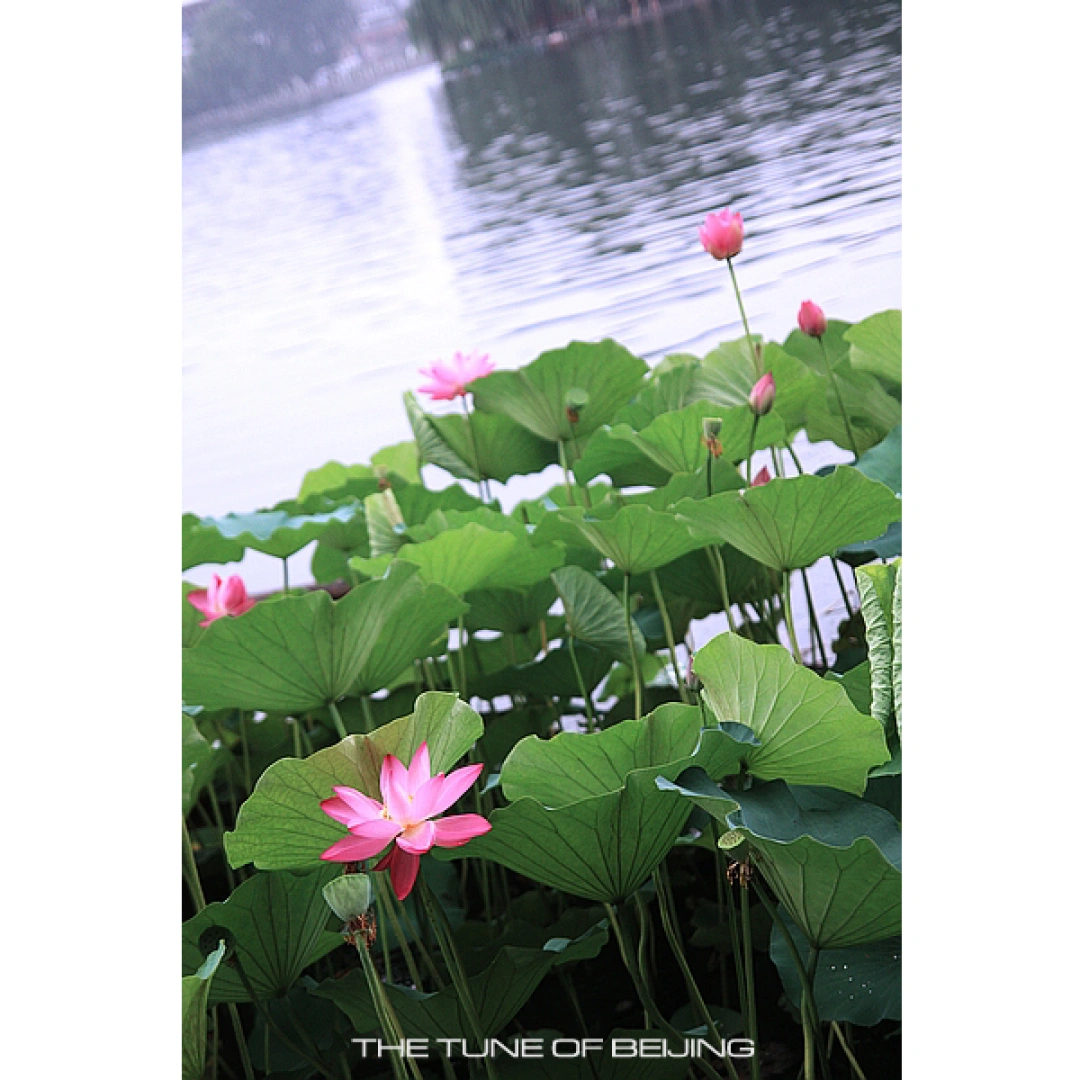
The Accent of Beijing: A Hutong Odyssey in a Downpour – Exploring Beijing's Hidden Charms
Meta Description: Discover Beijing's soul through a rain-soaked hutong odyssey. From Shichahai's melancholy to Mianhua Hutong's philosophy, experience the authentic "accent of Beijing" in this immersive travel story. I'm probably going to laze myself to death. I visited Beijing eight hundred years ago—took the high-speed…
Continue reading...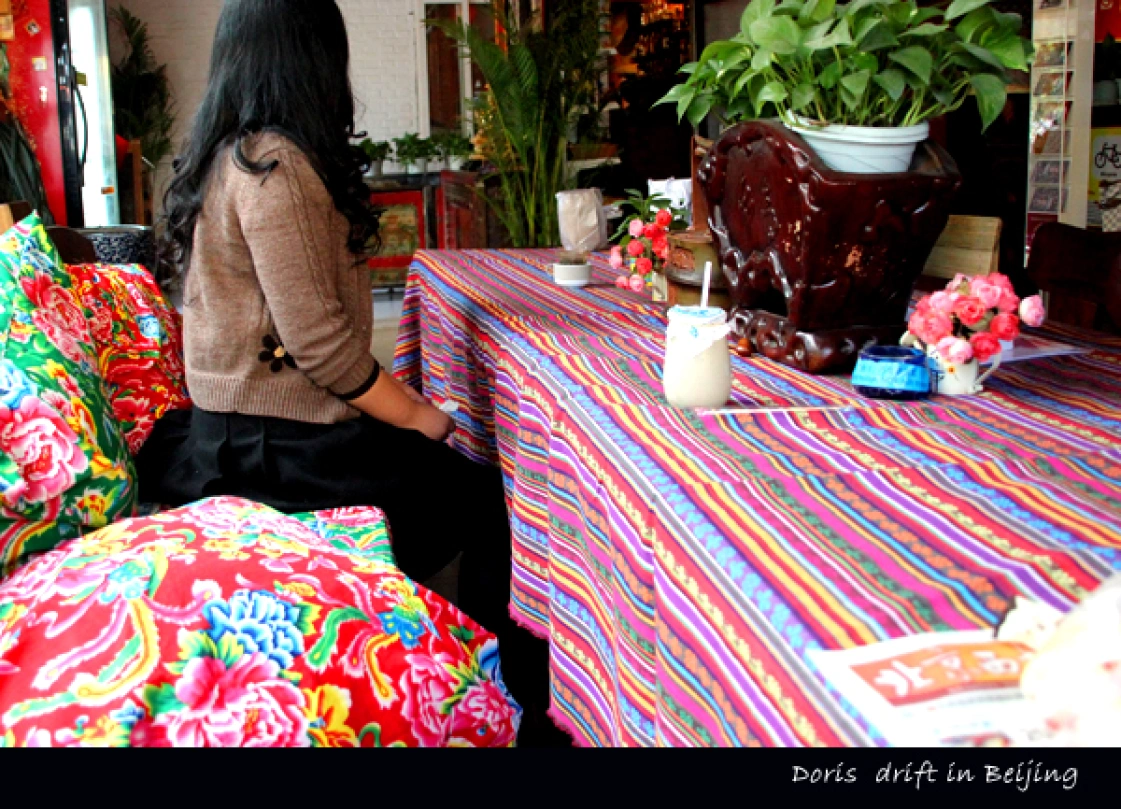
Peking: A Seven-Day Journey Between Old Dreams and New Realities – An SEO-Optimized Travel Guide
Meta Description: Explore Beijing in 7 days: from 798 Art District and Summer Palace to Houhai nightlife and Panjiayuan market. Discover hidden gems, local eats, and travel tips in this SEO-optimized itinerary. Some cities you never set foot in, yet you have painted them in…
Continue reading...
A Solo Journey Through Beijing: One Girl's Seven-Day Adventure
Here is the SEO-optimized, rewritten article based on your source material. It is structured for high readability, keyword density, and user engagement, targeting approximately 1500 words. SEO Title: Solo Travel in Beijing: One Girl’s 7-Day Budget Adventure (2,000 Yuan Itinerary) Meta Description: Discover the ultimate…
Continue reading...