The Accent of Beijing: A Hutong Odyssey in a Downpour – Exploring Beijing's Hidden Charms
Meta Description: Discover Beijing's soul through a rain-soaked hutong odyssey. From Shichahai's melancholy to Mianhua Hutong's philosophy, experience the authentic "accent of Beijing" in this immersive travel story.
Introduction: Rediscovering Beijing's Timeless Accent
I'm probably going to laze myself to death. I visited Beijing eight hundred years ago—took the high-speed rail, saw the sea—and yet the photos have been lying on my hard drive gathering dust. It wasn't until a sleepless midnight, when I stumbled upon these forgotten images, that the memories bubbled up like popped air pockets, one after another.
Back then, I was reading Hu Jiujiu's The Accent of Beijing and felt pretty cultured. Now, if I were to bring up that phrase, I'd probably get laughed at—what's trendy these days is "the spirit of Beijing." The internet is flooded with "spirit memes" that had me in stitches. If you ask me, this country of ours is basically a "nation of foodies." Don't believe me? Check this out:
- Tianjin Spirit: Jianbing guozi (savory crepe with egg and crispy fritter), extra cilantro
- Kunming Spirit: Slurping rice noodles, dry or soupy; grilling erkuai (rice cakes), sweet sauce or fermented bean curd
- Chongqing Spirit: Hotpot with numbing spice, spicy numbing hotpot
- Shanghai Spirit: Pan-fried pork buns, crab roe soup dumplings
As for me—a foodie with "flagging spirit but abundant neuroses"—my personal Beijing spirit is: baodu (quick-boiled tripe), douzhi (fermented mung bean drink), yangxiezi (lamb spine hotpot), zhajiangmian (noodles with fried bean sauce). Too rustic? Fine, let's elevate it to bourgeois tastes: naijuan (milk rolls), suanmeitang (sour plum drink), shanzhalao (hawthorn jelly), Daoxiangcun (traditional bakery pastries).
Honestly, the Beijing I carry in my heart has its own accent. It's an unquantifiable, indescribable feeling—you just need to take a sniff, and you can smell Beijing. Even without the sound of pigeon whistles in a clear sky, without sunset spilling over old shadow walls, without biting into a crispy bingtanghulu (candied hawthorn skewer), Beijing should still have a taste—the taste I knew in childhood and adolescence, the taste of dreams.
[Link: Beijing hutong food guide]
Beijing in a Downpour: An Unexpected Encounter
But when I finally got to Beijing, a torrential rainstorm separated me and my friend to opposite ends of the city. The people I wanted to see, I didn't. The streets I wanted to wander, I couldn't. Instead, I got struck by thunder, drenched by rain, and stumbled back, soaking wet, into a little shop next to my hostel. One entire weekend, I mostly sat there slurping honey yogurt from a little porcelain bottle, chatting with the shop auntie as I waited for the rain to stop. In two days, I downed five bottles of yogurt, got the auntie's entire life story, and polished off two big bags of pastries from the Daoxiangcun across the street.
And still, I missed the Beijing I had in my heart.
I came in a huff, got rained on, got soaked, and left with nothing but a backpack full of Daoxiangcun pastries and an empty yogurt bottle—empty-handed. And then I left, still in a huff.
Fine. Whatever. Walk around, wander, take random photos, entertain myself with a bit of playful spirit. As for that accent, I'll just have to savor it slowly on my own time.
[Link: Best time to visit Beijing hutongs]
Shichahai: A Minor-Key Melancholy
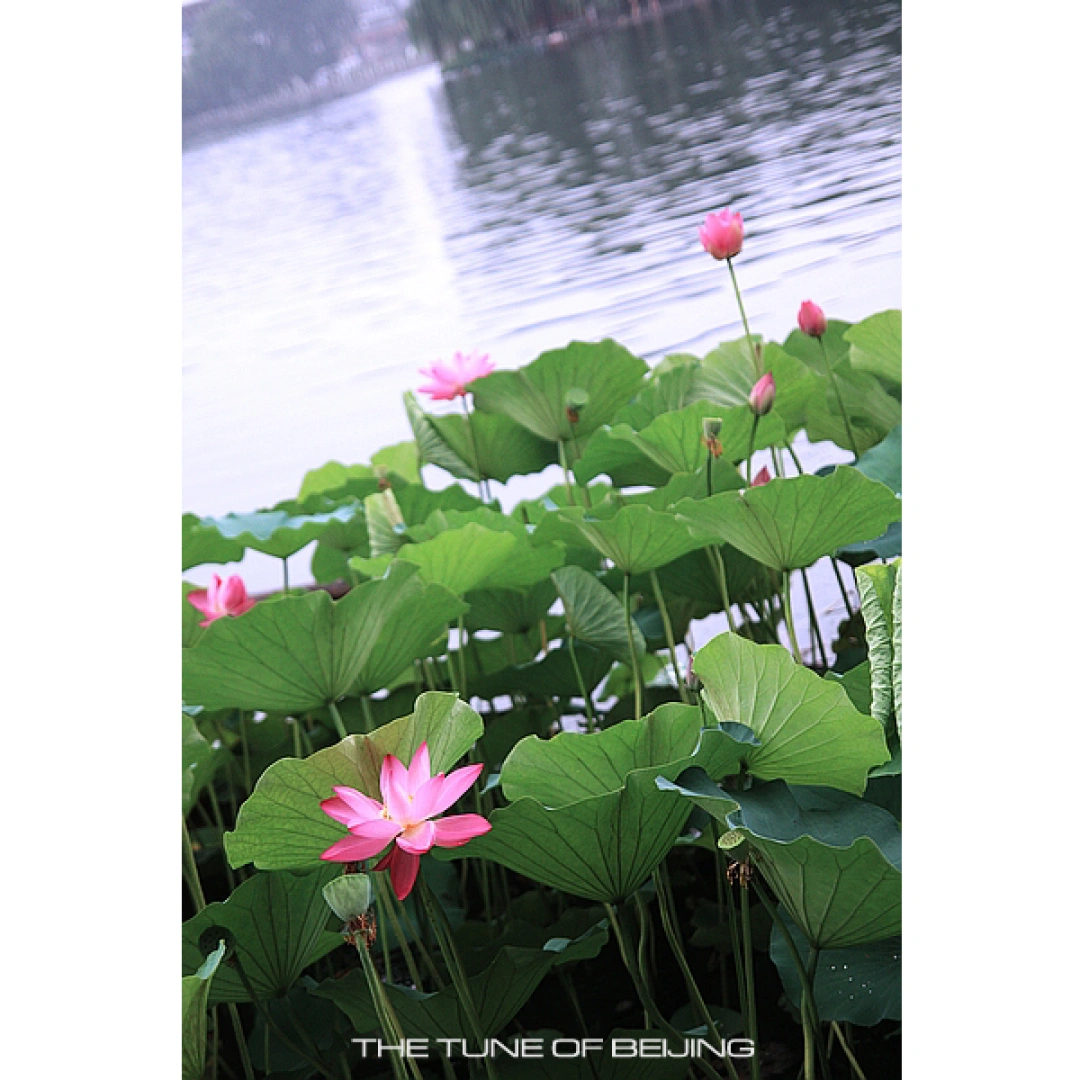
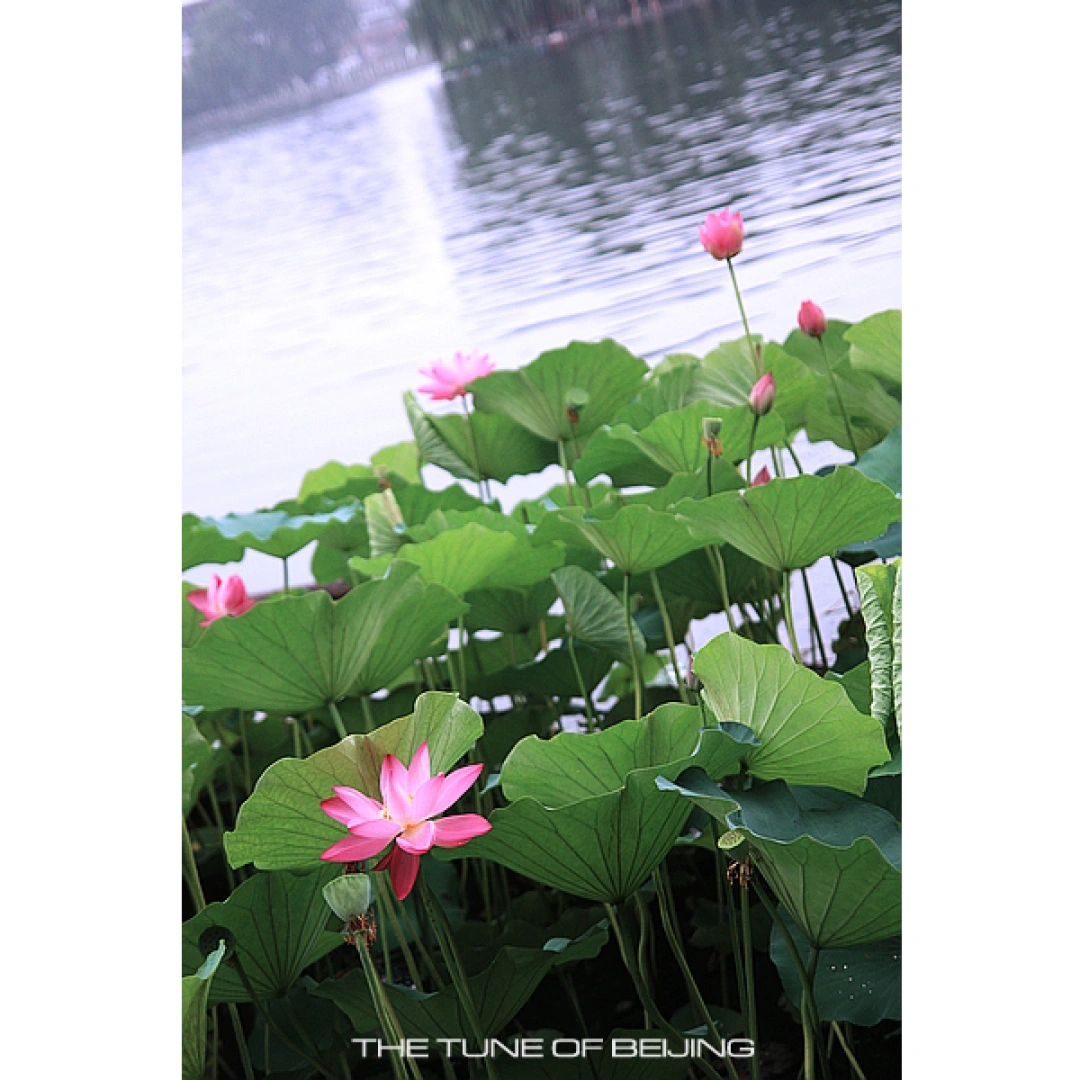
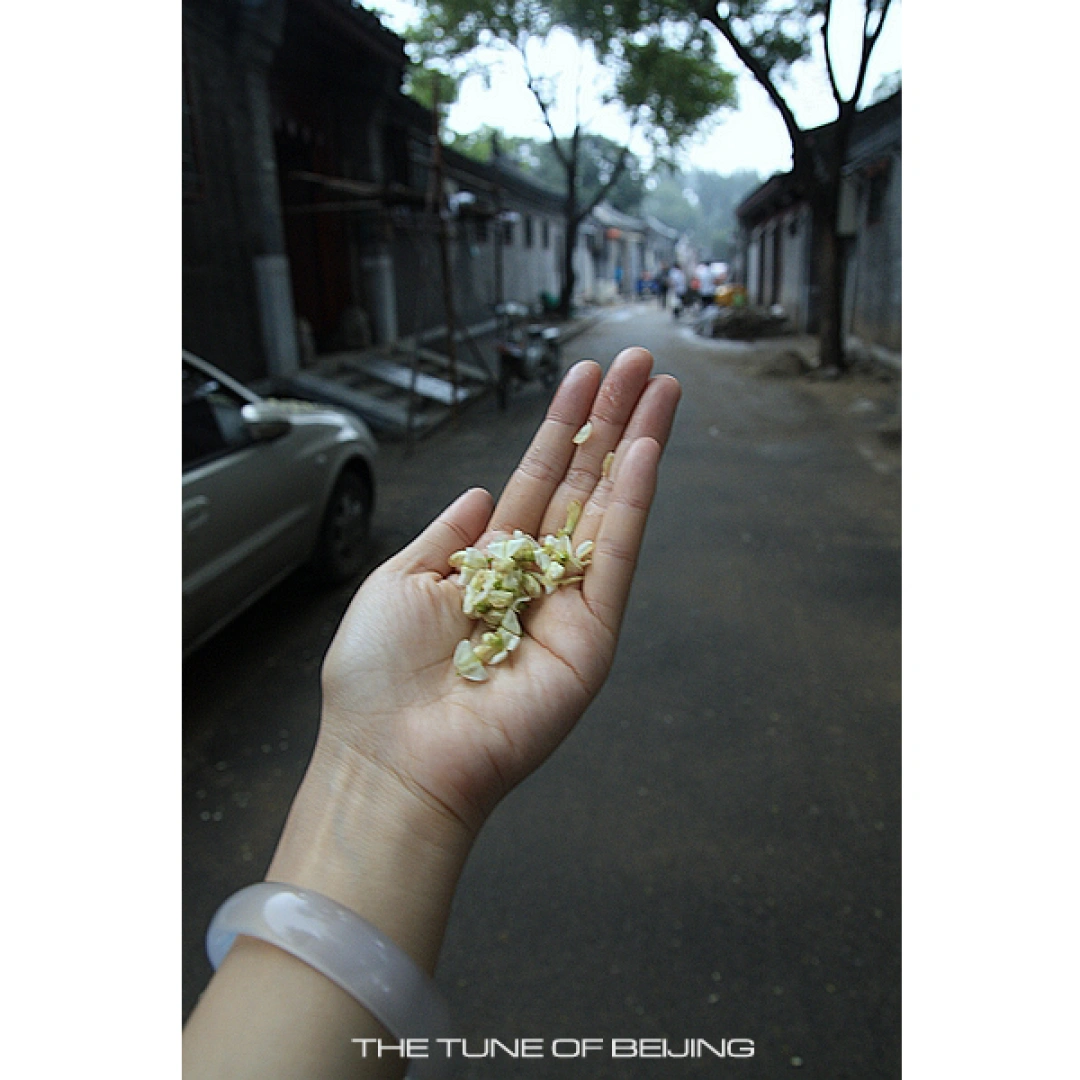
"Another Beijing summer is here, and Shichahai is blooming with lotus flowers again." I hummed this lyric, feeling a G-minor melancholy wash over me. The lotus flowers were indeed in bloom, but so was the rain. I stood at Beiguanfang Hutong (or was it Nanguanfang Hutong?), gathered a handful of fallen petals, and the storm was about to break. In Dajinsi Hutong (or Xiaojinsi?), the rain finally came.
In the early morning at Houhai, an old man fishing by the shore reminded me of my grandfather. May there be peaceful lakes and top-notch fishing rods in heaven. A woman walking her dog exuded an air of absolute authority. The shops on Yandai Xiejie hadn't opened yet. Someone's doorstep in Zhanzi Hutong looked like a movie prop set. Cars parked outside the Prince Gong Mansion, ordinary homes in Ya'er Hutong—this was all Beijing, plain and real.
[Link: Shichahai area guide – hutongs and attractions]
Deep in the Hutongs: Stories Washed by Rain
No. 18 Huazhi Hutong, a scholarly household. Xin Taiping Hutong—I couldn't find where the old Taiping Hutong was. Next year, I'm going to plant a rooftop full of beautiful gourds. Just being cute here.

The old campus of Fu Jen Catholic University—I snuck into the teaching building from back in the day. The place was eerily cold, so I fled. A light flickered in one window, faint but present. Part of the university was once a Qing dynasty prince's mansion. In the rain, on an empty corridor, at a turn, I came face to face with a cat. We both flinched back half a step, stared at each other for three seconds, and went our separate ways.
Beijing's bare-chested old men—honestly, I couldn't quite handle it. I was disturbing the peace, I know. But I love locust flowers—Beijing's locust flowers, for sure! After the rain, the fallen petals carpeted the ground, perfect for washing down some er guo tou (cheap grain liquor) with a touch of loneliness.
[Link: Hidden gems in Beijing hutongs]
A Philosophy Lesson at Mianhua Hutong
At Mianhua Hutong, an old man selling crickets asked me, "Where you from, miss?" I said Shanghai. He stomped his foot. "Tsk! What are you doing not watching the swimmers in Shanghai, coming all the way to Beijing instead? Wasting your time!" He turned away, lit a cigarette, and ignored me. I stood there, completely bewildered: Wasting my time... wasting time...
A middle-aged man turned his back when he saw me raise my camera. Half a minute later, he looked back, and I was still holding the camera, waiting for him and the pigeons to take flight together. He let out a thunderous roar: "What are you taking a picture of!" I nearly dropped the camera.
An old grandpa shot me a glare. "Another one with a camera!"
[Link: Beijing hutong photography tips]
Baihua Shenchu: Poetry in a Name
"Walking deep into the Hundred Blossoms, listening to a touch of autumn chill." Such a beautiful name—it reminded me of Suzhou's Jianjia Lane. Just as a clap of thunder rolled across the sky, the neighbors on West Huguosi Street gathered to tease a little kid. The kid looked utterly innocent.
Beiluogu Xiang—more like the real Beijing than Nanluogu Xiang. I love how morning glories climb over the eaves, the little bit of freshness in old hutongs. Old Gulou Street—the name of this shop is seriously impressive. Oh gods, I'm not destined for Valentine's Day, so just let me have a peaceful, once-in-a-lifetime Singles' Day!
Remember those old cookie tins? A home where you can push open the door and see flowers right away.
[Link: Nanluogu Xiang vs Beiluogu Xiang – which to visit]
Rabbit Lord and Honey Yogurt: The Taste of Beijing
Before coming to Beijing, I was dead set on buying a Tu'er Ye (Rabbit Lord figurine). In the end, I got one of these—yes! I am the queen of bingtanghulu!
I turned on Beijing Traffic Radio, and the reporter was saying: "To guard against this storm, the place has turned into a parade of engineering vehicles—pump trucks, water tankers, fire engines..." But two hours later, still on Gulou Street, facing a surging Yellow River of rainwater, I felt helpless. Was it carrying my beloved honey yogurt?
I've always had a question about those couplets pasted on painted doors: What if a family has a recent bereavement and isn't supposed to put up Spring Festival couplets? Do they just cover them with paper?
[Link: Traditional Beijing souvenirs and snacks]
Gulou East Street: A Pink Dream
On Gulou East Street, the rain cleared and the sun peeked out. I wanted to ride a pink bicycle, wheels spinning fast, the hem of my white dress lifting in the wind. I was daydreaming, I know.
One bite each, sweet and sweeter. The rabbit doesn't want to hear your love talk—the rabbit looks utterly resigned. Beijing girls have serious attitude—they'd be perfect for a Samsonite ad. Does he look like a speculator from the early '90s Special Economic Zone? The street-sweeping auntie is as unfazed as ever. That guy is Dong Cunrui, about to blow up a bunker. The auntie fans herself with such vigor.
[Link: Gulou area attractions and nightlife]
Frequently Asked Questions About Beijing Hutongs
1. What is the "accent of Beijing" mentioned in the article?
The "accent of Beijing" refers to the intangible cultural atmosphere and local character of the city—its unique blend of history, food, street life, and the unspoken rhythms of daily existence in the hutongs. It's less about a literal accent and more about the sensory and emotional experience of being in Beijing.
2. Which hutongs are best for a first-time visitor?
For first-timers, Nanluogu Xiang offers a lively mix of shops and food stalls, while Beiluogu Xiang provides a quieter, more authentic hutong experience. Shichahai (including Houhai and Qianhai) is excellent for lakeside walks, and Mianhua Hutong offers a glimpse into everyday local life.
3. What traditional Beijing foods should I try?
 Must-try dishes include zhajiangmian (noodles with fried bean sauce), baodu (quick-boiled tripe), yangxiezi (lamb spine hotpot), bingtanghulu (candied hawthorn skewers), and honey yogurt from local shops. For sweets, visit Daoxiangcun for traditional pastries.
4. Is it safe to visit Beijing hutongs during rainstorms?
While Beijing hutongs are generally safe, heavy rain can cause flooding and slippery conditions. It's best to check the weather forecast, carry an umbrella, and avoid low-lying areas during storms. Many shops and cafes offer refuge, and the rain can create a uniquely atmospheric experience.
5. What is the best time of year to explore Beijing hutongs?
Spring (April-May) and autumn (September-October) offer mild weather and clear skies. Summer can be hot and rainy, but the rain often adds a poetic charm to the hutongs. Winter is cold but less crowded, with occasional snow transforming the alleyways into a winter wonderland.
Conclusion: Savoring the Accent of Beijing
My Beijing odyssey in a downpour taught me something profound: the accent of a city isn't something you can capture in a photo or a souvenir. It's in the old man selling crickets at Mianhua Hutong, in the honey yogurt shared with a shop auntie, in the rain-soaked locust flowers carpeting the ground. It's in the frustration of missed plans and the unexpected joy of a pink bicycle dream on Gulou East Street.
The Beijing I carry in my heart has its own accent—unquantifiable, indescribable, but unmistakably real. And the next time I visit, I'll be ready for another downpour, another hutong, another story.
Ready to discover your own "accent of Beijing"? Start planning your hutong adventure today. Book a guided walking tour, pack your camera, and leave room for honey yogurt. The real Beijing is waiting—rain or shine.
[Link: Plan your Beijing hutong tour now]
You should also read:
Seeking · Encountering · Autumn in Beijing: Your Ultimate Guide to Beijing’s Most Stunning Fall Scenery
Meta Description: Discover Beijing’s best autumn destinations beyond Fragrant Hills. From Tsinghua University’s golden ginkgo avenue to Dajue Temple’s millennium-old tree, plan your perfect fall escape with our expert guide. Autumn in Beijing is more than a season—it’s a grand farewell. When the summer heat…
Continue reading...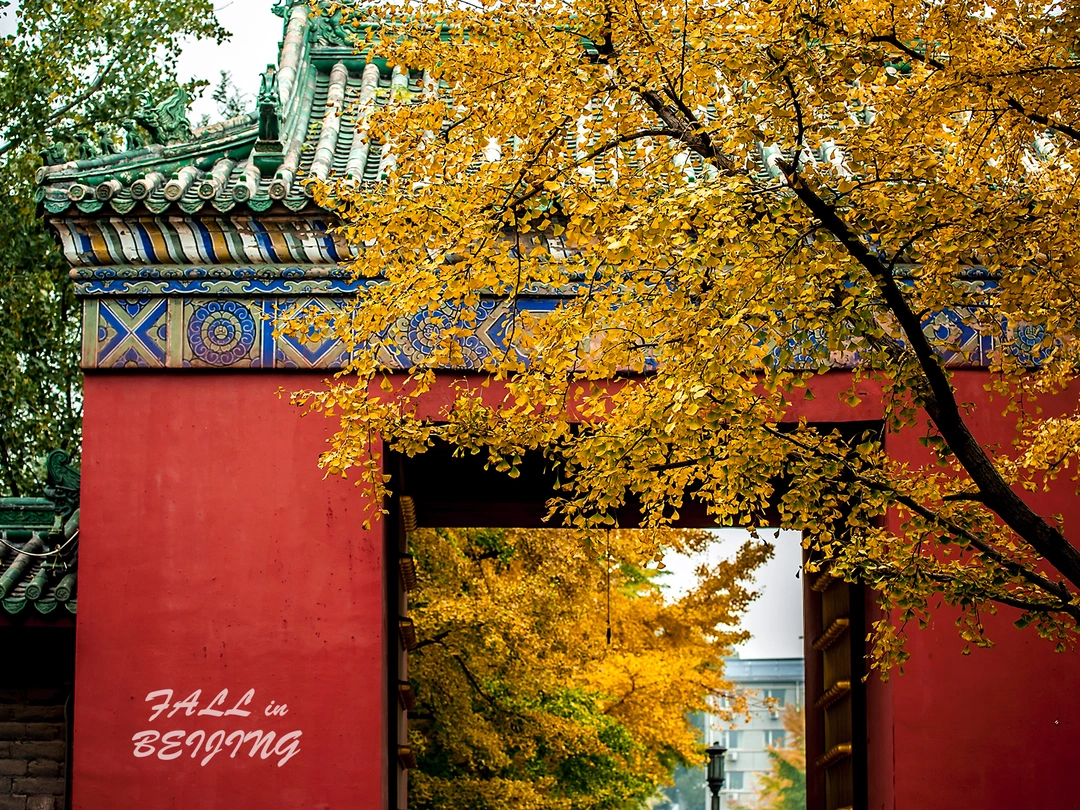
Living in Beijing: A Love Letter to Autumn – Why October Is the City's Best-Kept Secret
Meta Description: Discover why Beijing in autumn is pure magic. From golden ginkgo avenues to hidden hutong gems, this 2014 love letter captures the city's soul. Plan your fall visit now. There's a reason why old Beijing hands get misty-eyed when October rolls around. It's…
Continue reading...
Dreaming of Beijing: A City of Flames and Embers
Here is the SEO-optimized, rewritten article based on the source material. It has been restructured for search intent, readability, and keyword density while preserving the original poetic and narrative essence. SEO Title: Dreaming of Beijing: A City of Flames, Embers, and 3,000 Years of History…
Continue reading...