Seeking · Encountering · Autumn in Beijing: Your Ultimate Guide to Beijing’s Most Stunning Fall Scenery
Meta Description: Discover Beijing’s best autumn destinations beyond Fragrant Hills. From Tsinghua University’s golden ginkgo avenue to Dajue Temple’s millennium-old tree, plan your perfect fall escape with our expert guide.
Introduction: Why Autumn in Beijing Is a Grand Farewell You Can’t Miss
Autumn in Beijing is more than a season—it’s a grand farewell. When the summer heat finally fades and the sky turns high and clear, the city quietly dons its most magnificent attire of the year. For years, I stubbornly rushed to Fragrant Hills (Xiangshan), believing that lay the complete answer to Beijing autumn foliage. Yet year after year, I found myself gasping for breath in the sea of people, seeing only bobbing heads rather than the imagined hills ablaze with red leaves.

It was only when I let go of that obsession that I truly encountered Beijing’s autumn beauty—not in some famous scenic spot, but on the golden avenue of Tsinghua University, beneath the thousand-year-old ginkgo tree of Dajue Temple, and in the silent birch forest of Labagoumen. This guide shares my two-year journey exploring Beijing fall travel during autumn 2014 and 2015, offering insider tips for your own unforgettable autumn in Beijing itinerary.
About the Itinerary: How to Plan Your Beijing Autumn Trip
As a long-time Beijing resident, I spent two autumns exploring the city’s most beautiful scenery. For the three destinations below, if you’re staying in the city center, one day each is enough. If you prefer a slower, deeper travel experience, Labagoumen is worth an extra day.
Best time for autumn in Beijing: Late October to early November, when Beijing fall colors peak across the city.
I. The Spirit of Autumn—Tsinghua University: A Campus Bathed in Gold
Autumn Whispers on Campus: Why Tsinghua University Is a Must-Visit
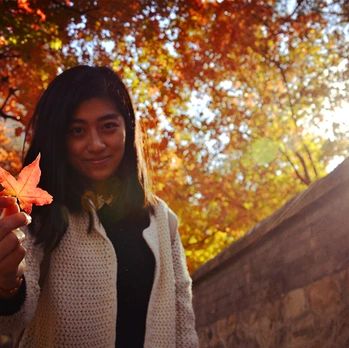
Tsinghua University covers 356 hectares (1.68 million square meters). This century-old institution has never lacked for scenery: the lotus pond of Shuimu Tsinghua, the chime of the Went Pavilion, the tranquility of Guyue Hall, the moonlight of Jinchun Garden. But when autumn arrives, nothing captivates the heart more than Tsinghua Road, lined with ginkgo trees.
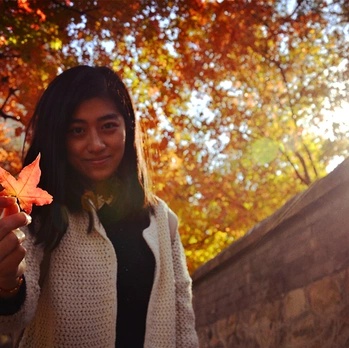
Best time to visit: Late October to early November. As someone who cycled this road daily for years, this is my carefully calculated golden window.
Getting there: - Metro: Take Line 4 to Yuanmingyuan Station, Exit B, then walk east about 500 meters to Tsinghua’s West Gate. - Bus: Take a bus to Tsinghua University West Gate stop, then walk north about 500 meters.
Entry tips: Entering through the West Gate sometimes requires a student ID (depending on the guard’s mood). If turned away, rent a bicycle from nearby vendors—cyclists usually aren’t checked. Alternatively, take Metro Line 13 to Wudaokou Station and enter through the East Gate, which rarely checks IDs. However, it’s about a 2-kilometer walk from there to the iconic Second School Gate.
[Link: Best Beijing parks for fall foliage]
Tsinghua Road · The Second School Gate: Where Autumn Comes Alive
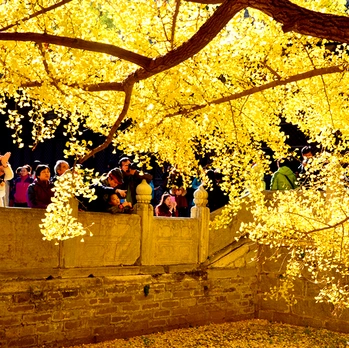
Tsinghua Road is one of two main campus arteries, stretching from the West Gate to the easternmost edge, dividing the school into north and south. It connects faculty residential areas, administrative offices, and teaching zones, as well as architectural styles from different eras—from traditional to modern.
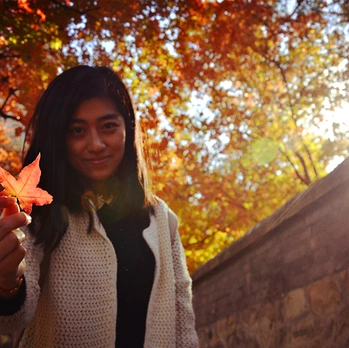
Starting from the West Gate and walking along Tsinghua Road for about 1,000 meters, you’ll see the iconic Second School Gate. It stands like a silent sentinel, witnessing the campus’s century of change. From this spot, you can gaze at the Great Hall, the sundial lawn, and Tsinghua Academy. Continuing past the intersection of Tsinghua Road and Xuetang Road, the New Tsinghua Academy, Concert Hall, and History Museum come into view one by one.
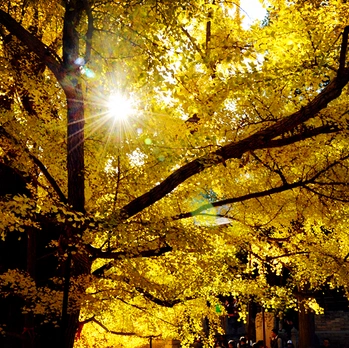
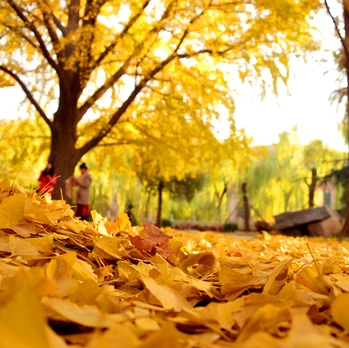
But the true stars of autumn are the ginkgo trees and French plane trees lining both sides. Golden ginkgo leaves sway gently in the breeze, sunlight filtering through the gaps to cast dappled shadows on the ground. Fallen leaves carpet the entire path, rustling underfoot like autumn whispering in your ear. The campus river meanders along the south side, its waters mirroring the golden foliage, adding a flowing poetry to the scene.
The Library: Where Time Settles Among Ginkgo Leaves
Looking north from the Second School Gate, you’ll see the Great Hall. Walk around it, and you’ll reach the Tsinghua University Library complex.
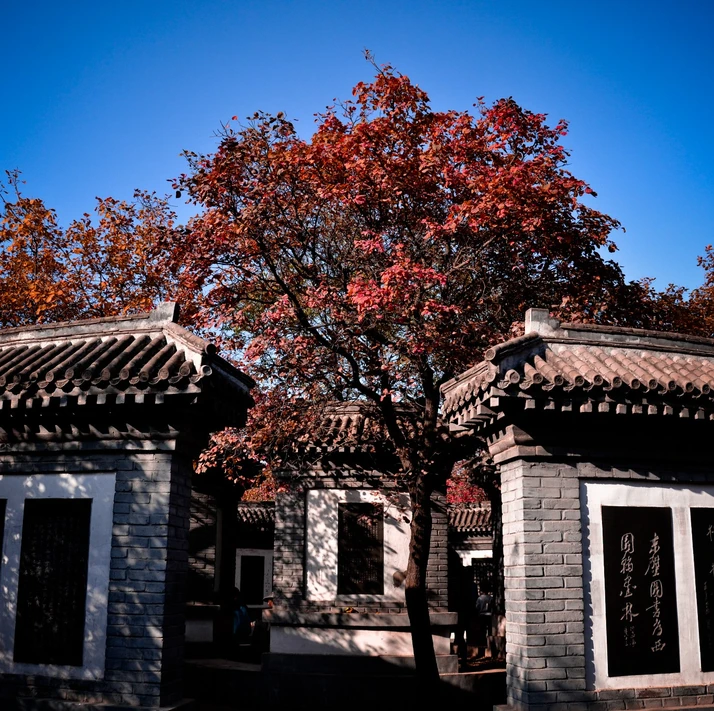
This building group was constructed over 75 years. In 1916, American architect Henry Murphy designed the eastern part of the old library—the first of the campus’s “Four Great Buildings,” initially only 2,114 square meters. In the early 1930s, renowned Chinese architect Yang Tingbao expanded the central and western sections, bringing the area to 7,700 square meters. In 1991, with a donation from Sir Run Run Shaw, a new wing designed by academician Guan Zhaoye was completed, bringing the total area to 28,000 square meters.
The new wing maintains stylistic consistency with the old while innovating in details, earning the 1993 “National Excellent Engineering Design Gold Award.” Whether in spring, summer, autumn, or winter, stepping into this library lets you feel the weight of history. Outside the windows, ginkgo leaves turn yellow and fall, but the wisdom within the pages remains forever young.
Lover’s Slope and Tingtao Garden: A Perfect Autumn Lunch Spot
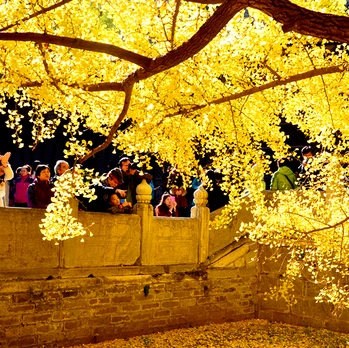
If you still have energy—or if you’ve rented a bicycle—ride east from the playground beside the library along the main east-west road for about 800 meters to reach Lover’s Slope. Located south of Tingtao Garden (formerly the No. 10 Dining Hall), adjacent to the old library on the west and the campus river on the east, it’s a quiet and beautiful leisure spot.
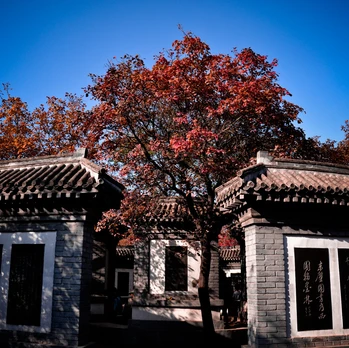
After enjoying the autumn scenery, head to Tingtao Garden for lunch. The first floor requires a campus card—ask a student to swipe for you. Recommended dishes: 麻辣香锅 (spicy hot pot stir-fry), 排骨炒饭 (pork rib fried rice), 油泼面 (hand-pulled noodles with chili oil), 肉夹馍 (Chinese-style pulled pork sandwich), and 清华酸奶 (Tsinghua yogurt)—a taste that lingers in every graduate’s memory. The second floor seems to accept cash, though it mainly serves rice bowls.
[Link: Best cheap eats near Beijing universities]
II. Autumn’s Intoxicating Beauty—Dajue Temple and Baiwang Mountain: A Day of Ancient Trees and Crimson Hills
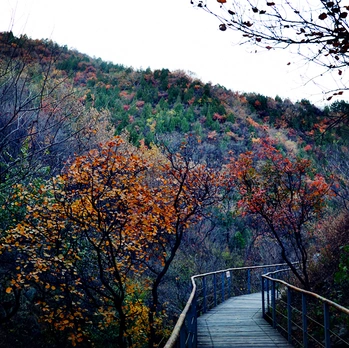
Dajue Temple: The Soliloquy of a Millennium-Old Ginkgo
Date visited: October 25, 2014
Admission: 20 RMB/person
Getting there: Take Bus 633 or the 919 Express (from Pingguoyuan) to the “Dajue Temple Bus Stop”
Dajue Temple was first built in the fourth year of the Xianyong era of the Liao Dynasty (1068 AD), originally called Qingshui Yuan (Clear Water Courtyard). During the Jin Dynasty, it became one of the eight major water courtyards of the Western Hills under Emperor Zhangzong, later renamed Lingquan Temple (Spirit Spring Temple). After reconstruction in the Ming Dynasty, it was given its current name, Dajue Temple.
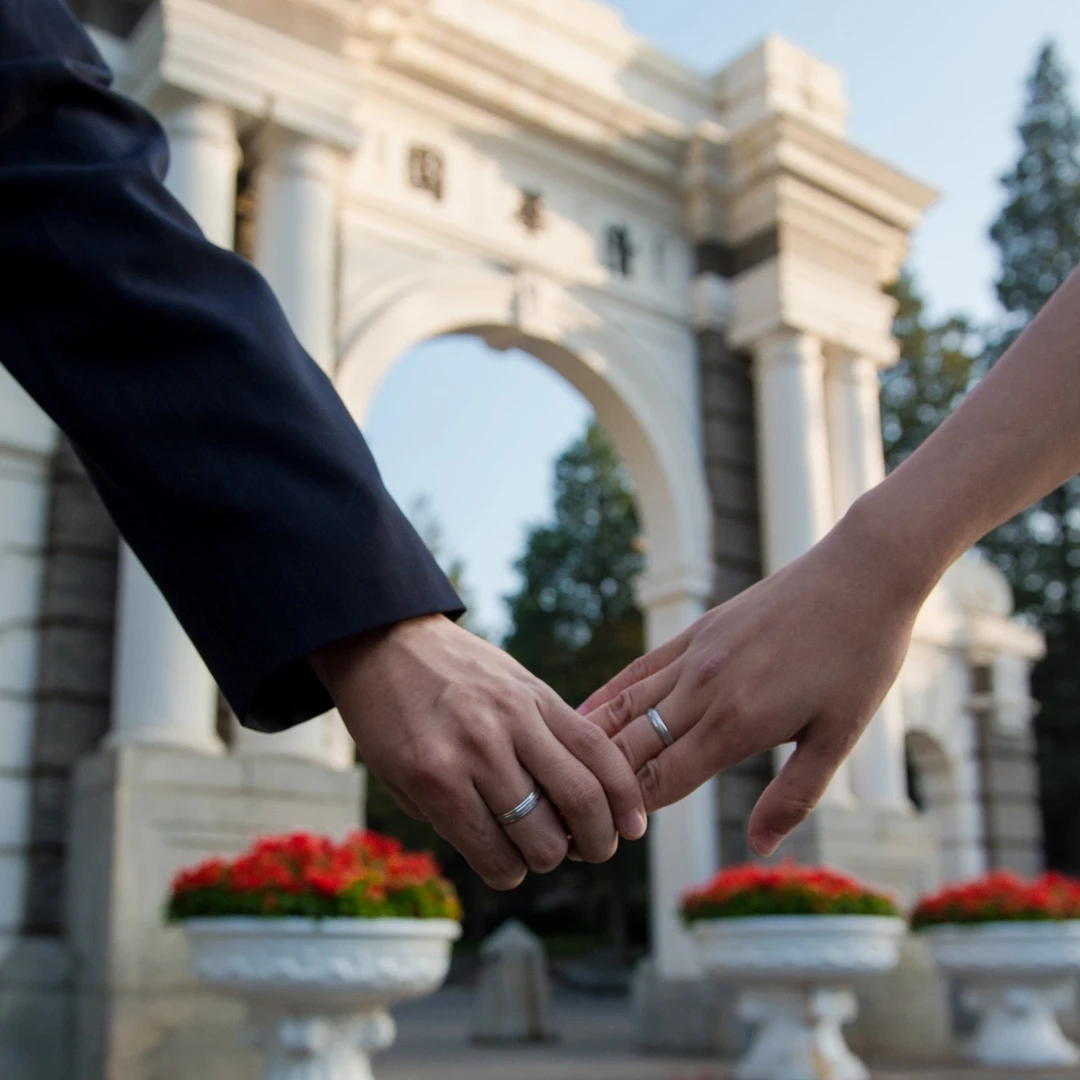
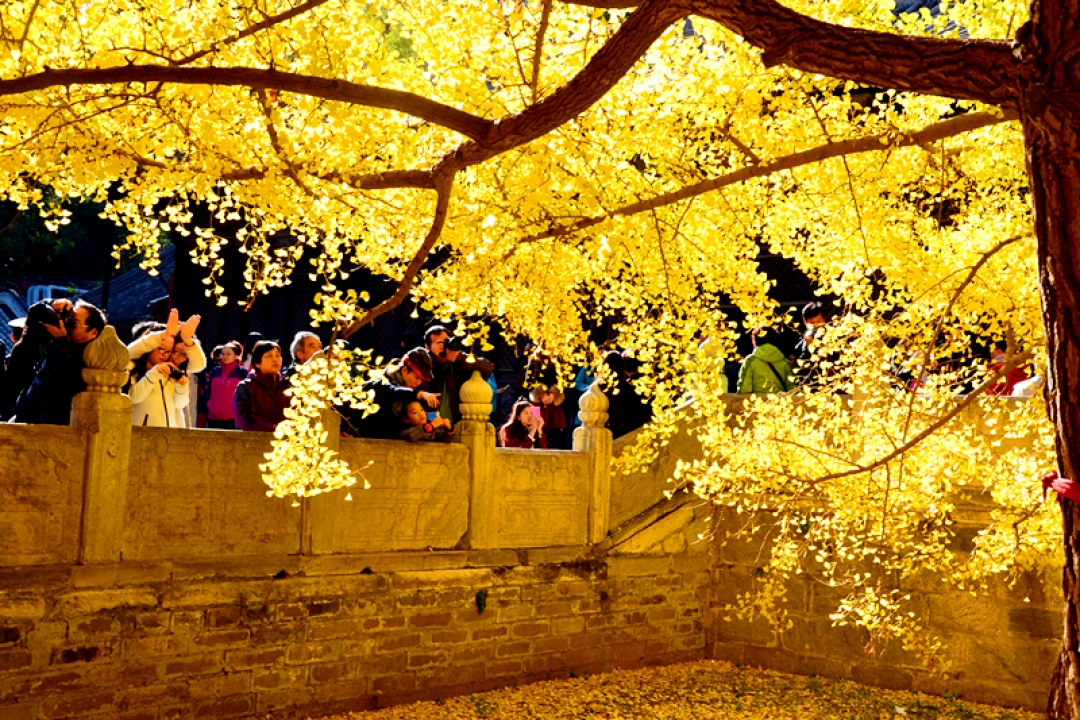
The temple is renowned for its clear springs, ancient trees, magnolias, and serene environment. It houses 160 ancient trees, including a 1,000-year-old ginkgo, a 300-year-old magnolia, as well as ancient sal trees, pines, and cypresses. The magnolias of Dajue Temple, together with the lilacs of Fayuan Temple and the peonies of Chongxiao Temple, are known as the “Three Great Floral Temples of Beijing.”
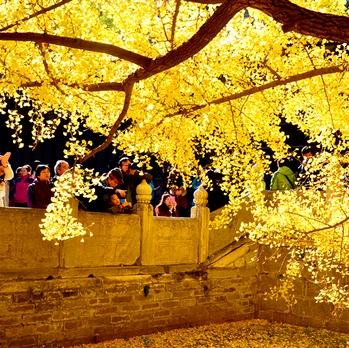
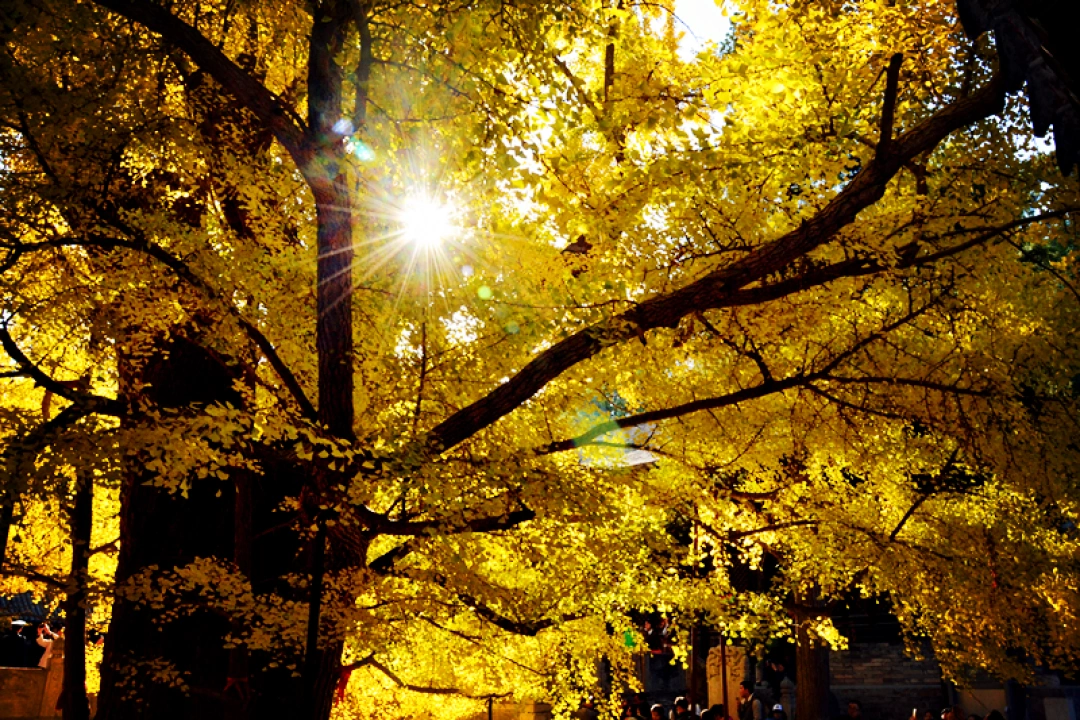
But the undisputed star of autumn is the thousand-year-old ginkgo. When the autumn wind brushes through, its leaves shift from emerald green to brilliant gold, as if the tree itself has caught fire, glowing brilliantly in the sunlight. Fallen leaves carpet the temple grounds; the soft footsteps of monks mingle with distant bells, compelling visitors to slow their pace.
Dajue Temple boasts “Eight Marvels”: Ancient Temple Magnolia Fragrance, the Millennium Ginkgo, Old Vine Entwining a Cypress, Buckthorn Entwining a Cypress, the Lingquan Spring, a Liao Dynasty Stele, Pines and Cypresses Embracing a Pagoda, and the Clear Jade Pool. Each spot is worth lingering over, each telling a story of time.
[Link: Beijing temple architecture guide]
Baiwang Mountain: A Carnival of Red Leaves
From Dajue Temple, take Bus 346 for about 40 minutes to reach Baiwang Mountain Forest Park (admission: 6 RMB/person).
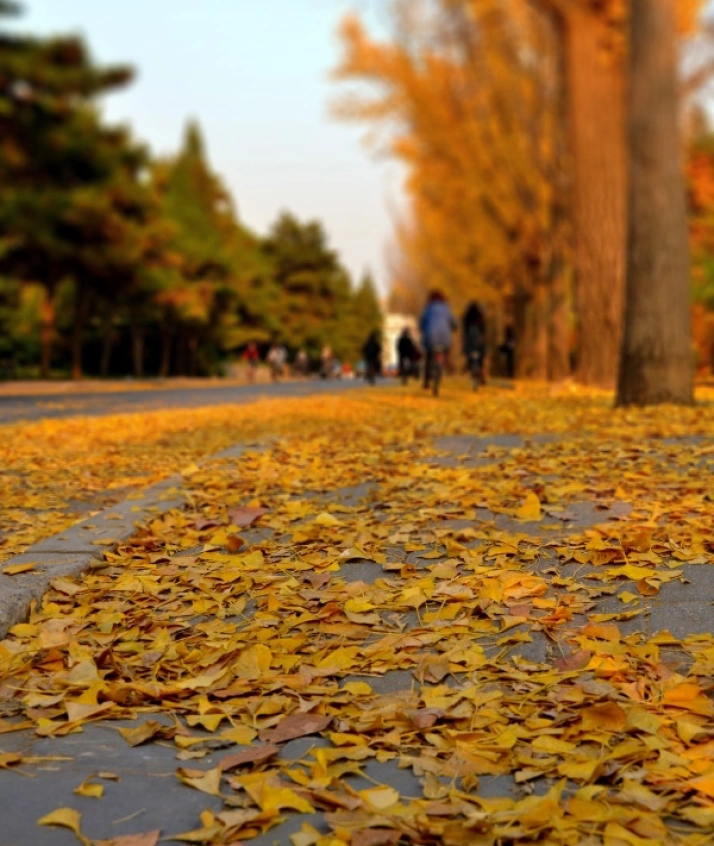
Baiwang Mountain is especially famous for its red leaves. They form vast pure stands; after the first frost, a thousand acres of crimson leaves compete in brilliance, dyeing the entire mountain red, layer upon layer. Standing at the summit, it feels as if nature has overturned its palette—reds, yellows, and oranges interweaving in a beauty that leaves you speechless.
Best time for Baiwang Mountain red leaves: Mid-to-late October through early November.
Pro tip: Arrive early to avoid crowds and capture the morning light filtering through the crimson canopy.
III. Labagoumen: Beijing’s Hidden Autumn Gem
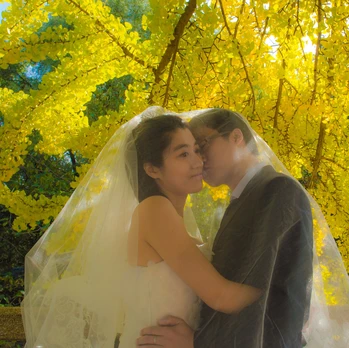
The Silent Birch Forest
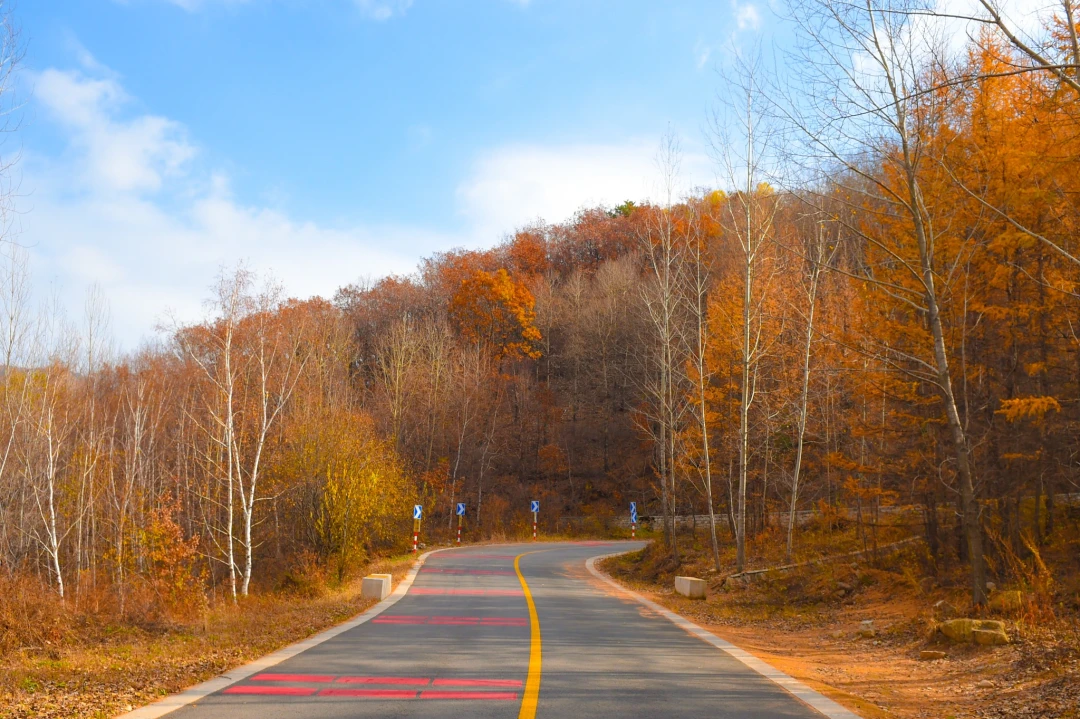
For those seeking a deeper escape, Labagoumen in Huairou District offers a silent birch forest that transforms into a golden wonderland in autumn. Located about 100 kilometers from central Beijing, this area requires a full day or overnight stay.
Getting there: Take a bus from Dongzhimen to Huairou, then transfer to a local bus or taxi to Labagoumen.
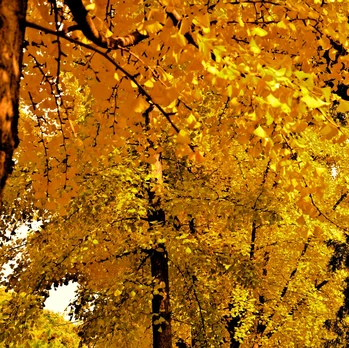
Best time: Mid-October to early November.
Why visit: Far fewer tourists than Fragrant Hills, with pristine birch and maple forests that create a photographer’s paradise.
[Link: Weekend getaways from Beijing]
Frequently Asked Questions About Autumn in Beijing
Q1: When is the best time to see autumn leaves in Beijing?
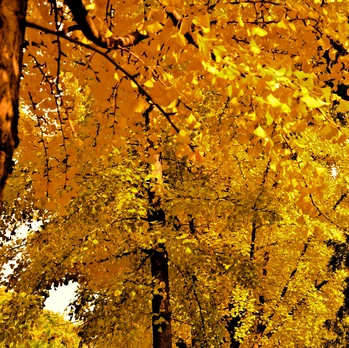
A: The peak season is late October to early November. Ginkgo trees peak in early November, while red leaves (maple and sumac) peak from mid-October through early November. Weather can shift the timing slightly each year.
Q2: How can I avoid crowds at Fragrant Hills?
A: Visit on weekdays, arrive before 8:00 AM, or skip Fragrant Hills entirely for less crowded alternatives like Baiwang Mountain, Dajue Temple, or Labagoumen. These offer equally stunning Beijing fall foliage without the crowds.
Q3: Are there any free places to see autumn colors in Beijing?
A: Yes! Tsinghua University campus is free (though entry may require a student ID). Olympic Forest Park, Yuyuantan Park, and Zhongshan Park also offer beautiful autumn scenery at low or no cost.
Q4: What should I wear for autumn sightseeing in Beijing?
A: Layered clothing is essential. Morning temperatures can be 5-10°C (41-50°F), warming to 15-20°C (59-68°F) by afternoon. Comfortable walking shoes, a light jacket, and a scarf are recommended.
Q5: Can I visit Dajue Temple and Baiwang Mountain in one day?
A: Yes! They are only 40 minutes apart by bus. Start at Dajue Temple in the morning, enjoy lunch nearby, then head to Baiwang Mountain for afternoon red leaf viewing.
Your Beijing Autumn Adventure Awaits
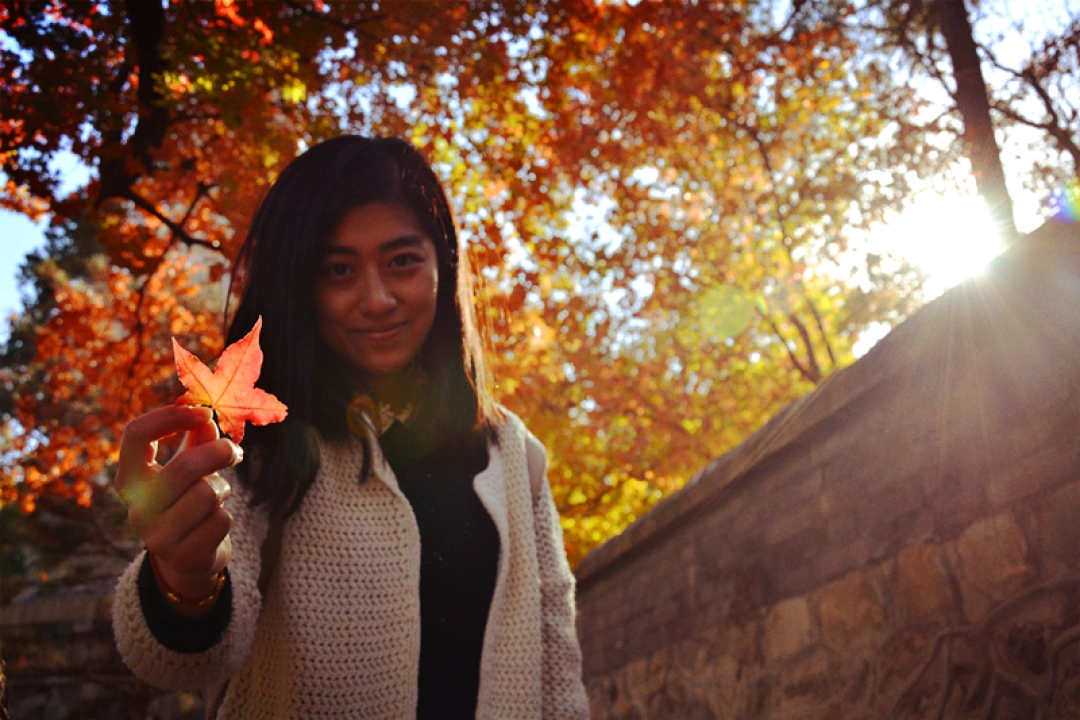
Beijing’s autumn is a fleeting masterpiece—a canvas painted in gold, crimson, and amber that lasts only a few precious weeks. Whether you’re cycling through Tsinghua’s ginkgo avenue, standing in awe beneath a thousand-year-old tree at Dajue Temple, or hiking through Baiwang Mountain’s red-leaf carnival, each moment is a gift.
Don’t wait until next year. Plan your autumn in Beijing itinerary now, pack your camera and comfortable shoes, and discover why this season is the city’s most spectacular. From the best Beijing fall foliage spots to hidden gems like Labagoumen, your perfect autumn escape is just a metro ride away.
Ready to experience Beijing’s golden season? Share your favorite autumn photo or ask for personalized recommendations in the comments below. Let’s make this autumn unforgettable.
[Link: Beijing travel guide]
[Link: Best time to visit Beijing]
[Link: Beijing photography spots]
You should also read:
Four Days, Three Nights in Beijing: A Super Practical Self-Guided Travel Guide (Including Food, Stay, and Transport Tips)
Here is the SEO-optimized, rewritten version of your article, structured for maximum search visibility and reader engagement. SEO Title: 4 Days 3 Nights in Beijing: The Ultimate Self-Guided Travel Guide (Food, Stay & Transport) Meta Description (160 chars): Plan the perfect 4-day Beijing itinerary. From…
Continue reading...
The Accent of Beijing: A Hutong Odyssey in a Downpour – Exploring Beijing's Hidden Charms
Meta Description: Discover Beijing's soul through a rain-soaked hutong odyssey. From Shichahai's melancholy to Mianhua Hutong's philosophy, experience the authentic "accent of Beijing" in this immersive travel story. I'm probably going to laze myself to death. I visited Beijing eight hundred years ago—took the high-speed…
Continue reading...
A Solo Journey Through Beijing: One Girl's Seven-Day Adventure
Here is the SEO-optimized, rewritten article based on your source material. It is structured for high readability, keyword density, and user engagement, targeting approximately 1500 words. SEO Title: Solo Travel in Beijing: One Girl’s 7-Day Budget Adventure (2,000 Yuan Itinerary) Meta Description: Discover the ultimate…
Continue reading...