Let's Go to Beijing Together (Part 4): Prince Gong's Mansion, Houhai, Five-Pagoda Temple, and the National Library — A Stroll Through the Qing Dynasty
Meta Description: Discover Beijing's hidden gems beyond the Forbidden City. Explore Prince Gong's Mansion, Houhai, Five-Pagoda Temple & National Library. A complete guide to Qing Dynasty history & architecture.
Introduction: Why Skip the Forbidden City for Prince Gong's Mansion?
In September 2021, my friend Hong and I made a pact for our Beijing reunion: no mountains, no Great Wall, and definitely no Forbidden City — not because it lacks splendor, but because neither of us wanted the sardine-can experience. Beijing's September sun is relentless; unless it's raining, standing outside feels like melting into a puddle. All you want is shade and stillness.
On previous trips, the Forbidden City was always on the itinerary. Yet after full-day wanders through its endless halls, I always left feeling I'd barely scratched the surface. This time, we pivoted to a residence that embodies the saying, "One Prince Gong's Mansion holds half the history of the Qing Dynasty." I had visited before, but revisiting promised fresh discoveries.
How to Get to Prince Gong's Mansion: Subway & Walking Directions
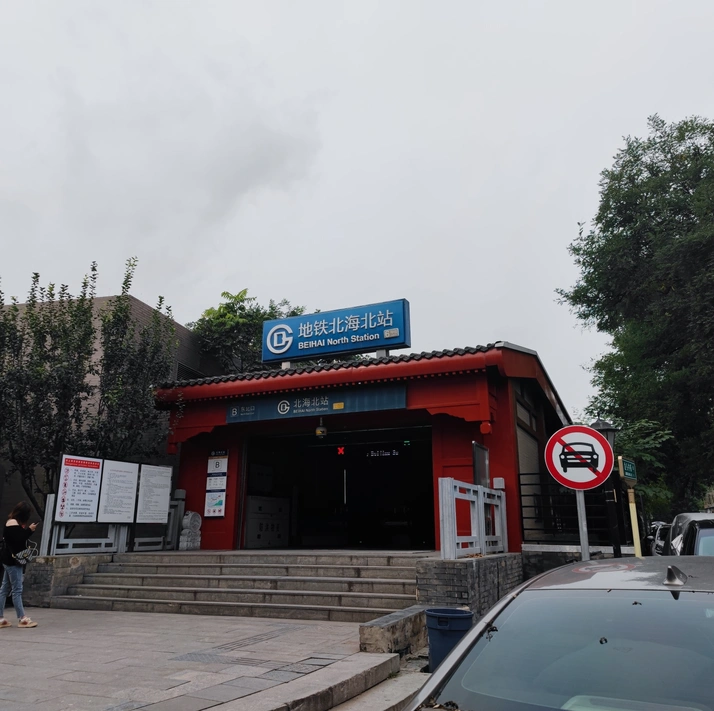
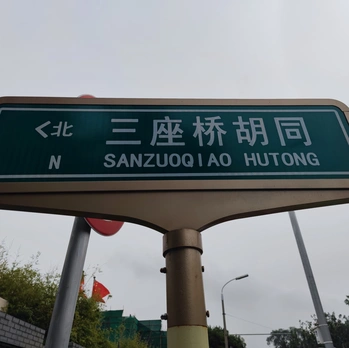
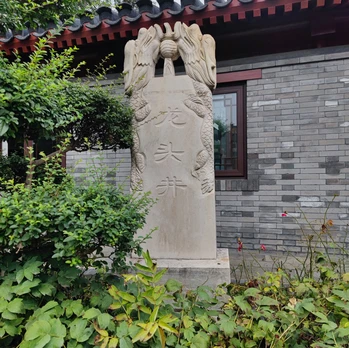
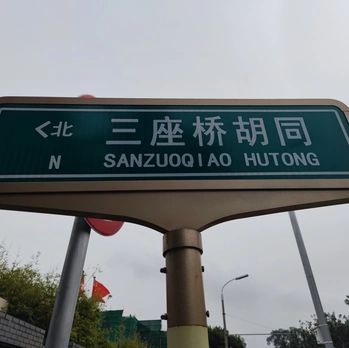
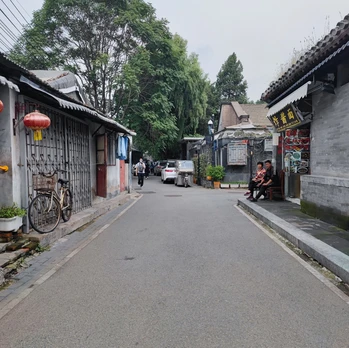
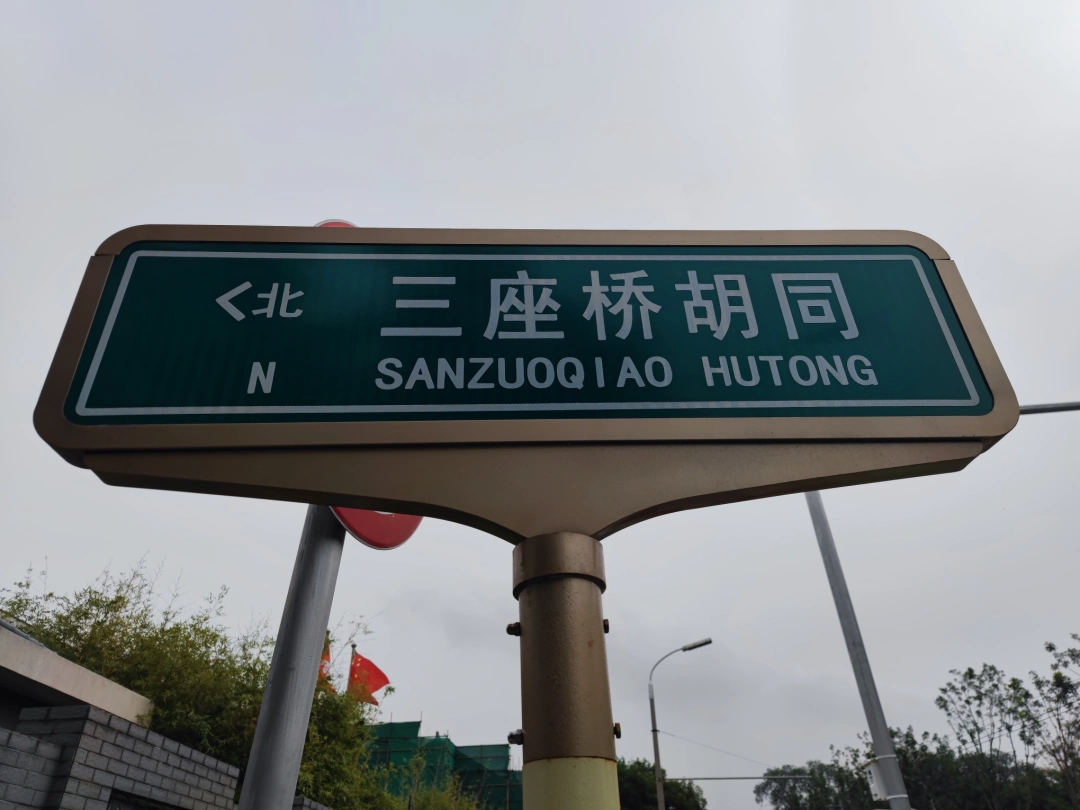
At 10:30 a.m. on the 28th, Hong and I met at Exit B (Northeast Exit) of Beihai North Station on Subway Line 6. Emerging from the station, we found ourselves at the intersection of Sanzuo Bridge Hutong and Longtoujing Street. The day before, exploring hutongs, we'd passed Longtoujing Street — and here it was again.

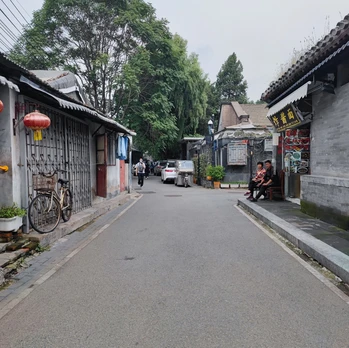
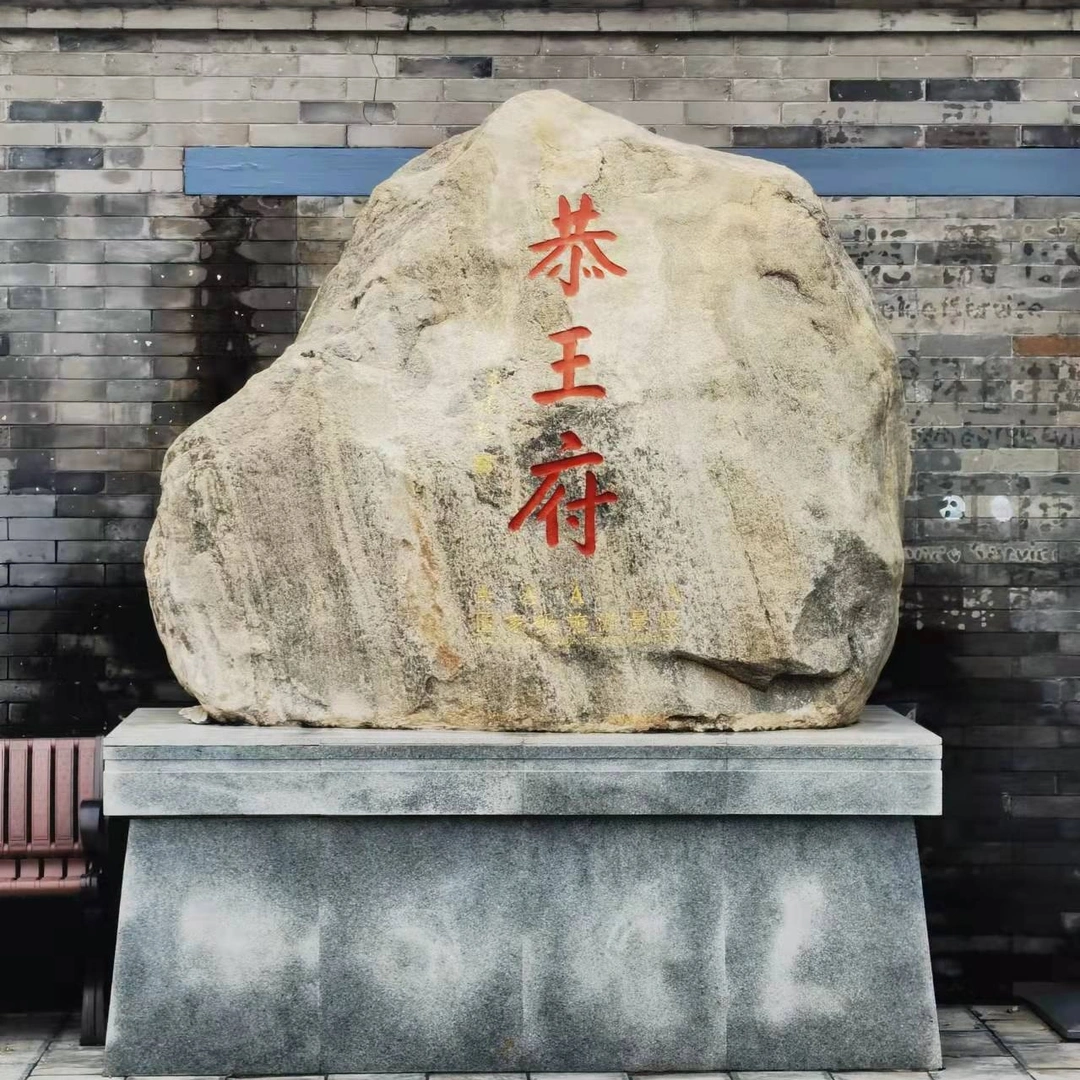
Both streets lead to Qianhai West Street, where the main gate of Prince Gong's Mansion sits. For two directionally challenged travelers like us, navigation apps became our lifeline. Following the map through Sanzuo Bridge Hutong and past the east entrance of Beiqianchuan Hutong, we spotted the mansion entrance within minutes.
We'd pre-booked tickets online — 40 yuan per person (approximately $5.50 USD), an absolute steal for a full day of Qing Dynasty immersion.
Prince Gong's Mansion Layout: Official Residence & Garden
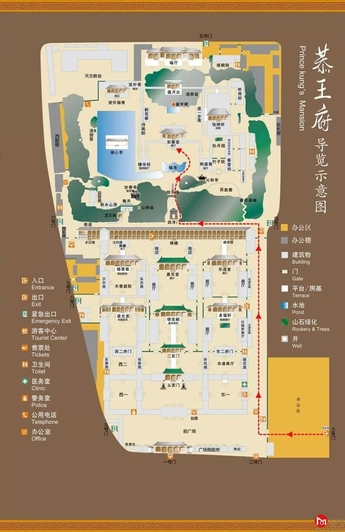
Prince Gong's Mansion covers over 60,000 square meters. Its most striking feature is the Rear Screen Building, famously known for having "99 and a half rooms." This building acts as a divider, separating the front courtyard (official residence) from the rear courtyard garden. The official residence comprises a carefully arranged complex of courtyard-style buildings, divided into three sections: east, central, and west. The central section holds the highest status.
Silver Peace Hall: The Prince's "Throne Hall"
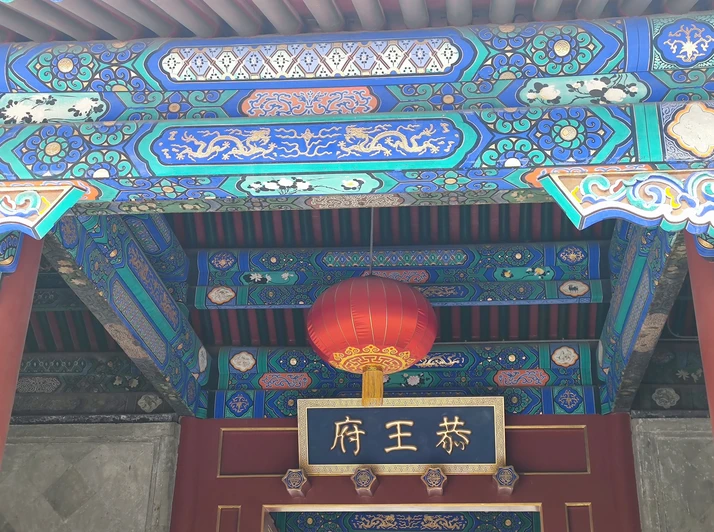
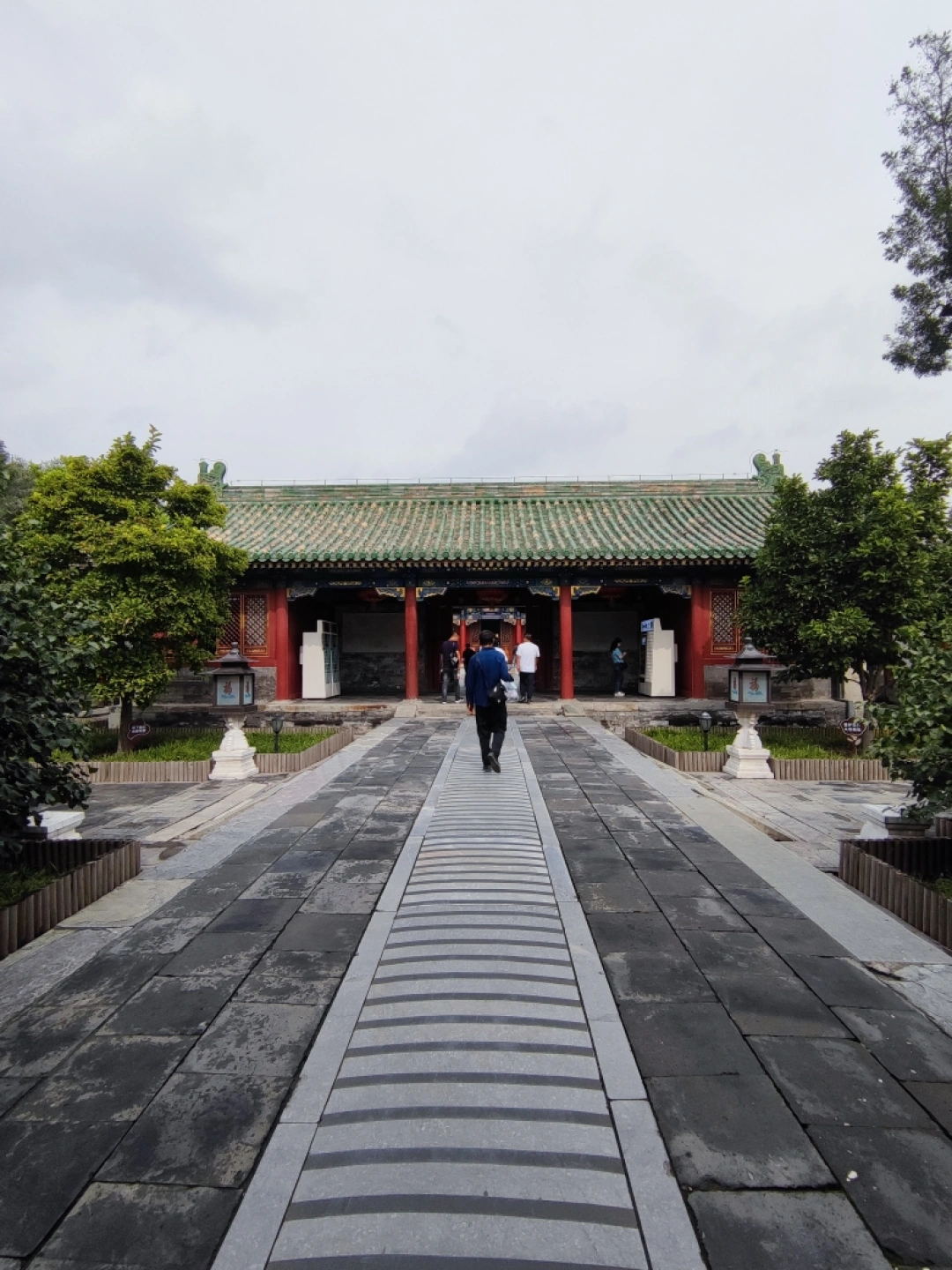
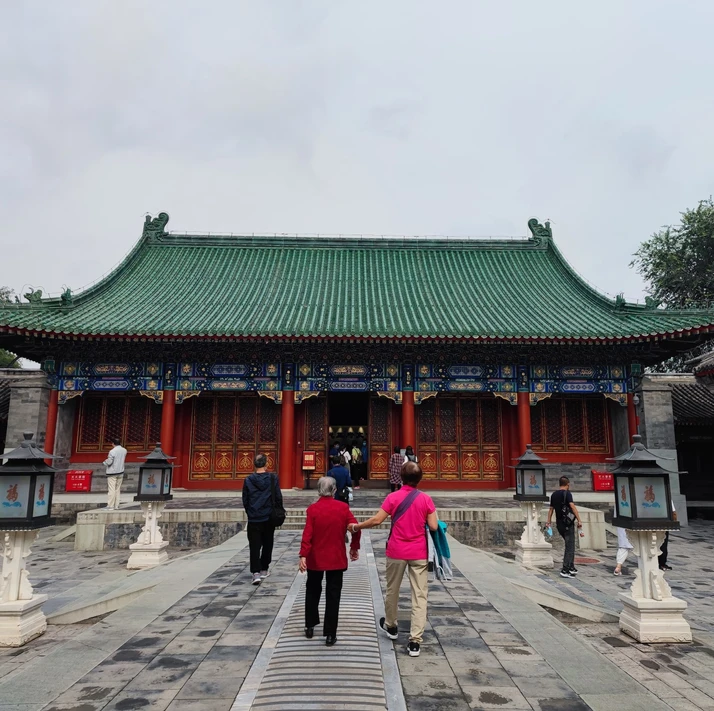
The Silver Peace Hall in the central section is the mansion's core building. Its roof features green glazed tiles, second only to the Forbidden City's golden glazed tiles. Historically, the Silver Peace Hall served as the palace for princes or feudal lords — the equivalent of the emperor's "Golden Throne Hall."
In the early Republic of China era, the Silver Peace Hall was destroyed by fire. The current structure is a faithful reconstruction.
Decorative details reveal strict hierarchy: - It cannot use imperial-grade "harmony and happiness" painted patterns (reserved for the emperor) - Instead, it uses the highest-grade "spiral flower" patterns - The ridge beasts on the eaves number seven, not nine (the emperor's privilege)
These details constantly remind visitors: no matter how noble a prince, he cannot overstep his rank.
Inside, an exhibition on Qing Dynasty princely culture displays daily-use items from the Qing court, including: - A prince's coiled-dragon robe - A wooden dragon-patterned official seal - A seal bearing "General by Imperial Command" — belonging to Prince Rui, Dorgon
This last artifact inevitably evokes memories of that era of clashing swords and galloping horses.
The Rear Screen Building: Secrets of the Treasure Vault
The Rear Screen Building is one of the "Three Marvels" of Prince Gong's Mansion. At 150 meters long with 99 and a half rooms, it's an architectural marvel. Prince Gong Yixin converted the central section of the ground floor into a Buddhist hall, enshrining Sakyamuni Buddha and bodhisattvas. The eastern half is called "Zhanji Tower," and the western half "Baoyue Tower." Its concave shape wraps around the mansion like a protective screen.
The most astonishing feature: The 88 windows on the rear wall. Legend says no two are identical. The lower windows are rectangular, while the upper ones feature over 40 distinct shapes — diamond, fan, peach, pomegranate, square, hexagonal. Window frames are carved with auspicious patterns: bats, fish, and chime stones.
According to local lore, the notorious Qing official He Shen could identify which treasure was stored behind each window just by looking at its shape. While this sounds fanciful, upon close inspection, we found the windows truly have no duplicates — a testament to ancient craftsmanship.
Cuijin Garden: Fortune, Poetry & Feng Shui
Passing through the Rear Screen Building, we entered Cuijin Garden — the rear garden of Prince Gong's Mansion. This 28,000-square-meter garden is a quintessential northern Chinese garden, blending Jiangnan garden artistry with northern architectural layout. It's rightfully called "the Pearl of Shichahai."
The Western-Style Gate: East-West Fusion Masterpiece
The garden's main entrance is a white marble archway — the Western-Style Gate, the second of the "Three Marvels." Prince Gong Yixin built it in imitation of the Dafahai Garden Gate in the Old Summer Palace (Yuanmingyuan). Today, it's the only surviving white marble archway of its kind in China.
On the gate's lintel are engraved eight characters: "静含太古" (Tranquility Embracing Antiquity) and "秀挹恒春" (Beauty Holding Eternal Spring). These reflect the garden owner's two pursuits: tranquility and beauty.
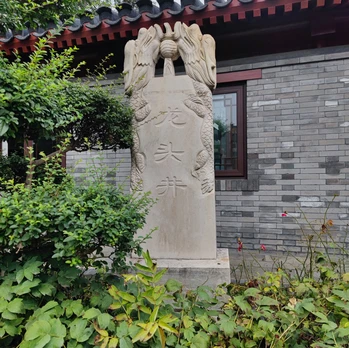
Walking through, you're greeted by a 4-meter-tall Taihu limestone rock inscribed with "独乐峰" (Solitary Joy Peak). Move to the other side, and you'll discover it's also called the "Child-Bringing Guanyin Stone." Legend says He Shen, after fathering over 20 daughters, obtained this stone and subsequently had his only son, Fengshen Yinde.
The Fortune Character Stele: Emperor Kangxi's Calligraphy
The third of the "Three Marvels" is the Fortune Character Stele, hidden in the Secret Cloud Cave beneath the Dripping Emerald Cliff. The character "福" (fortune) was personally written by Emperor Kangxi to celebrate his grandmother Empress Dowager Xiaozhuang's 60th birthday. The stele also bears the imperial seal.
Legend has it that when Emperor Jiaqing confiscated He Shen's mansion, he wanted to move this Fortune Character Stele to the Forbidden City. But He Shen had designed things so cleverly that moving the stele would disturb the dragon vein (geomantic energy). The superstitious emperor flew into a rage and ordered the rockery sealed shut.
It wasn't until 1962, when Premier Zhou Enlai inspected Prince Gong's Mansion, that he noticed the rock formation of Dripping Emerald Cliff resembled "Two Dragons Playing with a Pearl." He ordered a thorough search, and the Secret Cloud Cave — sealed for centuries — was finally reopened.
Beyond the Mansion: Houhai, Five-Pagoda Temple & National Library
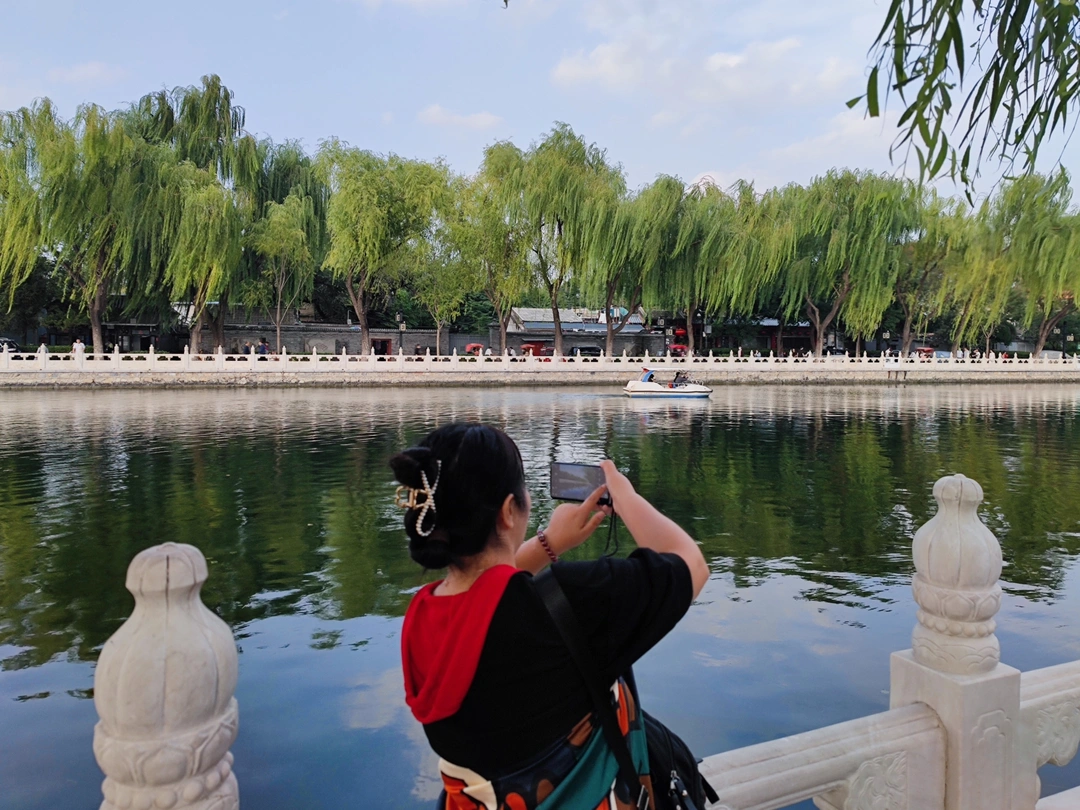
After exploring Prince Gong's Mansion, we strolled to Houhai — a serene lake area perfect for afternoon walks. The willow-lined shores and traditional architecture make it a favorite for locals and tourists alike. [Link: Best Hutongs to Explore Near Houhai]
Five-Pagoda Temple (Zhenjue Temple)
Just a short walk from Houhai, the Five-Pagoda Temple (Zhenjue Temple) is a hidden gem dating to the Ming Dynasty. Its unique five-pagoda structure represents a fusion of Chinese and Tibetan Buddhist architecture. The temple grounds are peaceful, offering a quiet contrast to the bustling mansion.
National Library of China
For history enthusiasts, the National Library of China is a must-visit. Located nearby, it houses over 37 million items, including ancient manuscripts, Qing Dynasty records, and rare maps. The library's ancient books section contains documents directly related to Prince Gong's Mansion and the Qing imperial family. [Link: How to Access Rare Qing Dynasty Documents at the National Library]
FAQ: Prince Gong's Mansion & Surrounding Attractions
1. How much time should I allocate for Prince Gong's Mansion?
 Plan for 3-4 hours to explore the official residence, garden, and the "Three Marvels" thoroughly. Add another 1-2 hours if you want to visit the nearby Houhai and Five-Pagoda Temple.
2. Is Prince Gong's Mansion worth visiting instead of the Forbidden City?
 Absolutely. While the Forbidden City is magnificent, Prince Gong's Mansion offers a more intimate, less crowded experience. You'll see authentic Qing Dynasty princely life without the tourist crush. Plus, the garden's Feng Shui elements and the Fortune Character Stele are unique attractions.
3. What is the best time of year to visit?
 Spring (April-May) and Autumn (September-October) are ideal. The weather is mild, and the garden's foliage is at its peak. Avoid summer afternoons when temperatures soar and crowds gather.
4. Can I take photos inside the mansion?
 Yes, photography is allowed in most areas. However, flash photography is prohibited in the Silver Peace Hall and near the Fortune Character Stele to protect the artifacts.
5. Are there guided tours available?
Yes, English and Chinese audio guides are available for rent at the entrance. Private guided tours can be booked in advance for a deeper historical dive. [Link: Top Beijing Guided Tour Packages]
Conclusion: Your Qing Dynasty Stroll Awaits
From the Silver Peace Hall's hierarchical architecture to the Fortune Character Stele's legendary calligraphy, Prince Gong's Mansion offers a window into Qing Dynasty life that the Forbidden City cannot match. Pair it with a stroll through Houhai's willow-lined shores, a visit to the Five-Pagoda Temple's serene grounds, and the National Library's vast archives — and you have a full day of Beijing history without the tourist crowds.
Ready to explore? Book your Prince Gong's Mansion tickets online in advance, download a navigation app, and prepare for a journey through one of Beijing's most fascinating historical sites. Whether you're a history buff, architecture lover, or simply seeking a peaceful escape, this Qing Dynasty gem delivers.
Start planning your Beijing adventure today — and discover why "One Prince Gong's Mansion holds half the history of the Qing Dynasty."
Have you visited Prince Gong's Mansion? Share your experience in the comments below! For more Beijing travel guides, subscribe to our newsletter.
You should also read:
A Spontaneous Escape Through Tianjin, Beijing, and Shandong: An Unforgettable Solo Travel Adventure
Meta Description: Discover the raw beauty of a spontaneous solo journey through Tianjin, Beijing, and Shandong. From Quanjude roast duck to Tanggu night views, read this heartfelt travelogue of escape and self-discovery. The July wind carried restlessness and unease. After abruptly ending a ten-day job…
Continue reading...
A Passionate Journey Through Beijing & Tianjin: Beijing Complete Guide – JOJO's In-Depth Travel Notes
Meta Description: Explore Beijing & Tianjin in 5 days with this complete travel guide. From the Forbidden City to the Great Wall, discover insider tips, transportation hacks, and must-see attractions. Plan your perfect China trip today. Beijing is not just a city—it's a living museum…
Continue reading...
Hai Tuo Mountain Above the Sea of Clouds: A Skyward Feast on the Roof of Beijing
Meta Description: Discover Hai Tuo Mountain, Beijing's second-highest peak, where sea of clouds, starry nights, and alpine meadows await. Your ultimate guide to hiking, camping, and photography on the "Roof of Beijing." At the border of Beijing's Yanqing District and Hebei's Chicheng County lies a…
Continue reading...