May 2026 Chronicle: Finding Life's Poetry Between Rain and Exhibitions in Beijing
Meta Description: Discover the poetic beauty of Beijing in May 2026—from rain-soaked moments in 798 Art District to ancient treasures at the National Art Museum. Explore how art, nature, and serendipity create life's most meaningful experiences.
Beijing in May always has a theatrical temperament. One moment the sky is clear and boundless, the next, dark clouds press down like a city under siege, thunder rolling in waves. I stood under the eaves of the 798 Art District, watching rain pour down from the corrugated rooftops, splashing into delicate droplets on the bluish-gray ground. A young man beside me remained remarkably calm. He dragged a rocking chair under the eaves, put on his headphones, closed his eyes, and listened to music, projecting an air of detachment from the world. I timed him. He lasted exactly five minutes — and then, with a sudden clap of thunder, he scrambled to grab his chair and bolted into the rain, fleeing in utter disarray. I couldn't help but laugh out loud. This, perhaps, is life at its most honest: we try so hard to appear composed, only to have a single rainstorm strip away all our pretenses.
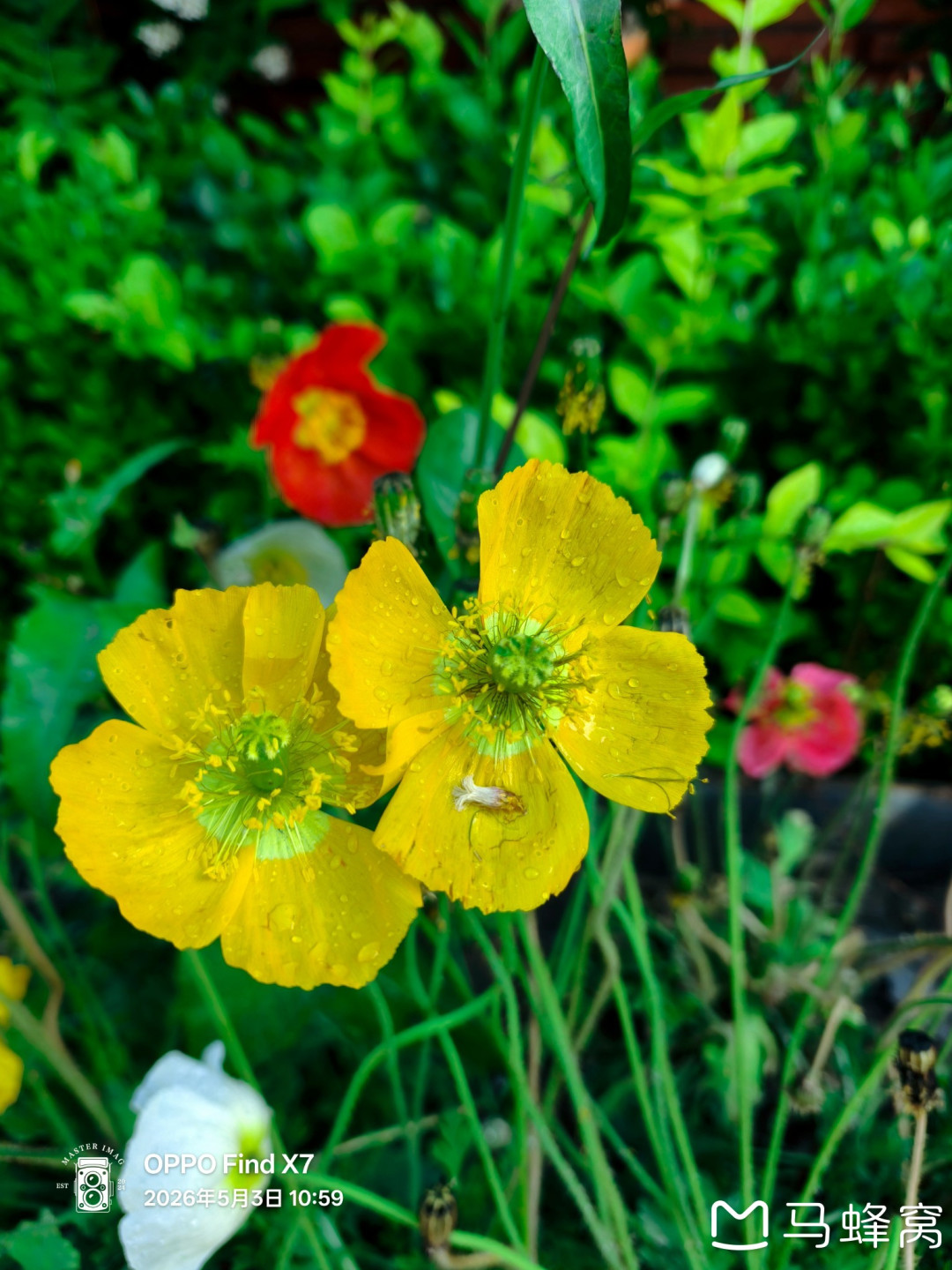
The rain came and went in waves, gradually fading. The flowers, washed clean, were radiantly delicate, with crystal droplets clinging to their petals like a weeping maiden, exuding a poignant beauty. I was suddenly reminded of the Polish poet Czesław Miłosz's poem "The Gift":
A day so happy. Fog lifted early, I worked in the garden. Hummingbirds were stopping over honeysuckle flowers. There was no thing on earth I wanted to possess. I knew no one worth my envying him.
Yes, beauty is everywhere in life. But we must not only learn to discover it — we must also learn to interact with it. A rainstorm, an exhibition, an unexpected encounter — these are all invitations.
[Link: Best time to visit Beijing in spring]
The Poetry of Rain: Finding Beauty in Beijing's Sudden Showers
The rain arrived abruptly and departed just as quickly. Thunder rolled in waves, as if the sky were performing a symphony. Raindrops struck the eaves, the leaves, the hurried umbrellas of passersby, each producing a different note. Standing under the eaves, watching the rain-soaked world, I suddenly understood what the poet Huang Canran wrote:
Sometimes life really deceives you, Makes you feel disheartened and desperate, Makes you feel that for a long time You've been groping in boundless darkness. But eventually it will restore Its true face.
After the rain, the sky was exceptionally clear, the clouds layered and distinct, clean and translucent. A friend remarked that Beijing's skies had been miraculous lately — you could see high-altitude clouds usually found only on the grasslands. In the flat urban landscape, such skies were rare indeed. The occasional unforecasted storm only made the sky more worth capturing.
I thought of Xiao An's poem "Stand a Little Higher":
You should be the one standing on the clouds Standing between the sun and the moon Be the brightest one You should be the bird covered in rainwater
The philosopher Martha Nussbaum once provided a footnote to such poetry: "To be a good human being is to have a kind of openness to the world; to be able to trust what is not under one's control and is therefore uncertain." She argued that ethical life is built on trust in uncertainty, on a willingness to expose oneself to the world. It demands that we be more like a plant than a gemstone — plants are fragile, but their unique beauty is inseparable from that fragility.
[Link: Beijing weather in May]
Art and Serendipity: An Afternoon in 798 Art District
After the rain stopped, I continued wandering through the 751 Art District. It remains one of Beijing's most vibrant spots, where avant-garde art thrives within the concrete and steel of old factories. This area, part of the larger 798 Art District, is a must-visit for anyone exploring Beijing contemporary art and urban culture.
Passing by the Persian Cultural Art Center, I was drawn to the exquisite Iranian handicrafts in the window. This private cultural space, founded by an Iranian businessman, is not an official "Iranian Cultural Center" per se, but its content is authentic, its exhibits genuine, and its cultural value high. The intricate Persian carpets, miniature paintings, and copperware told the story of an ancient civilization's glory.
As evening approached, music drifted from the square at the 798 Art Center. The Wilderness Park band was holding an open-air concert. I found a corner to sit in, listening to the guitar and drums echo through the twilight. I thought of Xing Dong's poem "Trees, and Shadows":
He was deceived A concert in a strange place He followed the address: Only to find A locked house
This might be the lightest, most elegant, most subtle and refreshing sermon I've ever encountered. The word "pastor" appears only at the very end, a single spark of light rising quietly from emptiness, faintly illuminating the poem's intent, then vanishing like a firefly's tail into the night sky, leaving no trace.
As the sun set, I stood on a rooftop terrace watching the sunset. A line from Yan Jidao's lyrics came to mind: "Beneath falling petals, one stands alone; in light rain, swallows fly in pairs." Fernando Pessoa's words also surfaced: "Days full of sun, tender rain... The night is gentle, people pass by, curiously peering from windows." As Buddhism teaches: Forgive everything before sleep, and you will be reborn upon waking. All my happiness comes from my forgetfulness and from the things I love.
[Link: 798 Art District guide]
National Art Museum of China: The Beauty of Ornament Through Millennia
On May 5th, the day of Lixia (the Beginning of Summer), I went to the National Art Museum of China — but not for the highly anticipated exhibition "Homage to the Masters: From Leonardo da Vinci to Caravaggio — Masterpieces of the Italian Renaissance." To be honest, I always feel a certain pressure when facing Western art. It demands a level of literary cultivation that I simply don't possess; even a superficial appreciation feels beyond my reach.
What drew me instead was the fifth-floor exhibition "Splendid Ornaments: Treasures of Ancient Hebei Art." Co-hosted by the National Art Museum, the Hebei Provincial Department of Culture and Tourism, and the Hebei Provincial Cultural Relics Bureau, this exhibition brought together more than 110 artifacts from eight cultural institutions, including the Hebei Museum and the Hebei Provincial Institute of Cultural Relics and Archaeology.
Exhibition Highlights: Three Thematic Sections
The exhibition was divided into three sections:

- "The Rise of Ornamental Style" — tracing how ancient peoples embroidered totems into their collars and carved ritual systems into jade discs
- "The Marvel of Craftsmanship" — showcasing the near-divine skills applied to gold, silver, copper, iron, jade, and lacquer
- "The Image of Beauty" — revealing how, when utility first shook hands with aesthetics, the cultural pulse of the Yan-Zhao region gained a visible warmth
Hebei, known in ancient times as the land of Yan and Zhao, borders the Bohai Sea to the east, the Taihang Mountains to the west, the Yanshan Mountains to the north, and the Central Plains to the south. Stepping into the gallery, a single glance around offered a panoramic view of Hebei's ten-thousand-year history. From prehistoric times through the Ming and Qing dynasties — from stone grinding plates to porcelain — ornamentation sprouted quietly alongside civilization, evolving and diversifying through the Chinese people's engagement with nature.
[Link: National Art Museum of China exhibitions]
Star Exhibits: Ancient Hebei Art Treasures You Must See
Bronze Horse with Lowered Head (Warring States Period)
This masterpiece, unearthed in Handan, is China's earliest realistic sculpture of a warhorse, predating the famous "Galloping Horse Treading on a Flying Swallow" by about 400 years. Its head hangs low, as if in contemplation, or as if listening to the voice of the earth. This Warring States bronze artifact is a testament to the advanced metallurgy and artistic vision of ancient Chinese civilization.
Gold-and-Silver Inlaid Bronze Pedestal with Four Dragons and Four Phoenixes
Coming from the Zhongshan Kingdom, this piece represents the pinnacle of Warring States craftsmanship. Four dragons and four phoenixes intertwine in a complex dance, gold and silver interwoven, shimmering with brilliance — a testament to the imagination and skill of artisans over two thousand years ago. This ancient Chinese metalwork is a highlight of the Splendid Ornaments exhibition.
Northern Qi Dynasty Murals from the Wanzhang Tomb
These murals offer a rare glimpse into the artistic achievements of the Northern Qi period. The vibrant colors and dynamic figures reveal the cultural fusion that characterized this era in Chinese history.
[Link: Top museums in Beijing]
Frequently Asked Questions About Beijing's May Art Scene
Q1: What is the best time to visit the 798 Art District in May?
 A: Late afternoon (around 3-5 PM) is ideal. The light is beautiful for photography, and you can enjoy galleries before the evening concerts begin. Weekdays are less crowded than weekends.
Q2: How do I get to the National Art Museum of China?
A: The museum is located at 1 Wusi Avenue, Dongcheng District. Take Subway Line 8 to National Art Museum Station (Exit A). It's also a short walk from Tiananmen East Station on Line 1.
Q3: Are the exhibitions at the National Art Museum free?
A: Many exhibitions are free, but some special exhibitions may require tickets. The "Splendid Ornaments" exhibition was included with the general admission. Check the official website for current pricing.
Q4: What should I wear for a day exploring Beijing art districts in May?
 A: May weather in Beijing can be unpredictable—bring a light jacket or umbrella. Comfortable walking shoes are essential for the 798 Art District, which covers a large area.
Q5: Can I take photos inside the National Art Museum?
A: Photography is generally allowed in permanent exhibitions, but flash and tripods are prohibited. Some special exhibitions may have restrictions—always check signage.
Why May 2026 Is the Perfect Month for a Beijing Art Trip
May in Beijing offers a unique blend of spring weather, cultural events, and outdoor experiences. The city's art scene comes alive with exhibitions, concerts, and spontaneous moments that make travel memorable. Whether you're a seasoned art lover or a casual explorer, the Beijing art scene in May provides opportunities for discovery and reflection.
The rain, the exhibitions, the chance encounters—they all remind us that life's poetry is found in the spaces between our plans. As the philosopher Martha Nussbaum suggested, being open to uncertainty allows us to experience the world more fully. So next time you visit Beijing, don't just follow a strict itinerary. Leave room for rain. Leave room for art. Leave room for the unexpected.
[Link: Beijing travel tips]
Your Next Step: Plan Your Beijing Art Adventure
Are you ready to experience the poetry of Beijing in May? Whether you're drawn to the avant-garde art of 798, the ancient treasures at the National Art Museum, or simply the beauty of a rain-washed afternoon, this city offers endless inspiration.
Start planning your trip today: - Book your flights to Beijing for late April to early June - Reserve accommodation near the 798 Art District or Dongcheng District - Check the National Art Museum's exhibition schedule in advance - Pack layers and a waterproof jacket for unpredictable spring weather
Share your own Beijing art discoveries in the comments below—we'd love to hear about the moments that made your trip memorable. And if you're visiting in May 2026, don't miss the chance to find your own poetry between rain and exhibitions.
[Link: Best hotels near 798 Art District]
This article was originally published on Mafengwo and has been optimized for SEO while maintaining factual accuracy and the original author's voice.
You should also read:
The Accent of Beijing: A Hutong Odyssey in a Downpour – Exploring Beijing's Hidden Charms
Meta Description: Discover Beijing's soul through a rain-soaked hutong odyssey. From Shichahai's melancholy to Mianhua Hutong's philosophy, experience the authentic "accent of Beijing" in this immersive travel story. I'm probably going to laze myself to death. I visited Beijing eight hundred years ago—took the high-speed…
Continue reading...
Peking: A Seven-Day Journey Between Old Dreams and New Realities – An SEO-Optimized Travel Guide
Meta Description: Explore Beijing in 7 days: from 798 Art District and Summer Palace to Houhai nightlife and Panjiayuan market. Discover hidden gems, local eats, and travel tips in this SEO-optimized itinerary. Some cities you never set foot in, yet you have painted them in…
Continue reading...
A Solo Journey Through Beijing: One Girl's Seven-Day Adventure
Here is the SEO-optimized, rewritten article based on your source material. It is structured for high readability, keyword density, and user engagement, targeting approximately 1500 words. SEO Title: Solo Travel in Beijing: One Girl’s 7-Day Budget Adventure (2,000 Yuan Itinerary) Meta Description: Discover the ultimate…
Continue reading...