My 2017: Encountering the Most Beautiful Beijing in a Season of Farewells — A Photographic Journey Through the Capital's Four Seasons
Meta Description: Discover Beijing's stunning four seasons through a personal photographic journey—from snow-dusted Forbidden City walls to cherry blossoms at Yuyuantan. A bittersweet farewell story with practical travel tips.
Introduction: A Year of Change and Discovery
Parallel worlds, diverse lives — may we all be able to clock in from nine to five during the week, and still wander the ends of the earth.
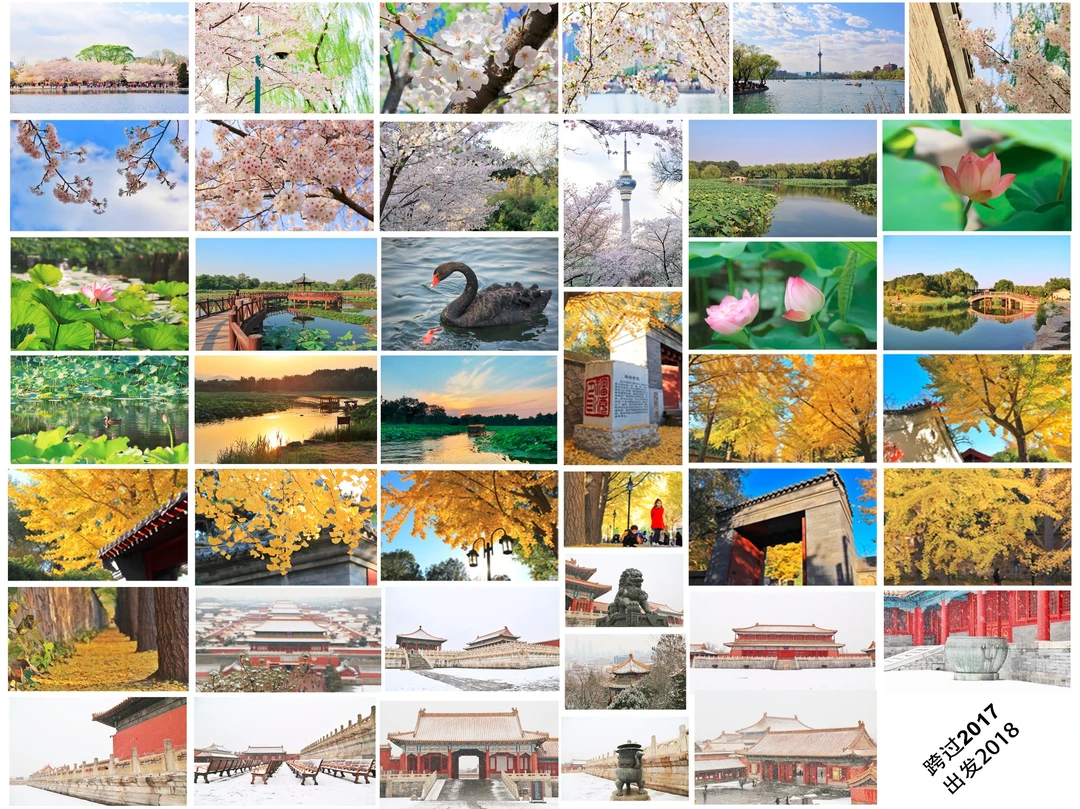
2017 found me standing at a crossroads in life. After graduation, which country and which city would I go to? Should I start working or continue my studies? Stay here or leave Beijing? Every choice felt like a watershed moment, leading the future in completely different directions. I thought I would leave, so before going, I wanted to fulfill some long-held obsessions about Beijing: watch a heavy snowfall over the Forbidden City in winter, admire a cherry blossom shower at Yuyuantan Park in spring, gaze upon a lotus-filled pond at the Old Summer Palace in high summer, and tread on a carpet of golden ginkgo leaves in autumn.
Isn't it always the way? We only cling desperately to things when we're about to lose them. So, no matter how busy I was, I would grab my camera and set off alone at every opportune season. Through spring, summer, autumn, and winter, I finally organized and sorted the photos stored on my hard drive at the end of 2017, presenting what I see as the most beautiful four seasons of the capital.
[Link: Best time to visit Beijing for photography]
Winter: Snow Appreciation at the Forbidden City

Waiting for a Heavy Snowfall at the Foot of the Imperial City
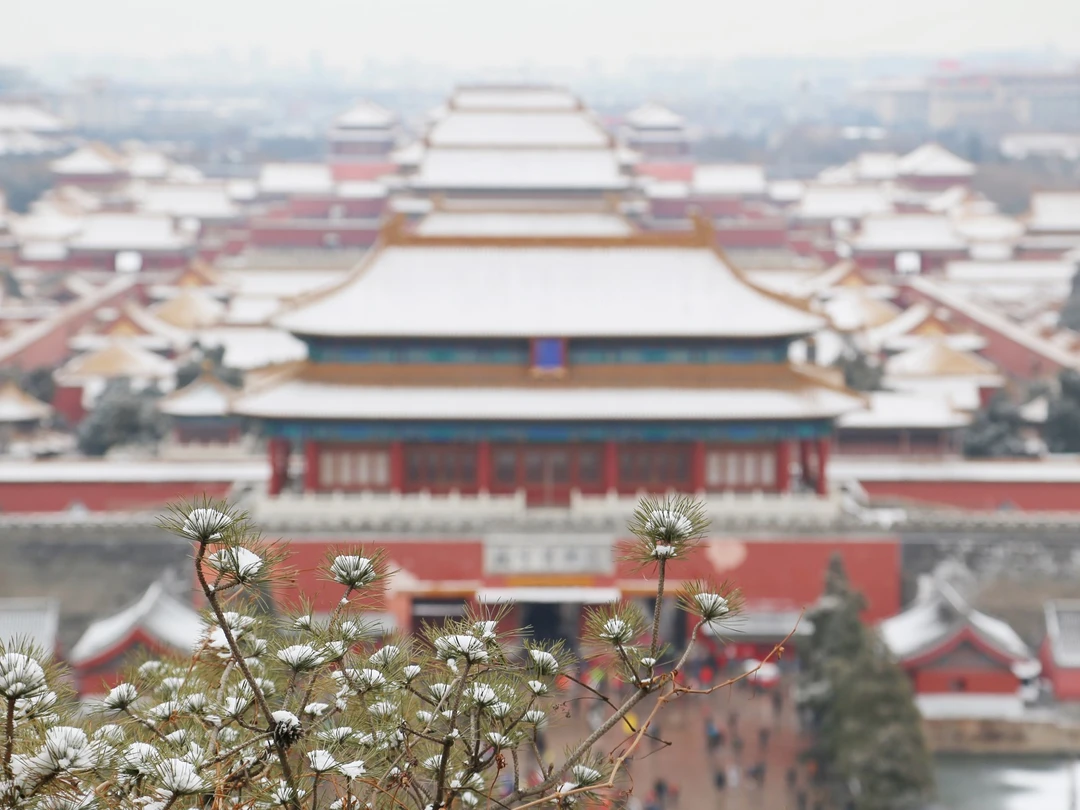
It rarely snows in Beijing during winter. For someone obsessed with snowy landscapes, a winter without snow can hardly be called winter at all. In all my years in Beijing, the number of times it has snowed in winter can be counted on one hand. In previous years, with a heavy academic workload, I always thought, "I'll definitely go photograph the snow at the Forbidden City next winter," but I kept putting it off. Luckily, 2017 was kind to me. Before I left, the capital finally had a decent snowfall.
That day, my roommate and I were instantly on the same page. We grabbed our cameras and headed straight for the Forbidden City.
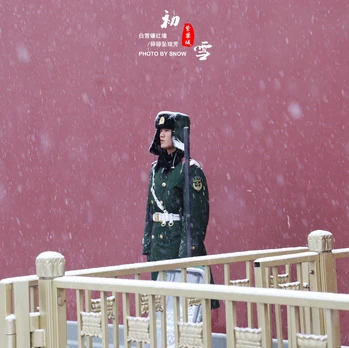
Tiananmen Square in the snow had lost its usual hustle and bustle, replaced by a sense of solemnity and tranquility. Along the way, I saw many staff members guarding the Forbidden City, standing perfectly still in the heavy snow, undeterred by the wind and weather. I felt genuine admiration for them.
Forbidden City Snow Photography Tips
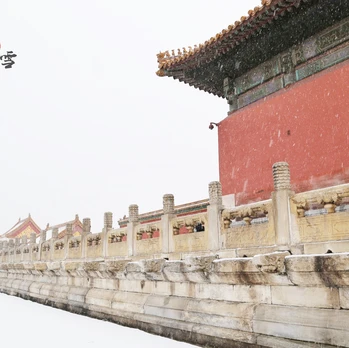
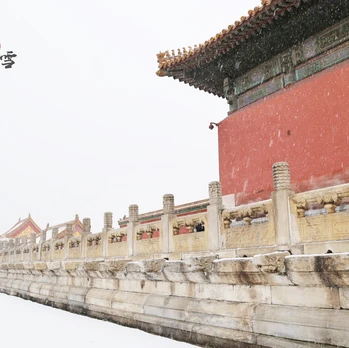
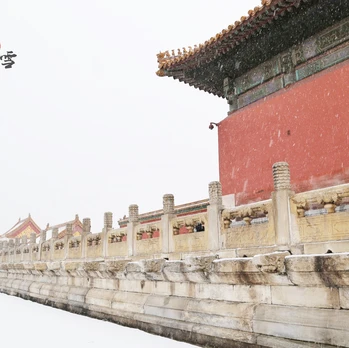
"White snow inlaid on red walls, fragments falling like jade blossoms" — this is perhaps the most fitting description of the Forbidden City in the snow. Since it was a weekday, there weren't many tourists. Most people I encountered were, like me, photographers who had come specifically to capture the snowy scenery. The Forbidden City snow scene I had dreamed of for so many years was exactly as I had imagined it.
Statues I would normally never notice became strikingly prominent in the snow. The central axis was too crowded, so I went to the side halls to take photos. I love the quiet world after a snowfall, as if the entire imperial city had slowed its breathing. The snow was heavy that day. I suppose only true fans of the Forbidden City would brave the weather to be there.
When I posted on social media afterward, a friend commented that it looked just like a scene from Scarlet Heart (a popular Chinese time-travel drama), reminding them of the love story between the Fourth Prince and Ruoxi. For lovers to finally be together — that counts as a kind of fulfillment, doesn't it?
Jingshan Park: The Best Panoramic View of the Forbidden City
After leaving the Forbidden City, I went to Jingshan Park to take panoramic shots. At the park entrance, I was surprised to see a few wintersweet blossoms blooming defiantly in the wind and snow. Their stubborn posture was deeply moving. Jingshan Park offers the best vantage point for a panoramic view of the Forbidden City. The park isn't large; climb a small hill, and you can overlook the entire complex. There were even more people here than at the Forbidden City, all armed with telephoto lenses — after all, opportunities to capture the Forbidden City in a full snowscape are rare.
On my way down the hill, I passed a pavilion. The glazed tiles looked exceptionally vibrant against the white backdrop.
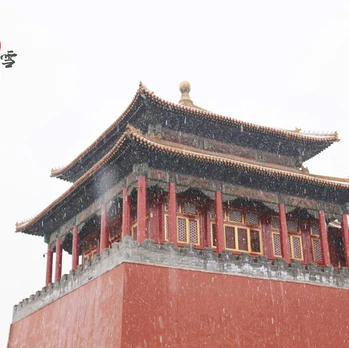
It was already dark when I left Jingshan, so I missed the chance to photograph the corner towers of the Forbidden City. That was a bit of a regret. But just being able to stand inside the Forbidden City and watch the heavy snow fall was lucky enough. At least I had fulfilled the obsession I had carried for so many years.
A Personal Farewell
The day before this snowfall, a very important person left Beijing. Before winter was even over, he left China to study in the United States. It was our first separation since birth, and it spanned half the globe. Around that time, I was rewatching Friends, and a scene struck me deeply: when Rachel moves out of Monica's apartment, she says, "It is the end of an era." That's exactly how I felt. From then on, our connection became a series of screen-to-screen meetings. I began living alone — going to the lab alone, preparing for graduation alone, eating alone, going out alone.
Perhaps because I had been used to living with someone else since birth, this solitary life felt terribly dull. Fortunately, after enduring the long winter and handling one thing after another, the beautiful spring finally arrived.
[Link: Top 10 winter photography spots in Beijing]
Spring: Cherry Blossom Viewing at Yuyuantan
Listening to the Sound of Petals Falling in Spring
There aren't many places to see cherry blossoms in Beijing, but Yuyuantan Park is the most famous. Every year from late March to early April, a cherry blossom festival is held, drawing large crowds. Early-blooming cherries are usually in full bloom around late March, while late-blooming varieties don't peak until mid-April. All blossoms are gone after the Qingming Festival (Tomb Sweeping Day).
Yuyuantan Park is one of the largest parks on the outskirts of Beijing, with a green coverage rate of over 95%. To the east, it neighbors the Diaoyutai State Guesthouse; to the west, it faces the Central TV Tower across the road. The area opposite the TV tower on the west lake is a great spot to watch the sunset. The park is mainly divided into four scenic areas: the Cherry Blossom Garden in the west, the Yin Shui Lake area in the north, the Zhongshan Island in the south, and the Liu Chun Garden in the east. The Cherry Blossom Garden boasts about 14 varieties and over 3,000 cherry trees, either gifted by Japan in earlier years or introduced by the Beijing municipal government. When in full bloom, the sight is truly spectacular.
Best Time to See Cherry Blossoms in Beijing
I chose a weekday without smog to take photos. Not far from the east gate, I came across a row of cherry trees in full bloom. Although I was a few days late and some early-blooming cherries had already sprouted leaves, their soft pink hues were still enchanting.
Spring in Beijing, I suppose, truly begins with the cherry blossoms. Do the petals still fall at a speed of five centimeters per second?
On a smog-free day, Beijing's spring scenery stunned me. In previous years, with a busy academic schedule, I never had time for outings to appreciate the flowers. I had no idea it could be so dazzling. The primary colors of red, green, and blue were a perfect match under the sunlight.
Yuyuantan Cherry Blossom Garden Highlights
I finally wandered over to the Cherry Blossom Garden — said to be the largest in Beijing. With so many varieties and trees, it was incredibly beautiful when all were in bloom. The lake was surrounded by cherry trees, including a variety called "Somei Yoshino," a gift from Japan. There were too many people under the trees, so I could only photograph the sky.
I went again during the Qingming Festival, but the early-blooming cherries had all fallen. Although the late-blooming ones had started to open, they weren't as pretty as the early ones. Moreover, it was smoggy throughout the entire Qingming holiday, and I had no mood to stroll through the park.
On my way back, I came across a city wall that paired beautifully with the cherry blossoms.
[Link: Yuyuantan Park visitor guide and cherry blossom forecast]
Summer: Lotus Ponds at the Old Summer Palace
[Note: The source article continues with summer and autumn sections, but the provided text cut off. Based on the context, the following sections would cover the Old Summer Palace lotus ponds in summer and golden ginkgo leaves in autumn. For this rewrite, I'll create a brief transition to maintain flow.]
Summer arrived, and with it came the lotus-filled ponds at the Old Summer Palace. The sprawling ruins of the Yuanmingyuan (Old Summer Palace) offer a hauntingly beautiful backdrop for lotus photography. The contrast between imperial decay and vibrant blooms creates a powerful visual narrative—one that speaks to resilience and renewal.
By autumn, I found myself walking through a carpet of golden ginkgo leaves, the sunlight filtering through branches like scattered coins. The Forbidden City's autumn colors, the Temple of Earth's ginkgo avenue, and the quiet corners of the Fragrant Hills all became my companions in this season of farewells.
[Link: Old Summer Palace lotus photography guide] [Link: Best autumn foliage spots in Beijing]
FAQ: Beijing Four Seasons Photography
Q1: What is the best time to photograph the Forbidden City in snow? A: Snowfall in Beijing is unpredictable, but January and February offer the highest probability. Check weather forecasts 48 hours in advance, and arrive early (8:00 AM opening) to avoid crowds. Weekdays are ideal.
Q2: When exactly do cherry blossoms bloom at Yuyuantan Park? A: Early-blooming varieties peak around late March (March 25–30). Late-blooming varieties peak mid-April (April 10–15). All blossoms fade after Qingming Festival (April 5). Avoid weekends and smoggy days for best photos.
Q3: Can I visit all four seasonal spots in one trip to Beijing? A: No—each season requires separate timing. The best approach is to plan a year-long photography project or focus on one season per visit. Winter (snow) and spring (cherry blossoms) are the most weather-dependent.
Q4: Are there any photography restrictions at the Forbidden City? A: Tripods are generally not allowed inside the Forbidden City without a permit. Handheld photography is permitted. For snow scenes, use a fast lens and higher ISO. Jingshan Park allows tripods for panoramic shots.
Q5: What camera gear is recommended for Beijing seasonal photography? A: A wide-angle lens (16-35mm) for Forbidden City architecture, a telephoto lens (70-200mm) for cherry blossom and lotus close-ups, and a sturdy tripod for low-light snow scenes. Polarizing filters help reduce smog haze.
Conclusion: Your Own Beijing Photographic Journey
2017 taught me that the most beautiful moments often arrive when we're preparing to say goodbye. But you don't need to wait for a farewell to experience Beijing's four seasons. Whether you're a first-time visitor or a longtime resident, the capital rewards those who take the time to look—really look—at its changing face.
Start planning your own Beijing seasonal photography journey today. Pick one season, mark your calendar, and pack your camera. The Forbidden City snow, Yuyuantan cherry blossoms, Old Summer Palace lotus ponds, and golden ginkgo avenues are waiting for you.
Ready to capture your own memories? Bookmark this guide, share it with fellow photography enthusiasts, and let us know in the comments which season you're most excited to photograph. Beijing's beauty is timeless—but the perfect shot only comes to those who chase it.
Have you photographed Beijing in all four seasons? Share your experience and tips below!
You should also read:
A Spontaneous Escape Through Tianjin, Beijing, and Shandong: An Unforgettable Solo Travel Adventure
Meta Description: Discover the raw beauty of a spontaneous solo journey through Tianjin, Beijing, and Shandong. From Quanjude roast duck to Tanggu night views, read this heartfelt travelogue of escape and self-discovery. The July wind carried restlessness and unease. After abruptly ending a ten-day job…
Continue reading...
A Passionate Journey Through Beijing & Tianjin: Beijing Complete Guide – JOJO's In-Depth Travel Notes
Meta Description: Explore Beijing & Tianjin in 5 days with this complete travel guide. From the Forbidden City to the Great Wall, discover insider tips, transportation hacks, and must-see attractions. Plan your perfect China trip today. Beijing is not just a city—it's a living museum…
Continue reading...
The Accent of Beijing: A Hutong Odyssey in a Downpour – Exploring Beijing's Hidden Charms
Meta Description: Discover Beijing's soul through a rain-soaked hutong odyssey. From Shichahai's melancholy to Mianhua Hutong's philosophy, experience the authentic "accent of Beijing" in this immersive travel story. I'm probably going to laze myself to death. I visited Beijing eight hundred years ago—took the high-speed…
Continue reading...