One Flower, One World; One Drink, One Bliss: Discovering a Poetic Garden in Southern Beijing
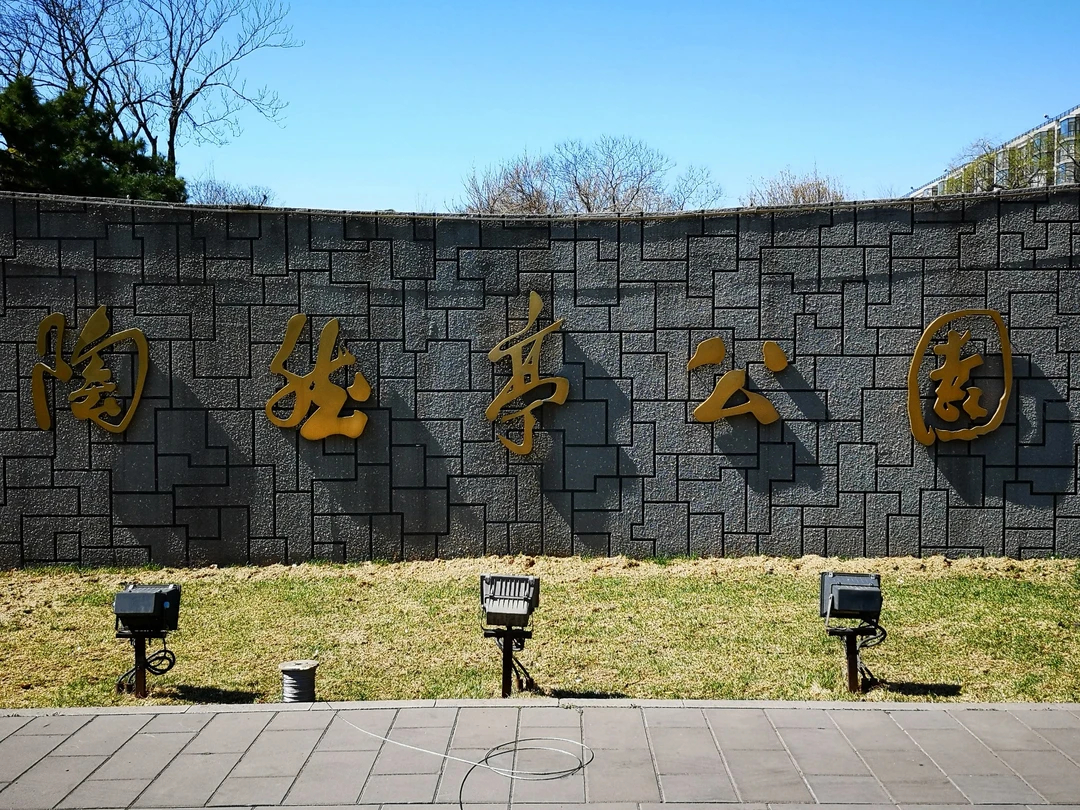
Meta Description: Escape the crowds and discover Taoranting Park, Beijing's hidden poetic garden. Explore ancient pavilions, literary history, and serene lakes for just 2 yuan. Your guide to tranquility in southern Beijing.
If you think Beijing is only about the grandeur of the Forbidden City and the majesty of the Great Wall, you may have missed another side of this city—those quiet corners hidden behind the bustle, where the most moving stories often lie. Taoranting Park (Joyful Pavilion Park) is exactly such a place, one that can truly make you "drunk with bliss."
It lacks the imperial splendor of the Summer Palace and the tragic grandeur of Yuanmingyuan (the Old Summer Palace), but it possesses a unique charm all its own: a gathering place for literary scholars, a witness to revolutionary romance, and a wondrous space that has "relocated" famous pavilions from across China. Step inside, and you feel as though you have entered a living, three-dimensional history of Chinese garden design.
The Poetic Origins of Taoranting Park
A Single Pavilion, a Thousand Years of Poetry
The name "Taoranting" itself carries poetic weight. It comes from a famous line by Tang Dynasty poet Bai Juyi: "Wait until the chrysanthemums turn gold and the homebrew is ripe, then share a drink with you, drunk with bliss." Picture it: autumn chrysanthemums in full bloom, the aroma of homemade wine filling the air, sipping with a kindred spirit in a state of gentle intoxication—what a sublime realm of life this is.

But the history of this pavilion runs far deeper than the verse. During the Yuan Dynasty, the area was still the eastern suburb of the Jin Dynasty capital, lush with flowers and trees, crisscrossed by streams, evoking the water towns of Jiangnan (the region south of the Yangtze River). Within the Cibei Temple (Compassion Temple) , two precious stone pillars from the Liao and Jin dynasties still stand, whispering tales from a thousand years ago.
During the Ming and Qing dynasties, the site became a kiln for firing bricks and tiles for the imperial city. It wasn't until the 34th year of the Kangxi reign of the Qing Dynasty (1695) that a Ministry of Works official named Jiang Zao happened upon the area during a visit. Captivated by its serene beauty, he built a pavilion west of Cibei Temple, initially naming it "Jiang Pavilion." Later, inspired by Bai Juyi's poem, he renamed it "Taoranting" (Joyful Pavilion) .
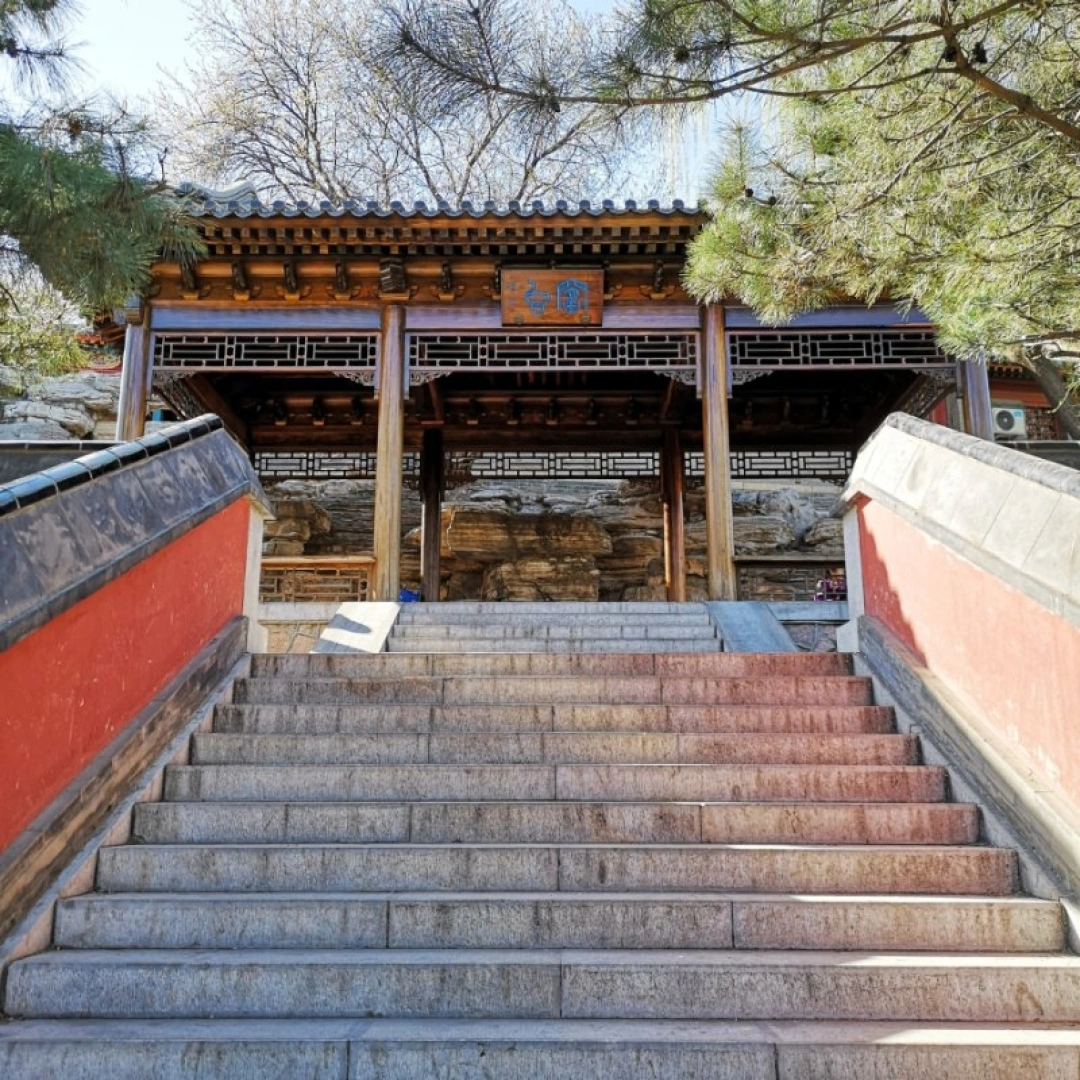
From that point on, the pavilion became a "pure world within the dusty realm" for scholars and artists. Famous figures such as Qiu Jin and Gong Zizhen left their poems and essays here. After the late Qing Dynasty, the site fell into disrepair until a comprehensive renovation in 1952, when lakes were dug, hills were built, and flowers and trees were planted, transforming it into the park we see today. In 1954, two ancient architectural groups—the Yunhui Tower (Cloud-Painted Tower) and the Qingyin Pavilion (Pure Sound Pavilion) —were relocated from Zhongnanhai (the central leadership compound), adding an elegant and tranquil charm to the park.
Practical Information: How to Get to Taoranting Park
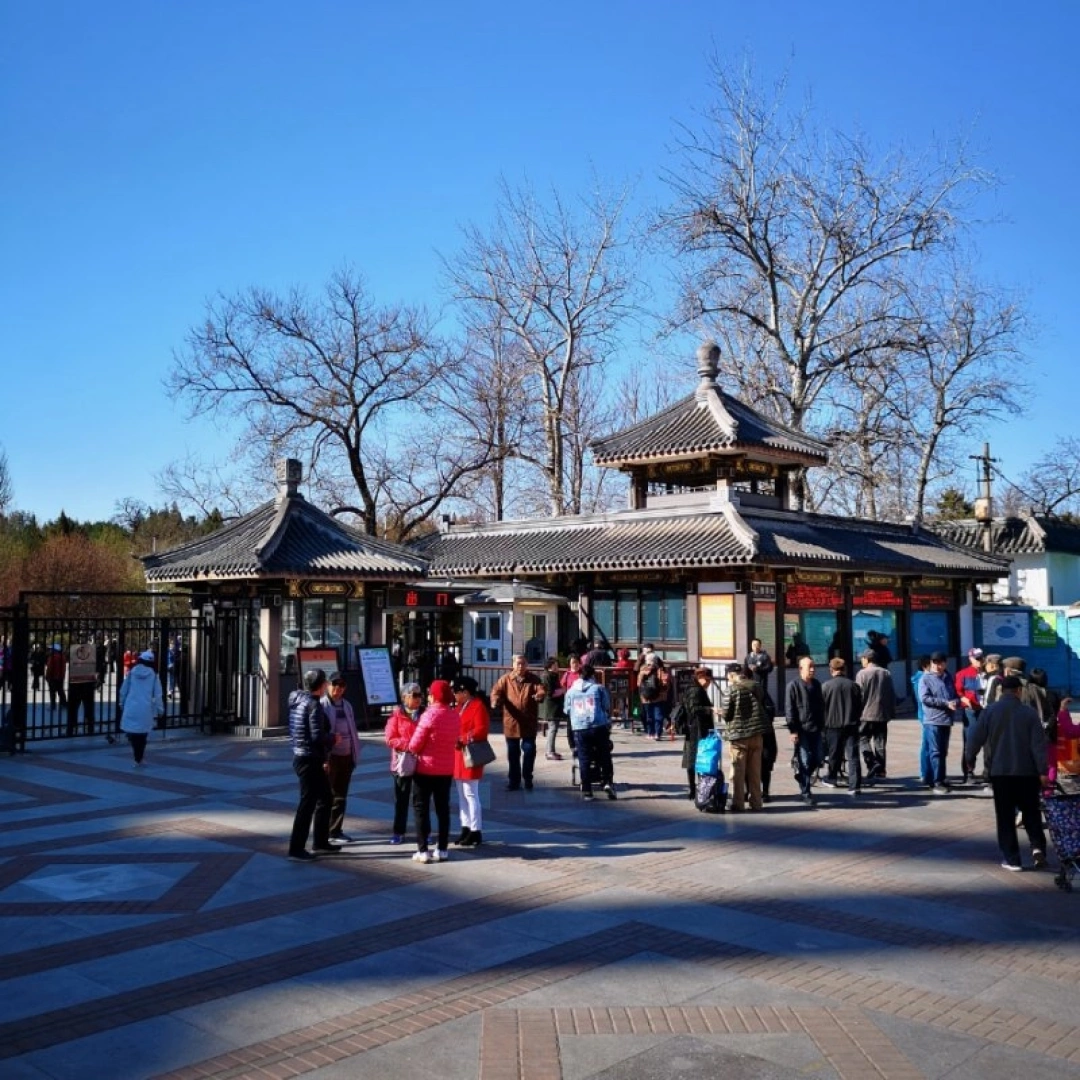
The north gate of Taoranting Park is one of the main entrances. Admission is only 2 yuan (about 30 US cents) , and free for those with a senior citizen card. Take Metro Line 4 (Daxing Line) to Taoranting Station , exit from Gate C (southeast exit), and walk east for about 700 meters. With this low price and convenient access, the park has become a favorite spot for locals to unwind.
Pro tip: Visit on a weekday morning to experience the park's tranquility without the weekend crowds.
Strolling Through the Park: From Kiln Terrace to Lake Center
Kiln Terrace (Yao Tai): A Ming Dynasty Relic
Entering from the north gate, the first thing you see is the Kiln Terrace (Yao Tai) , built on an earthen hill. The story of this small hill dates back to the reign of Ming Emperor Zhu Di (Yongle Emperor). At that time, a "Black Kiln Factory" was established here specifically for firing bricks and tiles, and a kiln god temple was built on the hill, giving it the name "Kiln Terrace." In the old days, Beijingers loved to climb up here for tea and a view, and "Kiln Terrace Climbing and Gazing" gradually became a famous scenic spot in the southern city.
Kiln Terrace Snow-Reflecting Pavilion
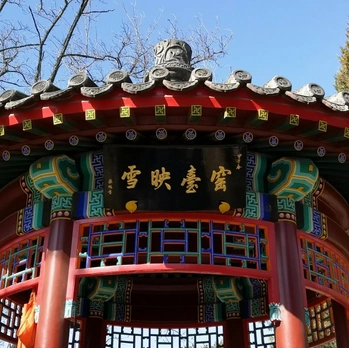
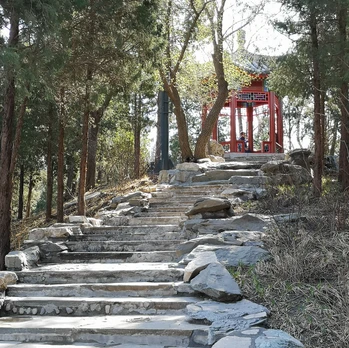
To the west of Kiln Terrace is the Kiln Terrace Snow-Reflecting Pavilion. Even when there's no snow, climbing up for a panoramic view is deeply refreshing. Watch your step on the way down—the stone stairs are uneven. When you reach the lakeside, the view suddenly opens up. In the middle of the lake sits a true "Lake Heart Pavilion," and occasionally you can spot adorable little yellow ducks splashing in the water.
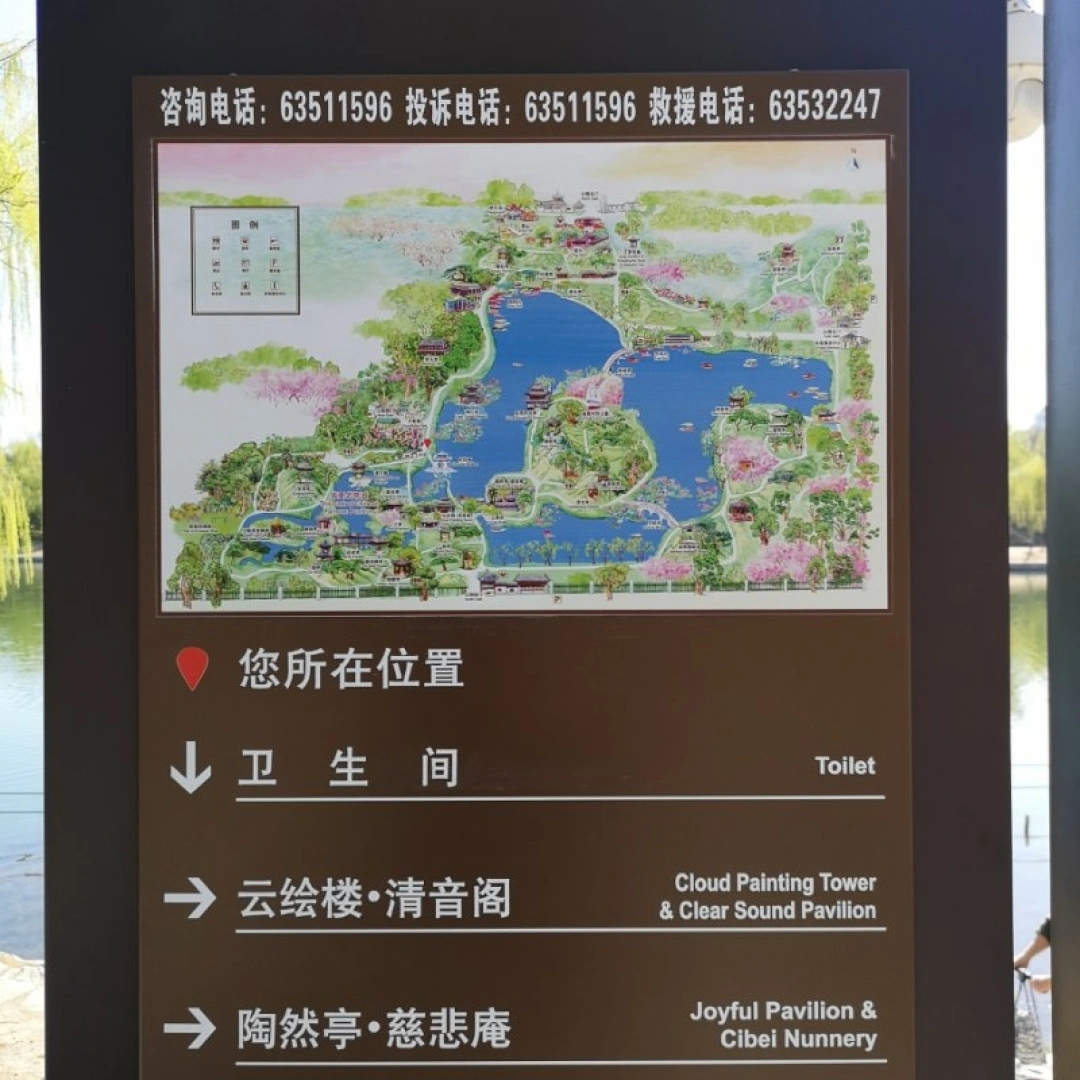
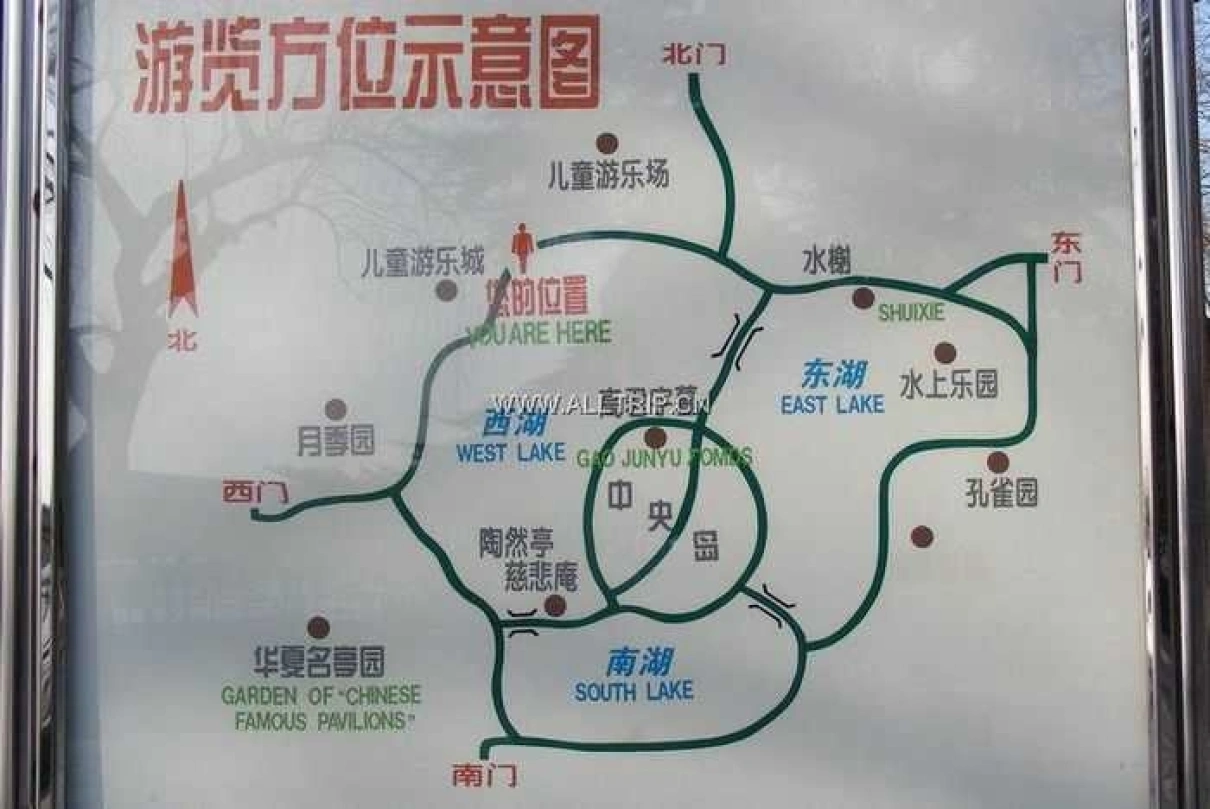
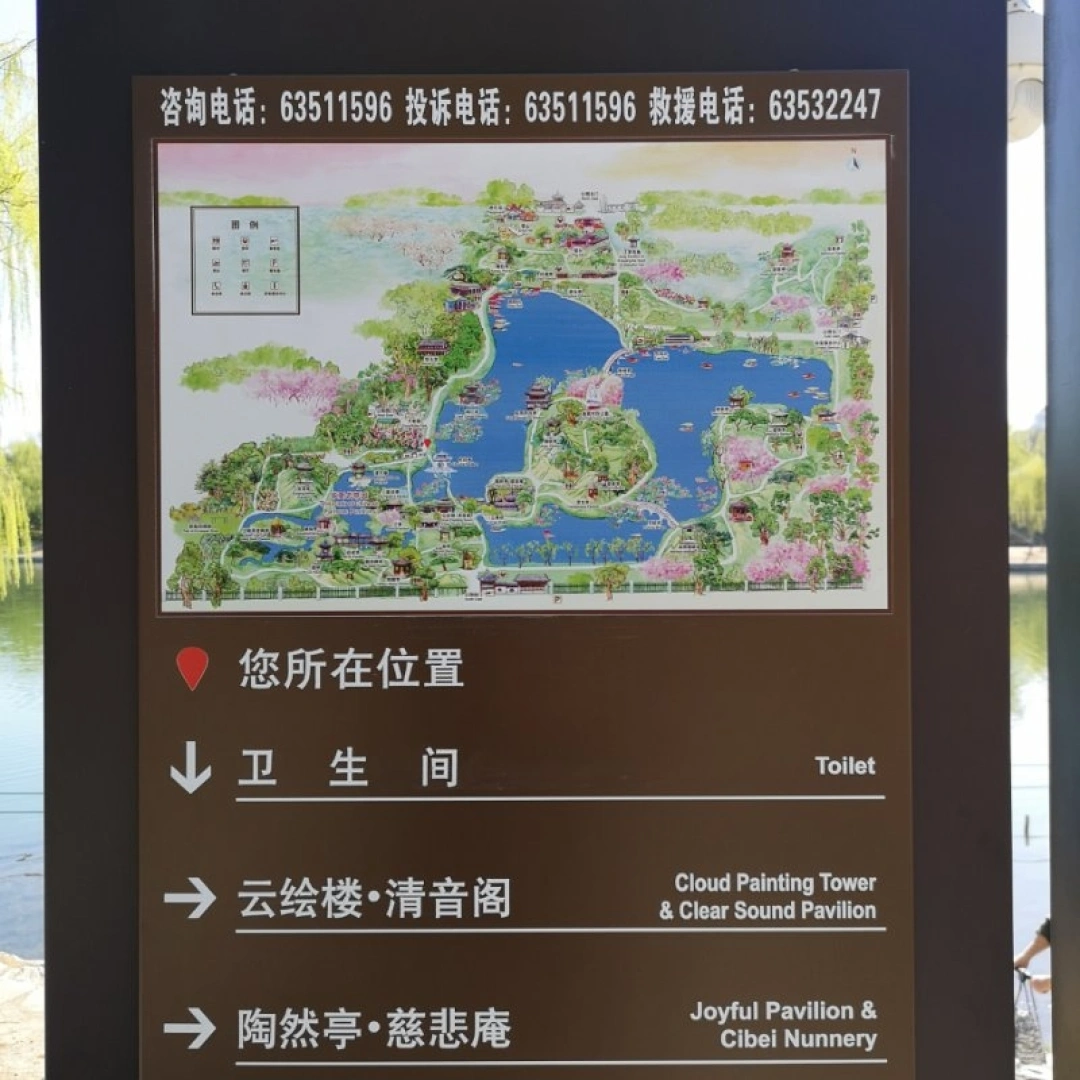
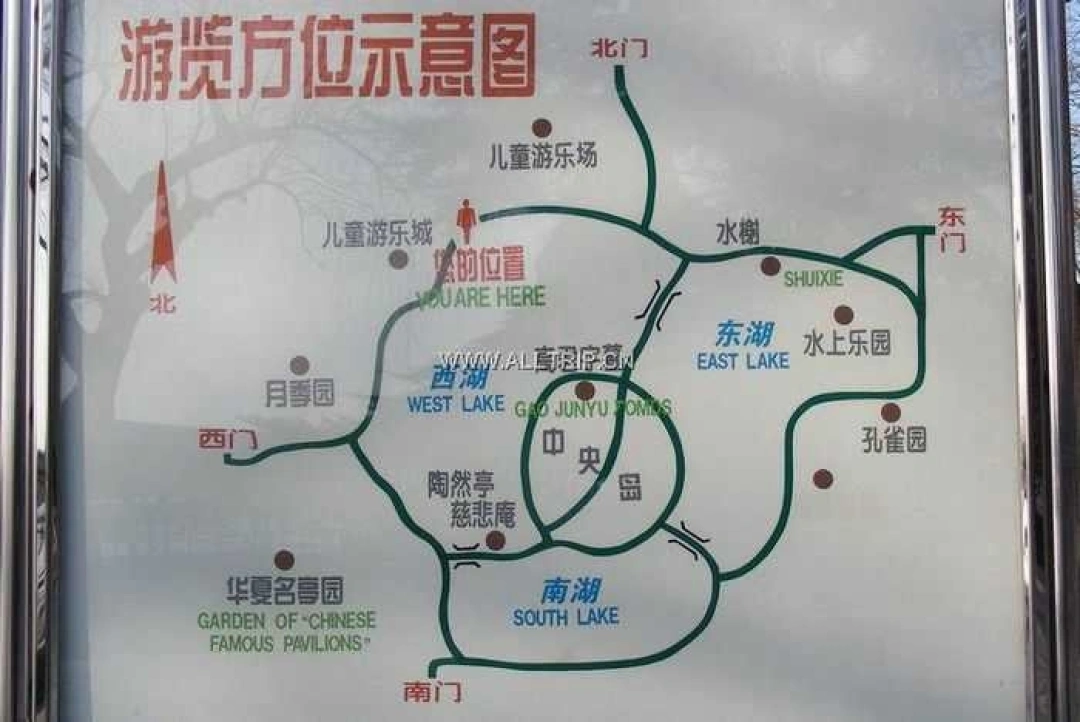
The park's signage is quite good, with location maps placed at multiple points for easy navigation.
Cibei Temple and Taoranting: The Soul of the Park
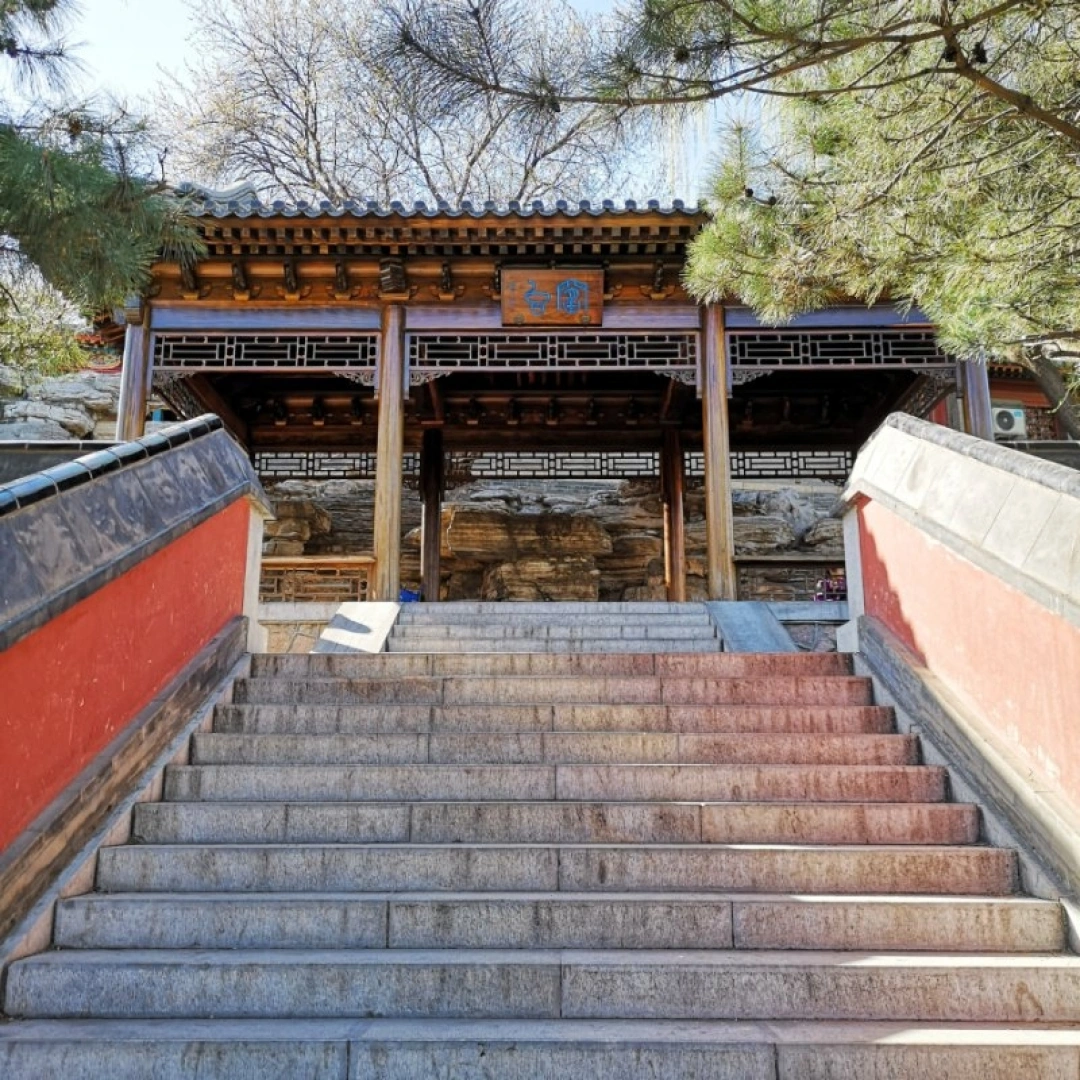
Cibei Temple sits on a central island surrounded by water on three sides, where three bridges converge. To the north, it faces Kiln Terrace across the lake; to the east, it aligns with the Green-Gazing Pavilion; and to the west, it offers a distant view of the exquisite Yunhui Tower and Qingyin Pavilion. Taoranting , one of China's four most famous pavilions, is located within Cibei Temple. Unfortunately, the gate is sometimes locked, preventing a close-up look—but that may just be the perfect excuse to come again.
Standing on the west shore of the lake to photograph the central island, with peach blossoms and green willows, the scene is breathtakingly beautiful. Spring here is Beijing at its gentlest.
A Gathering of Famous Pavilions: A Journey Through Time and Architecture
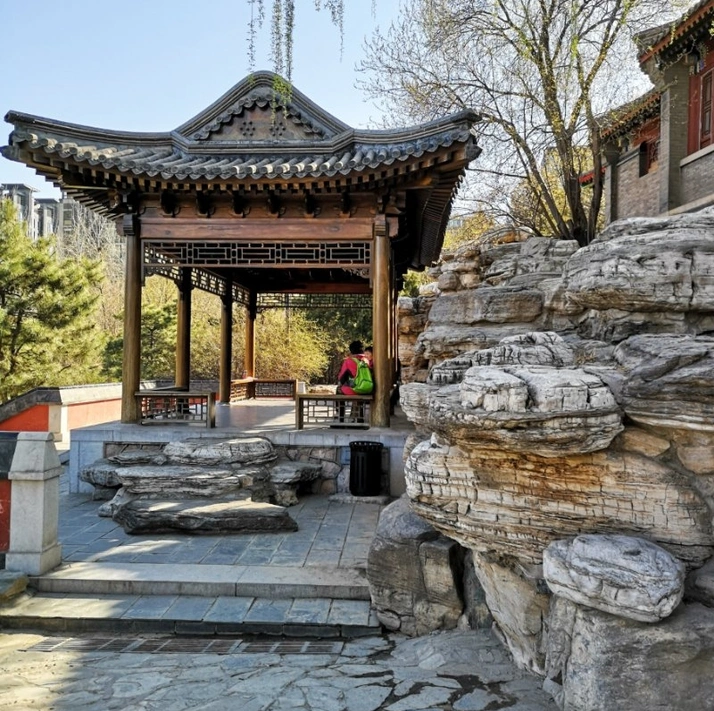
The most astonishing feature of Taoranting Park is undoubtedly the "Garden of China's Famous Pavilions" (Huaxia Mingting Yuan) . This 10-hectare (about 25-acre) area was first built in 1985 and took four years to complete. Designed by the Beijing Institute of Landscape Architecture, it has won numerous awards, including the Beijing Outstanding Design First Prize, the Ministry of Construction's Urban System Outstanding Design First Prize, and the National Outstanding Design Gold Award. The garden's name was inscribed by the master calligrapher Qi Gong.
Here, more than thirty historically famous pavilions from across China have been recreated, each with its own unique cultural background:
The Moon-Dipped Pavilion (Jinyue Ting)
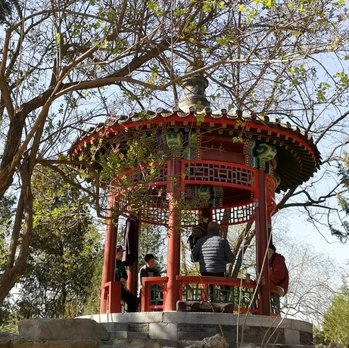
Recreated from the Moon-Dipped Pavilion at Gantang Lake in Jiujiang, Jiangxi Province—also known as the Mist-and-Water Pavilion—it was built in memory of the poet Bai Juyi. The name comes from a line in his epic poem "Song of the Pipa" (Pipa Xing) : "Drunk without joy, we part in sadness; in the vast river, the moon sinks, dipped in the waves." On the shore stands a giant rock shaped like a pipa (a Chinese lute), engraved with the full text of "Song of the Pipa," calligraphed by Wan Yi, a scholar of Ming and Qing court history, music history, and calligraphy.
The Hundred-Slope Pavilion (Baipo Ting)
Recreated from the Hundred-Slope Pavilion in the Three Su Temple (San Su Ci) in Meishan, Sichuan Province. The original was built in 1214 during the Southern Song Dynasty by Wei Liaoweng, the prefect of Meizhou. It was rebuilt over the Lotus Pond of the Three Su Temple in 1928, and the version at Taoranting Park was recreated in 1989.
The Drunken Old Man Pavilion (Zuiweng Ting)
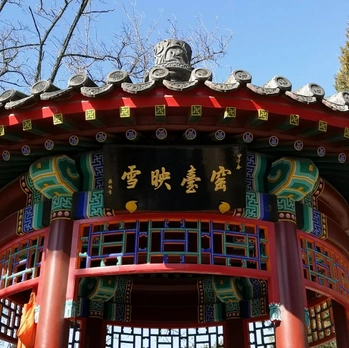
Recreated from the Drunken Old Man Pavilion at Mount Langya in Chuzhou, Anhui Province, made famous by Ouyang Xiu's essay "The Story of the Drunken Old Man Pavilion." A massive stone stands tilted before the pavilion, engraved with the three seal-script characters "Zuiweng Ting" (Drunken Old Man Pavilion). On the rock face opposite, there is a "double masterpiece" stone carving—Ouyang Xiu's essay written in the calligraphy of Su Shi, one of China's greatest poets and calligraphers. Nearby, the famous line "The drunkard's delight is not in the wine, but in the mountains and waters" is carved into the rock. Behind the pavilion, artificial rocks and a flowing spring recreate the scene described in the essay: "Gradually, you hear the sound of water gurgling between two peaks; that is the Brewing Spring."
The Blowing Terrace Pavilion (Chuitai Ting)
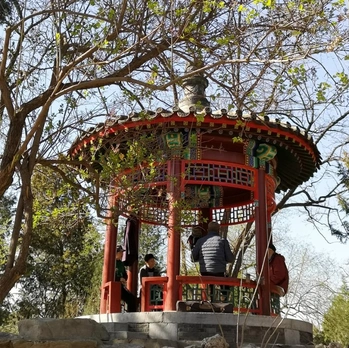
Recreated from the Blowing Terrace (also called Fishing Terrace) , this pavilion adds another layer of literary history to your visit.
Frequently Asked Questions About Taoranting Park
1. What is the best time to visit Taoranting Park?
Spring (March to May) is the most popular season, when peach blossoms and green willows frame the lake views beautifully. Autumn (September to November) offers pleasant weather and fewer crowds. Early weekday mornings are ideal for a peaceful experience.
2. How much does it cost to enter Taoranting Park?
Admission is only 2 yuan (about 30 US cents) . It is free for seniors with a senior citizen card. This makes it one of the most affordable attractions in Beijing.
3. How do I get to Taoranting Park by public transport?
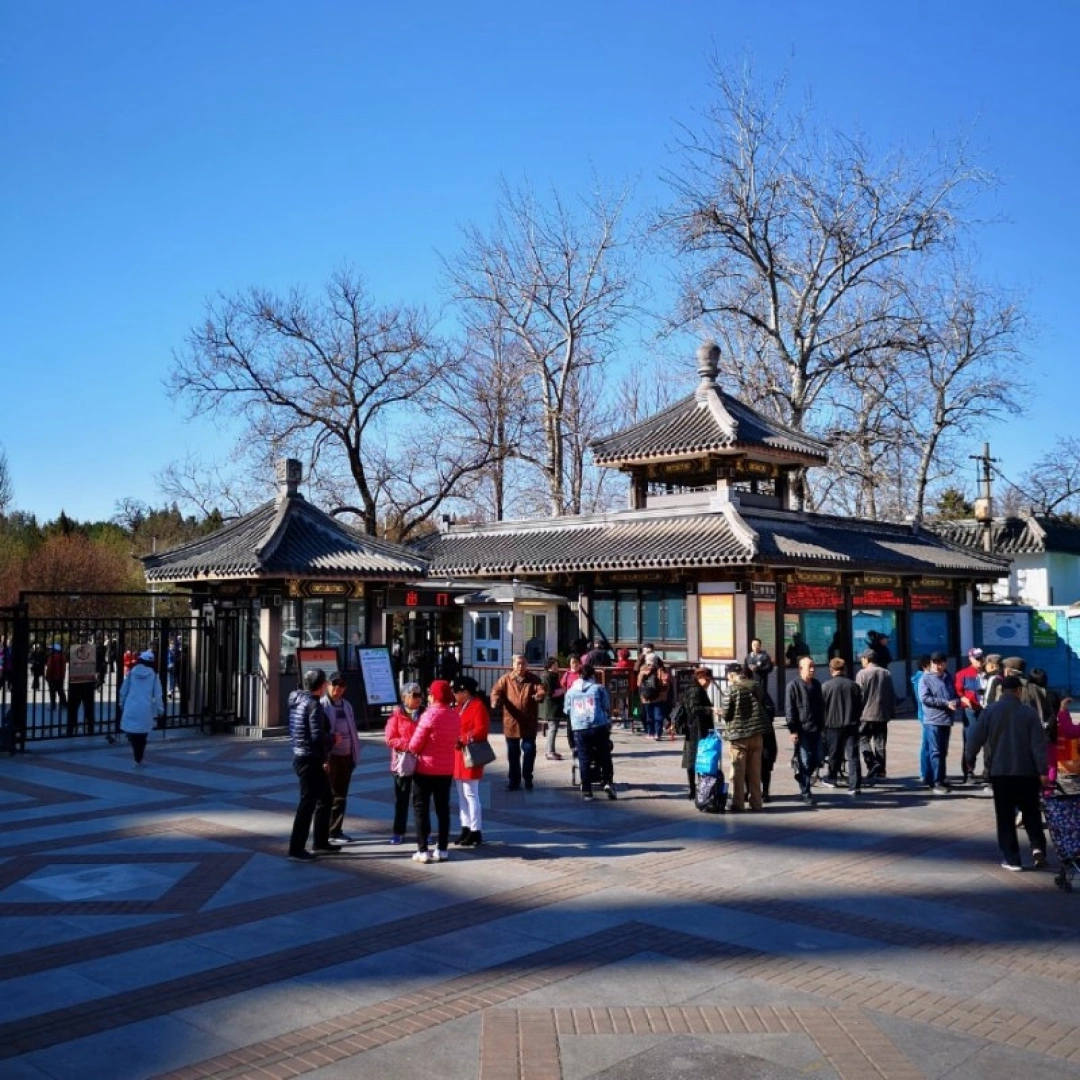
Take Metro Line 4 (Daxing Line) to Taoranting Station , exit from Gate C (southeast exit) , and walk east for about 700 meters. The north gate is the main entrance.
4. What are the must-see pavilions in the Garden of China's Famous Pavilions?
Don't miss the Moon-Dipped Pavilion (with its pipa-shaped rock and Bai Juyi inscription), the Drunken Old Man Pavilion (with Su Shi's calligraphy), and the Hundred-Slope Pavilion. Each offers a unique glimpse into Chinese literary and architectural history.
5. Is Taoranting Park suitable for families with children?
Absolutely. The park's spacious grounds, lake views, and mini-pavilions are perfect for leisurely strolls. Kids will enjoy spotting little yellow ducks in the lake and exploring the replicas of famous pavilions.
Why Taoranting Park Deserves a Spot on Your Beijing Itinerary
While the Forbidden City and the Great Wall showcase Beijing's imperial grandeur, Taoranting Park reveals the city's soul—a place where poetry, history, and nature intertwine. For just 2 yuan, you can wander through a living museum of Chinese garden design, trace the footsteps of literary giants like Bai Juyi and Ouyang Xiu, and find your own moment of "bliss" by the lakeside.
Related articles you might enjoy: - [Link: Best hidden gardens in Beijing] - [Link: Complete guide to Beijing's classical gardens] - [Link: Top affordable attractions in Beijing]
Your Invitation to Discover Beijing's Poetic Side
Beijing is a city of contrasts—ancient and modern, bustling and serene. Taoranting Park offers you the chance to step away from the crowds and into a world where a single pavilion holds a thousand years of poetry, and where a single drink can bring you bliss.
Plan your visit today. Pack a book, bring a camera, and prepare to be enchanted by one of Beijing's best-kept secrets. Whether you're a history buff, a literature lover, or simply seeking a peaceful escape, this poetic garden in southern Beijing awaits.
Have you visited Taoranting Park? Share your experience in the comments below, or tag us in your photos using #TaorantingBliss.
You should also read:
A Passionate Journey Through Beijing & Tianjin: Beijing Complete Guide – JOJO's In-Depth Travel Notes
Meta Description: Explore Beijing & Tianjin in 5 days with this complete travel guide. From the Forbidden City to the Great Wall, discover insider tips, transportation hacks, and must-see attractions. Plan your perfect China trip today. Beijing is not just a city—it's a living museum…
Continue reading...
The Journey That Didn't Freeze Me to Death: Beijing – Six Days and Five Nights of Bone-Chilling Cold
Meta Description: Planning a winter trip to Beijing? Read this firsthand account of a spontaneous 6-day Beijing adventure—from ticket battles to 798 Art District, Sanlitun, and survival tips for bone-chilling cold. Perfect for budget travelers and first-timers. Some trips are long-planned romances; others are impulsive…
Continue reading...
The Accent of Beijing: A Hutong Odyssey in a Downpour – Exploring Beijing's Hidden Charms
Meta Description: Discover Beijing's soul through a rain-soaked hutong odyssey. From Shichahai's melancholy to Mianhua Hutong's philosophy, experience the authentic "accent of Beijing" in this immersive travel story. I'm probably going to laze myself to death. I visited Beijing eight hundred years ago—took the high-speed…
Continue reading...