Qing History on Two Wheels: Cycling to Find Beijing’s Prince Mansions – An SEO-Optimized Guide
Meta Description: Explore Beijing's Qing Dynasty prince mansions by bike in this 1500-word guide. Discover Iron-Cap Prince estates, cycling routes, and hidden history. Perfect for history buffs and urban explorers.
Introduction: A Spontaneous Archaeological Journey Through Beijing’s Imperial Past
On October 11, 2024, I boarded a train from Daixian, near Yanmen Pass in Xinzhou, Shanxi Province, heading for Beijing. When the train pulled into Beijing West Station at 8:15 AM, the millennia-old capital was just beginning another ordinary day. But for me, an outsider, this was a rare opportunity—I couldn’t let my time in Beijing go to waste.
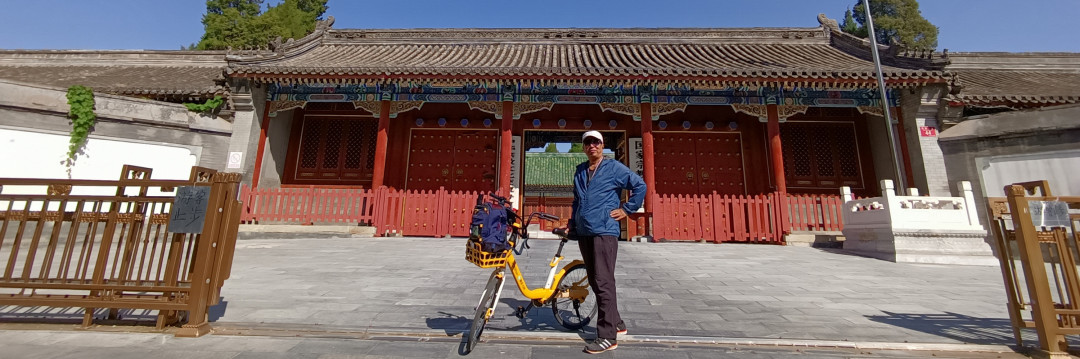
I chose the most down-to-earth approach: rent a shared bike and search for the scattered remains of Qing Dynasty prince mansions across the city. My goal was simple—to see with my own eyes what had become of those imperial-era estates once owned by nobility outside the Forbidden City. To touch the history and culture worn smooth by time.
This is the story of that 5-hour, 25-kilometer cycling journey through Beijing’s forgotten aristocratic past.
What Were Qing Dynasty Prince Mansions? A Brief History
Before setting off, it’s worth understanding what a prince mansion actually was. In feudal China, these were the highest-ranking aristocratic residences. All Qing Dynasty prince mansions were built within old Beijing. Interestingly, property rights belonged to the imperial court—princes only had the right to use the mansion, not to own or inherit it.
If a prince’s son inherited his title, he could continue living there. But if the prince had no heirs or was deposed, the mansion would be taken back by the court and reassigned to another prince.
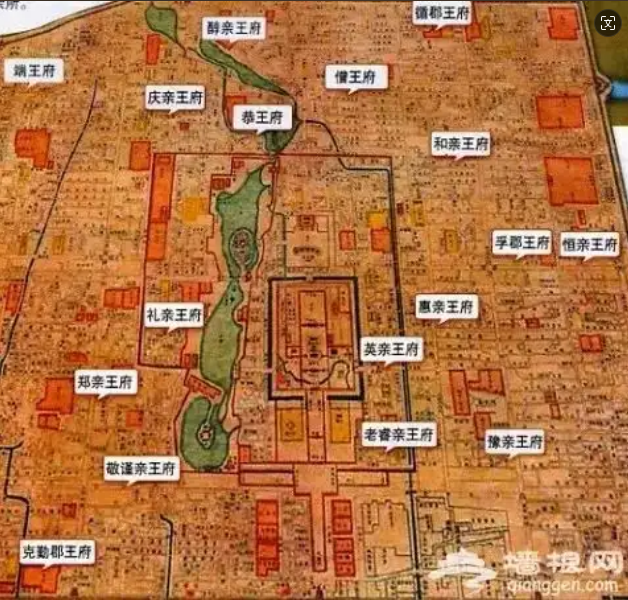
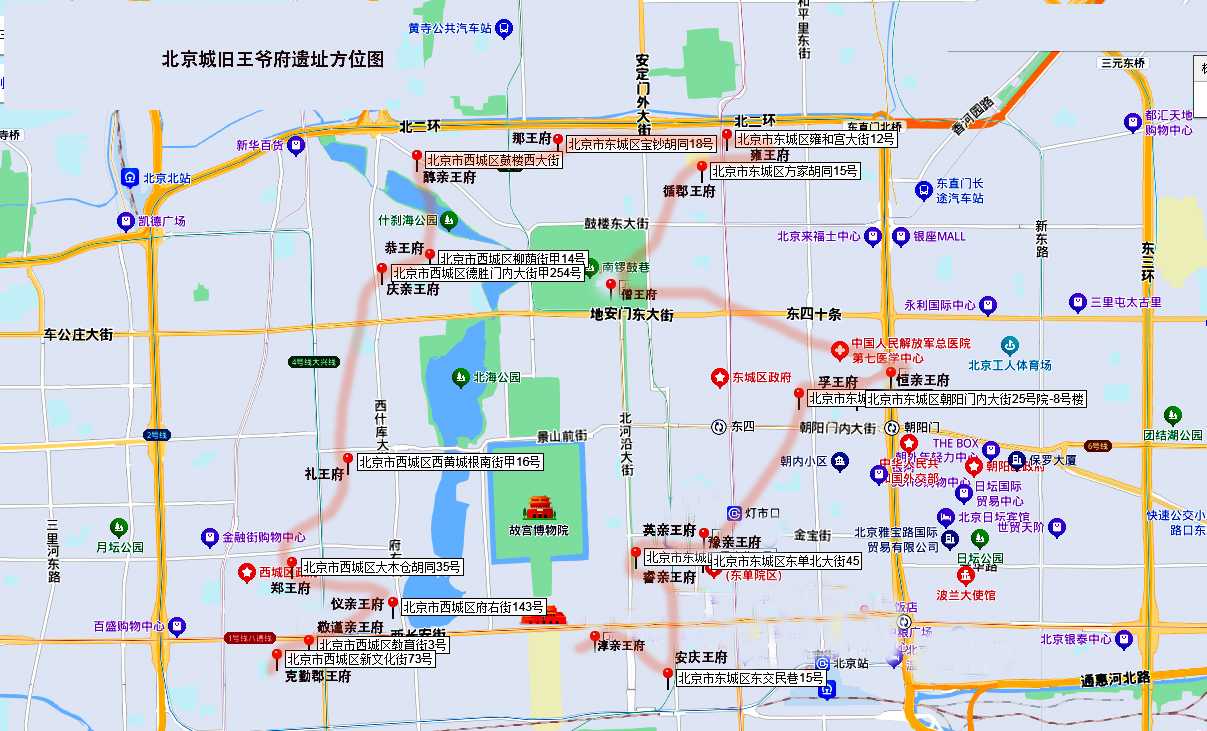
Qing Dynasty princes and commandery princes were all imperial sons. As minors, they lived inside the Forbidden City; only after reaching adulthood did they move into their designated mansions. According to historical records, from the Shunzhi Emperor onward, about seventy imperial sons were enfeoffed as princes or commandery princes, with a total of 89 mansions. These were divided into four ranks: Prince Mansion, Commandery Prince Mansion, Beile Mansion, and Beizi Mansion.
After the Xinhai Revolution of 1911, the glory of these mansions faded. Following the founding of the People’s Republic of China, all properties of the former aristocracy were nationalized. Through urban redevelopment and renewal, some old mansions were preserved, some were demolished, and others now remain only as gateways or stone lions at their entrances. But regardless of their fate, each carries an irreplaceable piece of history.
[Link: Forbidden City history and architecture]
The Cycling Route: A 5-Hour, 25-Kilometer Urban Crossing
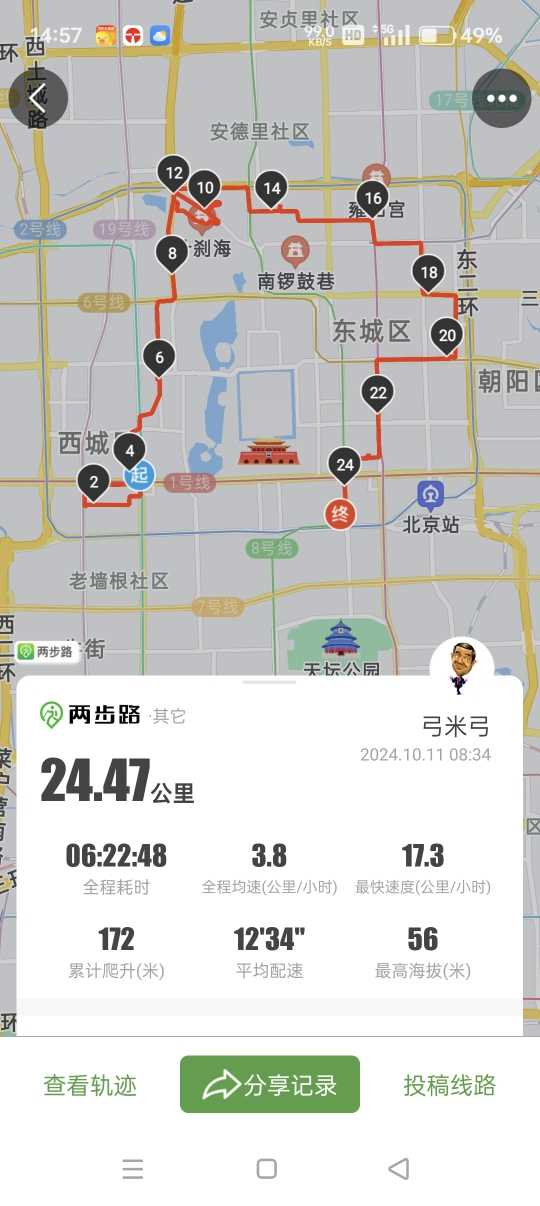
At 9 AM, I scanned a QR code at Xidan subway station to unlock a shared bike and began cycling along a pre-planned route. However, reality was far more complicated than I’d imagined. One-way streets, no-entry roads, detours… I kept turning around, retracing my steps, and taking wrong turns.
I cycled from Xicheng District to Dongcheng District, only to find myself near a location with no signs to confirm it. I had to rely on traces of ancient architecture to figure out where I was. I asked many passersby, but most knew nothing about history, let alone the exact locations of these prince mansions.
By 2:30 PM, after 5 hours and 25 kilometers of cycling, I was exhausted. Although I’d passed over a dozen mansions, I had no energy left to go back and search for the ones I’d missed. I decided to head to Beijing South Station to buy a ticket back to Tianjin.
But what struck me most during this ride were the mansions of the “Iron-Cap Princes”—those with hereditary privileges. Among them, the Prince Li Mansion stood out for its sheer scale and grandeur.
Best Cycling Routes for Qing History Exploration
- Start Point: Xidan subway station (Line 1/4)
- Recommended Duration: 4–6 hours
- Total Distance: 20–30 km
- Key Districts: Xicheng, Dongcheng
- Tips: Use offline maps, carry water, and wear comfortable shoes
[Link: Beijing cycling tour tips]
The Mansions of the Iron-Cap Princes: Testaments to Power and Glory
The Keqin Commandery Prince Mansion: A Microcosm of Rise and Fall
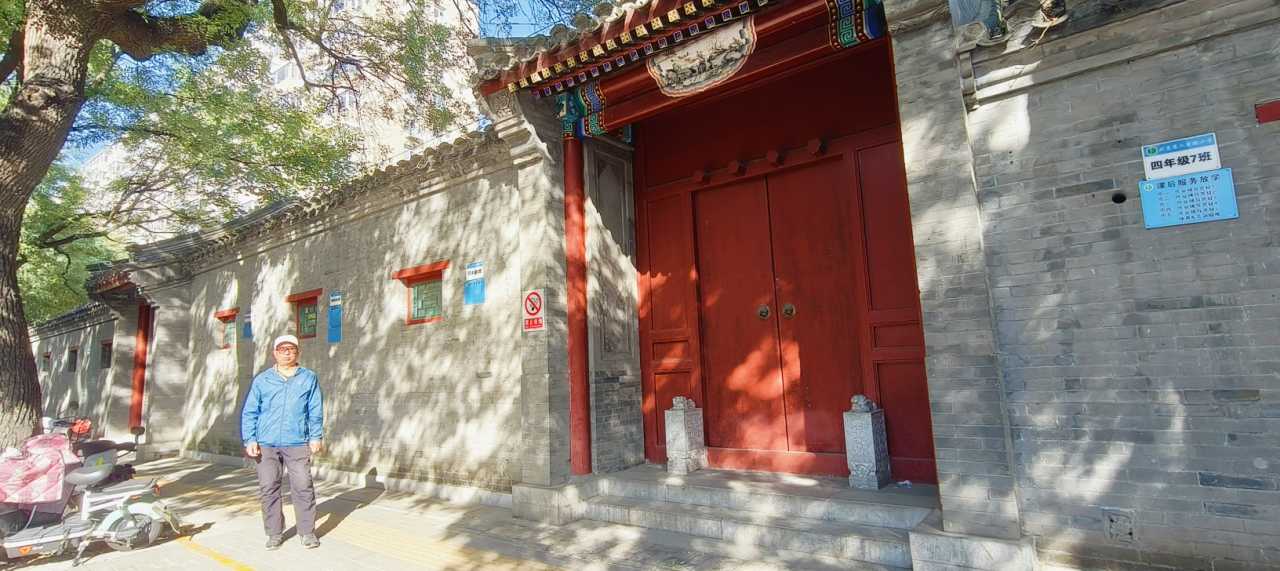
My first stop was the Keqin Commandery Prince Mansion, located on the north side of the west end of New Culture Street. Built during the Shunzhi era, this mansion belonged to one of the eight Iron-Cap Princes of the early Qing. Its master was Yoto, the eldest son of Prince Li Daišan. He was enfeoffed as Prince Cheng by Hong Taiji, later demoted in rank, and posthumously honored as Keqin Commandery Prince after his death.
There’s a poignant story about the Keqin Commandery Prince. In 1931, a news report titled “Iron-Cap Prince Pulls a Rickshaw” caused a sensation in Beijing. The photo showed a burly man pulling a rickshaw, beckoning customers. He was Yansen, the last Keqin Commandery Prince. After the Qing Dynasty fell, Yansen sold off his family assets—poetry, calligraphy, paintings, antiques—piece by piece to pawnshops. Eventually, he even sold the mansion itself. When Puyi summoned him to Manchuria, he was too incompetent to hold any position and had to return to Beijing, where he vanished from public view.
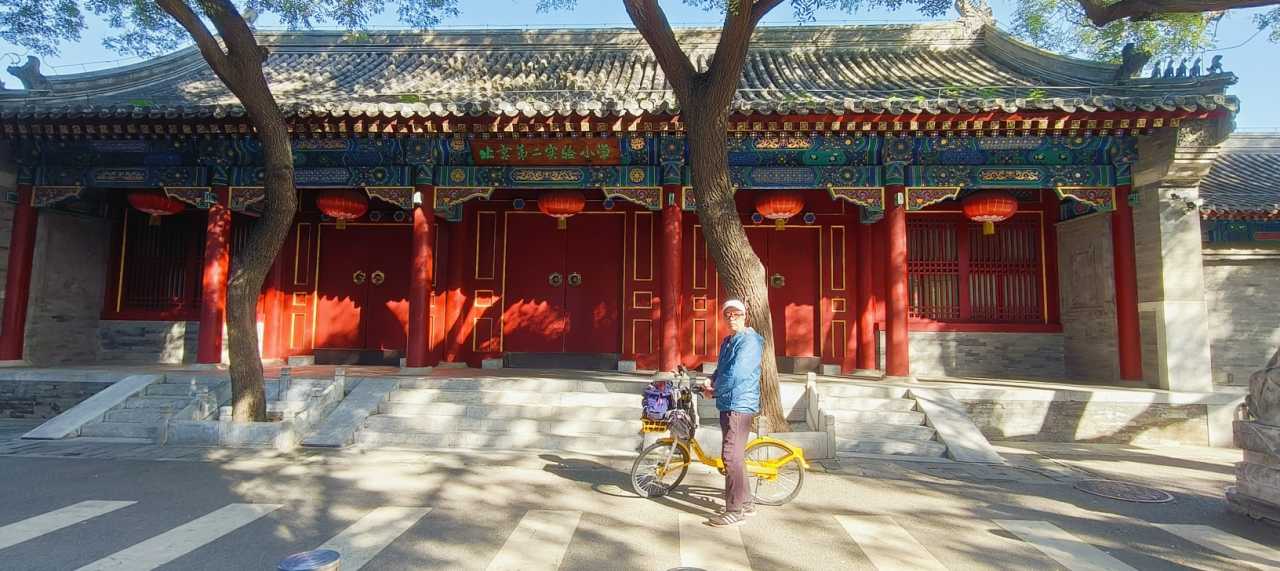
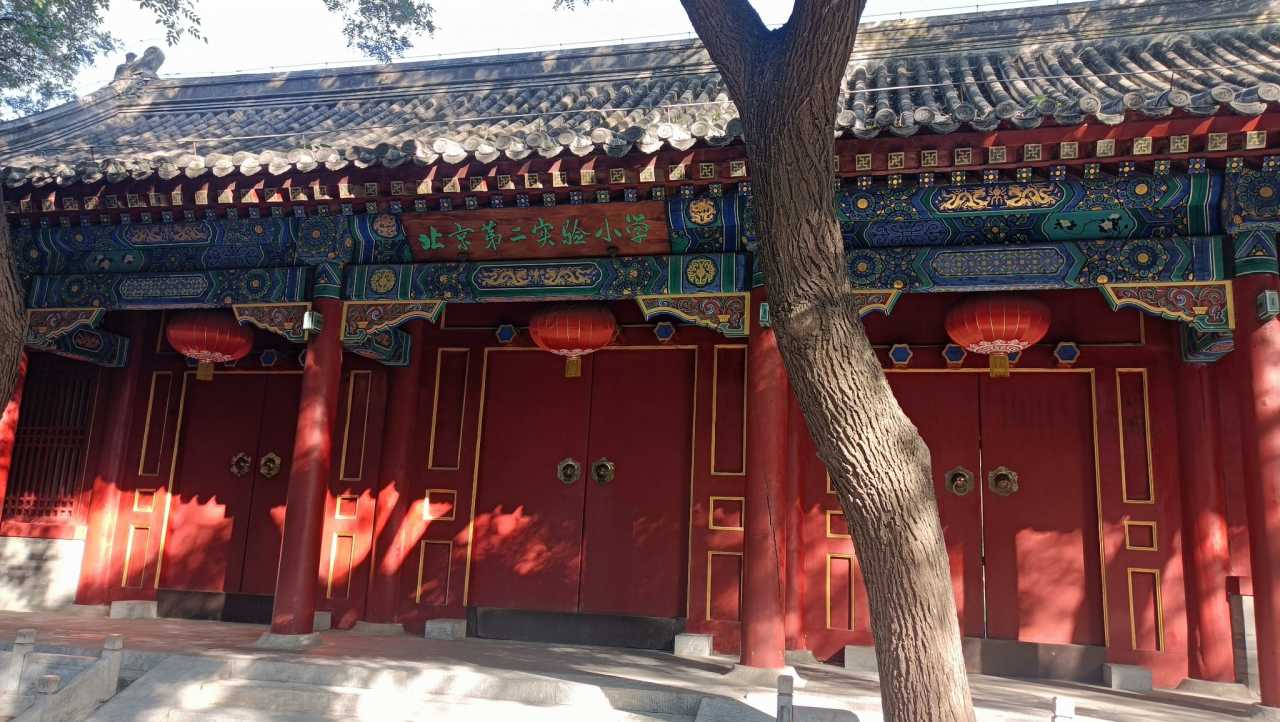
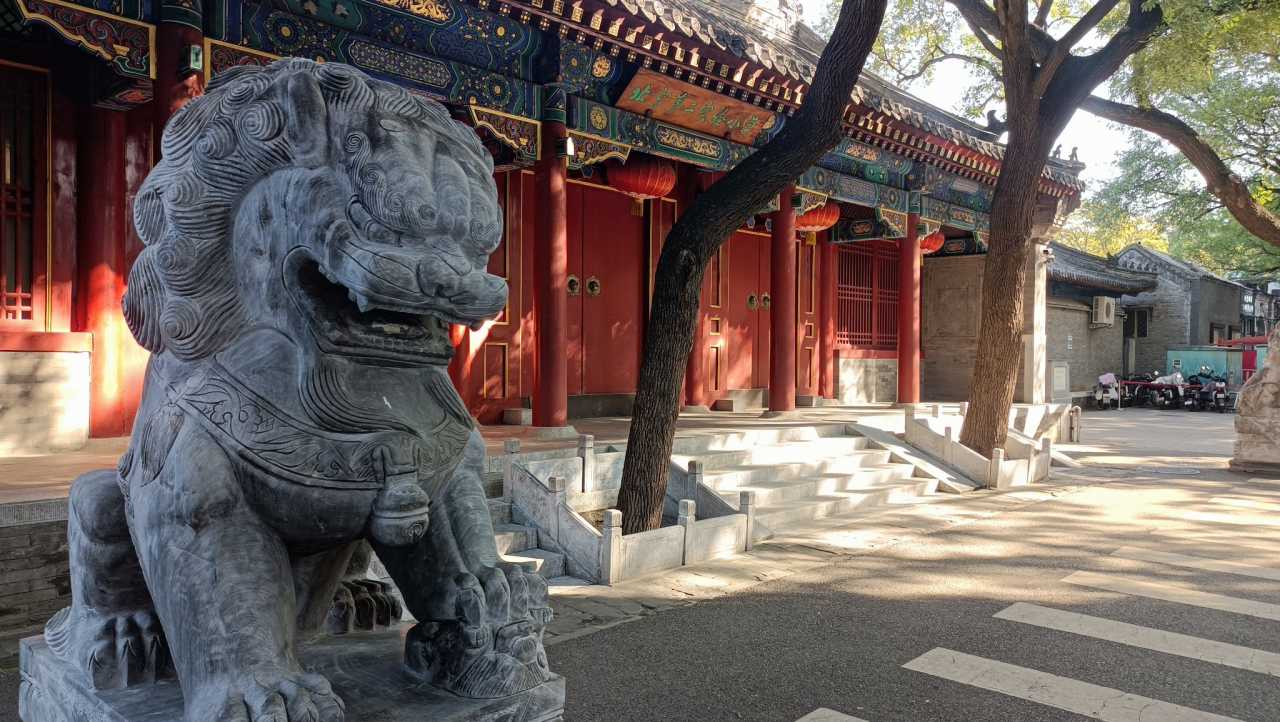
Today, the Keqin Commandery Prince Mansion has been fully renovated and now serves as Beijing No. 2 Experimental Primary School. The screen wall at the front still stands, and the inner gate, rear sleeping quarters, east and west side rooms, and rear hall remain intact.
Notable Fact: This mansion was also the residence of the uncle of Cao Xueqin, the author of Dream of the Red Chamber—the secondary consort of Narsu, the Keqin Commandery Prince, was the eldest daughter of Cao Yin.
[Link: Dream of the Red Chamber literary history]
The Prince Zheng Mansion: The Former Crown of Gardens
The Prince Zheng Mansion is located in Damucang Hutong. It was the residence of Jirgalang, the grandson of Nurhaci’s younger brother Šurhaci. Jirgalang was a founding hero of the Qing Dynasty and, aside from Dorgon, the only person granted the title “Uncle Prince.”
During the Qianlong era, the seventh Prince Zheng was stripped of his title, and the emperor ordered a descendant of Jirgalang’s younger brother, Depei, to inherit the title. Depei focused on garden construction, making the “Hui Garden” the finest among all Beijing prince mansion gardens.
Today, the eastern section of the mansion still stands, including the street gate, main gate, main hall, east and west side towers, and the main sleeping quarters—faint echoes of its former grandeur. The western garden has been converted into Erlong Road Middle School.
After the Republic of China era, the mansion was mortgaged to the Xishiku Church. In 1925, it was leased to China University, and the rear hall was renamed Yixian Hall. It now houses the China Education Development Foundation.
[Link: Qing Dynasty garden architecture]
The Prince Li Mansion: The Property of the First Prince of the Qing
The Prince Li Mansion is located on South West Huangchenggen Street, stretching from Dajiangfang Hutong in the south to Banshang Hutong in the north. During the Ming Dynasty, it was the private residence of Zhou Kui, a relative of the Chongzhen Emperor by marriage. In the early Qing, it became the mansion of Prince Li Daišan, the second son of Nurhaci and the foremost of the eight Iron-Cap Princes, often called the “First Prince of the Qing Dynasty.”
An old Beijing saying goes: “Prince Li’s mansion has the rooms, Prince Yu’s mansion has the walls,” meaning Prince Li’s mansion was known for its many rooms, while Prince Yu’s was famous for its high walls. This reflects the exceptional scale of Prince Li’s residence.
After the Republic of China era, it housed North China University, founded by Cai Yuanpei. After 1949, it became the office of the Ministry of Civil Affairs and is now used by the State Council’s Government Offices Administration. The central buildings are mostly well-preserved, a few courtyards remain in the northern section of the eastern wing, but most of the western wing has been demolished.
[Link: Ming Dynasty Beijing architecture]
The Prince Qing Mansion: The Extravagant Life of a Powerful Minister
The Prince Qing Mansion, located at No. 3 Dingfu Street in Xicheng District, was originally the residence of Heshen, a favorite minister of the Qianlong Emperor. In the fourth year of the Jiaqing era (1799), Heshen was executed, and the property was given to Yonglin, the first Prince Qing. In the late Qing, Prince Qing Yikuang became the wealthiest among the imperial princes.
Current Status: The mansion is partially open to the public and contains well-preserved halls and gardens. It offers a glimpse into the opulent lifestyle of Qing Dynasty aristocracy.
[Link: Heshen and Qing Dynasty corruption]
FAQ: Your Questions About Cycling to Beijing’s Prince Mansions
1. How long does it take to cycle to all the prince mansions in Beijing?
 A full tour covering the major Iron-Cap Prince mansions takes approximately 5–6 hours, covering 20–30 kilometers. However, you may need two days to visit all 89 historic mansions.
2. Are the prince mansions open to the public?
Some mansions, like the Prince Qing Mansion, are partially open. Others, like the Prince Li Mansion, are government offices and not accessible. Many have been converted into schools, hospitals, or residential compounds.
3. What is the best time of year for this cycling tour?
 Spring (March–May) and autumn (September–November) offer the most pleasant weather for cycling in Beijing. Summer can be hot and humid, while winter is cold and dry.
4. Do I need a guide to find these mansions?
While not strictly necessary, a guide or detailed offline map is highly recommended. Many mansions lack clear signage, and local knowledge is invaluable for navigating hutongs and one-way streets.
5. What should I bring for this cycling tour?
Bring water, snacks, a fully charged phone with offline maps, comfortable cycling clothes, sunscreen, and a hat. A camera is essential for capturing the historic architecture.
Conclusion: Pedal Through History – Your Beijing Prince Mansion Adventure Awaits
Cycling through Beijing to discover the remnants of Qing Dynasty prince mansions is more than a sightseeing tour—it’s a journey through 300 years of imperial history, urban transformation, and personal stories of rise and fall. From the tragic tale of the last Keqin Commandery Prince pulling a rickshaw to the grandeur of Prince Li’s sprawling estate, each mansion tells a unique story.
Whether you’re a history buff, a cycling enthusiast, or simply a curious traveler, this route offers an unforgettable experience. The shared bike is your time machine, and the hutongs are your museum corridors.
Ready to explore? Plan your cycling route today, download offline maps, and set off on your own Qing history adventure. Share your discoveries with us—tag your photos with #QingHistoryOnTwoWheels and inspire others to pedal through Beijing’s imperial past.
[Link: Beijing hutong cycling tours] [Link: Qing Dynasty history books] [Link: Beijing travel guide 2024]
Disclaimer: Some prince mansions are private property or government buildings. Always respect local regulations and do not enter restricted areas.
You should also read:
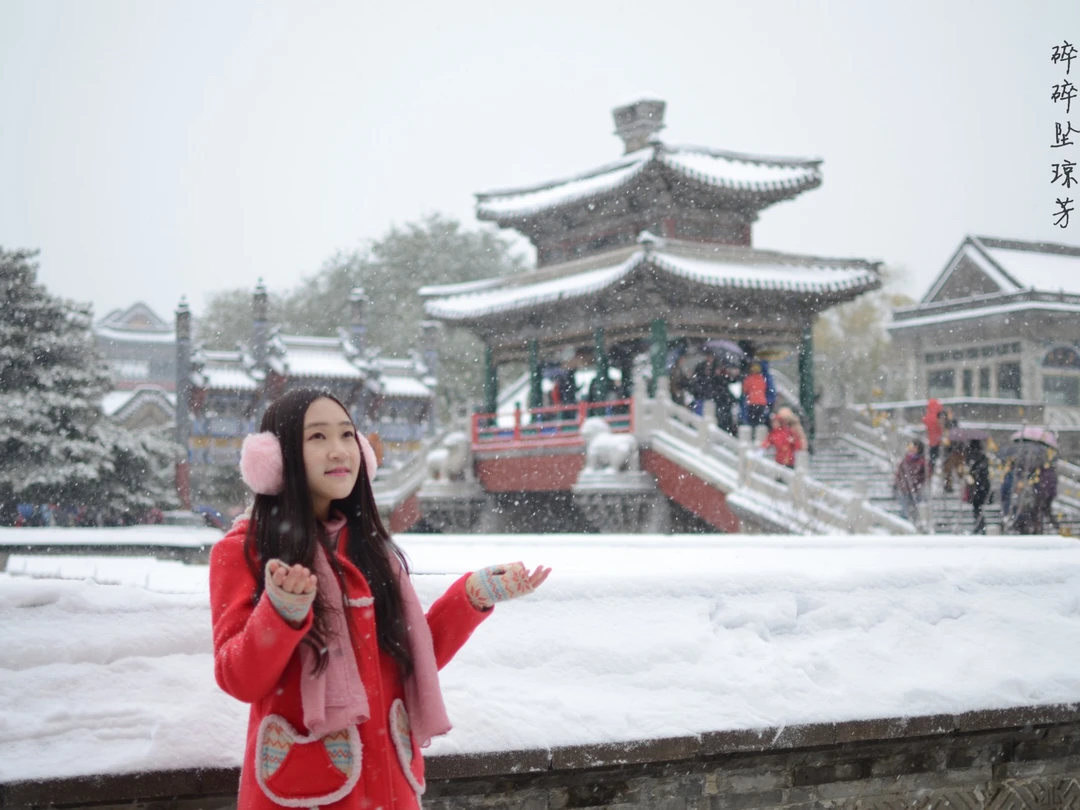
White Snow Adorning Crimson Walls: A Winter Guide to Beijing's Summer Palace
Meta Description: Discover the magic of Beijing's Summer Palace in snow. Our guide explores crimson walls, jade-like snowflakes, and winter photography tips. Plan your snowy visit today. On November 22, 2015, the solar term "Minor Snow" arrived precisely on schedule. That day, the ancient capital…
Continue reading...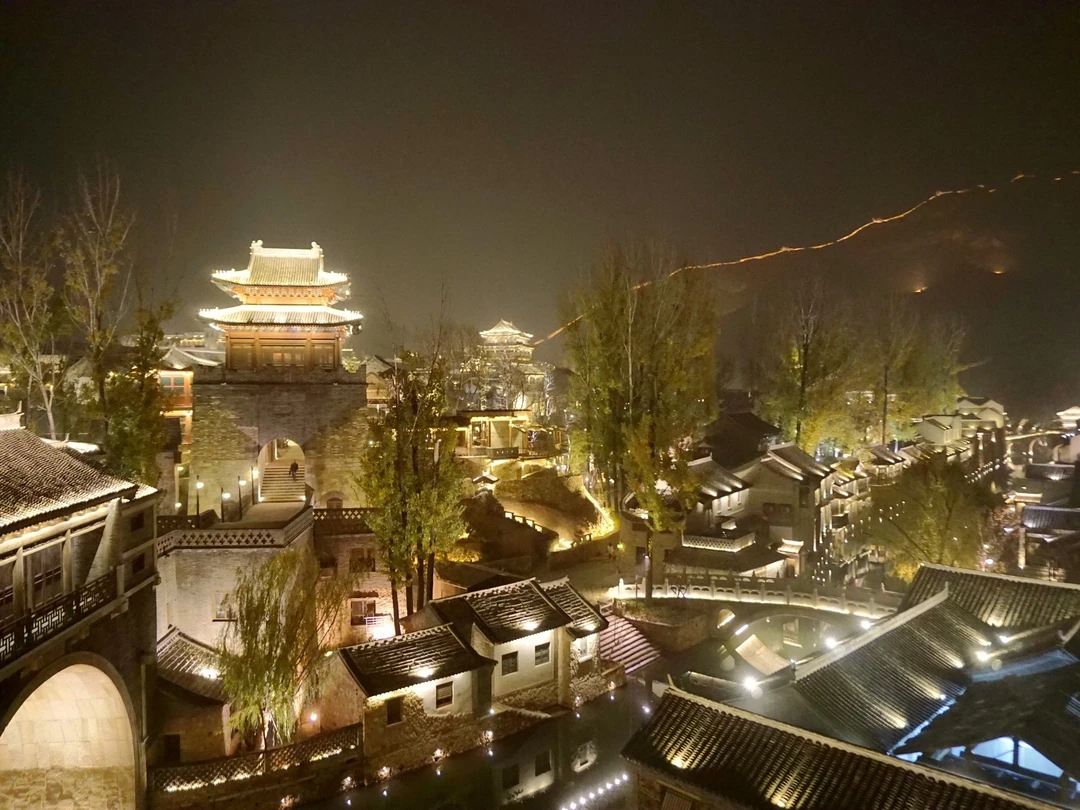
A Jiangnan Dream on Beijing's Outskirts: The Ultimate Gubei Water Town Travel Guide (November 2015)
Meta Description: Discover Gubei Water Town, Beijing's Jiangnan-inspired getaway at the foot of Simatai Great Wall. Read this detailed November 2015 travelogue with costs, tips, and must-see spots. The world is vast, yet life is fleeting. Sometimes, all it takes is a weekend—a spontaneous short…
Continue reading...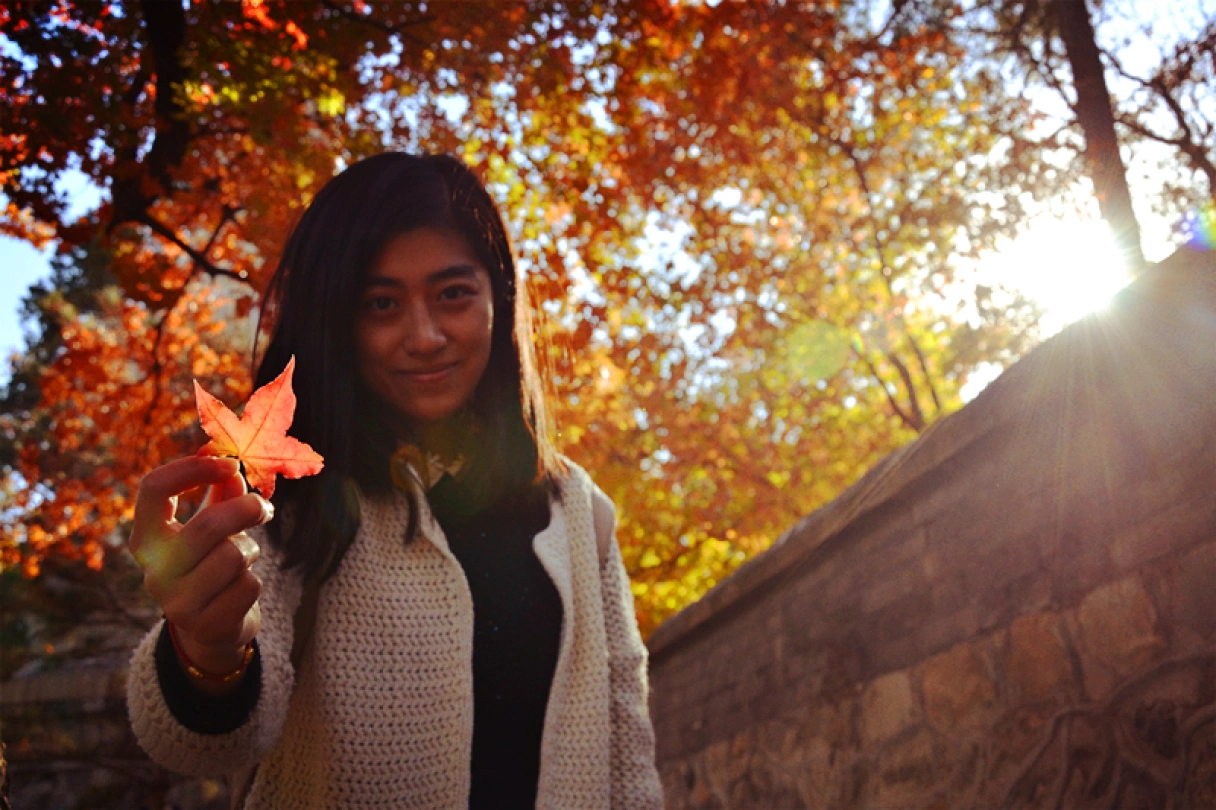
Seeking · Encountering · Autumn in Beijing: Your Ultimate Guide to Beijing’s Most Stunning Fall Scenery
Meta Description: Discover Beijing’s best autumn destinations beyond Fragrant Hills. From Tsinghua University’s golden ginkgo avenue to Dajue Temple’s millennium-old tree, plan your perfect fall escape with our expert guide. Autumn in Beijing is more than a season—it’s a grand farewell. When the summer heat…
Continue reading...