Seven Years in Beijing: Where My Solo Travel Journey Began – A Photographer’s Guide to the Capital
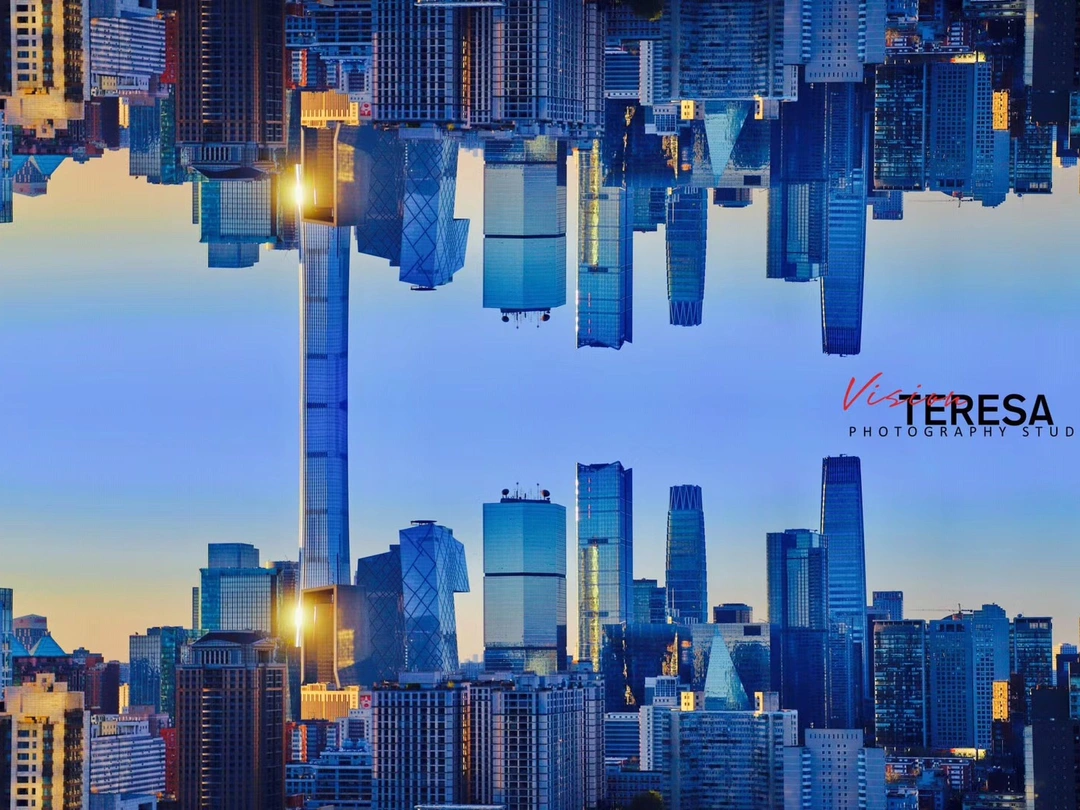
Meta Description: Discover how seven years in Beijing sparked a solo travel journey. From Jingshan sunsets to Gubei Water Town, explore the city’s best photography spots, hidden gems, and practical tips.
For many, falling in love with travel is a matter of destiny. For me, that destiny began in Beijing.
At eighteen, clutching my first mirrorless camera, I boarded a train to Beijing alone. I had no idea that this ordinary trip would become a pivotal turning point. From that moment, I learned to capture the world through my lens, measure cities with my footsteps, and feel every encounter with my heart.
Looking back seven years later, Beijing is no longer just a city. It is the witness to my youth, the mentor of my photography journey, and the starting point of discovering who I truly am. In this guide, I’ll share my favorite Beijing photography locations, practical tips, and the stories that shaped my solo travel beginnings.
1. Jingshan Park: The Best Sunset Spot in Beijing
If there’s one place I’ve visited again and again, photographed over and over, it has to be Jingshan Park. Standing atop the Wanchun Pavilion, the entire old city of Beijing unfolds before your eyes. This is the highest point on Beijing’s central axis and the best spot for a panoramic view of the Forbidden City.
What you’ll see from Jingshan Peak:
- East: China Zun Tower and the CCTV Headquarters (affectionately nicknamed “Big Pants”)
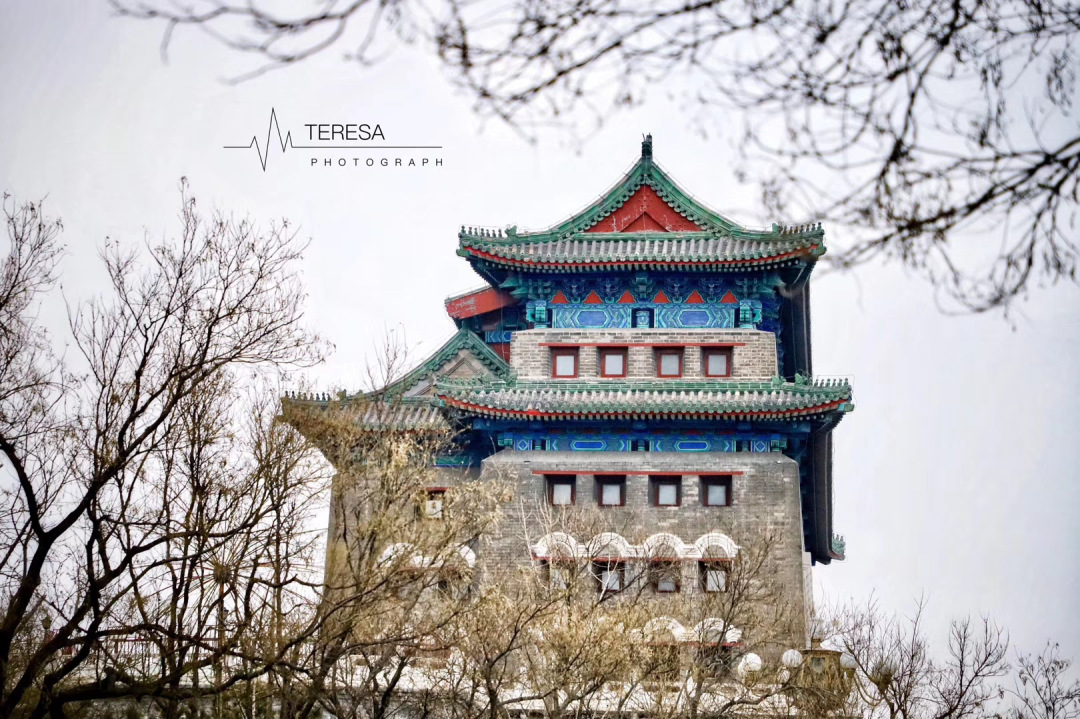
- South: The Forbidden City’s Gate of Divine Might
- West: Beihai Park and the CCTV Tower
- North: The Bell and Drum Towers and the Shouhuang Hall
What captivates me most is sunset. On one side, the Forbidden City stands in its century-old grandeur, its red walls and golden tiles glowing softly in the fading light. On the other, the glittering skyscrapers of Guomao (Beijing’s Central Business District) reflect the brilliance of a modern metropolis. As day gives way to night and the city lights begin to twinkle, Beijing’s evening truly begins here.
Practical Tips for Jingshan Park: - Admission: 2 RMB - Opening hours: 6:30 AM to 8:00 PM - Best time: Arrive around 4:00 PM to secure a good spot and wait for sunset - What to bring: A jacket – it gets windy at the top - Pro tip: Use a telephoto lens to compress the Forbidden City and the modern skyline for dramatic contrast
“Everyone should visit the capital at least once in their lifetime – walk through the hutongs, weave between the high-rises, and you can feel both the slow pace of history and the rapid pulse of the modern era.” – Words I wrote at the top of Jingshan.
[Link: Best photography spots in Beijing]
2. Beijing CBD Photography: From Sanlitun to Ciyun Temple

Some say Beijing is where dreams take flight; others say it exists to crush them. For me, it has brought happiness – not because of its dazzling prosperity, but because in some unassuming corner, it holds my earliest passion for photography.
Spot One: Sanlitun Overlooking the Beijing CBD
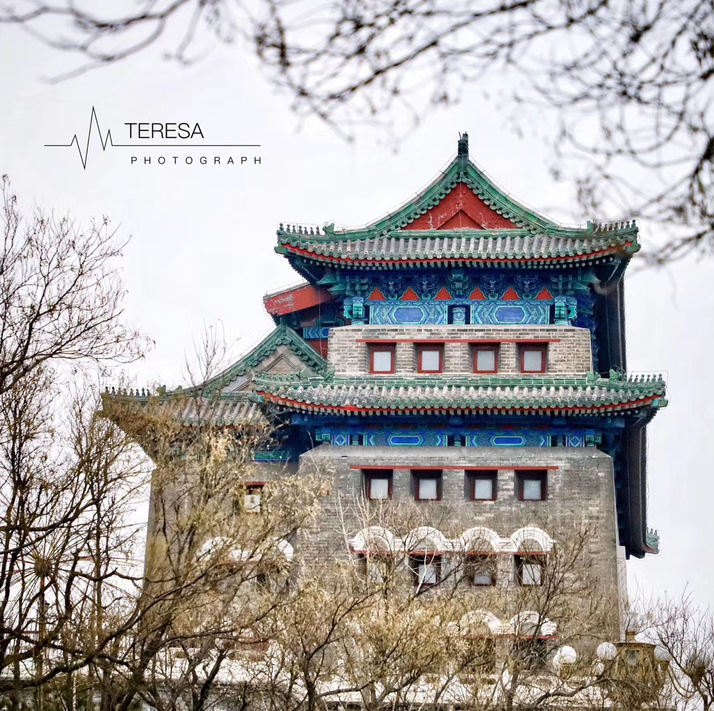
This is where I used to work – the Zhongyu Building, diagonally across from Chaoyang Sanlitun. The spot is on the 20-something floor, accessible only with a key card. It’s hard for non-employees to get in, but if you have the chance, the view is absolutely worth it.
Spot Two: The Footbridge in Front of Suning Store in Ciyun Temple
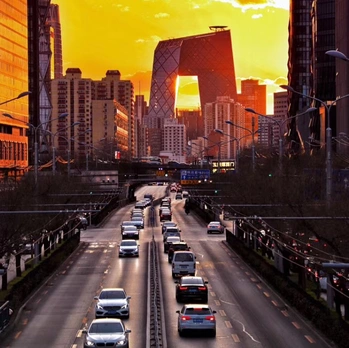
There are two footbridges here. The one closer to Suning is a popular spot for shooting the sunset with the CCTV Headquarters in the frame. The first time I used a tripod to capture traffic trails was on this bridge. A wide aperture combined with overlapping car lights, blended in post-production – the results were surprisingly stunning.
The other bridge is to the left of the Suning store, a short walk away. Using an ultra-wide-angle lens, you can capture even more dramatic shots.
Spot Three: The Rooftop of Suning Store in Ciyun Temple
I learned about this spot from a friend. Standing on the rooftop, the entire CBD spreads out before you. Every building is lit up, and every light tells a story.
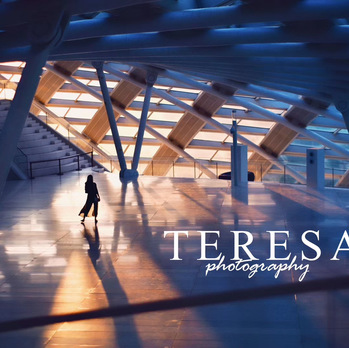
Pro tip: Visit during blue hour (just after sunset) for the most dramatic cityscape shots.
[Link: Beijing night photography guide]
3. Ghost Laughing Rock: Overlooking the Entire City
If you want a panoramic view of Beijing from outside the city center – besides Jingshan – head to Ghost Laughing Rock (Guixiaoshi).
Hiking up in the late afternoon feels incredible. To your left, the most beautiful nightscape of the capital; to your right, the romantic glow of a thousand lights. The higher you climb, the farther you get from the horizon, and the wider your view becomes. At the summit, the entire imperial city lies at your feet.
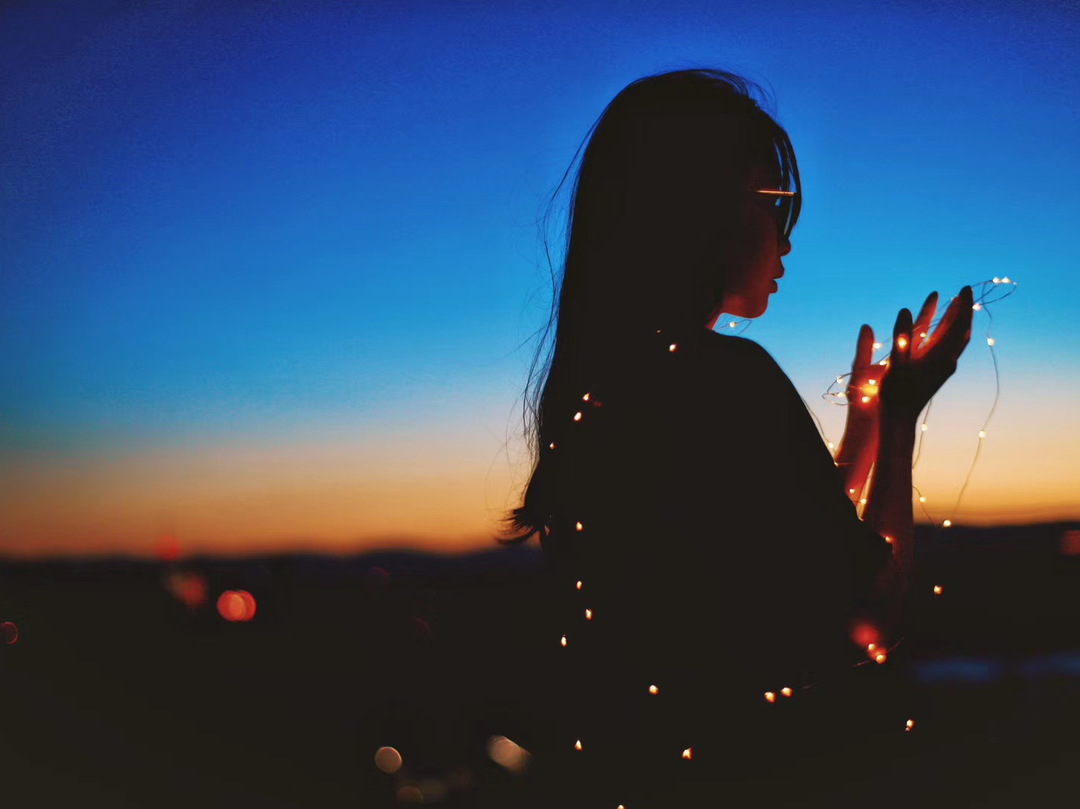
Seeing Beijing from such a height for the first time felt like being on a plane just after takeoff – roads become thin lines, and lights turn into tiny dots.
On the way down, I ran into many night-hiking enthusiasts. They wore headlamps and marched straight upward, as if answering a call to a nightly rendezvous.
Practical Tips for Ghost Laughing Rock: - Navigation: Set your destination to “Guixiaoshi Parking Lot, Haidian District, Beijing” - Hiking time: About 1 hour from base to summit - Best time for photos: Arrive at the base at least 1.5 hours before sunset - What to bring: An extra layer – it’s windy at the top - Getting there: The area is far from downtown, so it’s best to take a taxi or rideshare
[Link: Best hiking trails near Beijing]
4. Gubei Water Town: A Thousand-Year Dream in Late Autumn
In the blink of an eye, autumn painted this ancient capital, and Beijing was already breathtakingly beautiful.
The hillsides of Gubei Water Town, covered in red leaves, were especially dazzling in late autumn. An autumn without colorful foliage feels incomplete. I drove two hours from the city just to witness this late-autumn beauty.
The distant mountains were already a patchwork of fiery colors, the leaves shifting subtly from deep to light hues. Looking out, the hills shimmered with a riot of color, like an ocean of brilliance in motion.
But the water town’s beauty isn’t limited to red leaves. Its nighttime scenery is unforgettable. Follow the main road, pass the grand theater, cross the bridge, and hike up to the hilltop church. From there, the entire water town unfolds before you. Look up, and you see the dazzling remnants of sunset; look down, and you find ancient pavilions and towers steeped in old-world charm. In the distance, the Great Wall lies like a sleeping dragon slowly awakening; up close, small bridges and flowing water create a scene of poetic tranquility.
Practical Guide to Gubei Water Town: - Admission: 140 RMB/person (valid for two days but single entry only); combo ticket for Gubei Water Town + Sima Terrace Great Wall: 170 RMB - Best time for autumn foliage: Late September to early November - Getting there: About 1.5 hours by car from downtown Beijing; or take the direct shuttle bus from Dongzhimen (48 RMB one way) - Recommended experiences: - DIY tie-dye at Yongshun Dyeing Workshop - Send postcards from the water town post office - Watch a shadow puppet show at the puppet theater - Soak in the free hot springs - Watch sunset from the hilltop church - Catch the sky lantern show at 8 PM
[Link: Beijing autumn travel guide]
5. Phoenix International Media Center: Architecture of the Gods
I passed by this building every day on my way to work, and it was always my favorite.
“Straight lines belong to humanity; curves belong to God” – this is probably what Gaudi meant by “architecture of the gods.” The Phoenix International Media Center is modern, avant-garde, artistic, dreamy, romantic, and awe-inspiring. Here, space is woven, light and shadow flow, and every ray of light feels alive.
Inside this ultra-surrealist architectural marvel, you can appreciate the aesthetics of layered spaces. Walking across the “Bridge of Dreams” that seems to transcend time, you experience a sci-fi vision of the future. Riding the cloud-like escalators that seem to lead to the heavens, you feel the infinite loop of a Möbius strip.
Photography tip: Use a wide-angle lens to capture the full curve of the building. Visit during golden hour for the best light.
[Link: Modern architecture in Beijing]
6. The Summer Palace: Golden Light Through the Seventeen-Arch Bridge
Every winter, the Seventeen-Arch Bridge at the Summer Palace puts on a spectacular show called “Golden Light Piercing the Arches.” For about ten days around the winter solstice, the spot is packed with photography enthusiasts.

But what I love most is the frozen lake. In winter, Kunming Lake transforms into the most thrilling outdoor ice skating rink. It’s a unique Beijing experience you won’t find anywhere else.
Practical Tips for the Summer Palace: - Best time for golden light: Mid-December to early January, around sunset - Admission: 30 RMB (peak season), 20 RMB (off-peak) - What to bring: A telephoto lens for the Seventeen-Arch Bridge; warm clothes for winter visits - Pro tip: Arrive early to secure a spot – the bridge gets crowded during the golden light period
[Link: Summer Palace photography guide]
FAQ: Solo Travel in Beijing
1. Is Beijing safe for solo travelers?
 Absolutely. Beijing is one of the safest major cities for solo travelers. The public transportation is reliable, and locals are generally helpful. Just take standard precautions like keeping your valuables secure and avoiding poorly lit areas at night.
2. What’s the best time of year for photography in Beijing?
 Autumn (September to November) is ideal for photography. The weather is crisp, the skies are clear, and the autumn foliage is stunning. Spring (April to May) is also beautiful, with blooming flowers and mild temperatures.
3. How can I get around Beijing as a solo traveler?
 The Beijing subway is efficient and affordable. For photography spots outside the city center, consider taxis or rideshares. For Gubei Water Town, the direct shuttle bus from Dongzhimen is convenient.
4. What camera gear should I bring to Beijing?
 A mirrorless or DSLR camera with a versatile zoom lens (24-70mm) is great for most locations. A wide-angle lens (16-35mm) is ideal for architecture and cityscapes. A telephoto lens (70-200mm) is useful for Jingshan Park and the Seventeen-Arch Bridge. Don’t forget a tripod for night shots.
5. Are there any photography restrictions in Beijing?
Most public places allow photography, but some museums and temples may have restrictions. Always check signs or ask staff. Drones are heavily regulated in Beijing – avoid flying them without proper permits.
Start Your Own Solo Travel Journey in Beijing
Seven years in Beijing taught me that the best journeys begin with a single step – and a camera in hand. Whether you’re capturing the sunset from Jingshan Park, hiking to Ghost Laughing Rock, or wandering through Gubei Water Town’s autumn foliage, Beijing offers endless opportunities for discovery.
Ready to plan your trip? Start with these must-visit spots, pack your camera, and let Beijing write the first chapter of your solo travel story.
Have you visited Beijing? Share your favorite photography spot in the comments below!
[Link: Beijing travel itinerary 7 days] [Link: Solo travel tips for China]
You should also read:
Dreaming of Beijing: A City of Flames and Embers
Here is the SEO-optimized, rewritten article based on the source material. It has been restructured for search intent, readability, and keyword density while preserving the original poetic and narrative essence. SEO Title: Dreaming of Beijing: A City of Flames, Embers, and 3,000 Years of History…
Continue reading...
Solo in Beijing: Discovering Another Side of the Capital Amid Red Walls and Grey Tiles
Meta Description: Traveling solo in Beijing on a student budget? Discover hidden gems, practical tips for first-time solo travelers, and how to explore the capital's red walls and grey tiles without breaking the bank. When my friends asked why I chose to go to Beijing…
Continue reading...
Savoring the Flavors of Di'anmen: A Culinary Journey Through Beijing's Heart
Meta Description: Discover the authentic tastes of old Beijing in Di'anmen. From douzhi to stir-fried liver, explore hidden hutong food stalls, legendary snack shops, and the vibrant street food culture surrounding Shichahai Lake. The story of Beijing has never been solely about crimson walls, golden…
Continue reading...