Snow in Beijing: Why the Imperial Ancestral Temple Beats the Forbidden City for Snow Photography
Meta Description: Tired of sold-out Forbidden City tickets? Discover the Imperial Ancestral Temple—Beijing's hidden snow photography gem. Red walls, white snow, zero crowds. 2 RMB entry, no booking needed. Shoot like a pro.
"Beijing is snowing!" — the phrase spreads across social media faster than snowflakes hit the ground. When the capital turns white, the Forbidden City's red walls and golden tiles become a pilgrimage site for photographers. But reality hits hard: you open the official website, enter your ID, click "Purchase," and the screen coldly displays "Today's tickets are sold out."
Don't throw your phone. Just as you're about to abandon your snow photography dreams, a place is waiting—separated from the Forbidden City by only one wall, sharing the same architectural grandeur, yet almost empty of tourists.
Welcome to the Imperial Ancestral Temple (Taimiao) — Beijing's most underrated snow photography paradise.
Why the Imperial Ancestral Temple Is the Ultimate Snow Photography Spot in Beijing
On February 12, 2019, Beijing welcomed a rare heavy snowfall. My colleagues and I planned to head straight to the Forbidden City, but tickets vanished instantly. Determined not to waste the snow, we impulsively visited the Imperial Ancestral Temple. It became the most satisfying snow photography experience I've ever had.
A Royal Complex Without the Crowds
The Imperial Ancestral Temple sits northeast of Tiananmen Square—essentially the southeastern corner of the Forbidden City. Built in 1420 during the Ming Dynasty's Yongle reign, it served as the ancestral temple where Ming and Qing emperors honored their forebears. Covering over 200 mu (33 acres), the complex follows the ancient Chinese ritual principle of "revering heaven and honoring ancestors." Its rectangular layout stretches 475 meters north-south and 294 meters east-west, with three layers of enclosing walls forming a three-tiered courtyard of front, middle, and rear halls.
Sound familiar? The architectural style mirrors the Forbidden City—but the fame is far smaller. That's precisely its advantage: few tourists, serene environment, and unlimited photography space.

Getting there: Metro Line 1 to Tiananmen East Station, Exit B. Walk north along Nanchizi Street for about 200 meters, then turn left. The temple is also known as the "Workers' Cultural Palace."
Tickets: 2 RMB (basic entry) or 10 RMB (includes main hall interior). For snow photography, 2 RMB is plenty. No advance booking needed—buy on the spot. Opening hours: Monday–Sunday, 08:00–22:00.
Of course, if you want to view precious cultural relics, the Palace Museum remains your first choice. But for snowscape or portrait photography—especially avoiding massive crowds—the Imperial Ancestral Temple is the smarter choice. Most visitors here are local residents, with occasional wedding or portrait shoots. The atmosphere is peaceful and relaxing.
[Link: Best time to visit Beijing for snow photography]
Architectural Photography: Capturing Royal Elegance with Red Walls and White Snow
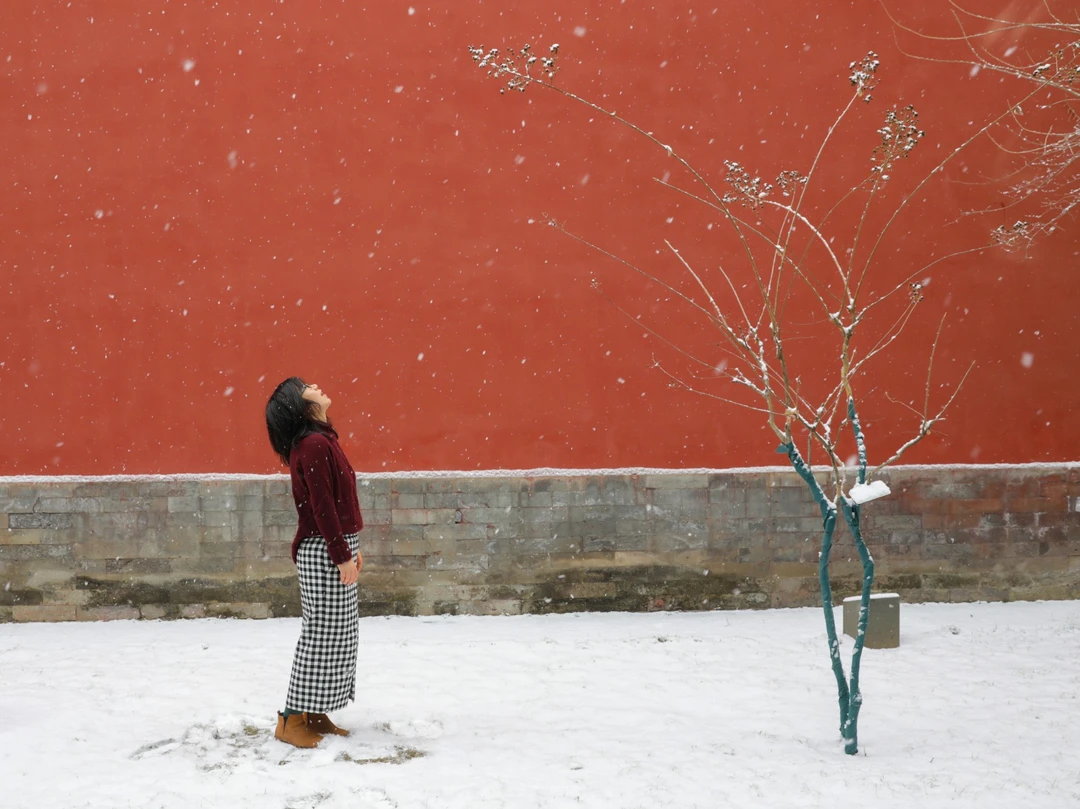
Our photographer, colleague Zhu Zhu, used a Canon 5D4 with a 24-70mm f/2.8 lens. Honestly, at the Imperial Ancestral Temple, almost every frame is a masterpiece.
Identical Details, Zero Distractions
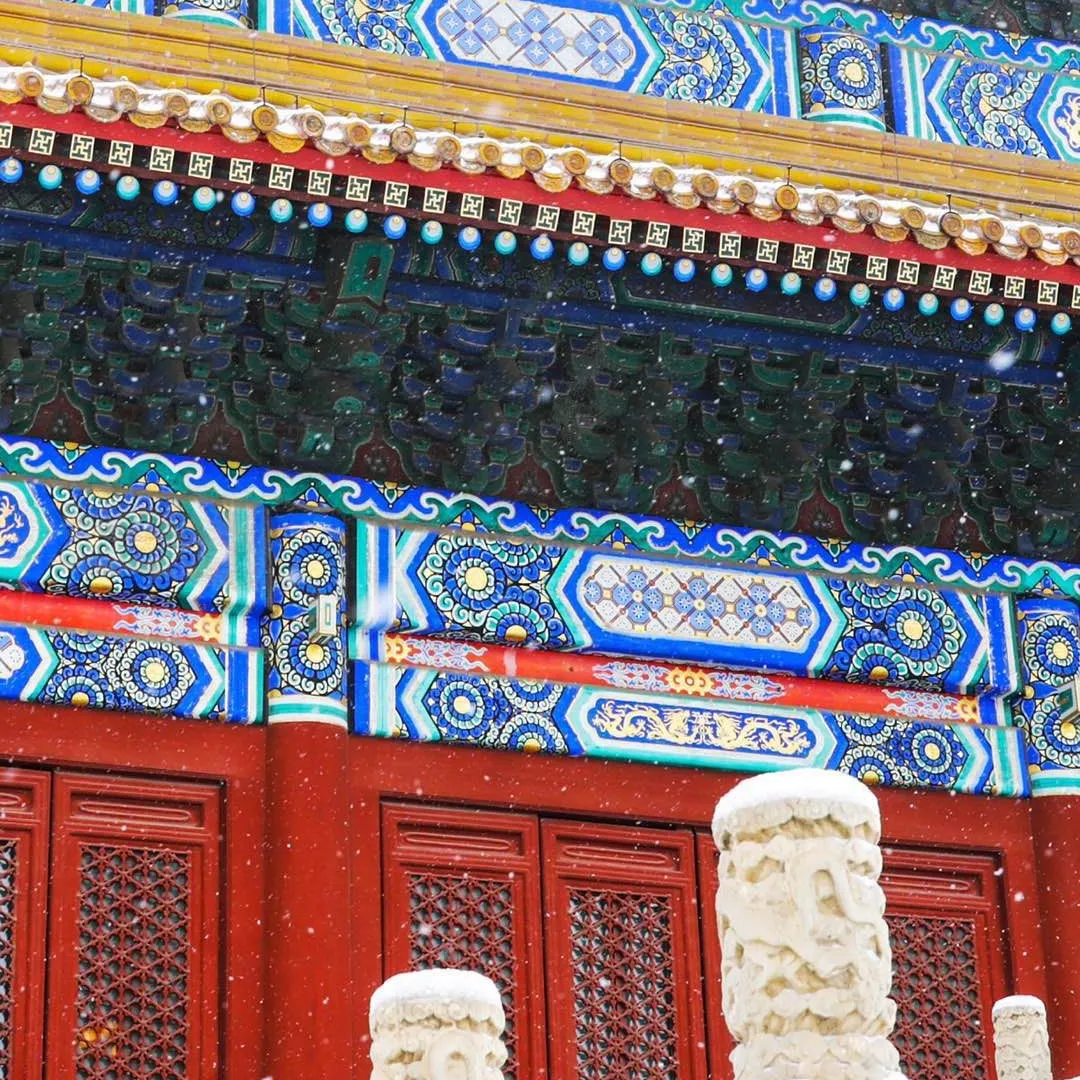
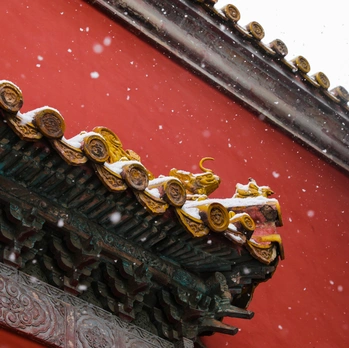
The architectural details are identical to the Forbidden City: upturned eaves, glazed tiles, white marble balustrades, red walls with golden nails. Against white snow, these elements pop vividly. When shooting close-ups, you can't tell whether this is the Forbidden City or the Imperial Ancestral Temple. Snow resting on mythical beasts atop eaves, or covering the heads of stone lions—that quiet, solemn beauty rivals anything in the Forbidden City.
Unique Elements That Elevate Your Shots
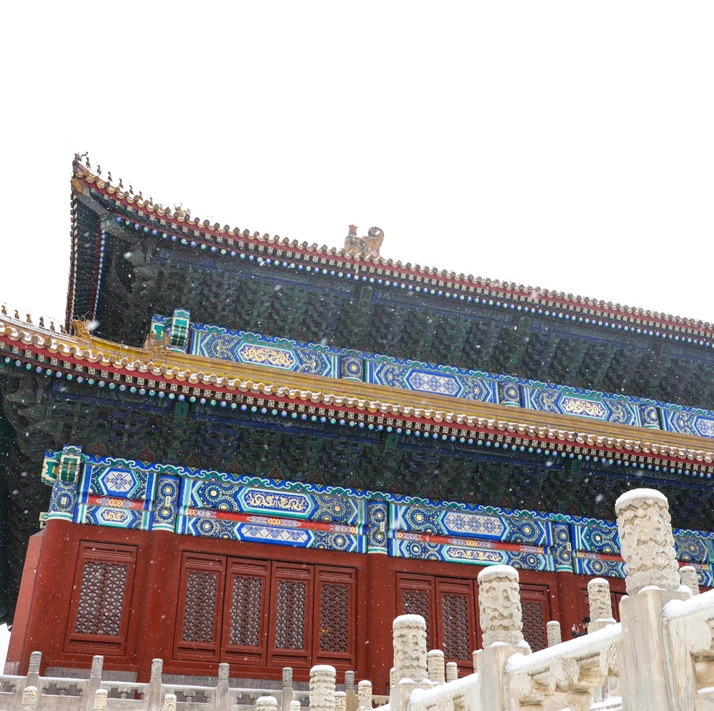
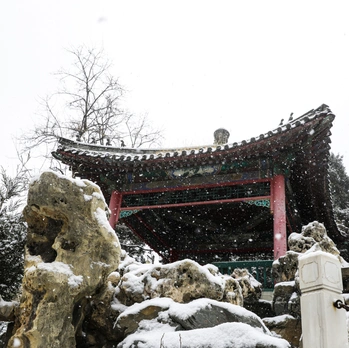
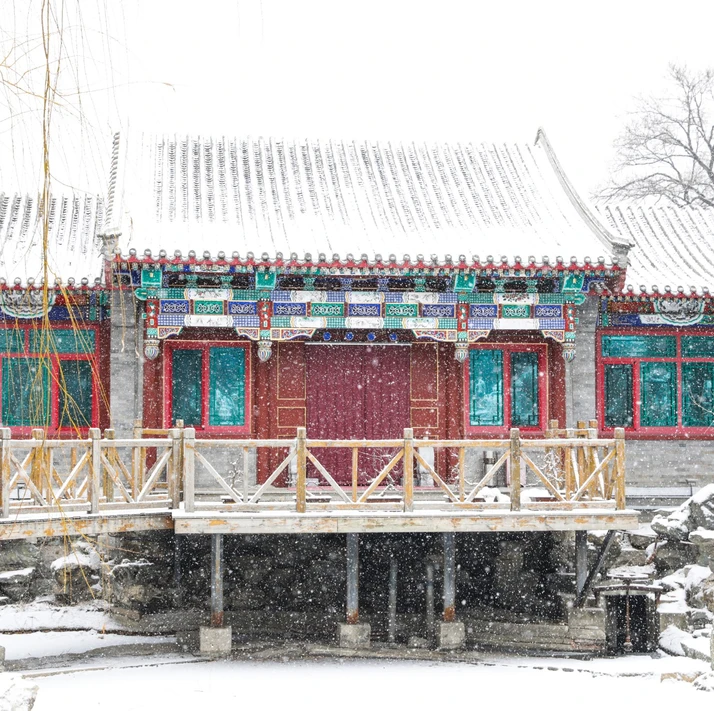
What makes the Imperial Ancestral Temple special is its "human touch." The grounds feature rockeries, pavilions, a small lake, and an elegant waterfront structure. These elements make snow-covered scenes richer and more varied. Because the ground is slippery after snow, many areas are cordoned off with warning tape—which ironically becomes a blessing: no random passersby in your shots, making compositions cleaner and more orderly.
The Long Red Wall: A Photographer's Dream
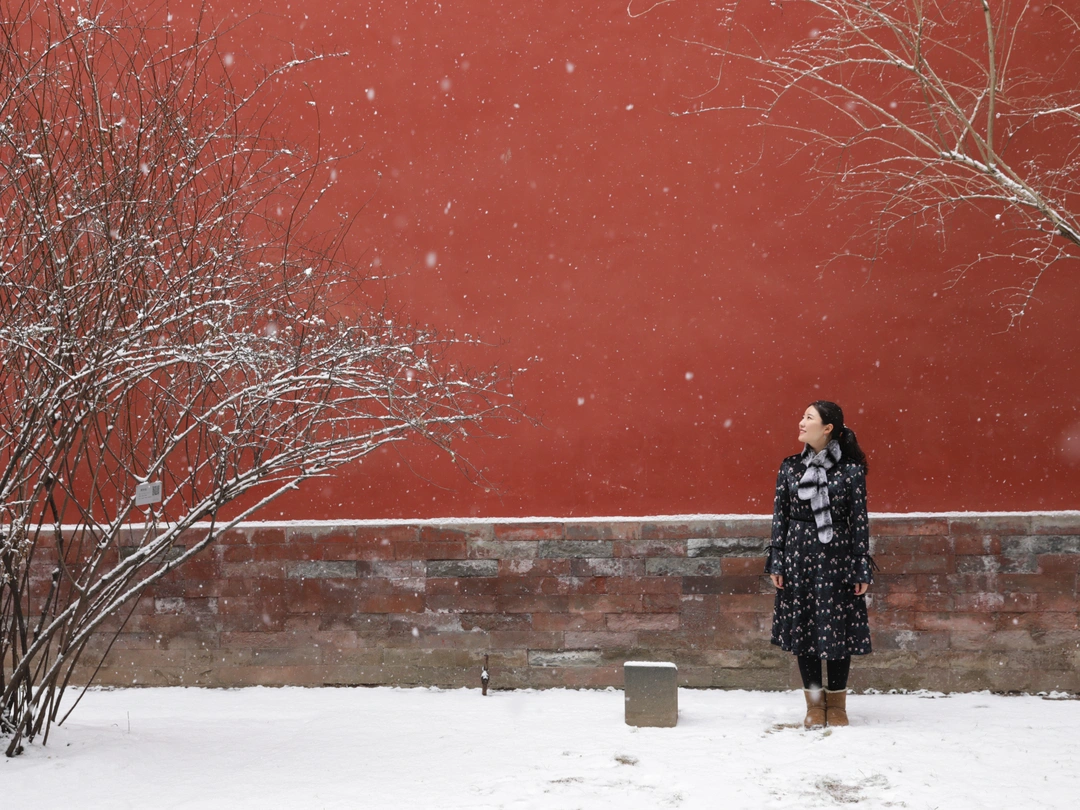
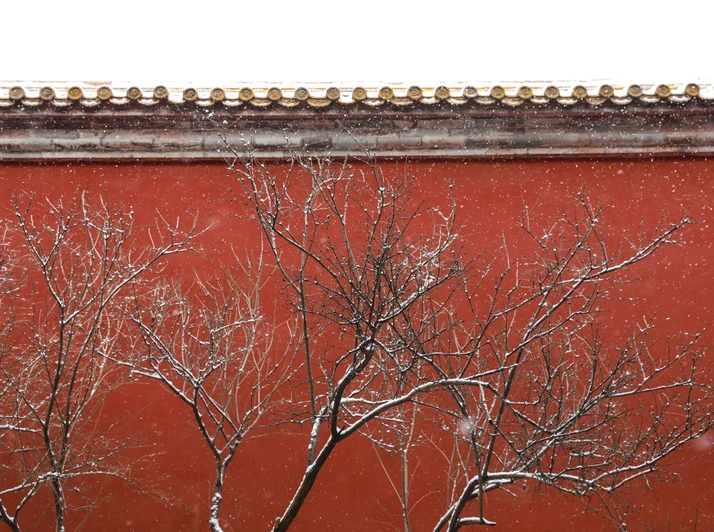
The most impressive feature is the long red wall inside the temple. Several trees line the base, with snowflakes resting on branches, creating stunning color contrast against the red wall and gray bricks. The wall is so long that there's a tree every few steps. Even if someone is shooting nearby, just walk a bit further to find a spot entirely your own. Red walls, white snow, bare branches—these three elements combine like a natural Chinese ink painting.
Pro tip: Use a wide aperture (f/2.8 or wider) to blur the background and emphasize the snow-covered details. For full architectural shots, stop down to f/8–f/11 for maximum sharpness.
[Link: Essential camera settings for snow photography]
Portrait Photography: Dreaming of Ancient Times in the Snow
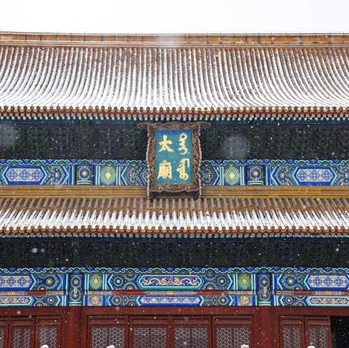
If architectural photography is about "stillness," portrait photography is about "movement." Shooting snow portraits at the Imperial Ancestral Temple is practically a tailor-made gift package for photographers. Why? So few people. You don't have to work hard to avoid crowds like at the Forbidden City, nor wait ten minutes just to press the shutter. Here, you can calmly compose, adjust lighting, and pose.
What to Wear: Say Goodbye to Puffer Jackets, Embrace Ancient Style
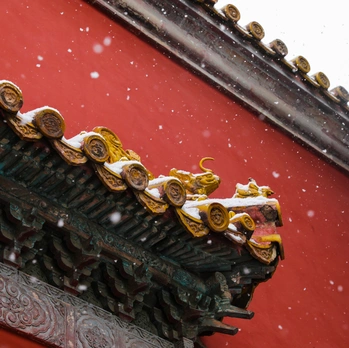
First, put away puffer jackets, windbreakers, and hoodies. These modern clothes clash sharply with ancient architecture. To capture stunning snow portraits, you have to "freeze"—not literally, but by choosing outfits that suit the setting.
- Long dresses in dark, dignified colors pair beautifully with red walls and white snow.
- Hanfu (traditional Chinese clothing) or a cloak instantly transport the scene back to ancient times. The flowing sleeves of Hanfu and the heaviness of a cloak create dramatic movement against falling snow.
- Many photography enthusiasts make special trips on snowy days just to shoot "snow warrior" or "palace lady" photos.
How to Shoot: Golden Rules for Framing and Posing
The Imperial Ancestral Temple offers incredible framing freedom—you never have to worry about a random passerby appearing in the background. Here are angles I've personally tested:
Beside the Red Wall: Stand at the base of the red wall, let snowflakes land on your shoulders or hair. Have the photographer take a full shot from a distance. No deliberate pose needed—just stand still, and you'll blend into the background.
Rockery and Pavilion: Find a pavilion or rockery for close-ups or medium shots. Lean against a pillar, look down at the snow, or reach out to catch a snowflake. Natural actions are often more compelling than forced poses.
Center of the City Gate: The city gate provides a symmetrical backdrop. Position your subject in the center for a powerful, balanced composition. Snow falling through the arch creates a frame-within-a-frame effect.
Along the Waterfront: The small lake reflects the snow-covered architecture. Shoot from a low angle to capture both the subject and the reflection. This works especially well during the golden hour (just after sunrise or before sunset).
Pro tip: Use a slow shutter speed (1/30–1/60 second) to capture falling snow as soft streaks. For sharp snowflakes, use a fast shutter speed (1/250 second or faster) with a flash to freeze the motion.
[Link: Best portrait lenses for travel photography]
FAQ: Your Questions About Snow Photography at the Imperial Ancestral Temple
1. Is the Imperial Ancestral Temple really less crowded than the Forbidden City during snow?
Absolutely. While the Forbidden City sells out within minutes of a snow forecast, the Imperial Ancestral Temple rarely sees more than a few dozen visitors at a time. On our visit, we had entire sections to ourselves. Most visitors are local residents or photography enthusiasts who know the secret.
2. Do I need to book tickets in advance for the Imperial Ancestral Temple?
No. Unlike the Forbidden City, which requires advance booking and ID verification, the Imperial Ancestral Temple sells tickets on-site. Simply show up, pay 2 RMB (or 10 RMB for the main hall), and enter. No ID needed.
3. What's the best time of day for snow photography at the Imperial Ancestral Temple?
Early morning (just after opening at 8:00 AM) or late afternoon (before sunset) offer the best light. The golden hour creates warm tones that contrast beautifully with the cool snow. Avoid midday when harsh overhead light flattens the scene.
4. Can I shoot portraits with a tripod?
Yes, but be mindful of slippery conditions. The ground can be icy after snow, so use a sturdy tripod with spiked feet if possible. The lack of crowds means you can set up without blocking pathways.
5. Is the Imperial Ancestral Temple accessible for photographers with mobility issues?
The main paths are relatively flat, but some areas may be cordoned off due to snow. The grounds are compact enough to cover in 1–2 hours without excessive walking. However, the rockery and pavilion areas have steps that may be slippery.
Final Tip: Your Snow Photography Checklist
Before heading out, pack these essentials:
- Camera with wide-angle (16-35mm) and portrait (50mm or 85mm) lenses
- Tripod for long exposures and sharp architectural shots
- Lens cloth to wipe off melting snowflakes
- Hand warmers to keep your fingers functional
- Waterproof boots to navigate slushy paths
- Extra batteries (cold drains them faster)
- Hanfu or dark-colored long dress for portraits
Ready to Capture Beijing's Snow Magic?
Next time Beijing turns white, skip the Forbidden City ticket scramble. Head to the Imperial Ancestral Temple—where red walls, white snow, and zero crowds await. At just 2 RMB, it's the best photography investment you'll make all winter.
Don't wait for the next snowfall to plan. Bookmark this guide, pack your gear, and be ready to shoot the moment snowflakes start falling. Your portfolio will thank you.
[Link: Complete guide to winter photography in Beijing]
Have you shot snow at the Imperial Ancestral Temple? Share your experience in the comments below—or tag us in your best shots. We'd love to feature them!
You should also read:
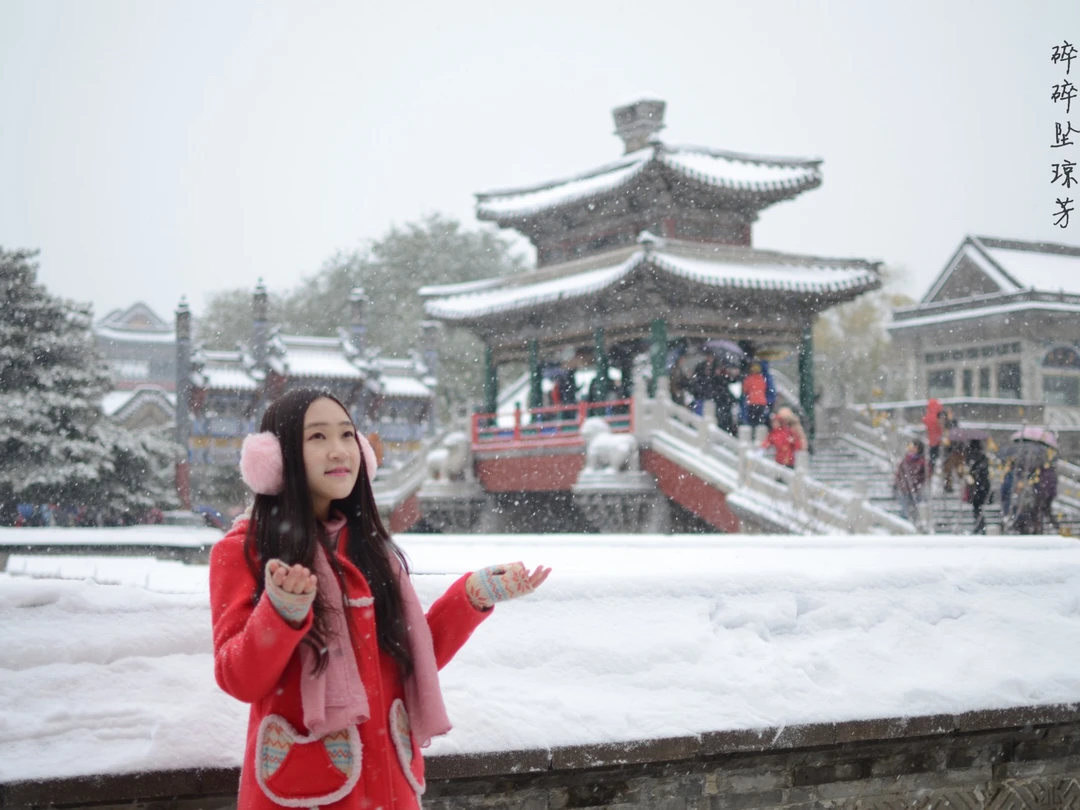
White Snow Adorning Crimson Walls: A Winter Guide to Beijing's Summer Palace
Meta Description: Discover the magic of Beijing's Summer Palace in snow. Our guide explores crimson walls, jade-like snowflakes, and winter photography tips. Plan your snowy visit today. On November 22, 2015, the solar term "Minor Snow" arrived precisely on schedule. That day, the ancient capital…
Continue reading...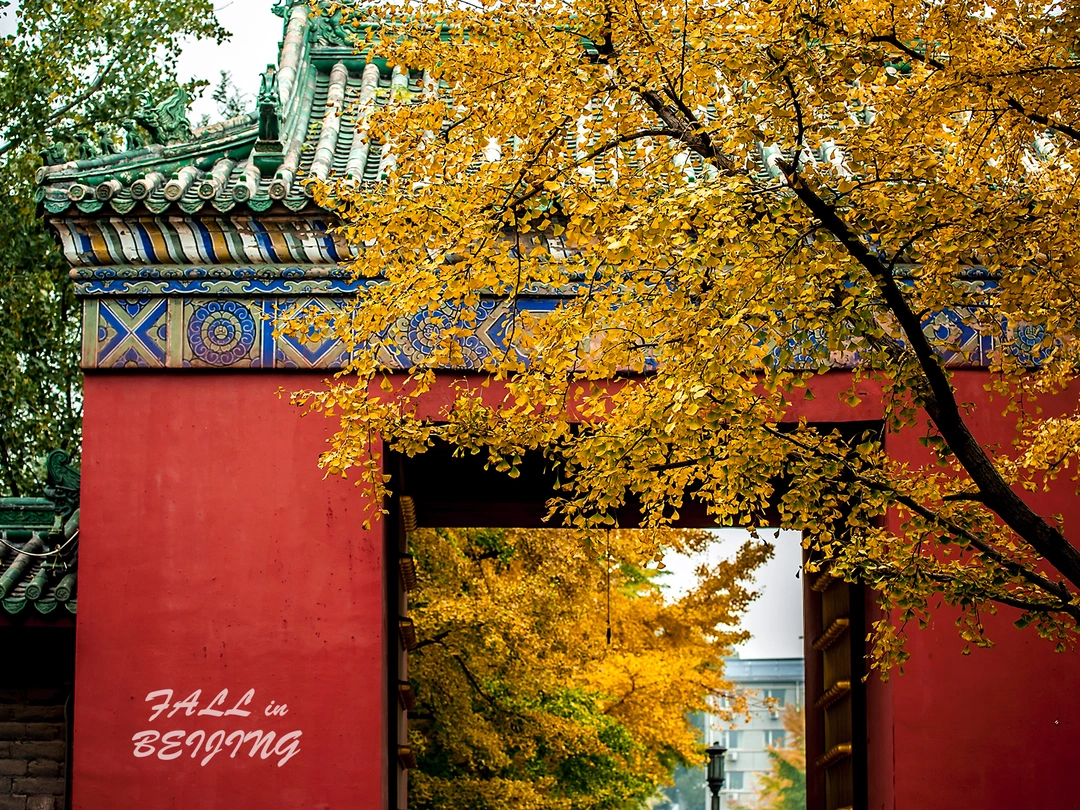
Living in Beijing: A Love Letter to Autumn – Why October Is the City's Best-Kept Secret
Meta Description: Discover why Beijing in autumn is pure magic. From golden ginkgo avenues to hidden hutong gems, this 2014 love letter captures the city's soul. Plan your fall visit now. There's a reason why old Beijing hands get misty-eyed when October rolls around. It's…
Continue reading...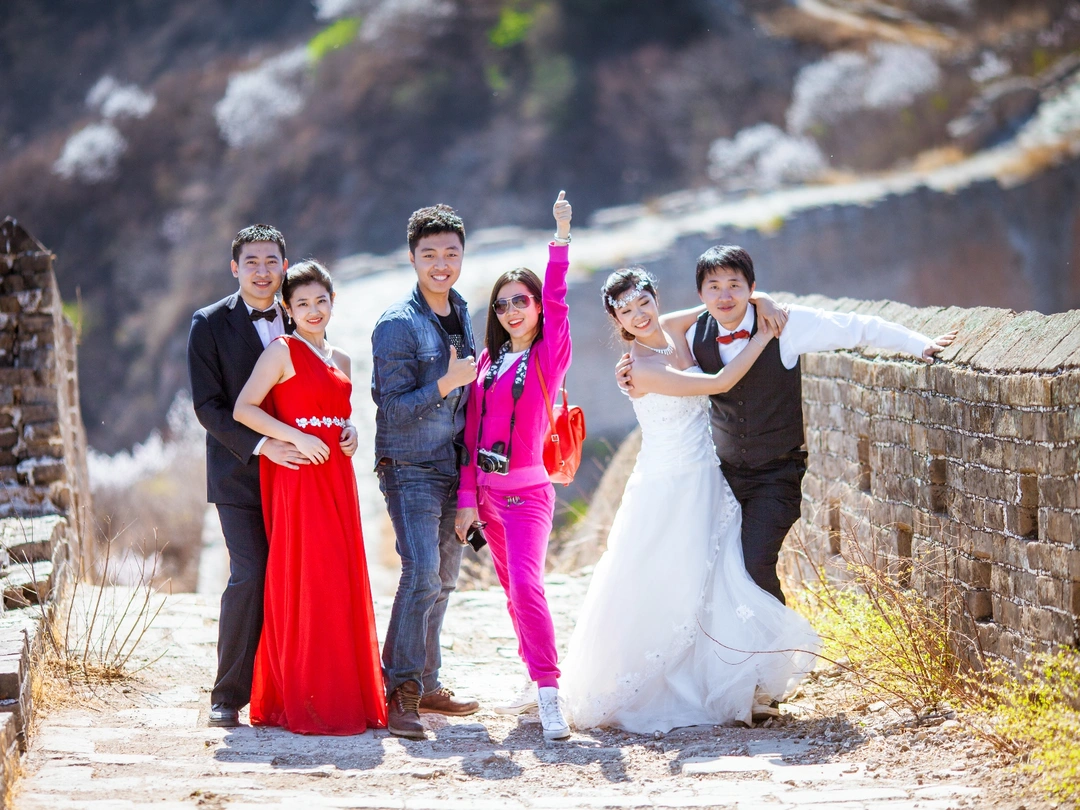
[Fish with You, Tong in Step] The Beijing We Conquered Together: A Wedding Travel Photography Gift for a Beloved Brother
Meta Description: Discover how a heartfelt Beijing wedding travel photography trip became the ultimate gift for a beloved brother. Explore Nanluoguxiang, the Forbidden City, the Great Wall, and more in this 4-day adventure filled with family, friendship, and love. There are moments in life that…
Continue reading...