So Nice to See You Again, Beijing: A Winter Reunion Across a Decade
Meta Description: Rediscover Beijing's winter magic after a decade away. From the Forbidden City's 600-year-old red walls to icy hutongs, this travel memoir captures a heartfelt reunion with China's capital.
"Cherish the loftiest ideals and the simplest life, even if tomorrow brings bitter cold, long roads, and the end of the road."
Prologue: When a Decade Becomes a Unit of Measurement
In the final days of 2019, I stood in Beijing's biting wind, watching my breath dissipate in pale winter sunlight. A full ten years had passed since I last set foot in this city.
A decade is long enough to transform a student into a working professional, to strip away youthful naivety, and to let life settle. The last time I visited Beijing, I could still buy half-price tickets with my student ID. This time, I had reached an age where "a decade" had become a meaningful unit to measure my own life.
Strangely enough, the impulse for this trip was almost willfully simple—after years of living in the south, I suddenly craved the experience of a truly northern winter. That was it. Even though I had already visited this city once, I was still willing to embark on the journey again. Because I believe that revisiting the same physical space allows us to hold a conversation with time itself.
Thank you to Tian, who walked with me through the ice and snow, freezing her fingers to capture every moment of my reunion with Beijing. And thank you to HH, whose promise made years ago gave me that extra push to make this trip happen.
A Six-Hundred-Year-Old Friend: The Forbidden City
Red That Transcends Time
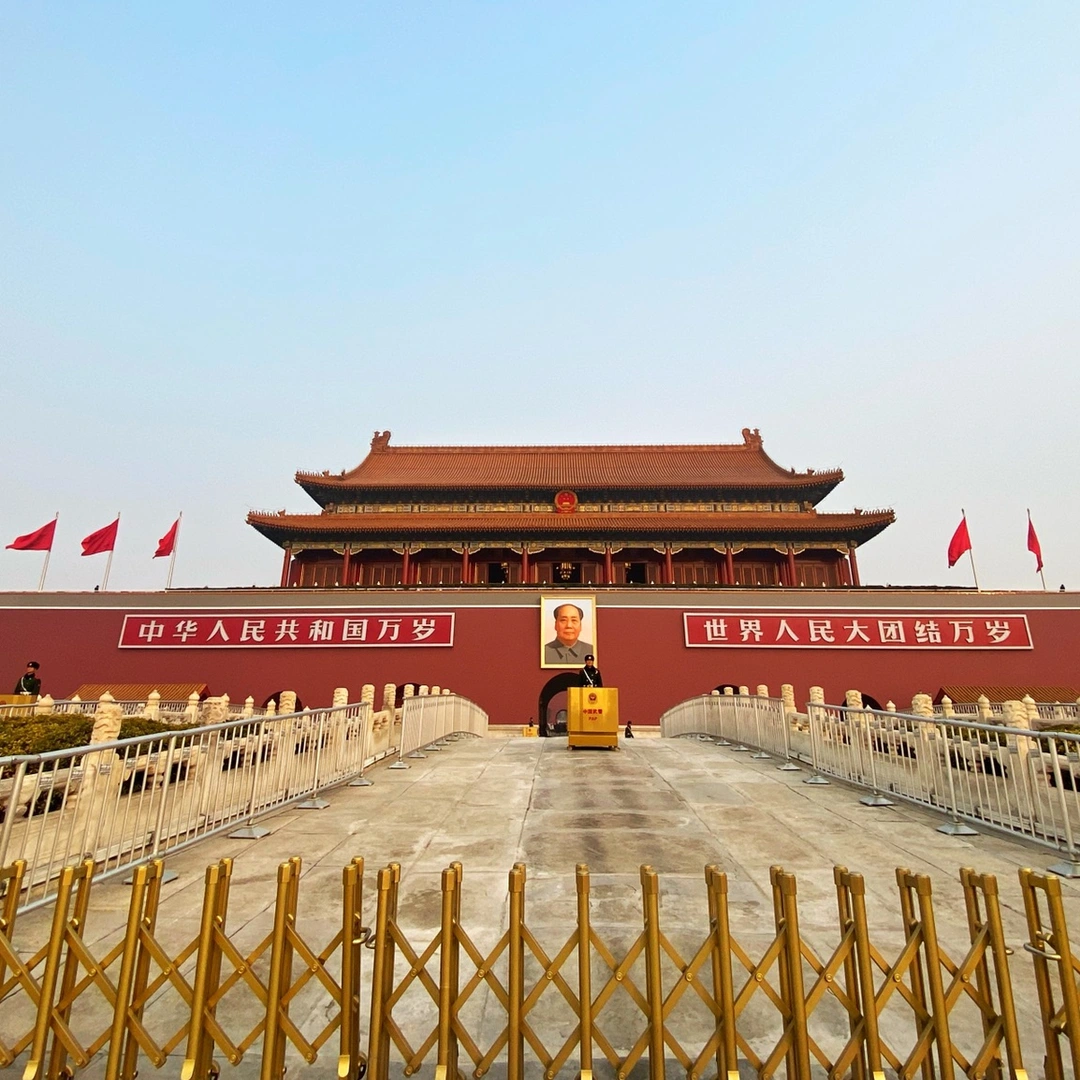
Standing in the center of Tiananmen Square, I thought—perhaps every Chinese person feels an indescribable surge of emotion here. In 2020, the Forbidden City would celebrate its six-hundredth birthday, and the Palace Museum would mark ninety-five years since its founding.
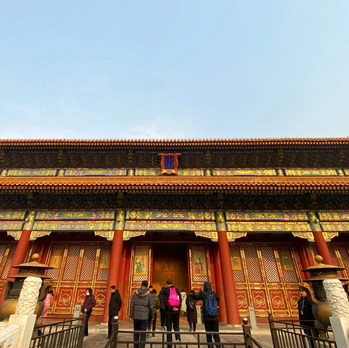
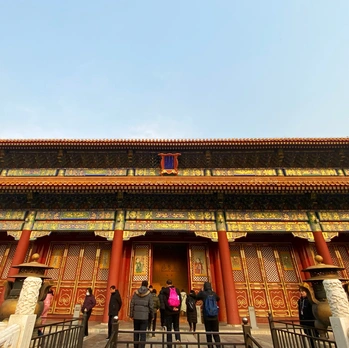
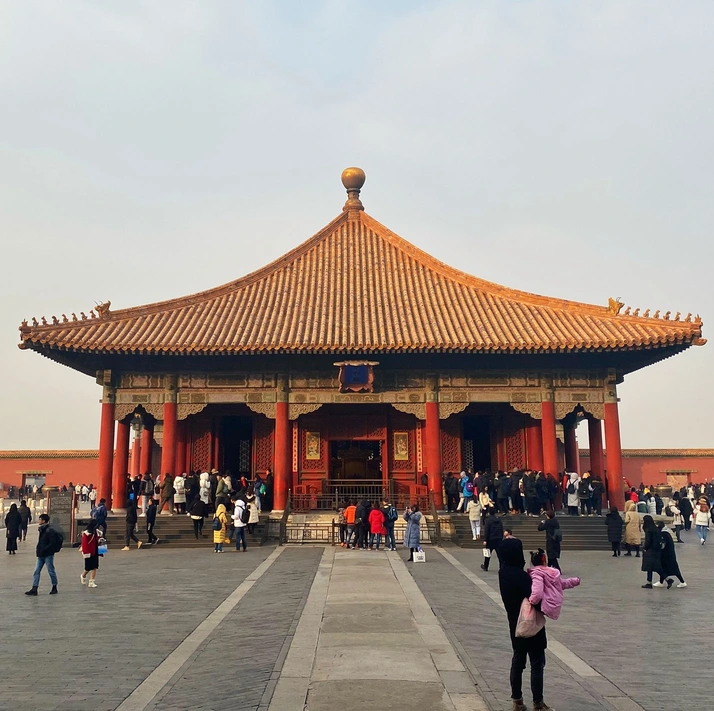
The weather on my visit wasn't great, but the ubiquitous Chinese red was still dazzling, as if telling its own story. I could still vividly recall waiting at the Meridian Gate (Wumen) a decade ago, queuing for entry. Ten years had passed, and nothing here had changed. In fact, six hundred years had passed, and it seemed unchanged as well.
Walking Through the Cracks of History
I chose a route that went West Line → East Line → Central Axis, covering most of the open areas. The West Line took me to the Hall of Compassion and Tranquility (Cining Gong) for its sculpture collection; the East Line featured the Clock and Watch Gallery and the Treasure Gallery; the Central Axis included the three main halls and the three rear palaces.
In the large exhibition halls, volunteer guides gave scheduled tours. Visitors queued orderly in front of artifact displays, while the souvenir shops buzzed with activity. Before every well-preserved palace, transparent windows reflected dense crowds of faces.
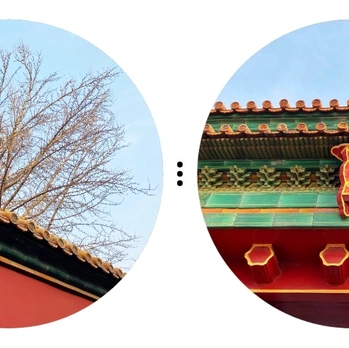
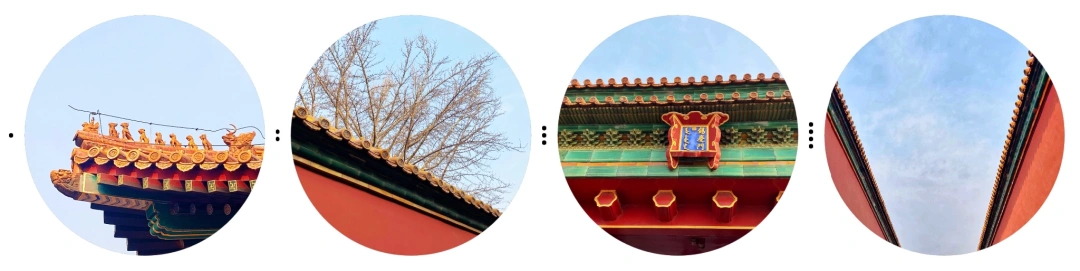
Red walls, glazed tiles, and a pale blue sky—these are the Forbidden City's most common colors. But what truly moved me were the ancient trees. Winter had stripped them of their leaves, leaving their defiant, gnarled branches even more striking. Every stone brick, every palace wall seemed to whisper softly to centuries of history. What a pity—it can witness my present, but I can never trace the past it has endured.
Treasures and Regrets
The collections in the Treasure Gallery and the Clock and Watch Gallery were astonishing in their opulence and exquisite in their craftsmanship. No matter how many years pass, they remain true "luxury goods." And that mirror at the entrance of the Treasure Gallery unexpectedly became the only photo Tian and I took together in the Forbidden City.
Passing through the Imperial Garden, the Gate of Divine Might (Shenwu Men) faces directly onto the south gate of Jingshan Park. This is the perfect spot for a panoramic view of the Forbidden City—and the ticket costs just two yuan (about 30 cents), so cheap it's almost unbelievable. Tian told me that Jingshan Hill was formed from the earth dug out during the construction of the moat (I haven't verified this, but it's an interesting story).

That day, Beijing suddenly dropped in temperature, and the fierce wind made it hard for me to speak properly. Standing atop Jingshan, my face was flushed red from the cold. My advice to anyone: if you want to see the full view of the Forbidden City, pick a clear afternoon.
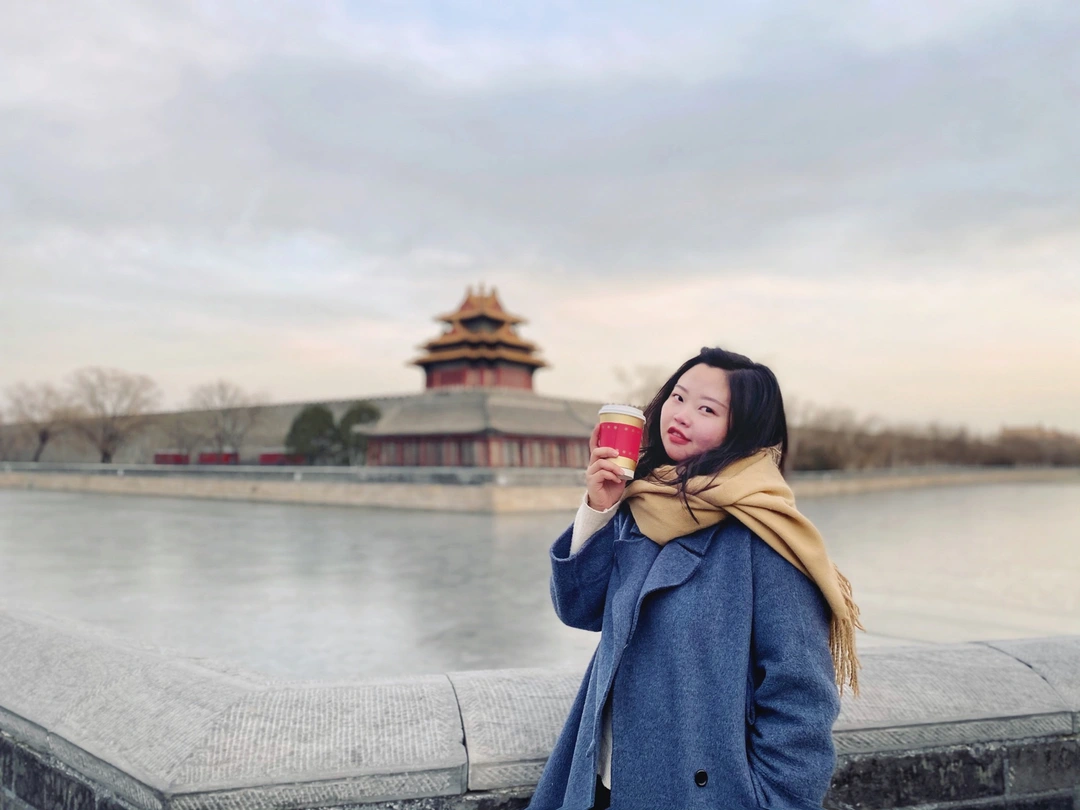
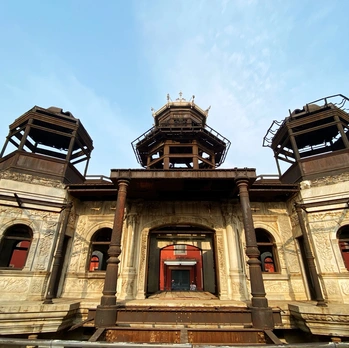
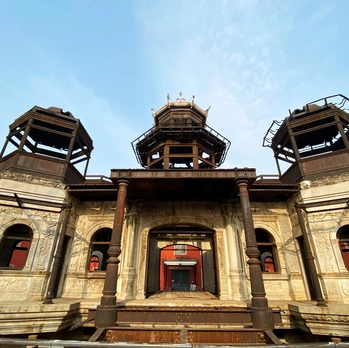
The biggest regret? It was too cold, and not a single one of the Forbidden City's famous palace cats made an appearance. At least the adorable cat sculptures at the entrance of the Corner Tower Cafe (Jiaolou Kafei), just west of the Gate of Divine Might, offered some consolation. The Forbidden City has four corner towers, and the one on the northwest side offers the best view. The coffee I had just bought at the Corner Tower Cafe had gone cold by the time I reached this corner, but paired with the view of the tower, it still had its own charm.
There's so much more I could say about the Forbidden City. But if you ask me for my takeaway, I can only say: between being in my twenties and being six hundred years old, there is an enormous gap that I simply lack the ability to describe. But it exists—it has always existed—gently waiting for every visitor who comes.
The Many Faces of Beijing: Streets and Alleys
The Hearth of the Hutongs
On the cab ride to the Bell and Drum Towers (Zhonggulou), the driver picked up on our Sichuan accent and joked, "In Beijing, we call them hutongs. In Shanghai, they're longtang. In your Chengdu, you call them hanghang'r (alleys)." And so, we found ourselves wandering aimlessly through Beijing's "hanghang'r."
The Bell and Drum Towers also sit on the city's central axis. When we reached the square, it was bustling—people walking their birds, kicking shuttlecocks, young and old alike. The setting sun hung like a salted egg yolk, stretching everyone's shadows long and thin. Around the Bell and Drum Towers, there are countless nameless little hutongs, and in the evening light, they felt especially full of life.
I loved walking through these hutongs, so I mostly chose to take buses and walk, giving myself more chances to soak up the authentic flavor of Beijing.
The Brave on the Ice
The frozen Shichahai, Houhai, and Qianhai seemed to merge into one vast ice rink. Tourist boats lay stranded on the ice, but brave souls squeezed through gaps in the iron railings, sliding onto the frozen surface to play. Music had already started playing in the bars along the shore. Food stalls were surrounded by hungry customers. Rickshaw drivers began hawking their rides.
The temperature that day was bone-chilling, but after dark, we mustered the courage to go out. The usual liveliness of Nanluoguxiang seemed dampened by the cold. We filled our empty stomachs with street food, warming the chill of the winter night.
The Temple of Heaven: A Place to Let Your Mind Wander
Our accommodation was very close to the Temple of Heaven (Tiantan) Park, so we decided to go early in the morning for a stroll. It was the gentle sunlight that gave us the courage to join the "morning exercise" crowd.
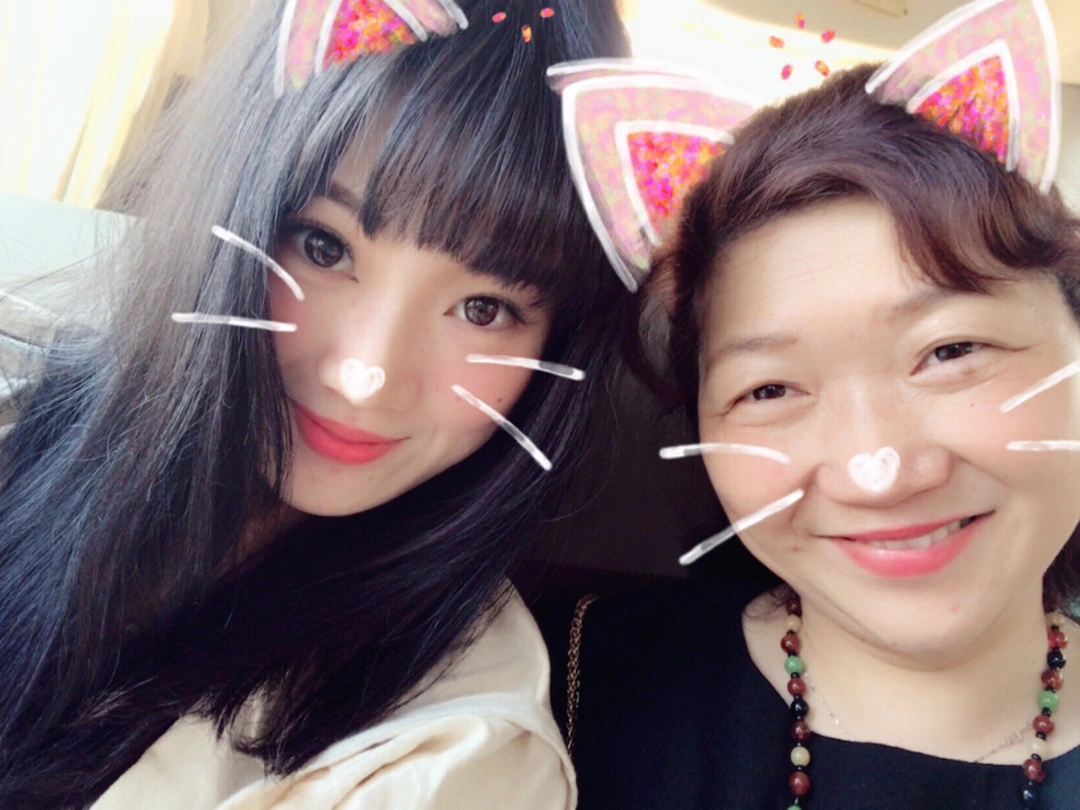
Tian told me that she once sat alone in the Temple of Heaven Park for four hours, just staring into space. I remembered the time I sat under a big tree here with my mother for a long time. This time, the two of us walked along the wide park paths, chatting idly, teasing the lively squirrels, and digesting our breakfast…
The vast emptiness of the Temple of Heaven Park provided the perfect stage for the biting wind to rush through—and also gave us inspiration for photos. The front of the Hall of Prayer for Good Harvests (Qinian Dian) was packed with people, so we quietly slipped around to the back, claiming the entire view for ourselves.
Eating to Stay Warm, Warming the Winter
Perhaps it was because those days in Beijing were so cold that we didn't dare go out without a full stomach. Paired with Tian, a fellow foodie, our conversations about food were always short and efficient:
—"That looks delicious~" —"Sir, two of those!"
Must-Try Winter Dishes in Beijing
| Dish | Where to Find It | Why It's Perfect in Winter |
|---|---|---|
| Beijing Roast Duck | Quanjude or Dadong | Rich, warming fat and crispy skin |
| Lamb Hotpot | Donglaishun | Spicy broth cuts through the cold |
| Jianbing | Street stalls near hutongs | Hot, savory breakfast on the go |
| Tanghulu | Nanluoguxiang vendors | Sweet, crunchy, and nostalgic |
[Link: Best street food in Beijing winter]
FAQ: Winter Travel in Beijing
1. Is winter a good time to visit Beijing?
 Absolutely. While temperatures drop below freezing, winter offers fewer crowds, lower prices, and a unique atmosphere—especially around the Forbidden City and frozen lakes. Just dress in layers.
2. What should I wear for a Beijing winter trip?
 Thermal underwear, a heavy down jacket, wool hat, scarf, gloves, and waterproof boots are essential. The wind can be biting, especially near Tiananmen Square and Jingshan Park.
3. How many days do I need to see the main attractions?
Plan at least 3–4 days: one for the Forbidden City and Jingshan, one for the Temple of Heaven and hutongs, one for the Summer Palace and 798 Art District, and one flexible day for food and shopping.
4. Are the Forbidden City's palace cats active in winter?
 Unfortunately, the famous palace cats tend to hide in heated areas during cold weather. You're more likely to spot them in spring or autumn. The cat sculptures at the Corner Tower Cafe are a good consolation.
5. Can I walk on the frozen lakes at Houhai or Shichahai?
Officially, it's not recommended, and railings block access. However, locals sometimes slip through gaps. If you do go, check ice thickness and avoid areas near tourist boats. Safer options include official ice skating rinks.
Planning Your Own Beijing Winter Reunion
Whether you're returning after a decade or visiting for the first time, Beijing in winter offers a unique blend of history, culture, and resilience. The cold sharpens your senses—every red wall, every gnarled tree, every bowl of steaming noodles becomes a memory you'll carry long after you've thawed out.
Ready to plan your trip? Start by booking your Forbidden City tickets online (reserve at least 7 days in advance), pack your warmest coat, and prepare for a journey that's as much about time as it is about place.
Share your own Beijing winter story in the comments below—or tag us in your photos. Because some reunions are worth waiting a decade for.
Have you visited Beijing in winter? What was your most memorable moment? Let us know!
You should also read:
Five Days in Beijing: Mother-Daughter Travel Guide to China's Capital
Meta Description: Plan the perfect Beijing mother-daughter trip with this 5-day itinerary covering the Great Wall, Forbidden City, Summer Palace, and hutong culture. Expert tips on group tours, packing, and budget-friendly travel. When my mom pulled out her beloved selfie stick and struck the classic…
Continue reading...
A Sweet Journey Through Beijing: The Hidden Philosophy of Desserts in Hutongs and Commercial Hubs
Meta Description: Discover Beijing's best dessert shops from hutongs to commercial hubs. Learn how location, aesthetics, and philosophy shape the city's sweet scene—and what entrepreneurs can learn from each. In Beijing, a city shaped by millennia of history, dessert has evolved far beyond a simple…
Continue reading...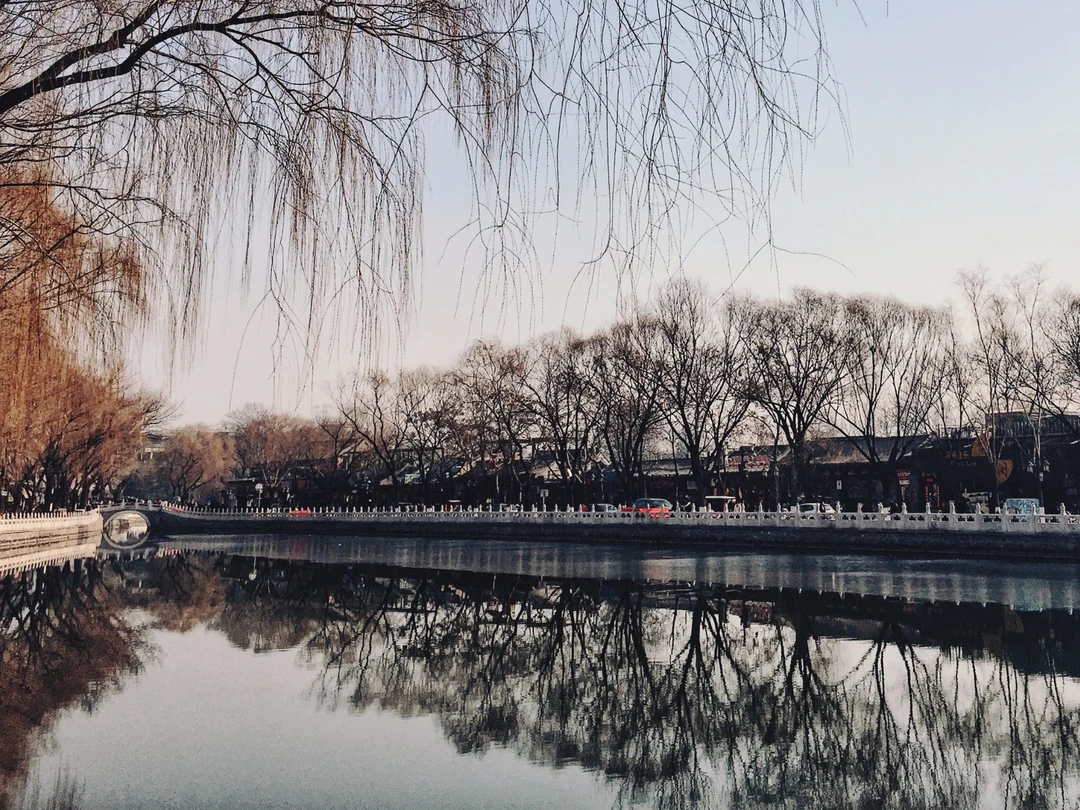
Strolling Through Old Beijing: The Ultimate Hutong Walking Tour of Nanluoguxiang, Yandaixiejie, Shichahai, and Houhai
Meta Description: Explore Beijing's historic hutongs on a day-long walking tour from Nanluoguxiang to Houhai. Discover hidden courtyards, Qing Dynasty alleys, and lakeside charm. Your complete guide to Old Beijing's most iconic neighborhoods. Beijing’s hutongs—those winding, narrow alleys—are like veins threading through the ancient capital,…
Continue reading...