Spring Breeze Is a Honored Guest: A Complete Guide to Beijing’s 2025 Spring Flowers
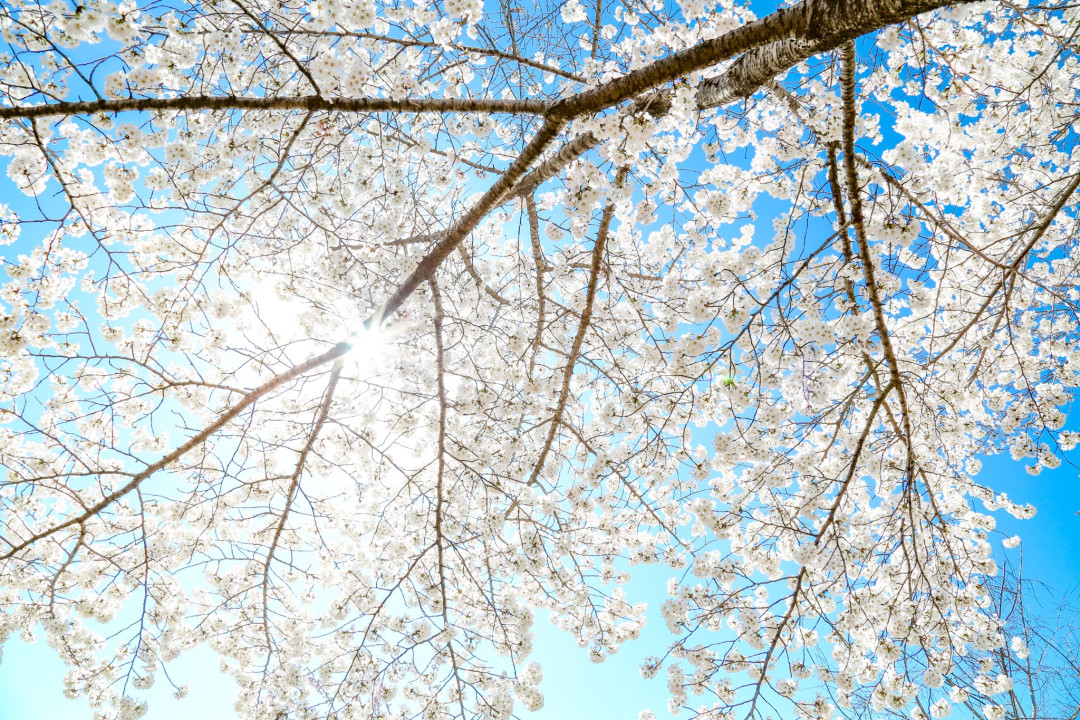
Meta Description: Plan your 2025 Beijing spring flower tour with this expert guide. Discover the best spots for mountain peach blossoms, magnolias, and cherry blossoms across the Summer Palace, Temple of Heaven, and more. Includes bloom calendar, photography tips, and a 4-day itinerary.
Introduction: Why Beijing’s Spring Flowers Are Worth the Journey
Beijing’s spring is a grand confession long in the making. When March winds sweep over the Yan Mountains, brush past the Forbidden City’s golden tiles and crimson walls, and coax the first mountain peach blossom to bloom along the West Dike of the Summer Palace, the city sheds its winter solemnity and dons its gentlest face.
Some say Beijing has only summer and winter—that spring and autumn are fleeting. But it is precisely this brevity that makes the capital’s spring blossoms so precious—like an honored guest, here one moment and gone the next, yet leaving behind a city drenched in fragrance.
In the spring equinox of 2025, I finally surrendered to my longing and embarked on this journey in pursuit of flowers. Over four days, from mountain peach to magnolia, from pear blossoms to early cherry, I chased the blooming calendar across Beijing. Today, I want to share with you this comprehensive spring flower-viewing guide—along with all the surprises and regrets along the way.
The Departure: Why You Shouldn’t Wait for “Next Year”
I’m embarrassed to admit that my longing for Beijing’s spring had been building for years. Every March, when I saw friends’ posts of the mountain peach blossoms at the Summer Palace and the magnolias at the Temple of Heaven, my heart would itch. But work, life—there were always a thousand reasons to push the plan back.
This March, when I saw news that the mountain peach blossoms at the Summer Palace had already bloomed, I couldn’t help saying to my partner, “I hope I can go to Beijing to see the flowers next year.”
My partner replied instantly: “Don’t wait for next year. Go this year. Next year will still have its own obligations. There’s no perfect time.”
With that one sentence, we took leave, bought tickets, packed our bags. Three days later, we were already on a flight to Beijing.
Sometimes, all it takes is a moment of impulse to set off. And as it turned out, that impulse was worth every second.
[Link: Best time to visit Beijing for spring flowers]
Complete 4-Day Beijing Spring Flower Itinerary
My original plan was beautiful: first see the mountain peach blossoms at the Summer Palace, Old Summer Palace, and Beihai Park, then wait for the magnolias to bloom. But Beijing’s warm winter, followed by a warm spring, completely disrupted the flowering schedule—the mountain peach blossoms faded early, the magnolias arrived ahead of time, and the blooming period shortened so abruptly that we were caught off guard.
So we became “flower chasers,” adjusting our itinerary daily based on real-time bloom reports. Our final four-day route looked like this:
Day 1: Summer Palace → Imperial Ancestral Temple → Pudu Temple → Beihai Park
Day 2: Old Summer Palace → National Botanical Garden → Wanshou Temple → Temple of Heaven
Day 3: National Botanical Garden (second visit) → Zhihua Temple
Day 4: Yuyuantan Park → Capital Airport
Practical Tips for Your Flower Tour
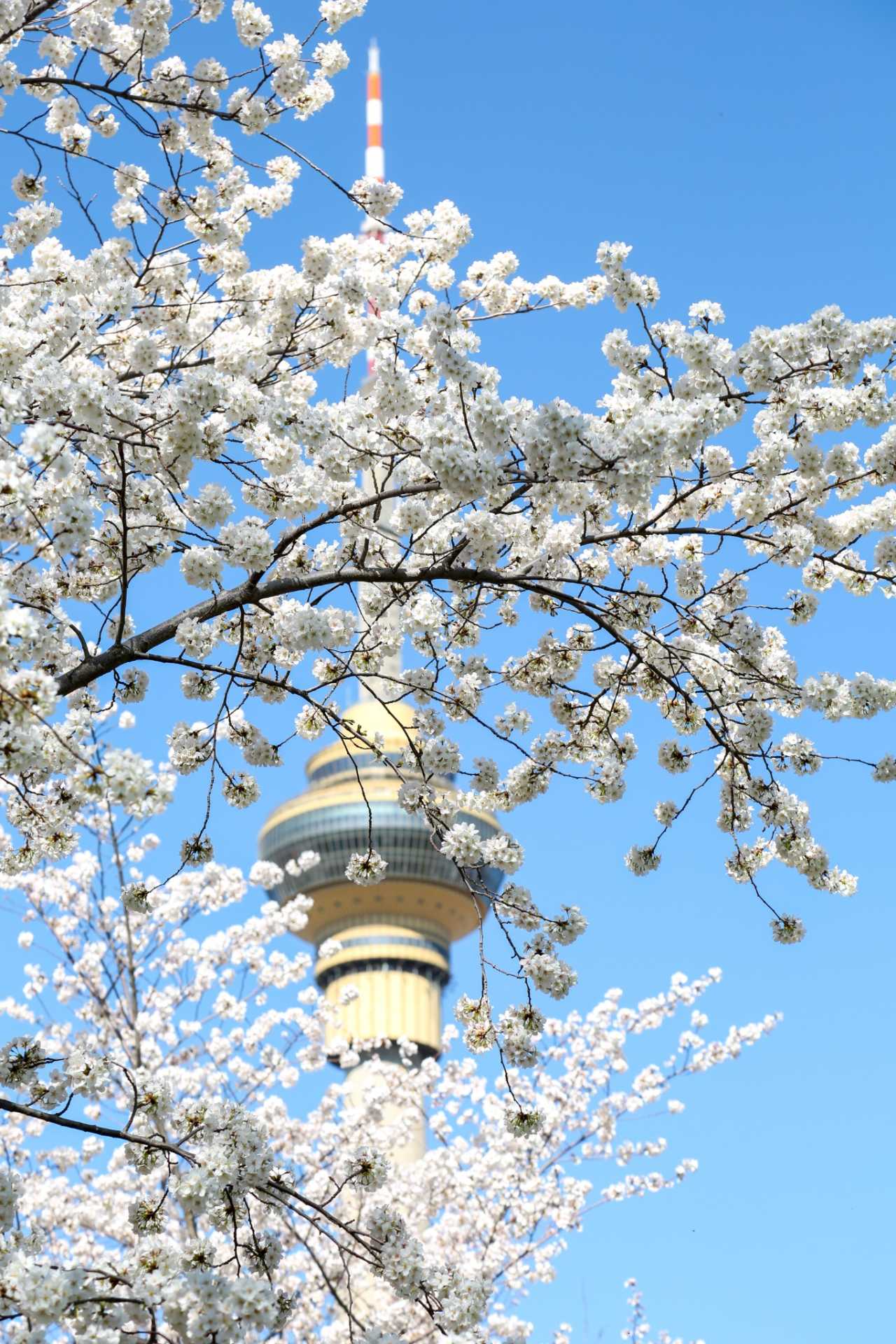
- List places beforehand, but finalize itinerary after arrival based on real-time bloom conditions
- Note closure days: The Forbidden City, Imperial Ancestral Temple, Temple of Heaven, Wanshou Temple, and Zhihua Temple are closed on Mondays
- Group attractions by area: For example, the Summer Palace, Old Summer Palace, and National Botanical Garden are all in the western suburbs
[Link: Beijing spring flower bloom calendar 2025]
Photography Tips for Spring Flowers in Beijing
After taking over a thousand photos, here are a few practical tips I’ve gathered:
Best Time of Day for Flower Photography
Mountain peach blossoms and cherry blossoms: Their colors are soft and delicate, best photographed in the early morning. Under direct midday sun, the petals are prone to overexposure and turn white.
Magnolias: Backlighting produces stunning results. Most magnolia viewing spots are in ancient architecture, where light tends to be insufficient in the early morning and late afternoon. Aim to arrive before 4:00 PM.
Gear Recommendations

- Wide-angle lens: Captures the awe-inspiring effect of “a tree full of blossoms” and preserves the relationship between flowers and their architectural surroundings
- Telephoto lens: Blurs the background, avoids crowds, and pulls in high-up flowers
Pro Tip for Crowd-Free Photos
Enter popular spots like the Summer Palace before 7:30 AM. At that hour, there are few people, the light is soft, and you can capture images where the flowers are beautiful, the scenery is stunning, and the crowds are absent.
[Link: Best camera settings for flower photography]
Day 1: Summer Palace, Imperial Ancestral Temple, Pudu Temple & Beihai Park
Summer Palace Mountain Peach Blossoms: The Breeze of Jiangnan Has Reached the Capital
I woke up at 6:00 AM to a sky of blue and white clouds. I took a taxi straight to the West Gate of the Summer Palace—saving nearly an hour compared to the subway.
I entered the park at 7:10 AM, just as the light was perfect. The mountain peach blossoms along the West Dike of the Summer Palace are one of Beijing’s great spring spectacles.
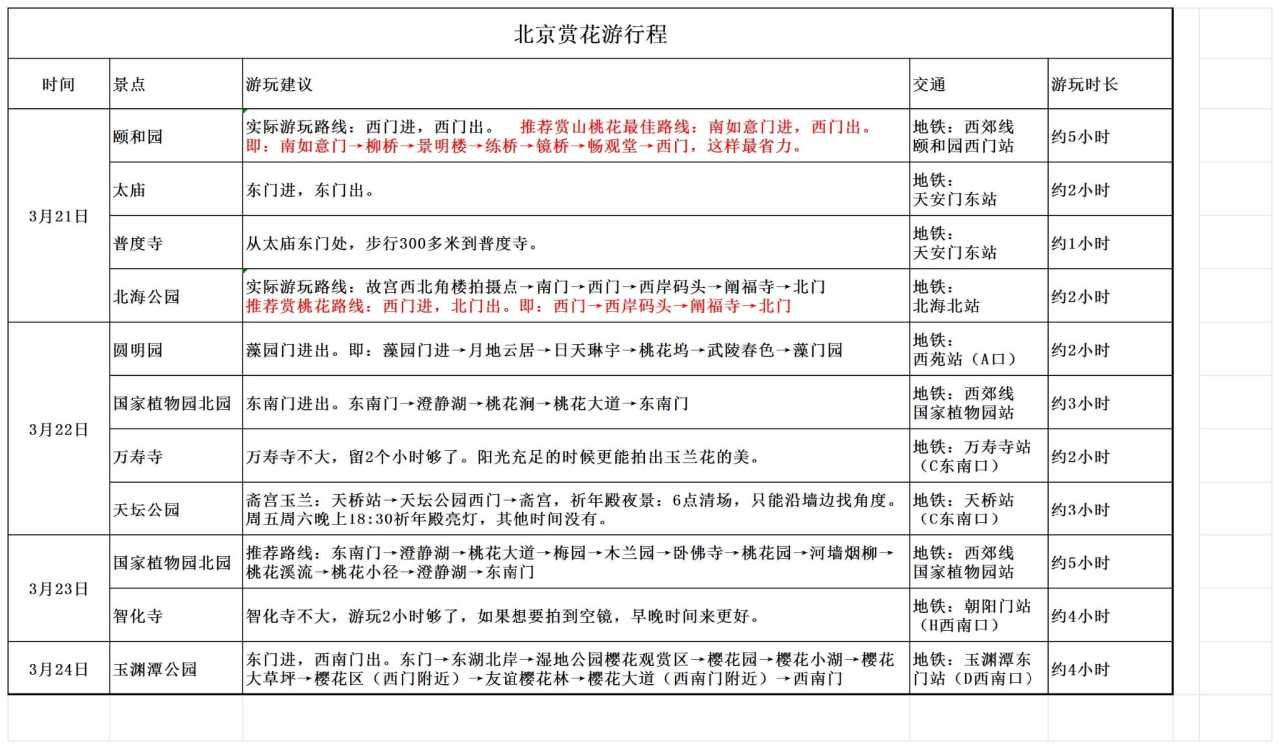
My route: West Gate → Changguan Hall → Willow Bridge → Jingming Tower → Lian Bridge → Mirror Bridge → West Gate. The entire loop took about 5 hours.
For time efficiency, I recommend this most efficient route: Enter through the South Ruyi Gate, walk along the West Dike, and exit through the West Gate. That is: South Ruyi Gate → Xiuyi Bridge → Willow Bridge → Jingming Tower → Lian Bridge → Mirror Bridge → Changguan Hall → West Gate.
Pro tip: No matter which gate you enter from, remember to follow the order of Willow Bridge → Jingming Tower → Lian Bridge → Mirror Bridge—this way, you’ll be shooting with the light behind you.
Spring at the Summer Palace is “ten thousand moments of serene brightness.” Up close, peach blossoms and green willows; in the distance, the Seventeen-Arch Bridge and the Tower of Buddhist Incense—like a spring painting slowly unfurling.
Imperial Ancestral Temple Magnolias: Blossoming Freely in the Spring Breeze
My original plan was to go to Beihai Park after the Summer Palace, but when I saw reports that the magnolias at the Imperial Ancestral Temple were in full bloom while the mountain peach blossoms at Beihai had begun to fade, I adjusted the order on the fly.
The Imperial Ancestral Temple is located on the east side of Tiananmen Square. It was where Ming and Qing emperors performed ancestral rites. Admission is only 2 RMB. Take the subway to Tiananmen East Station, Exit B, then walk about 800 meters along Nanchizi Street.
The temple grounds are quiet, with few visitors. Several tall magnolia trees stand before the red palace gates, densely covered in white blossoms. The sunlight was perfect—red walls as the canvas, white flowers as the painting. It was so beautiful it left me speechless.
A gentle breeze carried the fragrance of flowers. Unfortunately, I still had two more stops on my itinerary, so I had to hurry in and hurry out.
Pudu Temple Magnolias: Even Where No One Sees, Flowers Still Bloom
From the east gate of the Imperial Ancestral Temple to the south gate of Pudu Temple is only about 300 meters—an easy walk. This is an off-the-beaten-path spot, with few visitors even during the flower season. But the flowers don’t care; they bloom with abandon regardless.
The magnolia trees at Pudu Temple are relatively short, with dense clusters of flowers—good for portrait photography. But they lack the awe-inspiring effect of “a tree full of blossoms.” An hour is enough for a visit.
Beihai Park Spring Flowers: Spring Has Arrived at Beihai
Admission is 10 RMB. My route was a bit unusual: I first took a taxi to the northwest corner tower of the Forbidden City to snap a photo, then crossed the street to the south gate of Beihai Park. From the south gate, I walked along the road to the west gate, entered, and headed straight for the west bank dock.
Unfortunately, the peach blossoms at Beihai had already begun to fade by this point. However, the weeping willows along the lake were stunning, and the combination of ancient pavilions with spring greenery was still well worth the visit.
Day 2: Old Summer Palace, National Botanical Garden, Wanshou Temple & Temple of Heaven
Old Summer Palace Ruins and Spring Blossoms
The Old Summer Palace offers a unique contrast between historical ruins and vibrant spring flowers. The peonies and crabapple blossoms here are particularly noteworthy. The combination of broken stone arches with delicate pink petals creates a poignant, unforgettable scene.
Tip: Enter through the South Gate and head directly to the ruins area for the best photo opportunities.
National Botanical Garden: Beijing’s Spring Flower Collection
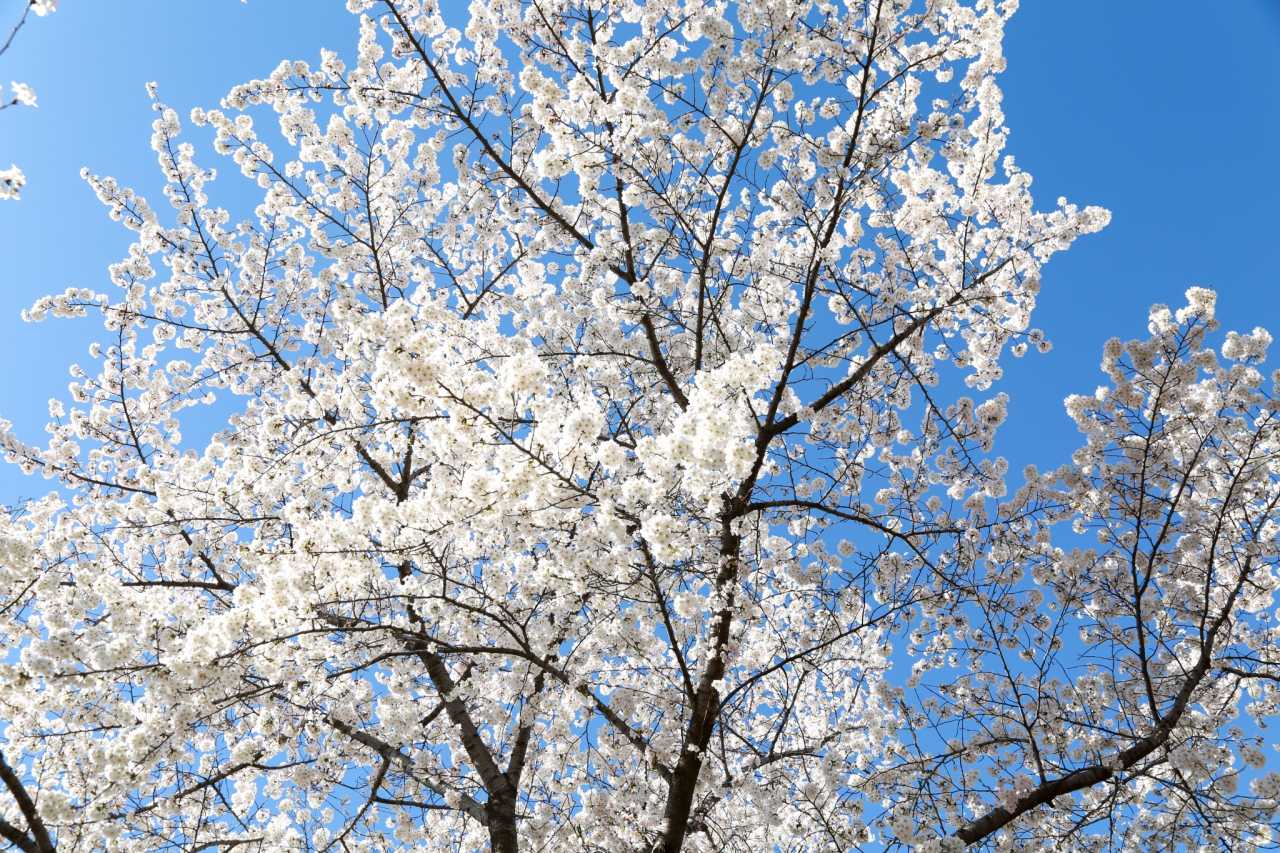
This is a must-visit for any serious flower enthusiast. The National Botanical Garden features dedicated sections for magnolias, cherry blossoms, and peonies. The magnolia garden is especially impressive, with dozens of varieties blooming in succession.
Note: We returned here on Day 3 because the blooms were so extensive. Plan at least 3-4 hours for a thorough visit.
Wanshou Temple and Temple of Heaven Magnolias
Both locations feature ancient magnolia trees set against historic architecture. The Temple of Heaven’s magnolias are particularly famous—the white blossoms against the blue-tiled roofs of the Hall of Prayer for Good Harvests create an iconic Beijing spring image.
Tip: Visit the Temple of Heaven early to avoid crowds, and don’t miss the side gardens where magnolias are less crowded.
[Link: Temple of Heaven spring flower guide]
Day 3: Second Visit to National Botanical Garden & Zhihua Temple
Zhihua Temple: A Hidden Gem for Flower Lovers
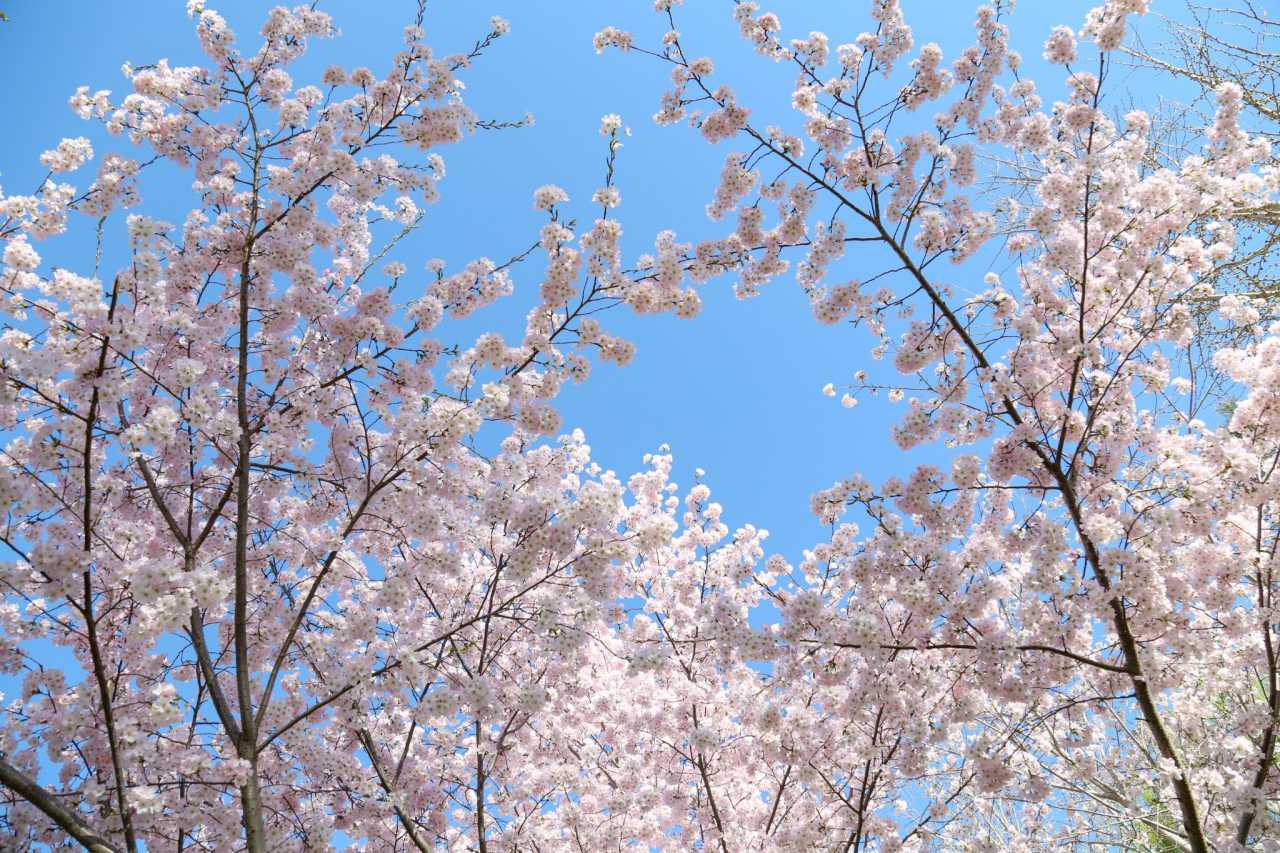
Zhihua Temple is one of Beijing’s best-kept secrets for spring flower viewing. This Ming Dynasty temple features a courtyard filled with ancient magnolia trees. The combination of dark wooden architecture and white blossoms creates a serene, almost meditative atmosphere.
Admission: 20 RMB. Allow 1.5-2 hours.
Day 4: Yuyuantan Park Cherry Blossoms
Yuyuantan Park: Beijing’s Cherry Blossom Capital
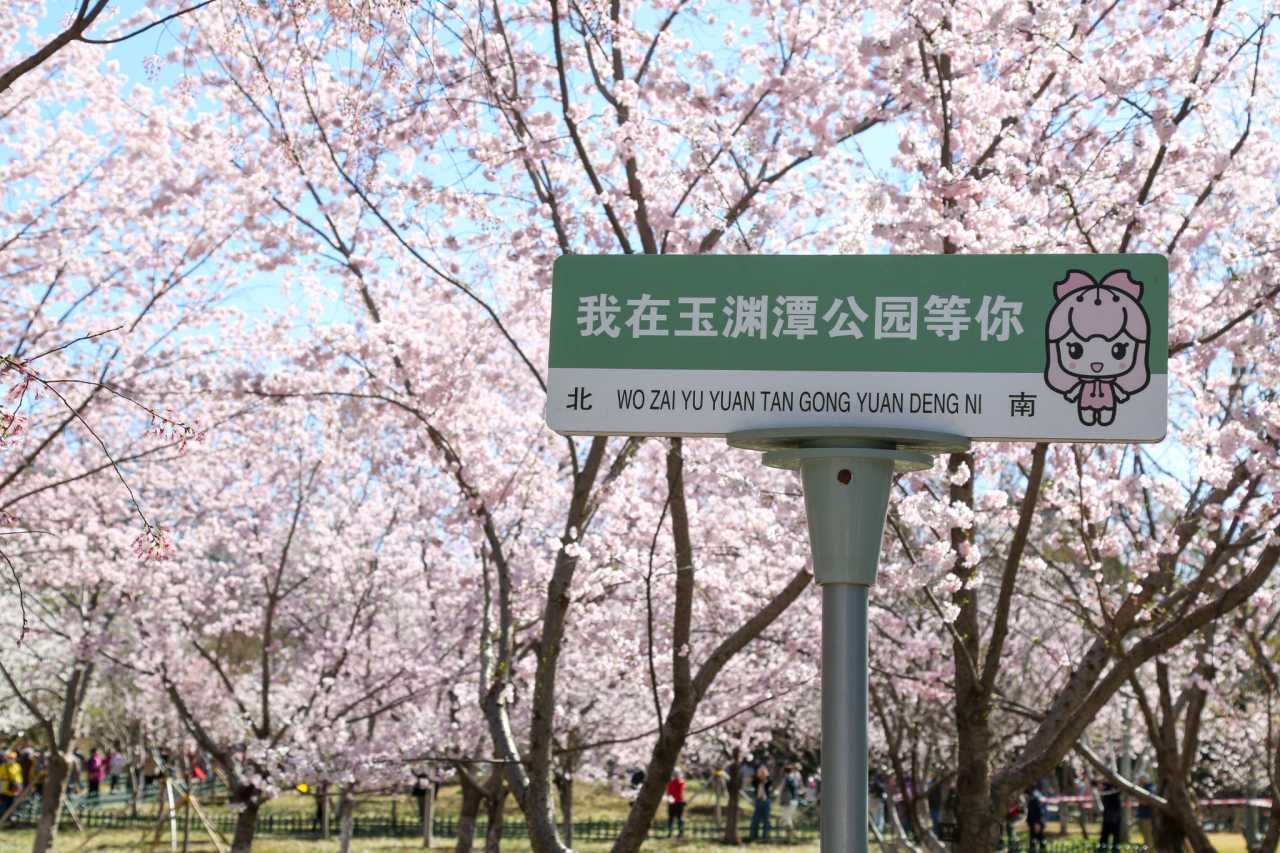
Yuyuantan Park is famous for its cherry blossom festival, which typically runs from late March to mid-April. The park features over 2,000 cherry trees of various varieties, creating a sea of pink and white.
Best route: Enter through the East Gate and walk toward the lake. The cherry blossoms along the waterfront are the most spectacular.
Tip: Visit on a weekday to avoid the massive crowds that gather during the cherry blossom festival.
FAQ: Beijing Spring Flower Viewing
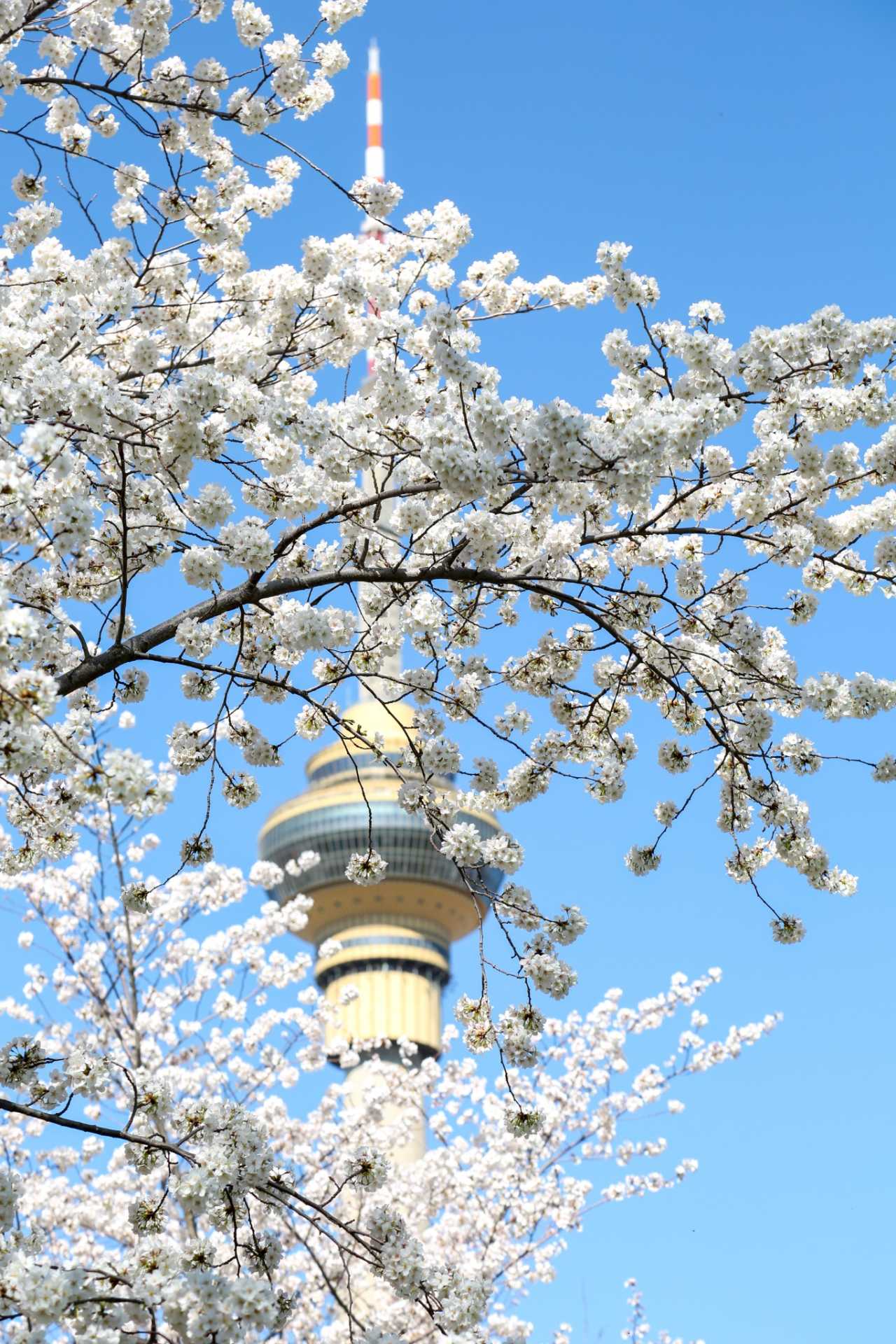
Q1: When is the best time to see spring flowers in Beijing?
The peak season typically runs from mid-March to mid-April, though exact timing varies yearly. Mountain peach blossoms bloom first (mid-March), followed by magnolias (late March to early April), and cherry blossoms (late March to mid-April).
Q2: What are the best spots for photography?
For mountain peach blossoms, the Summer Palace West Dike is unbeatable. For magnolias, visit the Imperial Ancestral Temple or Temple of Heaven. For cherry blossoms, Yuyuantan Park is the top choice.
Q3: How can I avoid the crowds?
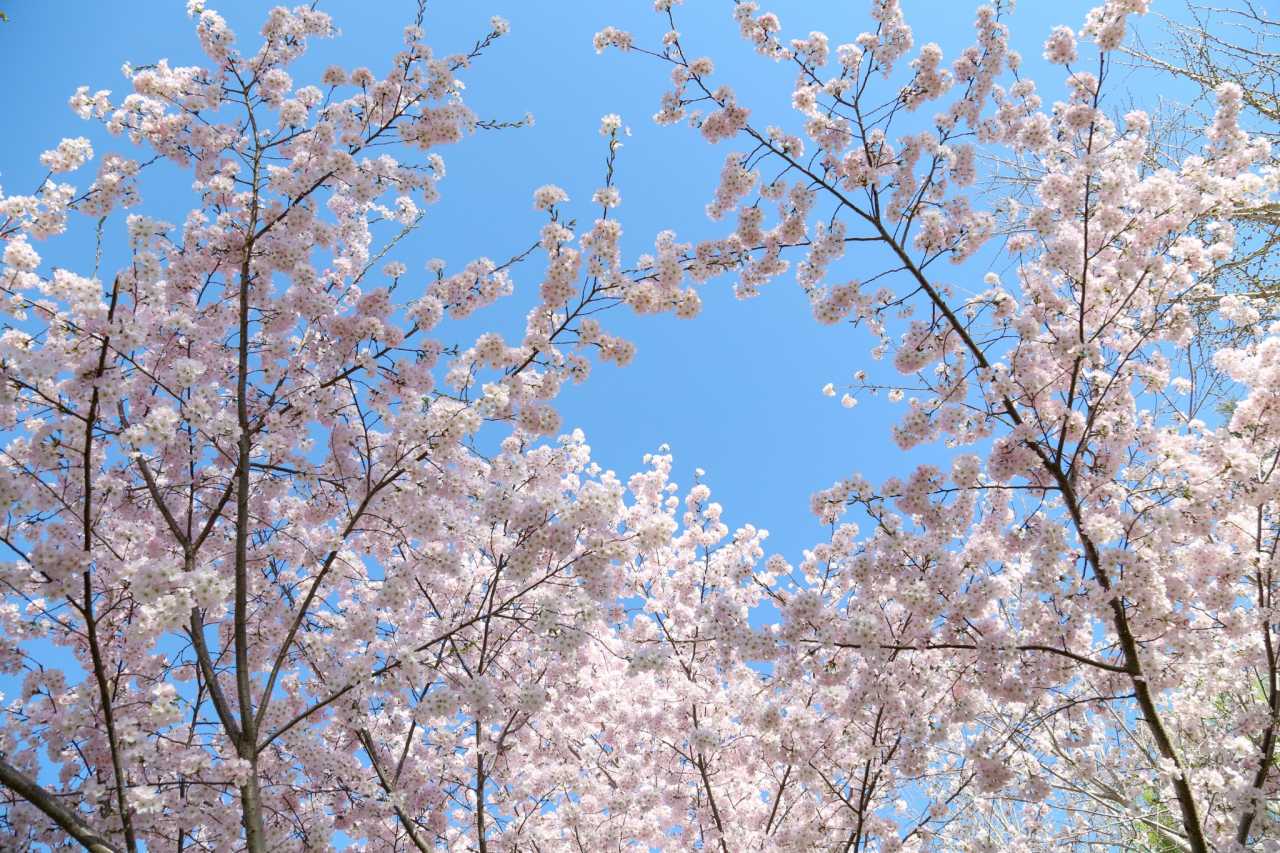
- Visit on weekdays rather than weekends
- Arrive at popular spots before 7:30 AM
- Consider off-the-beaten-path locations like Pudu Temple or Zhihua Temple
- Check real-time bloom reports to avoid peak bloom days at major attractions
Q4: What should I pack for a spring flower tour in Beijing?
- Comfortable walking shoes (you’ll walk 15,000-20,000 steps daily)
- A light jacket (mornings can be chilly)
- Camera with wide-angle and telephoto lenses
- Power bank (you’ll take hundreds of photos)
- Water and snacks (some parks have limited food options)
Q5: Are the parks crowded on weekends?
Yes, especially the Summer Palace, Temple of Heaven, and Yuyuantan Park. If you can only visit on weekends, arrive at opening time (usually 6:00-7:00 AM) to beat the crowds.
Conclusion: Your Spring Flower Adventure Awaits
Beijing’s spring is fleeting—here one moment and gone the next. But that’s precisely what makes it so precious. The mountain peach blossoms along the Summer Palace West Dike, the magnolias against the red walls of the Imperial Ancestral Temple, the cherry blossoms at Yuyuantan Park—these are memories that last a lifetime.
Don’t wait for “next year.” Book your tickets, pack your camera, and come chase the blooms. As my partner said, “There’s no perfect time. The only time is now.”
Ready to plan your trip? [Link: Book your Beijing spring flower tour]
Need more inspiration? [Link: Beijing travel guide for first-time visitors]
Have you visited Beijing in spring? Share your favorite flower-viewing spot in the comments below!
You should also read:
Seeking · Encountering · Autumn in Beijing: Your Ultimate Guide to Beijing’s Most Stunning Fall Scenery
Meta Description: Discover Beijing’s best autumn destinations beyond Fragrant Hills. From Tsinghua University’s golden ginkgo avenue to Dajue Temple’s millennium-old tree, plan your perfect fall escape with our expert guide. Autumn in Beijing is more than a season—it’s a grand farewell. When the summer heat…
Continue reading...
A Winter Journey in Beijing: Romance and Misery at Minus Five Degrees – An SEO-Optimized Travel Guide
Meta Description: Discover the romance and misery of a winter trip to Beijing at -5°C. Explore snowy Jingshan Park, historic hutongs, and budget-friendly tips for a 4-day Spring Festival adventure. Some say Beijing is a city you both love and hate. You love its profound…
Continue reading...
Beijing Through the Lens: One Person's Winter Wanderings – An SEO-Optimized Travel Guide
Meta Description: Discover Beijing's winter charm through a photographer's lens. From Nanluoguxiang's night scenes to Sanlitun's neon glow, explore the city's hidden corners and iconic landmarks in this SEO-friendly travel guide. January in Beijing is so cold you can hear your own breath. But for…
Continue reading...