The Bridges of the Summer Palace: A Waterborne Poem of an Imperial Garden
Here is the SEO-optimized and rewritten article, structured for high readability, keyword density, and user engagement.
SEO Title: The Bridges of the Summer Palace: A Waterborne Poem of an Imperial Garden
Meta Description (160 chars): Explore the 56 bridges of the Summer Palace, from the iconic Seventeen-Arch Bridge to the Jade Belt Bridge. A guide to history, architecture, and imperial design.
The Bridges of the Summer Palace: A Waterborne Poem of an Imperial Garden
“Read ten thousand books, travel ten thousand miles.” This ancient proverb finds its perfect architectural expression in the bridges of the Summer Palace. These are not merely crossings over water; they are fragments of history frozen in stone, flowing poems suspended in midair. Some arch high like rainbows, some lie flat like silk sashes, and others are as exquisite as paintings. Above the emerald waters of Kunming Lake and amidst the lush greenery of Longevity Hill, these structures quietly recount over two centuries of dynastic change.
Chinese garden art prizes the concept of “small bridges over flowing water”—no garden is complete without them. As the pinnacle of imperial garden design, the Summer Palace bridges took this philosophy to its fullest expression. During the Qianlong reign, when the Garden of Clear Ripples (the Summer Palace’s predecessor) broke ground northwest of Beijing, elegant stone bridges began to take root among the hills and waters. Fortunately, most of these survived the great fire set by the Anglo-French forces in 1860. During the Guangxu era, when the garden was rebuilt for Empress Dowager Cixi and renamed the Summer Palace, these bridges were restored to their former glory.
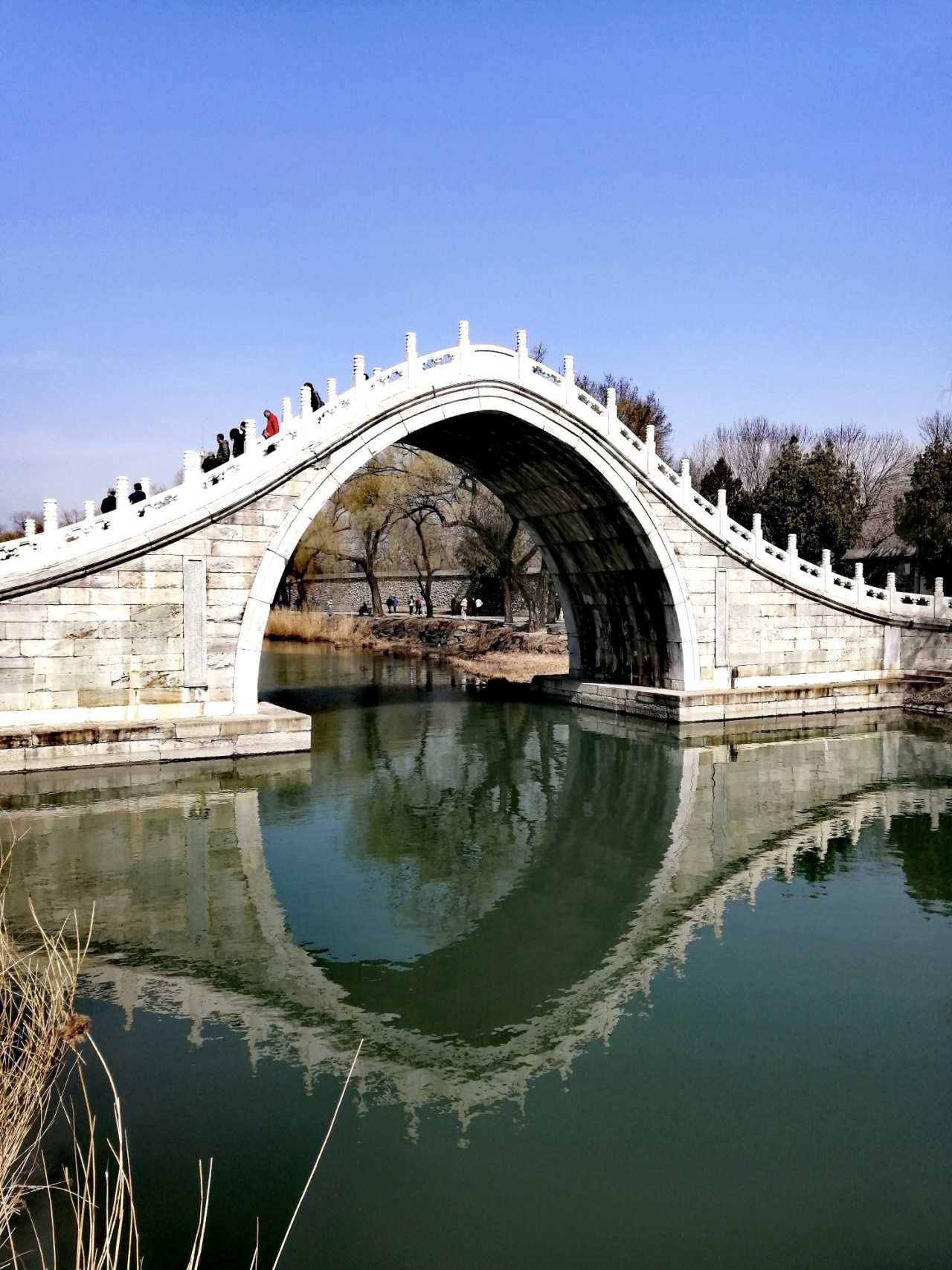
According to historical records, the Summer Palace contains fifty-six bridges in total. They come in a dazzling variety of shapes and forms. More than mere passageways connecting scenic spots, they are exquisite works of art. Flat bridges, such as the Bridge of Knowing Fish, sit low over the water, giving those who walk across them the sensation of “skimming across ripples.” Arch bridges, like the Embroidery Ripple Bridge and the Jade Belt Bridge, rise high like rainbows, extending the sense of depth across the lake’s surface. Covered bridges, such as the Bin Feng Bridge, offer shelter from sun and rain. Bridge and water—one still, one in motion—complement each other perfectly, forming the most moving highlights of this UNESCO World Heritage site.
The First Bridge of Kunming Lake: Embroidery Ripple Bridge (Xiu Yi Qiao)
If you enter the Summer Palace through the South Ruyi Gate, the first sight to greet your eyes is the Embroidery Ripple Bridge, known as the “First Bridge of Kunming Lake.” Built in 1750, this single-arch stone bridge stands at the junction of Kunming Lake’s southeastern shore and the Long River. It serves as a vital water-and-land link between the East Dyke and the West Dyke, and between the Long River and Kunming Lake.
The bridge’s design mimics the single-arch stone bridges of Jiangnan’s water towns. Running east to west, it vaults high over the outlet where Kunming Lake flows into the Long River. Because its arched shape resembles a hunchback, old Beijingers affectionately call it the “Hunchback Bridge.” The structure is made of white marble, with a span of nineteen meters and a height of about nine meters, making it the tallest arch bridge in the Summer Palace.
In the Qing Dynasty, when the emperor and empress boarded painted pleasure boats, they would travel along the Long River and pass beneath this bridge to enter Kunming Lake. For this reason, the bridge was deliberately designed with a high, single arch—both to allow the boats to pass smoothly and to maintain its graceful silhouette. At the center of the railing is a plaque bearing the bridge’s name in the calligraphy of the Qianlong Emperor himself.
Interestingly, the Embroidery Ripple Bridge closely resembles the Jade Belt Bridge on the West Dyke. One stands in the east, the other in the west, echoing each other across the water like a pair of “sister bridges.”
[Link: Summer Palace South Ruyi Gate History]
The Longest Bridge in the Summer Palace: Seventeen-Arch Bridge
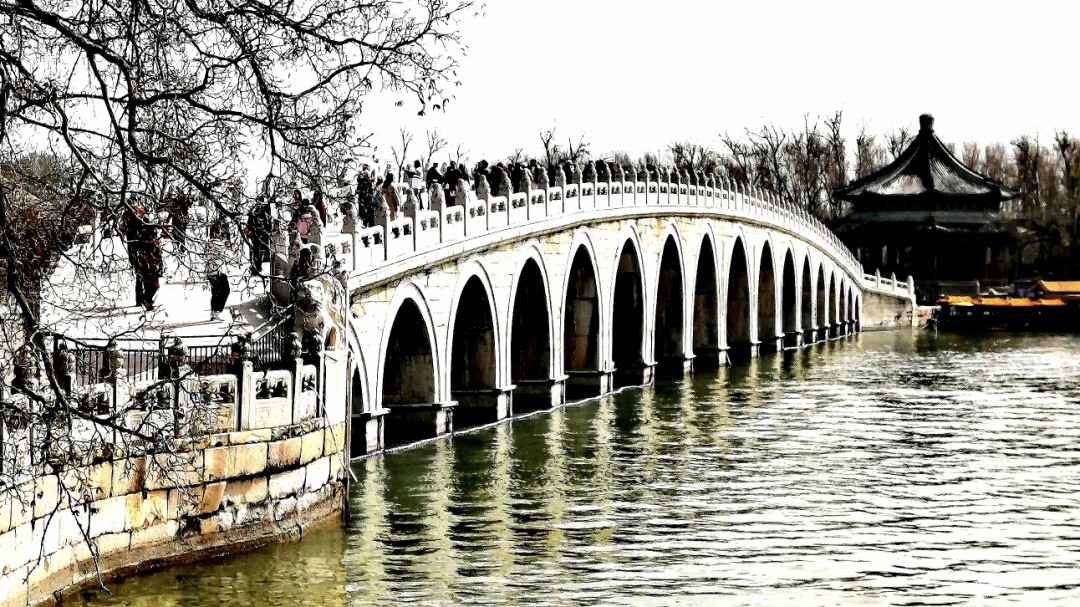
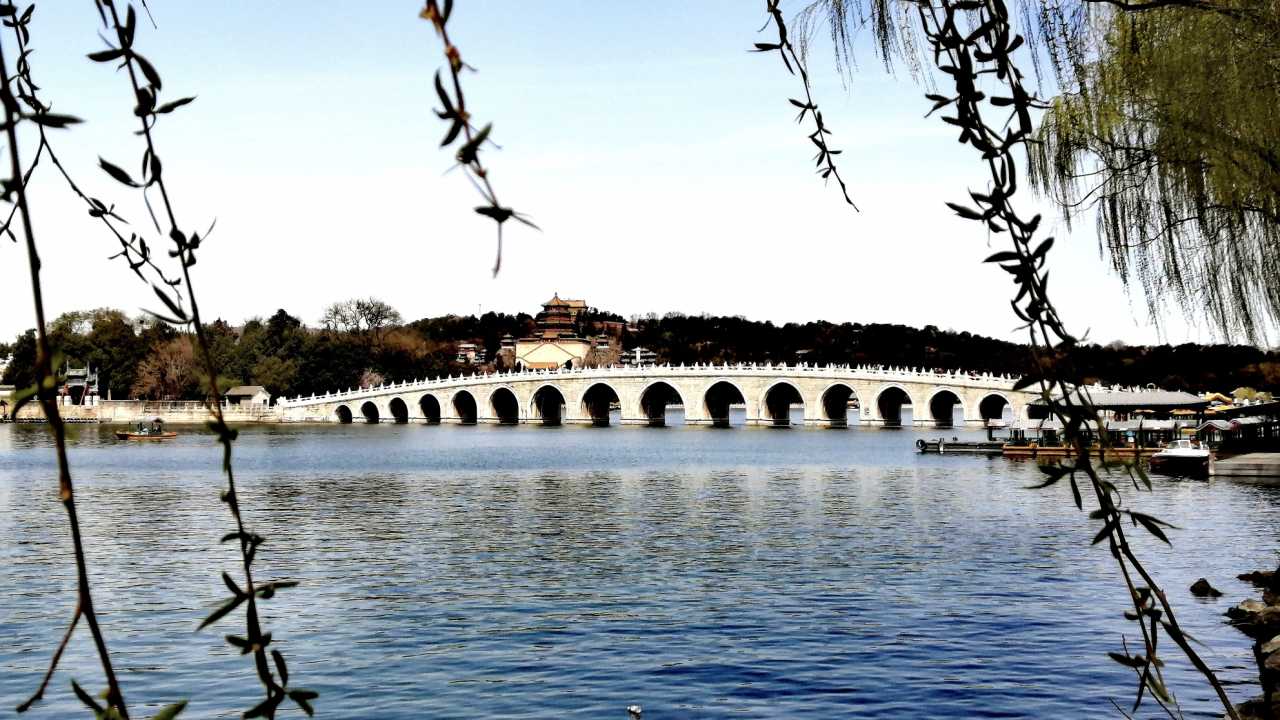
If the Embroidery Ripple Bridge is the “face” of Kunming Lake, then the Seventeen-Arch Bridge is the “soul” of the Summer Palace. Stretching one hundred fifty meters in length and eight meters in width, this stone bridge connects South Lake Island in the west to the Kuo Ru Pavilion in the east. From a distance, it appears as a rainbow arcing across the blue waves.
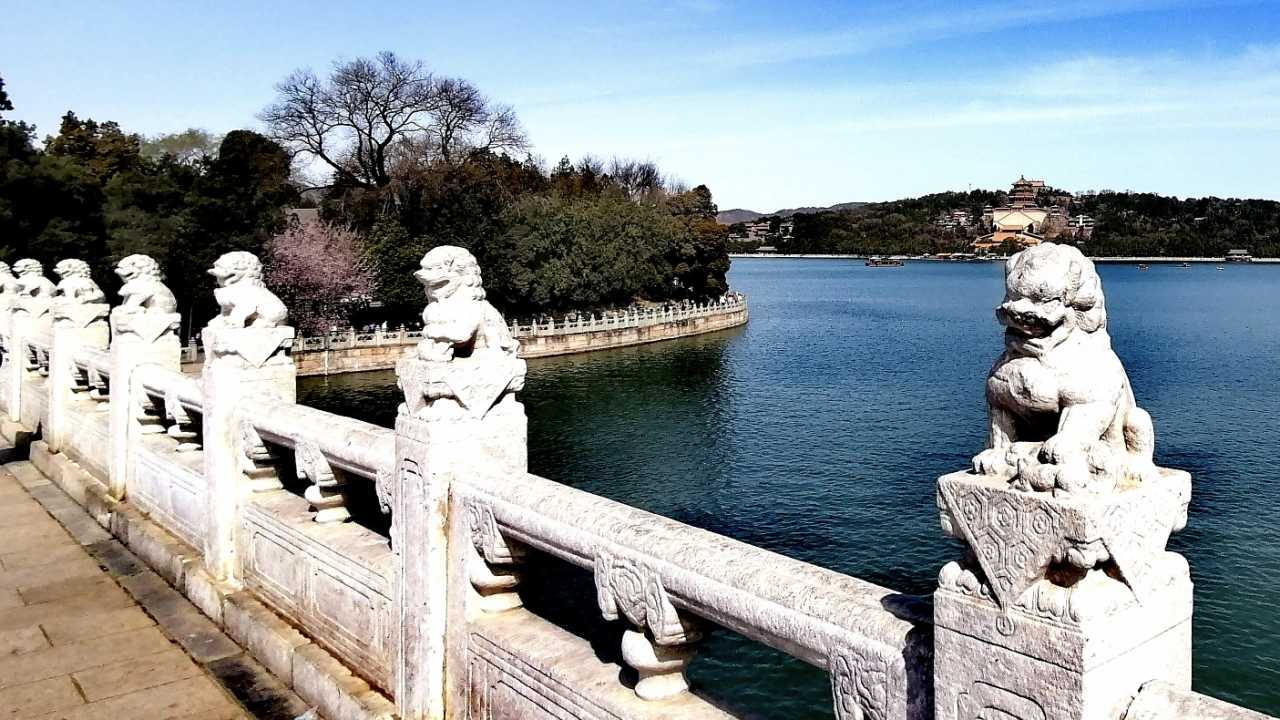
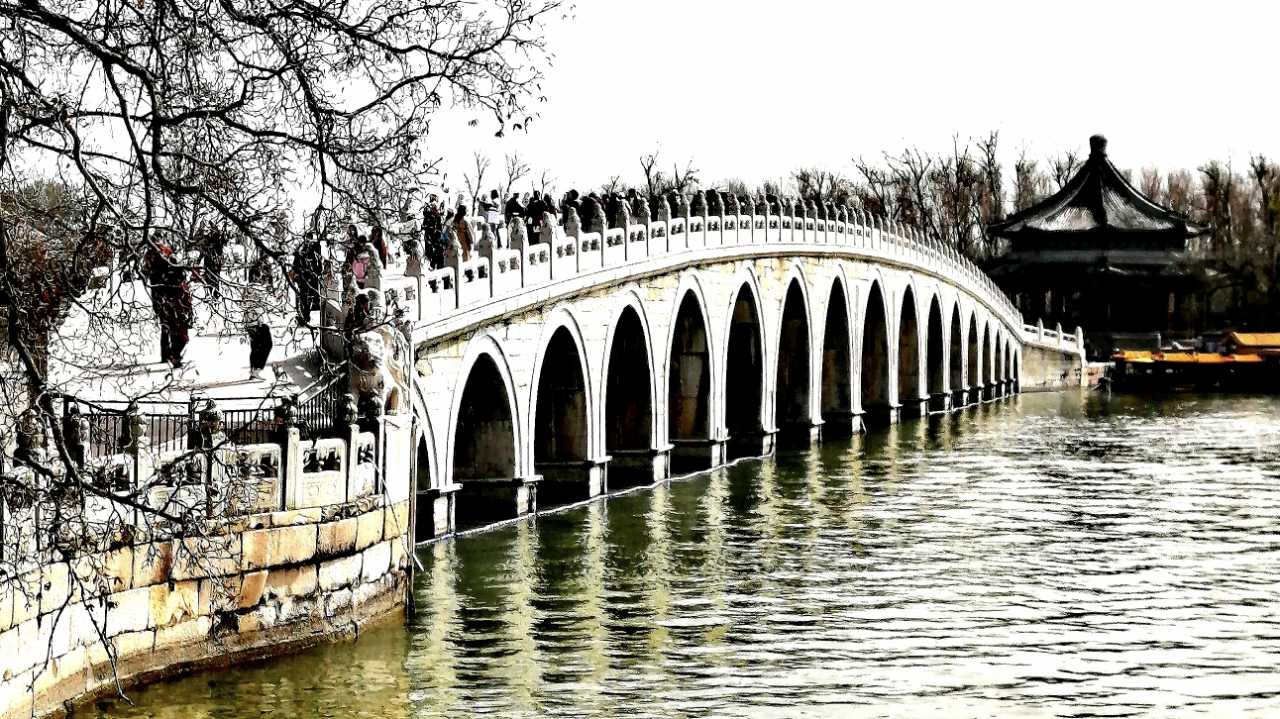
The seventeen arches are arranged symmetrically: the center arch is the largest, with the others gradually diminishing in size on either side, creating a powerful rhythmic effect. On the central balustrade, the north side bears the inscription “Divine Beast Crouching Beneath the Moon,” while the south side reads “Long Rainbow Striding Over the Ripples.” The stone carvings are extraordinarily intricate. The balustrade pillars are adorned with over five hundred lions, each with a distinct expression. At the bridge’s ends stand four stone mythical beasts, fierce and lifelike in appearance.
Pro Tip: Every year around the winter solstice, a spectacular phenomenon known as “Golden Light Piercing the Arches” takes place. As the sun sets in the west, golden rays stream through all seventeen arches, illuminating the entire bridge as if gilding it with a layer of golden light. This is the best time for Summer Palace photography.
[Link: Best Time to Visit Summer Palace]
The Tallest Three-Arch Stone Bridge: Three-Arch Long Bridge

Located in the middle section of the Back Lake (Hou Xi He) , the Three-Arch Long Bridge is the tallest three-arch stone bridge in the Summer Palace and the second largest after the Seventeen-Arch Bridge. Its northern end faces the North Palace Gate, while its southern end leads to the “Ci Fu” memorial archway.
The bridge body is built of granite, with white marble railings. It is wide and its arches are lofty, yet the slope of the deck is gentle and easy to climb. This design gives visitors a sense of grandeur without strain, making it a favorite for those exploring the quieter northern sections of the garden.
The Golden Water Bridge: The Highest-Ranking Bridge
Between the Pai Yun Gate and the Second Palace Gate stands a single-arch stone bridge called the Golden Water Bridge. This is the highest-ranking bridge within the Summer Palace. It spans a square lotus pond, its white marble balustrades decorated with cloud-and-wave carvings on the pillar heads, while the panels bear motifs symbolizing peace and good fortune.
The Golden Water Bridge was built in 1886 under Empress Dowager Cixi’s orders. In those days, it served as the boundary line where ministers would pay their respects during Cixi’s birthday celebrations. Officials of the first rank knelt north of the bridge, those of the second rank knelt to the south, while civil and military officials of the third rank and below had to kneel outside the Pai Yun Gate. A single bridge thus drew a stark line of hierarchical distinction.
The Six Bridges of the West Dyke: A Royal Rendition of Jiangnan Charm
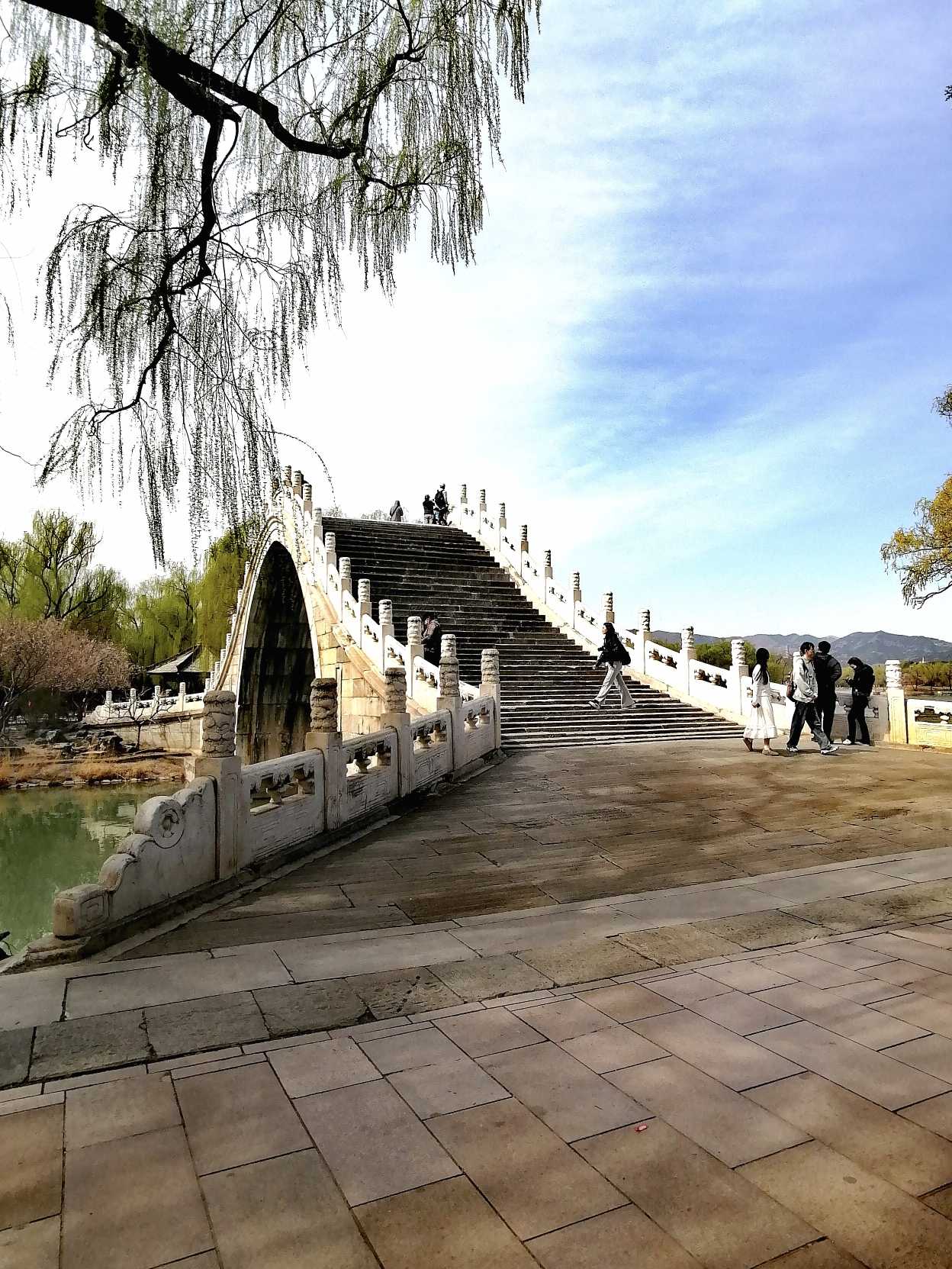
The West Dyke runs north-south along the western side of Kunming Lake, stretching approximately 2.8 kilometers. The Qianlong Emperor, enamored with the landscapes of Jiangnan (the region south of the Yangtze River), ordered it built in imitation of the Su Dyke at West Lake in Hangzhou. However, unlike the straight Su Dyke, the West Dyke was deliberately designed to be winding and meandering, giving the scenery greater depth and layering.
The six bridges of the West Dyke, from south to north, are: Willow Bridge (Liu Qiao) , Silk Bridge (Lian Qiao) , Mirror Bridge (Jing Qiao) , Jade Belt Bridge (Yu Dai Qiao) , Bin Feng Bridge, and Boundary Lake Bridge (Jie Hu Qiao) . Each bridge features a different style of pavilion, with double eaves, glazed tiles, and richly painted beams and rafters—a vivid expression of imperial grandeur.
Willow Bridge: Poetic Grace
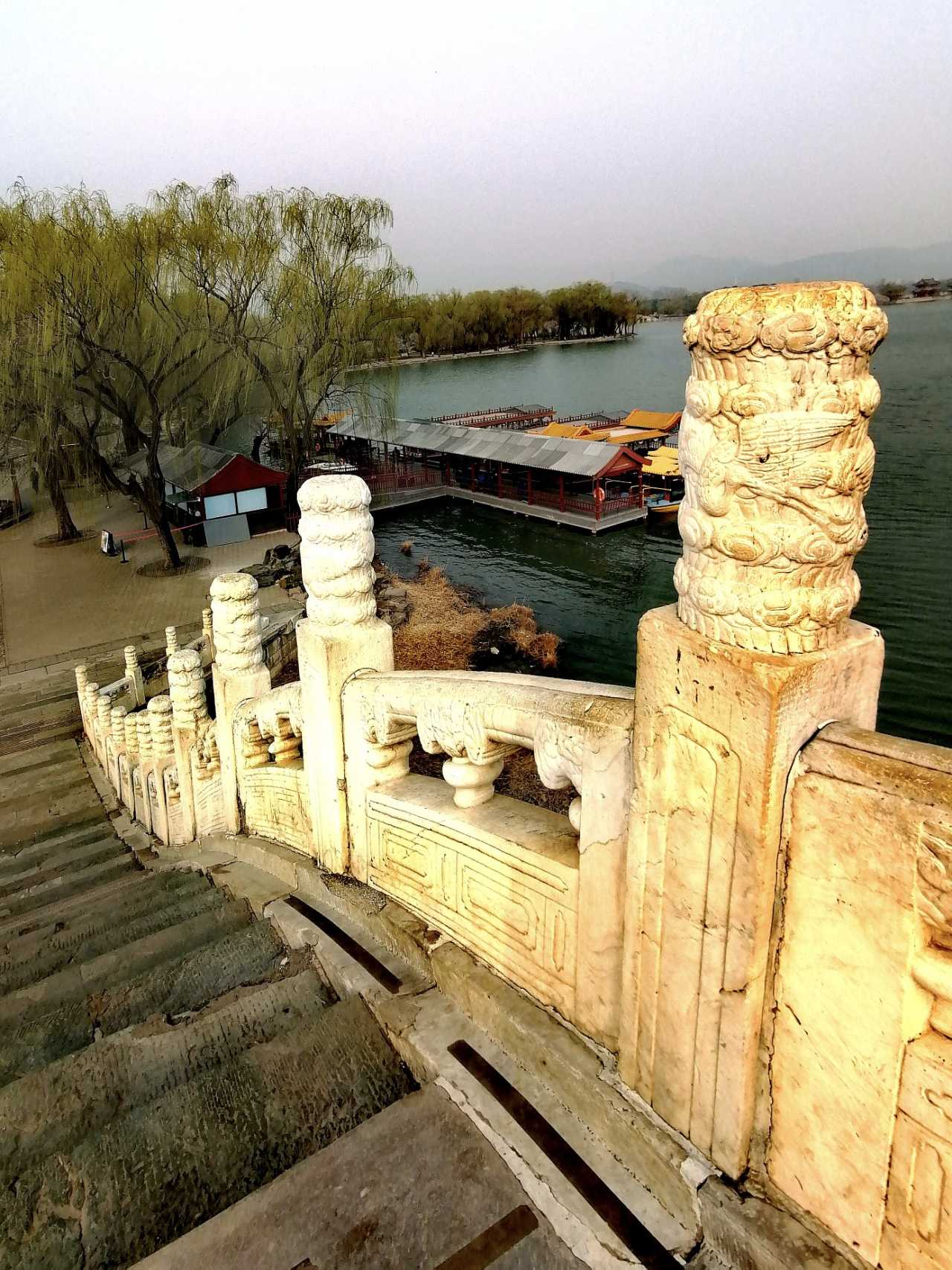
Enter through the South Ruyi Gate, turn left and walk west for over six hundred meters to reach the West Dyke. The Willow Bridge is the first you will encounter. It is named for the weeping willows that surround it, creating a poetic, soft landscape that contrasts sharply with the grand imperial halls.
Jade Belt Bridge: The Iconic Arch
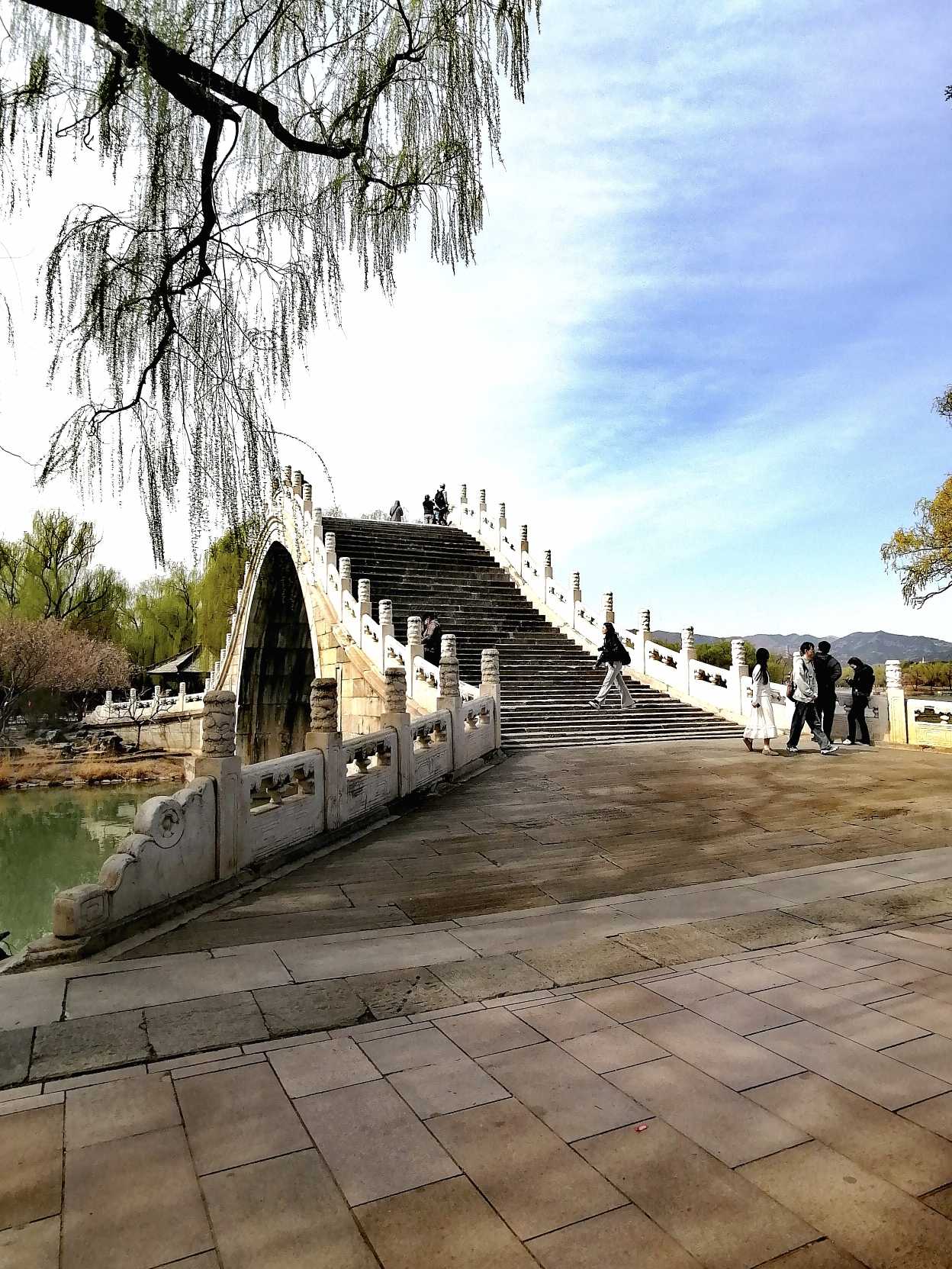
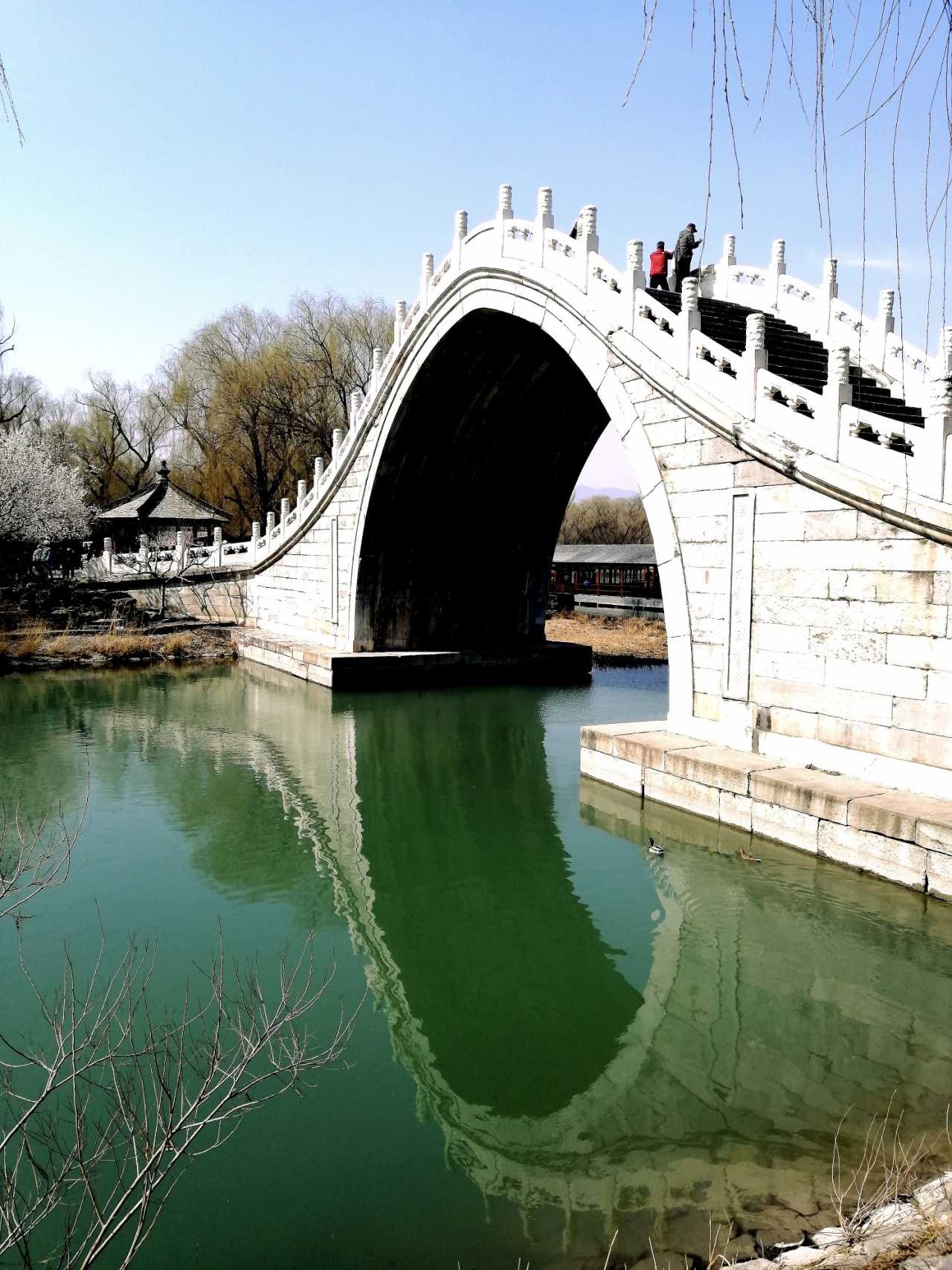
The Jade Belt Bridge is arguably the most photographed bridge on the West Dyke. Its high, thin arch and white marble construction create a perfect semicircle over the water. It was designed to allow the Emperor’s dragon boat to pass underneath without lowering its sails.
[Link: Kunming Lake Boat Tours]
FAQ: Bridges of the Summer Palace
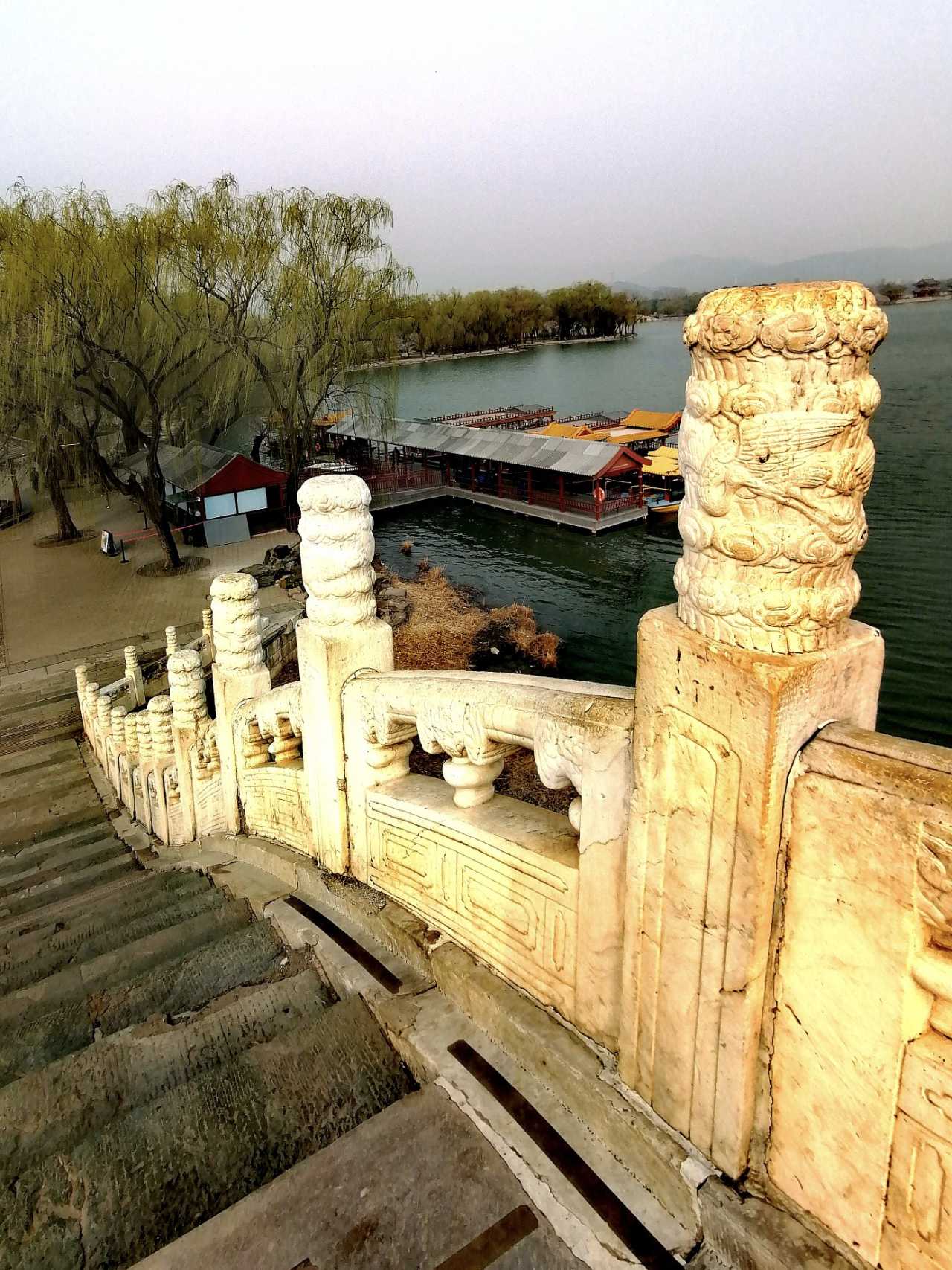
1. How many bridges are in the Summer Palace?
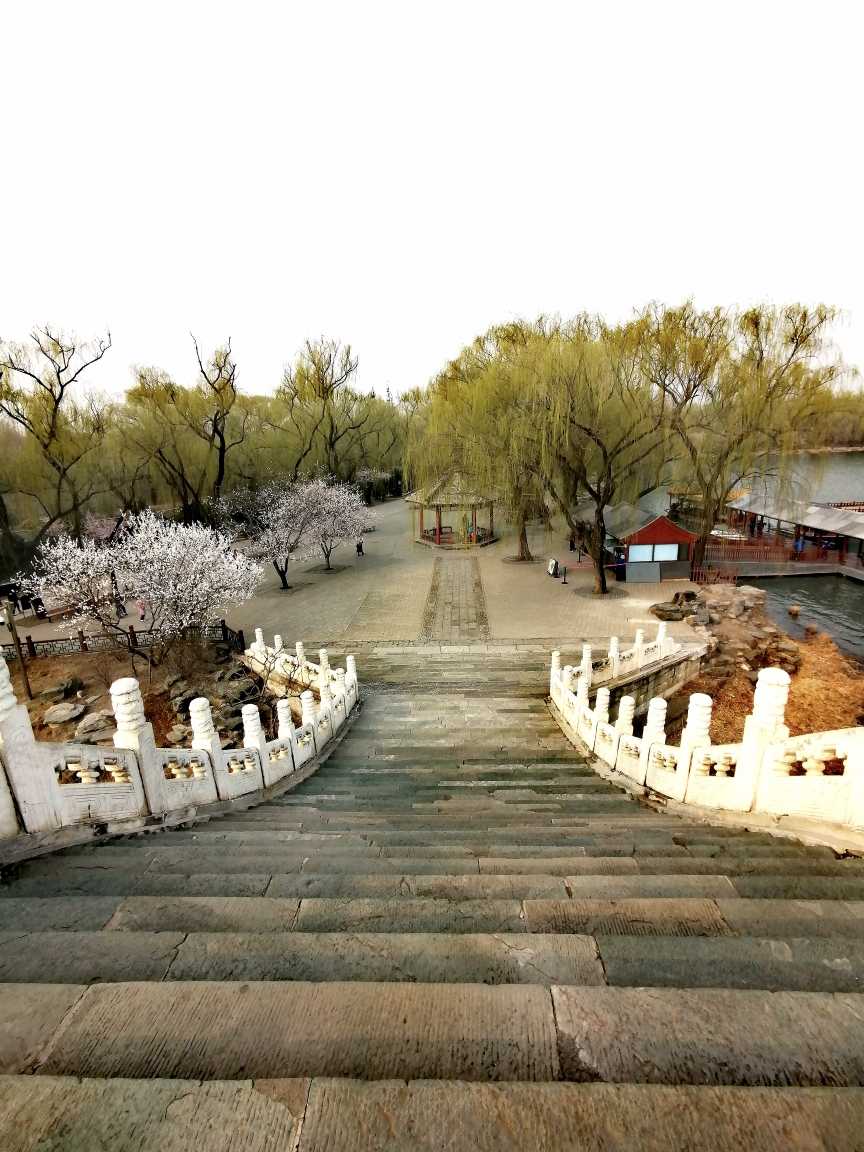 There are 56 bridges total within the Summer Palace complex, ranging from small stone slabs to grand multi-arch structures.
2. What is the most famous bridge in the Summer Palace?
 The Seventeen-Arch Bridge is the most famous. It is the longest bridge in the palace (150 meters) and features over 500 carved stone lions on its balustrades.
3. Which bridge was used by the Emperor?
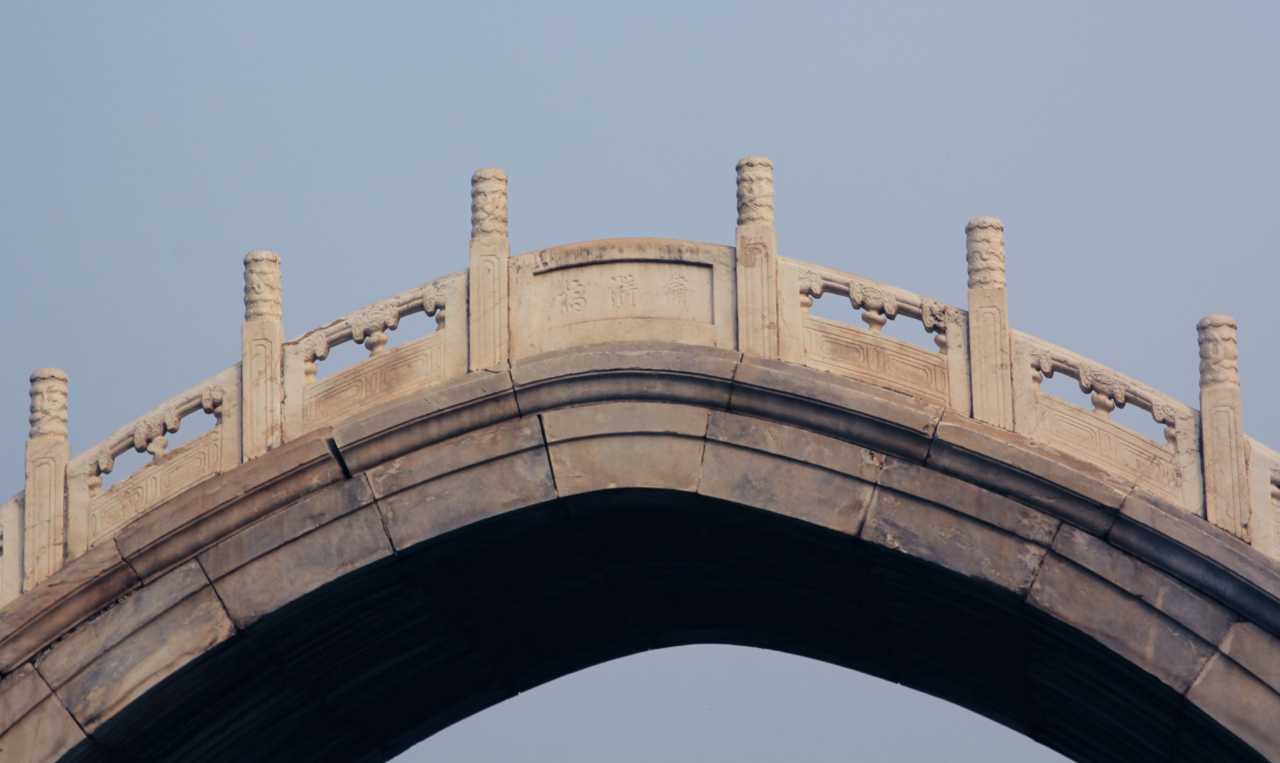 The Jade Belt Bridge on the West Dyke was specifically designed with a high arch to allow the Emperor’s dragon boat to pass through without lowering its mast.
4. What is the “Golden Light Piercing the Arches” phenomenon?
 It is a natural optical event that occurs around the winter solstice. As the sun sets, golden light shines directly through all 17 arches of the Seventeen-Arch Bridge, creating a spectacular visual effect.
5. Which bridge represents the highest rank in the palace?
The Golden Water Bridge, located in front of the Pai Yun Gate, held the highest ceremonial rank. It was used to separate officials of different ranks during Empress Dowager Cixi’s birthday celebrations.
Conclusion: Your Journey Across the Water
The bridges of the Summer Palace are more than stone and mortar—they are the threads that weave together the fabric of an imperial dream. From the humble flat bridges that let you touch the water to the majestic arches that frame the sky, each structure tells a story of power, artistry, and nature.
Whether you are a history buff, a photographer, or a casual traveler, walking these bridges is like walking through a waterborne poem. You will trace the footsteps of emperors and empresses, marvel at the craftsmanship of 18th-century stonemasons, and find your own moment of peace above the ripples of Kunming Lake.
Ready to walk the path of emperors? Plan your visit to the Summer Palace today. Book your tickets online to skip the queues, and don’t forget to bring your camera for the winter solstice shot.
Explore. Discover. Cross the bridges of history.
[Link: How to Buy Summer Palace Tickets] [Link: Beijing 3-Day Itinerary Guide]
You should also read:
Imperial Capital: The Myriad Gates Within Crimson Walls – A Half-Day Leisurely Stroll Through the Forbidden City
Meta Description: Discover the ultimate half-day Forbidden City itinerary. Learn insider tips to avoid crowds, photography secrets for empty palace shots, and the best entry route (Donghuamen). Your guide to a leisurely Beijing imperial tour. "Would you go to the Forbidden City again?" If someone…
Continue reading...
A Journey Through Time in the Forbidden City: A One-Day Immersive Guide to Imperial Court Life
Meta Description: Experience the Forbidden City like never before with this immersive one-day guide to imperial court life. Discover hidden gems, avoid crowds, and walk where emperors once ruled. Your time-travel adventure starts here. "The meaning of travel lies not in reaching the destination, but…
Continue reading...
Celebrating the New Year in the Forbidden City: A Family Day Trip Through the Imperial Palace (With Photography Tips)
Meta Description: Plan an unforgettable family New Year trip to the Forbidden City! Discover Qing dynasty traditions, ticket tips, must-see exhibitions, and expert photography advice for the Imperial Palace during Spring Festival. There’s something magical about stepping into a place where emperors once celebrated the…
Continue reading...