The Hidden Wonders of Northern Shaanxi: Four Natural Marvels Around Yan’an That Rival the World’s Best
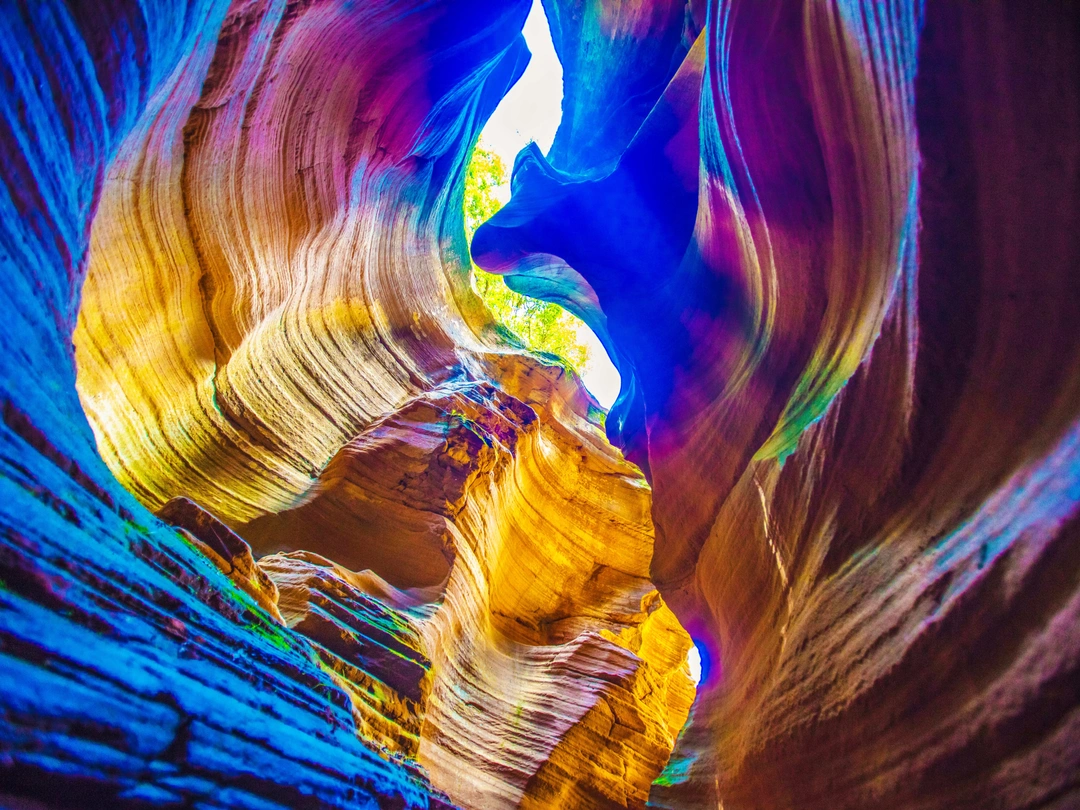
Meta Description: Discover four breathtaking natural wonders near Yan’an, China—Yucha Grand Canyon, Jingbian Wave Rock, Hukou Waterfall, and Qiantun Bay. These hidden gems rival global landmarks like Antelope Canyon and Horseshoe Bend.
When travelers think of Shaanxi Province, the Terracotta Army, Xi’an’s ancient city walls, or a steaming bowl of yangrou paomo (lamb soup with flatbread) often come to mind. But deep within the Loess Plateau lies a quartet of geological wonders that can hold their own against the world’s most spectacular natural landmarks. Meet the Yucha Grand Canyon, Jingbian Wave Rock, Qiantun Bay meander of the Yellow River, and Hukou Waterfall. These four hidden marvels around Yan’an tell a story of hundreds of millions of years of geological transformation—and they’re waiting to be explored.
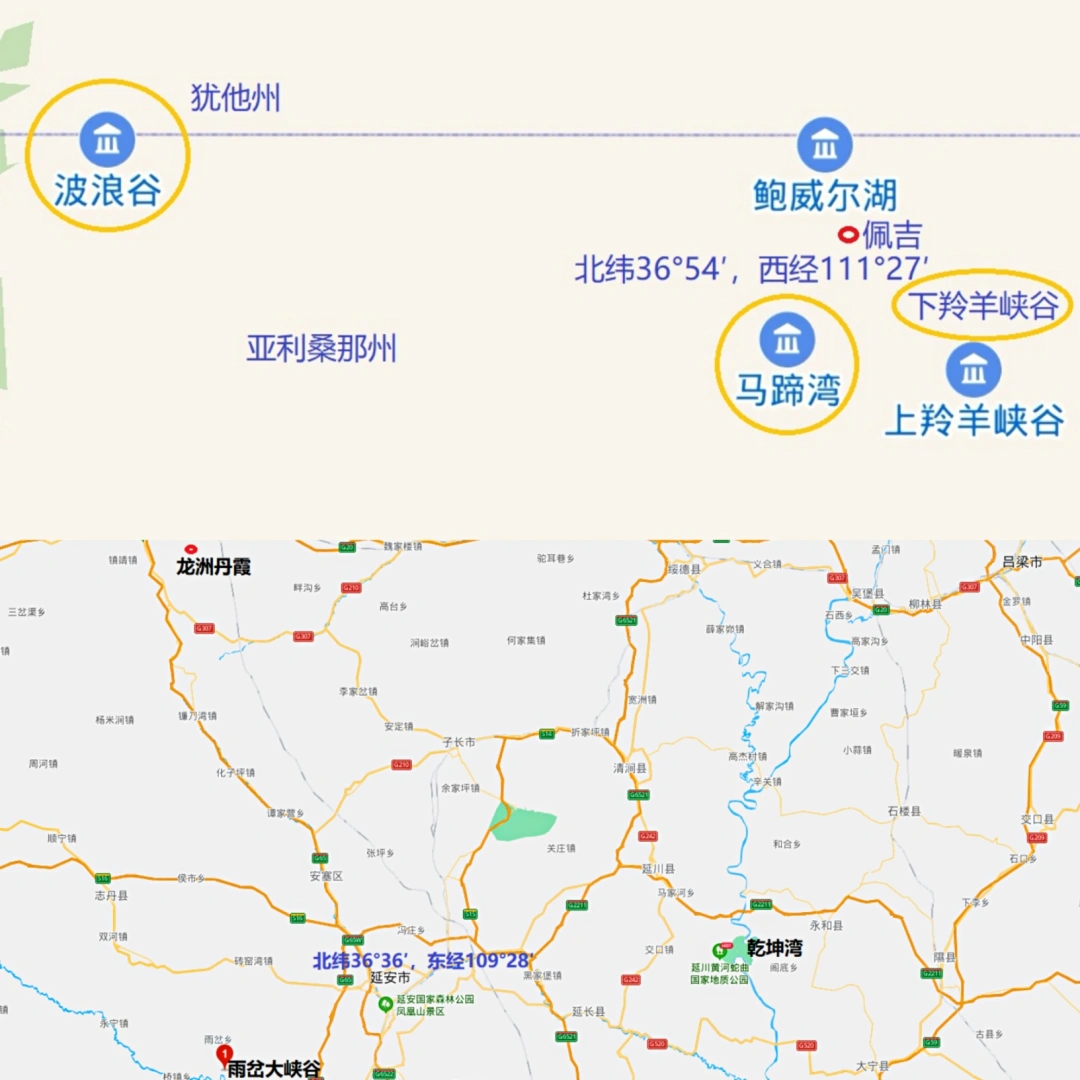
I have trekked across Antarctica’s ice fields and the Arctic’s snows. I have driven across the United States, Canada, Australia, New Zealand, France, Spain, and Iceland. Yet standing on the Loess Plateau of northern Shaanxi, I was utterly awestruck. Even more astonishing: three of these landscapes form a near-perfect "mirror image" with famous sites in Arizona, USA—Qiantun Bay echoes Horseshoe Bend, Longzhou Danxia mirrors The Wave, and Yucha Canyon parallels Antelope Canyon. All lie at roughly 36° north latitude, separated only by longitude. If you fold the globe along the prime meridian, these three points align almost exactly. Coincidence? Or some secret code of the Earth?
Let’s dive into each marvel and uncover why they deserve a spot on your travel bucket list.
1. China’s Antelope Canyon: The Light and Shadow Magic of Yucha Grand Canyon
Location: Yucha Village, Xiaosiwan Town, Ganquan County (about 80 km from Yan’an)
Why Visit: A hidden Danxia canyon cluster rivaling Arizona’s Antelope Canyon
About 80 kilometers from Yan’an, you reach Yucha Village in Xiaosiwan Town, Ganquan County. Here lies a treasure discovered by a Beijing geological photography enthusiast—a cluster of Danxia (red sandstone) canyons hidden beneath the Loess Plateau.
The Yucha Grand Canyon is not a single canyon but five separate gorges spread across several kilometers: Longbagou, Huabaocha, Mudangou, Fenghuanggou, and Huashugou. Each has its own distinct geological character, like five time-tunnels transporting you into another world.
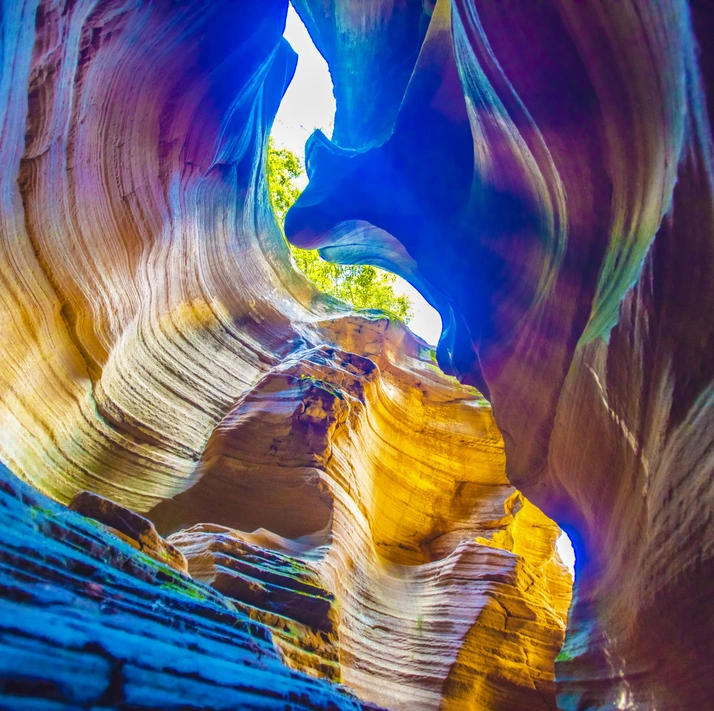
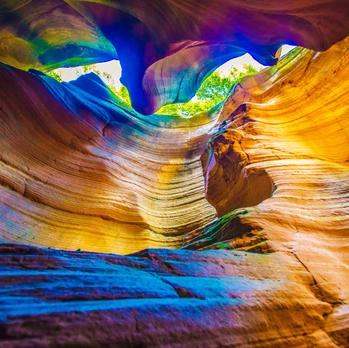
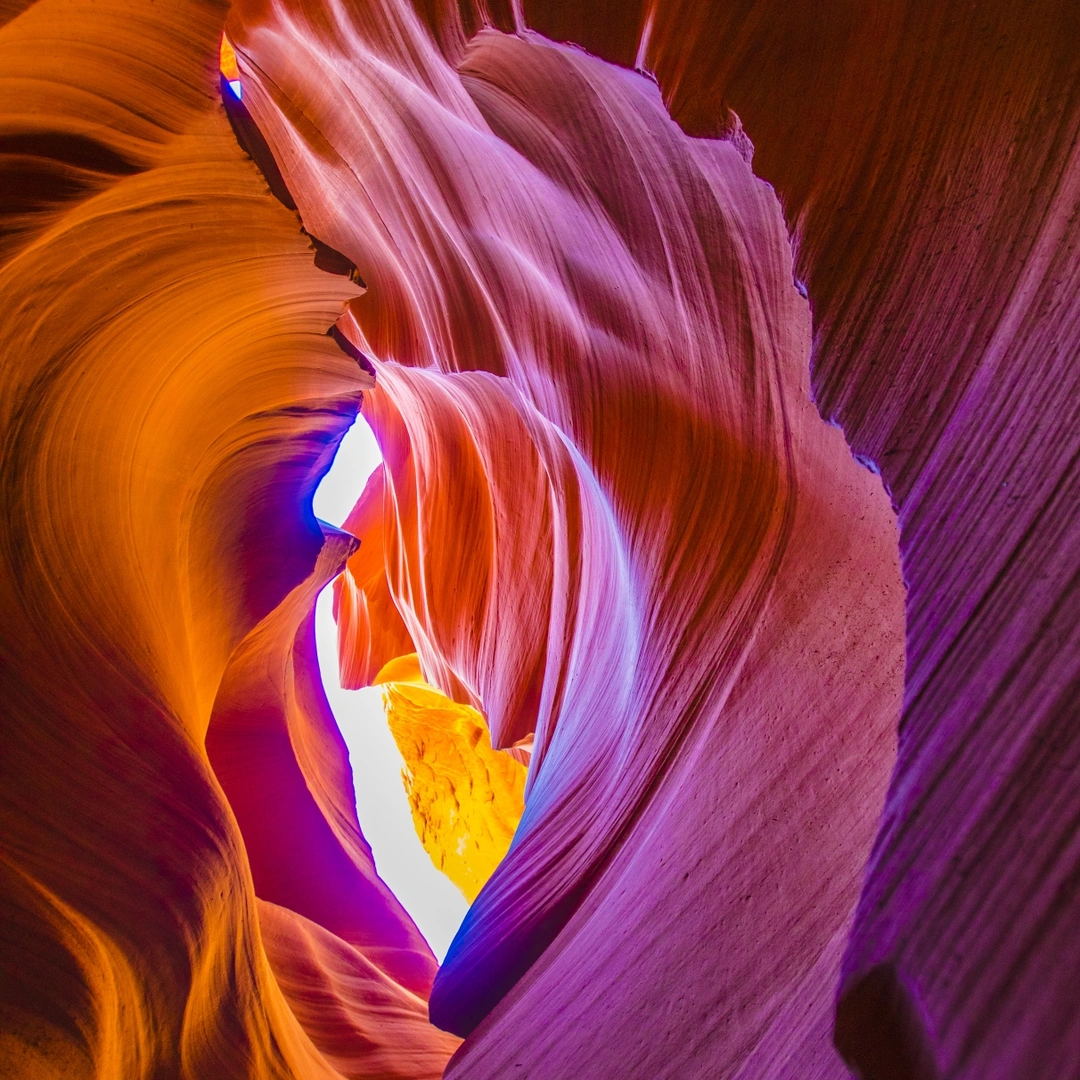
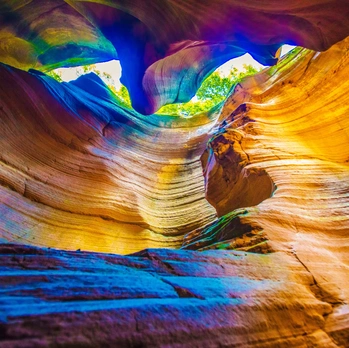
I have visited Antelope Canyon in Arizona, where red rock walls glow with dreamlike colors under refracted light. Yucha Grand Canyon is its worthy Chinese counterpart. The canyon tops are extremely narrow—sometimes just a few meters apart—while the vertical walls plunge dozens of meters down. Sunlight filters through the crevices, dancing and shifting across the damp rock surfaces, creating a kaleidoscope of color and shadow.
Practical Tips for Yucha Grand Canyon
- Access: The site is now under controlled access. You must transfer to a scenic shuttle bus from the parking lot. Admission: 50 RMB/person.
- Open Canyon: Currently, only Huashugou Canyon is open to visitors.
- Footwear: Rent waterproof boots (5 RMB)—the canyon floor often has standing water.
- Best Time to Visit: 11:00 AM to 2:00 PM, when light conditions are optimal for photography.

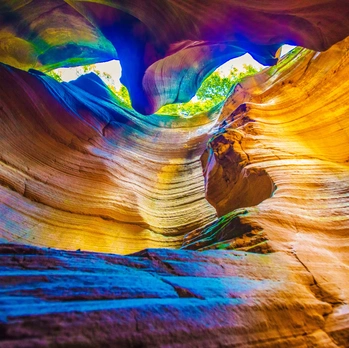
I arrived at Yucha just after heavy rain. Water pooled in the canyon, and the walls were slick and wet. At first, I felt it fell short of Antelope Canyon. But as I ventured deeper, the light began to work its magic. Just before exiting, the rock walls—layered in reds, yellows, and oranges—caressed by sunlight, truly rivaled those of Antelope Canyon.
Pro Tip: Bring a wide-angle lens and a tripod for the best shots. The narrow canyon walls make for dramatic, otherworldly photos.
2. Longzhou Danxia: The Time-Textured Wave Rock of Jingbian
Location: Longzhou Township, Jingbian County (about 220 km north of Yucha)
Why Visit: The largest Danxia formation in Shaanxi, sculpted by wind and rain over millennia
Heading north from Yucha for about 220 kilometers brings you to Longzhou Township, Jingbian County. This Danxia landscape, locally known as "Wave Rock" or "Red Stone Hill," is the largest Danxia formation in Shaanxi Province.
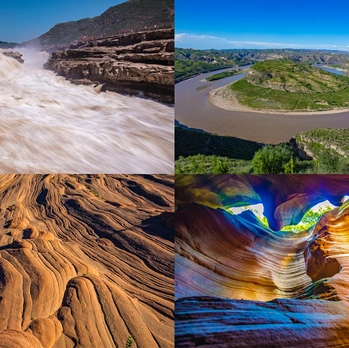
Wind and rain have sculpted the red sandstone into an astonishing variety of shapes and colors. The scenery changes dramatically depending on the angle and time of day. After a rain, when the sky clears, the red rock glows with its most vivid hues, creating unique light and shadow effects under the sun—magnificent and otherworldly.
Longzhou Danxia is divided into three main areas:
- Danxia Valley Scenic Area: Largest and best developed, with long steep boardwalks.
- Wave Rock / Flame Danxia Area: Smallest, where you can walk directly on the sandstone.
- Water Danxia Area: A short distance from the other two, offering a unique perspective.
Currently, the site is not yet officially ticketed, but a company has invested in development, and admission fees are expected soon.
Practical Tips for Jingbian Wave Rock
- Parking: No unified management yet. Parking is run by local villagers (10 RMB per car).
- Best Time to Visit: 4:00 PM to 7:00 PM, when the Danxia is most spectacular in the golden sunset light.
- Accommodation: Consider staying in Jingbian county town (26 km away), as accommodation near the site is often fully booked.
- Nearby Attractions: Along the way, you can visit the Longzhou Ancient Fortress ruins and Chairman Mao's former residence.
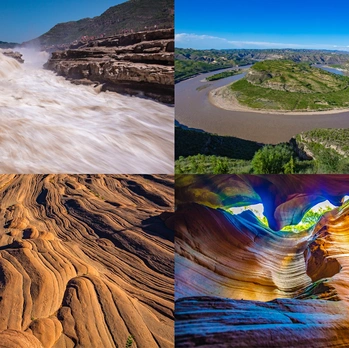
I arrived in Jingbian county town around 3:00 PM, rested briefly, then headed to the scenic area. The ruins of the Loess Great Wall and Chairman Mao's former residence along the route added a layer of historical depth to this geological journey. At sunset, the Danxia, bathed in golden light, looked like a vast oil painting—I could hardly tear myself away.
Pro Tip: Bring water and snacks. The area is remote, and facilities are limited.
3. The Yellow River Poured into a Single Pot: The Thunderous Power of Hukou Waterfall
Location: Border between Yichuan County (Shaanxi) and Jixian County (Shanxi)
Why Visit: The world’s only yellow-gold waterfall and a rare "submerged," "migrating" waterfall
On my way back to Beijing from Xi'an, I made a detour to Hukou Waterfall. Located on the border between Yichuan County in Shaanxi and Jixian County in Shanxi, this is the world's only yellow-gold waterfall and a rare "submerged," "migrating" waterfall.
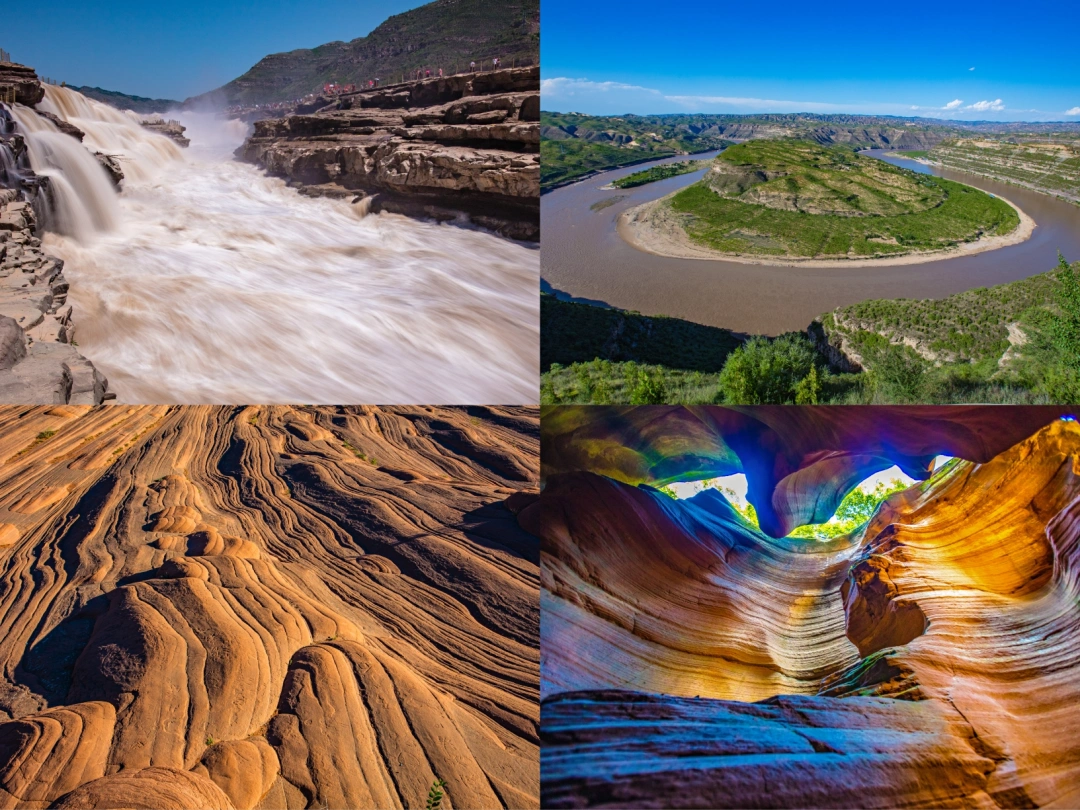
Here, the Yellow River, over 400 meters wide, abruptly narrows to just 40–50 meters, forming a massive horseshoe-shaped waterfall. The main cascade is over 40 meters wide with a drop of nearly 50 meters. A thousand cubic meters of water per second plunges from the steep cliff, creating the spectacle known as "the Yellow River gathered into a single pot."
Practical Tips for Hukou Waterfall
- Shaanxi Side: Witness the "Yellow River water coming from the sky"—the surging, headlong rush.
- Shanxi Side: Experience the "flowing to the sea never to return"—the overwhelming momentum.
- Best Seasons: Summer (high water volume, most spectacular) or winter (ice waterfall wonders).
- Distance: 130 km from Yan’an, 350 km from Xi’an.
- Visit Duration: Allow 2–3 hours.
Standing on the observation deck on the Shaanxi side, I watched the turbulent yellow water thunder down—waves churning, foam flying, mist rising like smoke. The roar of the raging torrent could be heard for miles. No photograph can convey the visceral shock of being there. Across the river, visitors on the Shanxi side get an even closer view of the waterfall's power and sound.
About five kilometers downstream lies Mengmen Mountain—two spindle-shaped giant boulders standing in the middle of the river. Legend says they were formed when Yu the Great split the mountain to channel the floodwaters during his legendary flood control efforts. A suspension bridge leads to the island, but I had to press on toward Qiantun Bay, so I missed it—a small regret from this trip.
Pro Tip: Wear a waterproof jacket or poncho. The mist from the waterfall can soak you within minutes.
4. The Number One Bend of the Yellow River: The Tai Chi Spirit of Qiantun Bay
Location: Qiantun Bay Town, Yanchuan County (about 150 km north of Hukou Waterfall)
Why Visit: A 320-degree meander that forms a natural Tai Chi symbol
From Hukou Waterfall, head north along Provincial Road S201 for about 150 kilometers to reach Qiantun Bay Town, Yanchuan County. The road is winding and steep, with almost no straight stretches for overtaking. That 150 kilometers took a full three hours. But when you stand on Shenglan Mountain and look down at the Yellow River, every minute of that drive is worth it.
The Yellow River forms five great bends within Yanchuan County: Xuanwo Bay, Yanshui Bay, Fusi Bay, Qiantun Bay, and Qingshui Bay. Among them, Qiantun Bay has a curvature of over 320 degrees—truly the "Number One Bend of the Yellow River under Heaven." From above, the river looks like a giant dragon surging through the gullies and hills of the Loess Plateau. Along the S-shaped ancient river channel, the villages of Hehuai and Fuyihe sit like the yin-yang fish in a Tai Chi diagram, forming a natural Tai Chi symbol.
Practical Tips for Qiantun Bay
- Best Viewpoint: Shenglan Mountain offers the most iconic panoramic view.
- Best Time to Visit: Late afternoon for golden hour photography.
- Nearby Attractions: Explore the other four bends of the Yellow River within Yanchuan County.
- Accommodation: Stay in Yanchuan county town or nearby guesthouses.
Pro Tip: Use a drone or a telephoto lens to capture the full curvature of the bend. The Tai Chi-like symmetry is best appreciated from above.
FAQ: Your Questions About Northern Shaanxi’s Hidden Wonders
1. Are these attractions suitable for family travel?
 Yes, all four sites are family-friendly. Yucha Grand Canyon and Jingbian Wave Rock involve moderate walking, while Hukou Waterfall and Qiantun Bay have well-maintained observation decks. For young children, consider visiting during cooler months to avoid extreme heat.
2. How do I get to these attractions from Xi’an or Yan’an?
 From Xi’an, take a high-speed train to Yan’an (about 2.5 hours), then rent a car or hire a private driver. The roads to Yucha, Jingbian, and Qiantun Bay are well-marked but winding. Hukou Waterfall is accessible via bus or car from both Yan’an and Xi’an.
3. What is the best time of year to visit?
 Spring (April–May) and autumn (September–October) offer mild weather and fewer crowds. Summer brings high water volume at Hukou Waterfall, while winter transforms it into an ice wonderland. Avoid Chinese public holidays for a quieter experience.
4. Can I combine these attractions into a single trip?
 Yes, a 4–5 day itinerary is ideal. Start with Yucha Grand Canyon, head to Jingbian Wave Rock, then drive to Hukou Waterfall, and finish at Qiantun Bay. Consider staying overnight in Yan’an or nearby county towns.
5. Are there guided tours available?
Guided tours are available from Yan’an and Xi’an, but they often focus on one or two sites. For maximum flexibility, rent a car and self-drive. Local guides can be hired at the entrances of Yucha and Jingbian.
Internal Linking Suggestions
- [Link: Best time to visit Yan’an and the Loess Plateau]
- [Link: How to plan a road trip from Xi’an to Yan’an]
- [Link: Top photography tips for Danxia landscapes]
- [Link: Exploring the Yellow River’s five great bends]
- [Link: Hidden gems in Shaanxi Province beyond the Terracotta Army]
Ready to Explore Northern Shaanxi’s Hidden Wonders?
These four natural marvels around Yan’an are not just geological wonders—they are testaments to Earth’s creative power. Whether you’re a photographer seeking the perfect light, a traveler craving off-the-beaten-path adventures, or a nature lover drawn to ancient landscapes, northern Shaanxi has something extraordinary to offer.
Your next step: Start planning your trip today. Book your flight to Xi’an, reserve a rental car, and pack your camera. The hidden wonders of northern Shaanxi are waiting to rival the world’s best—and they’re closer than you think.
Have questions or need help planning? Drop a comment below or share your own photos from these incredible sites. Let’s inspire each other to explore the hidden gems of China!
You should also read:
Northern Xinjiang Private Tour: 8-10 Days of Starry Skies, Grasslands, and the Duku Highway
Meta Description: Discover the ultimate Northern Xinjiang 8-10 day private tour itinerary. Explore Kanas, Hemu, Sayram Lake, Nalati, and the legendary Duku Highway. Expert tips on budget, accommodation, and must-see highlights. Start planning your dream trip today. If you've ever dreamed of witnessing the sunset…
Continue reading...
Escaping the City: A Family Adventure Through Kintetsu’s Hidden Gems in Kansai
Meta Description: Discover a family-friendly Kintetsu itinerary through Mie Prefecture's hidden gems—from Ise Jingu and Toba Aquarium to Matsusaka beef and Nagoya LegoLand. Perfect for your next Japan family trip! There’s something magical about a trip that begins as a last-minute scramble and ends as…
Continue reading...
My 2017: Encountering the Most Beautiful Beijing in a Season of Farewells — A Photographic Journey Through the Capital's Four Seasons
Meta Description: Discover Beijing's stunning four seasons through a personal photographic journey—from snow-dusted Forbidden City walls to cherry blossoms at Yuyuantan. A bittersweet farewell story with practical travel tips. Parallel worlds, diverse lives — may we all be able to clock in from nine to…
Continue reading...