The Iberian Peninsula and Morocco: A Multicultural Feast Across Europe and Africa
Here is the SEO-optimized rewrite of your article, structured for search engines while maintaining the original narrative charm.
SEO Title: Iberian Peninsula & Morocco Itinerary: 22-Day Multicultural Feast (2025 Guide)
Meta Description: Discover a 22-day journey across Portugal, Spain, Andorra & Morocco. Explore Lisbon trams, Gaudí, Sahara dunes & Moorish castles. Budget tips & cultural insights inside.
Iberian Peninsula & Morocco: A Multicultural Feast Across Europe and Africa
Introduction: Where Europe Meets Africa
Imagine standing at the western edge of Europe, the Atlantic crashing below you. Just hours later, you cross the Strait of Gibraltar and step onto African soil, where Sahara dunes meet the Mediterranean. This is not a fantasy—it is a 22-day adventure weaving together Portugal, Spain, Andorra, and Morocco.
In the autumn of 2017, I took this trip with my child on a budget of roughly 15,000 RMB per person. From Lisbon’s vintage trams to Barcelona’s Gaudí masterpieces, from Andorra’s snow-capped peaks to Morocco’s red deserts, this route unfolds like a vibrant tapestry. This guide is not just a checklist—it is a deep dive into history, culture, and the soul of two continents.
Why Visit the Iberian Peninsula and Morocco? A Dialogue Across Civilizations
The Iberian Peninsula was once part of the Roman Empire and later ruled by the Moors for nearly 800 years. This legacy is etched into the architecture, language, and cuisine of Spain and Portugal. Portuguese is spoken across nine countries, while Spanish reaches over 30 nations—testaments to their maritime empires.
Andorra, a tiny principality in the Pyrenees, offers a unique micro-state experience. Meanwhile, Morocco has become increasingly accessible: since 2016, Chinese citizens enjoy visa-free entry. The Strait of Gibraltar is only a 35-minute ferry from Tarifa, Spain—proving that Europe and Africa are truly neighbors.
Why this route? It encapsulates the collision of Christian and Islamic civilizations. From Lisbon’s Belém Tower to Granada’s Alhambra, from Seville’s flamenco to Fez’s leather tanneries, every scene tells a story of multicultural interweaving.
22-Day Iberian Peninsula and Morocco Itinerary: Compact Brilliance
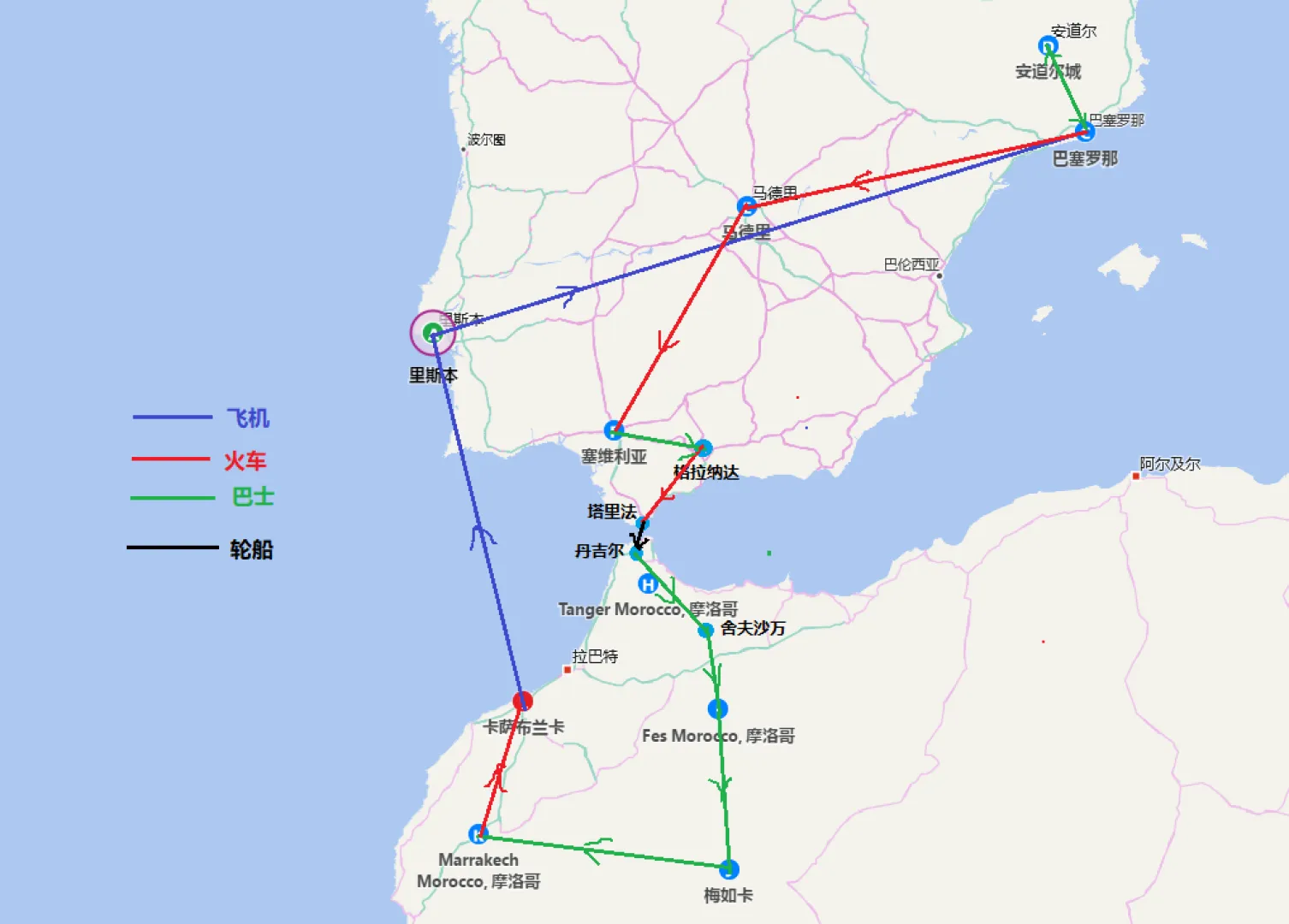
Our journey ran from October 27 to November 17, 2017. Here is the core route:
- Days 1-2: Beijing → Lisbon (Portugal)
- Days 3-12: Lisbon → Barcelona → Andorra → Madrid → Segovia → Seville → Granada → Tarifa (Spain & Andorra)
- Days 12-20: Tarifa → Tangier → Chefchaouen → Fez → Merzouga → Marrakech → Casablanca (Morocco)
- Days 21-22: Casablanca → Lisbon → Beijing
Highlight: We experienced both the classical elegance of Europe and the raw warmth of Africa. Transportation ranged from planes and high-speed trains to ferries and camels—an adventure in itself.
Lisbon: The Colorful Edge of Europe
First Impressions: Like San Francisco, But With a Soul of Its Own

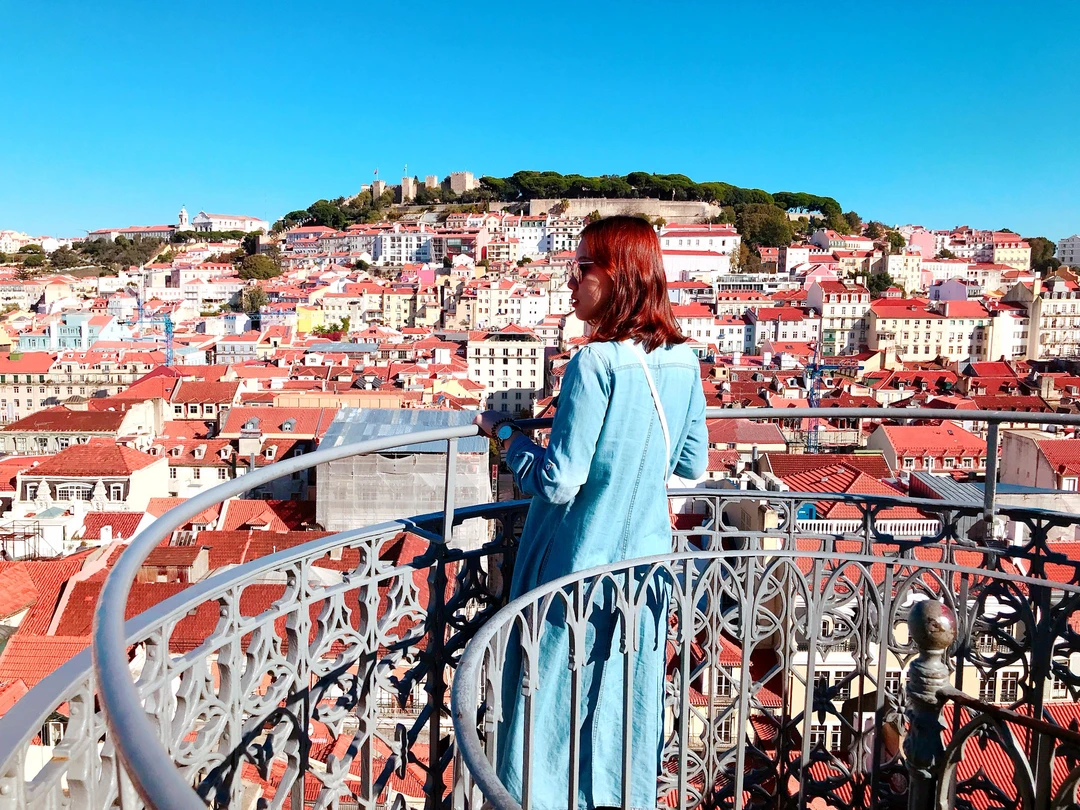
Lisbon, Portugal’s capital, sits at the westernmost point of continental Europe. It may remind you of San Francisco—hills, a red suspension bridge, and clattering trams—but Lisbon has its own character: pastel houses, cobblestone alleys, and a lazy, Southern European atmosphere.
A direct flight from Beijing takes just 11 hours, with round-trip tickets as low as 3,674 RMB—cheaper than many domestic Chinese routes. Upon arrival, grab a Viva Viagem rechargeable card (€0.50 card fee). A ride from the airport to the city center costs only €1.90—possibly the cheapest airport transfer in Europe.
Belém District: The Glory of the Age of Discovery
The Belém district is where Portugal’s maritime history comes alive. Three UNESCO World Heritage sites dominate:
- Jerónimos Monastery (16th century): A blend of Gothic and Renaissance styles. During the 1755 earthquake, the royal family survived by praying here—a story that adds mystique.
- Belém Tower: A white marble fortress on the Tagus River, where explorers set sail.
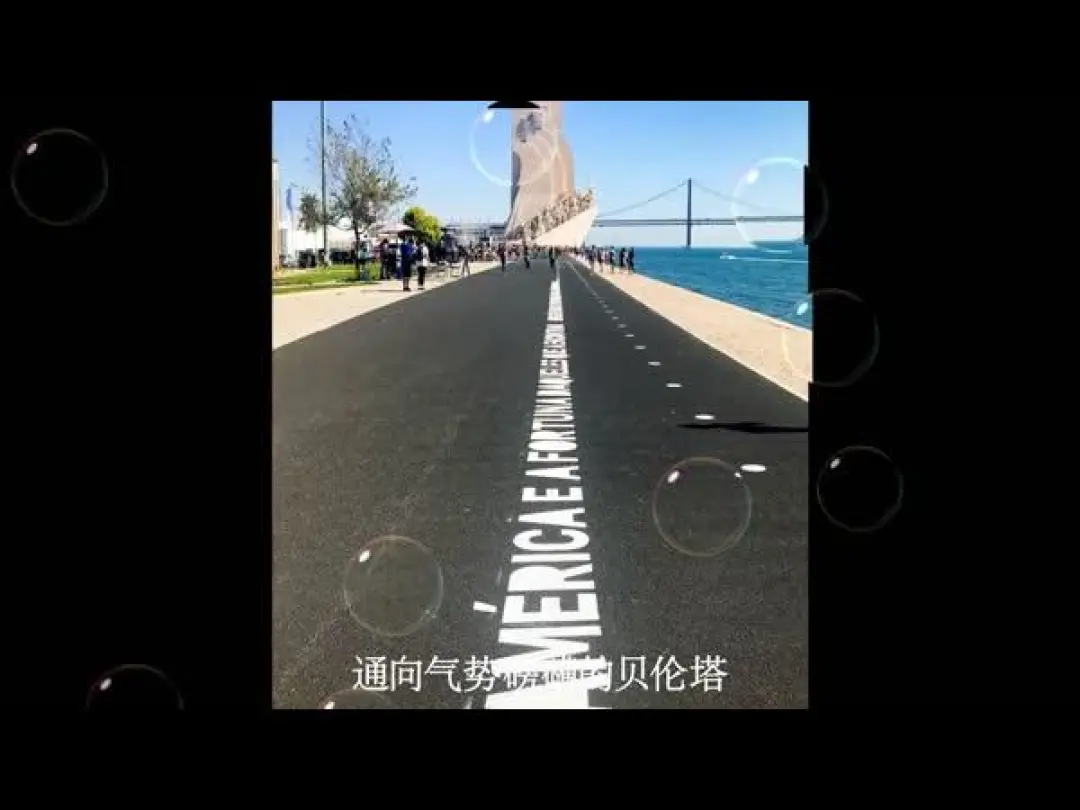
- Monument to the Discoveries: A giant caravel-shaped monument (1960) with Prince Henry the Navigator at the prow. Climb to the top for sweeping river views.
Tram 28: A Ride Through Time
Hop aboard the yellow Tram 28, operating since 1872. It winds through narrow streets, offering glimpses of 19th-century buildings and local life. Caution: Pickpockets are active here. My child lost €150 on this trip.
Best Views Over Lisbon
Lisboetas say, “He who has not seen Lisbon has not seen beauty.” Two spots prove this:
- Santa Justa Lift: A 45-meter iron structure designed by a student of Gustave Eiffel. Ride it for panoramic views of red-tiled roofs and the blue Tagus River.
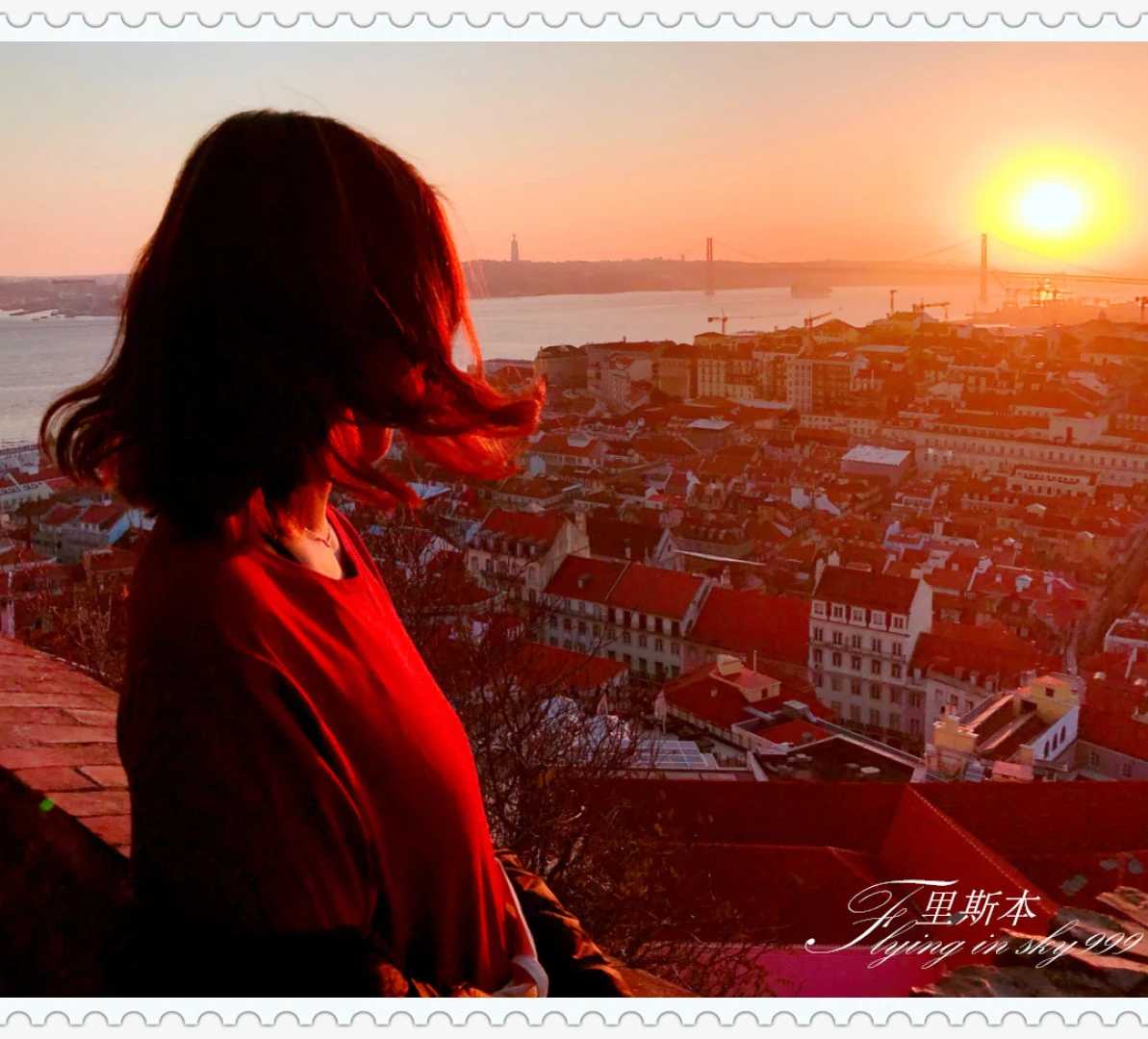
- Castle of São Jorge: Lisbon’s oldest landmark, perched on the highest hill in Alfama. Watch the sunset here for golden views of the 25 de Abril Bridge.
A Boat Ride to See Christ the King: Lisbon’s “Rio Moment”
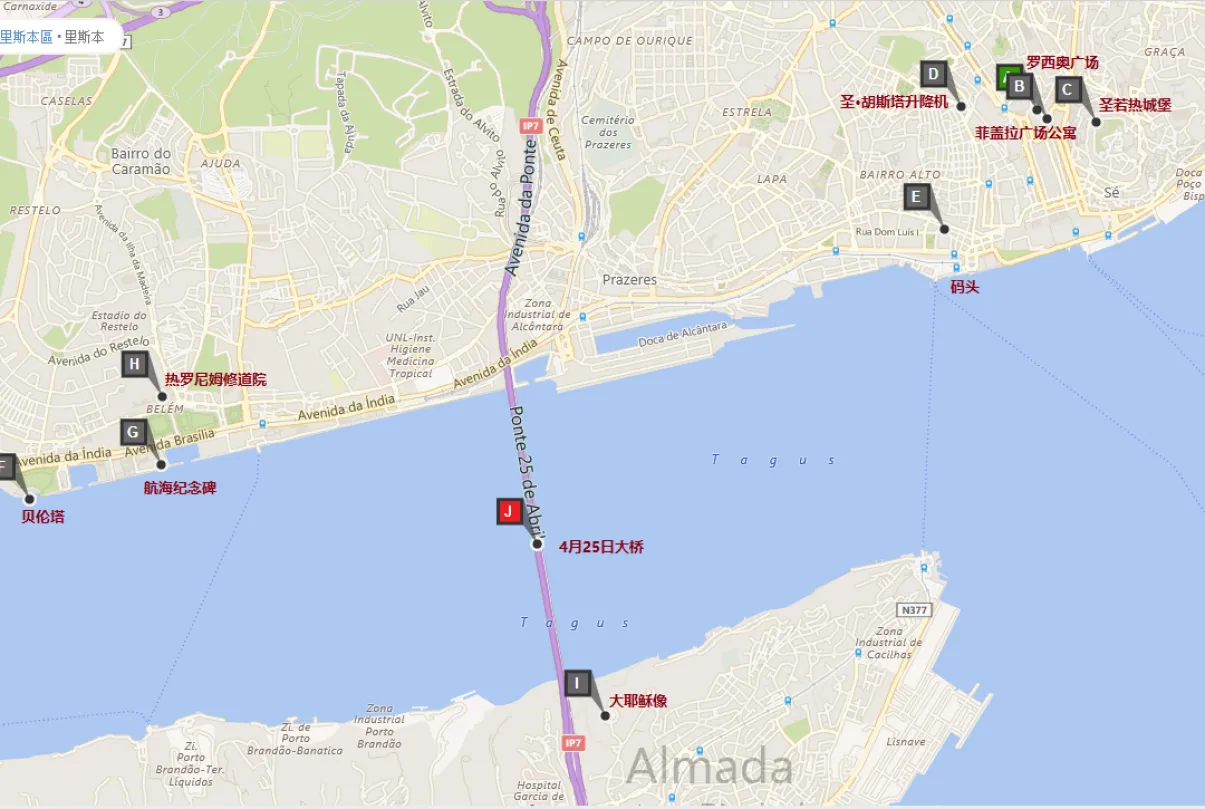
Take a ferry to Almada (€1.20). There, you’ll see the 25 de Abril Bridge—built by the same company as San Francisco’s Golden Gate Bridge. Atop the hill stands a Christ the King statue (110 meters tall), reminiscent of Rio de Janeiro’s Christ the Redeemer.
Sintra: A Paradise for Romantics
Pena Palace: A Fairytale Castle in Color
A 40-minute train from Lisbon takes you to Sintra, a summer retreat for Moorish nobles and Portuguese royalty. The Pena Palace (19th century) is a wild fusion of Gothic, Renaissance, Moorish, and Manueline styles, painted in vivid colors. It looks like a castle from a storybook.
Moorish Castle: A Haunting Beauty
Across the valley lies the Moorish Castle (17th century), the only one of its kind in Europe. Unlike Pena’s splendor, this one is reduced to crumbling ruins, with moss-covered walls snaking along the ridge. It offers a stark, beautiful contrast.
Spain & Andorra: From Gaudí to Snow-Capped Peaks
Barcelona: Gaudí’s Masterpieces
Spend two days in Barcelona exploring Sagrada Família, Park Güell, and La Boqueria Market. Gaudí’s organic architecture feels otherworldly. Don’t miss the Gothic Quarter’s narrow alleys.
[Link: How to skip the line at Sagrada Família]
Andorra: A Hidden Gem in the Pyrenees
Andorra offers duty-free shopping and ski slopes. Even in autumn, the mountain views are spectacular. It’s a perfect stop between Barcelona and Madrid.
Madrid & Segovia: Royal Grandeur
In Madrid, visit the Prado Museum and Royal Palace. A day trip to Segovia reveals a Roman aqueduct and a fairy-tale castle said to have inspired Disney.
Seville & Granada: Flamenco and the Alhambra
Seville pulses with flamenco rhythm. Granada’s Alhambra is the crown jewel of Moorish architecture—book tickets weeks in advance.
Morocco: The Red Deserts and Blue Cities
Tangier to Chefchaouen: Gateway to Africa
From Tarifa, a 35-minute ferry lands you in Tangier. From there, head to Chefchaouen, the “Blue Pearl” of Morocco. Its painted streets are a photographer’s dream.
Fez: The World’s Oldest University
Fez is home to the University of Al Quaraouiyine (founded 859 AD) and the famous Chouara Tannery. Watch leather being dyed in ancient stone vats.
Merzouga: Sahara Desert Experience
Spend a night in Merzouga, riding camels across the Erg Chebbi dunes. Sleep under a blanket of stars—this is the highlight of any Morocco itinerary.
Marrakech & Casablanca: Vibrant Souks and Modernity
Marrakech offers the Jemaa el-Fnaa square, snake charmers, and spice markets. Casablanca is home to the Hassan II Mosque, one of the largest in the world.
Budget Breakdown: How to Travel Iberian Peninsula and Morocco on 15,000 RMB
- Flights: Beijing–Lisbon round trip: ~3,674 RMB
- Accommodation: Mix of hostels, guesthouses, and riads: ~150–300 RMB/night
- Transport: High-speed trains (AVE), buses, ferries: ~2,000 RMB total
- Food: Local markets and street food: ~100–200 RMB/day
- Attractions: Alhambra, Sagrada Família, Pena Palace: ~1,000 RMB total
Total: ~14,000–15,000 RMB per person (excluding shopping).
Frequently Asked Questions (FAQ)
1. Do I need a visa for Morocco from China? No. Since 2016, Chinese citizens enjoy visa-free entry to Morocco for up to 90 days.
2. Is it safe to travel to the Iberian Peninsula and Morocco alone? Yes, both regions are generally safe for solo travelers. However, watch for pickpockets in Lisbon, Barcelona, and Marrakech. Avoid isolated areas at night.
3. What is the best time to visit the Iberian Peninsula and Morocco? Spring (March–May) and autumn (September–November) offer mild weather and fewer crowds. Summer can be scorching, especially in Andalusia and Morocco.
4. How long should I spend in each country? For a 22-day trip, allocate 7 days for Portugal, 8 days for Spain (including Andorra), and 7 days for Morocco. Adjust based on your interests.
5. What should I pack for this trip? Layers are key. Bring comfortable walking shoes, a scarf for mosques, a swimsuit for the Mediterranean, and a light jacket for evenings. Don’t forget a power adapter (Type C/F).
Internal Linking Suggestions
- [Link: How to book Alhambra tickets in advance]
- [Link: Best riads in Marrakech for budget travelers]
- [Link: Lisbon vs Porto: Which Portuguese city to visit first]
- [Link: Morocco desert tours: What to expect]
Conclusion: Your Multicultural Feast Awaits
The Iberian Peninsula and Morocco offer a journey unlike any other—a seamless blend of European elegance and African mystery. From Lisbon’s pastel hills to the Sahara’s golden dunes, every day brings a new story.
Ready to plan your own adventure? Book your flights early, pack your curiosity, and let the collision of civilizations transform your travel experience.
Start your journey today. Europe and Africa are waiting.
You should also read:

Central Europe Road Trip: The Ultimate 12-Day Anniversary Driving Guide Through Germany, Switzerland, Italy, Austria & Czech Republic
Meta Description: Planning a Central Europe road trip? Discover our 12-day anniversary drive through 5 countries, including Germany's autobahn, Swiss Alps, and fairy-tale castles. Expert tips on car rental, visas, and must-see stops. For our third wedding anniversary, my wife and I skipped the fancy…
Continue reading...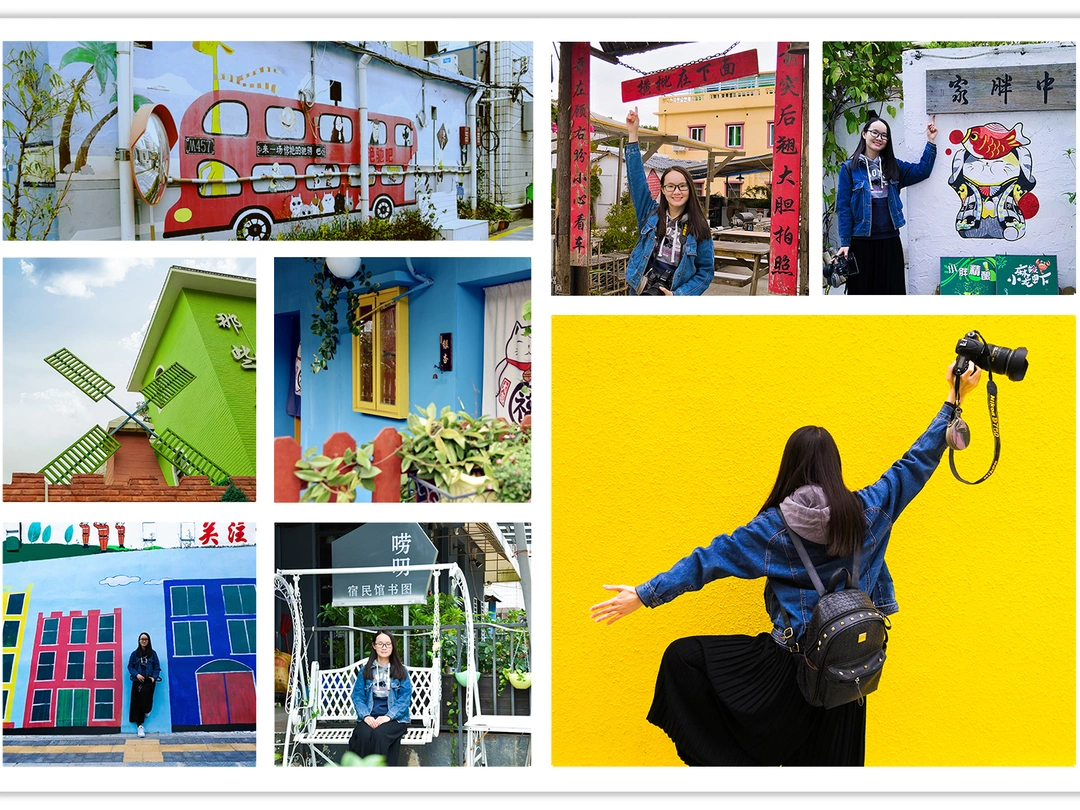
Shenzhen Guanhu Village: The Ultimate Guide to Shenzhen's Hidden Beach Paradise Across from Hong Kong
Meta Description: Discover Shenzhen Guanhu Village, a pristine beach paradise across from Hong Kong. This hidden gem offers quiet coastlines, colorful streets, and untouched beauty. Plan your visit with our complete guide. In the heart of China's fastest-growing metropolis lies an anomaly—a place where time…
Continue reading...
You Have Colorful Sunshine: An 11-Day Spanish & Portuguese Love Letter – The Ultimate Iberian Peninsula Itinerary
Meta Description: Discover the magic of Spain and Portugal in 11 days: from Barcelona's Gaudí masterpieces to Lisbon's melancholic charm. Your complete guide to an unforgettable Iberian adventure. There's something magical about a place that feels like it was designed just for you. A destination…
Continue reading...