The Twelve Hours of Beijing: A 24-Hour Encounter with a City's Ancient and Modern Symphony
Meta Description: Explore Beijing in 24 hours—from Forbidden City sunrise to Guomao night lights. Discover ancient hutongs, modern architecture, and local eats in this SEO-optimized travel guide.
Introduction: Can 24 Hours Capture 3,000 Years of History?
Seven years is enough time for a city to reinvent itself, and for a person's memories to gather the dust of time. In late autumn 2012, I first set foot on Beijing's soil. Golden leaves swirled like amber rain, etching the weight of this ancient capital into my memory. Back then, I was just a passing traveler, handling study-abroad paperwork—I didn't even have time to properly see the Forbidden City's crimson walls.
Seven years later, a business trip brought me back. This time, I gave myself just 24 hours. For a city with 3,000 years of history and 800 years as a capital, that's like measuring the ocean with a single drop. But precisely because of that, I decided to capture Beijing's two most extreme faces: the first light of dawn at the Corner Tower, and the last lamp burning deep into the night in the Guomao business district.
This is your Beijing 24-hour itinerary—a guide for travelers who want to taste both ancient and modern China in one day.
3:00 AM – 7:00 AM: Sunrise at the Forbidden City Corner Tower
Why Early Risers Get the Best View

In September, at 4:30 AM, the cold hit me like a wall. A southerner through and through, I shivered in short sleeves while the ride-hailing app ticked away. Fifteen minutes later, I climbed into a taxi. The driver glanced at me: "Here to photograph the Corner Tower? Good weather—you're in luck."
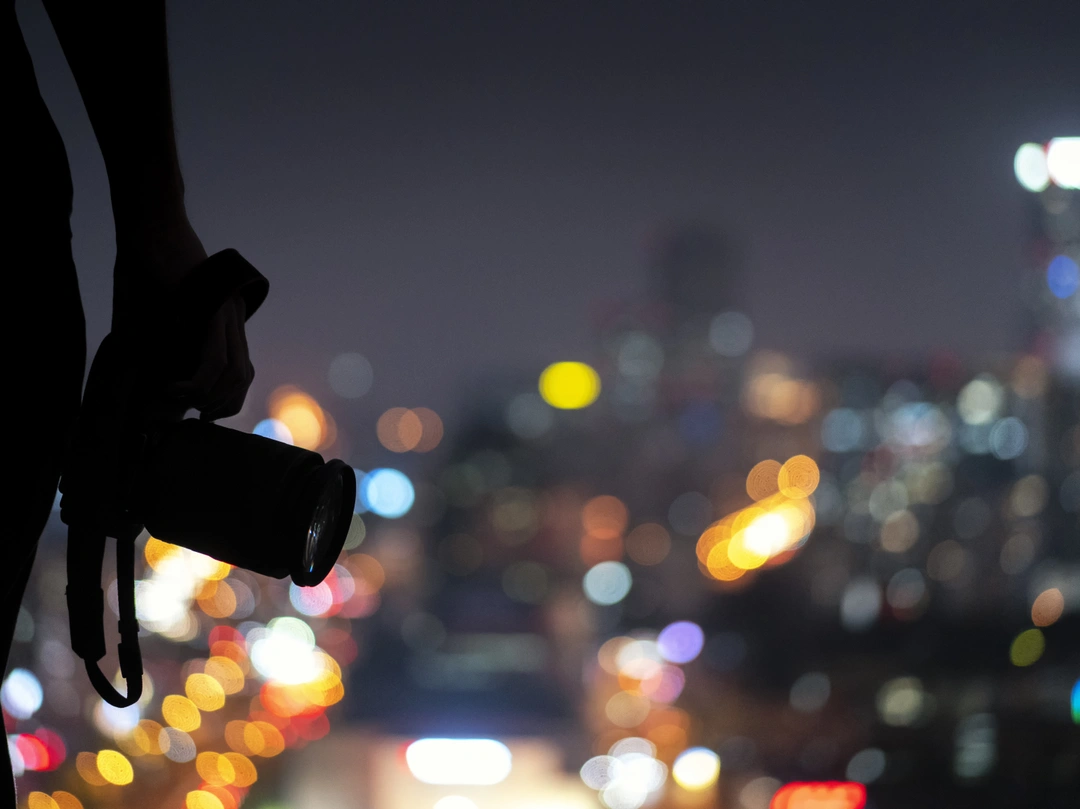
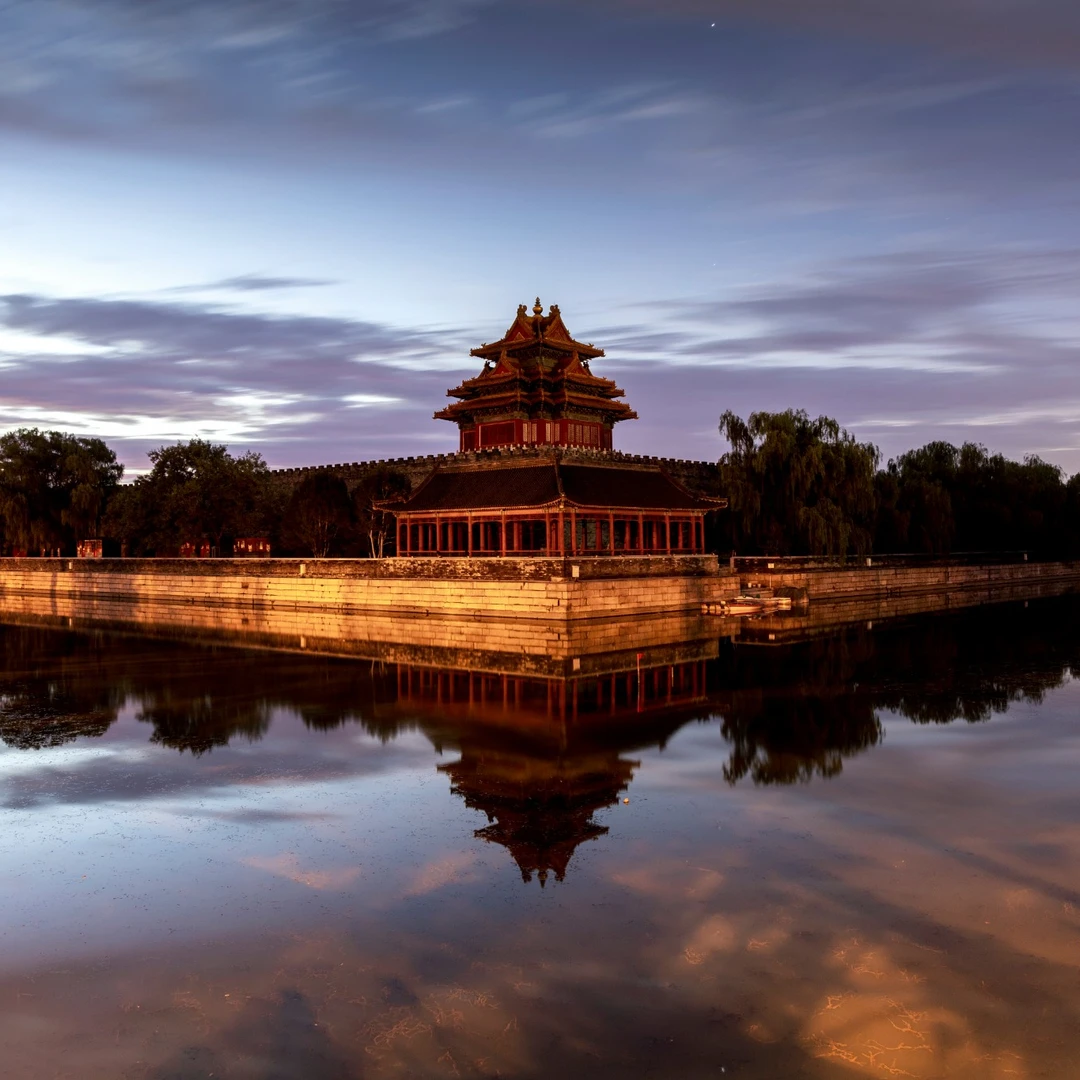
By the time I reached the northwest Corner Tower of the Forbidden City, nearly a hundred cameras lined the moat. Half the photographers were silver-haired seniors—wrapped in thick coats, clutching thermoses, their eyes sparkling with youthful excitement. I quietly pulled out my lightweight mirrorless camera and a small tripod. Traveling light for work, you make do.
Capturing the Perfect Sunrise Shot
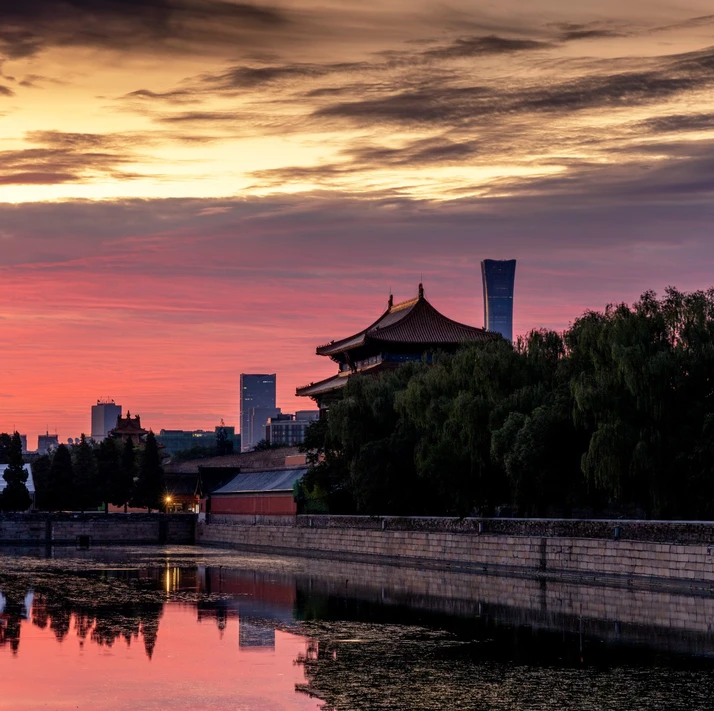
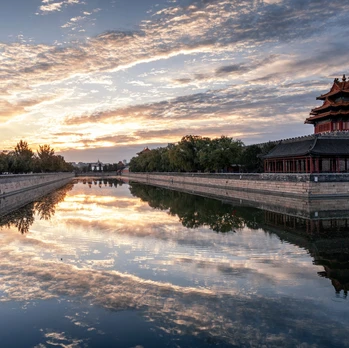
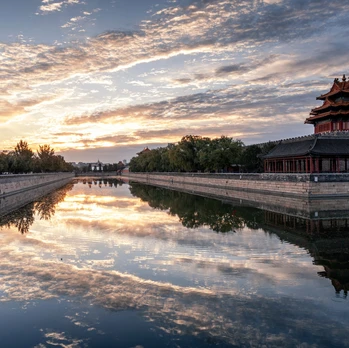
I set up the camera, adjusted settings, and started a 30-second long exposure. Through the lens, the moat's surface smoothed into a mirror, reflecting the upturned eaves of the Corner Tower. Clouds turned into silky ribbons flowing under the shutter. The sky blushed—first faint pink, then layers of orange, red, and purple bleeding into one another.
In that moment, the Forbidden City's Corner Tower and the distant China Zun skyscraper echoed each other across the frame. Ancient and new shook hands in the dawn glow.
Pro tip: For the best Beijing sunrise photography, arrive by 4:00 AM in summer or 5:30 AM in winter. The northwest corner offers the most iconic reflection shots.
7:00 AM – 9:00 AM: A Bowl of 炒肝 (Stir-Fried Liver)
Old Beijing Breakfast Culture
After the sunrise, my stomach protested. I ducked into 姚记炒肝 (Yao Ji Stir-Fried Liver) near the Drum Tower and ordered a bowl of 炒肝, a meat bun, and a bottle of 北冰洋 (Arctic Ocean) soda.
As a born-and-bred southerner, I expected to frown at this thick, goopy bowl of "organ soup." But the first bite hit me—the punch of garlic and rich depth of innards exploded on my tongue. Somehow, it was addictive.
Fun fact: "炒" (stir-fry) in this dish actually means "熬" (slow-simmer). It's made with pork intestines and liver, thickened with garlic and yellow bean paste. Old Beijingers have a ritual: no spoon. You hold the bowl and drink it in circles, letting the starch evenly coat every piece.
Morning Bike Ride Through Nanluoguxiang
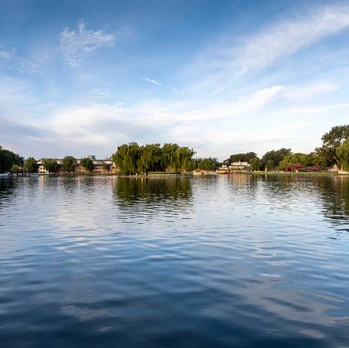
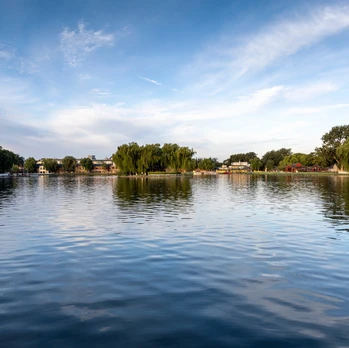
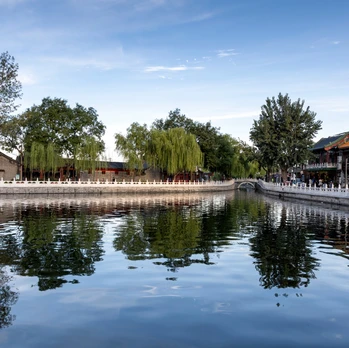
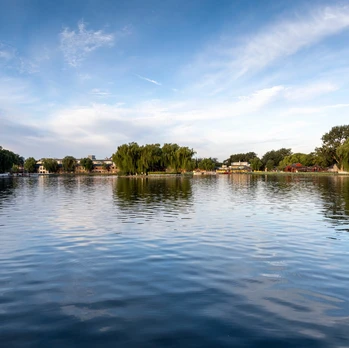
Full and happy, I grabbed a shared bike and pedaled toward 南锣鼓巷 (Nanluoguxiang). In the early morning, 什刹海 (Shichahai Lake) had shed its nighttime clamor. The lake shimmered, occasional elderly joggers passed by. Sunlight filtered through thin clouds, spilling onto the water—that warm, watery blue, as if the entire sky had been stirred into the lake.
[Link: Best Beijing street food tours]
9:00 AM – 1:00 PM: Phoenix Center – Beijing's Möbius Strip Architecture
A Glimpse of Beijing's Future
If the Forbidden City represents Beijing's past, the Phoenix Center is a glimpse of its future. Inspired by the Möbius strip, the building seamlessly connects office spaces and studios into an infinite loop.
The day I visited, a sculpture exhibition by Wu Weishan was on display. Light wove through the steel framework, and every step felt like walking into a giant kaleidoscope.
Photography Tips for Modern Beijing Architecture
My zoom lens proved invaluable. At 24mm wide-angle, I captured the grandeur of the entire atrium. At 105mm telephoto, I caught intimate moments—a little girl on tiptoe reaching for a bronze arm; an elderly man staring at an abstract sculpture as if searching for an answer.
The most delightful surprise: The rooftop space. The marble floor was so polished it mirrored the steel structure above, creating symmetrical geometric beauty. I placed my camera on the ground, set a 10-second self-timer, and jumped. In the photo, I'm suspended mid-air, merging with the building itself.
When I posted it to social media, the top comment was: "Your belly looks bigger." — Well, Beijing's food definitely has a "fattening" effect.
[Link: Beijing modern architecture walking tour]
1:00 PM – 3:00 PM: Galaxy SOHO – A Rhapsody of Lines
Why Galaxy SOHO Is a Photographer's Dream
I have an almost obsessive love for the SOHO series of buildings. I've photographed 凌空SOHO (Sky SOHO) in Shanghai and 望京SOHO (Wangjing SOHO) in Beijing. But Galaxy SOHO is the most futuristic of them all.
Its pure white facade is dotted with tinted glass windows arranged like musical notes, refracting different colors in sunlight. Using a telephoto lens to capture the building's details reveals an entirely different world—those seemingly chaotic lines suddenly find order in the viewfinder, becoming a silent geometric poem.
Pro tip: The flip-out touchscreen was a lifesaver. No need to lie on the ground or climb high—just a tap on the screen, and the composition was done.
3:00 PM – 5:00 PM: Beihai Park – Stealing a Half-Day of Leisure
Beijing's Oldest Imperial Garden
Beihai Park, the oldest and best-preserved imperial garden in China, is an oasis in the heart of Beijing. I swiped my transit card to enter. The sun was perfect, tree shadows dappled. Ducks glided lazily across the lake, and I used continuous autofocus to track their unpredictable paths.
As the sun began to set, Beihai reached its most beautiful moment. A small boat drifted slowly through a patch of lotus flowers—the last tail end of summer. A single late-blooming lotus stood defiant in the twilight, like a stubborn dancer refusing to take her final bow.
Fleeting Beauty: Water Calligraphy and Family Moments
On the shore, an old man wrote calligraphy on the ground with a brush dipped in water. His strokes were powerful and bold, but the characters evaporated into the air within moments—a reminder that beauty is always fleeting.
Not far away, a grandfather and grandmother sat on a bench with their grandson, watching the sun sink into the lake. I silently switched my camera to silent shutter mode, afraid to disturb the peace. Click—the frame froze: three generations of silhouettes, gilded in warm golden light.
[Link: Beijing parks and gardens guide]
5:00 PM – 7:00 PM: Guomao at Night – Beijing's Other Face
Capturing the CBD After Dark
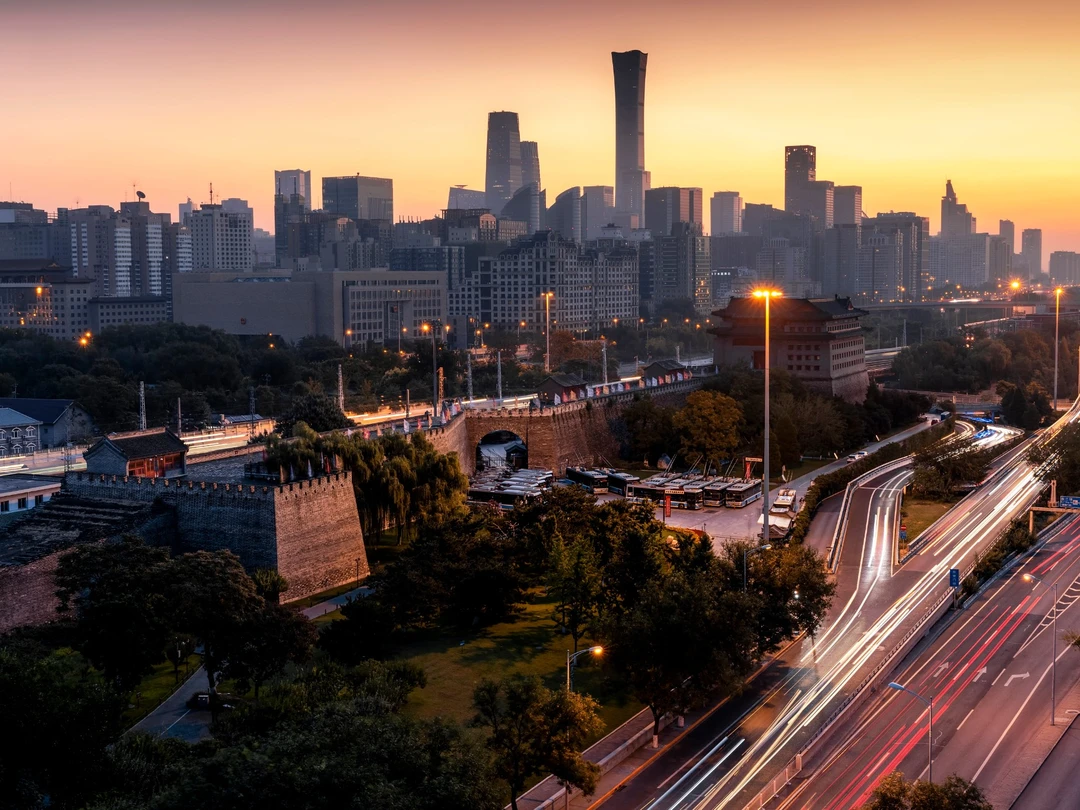
As night fell, thousands of lights blazed to life in Beijing's Central Business District. With a 24mm wide-angle lens, I captured the full panorama of Guomao—streams of cars flowing like ribbons of light. At 105mm telephoto, the space compressed, making distant buildings seem inches away, creating a surreal effect.
Light Trail Photography Techniques
I used the camera's interval shooting function to capture 10 consecutive shots, then stacked them into a single image—a perfect light trail of car headlights and taillights weaving together like a neon river.
Pro tip: The best spot for Beijing night photography is the pedestrian bridge connecting Guomao Towers A and B. Arrive 30 minutes before sunset to secure your position.
FAQ: Planning Your Beijing 24-Hour Trip
1. Is 24 hours enough time to see Beijing?
Yes, if you focus on two contrasting experiences—ancient and modern. This itinerary covers the Forbidden City area, modern architecture, and local food culture. For a deeper experience, extend to 48 hours.
2. What's the best time of year for a Beijing 24-hour trip?
 September to October offers the best weather—cool mornings, warm afternoons, and golden autumn leaves. Spring (April-May) is also pleasant but can be windy.
3. Do I need a visa for a 24-hour layover in Beijing?
China's 24-hour transit visa-free policy applies at Beijing Capital Airport. You can leave the airport for up to 24 hours without a visa, provided you have a confirmed onward ticket.
4. What should I pack for a Beijing 24-hour trip?
 - Layered clothing (mornings can be cold, afternoons warm) - Comfortable walking shoes (you'll cover 15,000+ steps) - Camera with versatile zoom lens (24-105mm recommended) - Power bank (charging stations can be scarce) - WeChat/Alipay (cash is rarely used)
5. How do I get around Beijing in 24 hours?
Use the Beijing Subway (¥3-9 per ride) or DiDi (Chinese Uber). Avoid taxis during rush hour (7:30-9:00 AM, 5:30-7:00 PM). A shared bike is perfect for short distances between hutongs.
Conclusion: Your Beijing Adventure Awaits
Twenty-four hours in Beijing is a sprint, not a marathon. But if you time it right, you'll witness a city that has mastered the art of duality—where a 600-year-old imperial tower reflects in a moat beside a 21st-century skyscraper, where a bowl of garlicky liver soup fuels your morning, and where a rooftop jump immortalizes your joy.
Are you ready to experience Beijing's ancient and modern symphony?
Start planning your trip today. Book your flights, download WeChat, and pack that camera. The Corner Tower is waiting for you at dawn.
Have you visited Beijing in 24 hours? Share your experience in the comments below or tag us in your best Beijing sunrise photos!
You should also read:
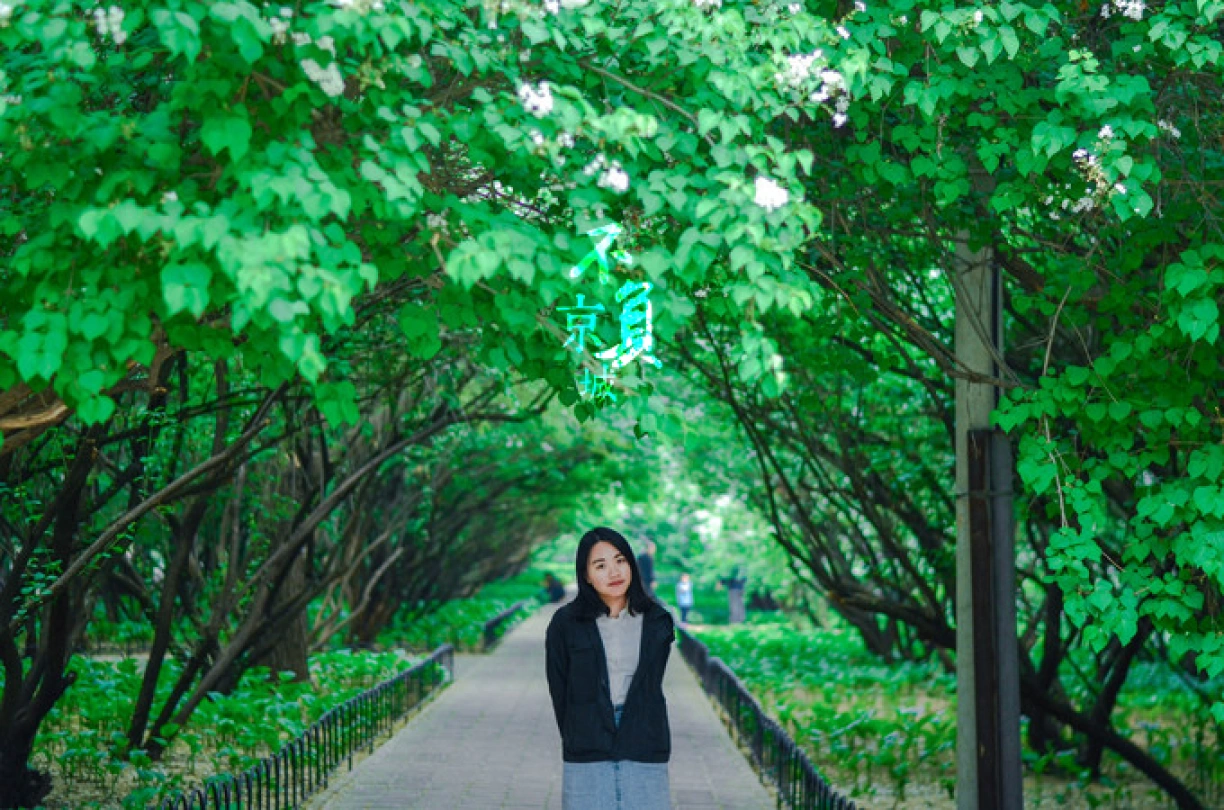
Three Days and Two Nights in Beijing: A Student’s Spring Travel Guide to the Imperial City
Meta Description: Discover Beijing on a student budget with this 3-day spring itinerary. From the Forbidden City to the Temple of Heaven, experience history, culture, and unexpected blue skies. Perfect for solo travelers. There are places you always think you can visit “someday”—until someday finally…
Continue reading...
Strolling Through Fragrant Beijing: The Imperial City of Crimson Walls and Azure Tiles – A Complete Travel Guide
Meta Description: Explore Beijing's Forbidden City, Temple of Heaven & hidden hutongs in this SEO-optimized travel guide. Walk 60km through crimson walls & azure tiles with insider photography tips. Plan your imperial city adventure today. "My Beijing City" plays on repeat as I write this—the…
Continue reading...
Dreaming of Beijing: A City of Flames and Embers
Here is the SEO-optimized, rewritten article based on the source material. It has been restructured for search intent, readability, and keyword density while preserving the original poetic and narrative essence. SEO Title: Dreaming of Beijing: A City of Flames, Embers, and 3,000 Years of History…
Continue reading...