Walking the Spine of Beijing: A Journey Along the 7.8-Kilometer Axis of Imperial Harmony
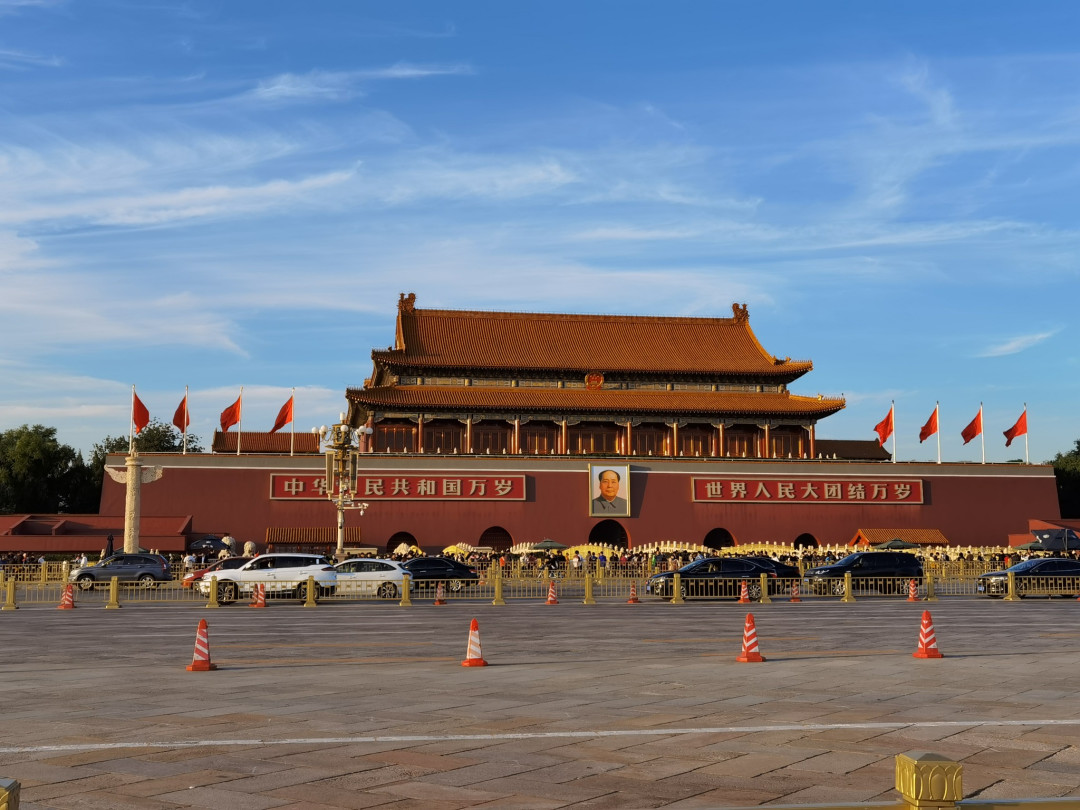
Meta Description: Discover Beijing's UNESCO-listed Central Axis—a 7.8km journey from Bell Tower to Yongdingmen. Explore imperial landmarks, insider tips, and hidden gems along China's most iconic urban corridor.
In July 2024, the world finally acknowledged what Beijing locals have known for centuries: the city’s central axis is a masterpiece of urban planning, a living testament to an ideal of order and symmetry that has shaped Chinese civilization for over 700 years. When UNESCO inscribed "Beijing Central Axis: A Building Ensemble Exhibiting the Ideal Order of the Chinese Capital" on the World Heritage List, it wasn’t just recognizing ancient architecture—it was celebrating a philosophy carved in stone, wood, and intention.
I’ve walked this line countless times, from the drum towers in the north to the gate that marks the southern boundary. Each visit reveals something new. Here’s my personal guide to the landmarks that make this axis extraordinary.
Why Beijing’s Central Axis Matters: A UNESCO World Heritage Journey
The Beijing Central Axis stretches 7.8 kilometers from the Bell and Drum Towers in the north to Yongdingmen in the south. This architectural spine embodies the Confucian ideal of harmony between heaven, earth, and humanity—a concept that governed Chinese capital planning for centuries. Walking this route is not just sightseeing; it’s a pilgrimage through the soul of imperial China.
Northern Sentinel: Bell and Drum Towers – Beijing’s Ancient Timekeepers
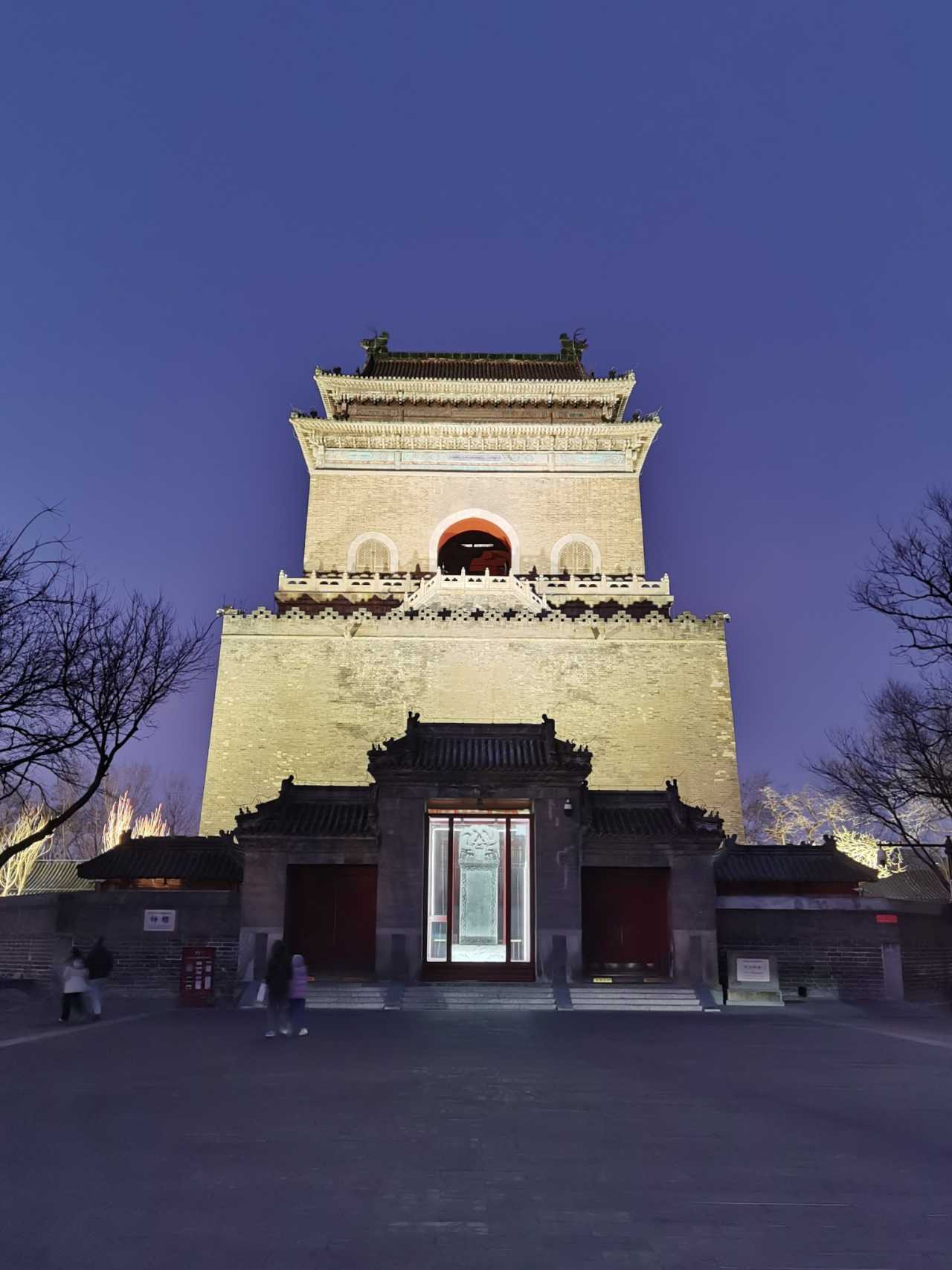
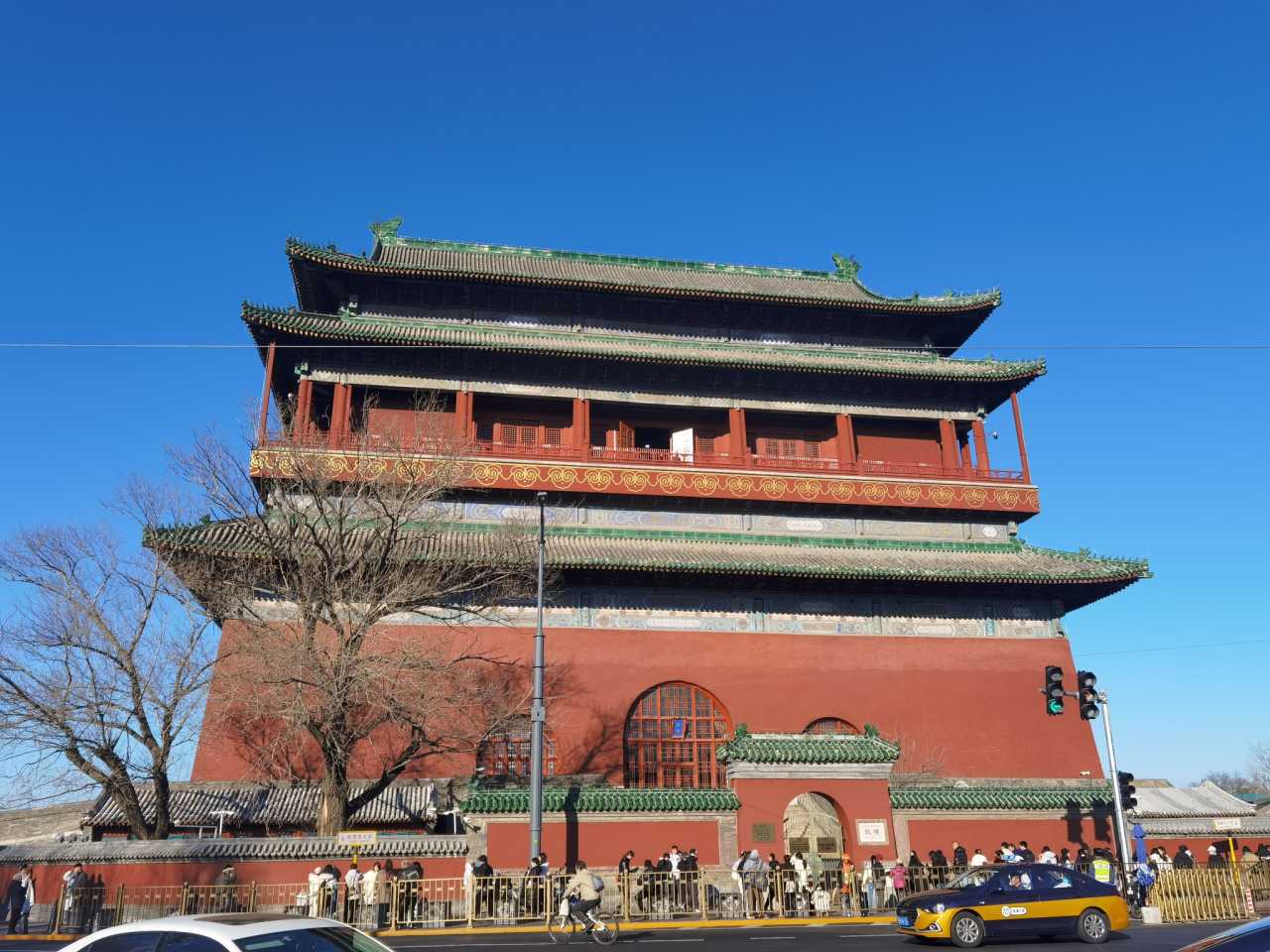
Location: No. 9 Zhonglouwan, Dongcheng District
Tickets: Bell Tower ¥10 (half ¥5), Drum Tower ¥20 (half ¥10), Combo ¥30 (half ¥15)
Hours: Off-season 09:30–16:30, Peak season 09:30–17:30 (last ticket sales one hour before close)
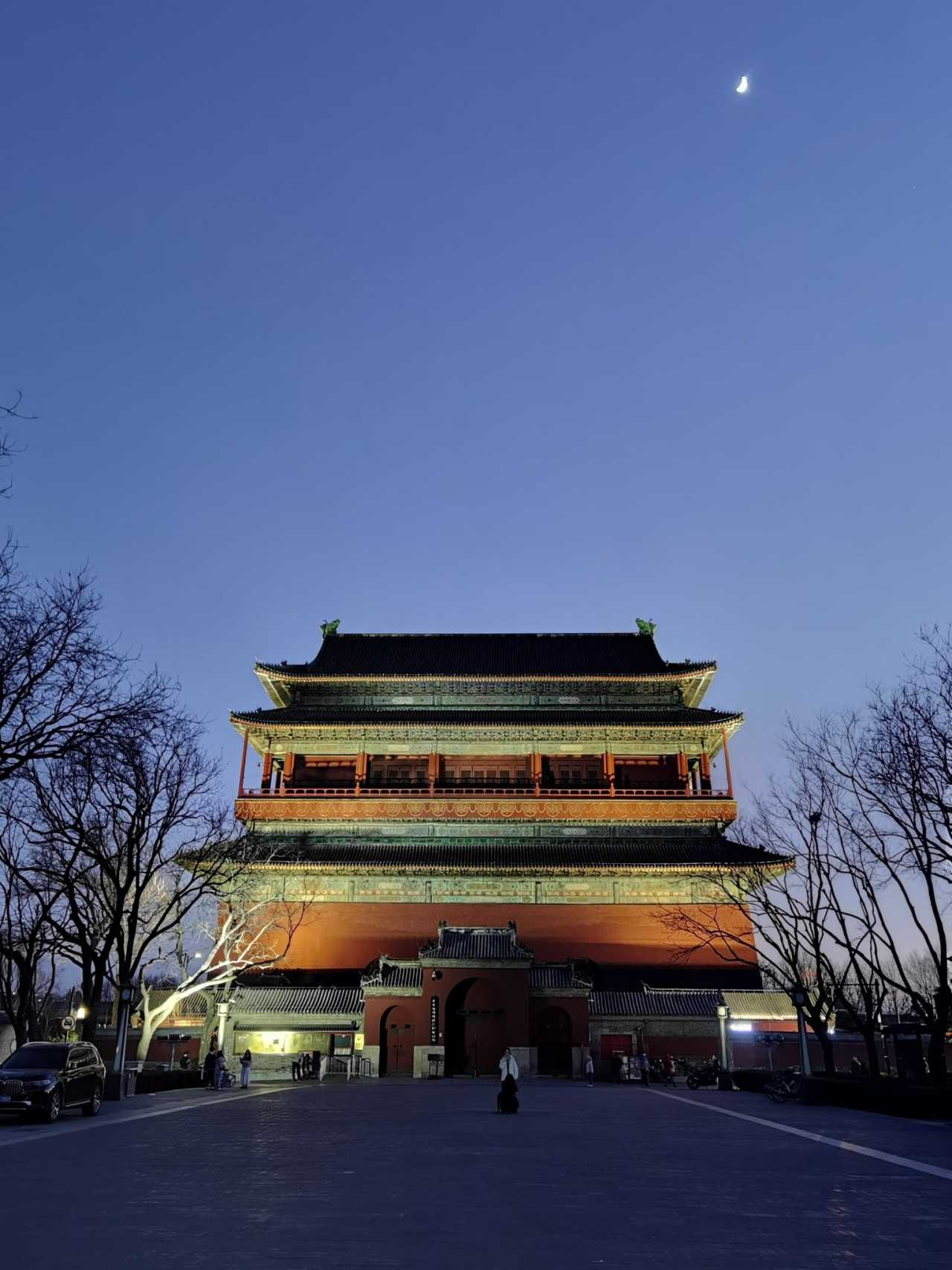
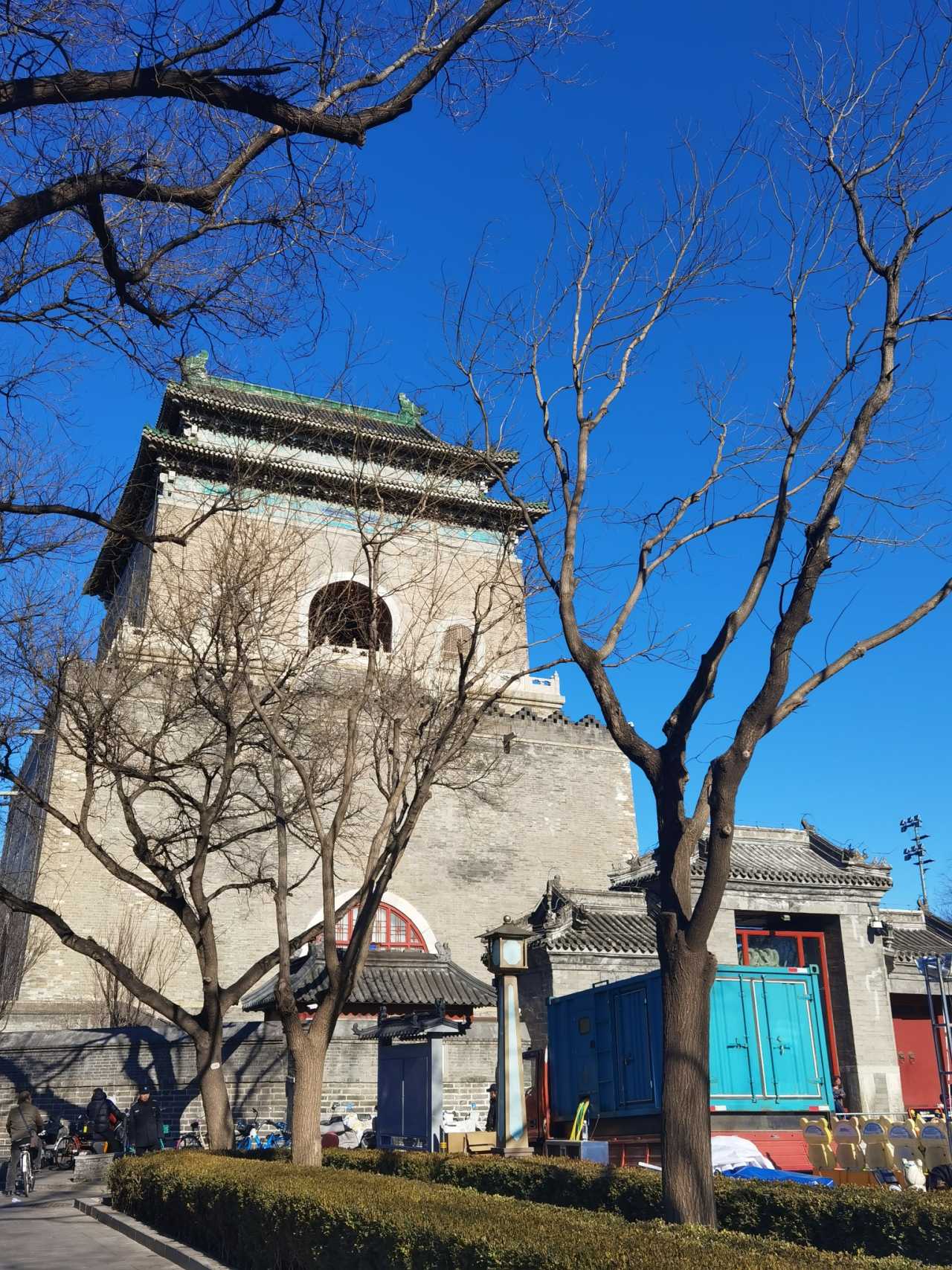
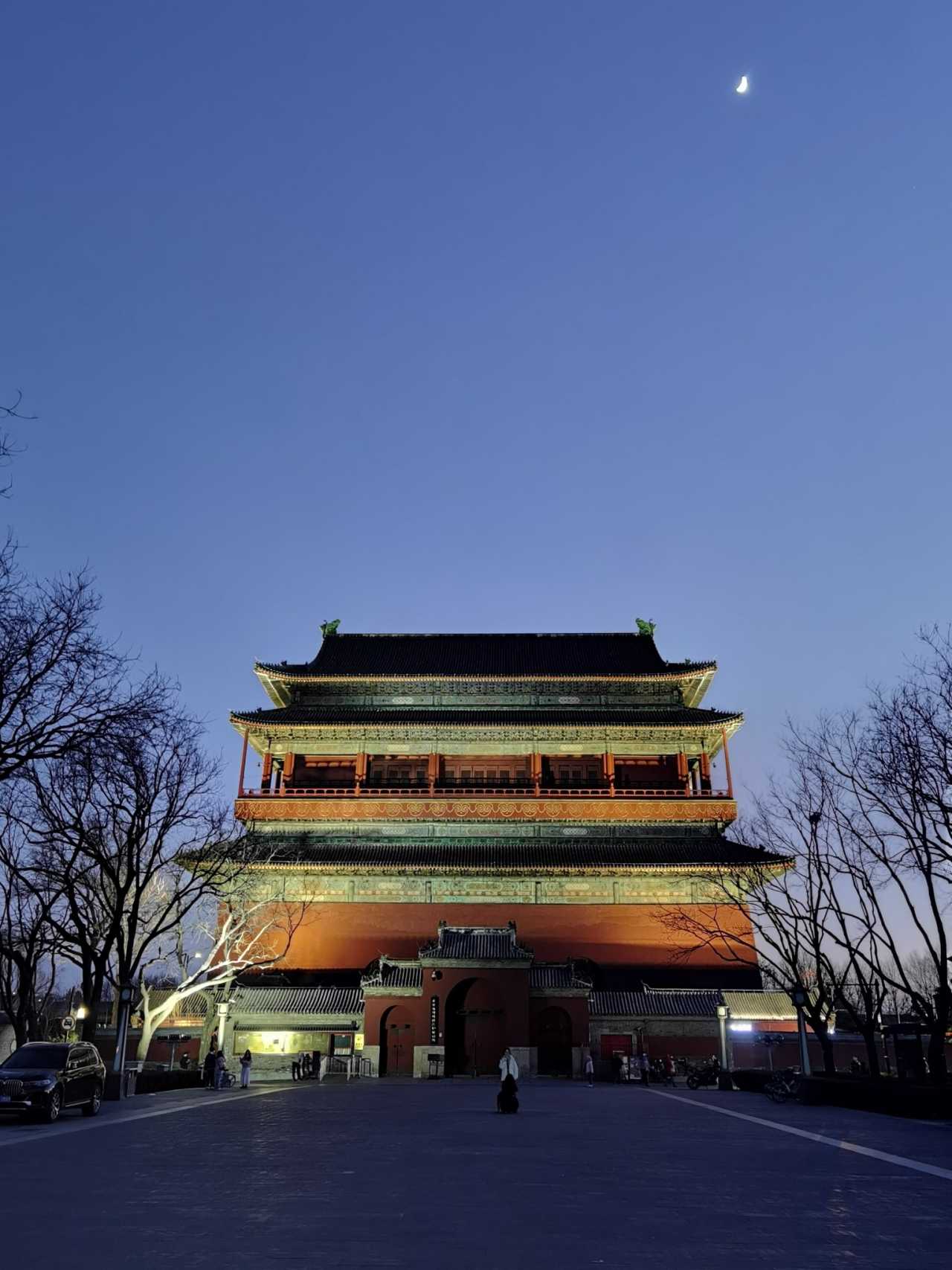
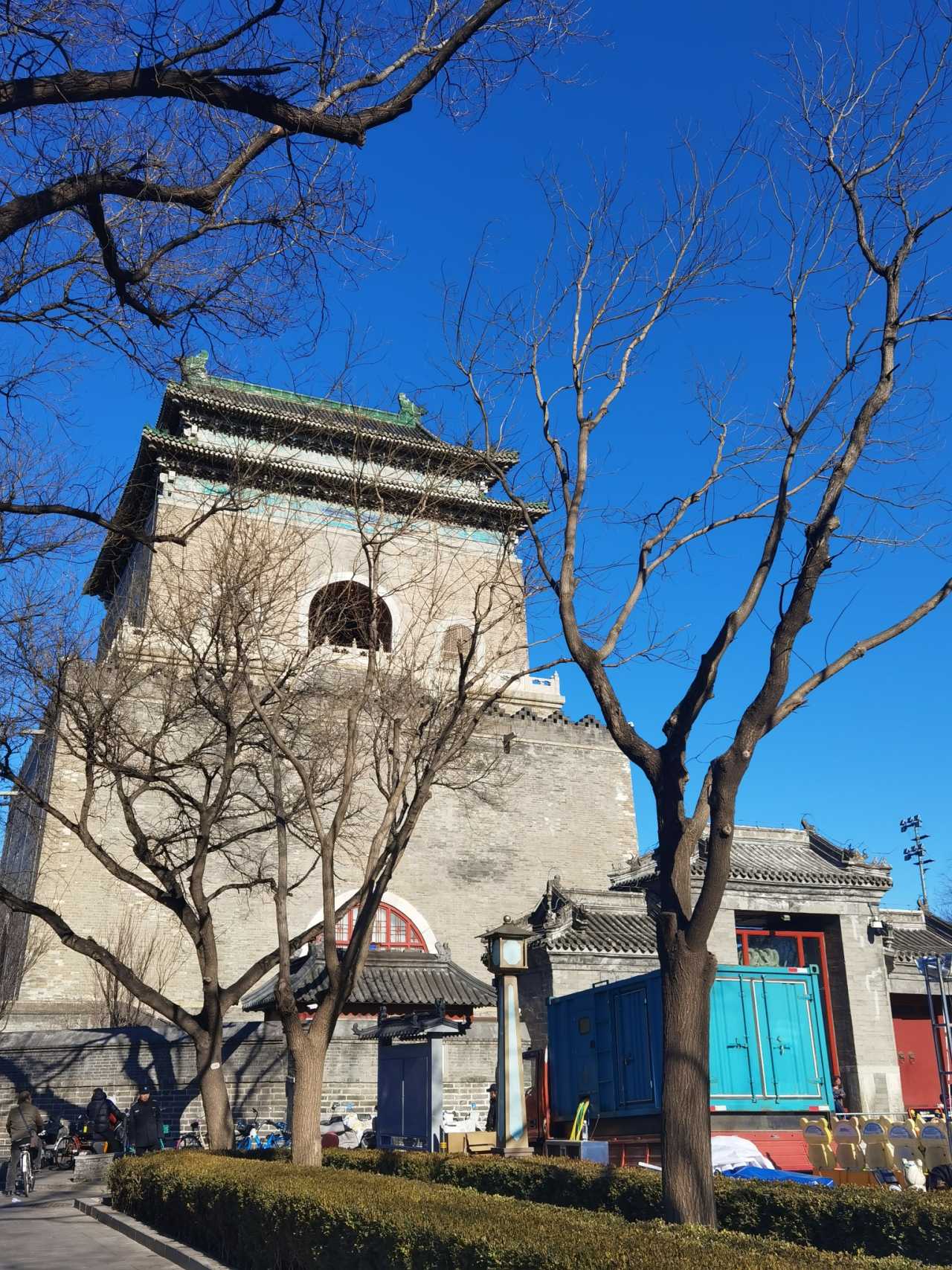
Standing shoulder to shoulder in the northernmost reaches of the axis, the Bell and Drum Towers once served as Beijing’s official timekeeping center during the Yuan, Ming, and Qing dynasties. The Drum Tower, painted a bold crimson, rises 46.7 meters and still houses 25 massive leather drums within its three-eaved wooden structure. Its gray companion, the Bell Tower, reaches 47.9 meters and contains an octagonal bronze bell suspended from an ancient wooden frame.
History of Beijing’s Bell and Drum Towers
The Drum Tower dates back to 1272 (Yuan dynasty), though what you see today is largely a Ming reconstruction from 1420. The Bell Tower was rebuilt in 1745 during the Qianlong era, and you can still find the imperial stele commemorating that renovation inside. Climb the 75 stone steps inside the Bell Tower’s eastern side, and you’ll emerge onto a viewing platform with Han white marble railings and arched doors on all four sides.
Pro tip: Check the official "Beijing Bell and Drum Towers" WeChat account for special drum performance schedules during holidays. Also, don’t miss the newly restored Hong’en Temple just north of the Bell Tower—a Qing-dynasty structure that now houses a creative center, a Beijing-style restaurant, a café, and a post office.
Wanning Bridge: The 700-Year-Old Stone Bridge on Beijing’s Central Axis

"Behind Jingshan, in front of the Drum Tower, Wanning Bridge sits right in the middle."
This old Beijing saying perfectly captures the bridge’s strategic position. Built in 1285 during the Yuan dynasty, Wanning Bridge marks the intersection of the Central Axis and the Grand Canal. It’s the oldest bridge along the entire axis—over 700 years old—and a key heritage site of the Grand Canal system.
What to See at Wanning Bridge
Originally constructed from wood, it was later rebuilt in stone and restored to its original name in December 2000. Look closely at the stone mythical water-beasts carved into the bridge’s wing walls on both sides. The one on the northeastern corner still bears an inscription reading "September, the Fourth Year of Zhizheng" (a Yuan dynasty reign period), though centuries of weather have worn their features nearly smooth. The waters to the west connect to Houhai (Rear Sea) and Shichahai (Ten Temple Sea), making this a serene spot to pause before continuing south.
[Link: Grand Canal Heritage Tour]
Jingshan Park: Best View of the Forbidden City and Beijing Central Axis
Address: No. 44 Jingshan West Street, Xicheng District
Hours: Park opens 06:30, last entry 19:30, closes 20:00
Tickets: ¥2 (purchase via the "畅游公园" WeChat mini-program)
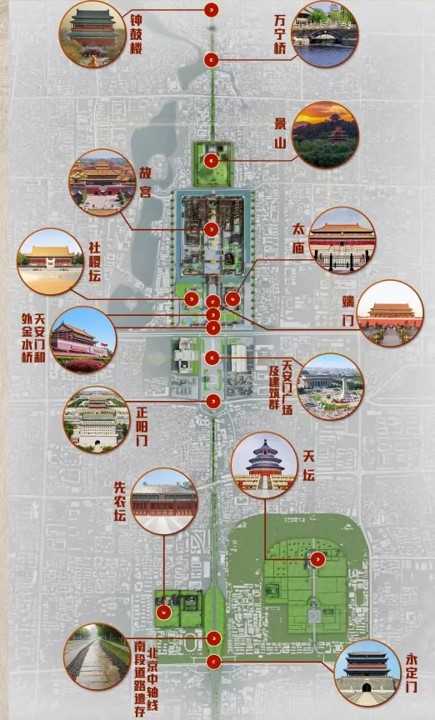
If you only visit one spot on the axis, make it Jingshan Park. The park’s history stretches back to the Jin dynasty, but the iconic artificial hill was created in 1420 during the Ming dynasty, piled atop the ruins of the Yuan dynasty’s Yanchun Pavilion (Spring Swallow Pavilion). It was renamed "Jingshan" (Prospect Hill) in 1655.
Jingshan Park’s Five Pavilions and Shouhuang Hall
The five pavilions lined along the ridge—from east to west: Zhoushang (Weekly Reward), Guanmiao (Observing Wonder), Wanchun (Ten Thousand Springs), Jifang (Auspicious View), and Fulan (Rich View)—were added in 1751. The central pavilion, Wanchun, offers the most photographed view in Beijing: looking south, the Forbidden City unfolds like a golden scroll; looking north, you’ll see the magnificent Shouhuang Hall (Hall of Imperial Longevity).
Shouhuang Hall deserves special attention. Built before 1602 and relocated to its current position in 1749, this sprawling complex of over 21,000 square meters once housed portraits of Qing emperors for ancestral worship. It’s the second-largest architectural ensemble on the axis after the Forbidden City, designed in imitation of the Imperial Ancestral Temple. The complex includes a main hall, side halls, twin stele pavilions, and three memorial archways. From 1956 to 2013, it served as the Beijing Children’s Palace before being returned to Jingshan Park and opened to the public in 2018. Best of all? No extra ticket required.
Note: The inner courtyards (including Shouhuang Hall, Guande Hall, and Huguo Zhongyi Temple) open at 09:30 and close at 17:00, and are closed on Mondays except holidays.
Forbidden City Walking Guide: Exploring the Heart of Imperial Power

Tickets: Peak season ¥60, Off-season ¥40; Treasure Gallery and Clock Gallery ¥10 each
Entry: South through Meridian Gate (Wumen); exit north through Gate of Divine Might (Shenwumen)
I’ve visited the Forbidden City dozens of times, including during the pandemic when I bought an annual pass. Let me be blunt: you cannot see it all in one day unless you’re sprinting. The official website is excellent for planning—use it.
Forbidden City Outer Court: Three Great Halls
The journey begins at Tiananmen (Gate of Heavenly Peace), then passes through Duanmen (End Gate), built in 1420 to store imperial ceremonial equipment. The word "duan" implies dignity and reverence, fitting for a gate that once witnessed grand processions of musicians and guards lining the path to the Meridian Gate.
Inside, the Three Great Halls dominate the outer court:
- Taihe Hall (Hall of Supreme Harmony): The largest hall in the complex, rebuilt in 1695 after multiple fires. Its 11-bay width and five-bay depth cover 2,377 square meters, and the golden throne sits beneath a coffered ceiling on gleaming "golden brick" floors.
- Zhonghe Hall (Hall of Central Harmony): A square pavilion where emperors prepared before ceremonies.
- Baohe Hall (Hall of Preserving Harmony): Used for imperial banquets and, from the Qianlong era onward, the final stage of the imperial examination.
Forbidden City Inner Court: Private Quarters of Emperors
The inner court reveals the private quarters:
- Qianqing Palace (Palace of Heavenly Purity): The emperor’s official residence, rebuilt in 1798. Look up—the "Zhengda Guangming" (Justice and Brightness) plaque hangs above the throne.
- Jiaotai Hall (Hall of Union): Houses the imperial seals and the ancient water clock.
- Kunning Palace (Palace of Earthly Tranquility): The empress’s residence, later converted into a Shamanic worship space in 1655.
Exit through Shenwumen (Gate of Divine Might), originally called Xuanwumen but renamed to avoid the Kangxi emperor’s personal name. This 31-meter gate features a five-bay tower with double-eaved hip roof and yellow glazed tiles.
[Link: Forbidden City Ticket Booking Guide]
Imperial Ancestral Temple: Beijing’s Finest Ming Dynasty Architecture
Location: East side of Tiananmen
Hours: Off-season 07:00–18:00, Peak season 06:30–20:00
Tickets: ¥2 (enter through the east gate if you haven’t reserved Tiananmen Square)
Built in 1420, the Imperial Ancestral Temple (now the Working People’s Cultural Palace) is the finest surviving Ming-dynasty temple complex in Beijing. The Hall of Worship (Xiangdian) is breathtaking—11 bays wide, six bays deep, rising 32.46 meters on a three-tiered white marble platform. The 68 interior columns are entire trunks of nanmu wood (a precious subtropical hardwood), the largest remaining example of its kind in China.
This temple served as the spiritual heart of the empire, where emperors performed elaborate rituals honoring their ancestors. Unlike the Forbidden City’s tourist crowds, this site offers a quieter, more contemplative experience.
FAQ: Beijing Central Axis Walking Tour
1. How long does it take to walk the entire Beijing Central Axis?
A full walk from the Bell and Drum Towers to Yongdingmen (7.8 km) takes approximately 4-6 hours without stops. With visits to major landmarks like Jingshan Park and the Forbidden City, plan a full day (8-10 hours). Many visitors split it into two days: northern section (Bell Tower to Jingshan) and southern section (Forbidden City to Yongdingmen).
2. What is the best time of year to visit the Beijing Central Axis?
 Spring (April-May) and autumn (September-October) offer the most pleasant weather. Summer can be hot and humid, while winter is cold but less crowded. For photography, early morning (before 8 AM) provides golden light and fewer tourists, especially at Jingshan Park.
3. Are there guided tours available for the Beijing Central Axis?
Yes, many tour operators offer guided walks. You can also download audio guides from platforms like Trip.com or use the official Beijing Central Axis app (available in Chinese and English). For a deeper experience, consider hiring a licensed guide through the Forbidden City’s official website.
4. What should I bring for a Beijing Central Axis walking tour?
 Comfortable walking shoes are essential. Bring water, sunscreen, and a hat in summer. In winter, dress in layers. A portable charger is useful for navigation apps and photography. Most sites accept WeChat Pay or Alipay, but carry some cash for small purchases.
5. Can I visit the Forbidden City and Jingshan Park in one day?
Yes, but it requires careful planning. Enter the Forbidden City at 8:30 AM (when gates open), spend 3-4 hours exploring, exit through Shenwumen, and walk 5 minutes to Jingshan Park. Climb to Wanchun Pavilion for sunset views. Note that the Forbidden City requires advance booking—tickets often sell out days or weeks ahead.
Final Tips for Your Beijing Central Axis Journey
- Book tickets in advance: The Forbidden City and Jingshan Park require online reservations, especially during peak season.
- Start early: Begin at the Bell and Drum Towers by 8 AM to avoid crowds.
- Use public transport: Subway lines 2, 5, and 8 serve multiple axis stops. Taxis are readily available but avoid rush hours (7-9 AM, 5-7 PM).
- Stay hydrated: Beijing’s dry climate means you’ll need more water than expected.
- Respect local customs: Dress modestly when visiting temples, and avoid loud conversations in sacred spaces.
Your Beijing Central Axis Adventure Awaits
Walking the Spine of Beijing is more than a sightseeing tour—it’s a journey through 700 years of Chinese history, philosophy, and urban design. From the ancient drums of the Bell Tower to the majestic halls of the Forbidden City, every step reveals the harmony that has made this axis a UNESCO World Heritage site.
Ready to explore? Start planning your Beijing Central Axis walking tour today. Book your Forbidden City tickets, download the Jingshan Park mini-program, and lace up your walking shoes. The imperial spine of China is waiting for you.
[Link: Beijing Travel Guide – Essential Tips for First-Time Visitors]
[Link: Top 10 UNESCO World Heritage Sites in China]
[Link: Best Walking Tours in Beijing – Local Recommendations]
Have you walked the Beijing Central Axis? Share your experience in the comments below, or tag us in your photos with #BeijingCentralAxis. For personalized itinerary planning, contact our travel experts at [email protected].
You should also read:
Dreaming of Beijing: A City of Flames and Embers
Here is the SEO-optimized, rewritten article based on the source material. It has been restructured for search intent, readability, and keyword density while preserving the original poetic and narrative essence. SEO Title: Dreaming of Beijing: A City of Flames, Embers, and 3,000 Years of History…
Continue reading...
Solo in Beijing: Discovering Another Side of the Capital Amid Red Walls and Grey Tiles
Meta Description: Traveling solo in Beijing on a student budget? Discover hidden gems, practical tips for first-time solo travelers, and how to explore the capital's red walls and grey tiles without breaking the bank. When my friends asked why I chose to go to Beijing…
Continue reading...
Savoring the Flavors of Di'anmen: A Culinary Journey Through Beijing's Heart
Meta Description: Discover the authentic tastes of old Beijing in Di'anmen. From douzhi to stir-fried liver, explore hidden hutong food stalls, legendary snack shops, and the vibrant street food culture surrounding Shichahai Lake. The story of Beijing has never been solely about crimson walls, golden…
Continue reading...