When the Paintbrush Meets Nature: A Botanical Art Journey Across China's Botanical Gardens
Meta Description: Explore the LIAN National Botanical Art Tour across 13 Chinese cities. Discover stunning plant paintings, artist stories, and the science behind botanical art in this immersive guide.
Introduction: The Art of Botanical Storytelling
On March 17, 2018, the Science Education Hall of the Beijing Botanical Garden hosted an exhibition unlike any other. No grand speeches. No flashy lights. Just over 40 meticulously crafted botanical paintings, each one a silent conversation between artist and nature. This was the debut of the LIAN National Botanical Art Tour—an unprecedented 10-month journey across China’s most celebrated botanical gardens.
From Beijing to Chengdu, Chongqing to Urumqi, and through 13 cities in total, this traveling exhibition brought together science, art, and the raw beauty of China’s flora. But this isn’t just an art show. It’s a scientific record, a cultural diary, and a love letter to the plant kingdom.
In this article, we’ll take you inside the exhibition, explore the stories behind the paintings, and show you why botanical art is more relevant than ever for nature lovers, gardeners, and art enthusiasts alike.
The LIAN National Botanical Art Tour: A First-of-Its-Kind Exhibition
The LIAN tour was a relay race of creativity. Over ten months, the exhibition traveled to 13 cities, each stop hosted by a major botanical garden. The goal? To showcase the intersection of scientific accuracy and artistic expression—a rare combination that defines botanical painting.
[Link: Botanical gardens in China – a guide to the best ones to visit]
Why This Exhibition Matters

- Educational value: Each painting is a scientific record of plant anatomy, growth habits, and ecological context.
- Cultural significance: Many plants depicted are native to China, with deep roots in local traditions.
- Artistic innovation: Artists used techniques ranging from ink wash to watercolor to acrylic, blending East and West.
From "Peninsula Jade" to "A Thunderbolt from the Blue": Plant Stories That Captivate
Every painting in the LIAN exhibition tells a story. Here are three that stand out.
"Peninsula Jade" – A Cactus from Mexico
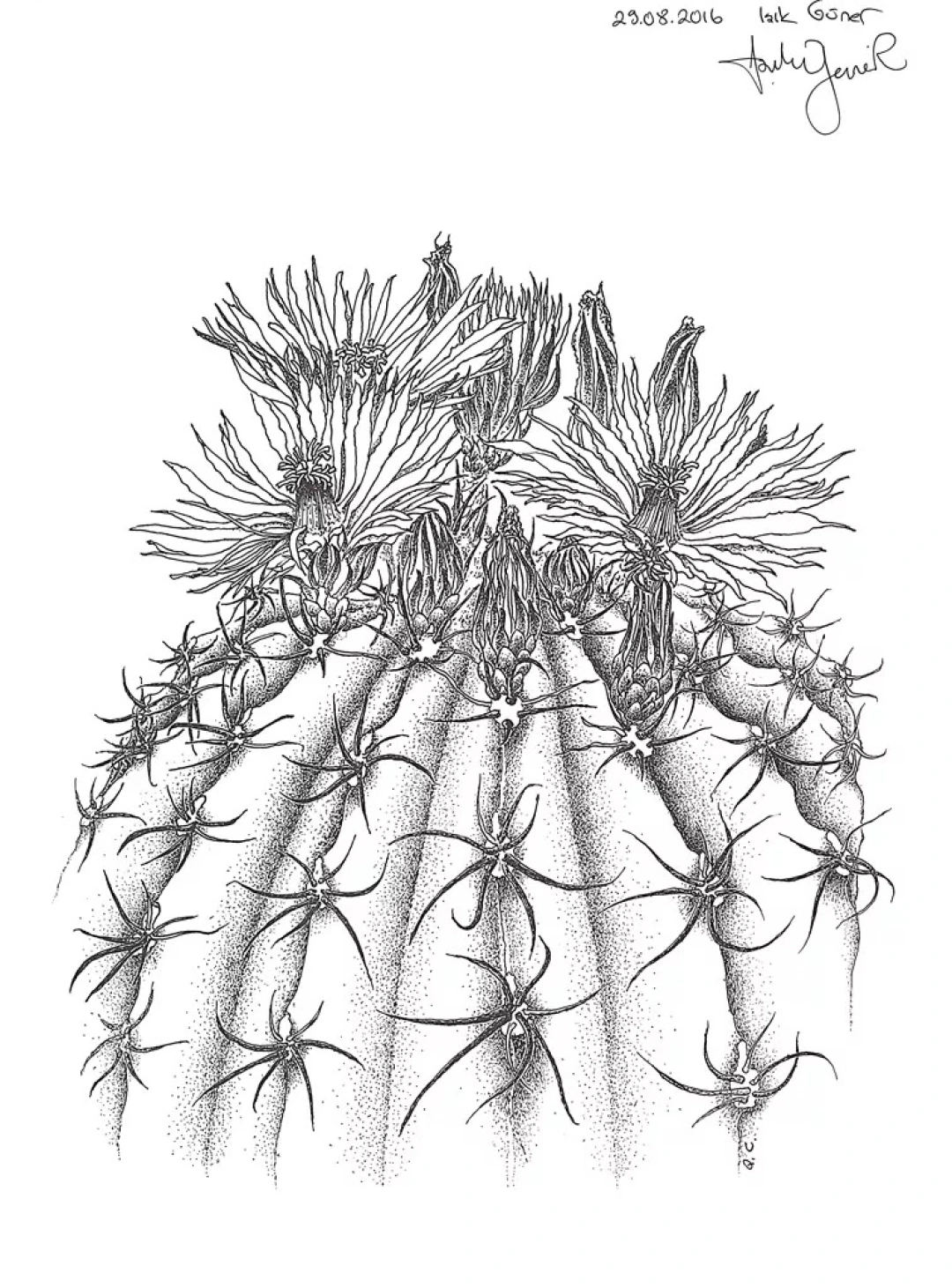
Artist Wu Qinchang spent hours in the Desert Plant Hall of Beijing World Flower Wonderland, sketching a cactus native to Mexico’s Baja California Peninsula. The result? A 27x19.5 cm ink drawing titled "Peninsula Jade." A month later, Turkish botanical artist Isik Guner saw the piece and signed it in admiration—proof that art transcends borders.
"Red Spider Lily" – The Flower That Blooms Without Leaves
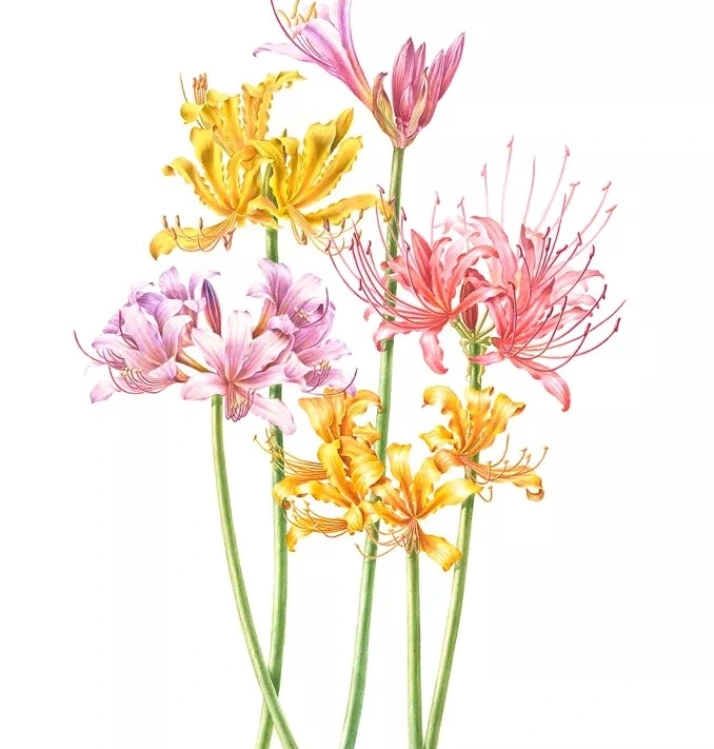
Also known as Lycoris radiata, the red spider lily is famous for its quirky growth habit: flowers appear without leaves, and leaves grow without flowers. This "flower and leaf never meet" trait has earned it the nickname "heartless grass." Its flower stalk grows over 10 cm in just days, giving it the dramatic name "A Thunderbolt from the Blue."
"Golden Lotus Bursting from the Earth" – Pig Feed Turned Sacred
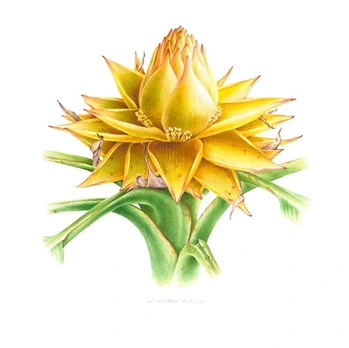
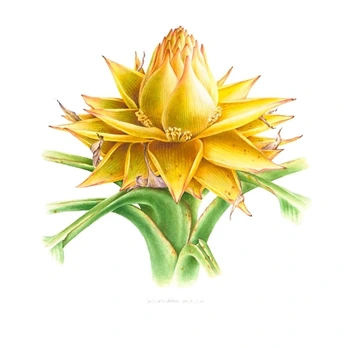
Musella lasiocarpa is a short banana relative native to Yunnan. In Buddhist temples, it’s one of the "Five Trees and Six Flowers." But in its native region, farmers feed it to pigs. The contrast between sacred and mundane is delightful—and a reminder that botanical art can find beauty everywhere.
Nine-Grid Life Journeys: The Artist's "Plant Diary"

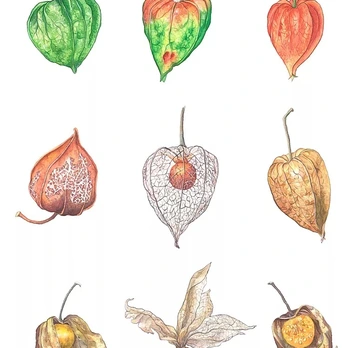
Some artists in the LIAN exhibition used a unique nine-grid format to document a plant’s life cycle. This technique turns a painting into a visual diary.
Chen Lifang's "Chinese Lantern Plant"
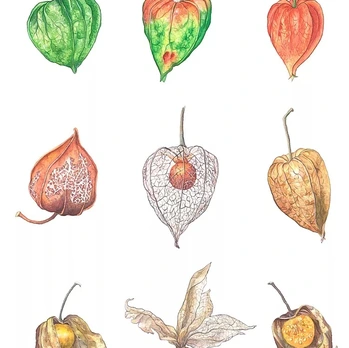
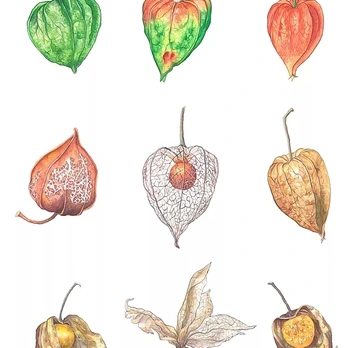
Chen’s nine-grid work shows the Physalis alkekengi fruit from tender green to fiery red, then to a skeleton of veins after wind and rain. She says, "It felt like I was experiencing their life journey alongside them." Viewers witness birth, aging, sickness, and death—all in one frame.
Yan Lan's "Lang's Paphiopedilum" – A Battle of Colors
This slipper orchid from Thailand is short but has large, heavy flowers. To capture its silvery purple-gray petals, bluish-gray leaves, and fine hairs, Yan worked intermittently for two months, layering colors dozens of times. The piece won an Excellence Award at the 19th International Botanical Congress Botanical Art Exhibition—a well-deserved honor.
[Link: How to start botanical painting – tips for beginners]
From Cangshan to Tianshan: A Geographic Atlas of Chinese Plants
The LIAN exhibition doubles as a geographic atlas of China’s plant diversity.
Tian Zhenqiong's "Axillary Rhododendron" and "Primula of Dali"
Tian’s paintings document low-altitude rhododendrons from Yunnan’s Cangshan Mountain and primulas from the foot of the mountain. Cangshan is known as the "Kingdom of Plants," with over 5,000 documented species. Tian says, "I used to paint traditional Chinese gongbi, but now I’ve left all technique behind. Anything goes as long as it serves the work."
Nian Gao's "Snow Lotus of the Tianshan Mountains"
The snow lotus (Saussurea involucrata) is often mythologized in novels and films. But Nian Gao sets the record straight: it’s a member of the Asteraceae family, and what look like petals are actually bracts. Wild snow lotus is becoming rare due to overharvesting. Nian’s painting carries a clear message: "Don’t pick wild plants outdoors."
Masterpieces: Zeng Xiaolian's "Plant Portraits"
No discussion of Chinese botanical art is complete without Zeng Xiaolian, a master of ecological painting. His works in the LIAN exhibition include "Kapok," "Yunnan Camellia," "Peony," "Parasitic Flower," "Long-Leaf Meconopsis," "Beautiful Silk Floss Tree," "Horse-Spotted Rhododendron," "Wild Lily," "Hard-Leaf Slipper Orchid," and "Bitter Gourd."
"Beautiful Silk Floss Tree" – A Botanical Instruction Manual
Native to South America but widely cultivated in southern China, Ceiba speciosa has pale pink flowers with white centers. Zeng captured the petals curling backward and the stamens fused into a tube. His paintings are both art and science—a visual encyclopedia.
"Wild Lily" – Folk Sentiment Meets Botanical Accuracy
Wild lilies grow on hillsides in central Yunnan. In folk tradition, they symbolize "a hundred years of happy union." Their bulbs are edible and medicinal. Zeng’s painting breathes new life into this common plant, elevating it to the status of art.
More Than Plants: Insects, Fungi, and Lichens in Supporting Roles
Botanical art isn’t just about plants. The LIAN exhibition also features insects, fungi, and lichens.
Li Xiaodong's "Insect Collection in Specimen Style"
Using four-sheet watercolor, Li depicted 16 insects—longhorn beetles, mantises, ladybugs, jewel beetles—each lifelike. His "Stag Beetle" focuses on the male’s mandibles, which are as developed as deer antlers and used as weapons. Stag beetles are beloved by collectors and even kept as pets.
Yang Jiankun's "Entoloma" – Fungi as Art
In 2015, Yang participated in a project by the World Agroforestry Center to survey wild fungi in Xishuangbanna’s Naban River Nature Reserve. Seeing the colorful, oddly shaped mushrooms inspired him to paint them. He says, "The difference between botanical art and fine art is that the former carries a responsibility for exploration and discovery. If we just keep painting common garden varieties, we miss the point."
[Link: Top botanical gardens in China for nature lovers]
FAQ: Botanical Art and the LIAN Exhibition
1. What is botanical art?
Botanical art is a genre of painting that combines scientific accuracy with artistic expression. It documents plant anatomy, growth habits, and ecological context, often serving as a visual record for botanists, gardeners, and nature lovers.
2. How is botanical art different from fine art?
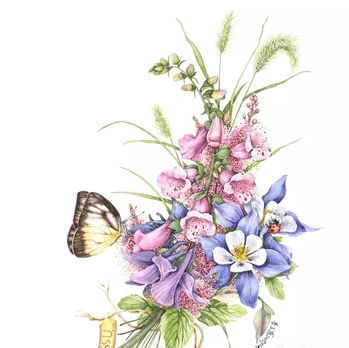 Botanical art prioritizes scientific accuracy over creative interpretation. While fine art may exaggerate or abstract, botanical art must faithfully represent the plant’s structure, color, and form.
3. Can I learn botanical painting?
Yes! Many artists start with basic watercolor or pencil techniques. The key is observation—spend time studying plants in their natural habitat. [Link: How to start botanical painting – tips for beginners]
4. Why is the LIAN exhibition important?
 It’s the first national tour of botanical art in China, showcasing over 40 works across 13 cities. It highlights China’s plant diversity, promotes environmental awareness, and elevates botanical art as a serious discipline.
5. Where can I see botanical art in China?
Many botanical gardens host exhibitions. The LIAN tour visited Beijing, Chengdu, Chongqing, Urumqi, Shijiazhuang, Zhengzhou, Nanjing, Shanghai, Lushan, Guiyang, Guangzhou, Xiamen, and Shenzhen. Check local botanical garden websites for upcoming shows.
Conclusion: Your Turn to Explore Botanical Art
The LIAN National Botanical Art Tour proves that art and science can coexist beautifully. Each painting is a window into a plant’s life—a story of growth, adaptation, and survival. Whether you’re a gardener, an artist, or simply someone who loves nature, botanical art offers a deeper connection to the world around us.
Ready to start your own botanical art journey?
Explore your local botanical garden, pick up a sketchbook, and begin observing the plants in your own backyard. You don’t need to be a professional artist—just a curious heart and a steady hand.
[Link: Best botanical gardens in China to visit in 2025]
Share this article with a friend who loves art, nature, or both. And if you’ve ever tried botanical painting, we’d love to hear about your experience in the comments below.
Keywords: botanical art, LIAN National Botanical Art Tour, Chinese botanical gardens, botanical painting, plant painting, botanical art exhibition, botanical art China, botanical art journey, botanical art stories, botanical art techniques, botanical art for beginners, botanical art exhibition China, botanical art tour, botanical art exhibition 2025
You should also read:
Strolling Through Beijing: When the Forbidden City's Twilight Meets the Alleyways' Hearth Smoke
Meta Description: Discover Beijing's imperial grandeur and culinary soul in this 5-day guide. From Forbidden City secrets to Niujie food walks, learn where to stay, eat, and explore for an unforgettable trip. Beijing isn't just a city—it's a living museum where six centuries of imperial…
Continue reading...
Beiping: A City Where the Aroma of Street Food Meets the Poetry of the Distant Horizon
Here is the SEO-optimized, rewritten article based on your source material. It is structured for search engine visibility while maintaining the poetic, travelogue style of the original. SEO Title: Beiping Travel Guide: Street Food Aroma, Hutong Culture & The Poetry of Beijing’s Horizon Meta Description:…
Continue reading...
A Winter Journey in Beijing: Romance and Misery at Minus Five Degrees – An SEO-Optimized Travel Guide
Meta Description: Discover the romance and misery of a winter trip to Beijing at -5°C. Explore snowy Jingshan Park, historic hutongs, and budget-friendly tips for a 4-day Spring Festival adventure. Some say Beijing is a city you both love and hate. You love its profound…
Continue reading...