The Corner Where Time Stands Still: Searching for the Forgotten Luopoling in Beijing’s Western Hills
Meta Description: Discover Luopoling, a forgotten train station in Beijing's Western Hills. Explore hidden hiking trails, historic pillboxes, and the quiet beauty of this off-the-beaten-path gem.
Introduction: A Photograph That Changed Everything
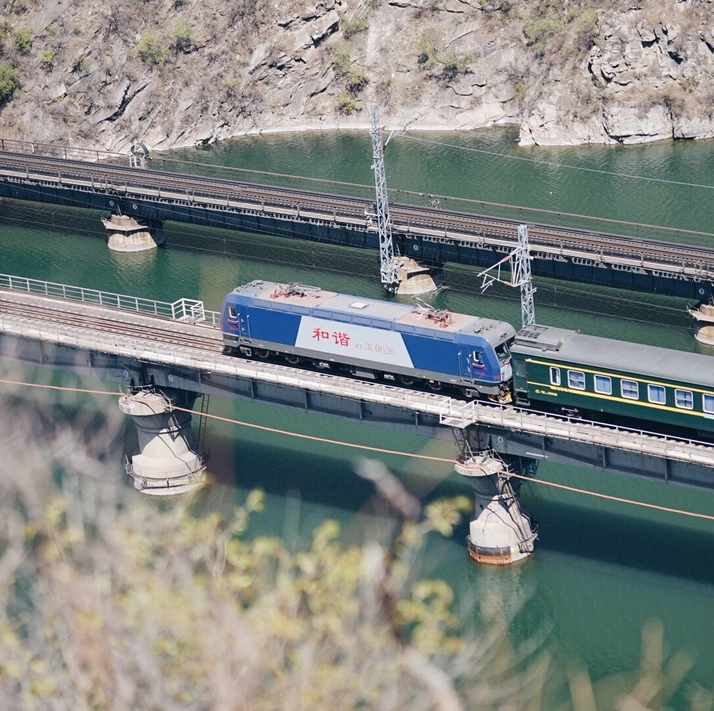
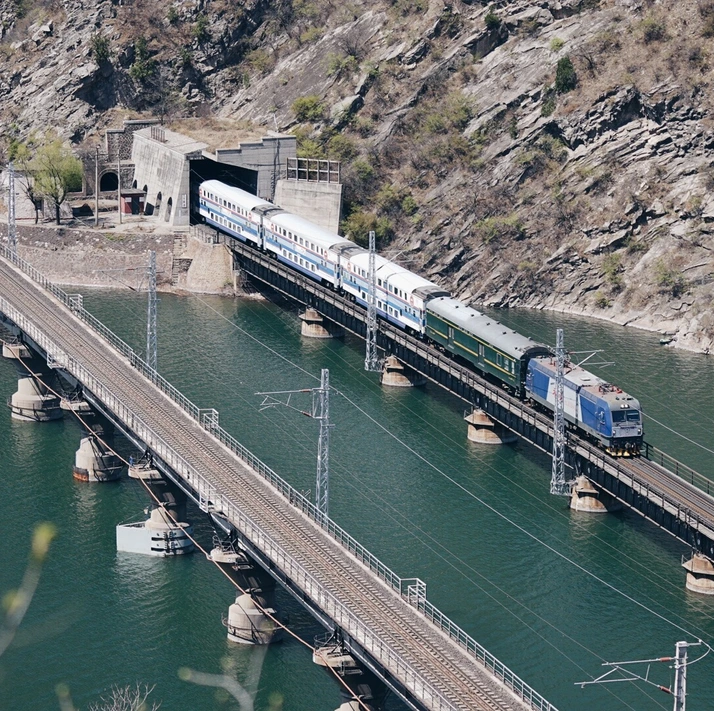
Two years ago, late one night, I stumbled upon a travelogue on Douban. The photo showed an old green train slowly gliding across tracks set among the mountains, with a turquoise reservoir and lush green hills in the background. The scene was so quiet it felt like a single frame cut from a bygone era. The author said the place was called Luopoling, located in Beijing’s western suburbs—a prime spot for train photography.
To be honest, I’m not particularly obsessed with trains. But that name—Luopoling—planted itself like a seed in my mind. It sounded like a place forgotten by time, a secret corner hidden among the peaks, known only to a lucky few.
Last weekend, I finally decided to uncover the mystery.
How to Get to Luopoling: A Hidden Gem in Mentougou District

Luopoling sits in Beijing’s Mentougou District, right next to National Highway 109—the road that stretches all the way from Beijing to Lhasa, often dubbed the “Western Hills Scenic Highway” online. The weather that weekend was impossibly perfect. Every scenic spot along the way had parking lots packed with cars and crowds buzzing with noise. But Luopoling didn’t seem to be on that bustling list.
We stood on a hillside next to the Luopoling community, flanked on both sides by thriving resorts and farmhouse inns. Only this spot was utterly quiet, as if the entire world had forgotten it existed.
Why Visit Luopoling?
- Off-the-beaten-path experience – No crowds, no ticket booths, just raw nature and history.
- Train photography paradise – Watch freight and passenger trains rumble through the mountains.
- Historic relics – Explore a Japanese-era pillbox and an abandoned railway station.
- Peaceful hiking – Short, easy trails with panoramic views of the reservoir and hills.
The Search for Luopoling Station: A Hidden Train Station
Luopoling’s “claim to fame” is a small train station. But when we tried to follow the map toward it, a construction worker stopped us: “Roadwork ahead. Can’t get through. The station’s closed anyway—there’s nothing to see.”
But we weren’t giving up. We could see the station’s silhouette from the roadside, and we could hear the train whistles.
We grabbed a station worker for directions. He scratched his head and said, “There’s a path behind the toilet, but nobody’s used it in years. Ah, don’t bother—it’s pretty dangerous.”
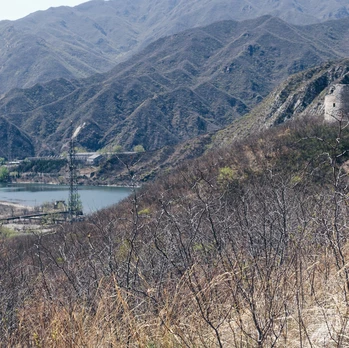
The slope looked maybe 20 or 30 meters high, not particularly steep. On a normal day, we could have scrambled up with hands and feet. The problem was that the hill was covered in wild jujube trees, their branches bristling with rock-hard thorns that were impossible to avoid.
Since there was a path, we decided to check it out anyway. The trail behind the toilet was indeed long-abandoned, covered in loose stones, with plants clawing at us from both sides. We turned back and hadn’t gone far when we spotted another small path heading up the hill, in slightly better condition.
We’d only climbed a few meters when an elderly woman, strolling with her hands behind her back at the bottom of the slope, called out: “Hey, you two—what are you up to?”
“We heard there’s a pillbox up there with a great view. We want to take some train photos.”
“The pillbox is over that way. Come on, follow me—I’ll show you.”
The Ascent: Discovering the Japanese Pillbox and Local Stories
We followed the woman back to the Luopoling community. Behind the dormitory buildings, there was indeed a stone path winding upward.
“Just follow this path. When the stones end, turn left, then keep going. You’ll see a fork—one side has a sign saying ‘Dogs on the Hill.’ Follow that sign and keep walking. There’s a path—it’s easy.”
“Are there really dogs up there…?”
“People keep them penned up—no worries.”
We thanked her and headed up. The path was very quiet, lined on both sides by small vegetable gardens that residents had cultivated, along with a few crumbling stone houses. This must have once been a lively community, but now the young people had moved away, leaving only the elderly to enjoy their twilight years in peace.
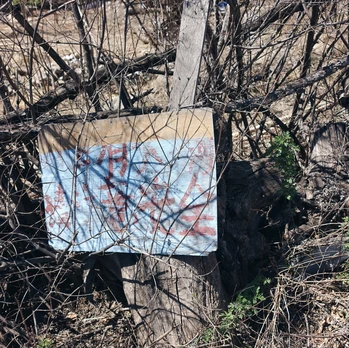
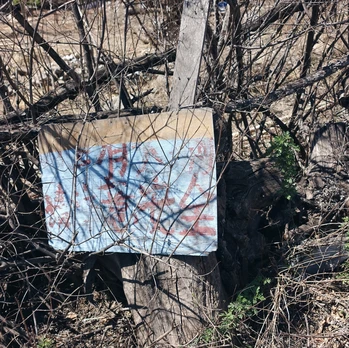
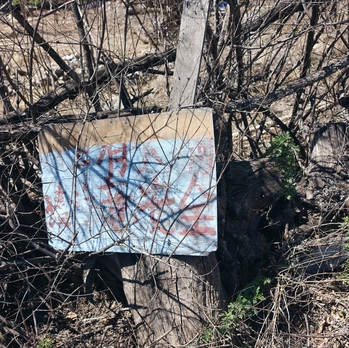
“Dogs on the Hill” was a faded blue wooden sign, tilted against a fence made of jujube branches. If you weren’t paying attention, you’d miss it entirely. The letters were barely legible—we stared at it for a long time before realizing this was indeed the “landmark.”
The trail was all loose stones. I was wearing canvas shoes, slipping with every step, and couldn’t stop worrying about the “dogs on the hill” warning. But when we finally reached the top, there wasn’t a single animal in sight—just the two of us.
The Japanese Pillbox: A Relic of Wartime History
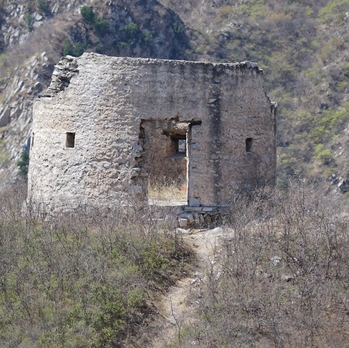
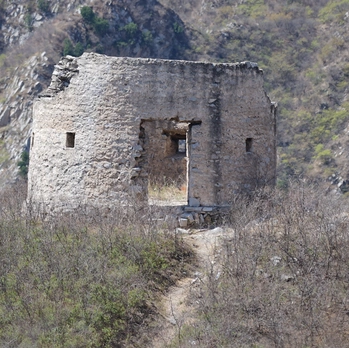
The pillbox was a thick, round concrete pillar, reportedly built by the Japanese during the war. They abandoned it halfway through construction and surrendered, leaving behind this “unfinished project.” The pillbox seemed genuinely surprised to see us climbing up.
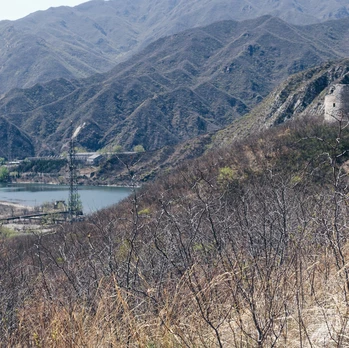
The wind on the mountaintop blew in steady gusts, incredibly refreshing. But from the pillbox, we could only see the turquoise reservoir and the tracks emerging from a tunnel—the station itself was hidden behind a smaller hill.
Train Spotting at Luopoling: Freight, Passenger, and Memories
The Fengsha Railway line was surprisingly busy. We stood there, watching trains emerge from the tunnel one after another, then swallow up trains coming from the opposite direction. Most were freight trains—green or blue locomotives pulling long strings of dark brown cars. Occasionally, a colorful container train or an oil tanker would pass, and we’d perk up with excitement.
Passenger trains were much rarer. The travelogue I’d read earlier mentioned that old green trains still ran here, especially the 4415/4416 from Beijing to Zhangjiakou, which offered a string of beautiful views along the Fengsha line. But when I checked before my trip, I found that service had already been discontinued.
Still, during the hour or so we spent at the pillbox, we actually saw a double-decker passenger train. Zooming in with my telephoto lens, I could see it was a tourist train from Shalingzi West Station to Shijiazhuang North Station. I used to take these trains all the time as a kid when visiting my hometown—they’re full of fond childhood memories. I hadn’t seen one in years.
“Let’s watch one more train, then head over there!” I said. Just then, we heard a whistle from inside the tunnel.
“Guess what this is—freight or passenger?”
“Freight.”
“Then I’ll guess passenger.”
The answer came rumbling out: a coal train, packed to the brim, thundering past us.
Later, we moved to a smaller hill nearby to capture trains from the other direction and a panoramic view of Luopoling Station. The shooting conditions were awkward—the wild jujube bushes were thicker here, and because so few people ever came this way, combined with the spring growth season, the already narrow dirt path was completely overgrown. Despite our caution, the jujube thorns snagged our clothes, pulling threads loose. The midday light was also harsh—far from ideal for photography.
After a few quick shots, we retraced our steps and followed a set of stairs used by railway workers down to the tracks.
Luopoling Station: A Lonely Sentinel on the Fengsha Line
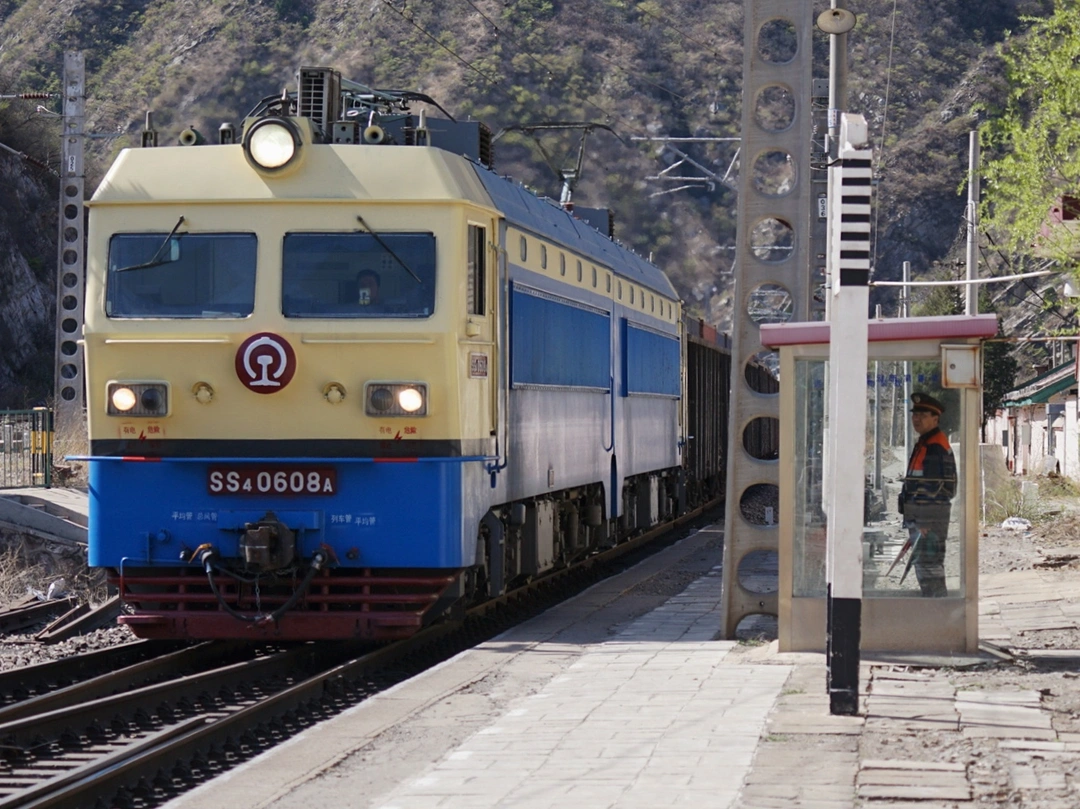
Luopoling Station had seven tracks in total—an impressively large number for such a small station. But from our observation on the hillside, it seemed only the three electrified tracks closest to the station building were still in use. The other four saw no traffic, and two of them even had old train cars parked on them.
From time to time, a few tourists wandered in, climbing up and down the parked train cars, poking around inside. Whenever a train approached, they’d all pull out their phones and cameras.
We only saw one staff member here. Whenever a train came, he’d stand on his observation post, waving a flag and signaling, watching train after train roar past. When no trains were coming, he’d sit alone against the wall, soaking up the sun. When he saw us taking photos, he just called out, “Watch out for the trains,” and said nothing more.
You’d have to have a deep love for this job to keep at it day after day.
The Luopoling Community: Where Time Stands Still
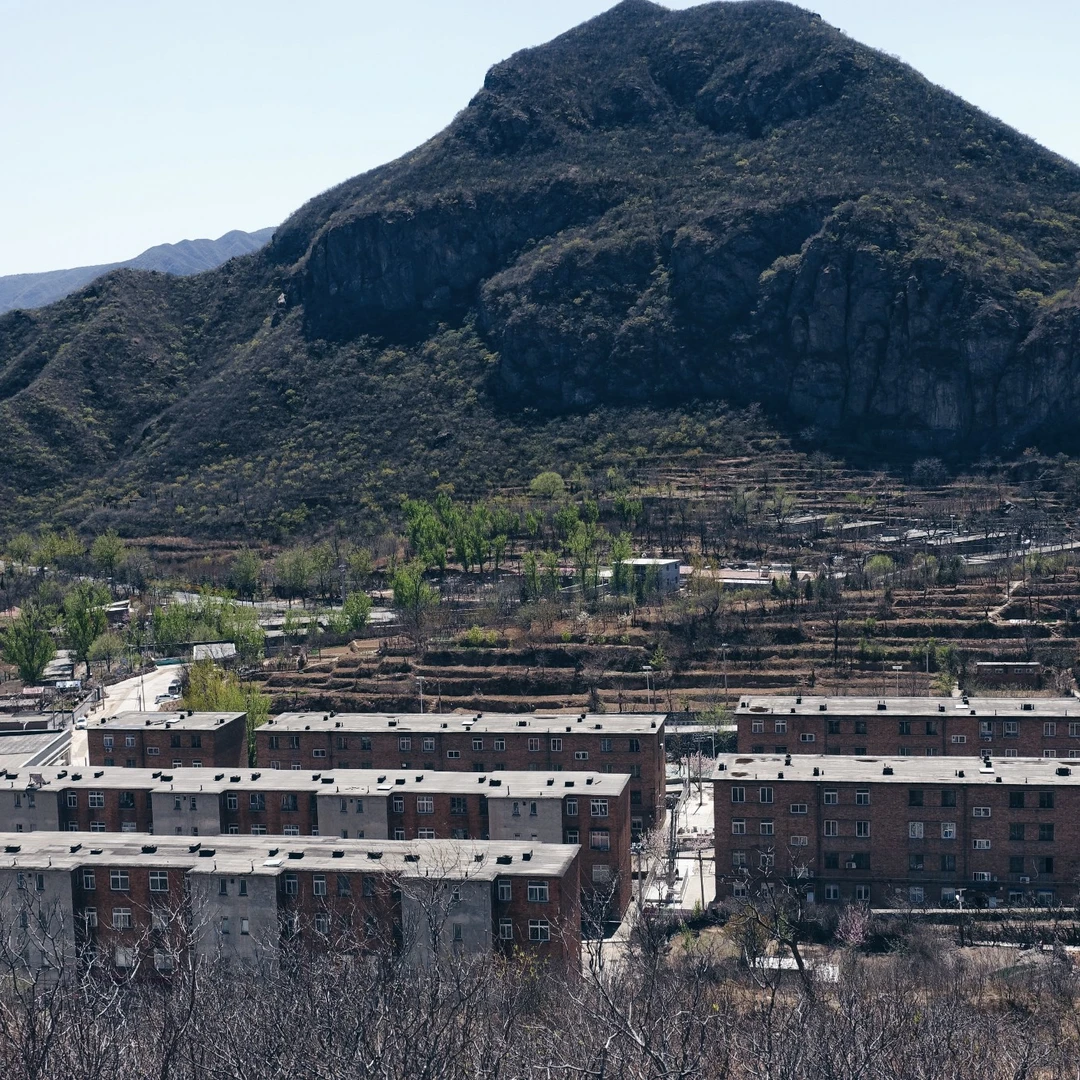
Above the station and below the hillside lay the Luopoling community. There were only four red-brick apartment buildings, with a row of single-story houses on one side housing the neighborhood committee.
This was once a lively community, but now the young people had moved away, leaving only the elderly to enjoy their twilight years in peace. The vegetable gardens, the crumbling stone houses, the faded signs—everything spoke of a place that had been gently forgotten by the modern world.
It’s the kind of place where time slows down. Where you can hear the wind rustling through the jujube trees, the distant whistle of a train, and the quiet chatter of elderly residents tending their gardens.
FAQ About Luopoling
1. Is Luopoling Station still operational?
 Yes, but only partially. Three of the seven tracks are still in use for freight and occasional passenger trains. The station building itself is closed to the public, but you can view trains from the hillside or along the tracks.
2. How do I get to Luopoling?
Luopoling is located in Mentougou District, accessible via National Highway 109. It’s about a 1.5-hour drive from central Beijing. Public transport options include buses to the Luopoling community or nearby stops.
3. Is there an entrance fee?
 No. Luopoling is a free, open-air location. There are no ticket booths or official tourist facilities.
4. What’s the best time to visit for train photography?
 Spring and autumn offer the best light and weather. Early morning or late afternoon provides softer lighting for photography. Avoid midday when the sun is harsh.
5. Are there any safety concerns?
Yes. The hiking trails are rough and overgrown, with loose stones and thorny jujube bushes. Wear sturdy shoes and long pants. Be cautious near the railway tracks—trains are frequent and fast. Always stay a safe distance from the rails.
Related Articles You Might Enjoy
- [Link: Best Hidden Hiking Trails in Beijing’s Western Hills]
- [Link: Exploring Abandoned Train Stations in China]
- [Link: A Guide to Mentougou District’s Off-the-Beaten-Path Attractions]
- [Link: Train Photography Tips for Beginners]
Final Thoughts: Why You Should Visit Luopoling
Luopoling isn’t a polished tourist attraction. It’s a place that rewards the curious, the patient, and the adventurous. You won’t find souvenir shops, guided tours, or Instagram-perfect viewpoints. What you will find is a corner of Beijing where time stands still—where the rumble of a freight train echoes through the hills, where an old pillbox stands as a silent witness to history, and where a small community lives at its own gentle pace.
If you’re tired of the crowds at the Great Wall or the Summer Palace, if you want to experience a side of Beijing that few tourists ever see, then Luopoling is waiting for you.
Ready to explore? Pack your hiking shoes, grab your camera, and head to the Western Hills. The forgotten corner is calling.
Have you visited Luopoling or another hidden gem in Beijing? Share your experience in the comments below—we’d love to hear your story!
You should also read:
Slow Time in the Imperial Capital: A Gentle Winter Encounter Amidst the Red Walls and Golden Tiles
Here is the SEO-optimized, rewritten article based on your source material. It is designed to rank for keywords related to "winter travel in Beijing," "slow travel," and "historical sites," while maintaining the poetic, gentle tone of the original. SEO Title: Winter in Beijing: A Gentle…
Continue reading...
The Creases of Time: Exploring History in Four Old Beijing Hutongs
Meta Description: Discover the hidden stories of Beijing's oldest hutongs—from Brick Pagoda Hutong's 700-year legacy to the poetic Depth of a Hundred Flowers. Explore history, culture, and forgotten lives in these ancient alleyways. In the late autumn of 2017, I stood at a crossroads in…
Continue reading...
A Five-Day In-Depth Beijing Tour: The Ultimate Free Travel Route Guide for First-Time Visitors
Meta Description: Plan the perfect Beijing itinerary with this SEO-optimized 5-day guide. From the Forbidden City to the Great Wall, discover practical tips, hidden gems, and expert advice for an unforgettable free travel experience. Beijing is a city where ancient history meets modern energy. With…
Continue reading...