The Forbidden City: A Journey Through 600 Years of Imperial Power – Your Ultimate City Walk Guide
Meta Description: Explore the Forbidden City's 600-year history, from Ming dynasty construction to Qing dynasty secrets. Discover 8,707 rooms, imperial power, and insider tips for your Beijing city walk.
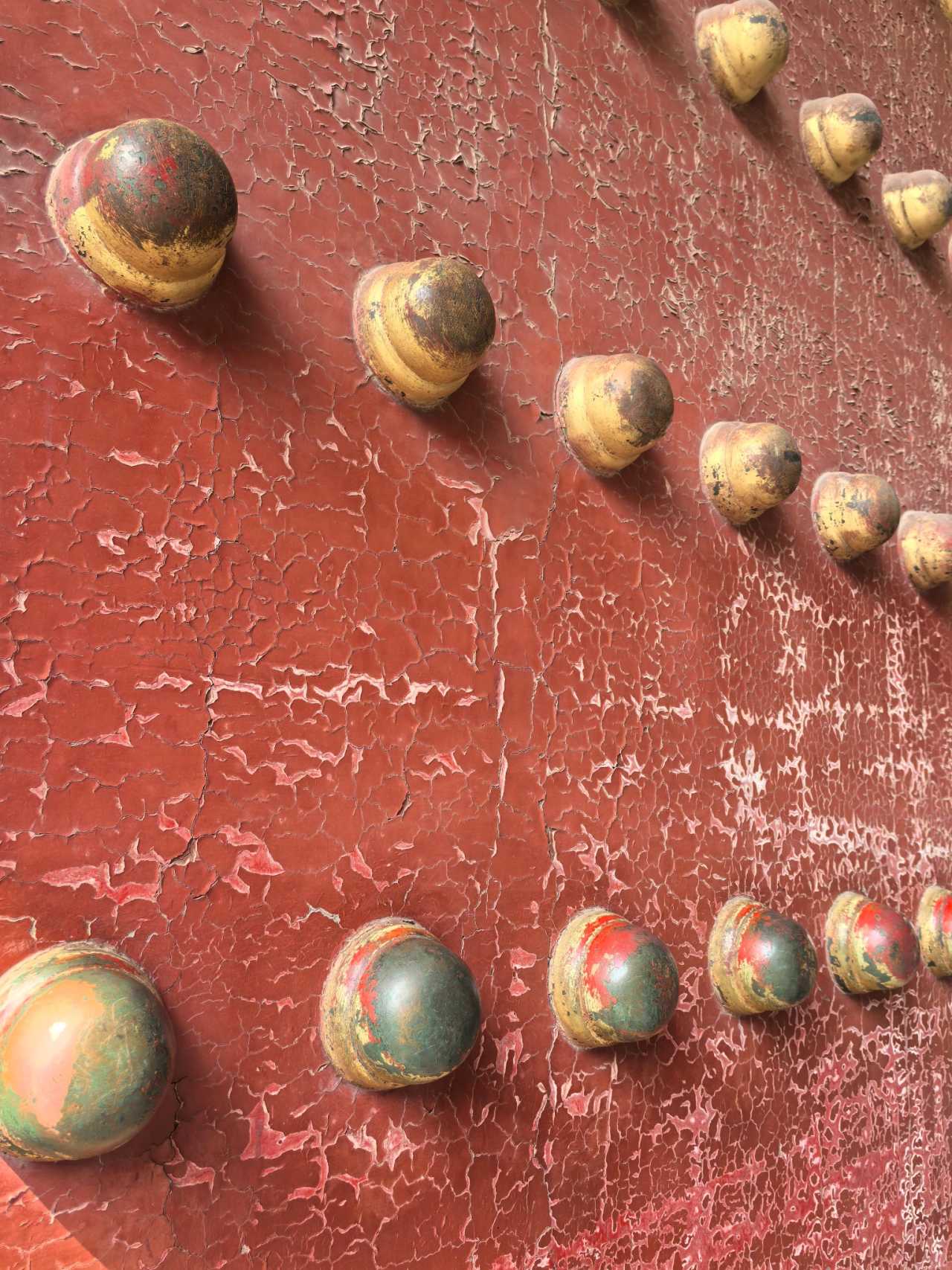
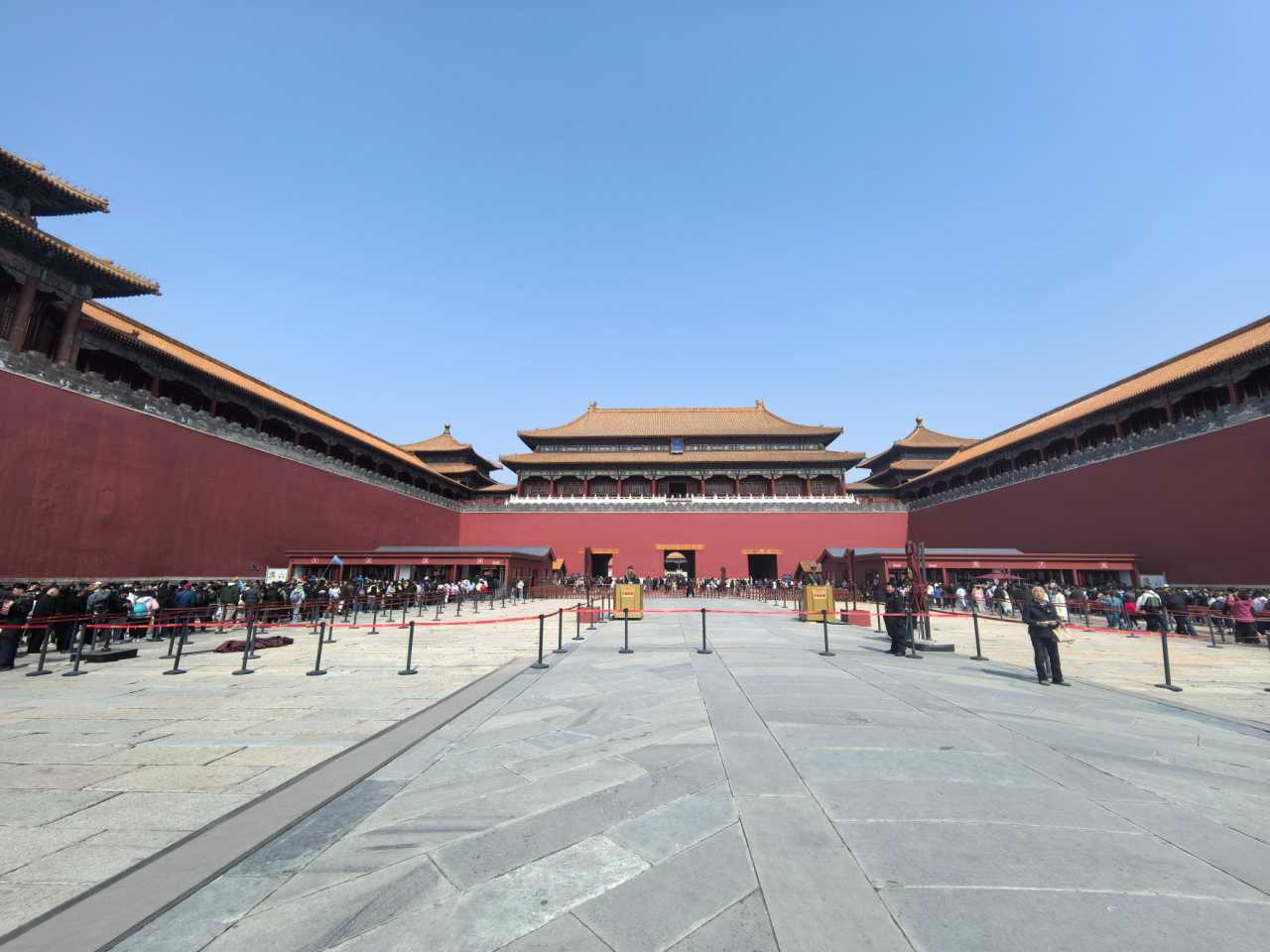
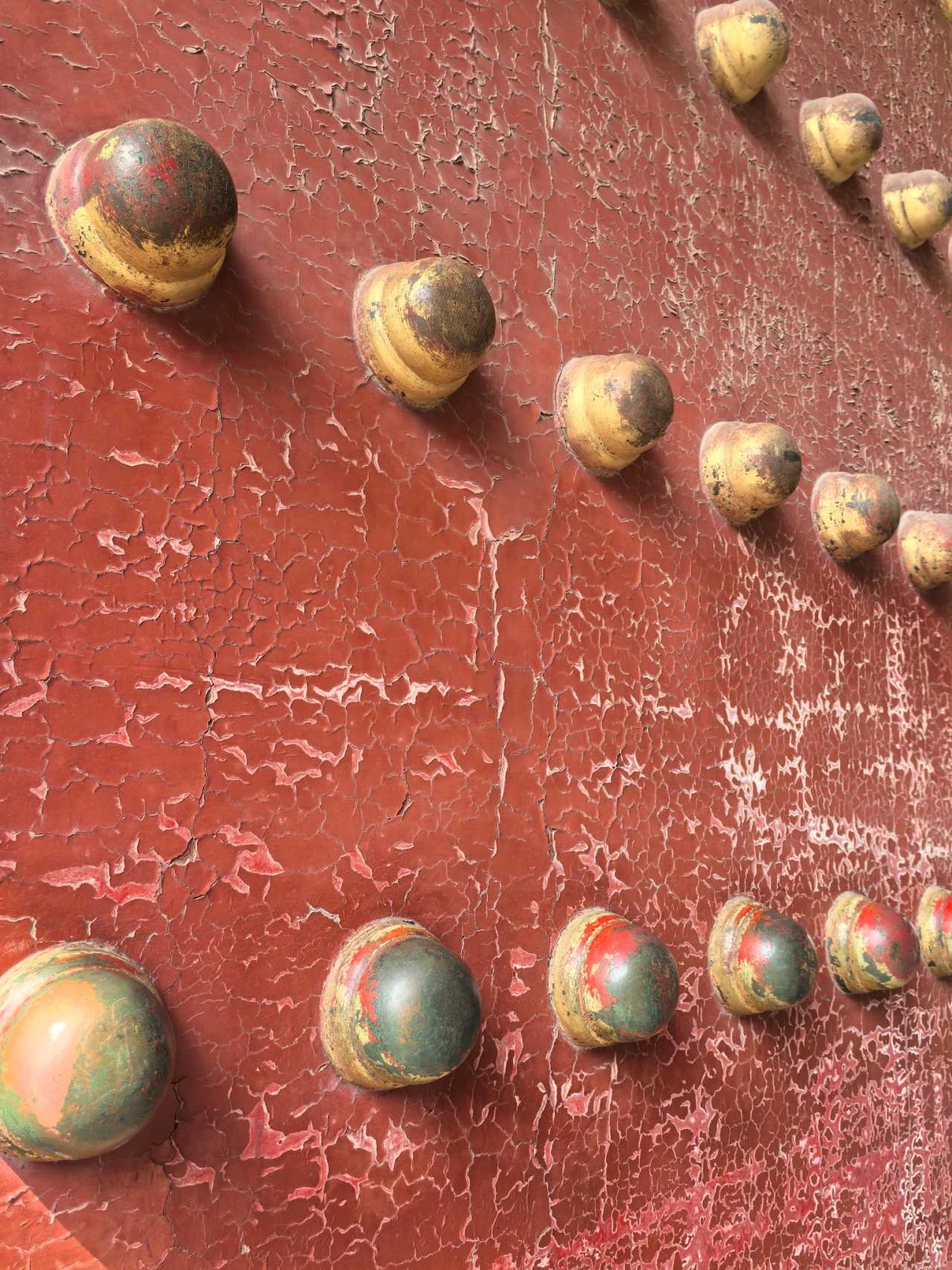
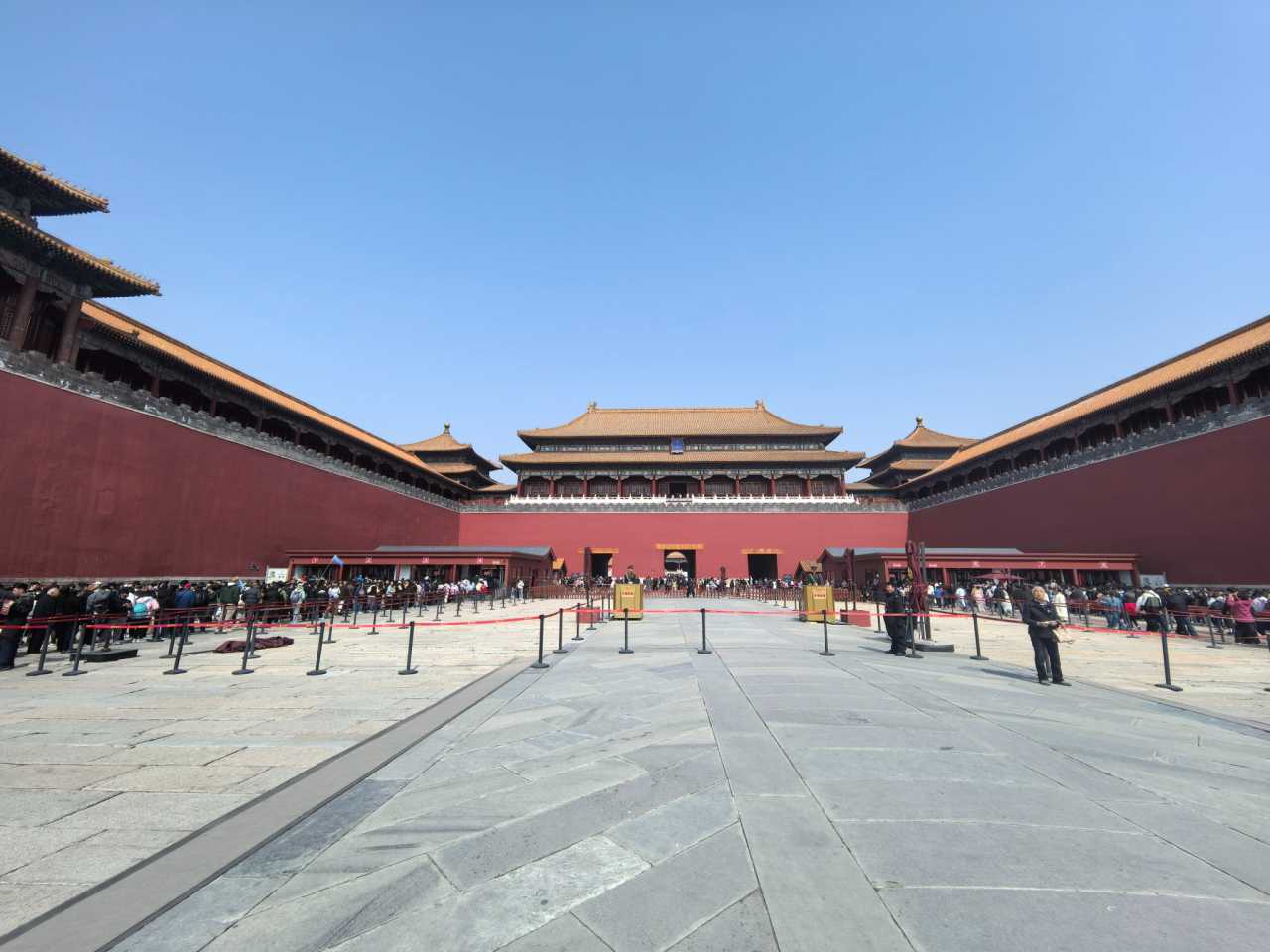
There’s something almost surreal about stepping through the massive wooden doors of the Meridian Gate, leaving behind the honking taxis and selfie sticks of modern Beijing, and entering a world that once existed behind walls so thick they could keep out not just invaders, but time itself. The Forbidden City isn’t just a museum; it’s a living chronicle of China’s imperial past, where every brick, every courtyard, and every upturned roof tile whispers stories of emperors, eunuchs, concubines, and courtiers who once walked these very paths. This Forbidden City travel guide will take you through the highlights, history, and hidden corners of this UNESCO World Heritage site.
The Birth of an Imperial Masterpiece: Forbidden City History
The story of this architectural wonder begins not in Beijing, but in the mind of a Ming emperor with a vision. In 1406, the Yongle Emperor—Zhu Di, the third ruler of the Ming dynasty—ordered the construction of a new imperial palace. He had moved the capital from Nanjing to Beijing, and he needed a residence fit for the Son of Heaven.
The design was entrusted to Kuai Xiang, a brilliant architect born in Suzhou in 1397. Drawing inspiration from the Nanjing palace that had served the first Ming emperor, Kuai Xiang created something far grander. The construction was a logistical marvel: massive logs were floated down rivers from the forests of southwestern China, while enormous slabs of stone were hauled across frozen canals in winter, using water as a natural lubricant.
By 1420, the palace complex was complete. But fate had a cruel sense of humor. The very next year, a devastating fire swept through the Hall of Supreme Harmony and its neighboring halls, consuming the emperor’s crowning achievement. It would be the first of many fires—and rebuildings—that would shape the Forbidden City we see today.
[Link: Best time to visit Beijing for Forbidden City tours]
A City Within a City: Forbidden City Architecture and Scale
Let’s get the numbers straight, because they’re almost too staggering to believe. The Forbidden City covers 72 hectares—that’s about 180 acres, or roughly the size of 100 football fields. Within its walls, you’ll find more than 70 palaces and halls, with a total floor area of 150,000 square meters.
Now, about those rooms. Legend has it that the Forbidden City contains 9,999.5 rooms—a number deliberately chosen to be just shy of the 10,000 rooms believed to exist in the heavenly palace of the Jade Emperor. The reality, as measured by experts in 1973, is a mere 8,707 rooms. Still, that’s enough to keep you wandering for days.
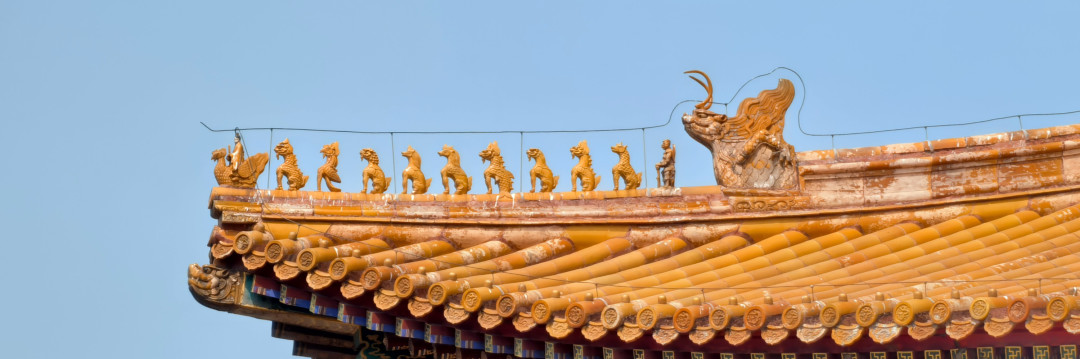
The complex is surrounded by a 10-meter-high wall and a 52-meter-wide moat—a formidable defense that no attacker ever breached. Four gates guard the cardinal directions: the Meridian Gate to the south, the Gate of Divine Might to the north, and the East and West Glorious Gates. At each corner of the wall sits a graceful watchtower, its multi-tiered roof a masterpiece of traditional Chinese architecture.
The Outer Court: Where Power Was Displayed
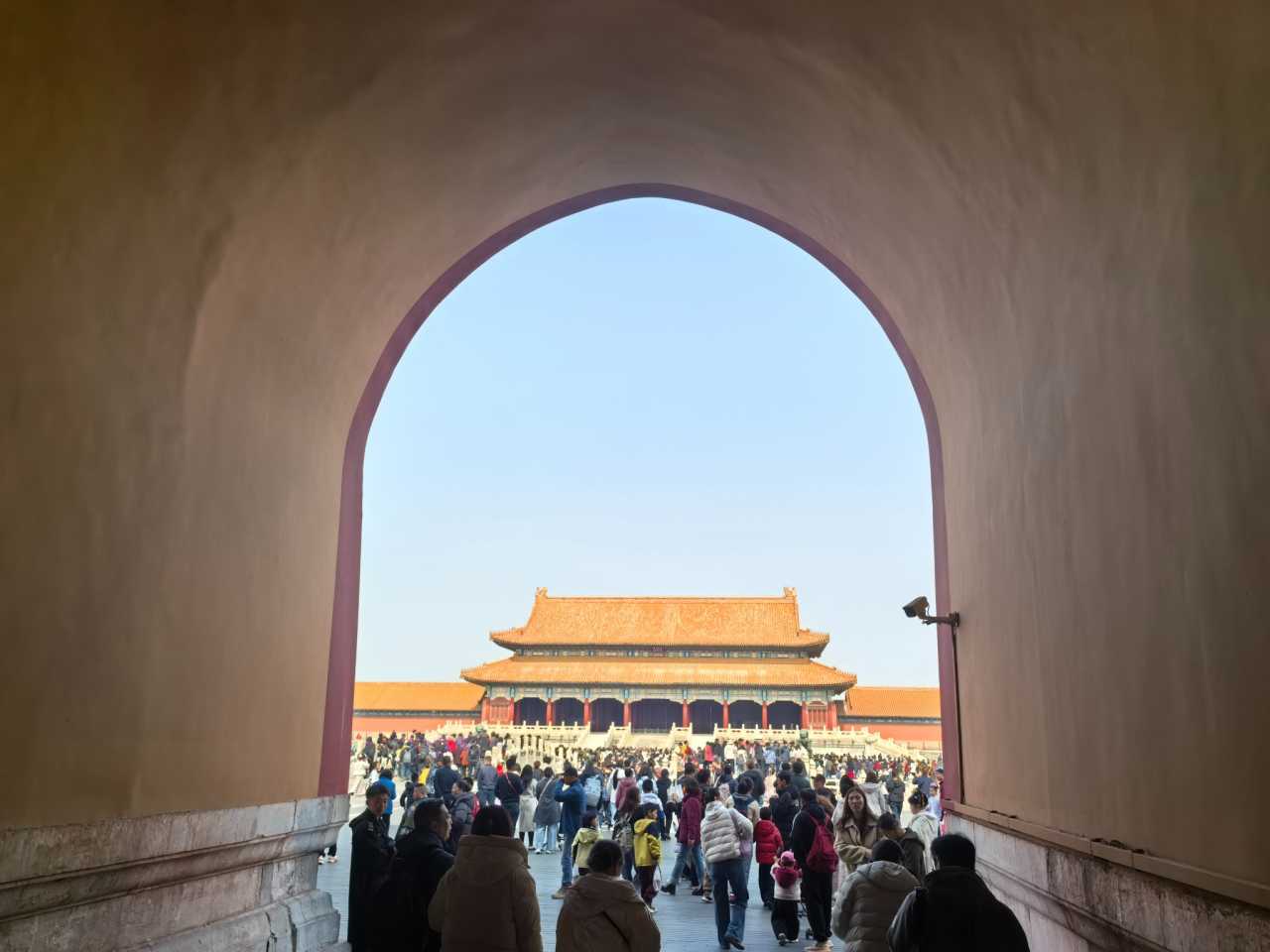
The Forbidden City is divided into two distinct sections: the Outer Court and the Inner Court. The Outer Court was the stage upon which the emperor performed his public role as the Son of Heaven.
The Hall of Supreme Harmony: The Throne Hall
This is the building you’ve seen in a thousand photographs—the one with the golden roof and the marble terrace that seems to float above the crowds. Known colloquially as the “Throne Hall,” it was here that the emperor presided over the most important ceremonies of state: coronations, imperial weddings, and the announcement of new year’s edicts.
The hall we see today is a reconstruction from 1695, during the reign of the Kangxi Emperor. Its predecessors had been destroyed by fire no fewer than three times—in 1421, 1557, and 1597. Each time, the empire rebuilt it, each time more magnificent than before.
The Hall of Central Harmony: The Imperial Green Room

Tucked between the two larger halls, this smaller, square building served a practical purpose. Before proceeding to the grand ceremonies in the Hall of Supreme Harmony, the emperor would stop here to rest, review his notes, and practice the rituals he was about to perform. It was, in essence, the imperial green room.
The Hall of Preserving Harmony: Site of the Palace Exam
This hall had a changing identity over the centuries. During the Ming dynasty, the emperor used it to change into ceremonial robes before major events. But from the Qianlong reign of the Qing dynasty onward, it became the site of the highest civil service examination—the palace exam. Imagine sitting for the most important test of your life, knowing that the emperor himself might glance at your answers.
The Inner Court: Where Power Was Lived
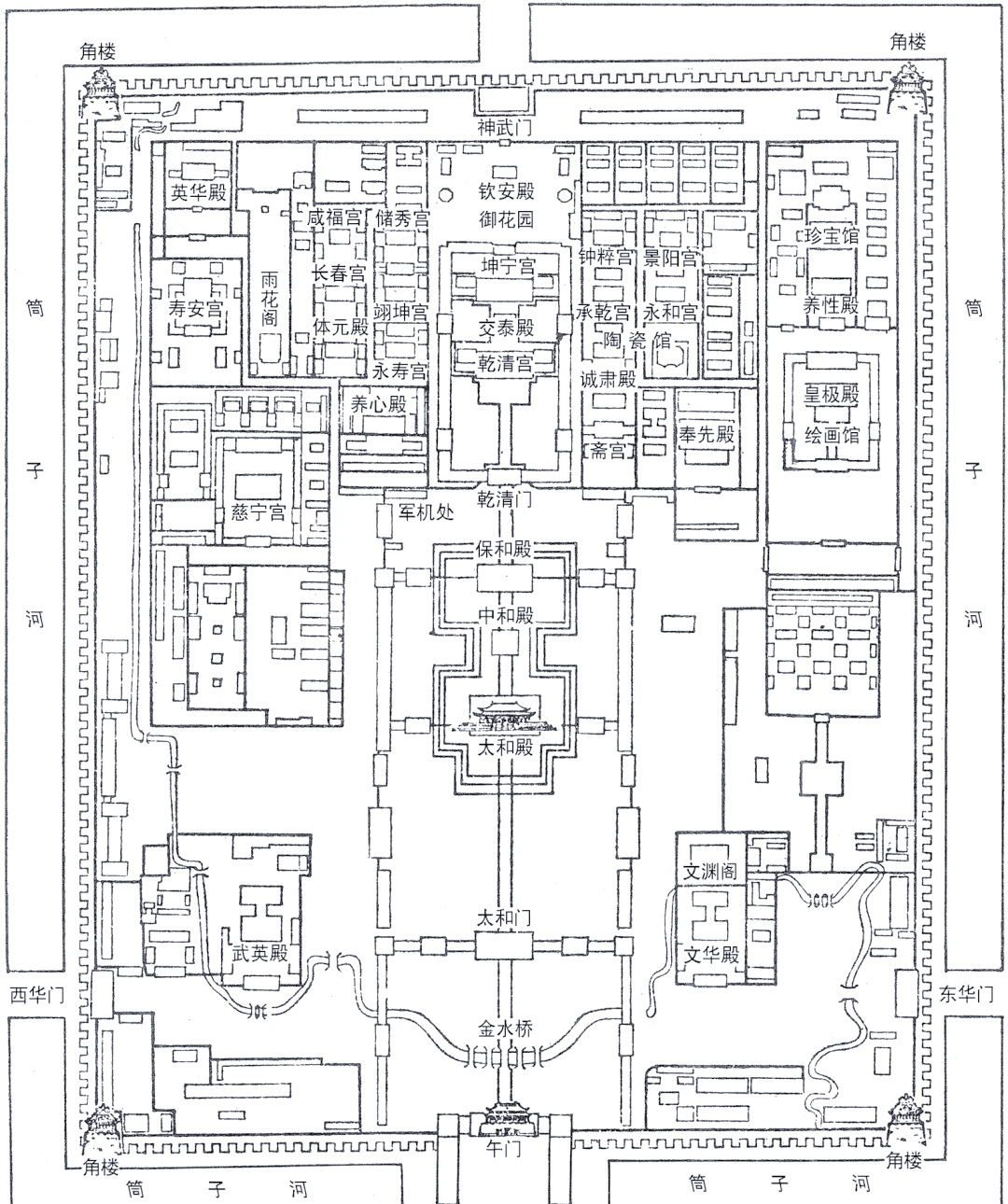
Beyond the Outer Court lies a more intimate world: the Inner Court, where the emperor actually lived, slept, and—if he was lucky—found moments of peace.
The Palace of Heavenly Purity: The Emperor’s Residence
This was the emperor’s official residence during the Ming dynasty, and for the first two Qing emperors as well. Fourteen Ming emperors, from Yongle to Chongzhen, called this place home. The building was so vast that the Ming emperors had it divided into nine heated chambers on two levels, with a total of 27 beds. The idea was to keep potential assassins guessing: which bed would the emperor choose tonight?
The Jiajing Emperor, after surviving a terrifying assassination attempt in 1542 known as the “Palace Rebellion of the Renyin Year,” became so paranoid that he moved out entirely, spending the rest of his reign in the Western Gardens.
[Link: Ming dynasty history and its impact on Chinese architecture]
The Hall of Union and Peace: Where the Empress Received Guests
Located between the emperor’s and empress’s palaces, this hall was where the empress received congratulations on her birthday. It also housed the 25 imperial seals of the Qing dynasty—the ultimate symbols of imperial authority.
The Palace of Earthly Tranquility: The Empress’s Residence and Shamanic Rituals
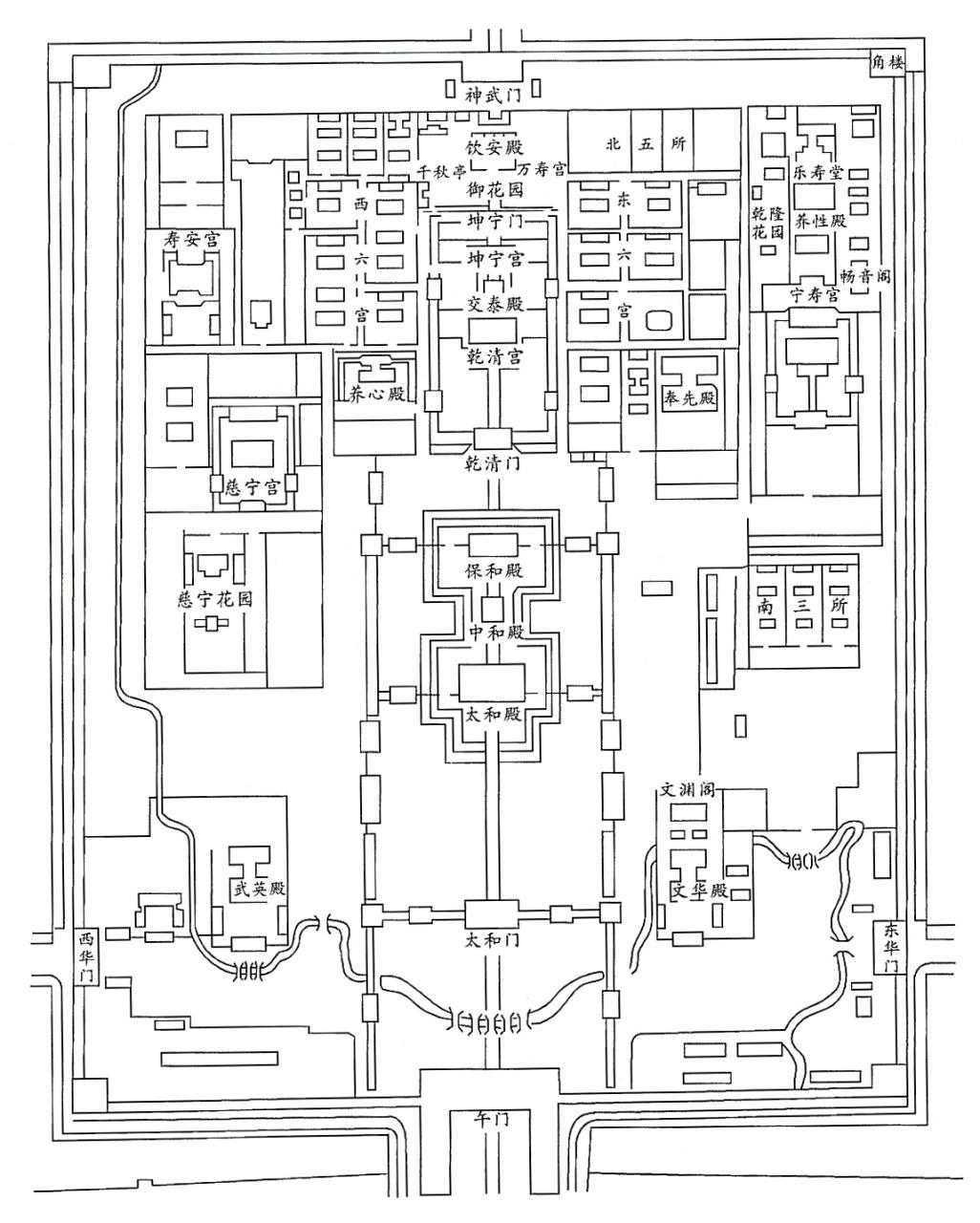
This was the empress’s official residence during the Ming dynasty. But by the Qing dynasty, its role had changed. The Manchu rulers, following their own traditions, used it primarily for shamanic rituals, including the sacrifice of pigs.
The Hall of Mental Cultivation: The Power Center of the Qing Dynasty
Here’s where things get interesting. When the Kangxi Emperor died in 1722, his son Yongzheng chose not to move into his father’s former residence in the Palace of Heavenly Purity. Instead, he took up residence in a smaller, more manageable building: the Hall of Mental Cultivation. This became the de facto imperial residence for all subsequent Qing emperors—from Yongzheng through to the last emperor, Puyi.
The hall contains several famous spaces: the “Diligent Government and Close Affinity” study of Yongzheng, the “Three Rare Treasures” studio of Qianlong, and the Eastern Warm Chamber, where the infamous “listening to government from behind the curtain” took place during the late Qing dynasty, when the Empress Dowager Cixi effectively ruled China from the shadows.
The Six Eastern and Six Western Palaces: Imperial Consorts’ Quarters
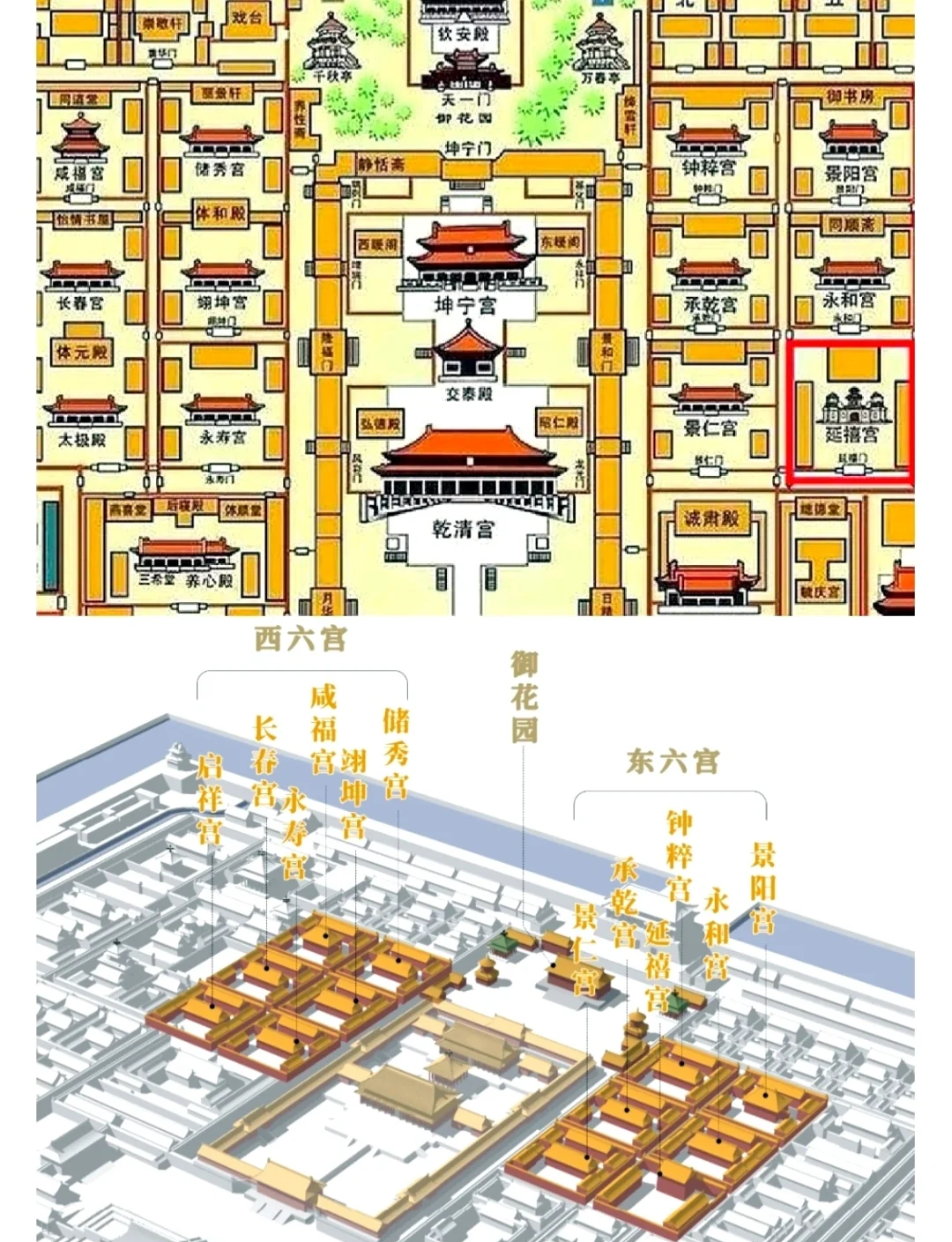
Beyond the main halls lie the residential quarters of the imperial consorts. These twelve palaces—six to the east and six to the west—were home to the women who competed for the emperor’s favor, often with deadly consequences.
Eastern Palaces
- Palace of Benevolence and Longevity: Birthplace of the Kangxi Emperor in 1654, and later home to the mother of the Qianlong Emperor. The tragic Consort Zhen, beloved by the Guangxu Emperor, was imprisoned here before being thrown into a well during the Boxer Rebellion.
- Palace of Celestial Favor: Residence of the legendary Donggo, the favorite consort of the Shunzhi Emperor, whose death supposedly drove the emperor to contemplate abdication.
- Palace of Accumulated Purity: Home to Empress Dowager Ci’an, the “Eastern Empress Dowager” who served alongside Cixi during the Tongzhi and Guangxu reigns.
- Palace of Eternal Harmony: Birthplace of the Kangxi Emperor’s mother and later home to Consort Jin, sister of Consort Zhen.
- Palace of Prolonging Happiness: Site of the unfinished “Crystal Palace,” a bizarre attempt by the late Qing court to build a Western-style aquarium.
- Palace of Bright Yang: Home to various consorts over the centuries.
[Link: Qing dynasty empresses and their influence on Chinese history]
Forbidden City FAQ
1. How long does it take to visit the Forbidden City?
A thorough visit takes 3–4 hours. If you want to explore all 70+ halls and palaces, plan for a full day (6–8 hours). Many visitors spend 2–3 hours on the central axis alone.
2. What is the best time of year to visit the Forbidden City?
Spring (April–May) and autumn (September–October) offer the most pleasant weather. Avoid Chinese public holidays (especially National Day in October and Spring Festival in January/February) when crowds are massive.
3. Do I need to buy tickets in advance?
 Yes. The Forbidden City limits daily visitors to 80,000 people. Tickets sell out days or weeks in advance during peak season. Book online through the official website or authorized platforms.
4. Can I take photos inside the Forbidden City?
Yes, photography is allowed in most outdoor areas and many halls. However, flash photography and tripods are prohibited in some indoor exhibits. Drones are strictly forbidden.
5. Is the Forbidden City wheelchair accessible?
 Partially. The central axis is wheelchair-friendly, but many side palaces and courtyards have steps and uneven surfaces. Wheelchair rentals are available at the entrance.
Plan Your Forbidden City City Walk
The Forbidden City is more than a tourist attraction—it’s a portal to 600 years of imperial Chinese history. Whether you’re a history buff, an architecture enthusiast, or simply a curious traveler, this Beijing city walk offers an unforgettable journey through time.
Recommended Route for a 3-Hour Visit
- Enter through the Meridian Gate (south entrance)
- Walk the central axis: Hall of Supreme Harmony → Hall of Central Harmony → Hall of Preserving Harmony
- Explore the Inner Court: Palace of Heavenly Purity → Hall of Union and Peace → Palace of Earthly Tranquility
- Visit the Hall of Mental Cultivation (Qing dynasty power center)
- Exit through the Gate of Divine Might (north entrance)
Insider Tips
- Arrive early: The gates open at 8:30 AM. Beat the crowds by arriving 15–20 minutes before opening.
- Wear comfortable shoes: You’ll walk 5–10 kilometers inside the complex.
- Bring water and snacks: Food options inside are limited and expensive.
- Use an audio guide: Rent one at the entrance for ¥40 (about $6) for deep historical context.
- Combine with Jingshan Park: After exiting through the north gate, climb Jingshan Hill for the best panoramic view of the Forbidden City.
Ready to Walk Through History?
The Forbidden City awaits. Whether you’re tracing the footsteps of Ming emperors, uncovering the secrets of Qing empresses, or simply marveling at the architectural grandeur, this imperial palace tour will leave you with memories that last a lifetime.
Book your Forbidden City tickets today and step into a world where power, intrigue, and beauty converged for six centuries. Your journey through 600 years of imperial power starts now.
[Link: Top 10 things to do in Beijing beyond the Forbidden City]
Have you visited the Forbidden City? Share your experience in the comments below or tag us in your photos with #ForbiddenCityWalk.
You should also read:
Seeking · Encountering · Autumn in Beijing: Your Ultimate Guide to Beijing’s Most Stunning Fall Scenery
Meta Description: Discover Beijing’s best autumn destinations beyond Fragrant Hills. From Tsinghua University’s golden ginkgo avenue to Dajue Temple’s millennium-old tree, plan your perfect fall escape with our expert guide. Autumn in Beijing is more than a season—it’s a grand farewell. When the summer heat…
Continue reading...
A Winter Journey in Beijing: Romance and Misery at Minus Five Degrees – An SEO-Optimized Travel Guide
Meta Description: Discover the romance and misery of a winter trip to Beijing at -5°C. Explore snowy Jingshan Park, historic hutongs, and budget-friendly tips for a 4-day Spring Festival adventure. Some say Beijing is a city you both love and hate. You love its profound…
Continue reading...
Living in Beijing: A Love Letter to Autumn – Why October Is the City's Best-Kept Secret
Meta Description: Discover why Beijing in autumn is pure magic. From golden ginkgo avenues to hidden hutong gems, this 2014 love letter captures the city's soul. Plan your fall visit now. There's a reason why old Beijing hands get misty-eyed when October rolls around. It's…
Continue reading...