The Warmth of Tea on a Gray Day: Stealing a Leisurely Afternoon in the Heart of Beijing's Alleys
Meta Description: Discover the hidden tea culture in Beijing's hutongs at Hé Tú Xiáng Yǔ. A family's unplanned afternoon with Liubao tea proves that the best travel moments happen when you abandon the checklist. Warmth, simplicity, and connection await.
Foreword: When Travel No Longer Needs a "Checklist"
We often imagine travel as a grand undertaking—plane tickets, hotels, Instagram-worthy spots, schedules pinned down to the minute. But sometimes, the most moving travel happens the moment you let go of all your plans.
March 21, 2026, Beijing. The weather forecast said it would be overcast, with a light breeze carrying that early spring chill. No alarm clock urging us forward, no list of must-see attractions. Our family of three just walked out the door with no particular destination in mind. Destination? None. Direction? Wherever the mood took us. That day, we only wanted one thing: to find a corner of the city where we could simply stop and feel at ease.
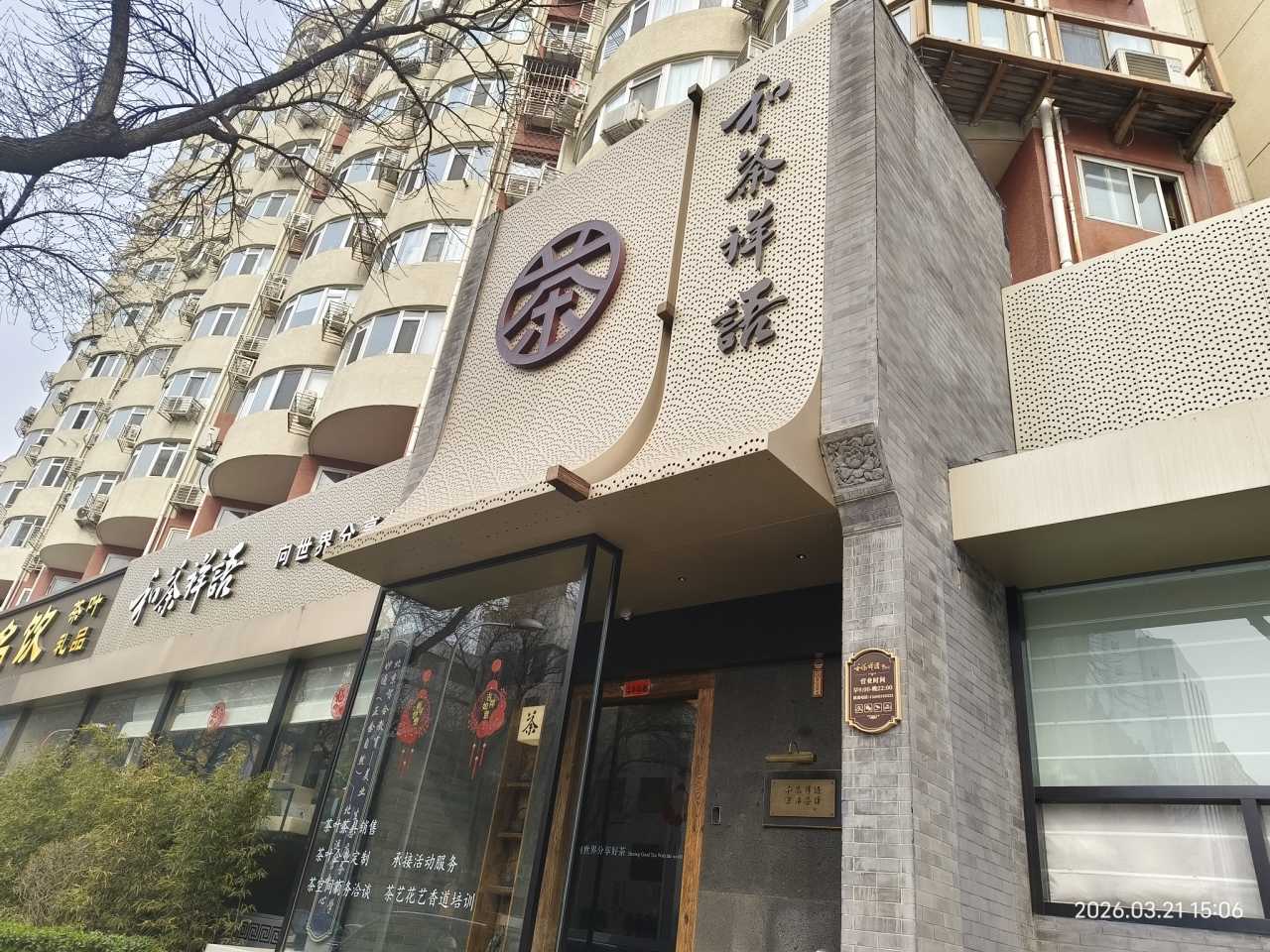
As it turned out, we stumbled upon a tea shop called "Hé Tú Xiáng Yǔ" (Harmony Tea Tales) at the corner of Yuetan Street. And that stumble gave us the gentlest memory of the entire weekend.
If you're searching for Beijing hutong tea experiences or wondering where to drink tea in Beijing's old city, this story might just lead you to the same quiet discovery.
I. The Encounter: Tea Fragrance Hidden Amid Everyday Life
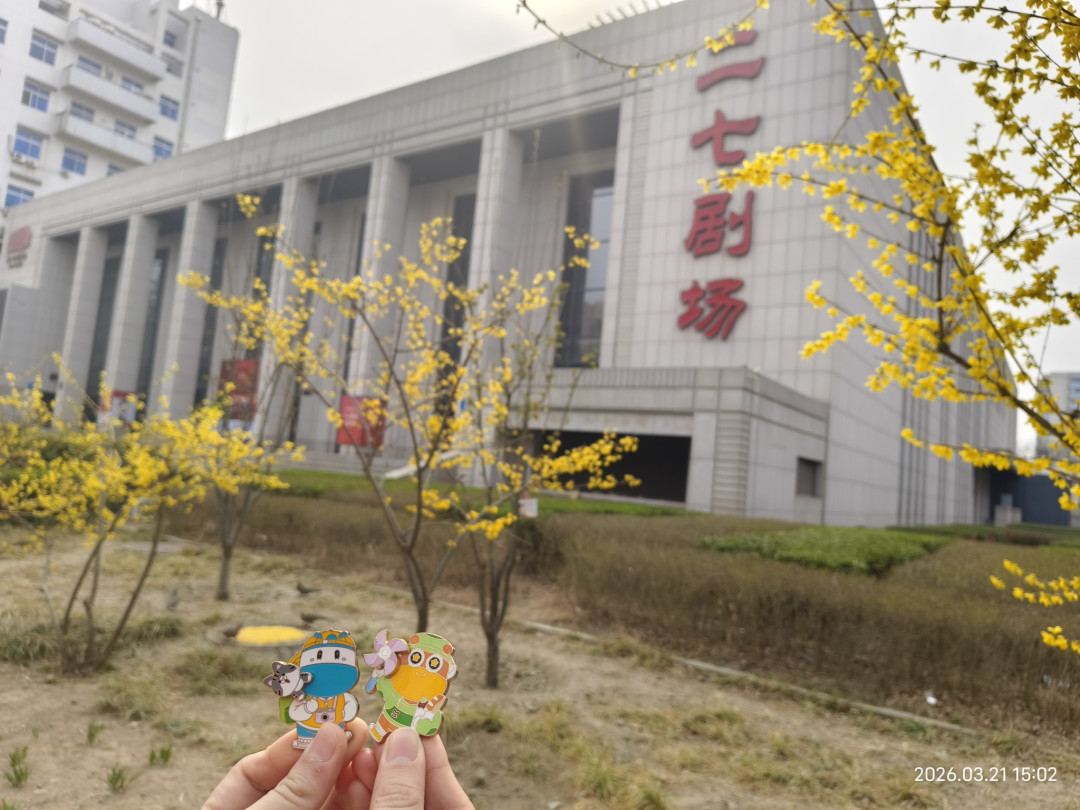
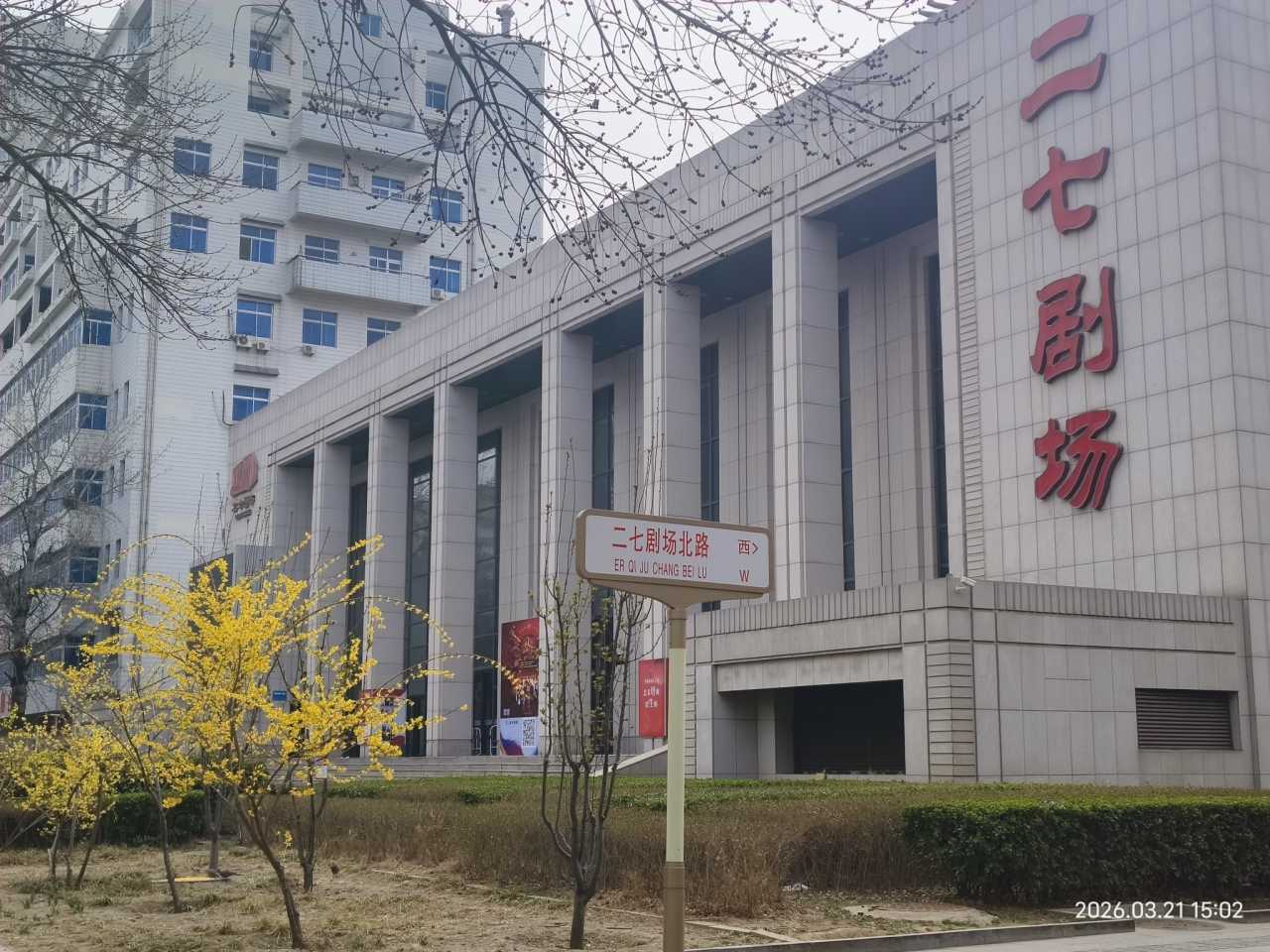
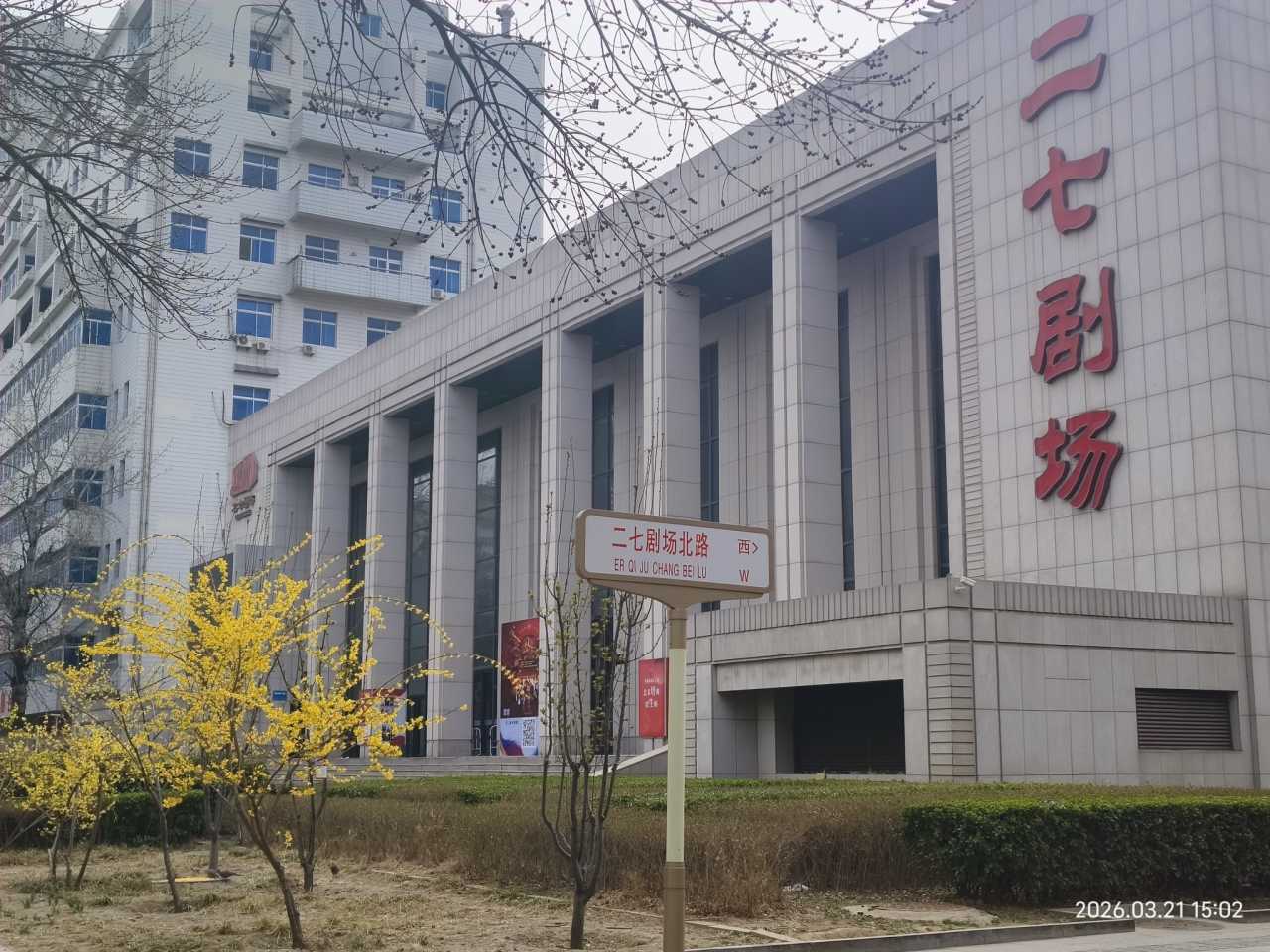
Location: West of the intersection of Erqi Theater East Lane and Nanlishi Road Second Lane
If your understanding of Beijing is still limited to the Forbidden City, the Great Wall, and Nanluoguxiang, you're missing the city's truest pulse. The Yuetan area is where old Beijing alleyways mingle with modern residential blocks. There are no noisy crowds of tourists—just elderly folks out for a stroll, kids heading home from school, and the occasional aroma of stir-fry drifting from open windows.
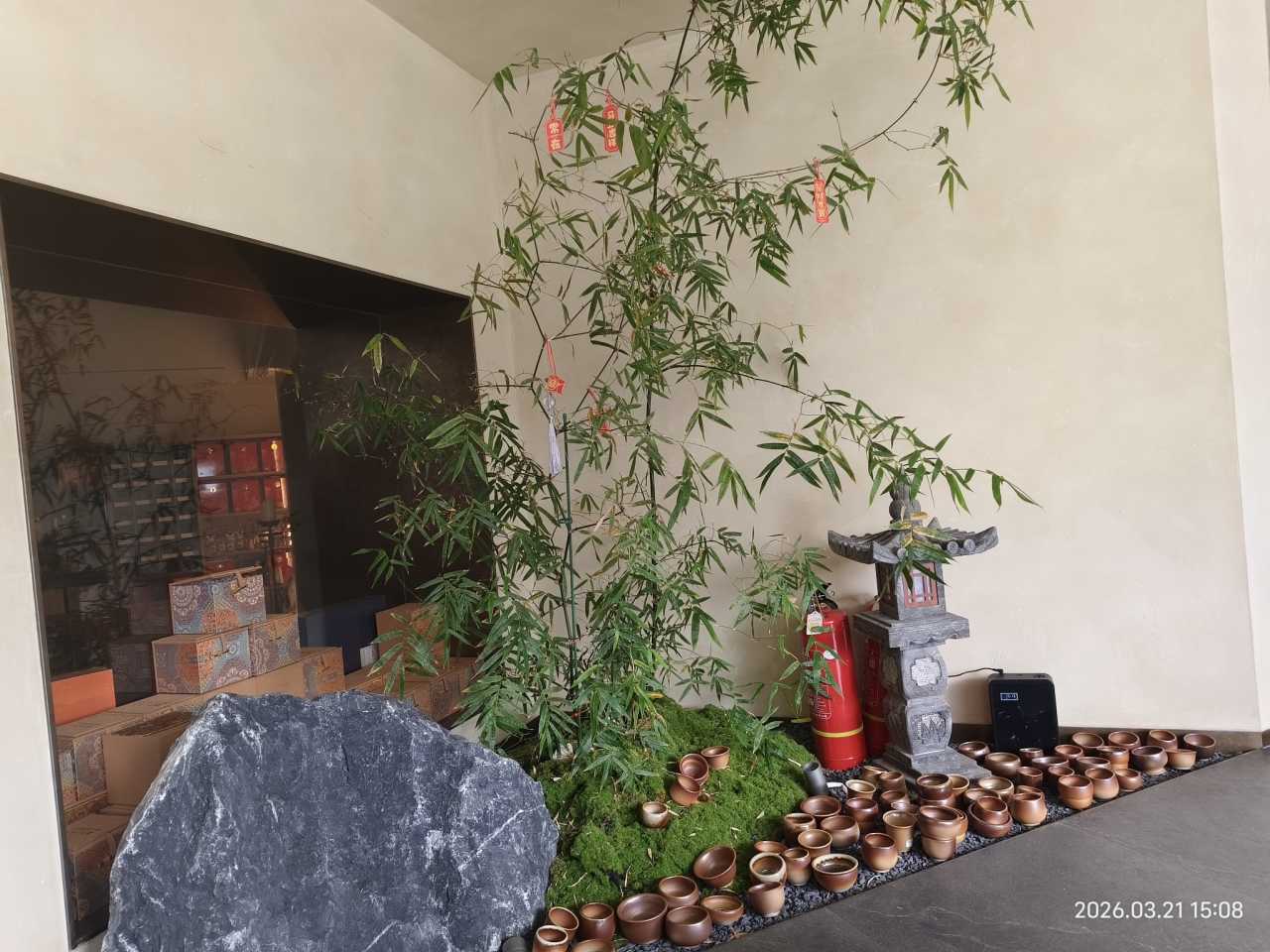
On such an unremarkable street corner, "Hé Tú Xiáng Yǔ" stood quietly. No flashy sign, no blaring music—just a glass door glowing with warm yellow light. Before I pushed it open, I wasn't even sure if it was open for business. But it was precisely that uncertainty that made the surprise that followed so precious.
For travelers seeking quiet tea houses in Beijing or off-the-beaten-path Beijing attractions, this kind of serendipity is exactly what makes a trip memorable.
The Moment We Pushed Open the Door, the World Fell Silent
To be honest, the thing I dread most about going out with a child is the "boredom." But when we stepped into the tea shop, even our five-year-old son fell quiet.
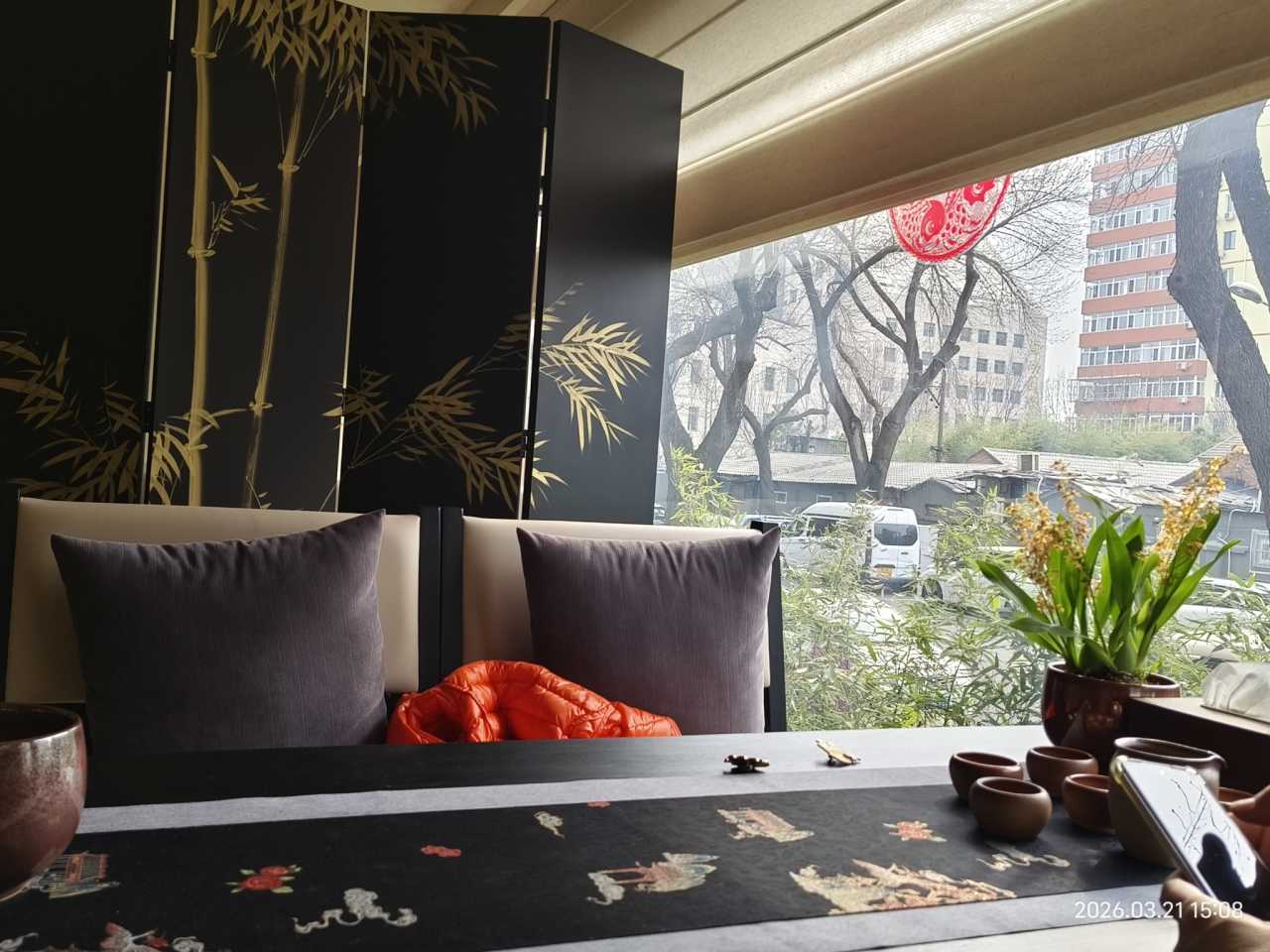
Not the kind of quiet that comes from being stifled, but the kind that comes from being wrapped in gentleness. The space wasn't large, but it was arranged with a sense of openness—a few sofas placed at comfortable angles, soft light streaming through the floor-to-ceiling windows, filtered by the overcast clouds into a mellow glow. A faint fragrance of tea lingered in the air, neither strong nor forced, like an old friend whispering in your ear: "You're here? Have a seat."
The staff didn't rush over to pitch anything. They didn't chatter on about tea culture. They just smiled and nodded, signaling for us to sit wherever we liked. This kind of "non-intrusive" reception actually made us feel a comfortable kind of respect.
We chose a sofa by the window. Our son pressed his face against the glass, watching people pass by outside. My partner and I leaned into each other, saying nothing—and yet, that moment felt like more than enough.
[Link: Best family-friendly tea houses in Beijing]
II. A Pot of Liubao Tea, Warming the Entire Gray Day
Why Liubao Tea?
If your knowledge of tea stops at "green tea is refreshing, black tea warms the stomach," then Liubao tea might surprise you. It's a type of dark tea from Guangxi, fermented and aged, with a gentle nature—especially suited for damp, chilly weather.
When the staff recommended Liubao tea, I hesitated. After all, we had a child with us, and I worried the flavor might be too strong. But the staff member smiled and said, "Don't worry—Liubao is very mellow. A light cup is fine even for the little one."
So we ordered a pot.
For anyone curious about Liubao tea benefits or dark tea for beginners, this is a perfect starting point. It's one of the most warming teas for cold weather and pairs beautifully with a gray afternoon.
One Sip, and the Gray Day Brightened
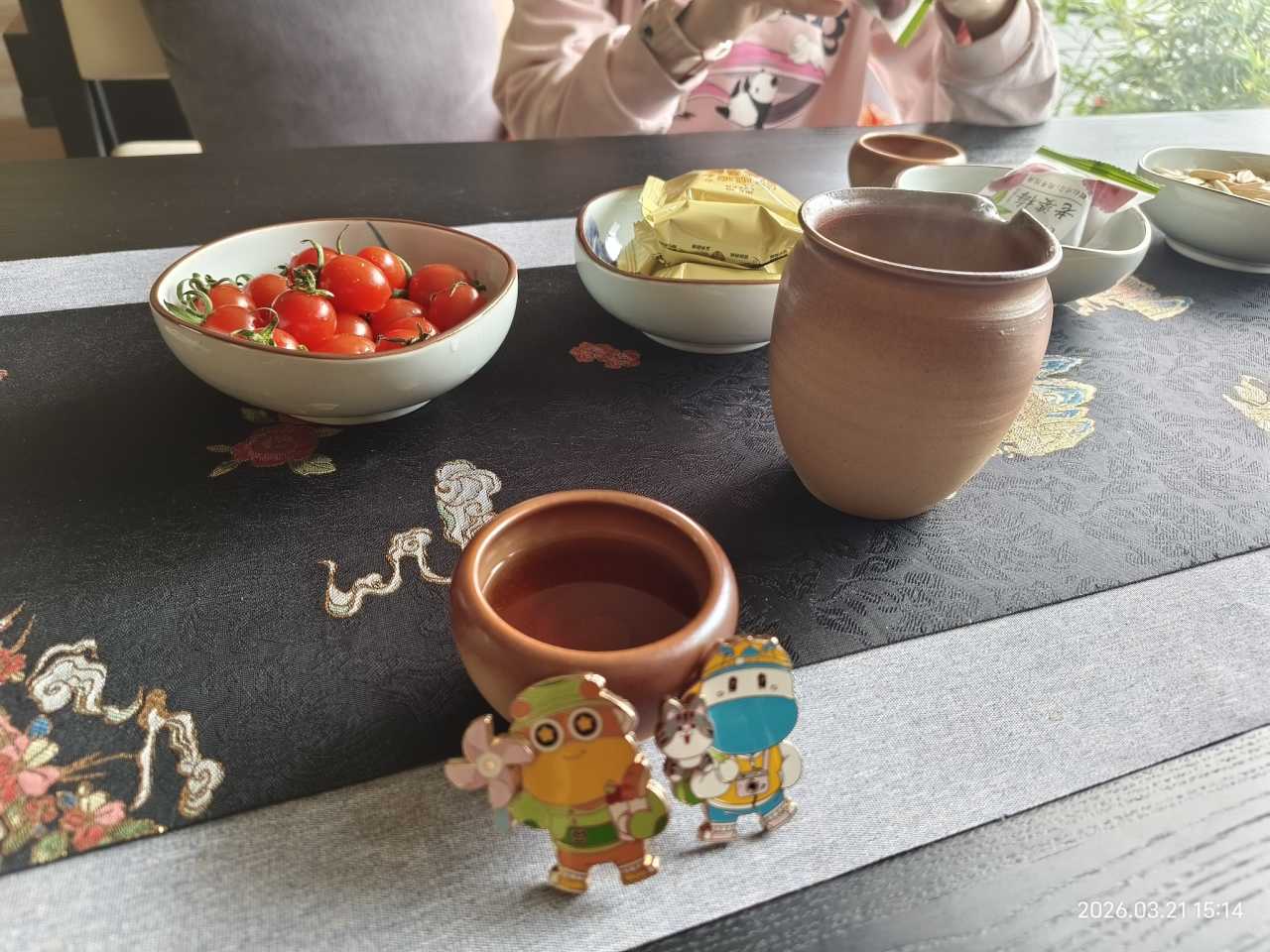
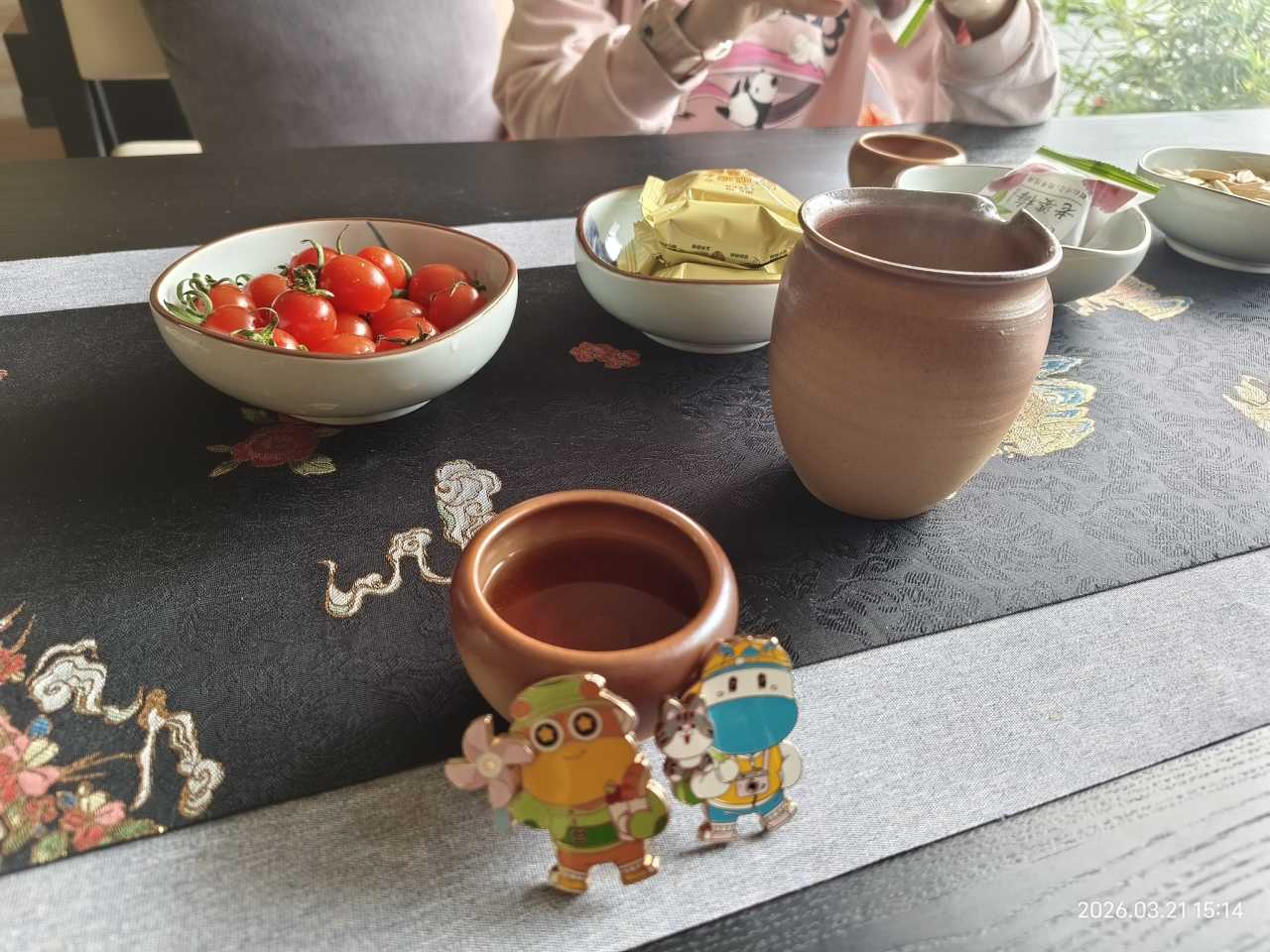
When the tea set arrived, I knew we'd made the right choice. The tea liquor was a deep, translucent red—like amber, or the leaves of a maple tree in late autumn. As it was poured into the cup, steam rose gently, carrying a steady, woody fragrance.

My first sip brought one word to mind: smooth. Not the sharpness of being scalded, but a warmth that slid slowly from my throat into my stomach. None of the astringency of green tea, none of the dryness of black tea—just a rich, grounded sweetness. After a few sips, I felt as though I were wrapped in a soft cocoon of warmth. The gloom of the gray day outside faded, almost without notice.
Our son tried a small cup. He smacked his lips and said, "Yummy—like brown sugar water." My partner and I exchanged a smile. That kid sure knows how to describe things.
[Link: How to choose tea for beginners]
III. Snacks and Roses: Tenderness in the Details
The Quiet Thoughtfulness
Many tea shops focus only on selling tea and neglect the art of pairing. But "Hé Tú Xiáng Yǔ" clearly understands.
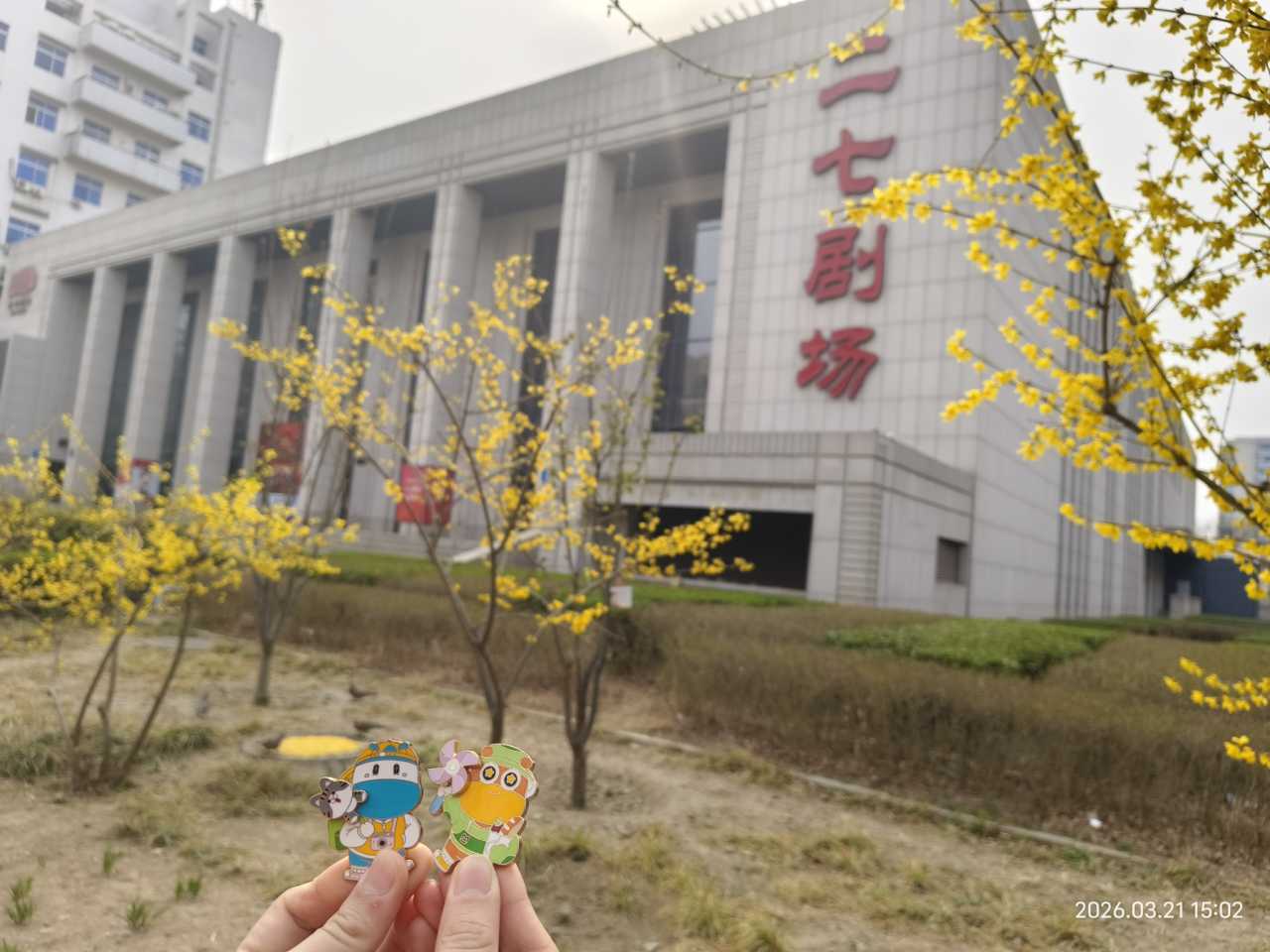
On the table, there was a small dish of sunflower seeds, a few cherry tomatoes, crispy little cookies, and some sweet-and-sour dried plums. The interplay of sweet and savory balanced the tea's clean taste perfectly. Our son wasn't interested in the sunflower seeds, but he quietly ate half the plate of cherry tomatoes, muttering between bites: "Mom, these are sweeter than the ones at home."
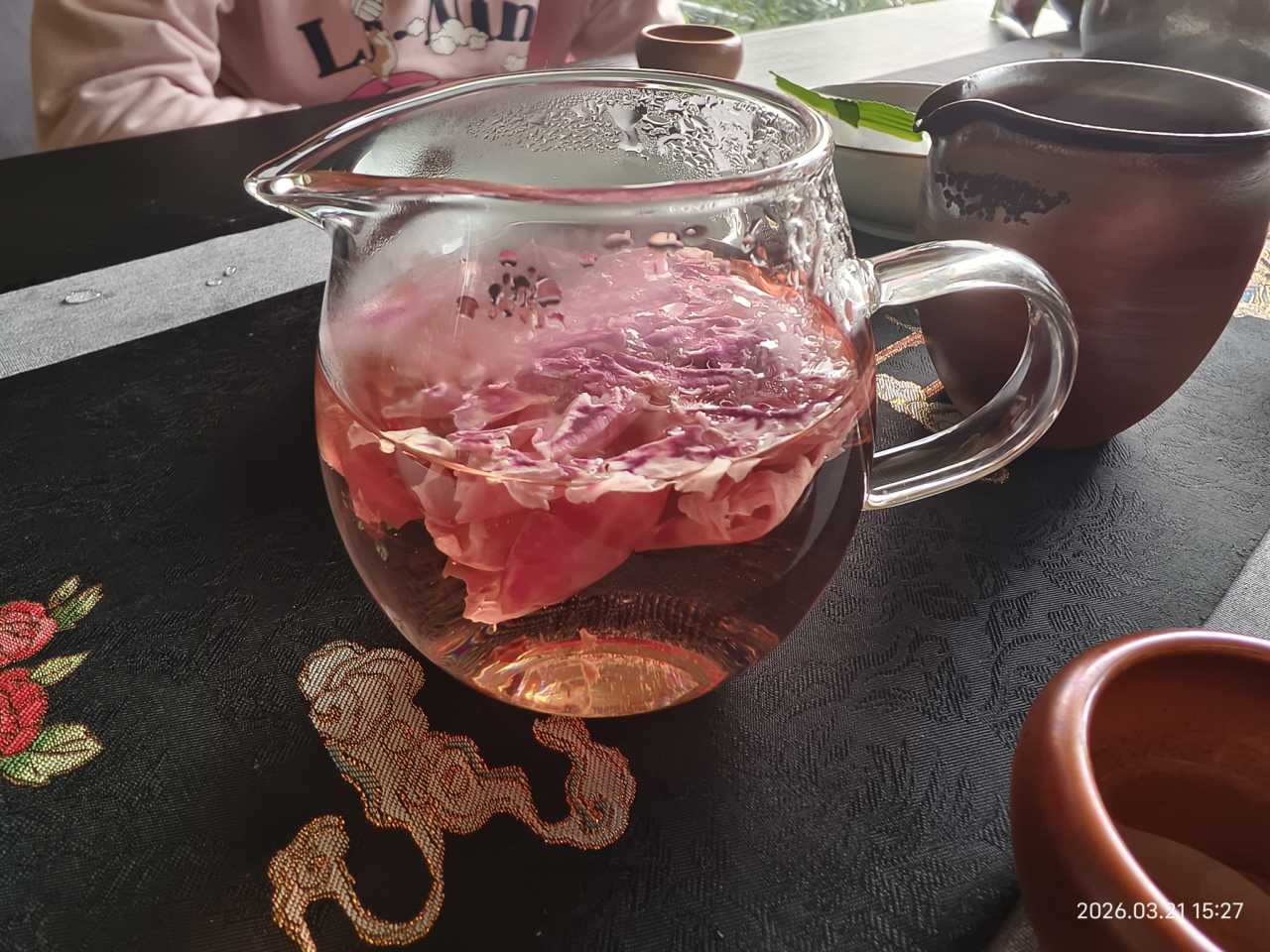
What surprised us even more was when the staff later brought over a cup of rose tea—complimentary. The petals slowly unfurled in the hot water, the pinkish-purple tea diffusing gently. Just watching it made my mood soften. My partner held the cup, for once not looking at her phone, just drinking quietly, occasionally lifting her gaze to the street scene outside the window.
For those who appreciate tea pairing snacks or Beijing tea house hospitality, these small touches elevate an ordinary afternoon into something memorable.
You Don't Need to Understand Tea, Just Live Well
To be honest, I'm not a tea connoisseur. Terms like "aftertaste," "mouthfeel," and "tea energy" are all mystical to me. But that afternoon, I suddenly understood something: drinking tea has never been about "understanding" it. It's about "feeling" it.
You don't need to know the age of the Liubao tea. You don't need to distinguish the layers of flavor. You don't even need to worry about whether the water temperature is exact. You just need to sit there, let the tea fragrance seep into your breath, let the warmth spread from your fingertips to your heart. And then you'll realize that the things you've been anxious about—work, the mortgage, your child's grades—none of them matter that much.
At least, not this afternoon.
[Link: Mindfulness practices through tea drinking]
IV. One Hour Stretched, Gently, Like Time Had Slowed Down
We only stayed for a little over an hour. But that afternoon, time felt as though someone had pressed the slow-motion button.
Our son drew a picture on the sofa—"Our family of three drinking tea," he called it. My partner talked about plans for next week, saying she wanted to take our son to the botanical garden to see the flowers. I leaned by the window, watching the occasional passerby: an elderly man walking his dog, a delivery rider on an electric scooter, two young women strolling arm in arm.
These scenes are everywhere on the street, any day. But that afternoon, they suddenly felt warm. Maybe it was the tea. Maybe it was because, for the first time in a while, I had the mental space to notice them.
The staff never came to rush us. They never hinted that we should leave. Only when we stood up to pay did the woman at the counter smile and say, "Feel free to come again." Her tone was plain, but it felt genuine.
For anyone wondering how to spend a rainy day in Beijing or looking for slow travel experiences in China, this is the kind of moment that transforms a trip.
[Link: Slow travel in Beijing's hutongs]
V. Leaving with a Heart Full of Ease
When we stepped out of the tea shop, the wind was still cool, but my heart felt warm. Our son held my hand, hopping and skipping ahead, humming a children's song he'd just learned. My partner linked her arm through mine and said softly, "Today was really nice."
A line came to mind: The best moments are never the polished Instagram shots. They are ordinary gray days like this one—finding a tea room that understands you, in a corner of old Beijing's alleyways, sharing a pot of warm tea with the people you love most, stealing a gentle stretch of time that belongs only to you.
The wind was cool. The tea was warm. And our hearts were full.
FAQ: Your Questions About Beijing Tea Culture and Hidden Tea Houses
1. What is the best time to visit Beijing's hutong tea houses?
Spring and autumn are ideal—mild temperatures and fewer crowds make for a peaceful experience. Gray, overcast days are actually perfect for tea drinking, as the warm brew complements the cool atmosphere.
2. Is Liubao tea suitable for children?
Yes, in moderation. Liubao tea is naturally mellow and low in caffeine compared to green or black teas. The staff at Hé Tú Xiáng Yǔ recommended it for our five-year-old, and he enjoyed it like "brown sugar water." Always ask the tea house staff for guidance.
3. How do I find hidden tea shops like Hé Tú Xiáng Yǔ in Beijing?
Explore residential areas like Yuetan, Gulou, or the back alleys around Nanluoguxiang. Look for small, unmarked doors with warm light. Avoid tourist-heavy streets. Ask locals or use Chinese apps like Dianping to find authentic Beijing tea experiences.
4. What should I order if I'm new to Chinese tea?
Start with a mild dark tea like Liubao, a floral tea like rose or jasmine, or a classic oolong. Tell the staff you're a beginner—they'll guide you. Avoid strong pu'er or raw green teas if you're sensitive to bitterness.
5. Can I visit Hé Tú Xiáng Yǔ without a reservation?
Yes, walk-ins are welcome. The shop is located west of the intersection of Erqi Theater East Lane and Nanlishi Road Second Lane. It's best to visit on weekdays or early afternoons for a quieter experience.
Your Turn: Find Your Own Gray Day Tea Moment
You don't need a perfect itinerary. You don't need to be a tea expert. You just need an open heart, a willingness to wander, and a desire to slow down.
Next time you're in Beijing—whether you're a first-time visitor or a longtime resident—skip the crowded attractions for one afternoon. Walk into a hutong. Find a tea shop with warm light. Order something you've never tried. Sit with someone you love. And let the tea do the rest.
Ready to plan your own Beijing tea adventure? [Link: Book a guided hutong tea tour] or [Link: Download our free Beijing tea house map] to discover hidden gems like Hé Tú Xiáng Yǔ.
The best memories aren't planned. They're steeped.
You should also read:
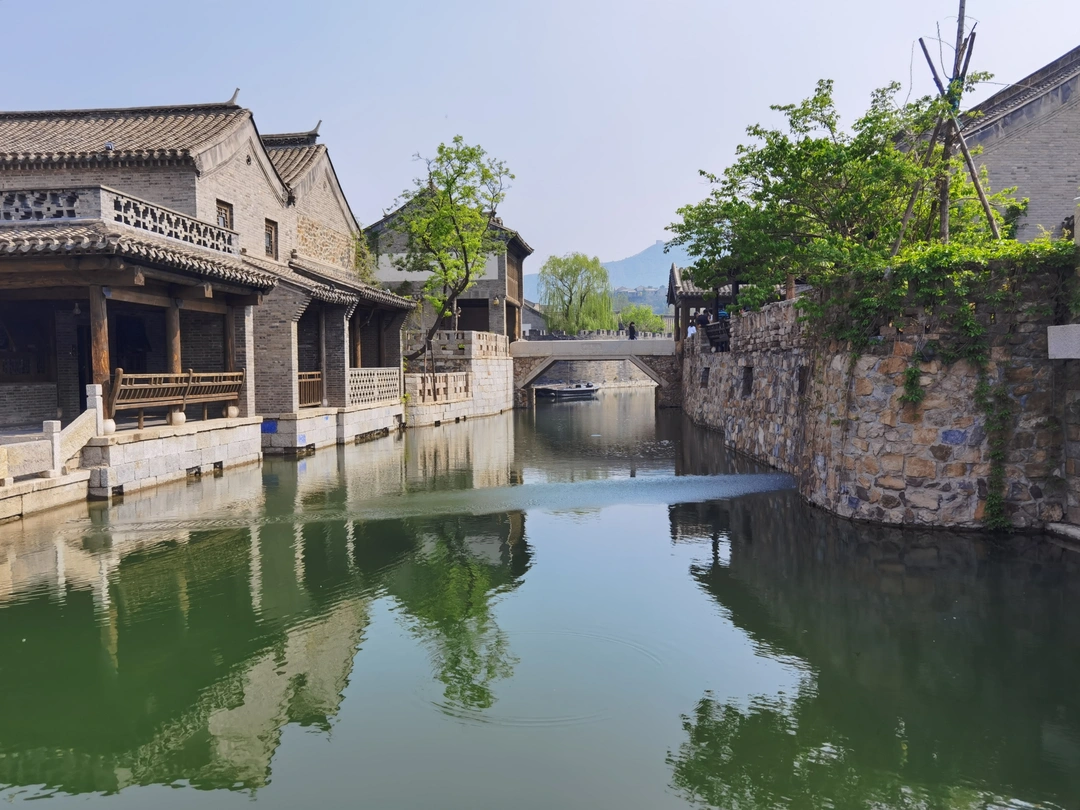
Romantic Mountains and Waters, Leisurely Flower Boats – A Complete Guide to Gubei Water Town Staycation
Meta Description: Discover the hidden magic of Gubei Water Town with insider tips on staying inside the scenic area, avoiding crowds, and experiencing a peaceful mountain-and-water retreat. Perfect for families and couples. Some places are destined to be visited twice. The first time is by…
Continue reading...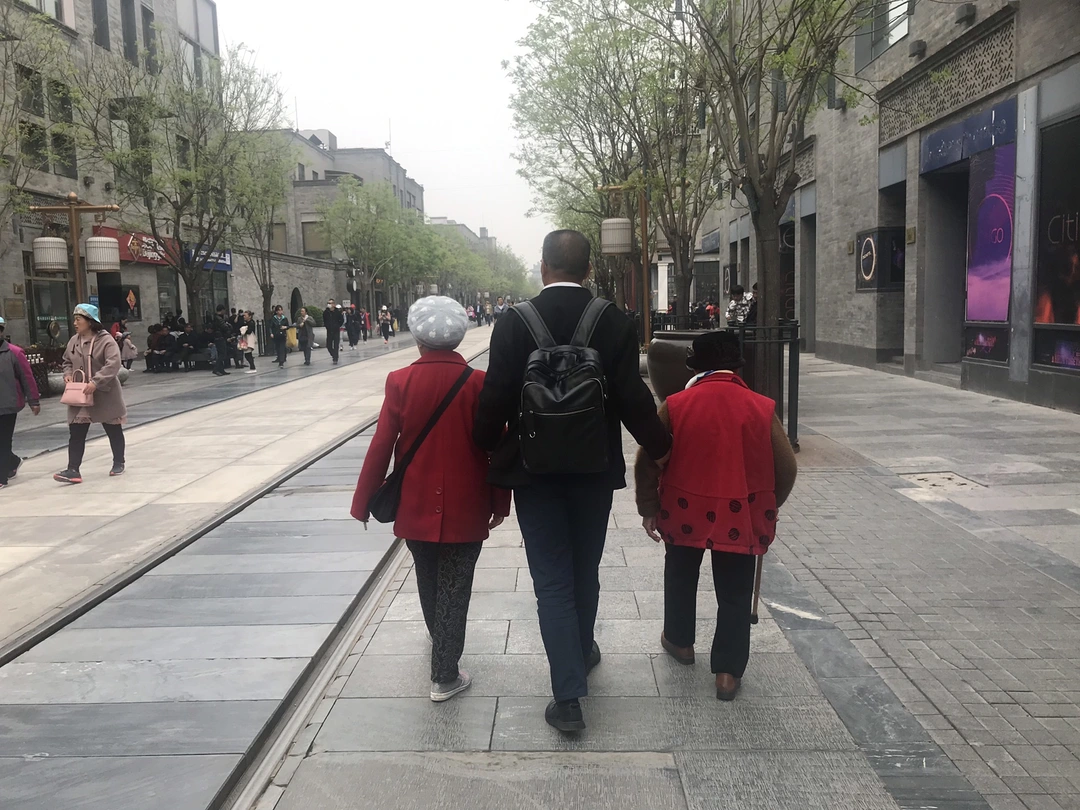
Taking Grandma and Great-Grandma to Beijing: A Heartwarming Journey Across Generations – The Ultimate Multi-Generational Travel Guide
Meta Description: Plan a stress-free Beijing trip with elderly parents or grandparents. Discover our 7-day itinerary, wheelchair rental tips, senior-friendly attractions, and accommodation advice from a real multi-generational family adventure. When my parents announced they wanted to bring our 75-year-old grandmother and 84-year-old great-grandmother from…
Continue reading...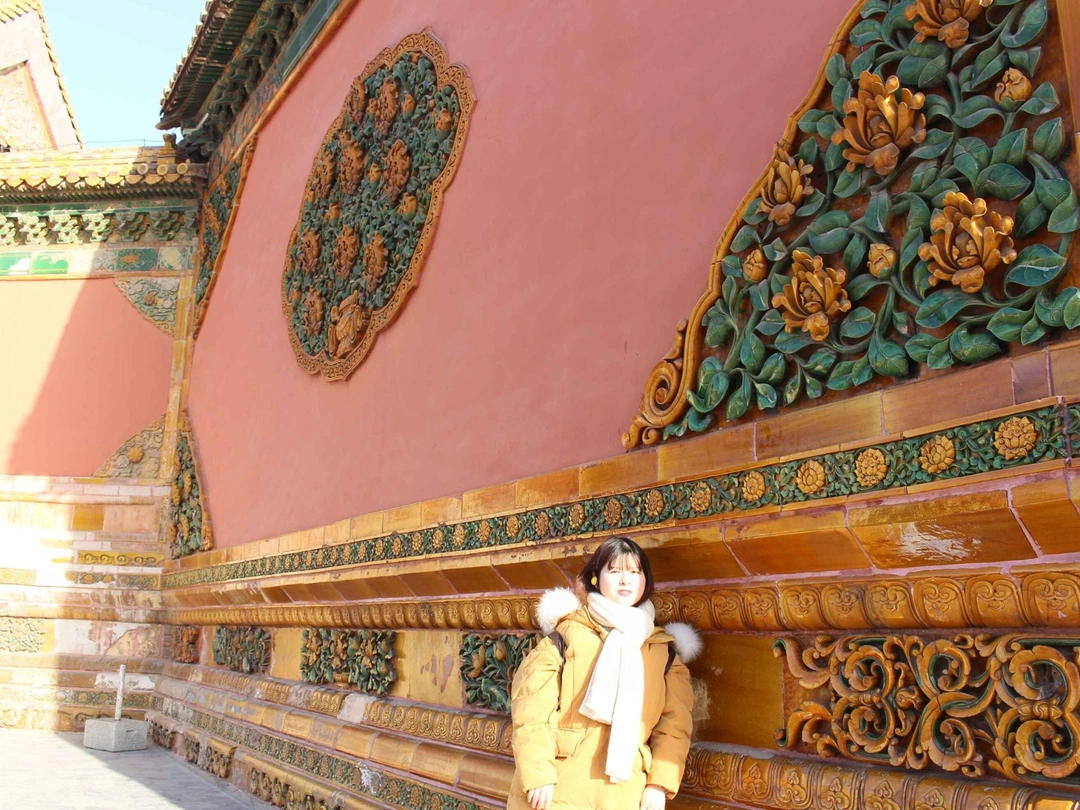
Strolling Through Peking: 100,000 Steps in Five Days – A Winter Journey Through Beijing's Heart
Meta Description: Walk 100,000 steps through Beijing in winter—from historic hutongs to iconic landmarks. Discover hidden eats, ancient palaces, and the warmth of a city that blends tradition with modernity. When I was a child reading Lao She, I always sketched an image of Peking…
Continue reading...