Walking Beijing's Central Axis: The 7.8-Kilometer Code of Eastern Order
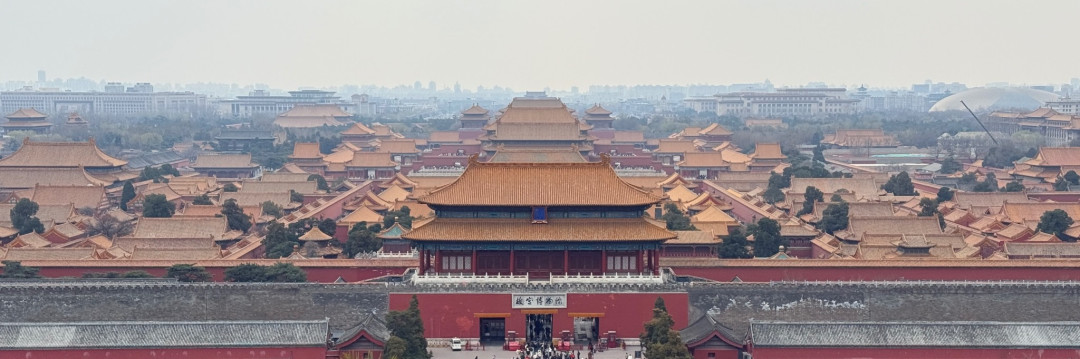
Meta Description: Discover Beijing's Central Axis, a UNESCO World Heritage site spanning 7.8 km. Explore the Bell Tower, Drum Tower, Wanning Bridge, and Jingshan Park—a journey through 600 years of Eastern philosophy and imperial order.
Introduction: The World's Newest Heritage, China's Oldest Blueprint
On July 27, 2024, UNESCO inscribed "Beijing Central Axis: A Masterpiece of China's Ideal Capital City Order" onto the World Heritage List. At just months old as a heritage site, it is China's youngest—yet beneath that "youthful" title lies over six centuries of accumulated history, planning, and philosophy.
This 7.8-kilometer urban spine runs from the Bell and Drum Towers in the north to the Yongding Gate in the south. It originated in the Yuan Dynasty's Dadu (the Mongol capital), was refined under the Ming and Qing Dynasties, survived the turbulence of the Republican era, and was reshaped under New China. While Beijing's center of gravity has shifted multiple times, this axis has remained steadfast—an invisible spine holding up the soul of an entire city.
Walking this entire line is not just a tour of landmarks. It is an encounter with Eastern aesthetics—symmetry, balance, solemnity, and restraint—frozen in brick, tile, and stone. Here is how to walk Beijing's Central Axis and decode its ancient order.
The Bell and Drum Towers: Where Time Began on the Central Axis
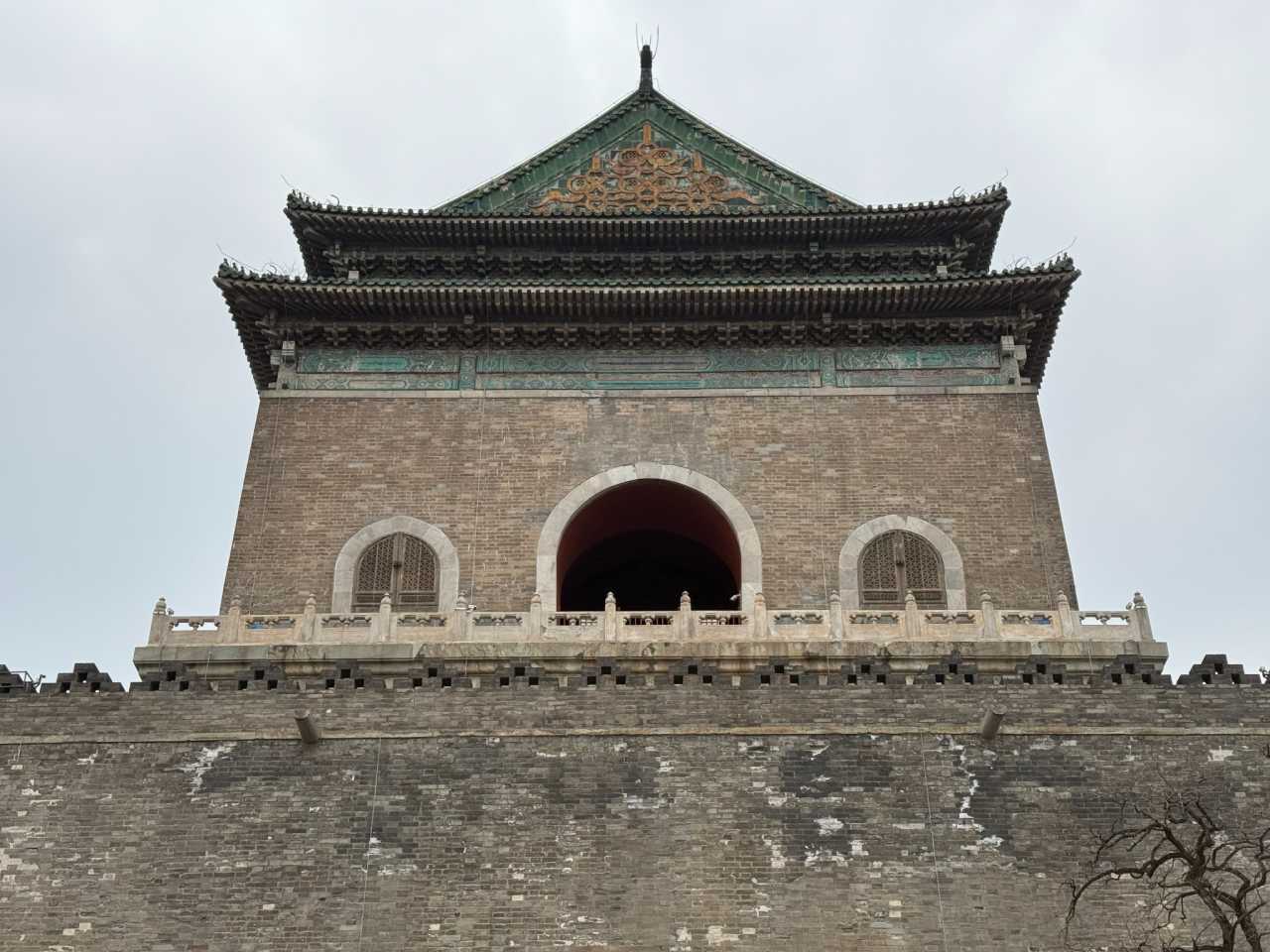
Northern Anchor of the 7.8-Kilometer Axis
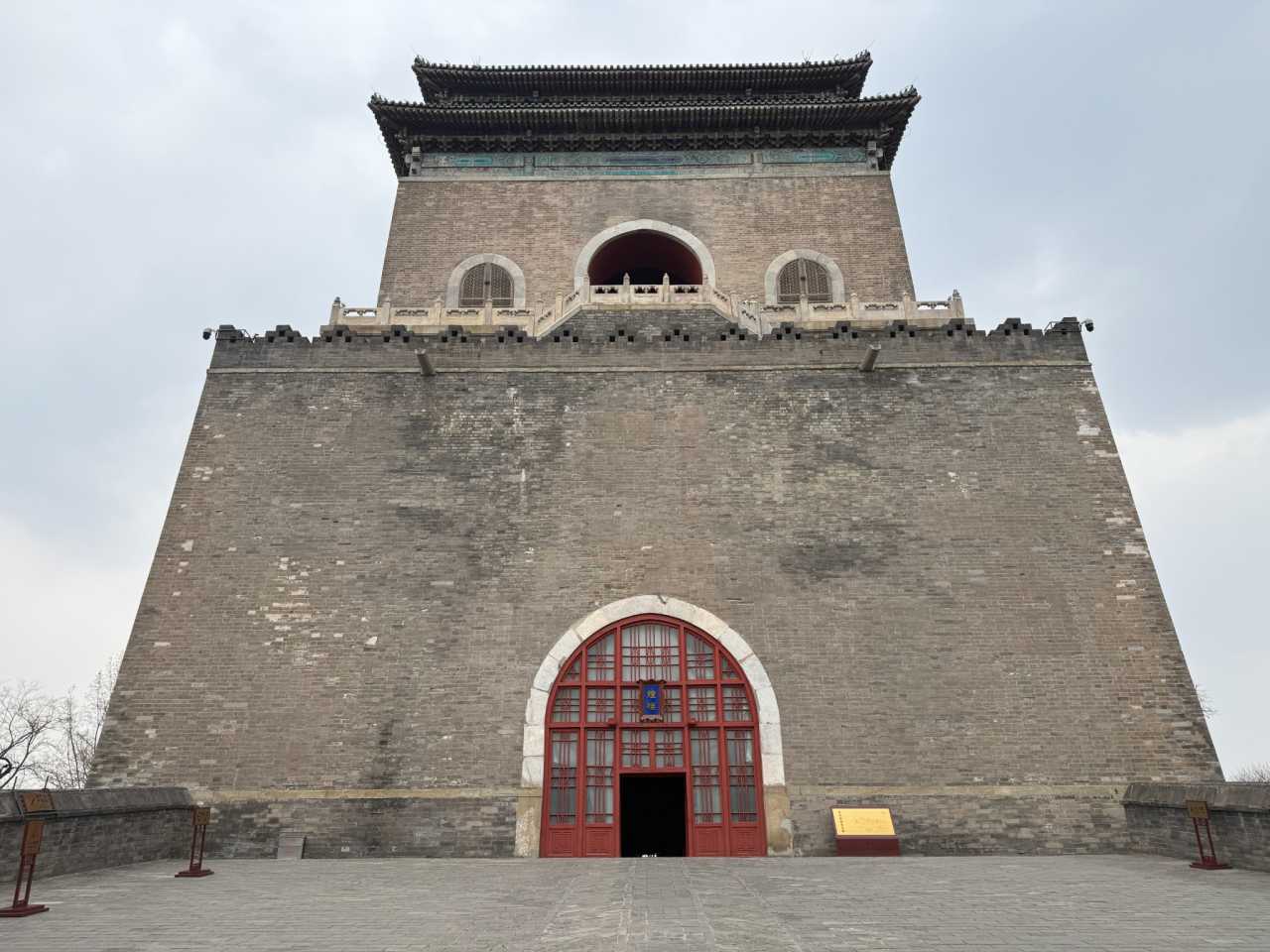
My journey along the Beijing Central Axis started at its northernmost point: the Bell and Drum Towers. These two structures were already the highest points in northern Dadu during the Yuan Dynasty. They were not just landmarks—they were the city's "time manager." The imperial voice declared: "When the drum sounds, rise; when the bell sounds, rest." That authority radiated from here to every corner of the capital.
By the Ming Dynasty, when Emperor Zhu Di moved the capital to Beijing, the Bell and Drum Towers were designated as the northern starting point of the central axis, forming a "rear guard" for the Forbidden City.
Bell Tower: Acoustics and Architecture
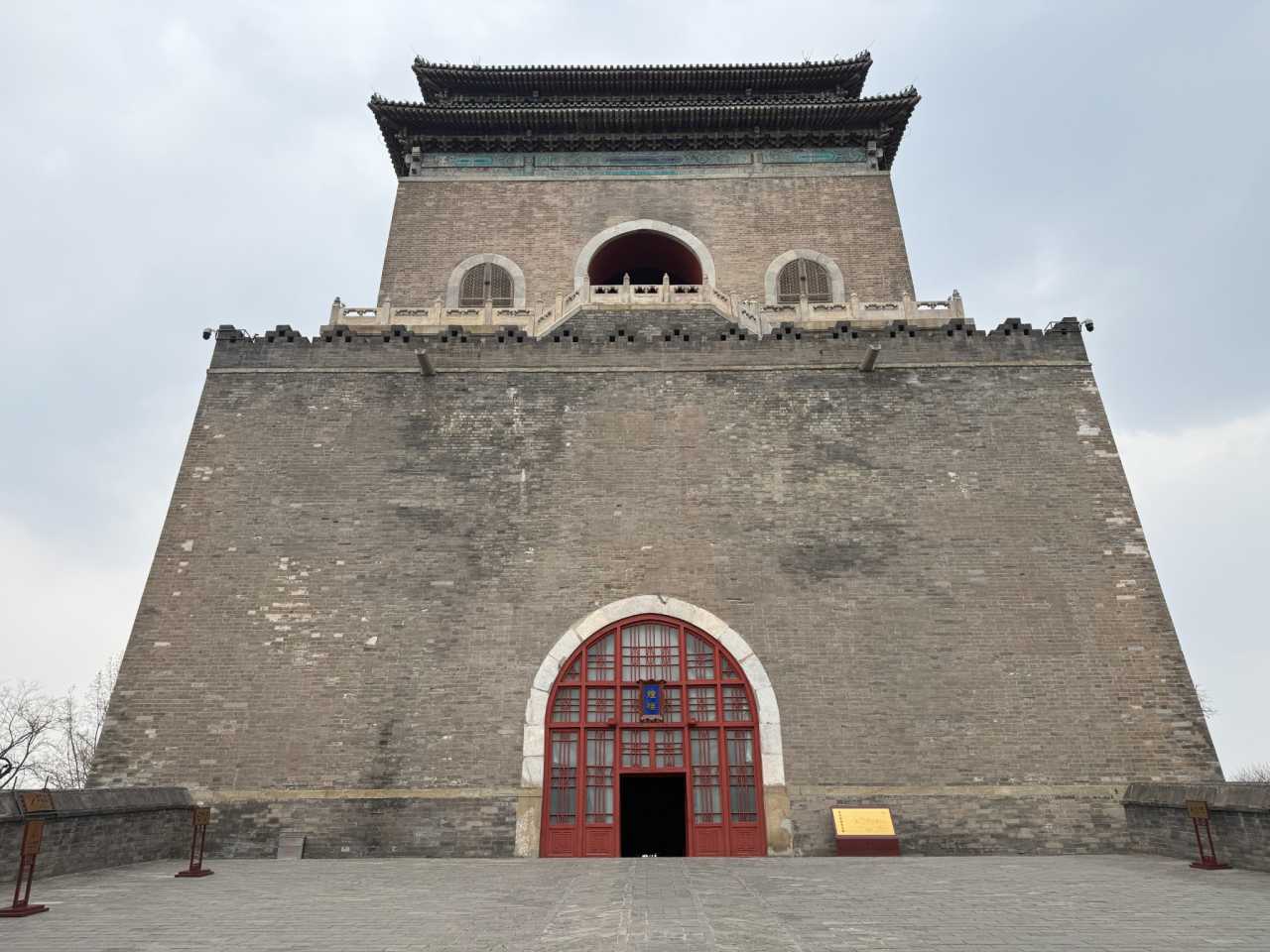
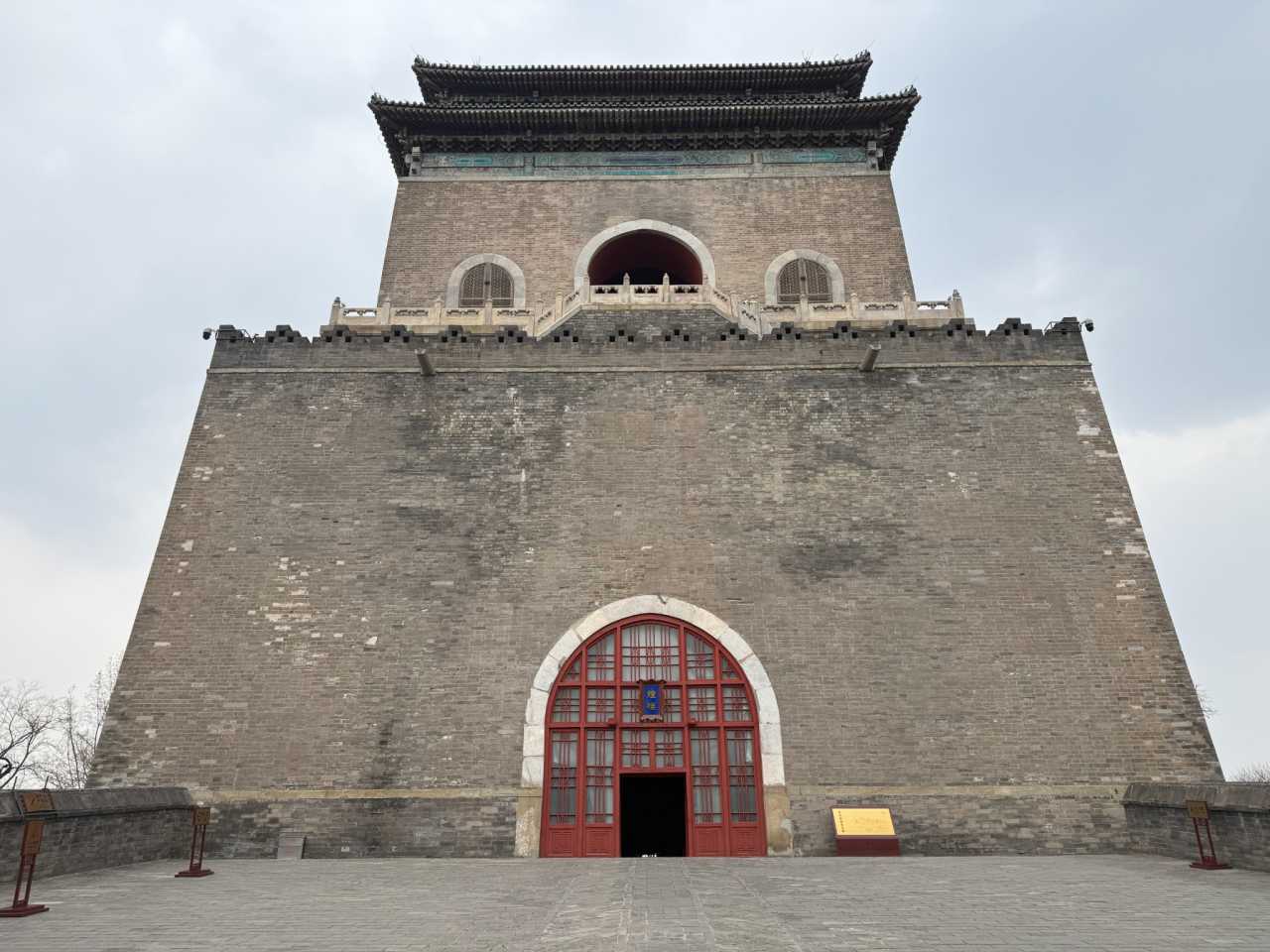
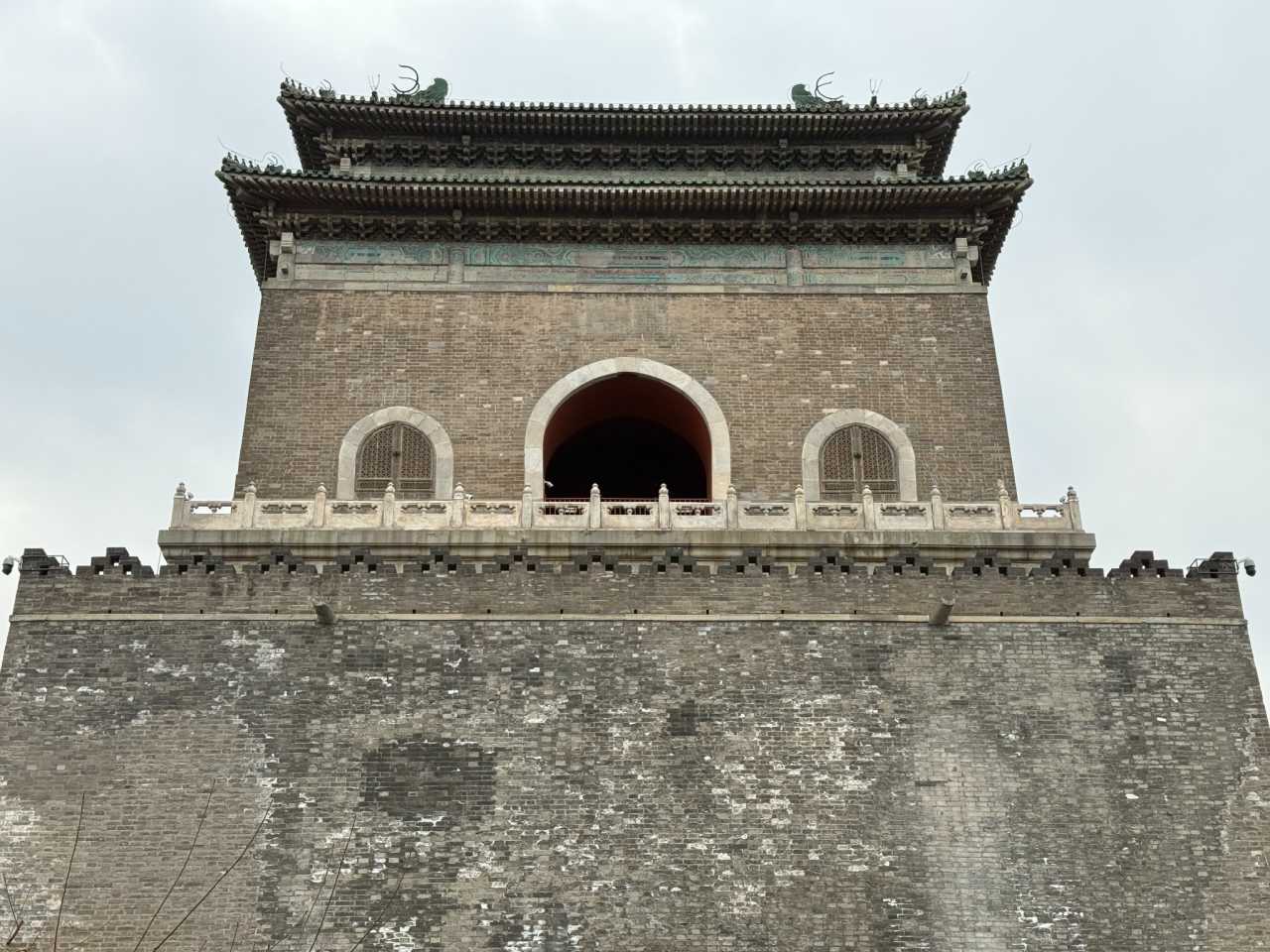
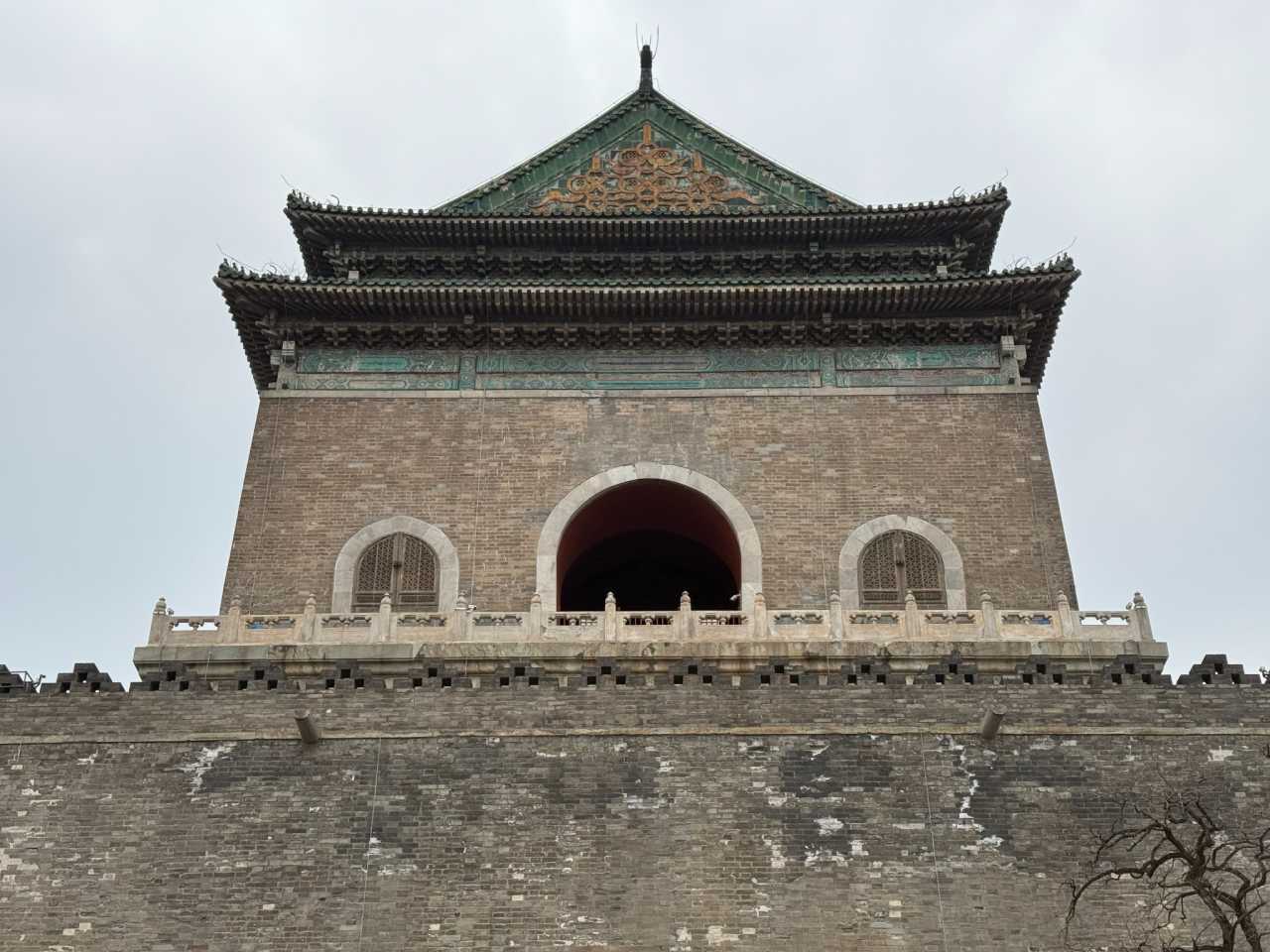
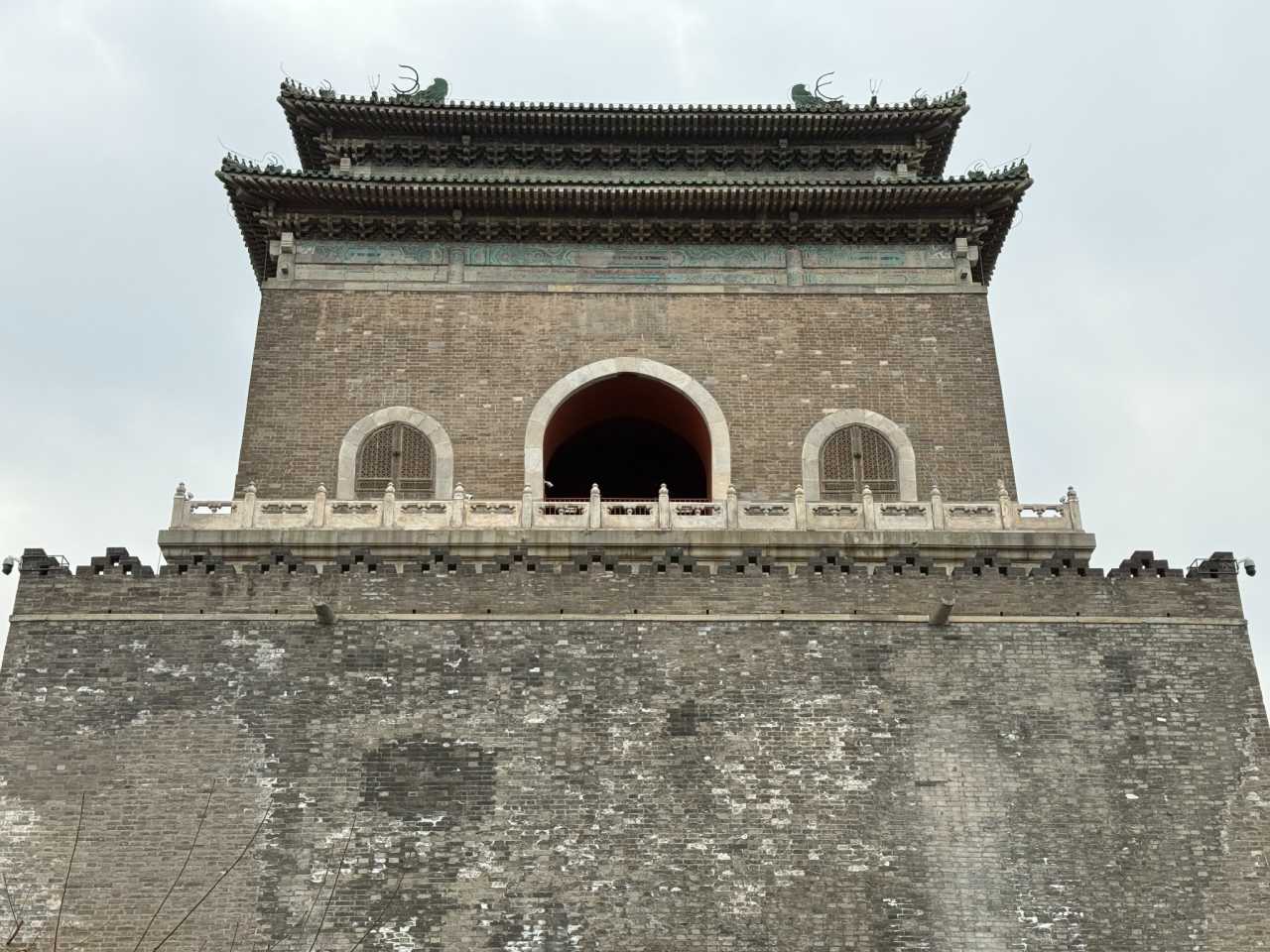
The Bell Tower is the northernmost building on the axis. Tall and slender, it stands on a four-meter-high sloping brick-and-stone platform. Each of its four sides has an arched opening. These converge in the center into a courtyard, which opens upward to the base of the great bell—a natural sound chamber that showcases ancient Chinese mastery of acoustics.
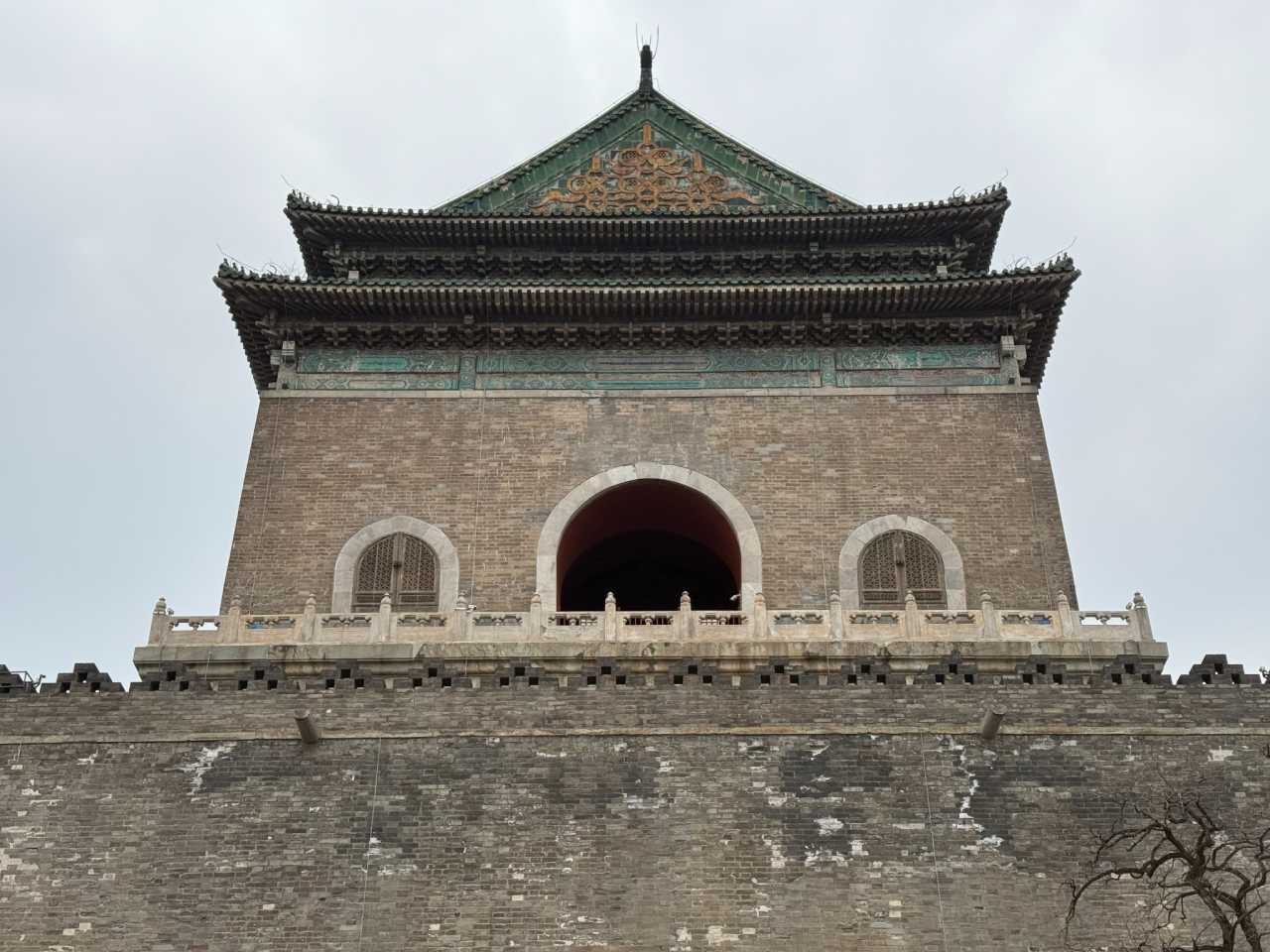
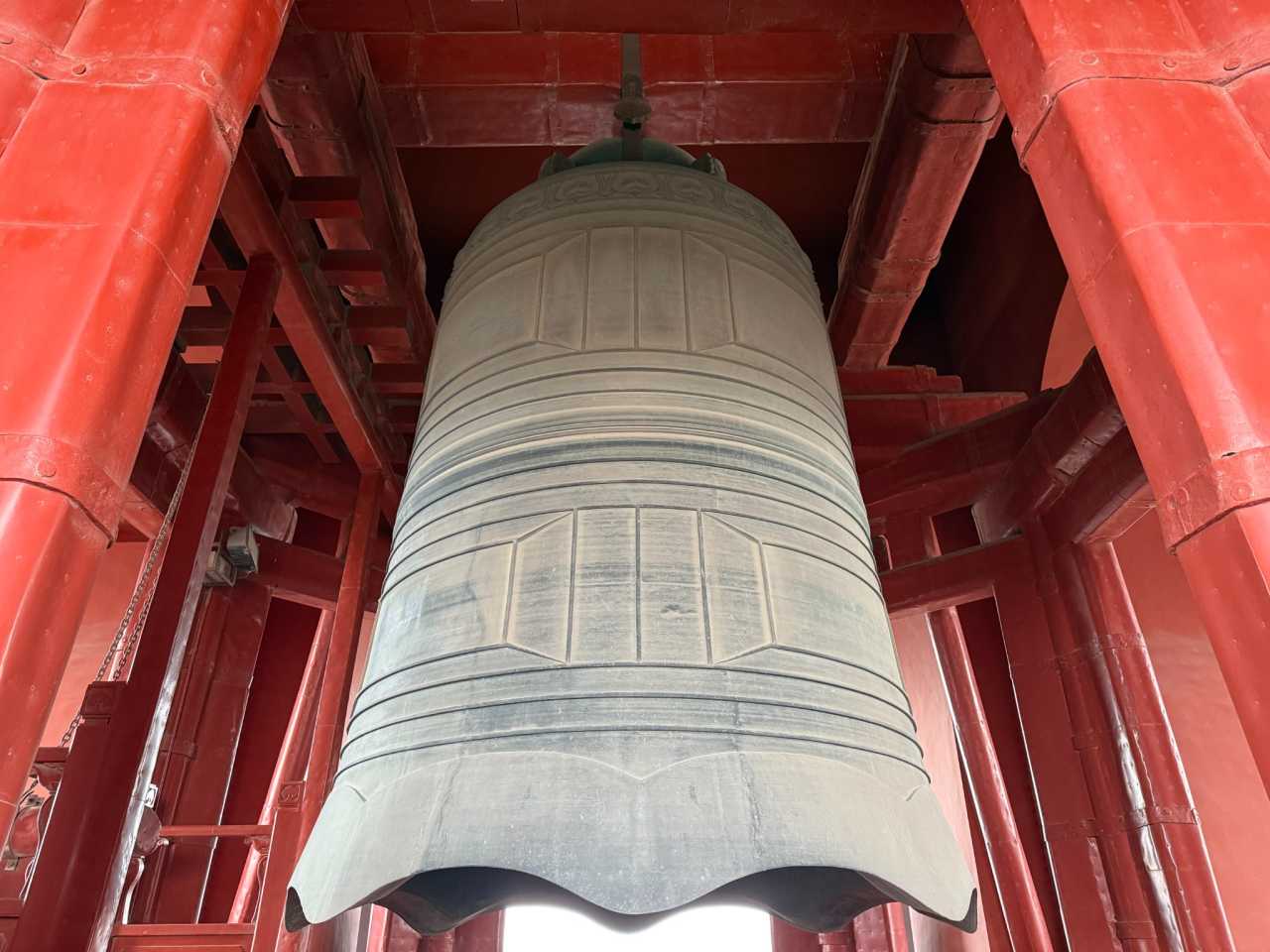
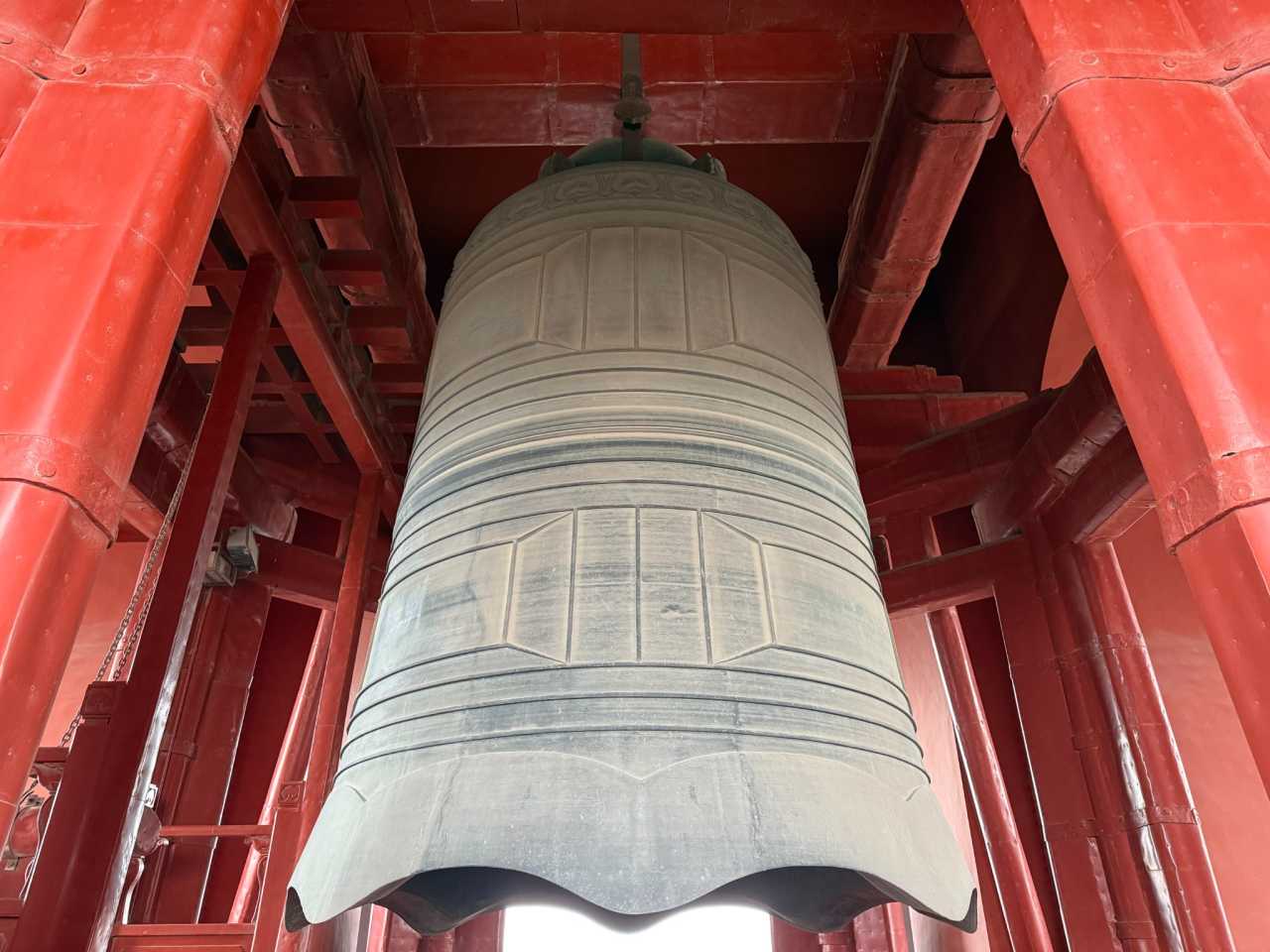
To ascend, you enter through the northeastern arched door and climb a steep staircase. Inside hangs the large bell, an original from the Yongle era of the Ming Dynasty, cast from a copper-tin alloy. Its sound once served as the city's timekeeping center.
The original Bell Tower was wooden and underwent many repairs. During the Qianlong reign of the Qing Dynasty, it was rebuilt in brick and stone to prevent fire hazards. Emperor Qianlong even composed an inscription for a stele, now standing at the entrance.
Looking out from the Bell Tower, you see a sea of gray bricks and tiles—traditional courtyard houses undergoing revitalization. To the north, a continuous stretch of modern buildings marks the new northern extension of the central axis: the Olympic Tower, the Bird's Nest, and the Water Cube.
Drum Tower: The Pulse of Old Beijing
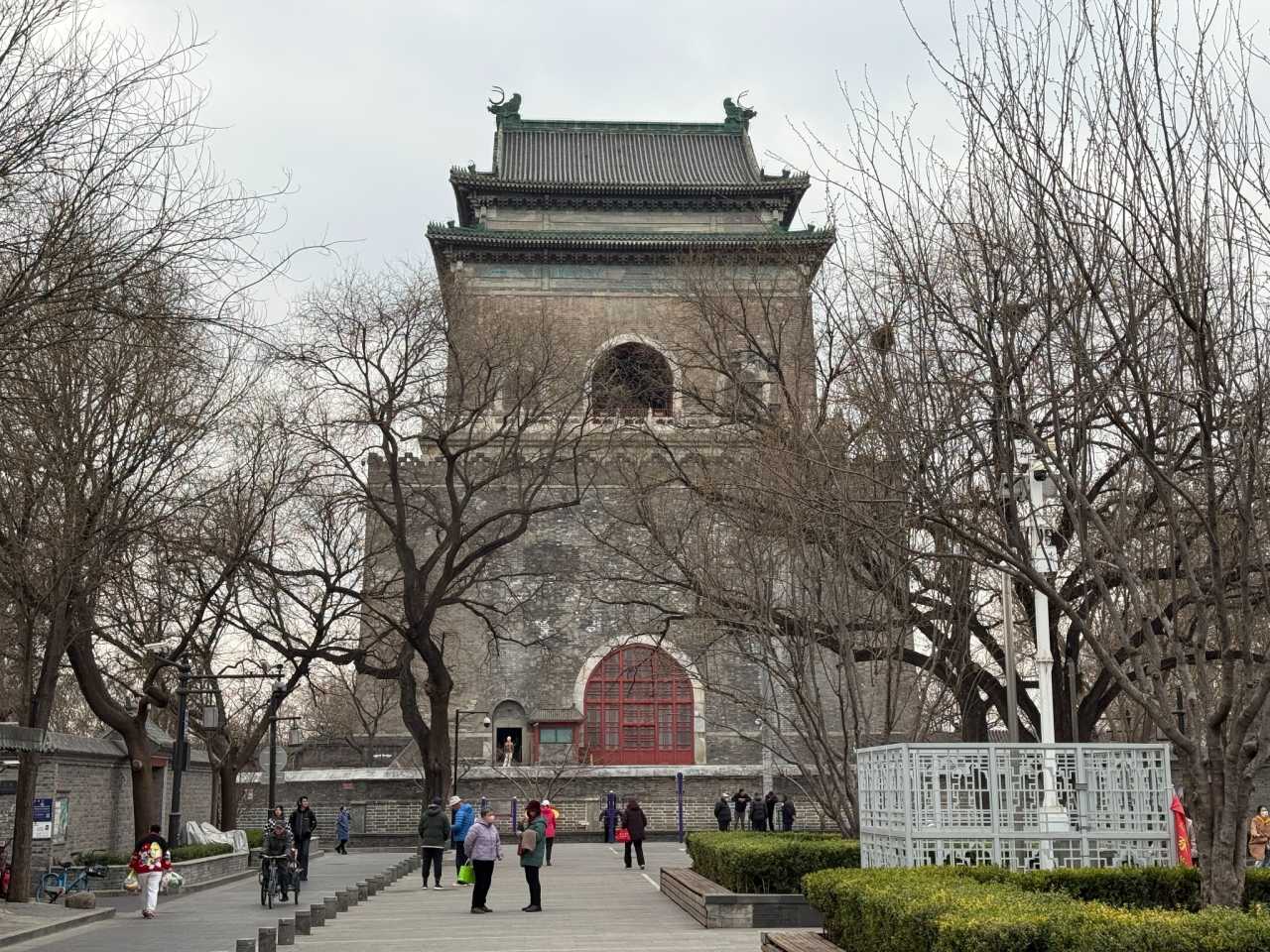
South of the Bell Tower lies the Drum Tower. Between them is a small square, now a fitness area for local residents, where groups kick shuttlecocks. The Drum Tower largely retains the architectural style of the Ming Dynasty. Its two-story, double-eaved, hip-and-gable roof hall is five bays wide and three bays deep, giving it a grand and imposing presence.
During the Yuan, Ming, and Qing Dynasties, the Bell and Drum Towers were the central public timekeeping hub. After 1924, the practice of "morning bell and evening drum" ended, and the site opened to the public as the Jingzhao Popular Education Center.
Today, the first floor of the Drum Tower houses the "Time Architecture" thematic exhibition hall, where you can journey through the historical changes of the central axis amidst light and shadow. Climbing the Drum Tower, you'll find that of the original 25 night-watch drums, only one main drum remains, bearing scars from the occupation by the Eight-Nation Alliance. On the hour, a drumming performance takes place.
"East of Dongsi, West of Xidan, in front of the Drum Tower"—this old Beijing saying points to the city's bustling heart. From the Yuan Dynasty onward, this area became one of the oldest commercial districts due to the imperial city's construction rule of "court in front, market behind." Today, walking south along Di'anmen Street, you pass a continuous line of restaurants, taverns, and tea houses, teeming with tourists, all the way to Jingshan Park.
[Link: Best time to visit Beijing's Central Axis for fewer crowds]
Wanning Bridge: The Overlooked "Time Coordinate" of the Central Axis
On Di'anmen Outer Street stands an unassuming heritage site: Wanning Bridge. Built during the Yuan Dynasty, this bridge once guarded Beijing's ancient seaport and was one of the key reference points for determining the location of Dadu and its central axis.
When the Yuan Dynasty moved its capital to Dadu, the city was built northeast of the former Jin capital, Zhongdu. To secure a water source, the city was planned around Jishuitan (today's Shichahai). The northeastern shore of Jishuitan became the geometric center of the city—the very spot where Wanning Bridge now stands.
The Meaning of "Wanning" and Its Hidden History
"Wanning" means "eternal peace." The white bridge body shows clear signs of restoration. To transport grain to the capital, the Yuan Dynasty built a canal connecting Jishuitan to Tongzhou, which Kublai Khan named the "Tonghui River." This river not only linked Dadu to the Grand Canal but also provided a continuous flow of water to the moat of the imperial palace. Wanning Bridge guarded the entrance from Jishuitan to the Grand Canal.
During a renovation and improvement project in 1999, the Beijing municipal government discovered six water-controlling beast sculptures. One, on the northeastern stone embankment, is an original from the Yuan Dynasty; the other five date from the Yongle era of the Ming Dynasty. The height of these water beasts subtly encoded hydrological information from their time—a hidden layer of data embedded in the central axis.
[Link: Hidden historical sites along Beijing's Central Axis]
Jingshan Park: An "Imperial Perspective" for Just Two Yuan
The southern end of Di'anmen Street brings you to Jingshan Park. Having maintained a ticket price of just 2 yuan for years, it is arguably the best value-for-money paid attraction in Beijing.
From Jin Dynasty to Ming Dynasty: The Birth of a Towning Mountain
The earliest structures on Jingshan date back to the Jin Dynasty. During the Ming Dynasty, the concept of a "towning mountain" emerged. After moving the capital to Beijing, the Ming court used the earth excavated from digging the Forbidden City's moat, Taiye Lake, and the South Sea to pile up five peaks behind the Forbidden City, on the site of the Yuan Dynasty's palace.
Named "Wansui Mountain" (Longevity Mountain), it was positioned directly over the core area of the Yuan palace, Yanchun Pavilion. When the Forbidden City was completed, it leaned against Wansui Mountain, perfectly adhering to Feng Shui principles.
The Five Pavilions and the Geometric Center of Beijing
The name "Jingshan" was given by Emperor Shunzhi after the Qing Dynasty took over, meaning "lofty and grand." Each of the five peaks has a pavilion, all built in the 15th year of the Qianlong reign. From east to west, they are:
- Zhoushang Pavilion
- Guanmiao Pavilion
- Wanchun Pavilion – the central and highest point
- Jifang Pavilion
- Fulan Pavilion

The most prominent is Wanchun Pavilion—the highest point on the Beijing Central Axis and the geometric center of the entire city. Ming and Qing emperors would ascend here to gaze into the distance and observe the world's affairs. Today, most first-time visitors to Beijing also choose this spot for a panoramic view of the Forbidden City.
At the southern foot of Jingshan stands a two-story structure that marks the transition from the imperial rear guard to the Forbidden City itself.
[Link: How to plan a one-day walking tour of Beijing's Central Axis]
FAQ: Walking Beijing's Central Axis
1. How long does it take to walk the entire 7.8-kilometer Central Axis?
A full walk from the Bell and Drum Towers to Yongding Gate typically takes 4 to 6 hours, depending on how much time you spend at each site. Most visitors break it into two half-day segments, starting from the north or south.
2. Is the Central Axis accessible for people with mobility issues?
Some sections, especially the Bell Tower and Jingshan Park, require climbing steep stairs. However, the ground-level path along Di'anmen Street and the southern sections are relatively flat. Wanning Bridge is fully accessible from street level.
3. What is the best time of day to visit the Central Axis?
Early morning (before 9 AM) offers fewer crowds and softer light for photography. Late afternoon provides golden hour views from Jingshan Park. If you want to see the drumming performance at the Drum Tower, check the schedule in advance.
4. Are there guided tours available for the Central Axis?
Yes. Both private and group guided tours are available, ranging from 2-hour highlights to full-day immersive experiences. Audio guides are also available at the Bell Tower, Drum Tower, and Jingshan Park.
5. What other World Heritage sites are near the Central Axis?
The Forbidden City (a UNESCO World Heritage site itself) lies directly on the axis. The Temple of Heaven and the Summer Palace are also nearby and can be combined into a multi-day itinerary.
[Link: UNESCO World Heritage sites in Beijing: Complete guide]
Conclusion: Walk the Axis, Read the City
Beijing's Central Axis is more than a tourist route. It is a 7.8-kilometer code—a physical manifestation of Eastern philosophy written in brick, tile, and stone. From the Bell and Drum Towers where time began, through the overlooked Wanning Bridge that anchored a dynasty, to the imperial perspective of Jingshan Park, every step reveals a layer of order, balance, and history.
Whether you are a first-time visitor or a seasoned traveler, walking this axis changes how you see Beijing. It transforms a sprawling modern metropolis into a coherent, ancient masterpiece.
Ready to decode the Eastern order for yourself? Start your journey at the Bell and Drum Towers, and let the axis guide you south. Bring comfortable shoes, a camera, and an open mind. The 7.8-kilometer code is waiting.
[Link: Beijing travel guide: Essential tips for first-time visitors]
You should also read:
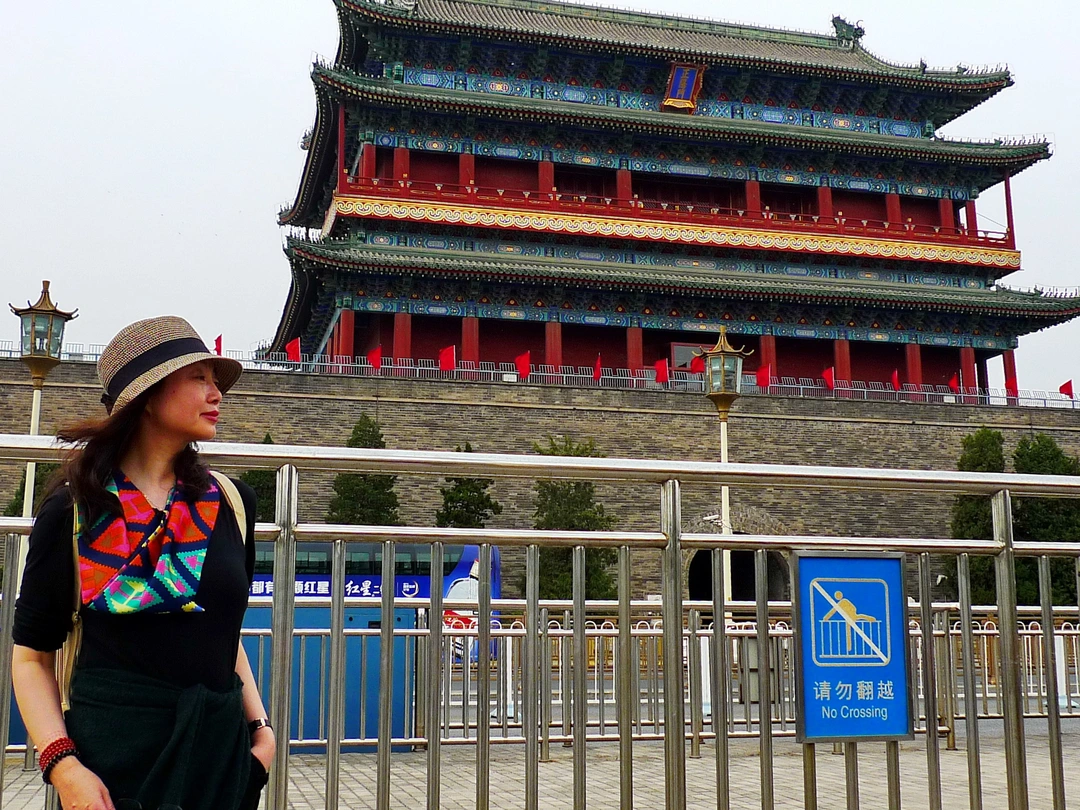
Qianmen Dashilan: Century-Old Beijing Charm Meets Modern Lifestyle – A Complete Walking Guide
Meta Description: Discover Qianmen Dashilan, where Beijing's 600-year-old history meets trendy boutiques, bookstores, and global cuisine. Your complete guide to walking Beijing's most iconic pedestrian street. I had lived in Beijing for years. I knew the hutongs, the hidden dumpling shops, the best times to…
Continue reading...
Going Deeper: A Solo Late-Autumn Journey Through Mountains, Sea, Castles, and Hot Springs in Central Japan
Meta Description: Discover an unforgettable solo late-autumn itinerary through central Japan—exploring mountains, sea, castles, and hot springs. From Osaka shopping to Himeji Castle, this guide offers practical tips, hidden gems, and budget-friendly travel advice. Before the stars had fully faded from the sky, my travel…
Continue reading...
Walking Through Ancient Sites, Recalling Old Peking: When History Falls Silent, Life Is but a Dream
Meta Description: Explore Beijing's hidden historical gems—from Lu Xun's Former Residence to the abandoned Fusuijing Building and Emperor Guangxu's birthplace. A photographer's journey through ancient sites, capturing the soul of Old Peking. Have you ever imagined pressing the shutter button while standing at the birthplace…
Continue reading...