Monkeying Around in Beijing: A Guangdong Native's Milestone Birthday Trip to the Capital
Meta Description: A Guangdong native turns 30 with a winter trip to Beijing—siheyuan stays, Forbidden City sunsets, and ice skating at Beihai. Discover why the capital stole his heart.
Prologue: From Shenzhen to Beijing, a 30-Degree Crossing
Thirty years old is a微妙 (subtle) milestone for many people. Da Bin is no exception. Over the years, he's traveled extensively, his passport filled with entry stamps from countries around the world. He's left footprints in nearly every capital city—except Beijing, his own country's capital, which had always remained unchecked.
At the tail end of 2018, he finally decided to fill that gap. Packing his thickest down jacket and heaviest sweater, this Guangdong native boarded a northbound flight at dawn, when the temperature was already minus ten degrees Celsius.
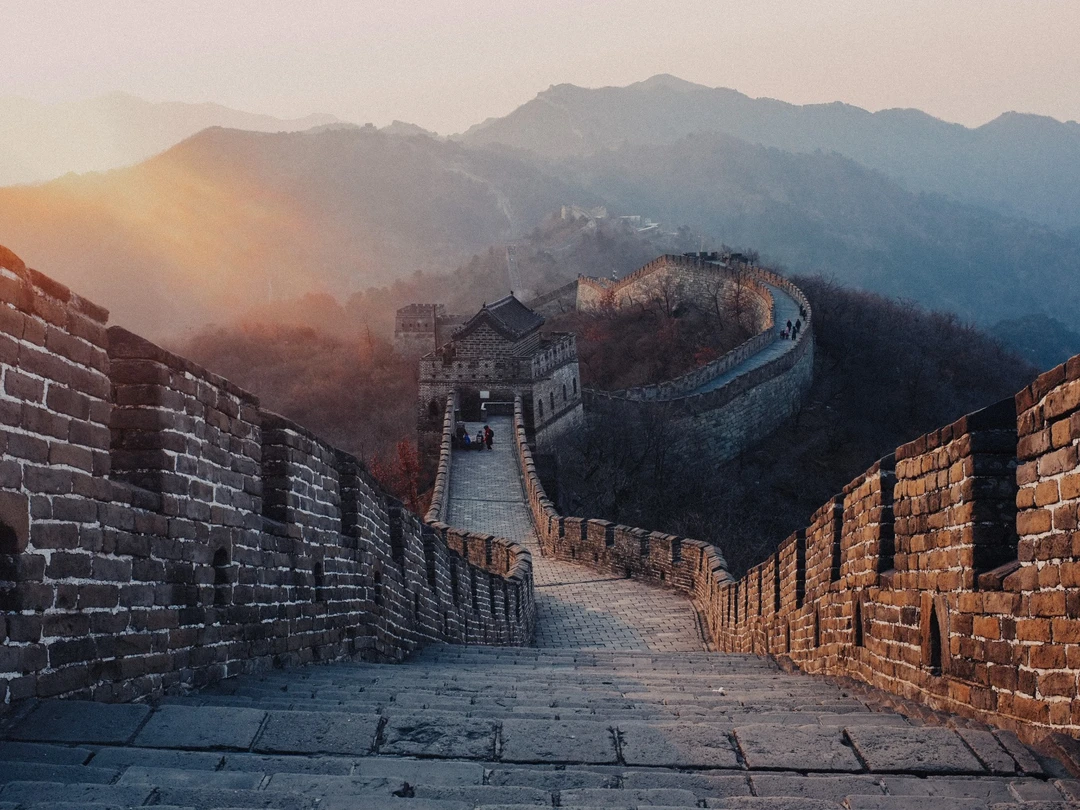
From Shenzhen to Beijing, a single flight spanned a temperature difference of nearly 30 degrees. Before departing, he'd done his homework: on New Year's Day, he planned to climb Mutianyu Great Wall to greet the first rays of 2019. His only concern: just how cold would Beijing be? Would it snow?

The answer came quickly: cold, really cold. A dawn temperature of minus thirteen degrees could make you question your life choices. But snow? Not a chance.
Five days and five nights—he'd originally thought that would be enough to thoroughly explore Beijing. Instead, he left wanting more. His travel companion returned to Shenzhen early, utterly perplexed: "How can you guys have so much fun in Beijing?" Da Bin thought about it, and the answer was simple—for those of us wandering within the Second Ring Road, a city with history and stories is the ultimate attraction.
Climbing the Roof of a Siheyuan (Traditional Courtyard House)
Old Beijing has a saying: "The east is wealthy, the west is noble, Chongwen is poor, Xuanwu is broken." Times have changed. Today's Beijing has been redefined by new labels like the Chaoyang Masses, the Xicheng Aunties, and the Haidian Netizens. But the siheyuan (traditional courtyard houses) within the Second Ring Road remain legendary.
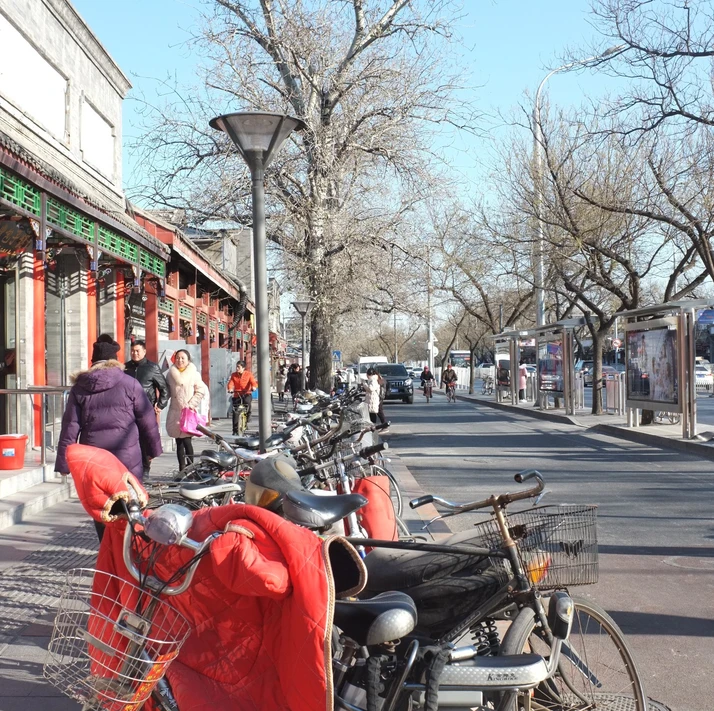
According to data, the most expensive siheyuan sold in 2014 went for 1.18 billion yuan, averaging 190,000 yuan per square meter. A standard siheyuan covers about 400 square meters of land, with a building area of roughly 200 square meters—costing nearly 100 million yuan. At those prices, Da Bin naturally couldn't afford one. Fortunately, some authentic guesthouses offered a cost-effective alternative.
They chose Kaili's Home on Lingjing Hutong. Passing through a residential area, the guesthouse was tucked deep within the alley. No traffic noise—just silence so profound that you instinctively lowered your voice. Occasionally, a bicycle bell would break the stillness.
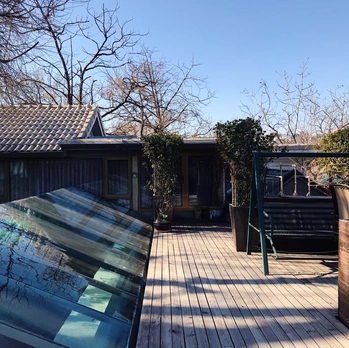
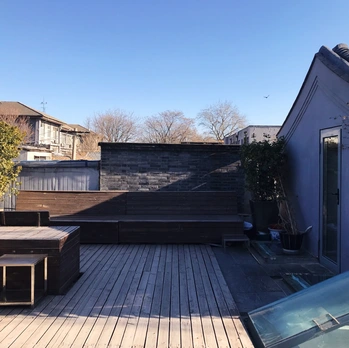
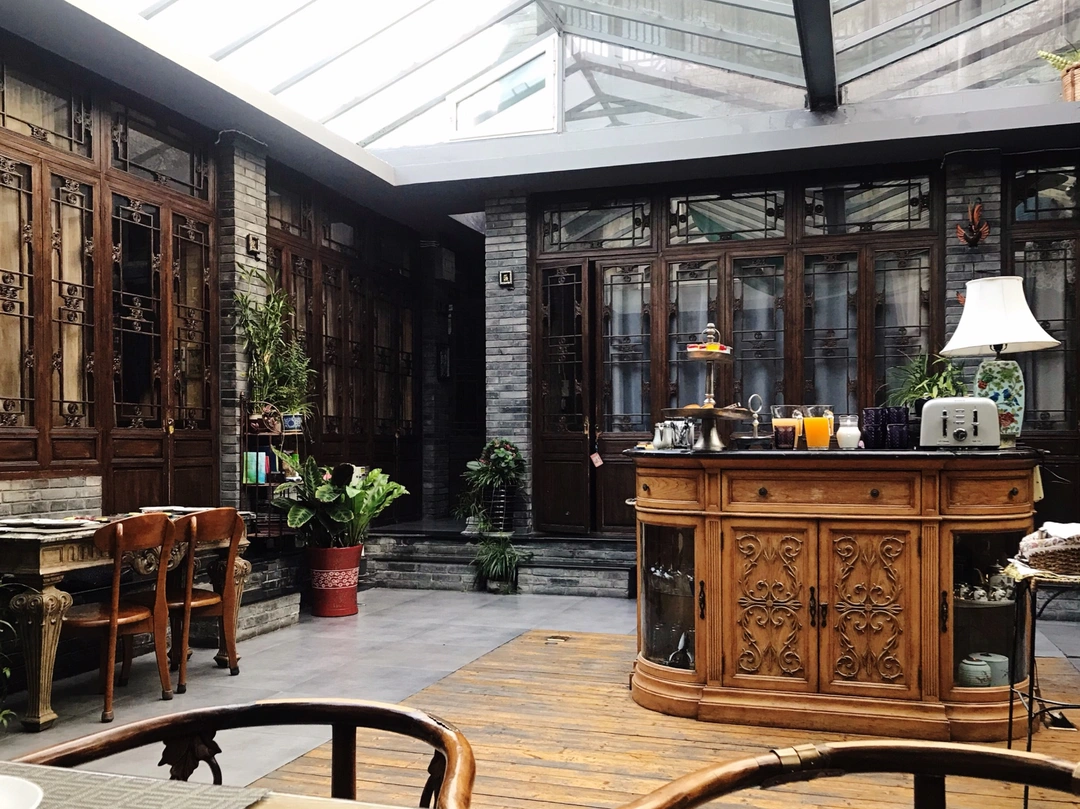
The siheyuan wasn't large. Its original courtyard had been enclosed with a glass canopy, creating a common area. During the day, while other guests were out exploring, you could brew a pot of tea, grab a book, sit on the raised platform (kang), and let the soft music wash over you—pure bliss. The rooftop was an outdoor terrace. Sitting in a rocking chair, your hand could reach out and touch the roof tiles, steeped in history. That's when Da Bin recalled an old saying: "If you don't get spanked for three days, you'll climb up and rip off the tiles."
Why Siheyuan Guesthouses Are Perfect for Winter Travel to Beijing
Staying in a siheyuan guesthouse isn't just about accommodation—it's about experiencing Beijing's soul. For first-time visitors, especially those from southern China, the contrast between the bustling hutongs and the serene courtyard life is unforgettable. [Link: Best Siheyuan Guesthouses in Beijing]
Beihai Park: No Paddling, But Mandarin Ducks on the Ice
One advantage of choosing a siheyuan guesthouse was that many attractions were within walking distance. After dropping off their luggage and freshening up, they headed straight for Jingshan Park.
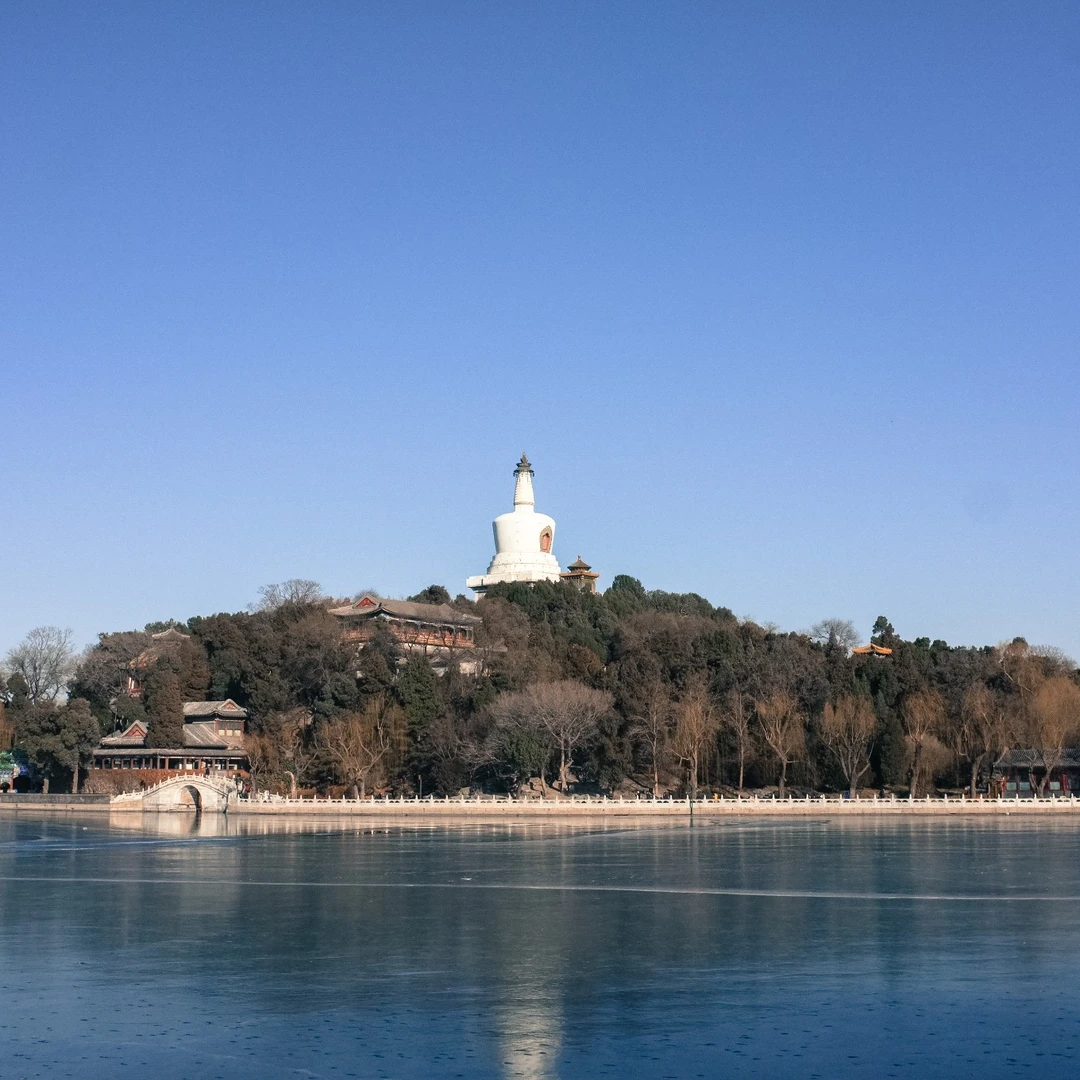
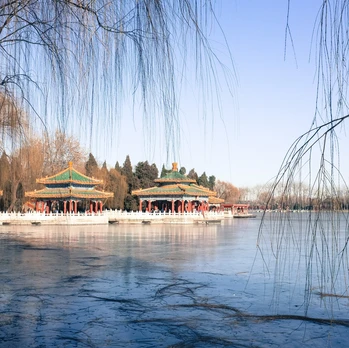
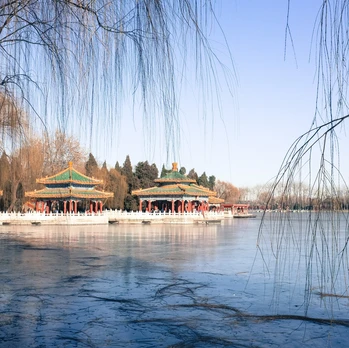
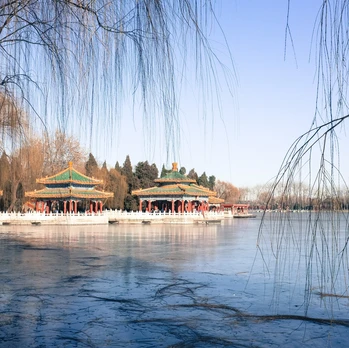
It didn't look far on the map, but in Beijing, a few blocks can easily stretch into four or five kilometers. On the way, they passed a park with a wide lake, hills, and water. Curiosity piqued, they bought tickets and went in. A few steps later, they spotted a white pagoda—wait a minute, wasn't that the "beautiful white pagoda reflected in the water" from the childhood song? The melody instantly echoed in their minds.
But the weather was just too cold—paddling a boat was out of the question.
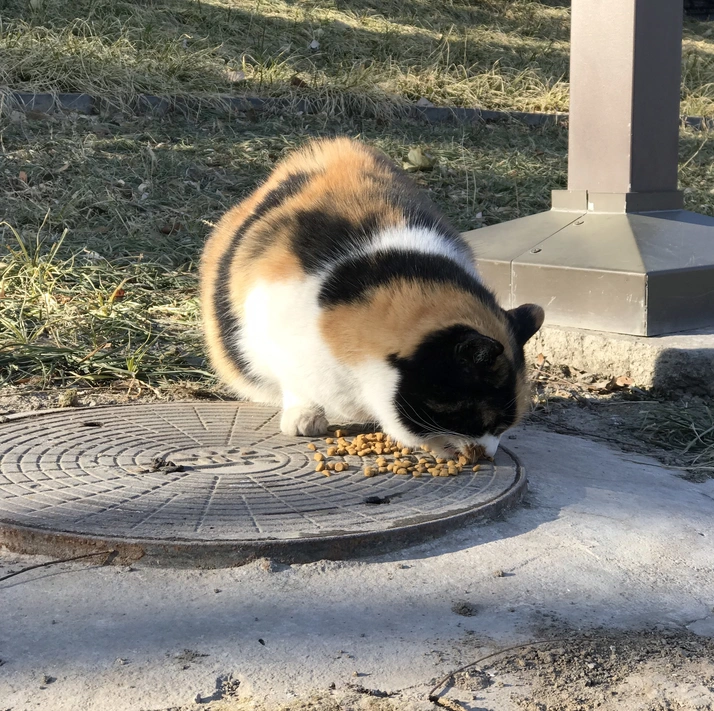
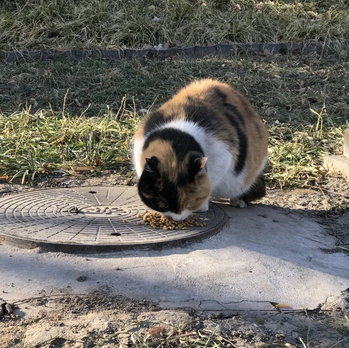
They'd planned just a quick look, but the park's atmosphere was so captivating that they ended up walking the entire circumference of the lake. The differences between north and south weren't just about temperature—even the cats were built differently. Look at that round physique, the uniform fur, the thick paws, the broad face, and that focused eating expression—a perfect "keep taking photos, nothing's going to disturb my meal" attitude.
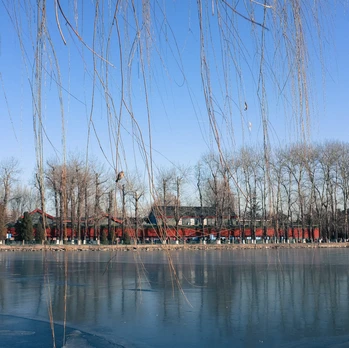
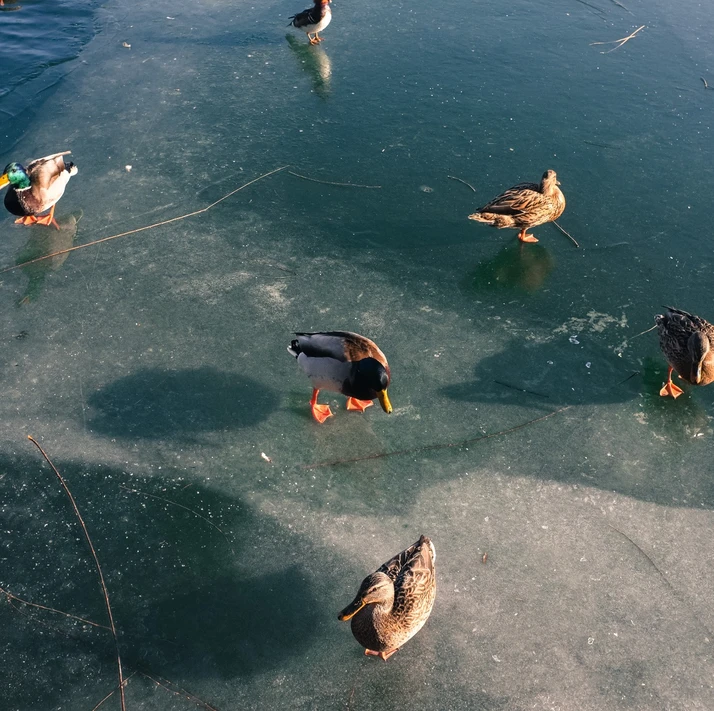
Reaching the north side of Beihai (North Sea Park), the crowd suddenly thickened. Long telephoto lenses were aimed at the partially frozen lake. Getting closer, they saw people photographing mandarin ducks playing in the water. Small groups of ducks and mandarin ducks alternately splashed in the water and walked on the ice. Duck feet aren't equipped with anti-slip features, so they'd occasionally stumble. A helpful elderly gentleman, seeing their confusion, explained that these photographers had been waiting for hours to capture the moment a duck caught a fish.
Da Bin remembered the BBC documentary "Chinese New Year: The Biggest Celebration on Earth." What struck him most was the image of several bearded Westerners gleefully skating on ice sleds, laughing like children. Before this trip, he'd specifically checked the opening dates of Beijing's ice rinks and found that they opened their doors right around New Year's. Beihai's ice rink wasn't large—a barrier cordoned off a safe area, inside which the noise was deafening, with the constant clang of metal. Outside, cheerful onlookers watched—this, perhaps, was the joy of winter.
Winter Activities at Beihai Park: Ice Skating, Mandarin Duck Watching & More
If you're planning a winter trip to Beijing, Beihai Park is a must-visit. The ice rink typically opens from late December to early February, depending on weather conditions. [Link: Beijing Winter Activities Guide]
Wanchun Pavilion: A Sunset with "No Room to Stand"
After their "quick loop" around Beihai, it was already sunset. Taking advantage of the remaining light, they climbed to the highest point of Jingshan Park—Wanchun Pavilion. But the real test was just beginning.
Wanchun Pavilion offers the best panoramic view of the Forbidden City, and countless films have been shot here. In Da Bin's imagination, Jingshan was like the innocent childhood friendship between Song Ge and Liu Xingyang in "Beijing Love Story," or the helplessness of Xiao Xiao and Jian Qing in "Us and Them." But the reality of Jingshan was a sea of people.
Before the last rays of sunset arrived, people had already staked out their spots, cameras at the ready. Trying to secure the prime position required Herculean effort—even the railings were packed with people. Finally, a shivering guy who couldn't take the cold anymore vacated a high spot. Da Bin climbed up with stiff legs. Looking south, the entire Forbidden City lay before him.
The only word for the view was "spectacular." What did a biting wind matter? As dusk approached, the twilight deepened. "Sunset over the Forbidden City"—that kind of magnificent, melancholic historical atmosphere revealed a different beauty of the imperial palace.
Best Sunset Views in Beijing: Why Wanchun Pavilion Is a Photographer's Dream
For the perfect sunset shot, arrive at Jingshan Park at least 45 minutes before sunset. The best spots fill up fast, especially during peak season. [Link: Jingshan Park Photography Tips]
The Forbidden City Ice Cellar: A Sanctuary in Sub-Zero Cold
On the last day of 2018, they'd planned to enter the Forbidden City as soon as the gates opened to experience imperial grandeur. But they overslept by half an hour, and by the time they arrived, a long queue had already formed.
From Chang'an Avenue to the Tiananmen Gate Tower, then through the Meridian Gate into the Forbidden City—as a Guangdong native who'd never been to the imperial capital, Da Bin felt a surge of excitement. The Purple Forbidden City, as the core and symbol of the empire, its red walls and golden tiles exuded supreme imperial authority. Although it now carried traces of a commercial society, walking beneath those towering walls, you could still feel the weight of history.
Before the trip, Da Bin had watched a few episodes of "The New Forbidden City," gaining some familiarity with classic scenes and stories within the palace. Whenever he saw these scenes in person, he felt a strange sense of revisiting an old place, excitedly explaining the show's content to his companion.
The clear blue sky gave them the "Beijing Blue" they'd hoped for—a crisp winter day perfect for exploring.
Forbidden City Winter Guide: Avoiding Crowds & Staying Warm
Winter is an excellent time to visit the Forbidden City—fewer tourists, clearer skies, and a magical atmosphere. But the cold can be brutal. Dress in layers, wear thermal socks, and bring hand warmers. [Link: Forbidden City Ticket Booking Tips]
Mutianyu Great Wall: Greeting 2019 at Dawn
On New Year's Day, Da Bin finally got his wish. He took a bus from Dongzhimen to Mutianyu, arriving just as the sun began to rise. The wall was empty—just him, the wind, and the endless snaking stone dragon across the mountains.
The temperature was minus 15 degrees Celsius. His phone battery died in 20 minutes. His fingers felt like they'd been dipped in liquid nitrogen. But as the first rays of 2019 light hit the watchtowers, he forgot the cold. He thought about the soldiers who once stood guard here, the merchants who passed through, the history that had washed over these stones.
Standing on the Mutianyu Great Wall, he realized: this was what he'd been missing all these years. Not just a destination, but a connection to his own country's story.
Mutianyu vs Badaling: Which Great Wall Section Is Best for Your Trip?
Mutianyu is less crowded and more scenic than Badaling, making it ideal for winter visits. It also has a cable car and toboggan ride for fun descents. [Link: Great Wall Sections Comparison]
FAQ: Winter Travel to Beijing for First-Timers
Q1: Is Beijing too cold for tourists in winter? A: Winter temperatures in Beijing range from -10°C to 5°C (14°F to 41°F). While cold, it's manageable with proper clothing (thermal layers, down jacket, hat, gloves, scarf). The clear skies and fewer crowds make it worthwhile.
Q2: What's the best way to get from the airport to central Beijing? A: The Airport Express train connects to Dongzhimen and Sanyuanqiao stations (25 minutes, 25 RMB). Taxis cost around 100-150 RMB depending on traffic. Avoid unofficial taxis.
Q3: Are siheyuan guesthouses warm enough in winter? A: Most siheyuan guesthouses have modern heating systems, but some older ones may have drafts. Check reviews before booking. Kaili's Home (mentioned in the article) has good insulation and heated common areas.
Q4: Do I need to book Forbidden City tickets in advance? A: Yes! The Forbidden City limits daily visitors. Book at least 7 days in advance during peak season (April-October) and 3-5 days in winter. Tickets sell out fast, especially for weekends and holidays.
Q5: Can I see snow in Beijing during winter? A: Snow is possible but not guaranteed. Beijing averages 2-3 snowfall days per winter, usually in January or February. For guaranteed snow, consider visiting nearby ski resorts like Nanshan or Huaibei.
Conclusion: Why Beijing Deserves a Spot on Every Chinese Traveler's Bucket List
Da Bin's birthday trip to Beijing was more than just a vacation—it was a homecoming. For a Guangdong native who had traveled the world, the capital offered something unique: a deep, resonant connection to his own culture and history.
From the silent siheyuan rooftops to the bustling ice rinks of Beihai, from the sunset at Wanchun Pavilion to the dawn at Mutianyu Great Wall, Beijing revealed itself as a city of contrasts. Cold but warm. Ancient but alive. Crowded but intimate.
If you've been putting off a trip to Beijing, let this be your sign. Whether you're turning 30, 40, or just want to experience the heart of China, the capital is waiting.
Ready to plan your own Beijing adventure? Start by booking your siheyuan guesthouse and Forbidden City tickets—and don't forget your thickest down jacket!
[Link: Complete Beijing Travel Guide] [Link: Best Time to Visit Beijing] [Link: Beijing Winter Packing List]
Have you visited Beijing in winter? Share your experience in the comments below—we'd love to hear your stories!
You should also read:
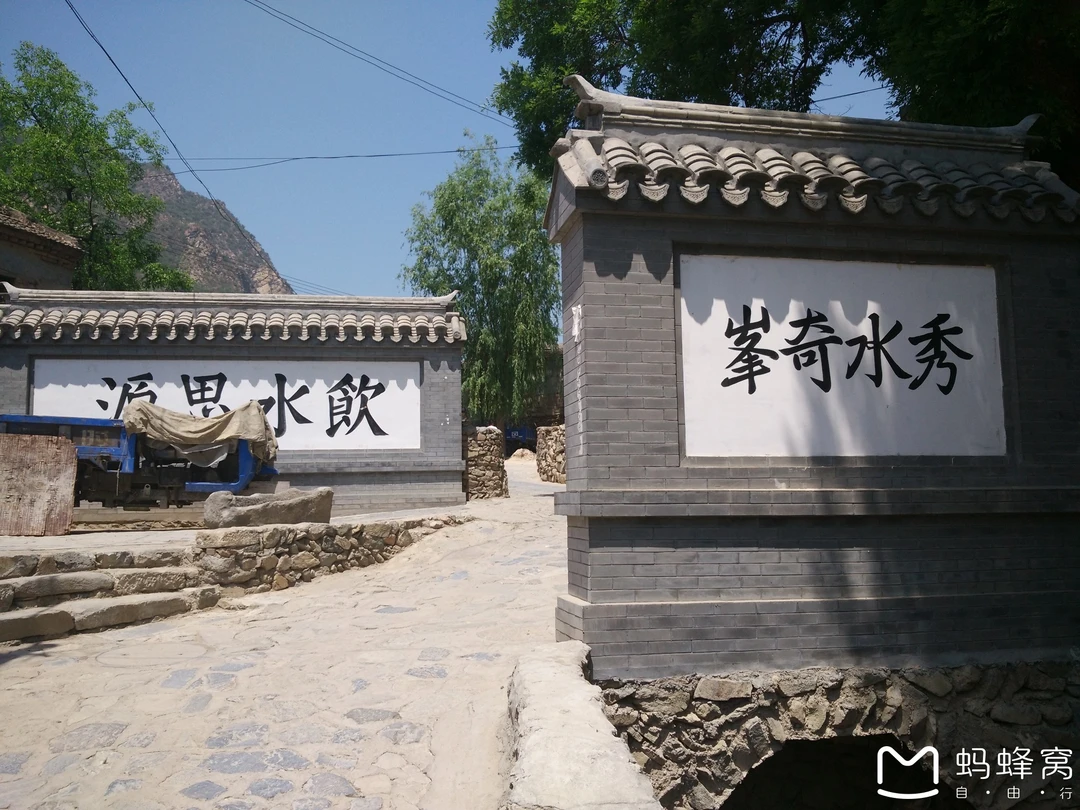
Impressions of Beijing: Mentougou Part Three — Lingshui Village, Searching for a World of the Past in the Depths of Time
Meta Description: Discover Lingshui Village, Beijing's "Juren Village" in Mentougou District. Explore millennium-old courtyard houses, Ming-Qing scholar legacy, and practical travel tips. A journey into ancient Chinese culture awaits. "Spring deep, my official duties are complete; day by day, my heart turns to the mountains."…
Continue reading...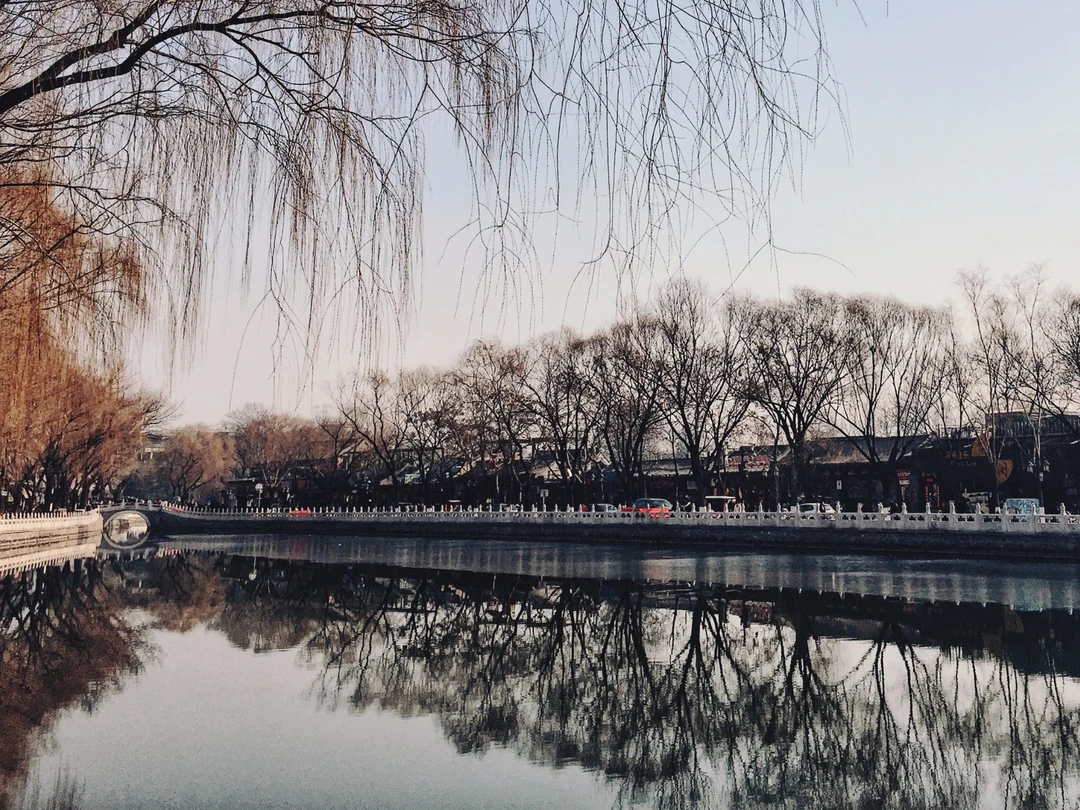
Strolling Through Old Beijing: The Ultimate Hutong Walking Tour of Nanluoguxiang, Yandaixiejie, Shichahai, and Houhai
Meta Description: Explore Beijing's historic hutongs on a day-long walking tour from Nanluoguxiang to Houhai. Discover hidden courtyards, Qing Dynasty alleys, and lakeside charm. Your complete guide to Old Beijing's most iconic neighborhoods. Beijing’s hutongs—those winding, narrow alleys—are like veins threading through the ancient capital,…
Continue reading...
Strolling Through Beijing: When the Forbidden City's Twilight Meets the Alleyways' Hearth Smoke
Meta Description: Discover Beijing's imperial grandeur and culinary soul in this 5-day guide. From Forbidden City secrets to Niujie food walks, learn where to stay, eat, and explore for an unforgettable trip. Beijing isn't just a city—it's a living museum where six centuries of imperial…
Continue reading...